What to see
Complete guide to visiting the Cyclades: islands, itineraries, budget and tips
We may earn a commission when you book through links on this page, at no extra cost to you. We don't visit or try the places we cover: we summarize published sources. How we work
In short
- A week covers two islands without rushing (for example Paros and Naxos); ten days allow three. Stay at least two or three nights on each.
- The most common entry point is Athens, then a ferry from Piraeus or another mainland port; some islands also have an airport.
- Late May to late September is the main season; June and September are often the best compromise between weather, price and crowds.
- Rates vary widely by island and season: Santorini and Mykonos are the most expensive in high season, less-known islands and May-June or September cut the bill.
The Cyclades are among the most familiar images of Greece: white cubes clinging to a cliff, blue domes, windmills facing the wind, turquoise coves. Behind these postcards, however, lies a varied archipelago, where each island has its own character, rhythm and way of welcoming travelers. Some are famous worldwide, others remain almost confidential, and all call for a little organization, since you get around by boat.
This guide is the starting point for preparing your trip. It presents the archipelago, its main islands grouped by region, the highlights, the best time to go, ways to arrive and get around, accommodation options and the budget to plan. At each step, you will find links to the site’s detailed articles, to go deeper into what interests you.
Introducing the Cyclades: an archipelago in the Aegean Sea
The Cyclades form a group of islands southeast of mainland Greece, in the Aegean Sea. The archipelago has several hundred islands and islets, of which only about twenty are inhabited year round. Its name comes from ancient Greek and evokes a circle: the islands were seen as arranged in a ring around Delos, Apollo’s sacred island.
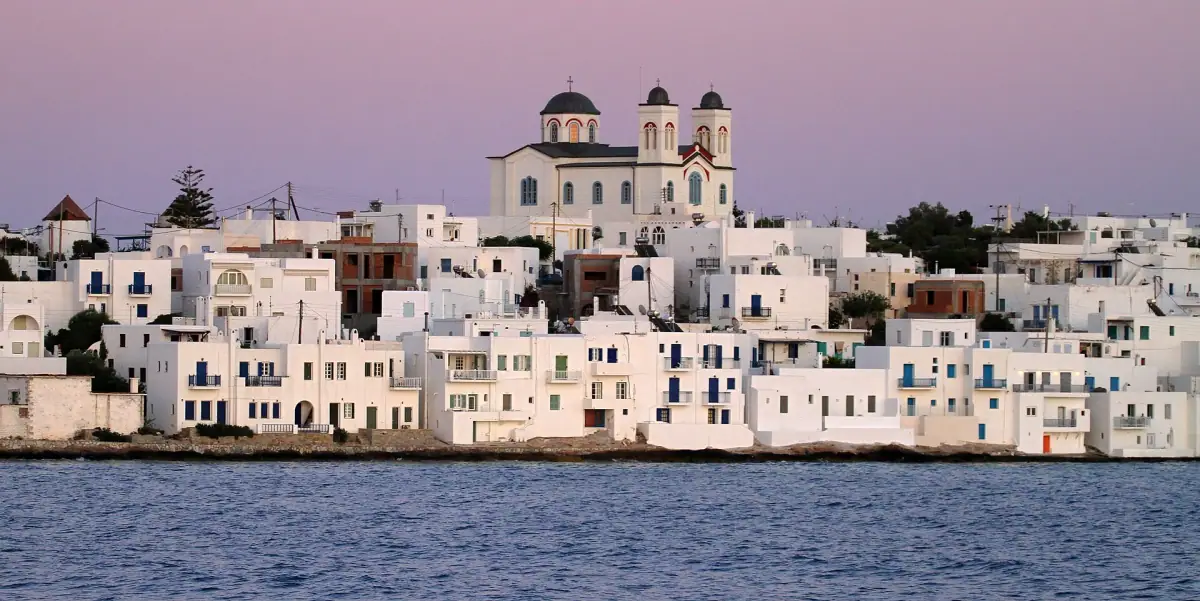
These are islands of rock, wind and light. Vegetation is low, often dry in summer, landscapes are open, and the sea is visible almost everywhere. The traditional architecture, with its lime-whitewashed houses, narrow lanes and chapels with colorful domes, answers very concrete constraints: protection from heat, wind and, in the past, pirates. The main villages, called chora, are often perched above the port and laid out like a labyrinth.
The history of the archipelago is just as striking. The Cyclades gave their name to a Bronze Age civilization, famous for its small, pared-down marble figurines. They were later a maritime crossroads under the Greeks, Romans, Byzantines and then the Venetians, whose influence is still visible on some islands, notably Naxos, Syros and Tinos. This layering of eras explains the richness of the sites to visit, from marble temples to medieval fortresses.
Finally, the climate is typically Mediterranean: hot, dry summers, mild but windier and rainier winters. A north wind, the meltem, blows frequently in summer and marks life in the archipelago. It cools the atmosphere, but it also influences the beaches, the crossings and the choice of your base. We come back to it below.
How the archipelago is organized: the regions to know
The Cyclades are not a single destination but a set of islands visited by combining two or three stops. To find your way, here are the main groups useful to a traveler.
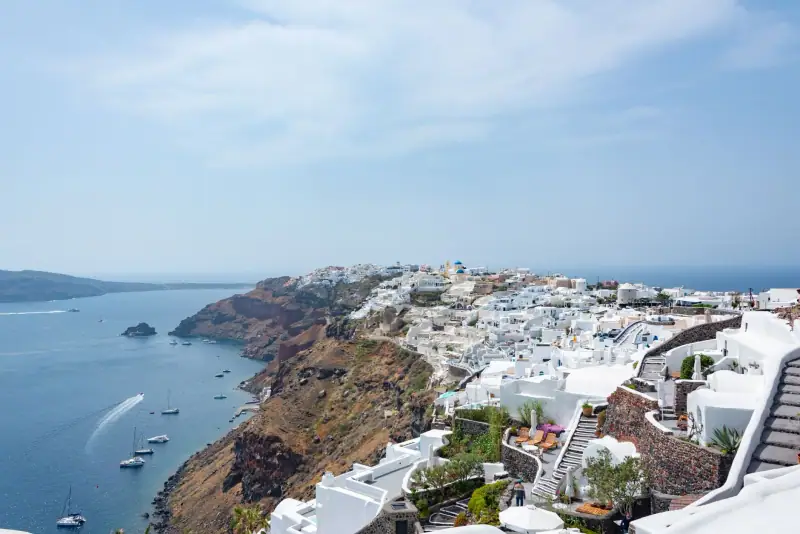
Santorini is a destination in itself. The crescent-shaped island surrounds a caldera, that is, a vast crater filled by the sea after a volcanic eruption of exceptional scale in antiquity. The white villages cling to the cliff edge, facing the volcano.
Mykonos and Delos make up the archipelago’s second famous pole. Mykonos is known for its white town, windmills, lively beaches and nightlife. A few minutes away by boat, Delos is a major archaeological site, a UNESCO World Heritage site.
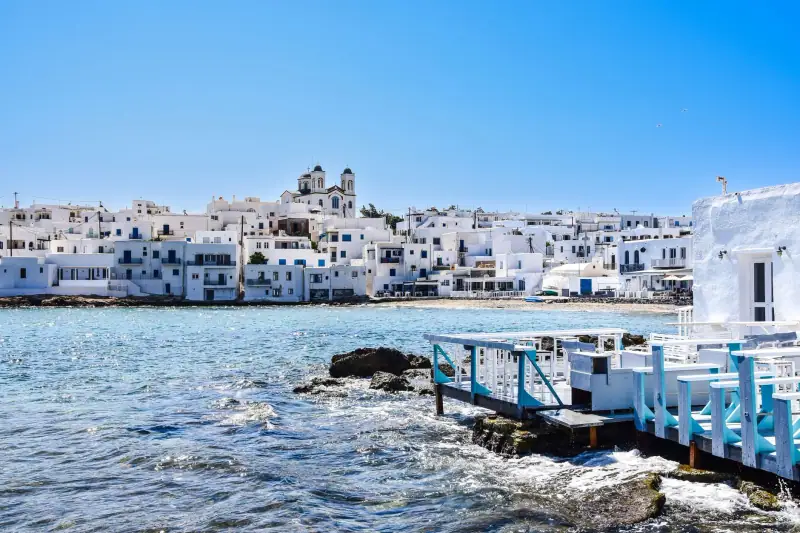
Naxos and Paros are the two big central islands. Naxos is the most extensive in the archipelago, with mountains, interior villages and long sandy beaches. Paros is more compact, organized around two poles, Parikia and Naoussa, and very well served by ferries.
Milos is a volcanic island with lunar landscapes, known for its coves, pale cliffs and boat trips. Folegandros and Sifnos are more unspoiled islands, with perched chora and a quiet mood. Syros and Tinos, to the north, are more authentic and less geared to mass tourism: Syros has Ermoupoli, the archipelago’s elegant administrative capital, and Tinos is a renowned pilgrimage site, dotted with villages and stone dovecotes.
Finally, the Small Cyclades, including Koufonissia, Schinoussa and Iraklia, are tiny islands with a relaxed mood, clear water and very few cars. They require patience, as links there are less frequent, but they appeal to those looking for calm.
Santorini: the caldera and its villages
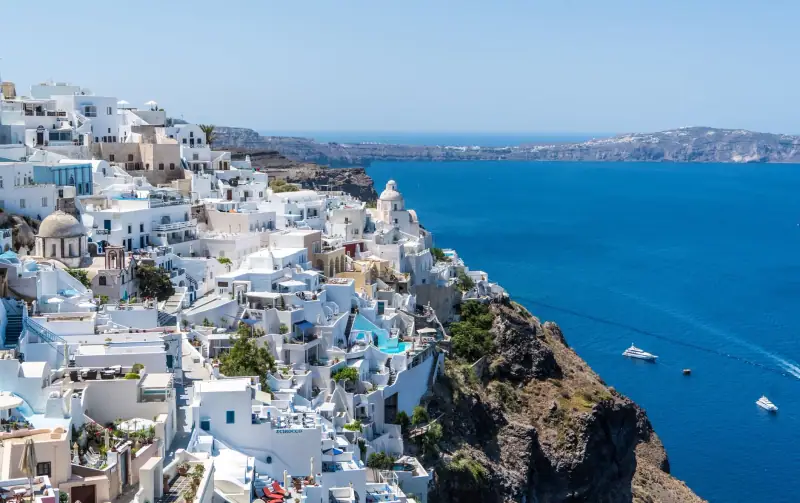
Santorini is probably the most photographed island in Greece, and for good reason. Seen from the sea or from the cliffside paths, the caldera offers a unique spectacle: lava cliffs in dark or reddish tones, topped by a line of white villages. The two best-known towns are Fira, the capital, lively and well equipped, and Oia, famous for its sunsets, very busy in season.
The island is not just about its views. There are black or red sand beaches, vineyards grown in a crown shape at ground level to withstand the wind, as well as the Akrotiri archaeological site, a Bronze Age city preserved under volcanic ash. If you only have a few days, it is easy to combine villages, beach, volcano and wine.
The main challenge is the crowd. In high season, Oia and the best-known viewpoints are saturated. Visit them early in the morning or late in the day, and try less-visited villages. To organize your days, see our three-day itinerary in Santorini and, to choose your area, our guide where to stay in Santorini.
Compare hotels and apartments by village, view and budget: book early for high season.
Mykonos and Delos: party, windmills and antiquity
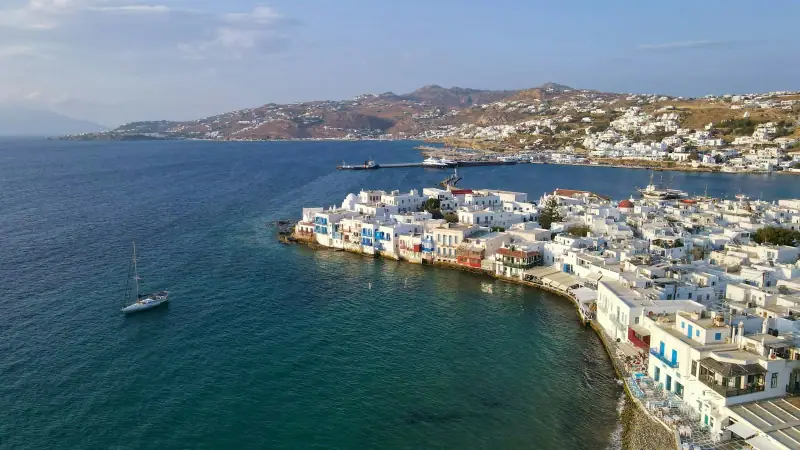
Mykonos has the reputation of a jet-set island, and it lives up to it in some districts and on some beaches. But the island has several faces. The main town, called Chora, is a maze of white lanes lined with shops, flowered balconies and chapels. The Little Venice district, with its houses at the water’s edge, and the row of windmills above the town are the best-known images.
The beaches are varied: some are lively, with beach establishments and music, others calmer and wilder. The meltem is often marked there, which makes the island a good spot for board sports, but forces you to choose the beach according to the wind direction.
Not to be missed: the crossing to Delos. According to mythology, Apollo and Artemis were born there. The site, vast and very well preserved, includes houses decorated with mosaics, a sanctuary and the famous Terrace of the Lions. Bring a hat, water and good shoes, as shade is rare. All the practical details are in our article Mykonos and Delos.
Naxos and Paros: the big central islands
If you are looking for a balanced stay, Naxos and Paros are excellent bases. Naxos is the largest island in the Cyclades. Its capital is organized around its port and the Portara, an immense marble gateway, remnant of an ancient temple, which stands facing the sea and draws many people at sunset. The west coast lines up long sandy beaches, while the mountainous interior, dominated by Mount Zas, holds stone villages, Byzantine chapels and hiking trails.
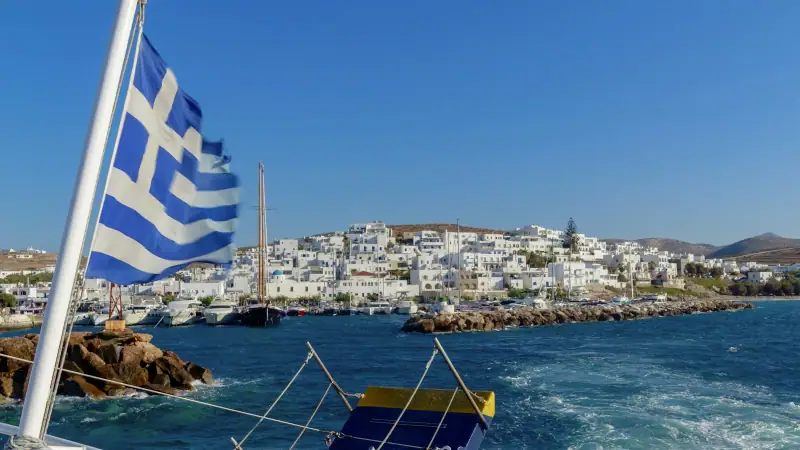
Paros, smaller, is explored more easily in a few days. Parikia, the main port, and Naoussa, a former fishing village turned lively resort, are linked by short roads, and the island has the reputation of being very well connected to the others. It offers a good mix of beaches, villages and activity, with simple organization for travelers who do not rent a vehicle.
The two islands are neighbors and combine very naturally. If you are hesitating between them, or want to understand which suits your profile best, read our comparison Naxos or Paros. To include them in a longer trip, our 10-day itinerary in the Cyclades offers a Paros, Naxos and Santorini sequence.
Hikes, guided tours, boat trips and tastings: discover the activities offered on both islands.
Milos, Folegandros and the unspoiled islands
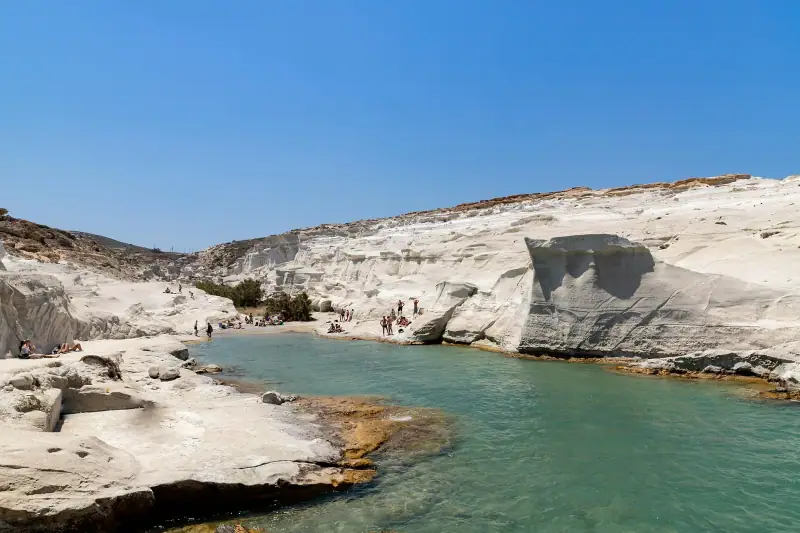
Milos is a frequent favorite of travelers who already know the Cyclades. Its volcanic origin carved pale cliffs, sea caves and astonishing coves. Sarakiniko, with its smooth white rocks evoking a lunar landscape, is one of the most photographed sites, and boat trips to Kleftiko let you explore rock formations reached mainly by sea. The island also has colorful fishing villages, with boats sheltered in rock-cut shelters. Find the detail in our article on the beaches and coves of Milos.
Folegandros represents another facet of the archipelago: a small, steep, calm island, with a chora perched on a cliff and trails leading to isolated beaches. It suits travelers who prefer quiet lanes and hiking to nightlife. Our Folegandros guide presents its villages, beaches and walks.
Sifnos, next to Folegandros, is renowned for its cooking and pottery. Syros and Tinos, farther north, are oriented more toward the local population than international tourism, which makes them good choices for those seeking a more authentic atmosphere. They suit those who travel off-season well, as life there goes on all year.
The must-dos of the Cyclades
If you had to remember a few emblematic experiences of the archipelago, here are the ones that come up most often in travelers’ accounts.
- The Santorini caldera, seen from a cliffside path or from a boat.
- The Delos archaeological site, reached from Mykonos, to step into antiquity.
- The Portara of Naxos, at sunset, on foot from the port.
- The interior villages of Naxos, such as Apeiranthos and those of the Tragea valley.
- Sarakiniko and Milos boat trips, for the geology and clear waters.
- The perched chora, notably that of Folegandros, for the architecture and atmosphere.
- The Byzantine road of Paros, between Lefkes and Prodromos, for an easy hike.
- A lunch of local specialties in a village taverna, away from the waterfront.
These must-dos cannot all be chained in a single trip. Choose three or four priorities and organize your stops around them, rather than ticking off a list.
What to taste in the Cyclades
Cycladic cooking is simple, based on island products: olive oil, vegetables, fish, cheeses, capers, honey. Each island has its specialties, often tied to its agricultural resources, and village tavernas are the best place to discover them. Naxos is known for its cheeses and potatoes, Santorini for its white wines from vines grown on volcanic soil, Sifnos for its dishes simmered in clay pots, and most islands for their salads, grilled fish and honey sweets.
Our article on Cyclades specialties details what to taste island by island. A general tip: have lunch late, like the locals, and choose places where the menu is short and centered on seasonal products, rather than those that display menus in several languages on the waterfront.
When to go to the Cyclades
The main season runs from late May to late September. This is when the sea is warm enough for swimming, when accommodation, restaurants and beaches are open and when ferry service is most frequent.
- May and early June: days are long and pleasant, nature is still green and sites are less crowded. The water is cool for swimming.
- June and September: often the best compromise between weather, price and crowds. The sea is generally pleasant, and high season has not yet started or has just ended.
- July and August: full summer. It is hot, the sun is strong, prices rise and the best-known islands are very busy. The meltem blows mainly in this period.
- October: still pleasant some years, but ferry timetables shrink and some businesses close.
- November to April: part of the accommodation and services is closed, links are limited, and the weather can be rainy or windy. It is a period for travelers who seek calm and accept the constraints.
The meltem deserves a special mention: this north wind can make some beaches uncomfortable and stir up the sea. It is therefore useful to choose, on each island, a beach sheltered according to the wind direction. All the details, month by month, are in our guide when to go to the Cyclades.
How to get to the Cyclades
There is no single link: the most common gateway is Athens. Flights, direct and with a stop, serve the Greek capital, with good frequencies in summer. Check the airlines and timetables available at the time of your trip, as supply varies with the seasons.
From Athens, two main options are open to you:
- The ferry, from Piraeus, but also from Rafina or Lavrio depending on the islands. It is the most common solution, sometimes the cheapest, and the experience is part of the trip.
- The plane, as some islands, including Santorini, Mykonos, Naxos, Paros and Milos, have an airport with domestic links, more frequent in season. It is faster, but supply varies and fares can climb.
Some islands, notably Santorini and Mykonos, also receive direct flights from several European cities in summer. If you want to save time, it is an option worth checking when booking. Also remember to keep a margin between your last ferry and your return flight, as a crossing can be delayed by wind.
Compare flights to Athens and the islands: flexible dates, stops and baggage included depending on the airlines.
Getting from island to island
Ferries are the backbone of any trip to the Cyclades. There are two main categories of ships: conventional ferries, slower, steadier and generally cheaper, which accept vehicles, and fast boats, which save time but cost more and cope less well with rough seas. The choice depends on the distance, your budget and your sensitivity to seasickness.
A few useful rules:
- Book ahead in July and August, especially for links to Santorini and Mykonos.
- Arrive at the port early, as the quays are sometimes far from each other and boarding instructions vary.
- Avoid tight connections: a wind delay can compromise a sequence.
- Keep a safety margin before an international flight.
- The small islands have less frequent timetables: check the departure days before committing.
Islands close to each other, like Paros and Naxos, are the easiest to link. Trips between distant islands take more time and sometimes a stop at a hub island. Our guide to ferries in the Cyclades details how the links work, the companies and booking strategies.
Once on the island, three solutions exist: local buses, which link the main localities at varying frequencies, taxis, useful for one-off trips, and rental vehicles. On the larger islands, a car, quad or scooter gives freedom, but roads can be narrow, winding and sometimes poorly maintained. If you are not used to two-wheelers, prefer a car, and check the insurance conditions before signing.
Where to stay in the Cyclades
The accommodation offer is very varied: charming hotels, apartments, rooms in private homes, small seaside complexes and, on some islands, campsites. Prices vary widely by island, period and location. More than elsewhere, the choice of neighborhood counts as much as the hotel itself.
For a first visit, favor the main town or the best-connected village of the island. You will find restaurants, shops, transport and evening activity, which makes life easier without a vehicle. On Naxos, the port town suits well. On Paros, Parikia is practical for links, while Naoussa is livelier in the evening.
For the views, Santorini is in a category of its own: rooms carved into the cliff with a caldera view are highly prized and expensive. If your budget is limited, it is often wiser to stay in a lesser-known village and visit the emblematic villages on day trips.
For calm, small islands like Folegandros or those of the Small Cyclades offer a relaxed atmosphere, but the offer is more limited and books early. In July and August, it is better to book several months ahead.
A few practical benchmarks:
- Check the real distance between the accommodation and the port or bus stop.
- Read the reviews about stairs, as many accommodations are perched without an elevator.
- See whether air conditioning is included, which matters a lot in summer.
- Check the cancellation conditions, especially if ferries may change your calendar.
- Think about the tourist tax, which is generally added locally.
Compare accommodation island by island: location, guest rating, free cancellation on some offers.
Budget: how much to plan for the Cyclades
The budget depends on three parameters: the island, the season and your travel style. The main spending items are international transport, ferries, accommodation, meals, vehicle rentals and activities.
Accommodation is generally the first item, with very large gaps between a simple room in a quiet village and a suite with a view in Santorini or Mykonos in August. Meals are more affordable in village tavernas than on touristy waterfronts. Ferries are a significant item, especially if you chain several islands or travel with a vehicle.
To cut the bill without giving up the essentials:
- Travel in May, June or September rather than July and August.
- Favor less-publicized islands, where prices are lower.
- Book early the accommodation and ferries in high demand.
- Eat in village tavernas, rather than in waterfront restaurants.
- Limit the number of islands: each transfer costs time and money.
We detailed the spending for different profiles in our article Cyclades budget, which will help you build a realistic estimate adapted to your dates. Avoid relying on averages that are too general: differences from one island and one season to another are considerable.
Formalities and practical tips
Greece is part of the European Union and the Schengen area, and the euro is the currency. Entry rules depend on your passport. Check the official travel advice of your government before you book: travel.state.gov (US), GOV.UK (UK), travel.gc.ca (Canada), Smartraveller (Australia) (checked November 2026). Also consider travel insurance suited to your plans if you intend to do water activities or hiking. Everything is detailed in our article on formalities for the Cyclades.
A few practical tips round out the preparation:
- Protect yourself from the sun: sunscreen, hat, glasses and enough water, as shade is rare.
- Plan closed shoes for hiking trails and archaeological sites.
- Keep cash for small places and villages, as cards are not accepted everywhere.
- Respect natural sites: do not take stones or sand, and avoid trampling fragile vegetation.
- Be sparing with water, precious on many islands where it is sometimes desalinated.
- Dress appropriately in churches and monasteries, where covering clothing is expected.
How to build your itinerary
The temptation, faced with such a rich map, is to want to see everything. It is better to set a pace: two or three nights per island at minimum, with a buffer day before the return flight. Here are a few classic combinations.
One week, two islands: Paros and Naxos, or Santorini and a neighboring island. It is a good format for a first stay, with a single ferry between the two stops.
Ten days, three islands: Paros, Naxos and Santorini, as in our 10-day itinerary. This route chains a lively port, interior villages and the spectacle of the caldera.
For lovers of nature and calm: Milos and Folegandros, with days devoted to coves, trails and sunsets.
For culture: Mykonos and Delos, complemented by Syros for its architecture and local life, and by Tinos for its religious heritage and villages.
In every case, place Santorini at the start or the end of your trip, as the island is farther from most of the others. Also keep a spare day in case of a canceled ferry, particularly in the height of the meltem season.
Day cruises, guided tours and activities: discover the experiences offered on the islands.
The essentials to remember before you go
The Cyclades reward travelers who take the time to choose. A well-chosen island, a suitable period and a reasonable pace are worth more than a packed program. To prepare your trip, here are the steps to follow in order:
- Choose your dates with the guide when to go to the Cyclades.
- Select two or three islands according to your tastes: Santorini, Mykonos and Delos, Naxos or Paros, Milos or Folegandros.
- Estimate your budget with our article Cyclades budget.
- Organize your crossings with the guide to ferries.
- Choose your neighborhoods, for example with our article where to stay in Santorini.
- Check your formalities and book your flights.
- Prepare your meals by drawing inspiration from the Cyclades specialties.
With this preparation, all that remains is to enjoy the light, the sea and the gentle evenings on a taverna terrace facing the Aegean.
Frequently asked questions
How long do you need to visit the Cyclades?
A week lets you discover two islands without rushing, for example Paros and Naxos or Santorini and a neighboring island. With ten days, you can chain three. It is better to see fewer islands and stay at least two or three nights on each: crossings take up a good part of the transit days.
What is the best Cyclades island for a first trip?
It depends on what you are looking for. Santorini for spectacular landscapes, Mykonos for the atmosphere and Delos, Naxos for beaches and interior villages, Paros for a good balance between activity and simplicity, Milos for coves and rock formations, Folegandros for calm. For a first stay, the Paros and Naxos duo is one of the easiest to organize.
When should you go to the Cyclades?
From late May to late September for swimming. June and September are often a good compromise between weather, price and crowds. July and August are the hottest, most expensive and busiest months, with the meltem wind that can stir the sea. Off-season, part of the accommodation and ferry service is reduced.
How do you get to the Cyclades?
The most common solution is to take a flight to Athens, then a ferry from Piraeus or another mainland port. Some islands, such as Santorini or Mykonos, also have an airport and air links, notably in season. Check the offers and timetables at the time of your trip, as they change from year to year.
Do you need to rent a car in the Cyclades?
Not always. On the small islands and in the main towns, you get around on foot or by bus. On the larger islands such as Naxos or Milos, a car, quad or scooter makes it easier to reach beaches and distant villages. A valid driver's license is needed, and the mountain roads call for caution.
Are the Cyclades suitable for families?
Yes, provided you choose the island well. Naxos and Paros offer sandy beaches with shallow water in places and simple organization. Very steep or very lively islands are less practical with young children. Also plan serious sun protection: exposure is strong in summer.
Are the Cyclades expensive?
They can be, especially in Santorini and Mykonos in high season. Less-known islands and the May-June or September period let you cut the bill noticeably. Our budget guide details the spending items for three traveler profiles.
More Cyclades guides
Keep reading
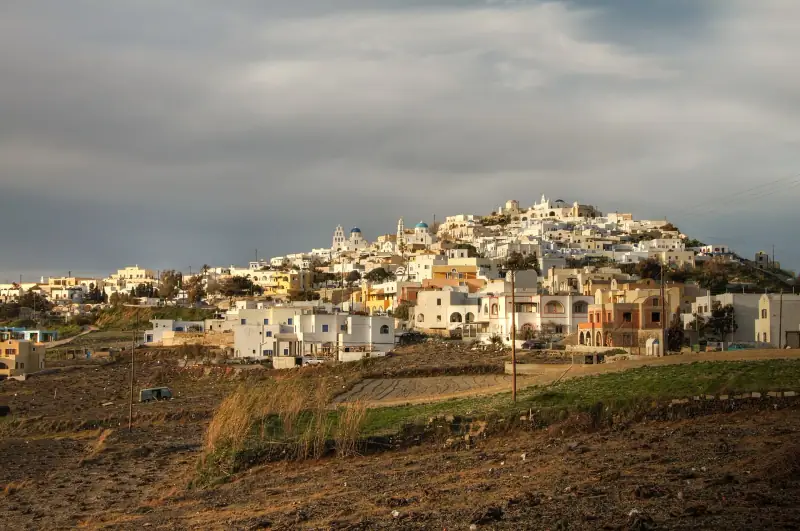
Pyrgos in Santorini: is it worth the detour without a car?
Pyrgos Kallistis without a car: bus from Fira, kasteli, lanes, tavernas, sunset and tips for a half-day visit or an overnight stay.
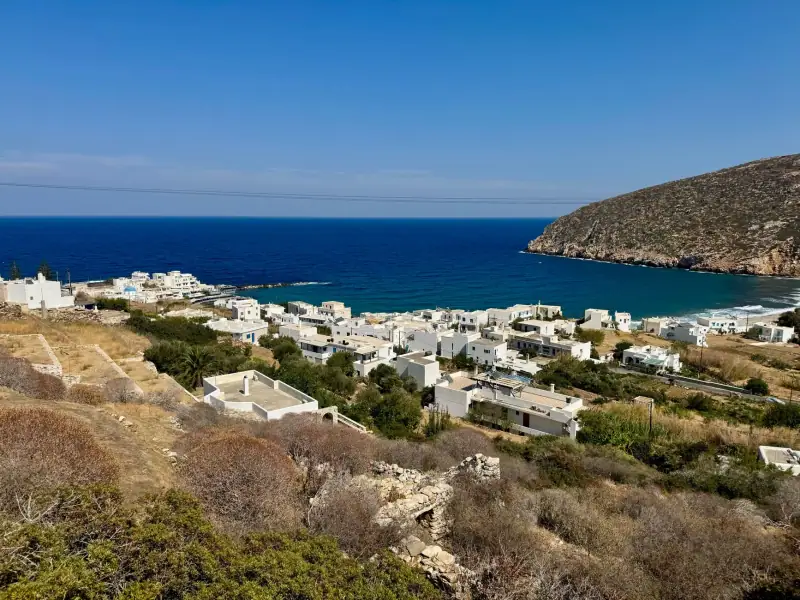
Folegandros: guide to the unspoiled Cyclades island, Chora, beaches and hikes
What to do on Folegandros? Chora on its cliff, Katergo and Agali beaches, hikes, Ano Meria and tips for the ferry and getting around the island.
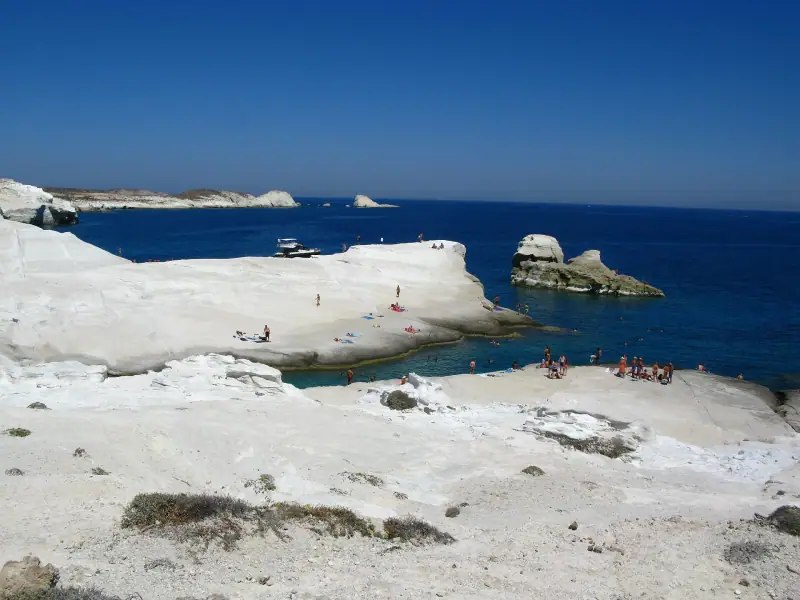
Milos: the best beaches and coves on the island, from Sarakiniko to Kleftiko
Sarakiniko, Kleftiko, Firiplaka, Papafragas: a selection of the best beaches and coves on Milos, with tips on access, season and organization.
Ready-made
Cyclades itineraries
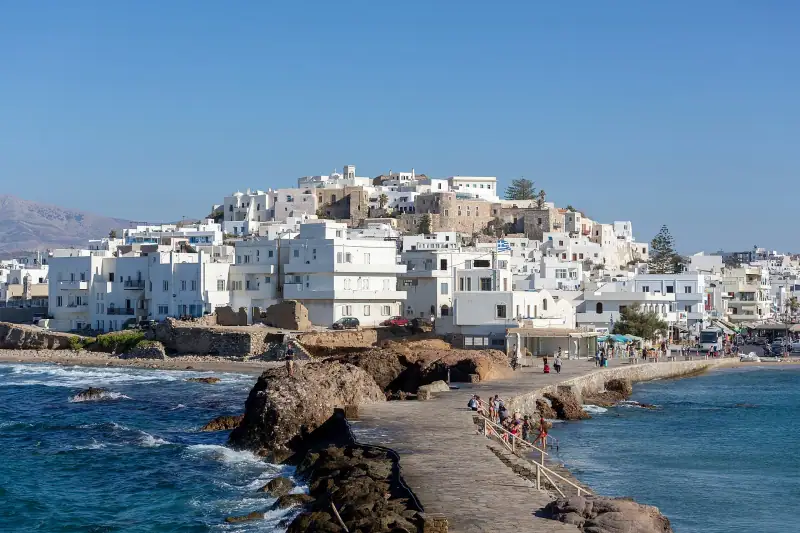
7 days
Naxos and Paros in 7 days: a detailed itinerary for two
Naxos ChoraParos
10 days
10 days in the Cyclades: Paros, Naxos and Santorini, island by island
ParosNaxosSantorini
3 days
Santorini in 3 days: a complete itinerary through the caldera, ancient sites and beaches
What to do in Santorini in 3 days? Day-by-day itinerary: Fira, Oia, Akrotiri, the volcano, black beaches and vineyards, with transport and planning tips.