Things to do
Hiking in Zhangjiajie: Wulingyuan, Tianmen and the Avatar mountains
We may earn a commission when you book through links on this page, at no extra cost to you. We don't visit or try the places we cover: we summarize published sources. How we work
In short
- Allow at least three days: two in Wulingyuan park and one on Tianmen Mountain, near Zhangjiajie city. A fourth day adds margin for fog or the Grand Canyon.
- Wulingyuan has been a UNESCO World Heritage site since 1992. The Bailong Elevator rises over 300 m (985 ft) in under two minutes but queues are long; arrive early.
- Spring and fall are generally the most pleasant seasons. Avoid Chinese national holidays, when lines at cable cars and the elevator can last hours.
- Wear shoes with good grip: the stone steps are slippery in mist or rain. Do not feed the macaques.
In central China, in Hunan province, thousands of sandstone pillars shoot up above thick forests, often capped with mist. This Zhangjiajie region, readily associated with the “Avatar mountains,” is one of the best hiking grounds in the country: dizzying staircases, viewpoints over rocky spires, cool valleys and trails where you sometimes meet macaques.
The site is vast and poorly understood by first-time visitors. It is not a single mountain but several sectors, with their own entrances, shuttles and moods. This article explains how to divide them up, which trails to choose, how to handle crowds and weather, and what a realistic three or four-day hike looks like. To choose your dates, see our guide to when to go to China, and to size the overall budget, the budget for a trip to China.
Key points:
- Allow at least three days: two for Wulingyuan park, one for Tianmen Mountain
- The park is visited by combining trails, shuttles, cable cars and the elevator: walking remains significant
- Fog is frequent: keep flexibility in the schedule
- Avoid Chinese national holidays, when lines become very long
Understanding what you come to see
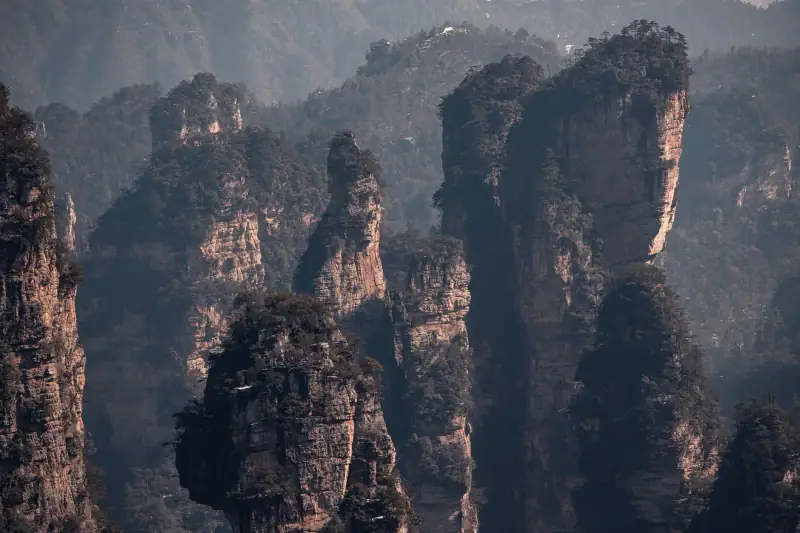
Zhangjiajie’s landscape is a relief of quartz sandstone, sculpted by water, frost and erosion over millions of years. The rock columns, narrow and tall, are separated by deep gorges that the forest has covered. The Wulingyuan site, which includes most of these formations, has been a UNESCO World Heritage site since 1992.
This geology explains why hiking there is so distinctive. You move on two levels: on the plateaus, from which you look at the pillars head-on and from above, and at the bottom of the valleys, from which you look up at walls several hundred meters high. Most visitors favor the first level, more spectacular in photos; walkers mostly enjoy the second, calmer and cooler.
The climate is humid subtropical. Mist and low clouds are part of the scenery, and some days they completely hide the viewpoints. Good photographs are often born after rain, when the clouds lift between the pillars. It is an argument for building margin into the calendar rather than betting everything on a single day.
Organizing your stay: bases and access
There are two main bases. Zhangjiajie city, on the plain, is practical for transport: station, airport and links to the rest of the country. The town of Wulingyuan, at the park entrance, avoids long morning trips and lets you start early, before the crowds. For a first visit devoted mostly to hiking, sleeping in Wulingyuan is generally the most comfortable choice.
The trip generally involves a flight to a major Chinese city, then a domestic flight or a high-speed train. If you come from Chengdu, you can link the two legs of your trip; our itinerary Chengdu in 3 days suits a sequence with Zhangjiajie. Before you leave, note that entry rules depend on your passport and change often. Check the official travel advice of your government before you book: travel.state.gov (US), GOV.UK (UK), travel.gc.ca (Canada), Smartraveller (Australia) (checked November 2026).
To enter the park, one ticket in principle covers several consecutive days and is presented with ID or biometric data according to the checks in force. The rules change: check the official ticket office or ask your lodging for the current procedure rather than relying on old information.
Where to stay in Zhangjiajie?
Staying at the park entrance lets you set out before the groups arrive. To compare for your dates.
The national forest park: the main sectors
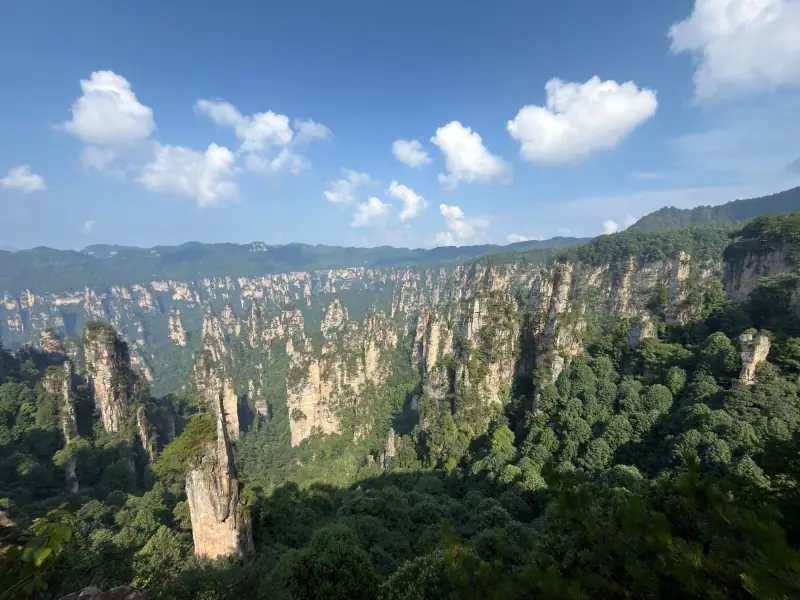
Wulingyuan park is divided into several zones. There are many names, but a few landmarks are enough to find your way.
Yuanjiajie and Hallelujah Mountain
Yuanjiajie is the best-known sector. A relatively flat plateau offers a series of viewpoints facing very tightly packed pillars, including the one renamed “Avatar Hallelujah Mountain” in reference to the film Avatar. This is where crowds and photographers concentrate. The trail is easy on the plateau itself, but the best-known viewpoints can be crowded in the middle of the day.
Access is generally via the Bailong Elevator, a cabin attached to the sandstone wall, presented as one of the tallest outdoor elevators in the world. It links the valley floor to the plateau in under two minutes, for an elevation gain of over 300 m (985 ft). It is practical, but also in high demand: arrive early or accept waiting. An alternative is to go up on foot or by cable car depending on the route chosen.
Golden Whip Stream and the valley
The Golden Whip Stream trail follows a watercourse in a shaded valley floor. It winds between rock walls, waterfalls and dense forest. It is the most pleasant hike for those who want to avoid crowded viewpoints, especially since it is almost flat. Wild macaques are common there: do not feed them, and keep your bags closed, because they are quick and bold.
Tianzi Shan and the northern heights
The Tianzi Mountain sector, farther north, offers other viewpoints and a network of trails on the ridges. A cable car lets you gain height without effort, and the walk down is one of the park’s finest, although long and full of steps. It is a perfect sector for a full day of walking, with a picnic.
The Ten-Mile Gallery and Yangjiajie
The Ten-Mile Gallery is a flat trail that runs at the foot of several remarkable formations, with the option of taking a small train. Yangjiajie, more remote, draws fewer people and suits those looking for quieter viewpoints. Its relative remoteness means planning time for internal transfers.
A two-day hiking itinerary in the park
To combine the sectors without rushing, here is a reasonable organization. Travel times depend on crowds, shuttle lines and your pace; take them as orders of magnitude.
Day 1: plateau and valley. Enter as early as possible. Go up to Yuanjiajie by the Bailong Elevator or on foot, tour the viewpoints before the groups arrive, then come back down by a valley trail to Golden Whip Stream. The day alternates a spectacular sector and a peaceful walk, which limits fatigue.
Day 2: Tianzi ridges and gallery. Take the cable car up to Tianzi Shan, walk the ridges, then descend by the stairs. Finish with the Ten-Mile Gallery if energy allows. This day is more physical than the first.
In both cases, bring water, food and a waterproof jacket. Restaurants are few inside the park and often expensive. Bringing your own snacks saves time and money.
A guided excursion to Zhangjiajie?
To handle transfers and lines, day excursions exist. To compare according to your pace.
Tianmen Mountain: a day apart
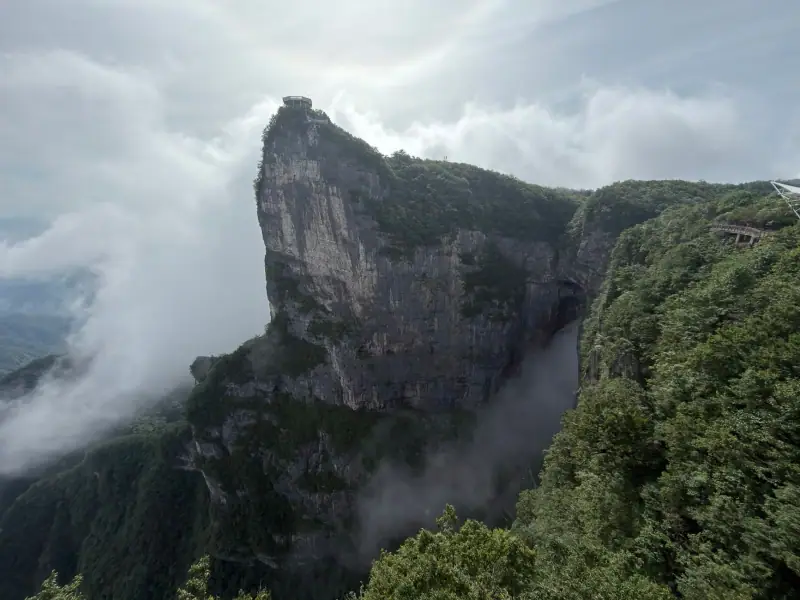
Tianmen Mountain is near Zhangjiajie city, not in Wulingyuan. It is therefore visited on a separate day. Its central attraction is the “Heaven’s Gate,” a large natural opening in the rock, visible from several kilometers away. You go up either by a very long cable car, among the longest in the world, or by a mountain road with many bends, or by combining the two depending on the direction chosen.
At the top, several built trails follow the cliff edge, some as walkways attached to the wall, part of them with a glass floor. These passages are impressive and not recommended for people prone to vertigo, but they are safe. The mountain is also an ancient Buddhist pilgrimage site, with a temple at the summit, which gives the visit a more cultural side.
For Heaven’s Gate itself, climbing on foot by the stairs is possible, but it is long and involves a large number of steps. Most visitors prefer to go up by shuttle from the road. Weather matters a lot: in fog, the view disappears, and the summit can seem disappointing. Keep this day for a slot with a promising forecast, and check the local forecast the day before.
The Grand Canyon and its glass bridge
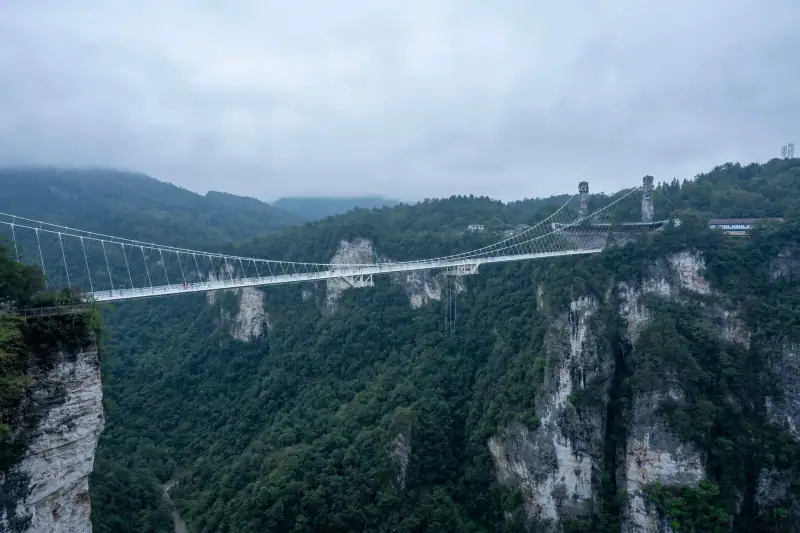
If you have a fourth day, Zhangjiajie Grand Canyon is an option. It is a developed canyon, crossed by a very long glass pedestrian bridge, often presented among the longest and highest in the world in this category. The mood is more “amusement park” than “wild hike”: activities, walkways, a boat ride or walk down depending on the season.
This site will please families and those who like thrills. Hikers looking for nature can skip it and devote their extra time to a third day in Wulingyuan, notably to explore a more secondary sector such as Yangjiajie.
A flight to China?
Compare flights to Beijing, Shanghai or Guangzhou before reaching Zhangjiajie by domestic flight or train.
When to go for good hiking conditions
Spring, from April to May, offers mild temperatures and very green vegetation, but also frequent rain. Fall, from September to November, is the period often recommended: clearer sky, drier air, forest colors changing. Summer is hot, humid and stormy, and attendance peaks, notably during school holidays. Winter is calmer, but the cold at altitude and ice on the stairs call for caution.
The weeks of Chinese national holidays, especially early October and during the Spring Festival, are best avoided if you can. Lines at the cable cars and the elevator can last hours. If you have no choice, arrive at opening time and stick to the valley trails, less prone to congestion. Our article when to go to China details the national calendar.
Gear and safety
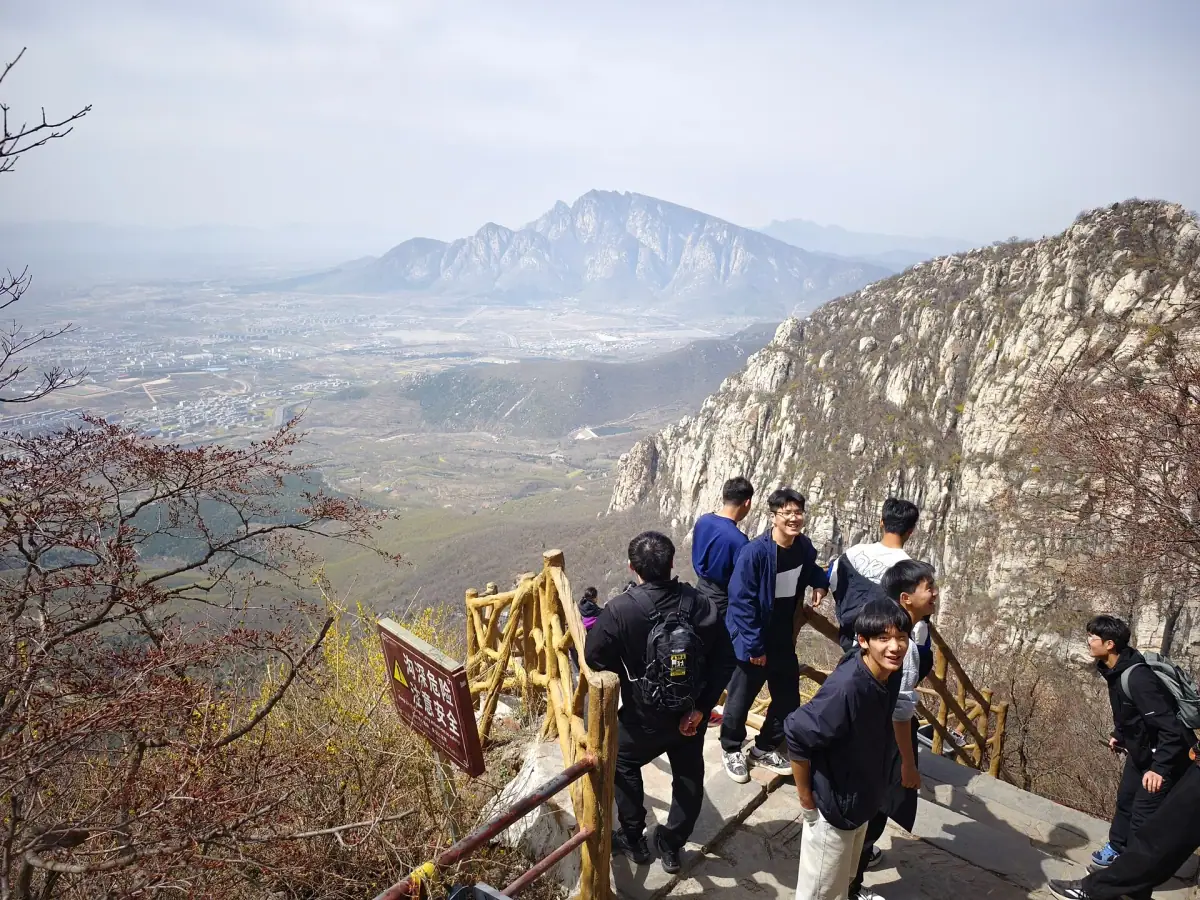
Hiking in Zhangjiajie is accessible, but it relies on an enormous number of steps, often damp. Hiking shoes with a grippy sole are essential; smooth sneakers cost you dearly on wet stone. A trekking pole relieves the knees on descents. A light rain jacket and a small waterproof bag complete the basic gear.
A few good habits:
- Start early, before 8 am if possible, to enjoy the trails before the groups arrive
- Bring water and snacks, because the offer inside the park is limited
- Stay on the marked trails and respect the viewpoint railings
- Do not feed the macaques and do not keep food visible
- Bring a power bank, because the phone is used for payments, ticketing and photos
For a detailed list, see our guide to useful accessories for traveling in China. Also think about payments: many shops use mobile payments, and it is better to have prepared a solution in advance. For health and repatriation cover in mountain terrain, consider travel insurance with medical and repatriation coverage.
Budget and pace: what to keep in mind
The cost of a stay in Zhangjiajie is made up of the park entry ticket, cable car and elevator tickets, transfers, lodging and meals. The cable cars and the elevator are not always included in the entry ticket: find out before going up, to avoid bad surprises. Prices vary by season and are regularly revised, which is why we give no precise figures here.
As for pace, do not try to see everything. A park of this size suits two or three well-chosen big trails better than a race from one viewpoint to the next. Leave room for fog, breaks and detours: that is what makes Zhangjiajie a memorable hike rather than a simple photo session.
Fitting Zhangjiajie into a wider trip
Zhangjiajie fits naturally into a circuit from west to east or from Sichuan toward the center of the country. You can combine it with Chengdu, its pandas and its spicy food, then continue east. For a nature-focused circuit, Guangxi and the Li River are another coherent stop, detailed in our itinerary Guilin and Yangshuo in 3 days. Finally, all the main stops are presented in our complete guide to China.
FAQ: your questions about hiking in Zhangjiajie
Answers to the most frequent questions are in the FAQ above. In short: allow three to four days, favor spring or fall, start early, keep a weather margin and equip yourself with good shoes. With this preparation, the Zhangjiajie region is one of the finest hikes in China.
Frequently asked questions
How many days do you need to visit Zhangjiajie?
Three full days are a good minimum: two days in Wulingyuan park and one day at Tianmen Mountain. A fourth day serves as a margin in case of fog or lets you add the Grand Canyon and its glass bridge.
What is the best season to hike in Zhangjiajie?
Spring and fall generally offer the most pleasant temperatures and better visibility. Summer is hot, humid and very busy, especially during Chinese school holidays. Winter is calmer, but it can be cold at altitude, with sometimes snow or ice.
Do the Avatar mountains really exist?
Yes. The film Avatar was partly inspired by the sandstone pillars of Wulingyuan. One of these pillars was even renamed the "Avatar Hallelujah Mountain" in reference to the film. They are real natural formations, but the mountains do not float: the effect comes from the mist.
Do you need a guide to hike in Zhangjiajie?
No, the park's trails are marked, built with stairs and can be done independently. A guide can however save time on transfers and lines, or help you understand the geological context.
Is Zhangjiajie suitable for children and seniors?
Largely yes, thanks to shuttles, cable cars and the Bailong Elevator, which limit the elevation gain. The trails are still made of many steps, though. People prone to vertigo should avoid the glass walkways and some viewpoints.
How do you get to Zhangjiajie?
You generally go through a major Chinese city such as Beijing, Shanghai or Guangzhou, then take a domestic flight or a high-speed train to Zhangjiajie. Check current schedules before booking, because the offer changes.
What gear should you bring for the hike?
Good shoes with a grippy sole, a light rain jacket, water and snacks. The stone steps become slippery in mist or rain, and the weather changes fast at altitude.
More China guides
Keep reading
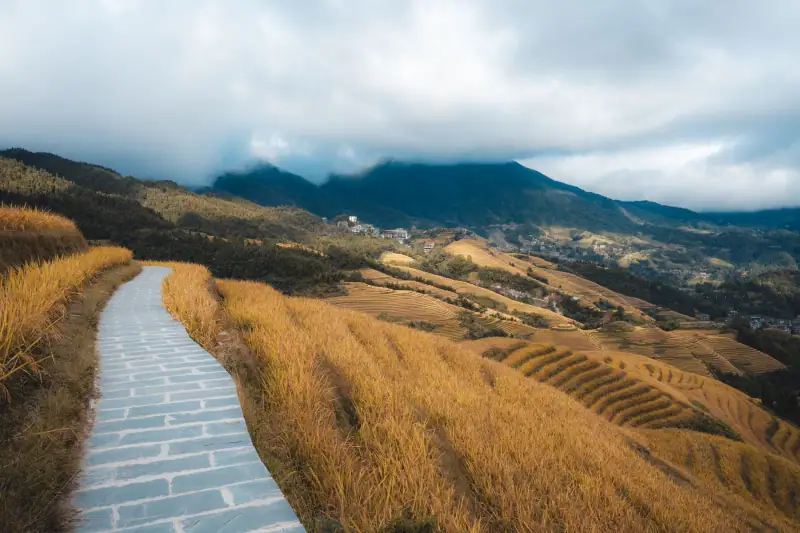
Hiking the Longji rice terraces: Ping'an, Dazhai and seasons
How to hike the Longji rice terraces from Guilin: Ping'an, Dazhai, trails, duration, best seasons, where to stay and practical tips.
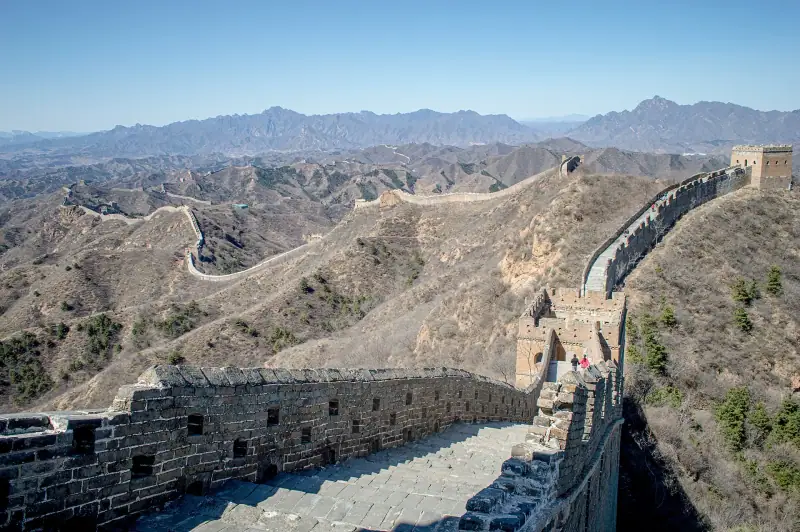
Great Wall of China: which section to choose from Beijing?
Badaling, Mutianyu, Jinshanling or Huanghuacheng? A comparison of the Great Wall sections reachable from Beijing, with access and visiting tips.
Budget for a trip to China: real costs, 3 profiles and ways to save
How much does a trip to China cost? Lodging, trains, meals, site entry fees: three daily budgets with figures, and tips to spend less.
Ready-made
China itineraries

3 days
Shanghai in 3 days: the Bund, Pudong, the French Concession and gardens
What to do in Shanghai in 3 days? The Bund, Pudong skyscrapers, Yuyuan Garden, the French Concession and a possible day trip: a clear itinerary with tips.
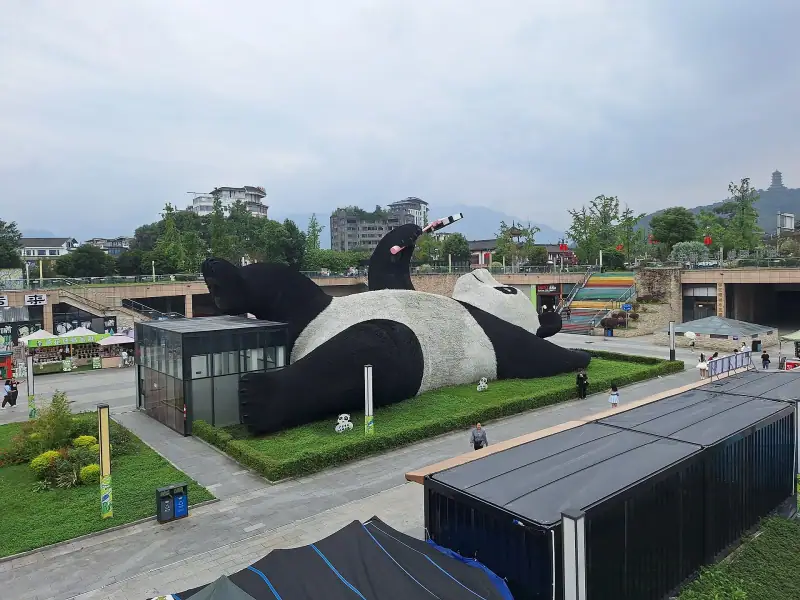
3 days
Chengdu in 3 days: pandas, Sichuan food and teahouses
What to do in Chengdu in 3 days? Giant pandas, old alleys, teahouses, Sichuan opera and a day trip to Dujiangyan: a clear, practical itinerary.
4 days
Beijing in 4 days: a complete itinerary and tips
What to see in Beijing in 4 days? Forbidden City, Great Wall, Temple of Heaven, Summer Palace and hutongs: a day-by-day plan with the bookings to make.