Itineraries
Chengdu in 3 days: pandas, Sichuan food and teahouses
We may earn a commission when you book through links on this page, at no extra cost to you. We don't visit or try the places we cover: we summarize published sources. How we work
Day by day
- Day 1Giant panda base, then hotpot dinner
- Day 2Wenshu Monastery, Kuanzhai alleys, park teahouse, Sichuan opera
- Day 3Day trip to Dujiangyan and Mount Qingcheng
In short
- Three days cover the giant panda base (day 1), the historic center and Sichuan opera (day 2), and a day trip to Dujiangyan and Mount Qingcheng (day 3).
- Visit the panda base early in the morning, when the animals are active. Allow about three hours there.
- The center is easy to explore on foot and by metro. Keep place names in Chinese characters on your phone for taxi drivers.
- Avoid China's national holidays, especially the first week of October, when sites are packed.
Chengdu, the capital of Sichuan province, has a reputation as the most relaxed city in China. People come for the giant pandas, of course, but they stay for the pace: locals take time to drink tea, play cards in a park, or sit for hours around a steaming pot. It is also one of the country’s great food capitals.
In three days you can combine the must-sees with slower moments. This itinerary devotes the first day to pandas and food, the second to the historic center and Sichuan opera, and the third to a day trip into the surroundings. To choose your dates, see our guide to when to go to China, and to extend the trip, see Xi’an in 2 days.
Key points:
- Visit the panda base early in the morning, when the animals are active
- The center is explored on foot and by metro, which is very convenient
- Dujiangyan, west of the city, makes an easy day trip
Getting to Chengdu and getting organized
Most travelers arrive by air: Chengdu is served by major international airports and many domestic connections. A high-speed train also links it to Xi’an, which makes it a natural stop on a route between northern and southwestern China. To compare flights, the box at the end of this guide gives you a starting point.
For lodging, choose a place in the center, near a metro station: you will save time every day. The area around Chunxi Road, a large shopping district, or the historic alleys suit a first visit well. Neighborhoods farther out sometimes offer better prices but lengthen your trips.
Where to stay in Chengdu?
Hotels in the center, close to the metro and the historic districts, to compare for your dates.
The Chengdu metro is modern and clear, with signs in pinyin and English. Taxis and ride-hailing apps are also convenient, but keep place names in Chinese characters on your phone, because drivers rarely speak another language.
Day 1: the giant panda base and Sichuan food

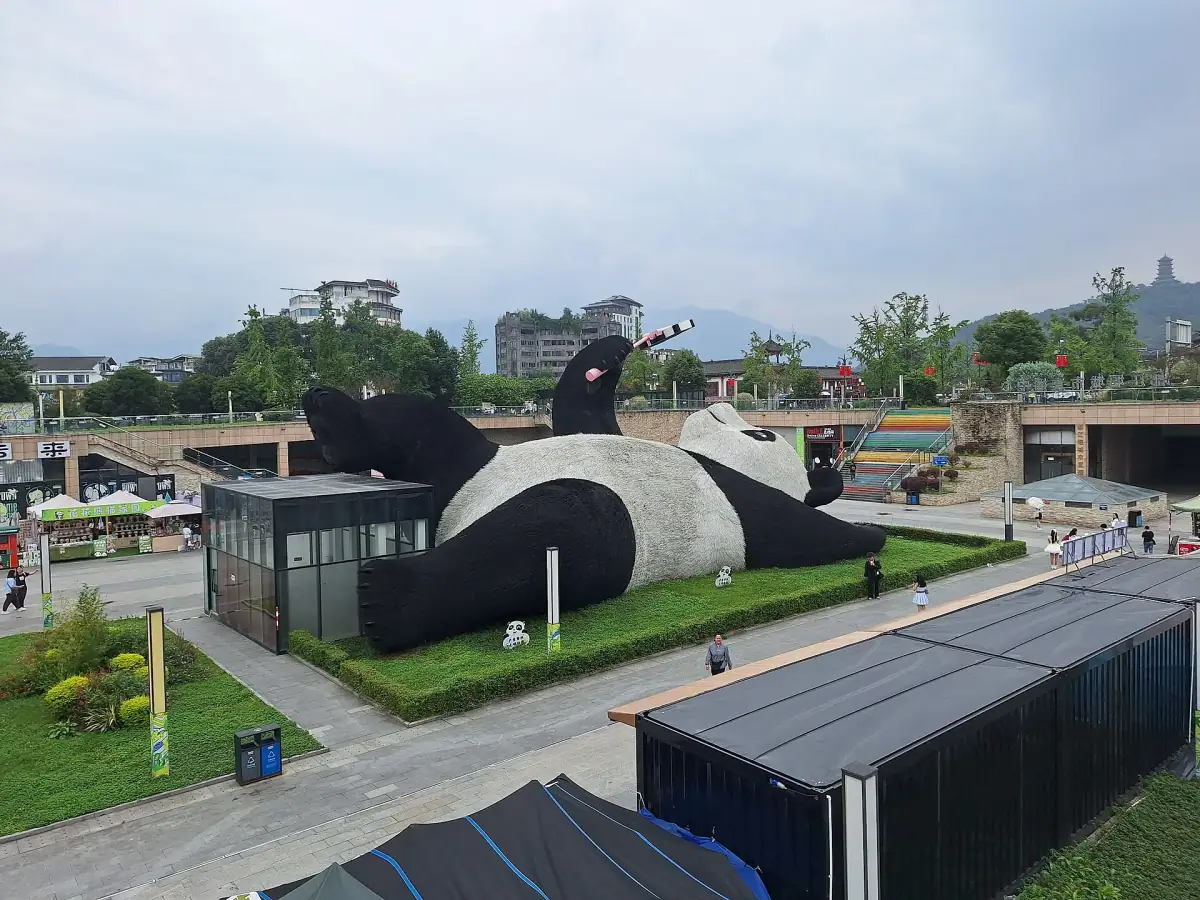
The Chengdu Research Base of Giant Panda Breeding is the city’s flagship visit. It is a research and breeding center dedicated to the conservation of giant pandas, set in a large park planted with bamboo north of the city, about 10 km (6 mi) from the center. You can see adults, youngsters and sometimes cubs, depending on the season.
The key tip: arrive at opening time. Pandas are most active in the morning at feeding time, and then spend much of the day sleeping, especially when it is hot. Later on you are also likely to meet more crowds. Allow about three hours there, with good shoes, because the park is large and covered on foot or with an internal shuttle.
Keep your distance and follow the rules: do not approach the animals, and flash photography is of course out of the question. If you would rather not arrange the trip yourself, a guided tour can be practical.
Guided panda tour
Tours with transport and a guide to the giant panda research base, so you arrive early without organizing the trip.
The afternoon is ideal for a quiet time: a break in a teahouse, then a stroll around town. In the evening, head for Sichuan cuisine, which is worth the trip on its own. Hotpot, a pot of fragrant broth in which you dip meat, vegetables and tofu, is the classic experience. Start with a mild broth, or choose a two-compartment pot if you fear the heat.
Day 2: old alleys, a temple and teahouses in the center
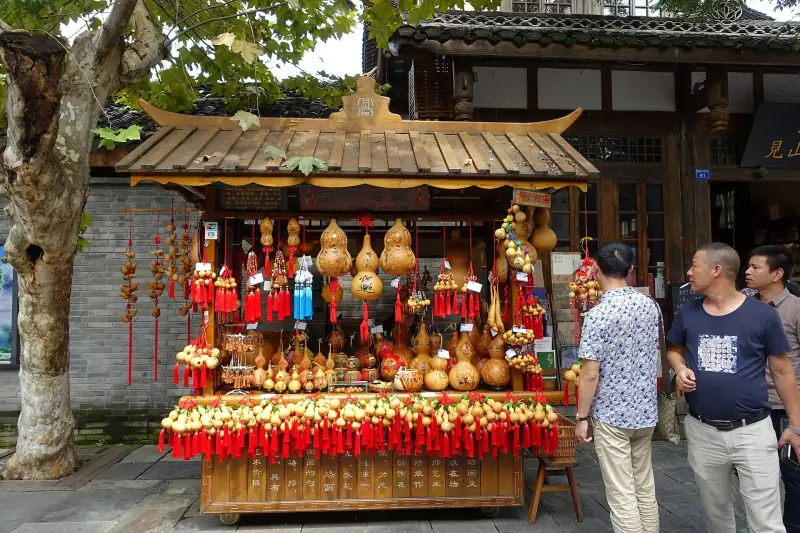
The second day is spent on foot in the historic center. Start with Wenshu Monastery, an active Buddhist temple with a peaceful atmosphere, shaded courtyards, incense smoke and a small teahouse. It is one of the most pleasant places in the city to settle into Chengdu’s rhythm.
Continue to the Kuanzhai alleys, a district of restored traditional houses, now lined with shops, cafés and food stalls. It is touristy, but it keeps its charm, especially early in the morning or late in the day when the crowds thin out. The Jinli district, near the Wuhou Temple, has a similar atmosphere, with architecture inspired by the Three Kingdoms period.
In the afternoon, do as the locals do: settle into a park teahouse, for example in People’s Park, and spend an hour watching local life. People play mahjong, read, chat or have their ears cleaned by specialized craftsmen, a surprising local tradition. One cup of tea is enough to stay as long as you like.
Day 2 (evening): Sichuan opera and regional dishes
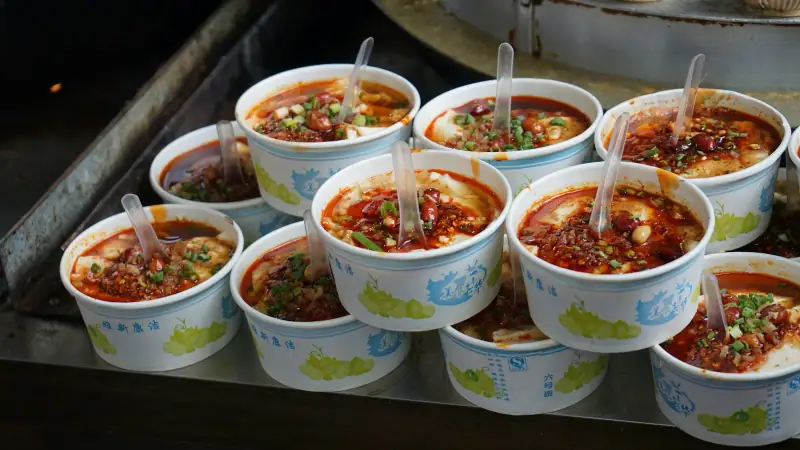
In the evening, a Sichuan opera show is a favorite with travelers. It mixes singing, music, acrobatics, puppets and, above all, the famous face changing, where actors switch masks in a split second. Performances generally last one to two hours and are easy to follow without speaking Chinese, since the visual side dominates. Check venues and times in advance, as they change with the seasons.
For dinner, try a few classics of local cooking: mapo tofu, dandan noodles, twice-cooked pork or kung pao chicken. Our guide to regional Chinese cuisine details these dishes and those of other provinces.
Food tour in Chengdu
Guided tastings and cooking classes to discover Sichuan cuisine with someone who knows the best places to eat.
Day 3: day trip to Dujiangyan and Mount Qingcheng
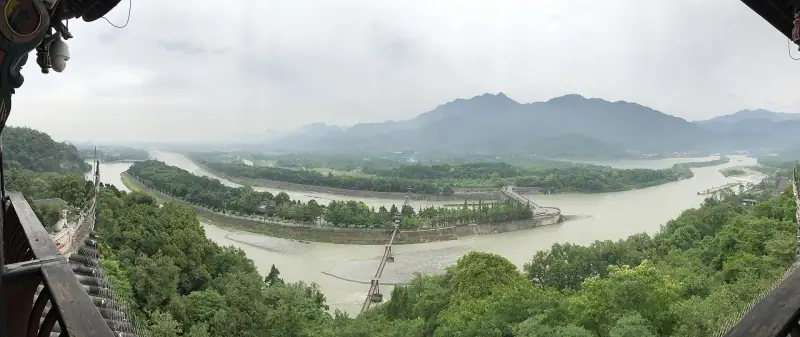
For your last day, leave the city for Dujiangyan, about an hour by road west of Chengdu. This irrigation system, built more than two thousand years ago on the Min River, still works today and is a UNESCO World Heritage site. You can walk along the dikes and bridges and see how such an ancient structure turned the Chengdu plain into a prosperous farming region.
Nearby, Mount Qingcheng, considered one of the cradles of Taoism, offers an easy hike through dense forest, with temples on the slopes. Visitors like it for its coolness in summer and its peaceful atmosphere, far from the bustle of the city.
The high-speed train followed by the local shuttle makes the trip simple to do on your own. If you have more time, add a fourth day for the Leshan Giant Buddha, an immense statue carved into the cliff (see how to get there from Chengdu by train), or for the Sanxingdui archaeological site, north of the city, whose museum displays very distinctive bronzes.
Practical tips for your stay
Always carry your passport: it is requested for many tickets, and some sites require a reservation in your name. Check the conditions shortly before your visit, because they change regularly. If possible, avoid China’s national holidays, especially the first week of October, when sites are overcrowded.
For payment, mobile wallets are everywhere in China: find out before you leave which options are accepted for foreign travelers, and keep some cash as a backup. As for weather, spring and fall are pleasant, while summer is hot and humid, with often hazy skies.
Chengdu combines very well with Xi’an, by high-speed train, or with Yunnan to continue toward Lijiang and the mountains. If you are looking for flights to China or between two cities, compare offers in advance, because prices vary a lot by season.
Flights to China
Compare flights to Chengdu or to your other stops in China, for your dates.
Frequently asked questions
How long do you need to visit Chengdu?
Three days let you see the pandas, the historic center, a Sichuan opera show and a day trip nearby. With two days, you have to skip the day trip; with four or five, you can add the Leshan Giant Buddha or the Sanxingdui site.
What is the best time to see the pandas?
In the morning, around the animals' feeding time, when they are most active. The later it gets, the more the heat makes them sleepy. Arrive at opening time, especially in high season.
Where is the panda base in relation to central Chengdu?
It is north of the city, about 10 km (6 mi) from the center. You get there by metro and then bus or taxi, or with an organized tour. Allow about an hour of travel depending on traffic.
Is Sichuan food always very spicy?
No. It relies on chili and on Sichuan pepper, which numbs the mouth, but many dishes are mild or lightly spiced. You can ask for less spice, although the result is often hotter than expected.
Which cities can you combine with Chengdu?
Xi'an, reachable by high-speed train, is the most natural complement. From Chengdu you can also reach Yunnan, with Lijiang and Dali, for a trip with more contrast between cities and mountains.
More China guides
Keep reading
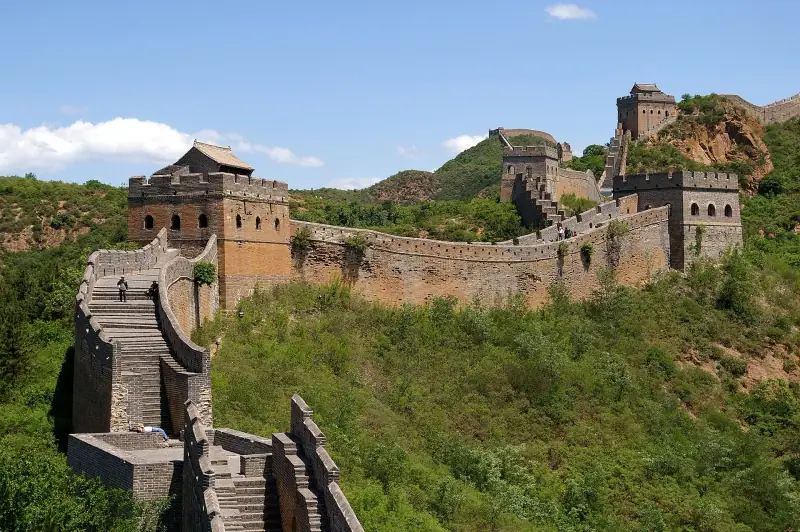
Budget for a trip to China: real costs, 3 profiles and ways to save
How much does a trip to China cost? Lodging, trains, meals, site entry fees: three daily budgets with figures, and tips to spend less.
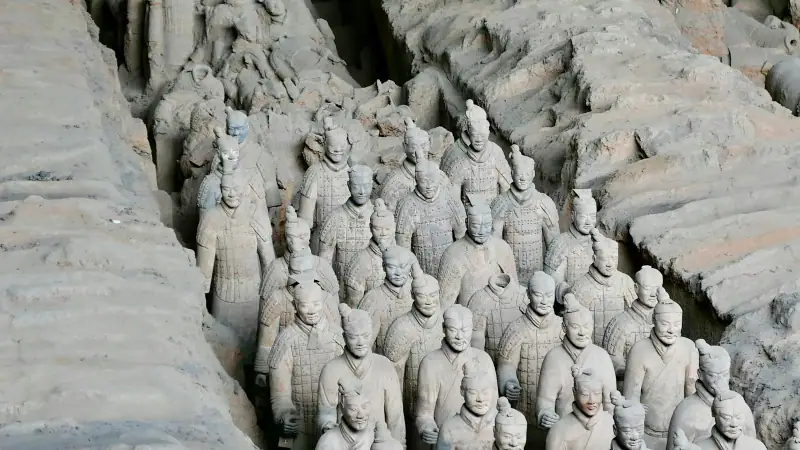
Terracotta Army: hours, prices, booking and getting there from Xi'an
Xi'an Terracotta Army: hours, fares, mandatory booking with passport, bus and metro from the center, and how to avoid the crowds.
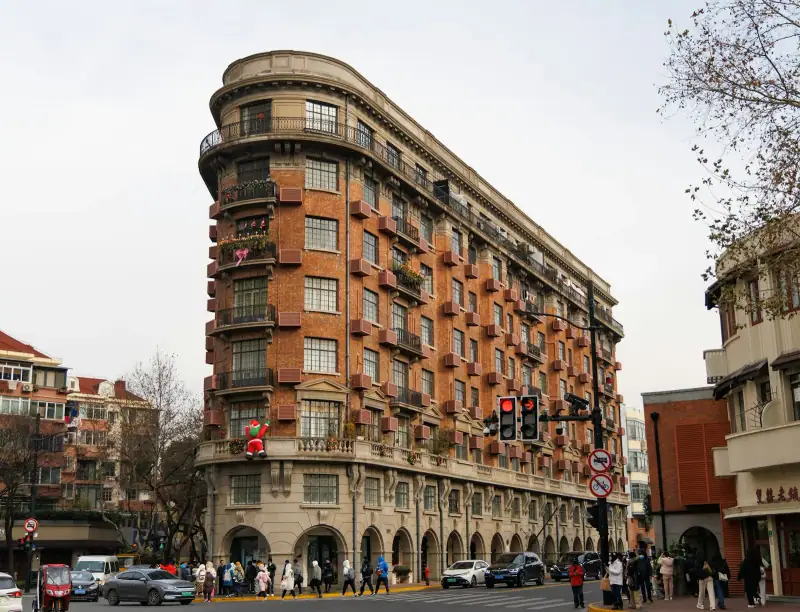
Where to stay in Shanghai: which neighborhood to choose
Where to stay in Shanghai? The Bund, the former French Concession, Jing'an, Pudong or Hongqiao: a neighborhood comparison with metro and booking tips.
Ready-made
China itineraries

3 days
Shanghai in 3 days: the Bund, Pudong, the French Concession and gardens
What to do in Shanghai in 3 days? The Bund, Pudong skyscrapers, Yuyuan Garden, the French Concession and a possible day trip: a clear itinerary with tips.
4 days
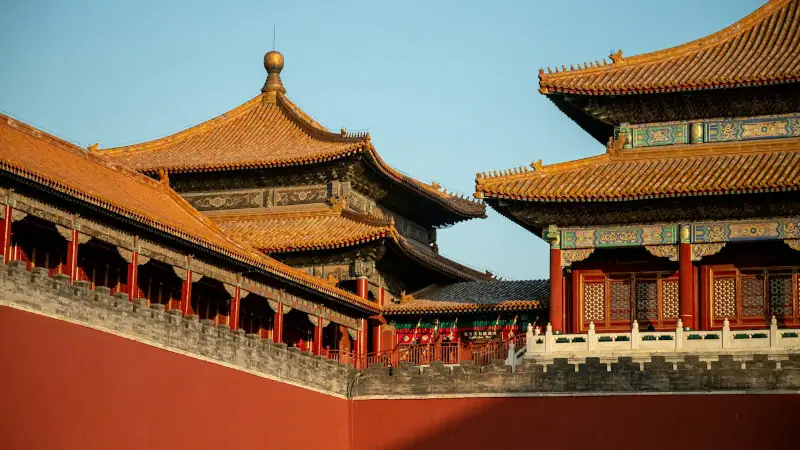
Beijing in 4 days: a complete itinerary and tips
What to see in Beijing in 4 days? Forbidden City, Great Wall, Temple of Heaven, Summer Palace and hutongs: a day-by-day plan with the bookings to make.

3 days