What to see
Complete guide to visiting China: regions, cities, highlights and tips

We may earn a commission when you book through links on this page, at no extra cost to you. We don't visit or try the places we cover: we summarize published sources. How we work
In short
- Two weeks allow a classic first circuit: Beijing, Xi'an, Shanghai and a nature stop such as Chengdu or Guilin. Choose two or three regions rather than trying to see everything.
- September to November and April to May are generally the most pleasant seasons. Avoid Chinese New Year and the first week of October (Golden Week).
- Excluding the international flight, per person per day: €40 to 60 budget (about $46 to 70), €90 to 140 comfort (about $105 to 160), over €200 high end (about $230).
- High-speed trains link most big cities. Mobile payment, offline translation and early booking of busy sites are the keys to comfort.
China often bewilders before you even leave. The country is almost as vast as Europe, its landscapes range from cold plateaus to subtropical karsts, its cities are among the largest in the world, and its daily habits, from QR-code payment to high-speed trains, can surprise a visitor. Yet traveling in China has become simpler than it seems, provided you choose your stops well and prepare a few practical points.
This guide is the starting point of the site. It presents the destination, its main regions and cities, the highlights not to miss, the best season, how to get there and around, lodging options and the budget to plan. At each step, it points to the matching detailed article, so you can build your trip step by step.
Key points:
- Choose two or three regions rather than trying to see everything: distances are enormous
- The classic circuit links Beijing, Xi’an and Shanghai by high-speed train, with a possible nature extension to Chengdu, Guilin or Yunnan
- September to November and April to May are the most balanced seasons, outside national holidays
- Mobile payment, offline translation and early booking of sites are the three keys to comfort on the ground
China at a glance: a country the size of a continent
China is home to more than 1.4 billion people, spread over several geographic time zones but run on a single official time. It has deserts, high mountains, great rivers, heavily urbanized coasts and countryside of rice paddies. This diversity is the richness of the trip, but it forces choices: you do not “do” China in one stay, you explore a part of it.
For a first trip, most visitors combine three ingredients. The first is imperial history, embodied by Beijing, the Forbidden City and the Great Wall, as well as Xi’an and its Terracotta Army. The second is modern China, with Shanghai, its skyscrapers and its old neighborhoods. The third is nature and regional cultures, in Sichuan, Guangxi or Yunnan, where food, landscapes and ways of life change profoundly.
A few landmarks help you get your bearings. The capital is Beijing, in the north. Shanghai is the great metropolis of the east coast. Xi’an is in the north-central part of the country, Chengdu in the southwest, Guilin and Yangshuo in the south, and Lijiang in the foothills of Yunnan. Hong Kong and Macao, on the south coast, are special administrative regions with their own entry rules. This breakdown matches the regions we detail on the site.
The main regions to know

Beijing and the north
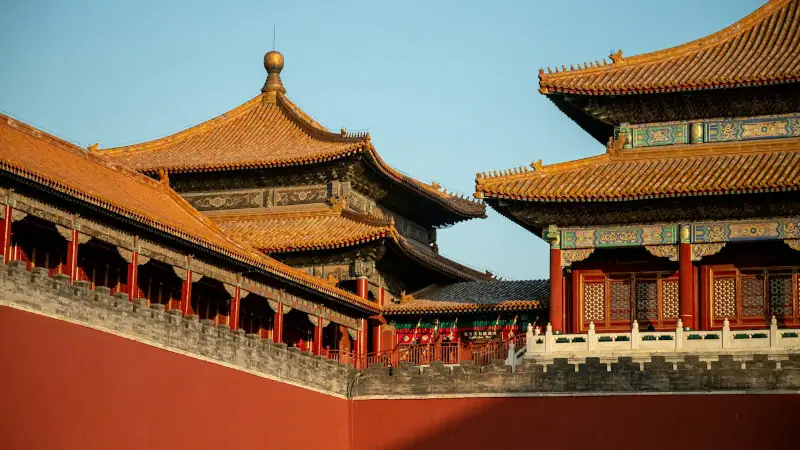
Beijing is the natural gateway for a first trip. The Forbidden City, Tiananmen Square, the Temple of Heaven, the Summer Palace and the traditional alleys make up a dense stay, which you can organize in about four days. It is also the starting point for trips to the Great Wall, whose sections differ a lot in crowds, condition and accessibility.
To organize your stay, read Beijing in 4 days, then which section of the Great Wall to choose. If you hesitate over where to sleep in the capital, our comparison of Beijing’s neighborhoods will help you decide.
Xi’an and the north-central region
Xi’an was one of the great imperial capitals of ancient China. Today it is famous for the Terracotta Army, its well-preserved city walls and its Muslim Quarter, where local food turns up at every corner. The city is well visited in two days, and links to Beijing or Shanghai by high-speed train. The details of the stay are in Xi’an in 2 days.
Shanghai and the Yangtze delta
Shanghai is the country’s modern showcase: the Bund riverfront and its 1920s buildings, the Pudong skyline, the French Concession and its tree-lined streets, the traditional gardens. Around the city, the Yangtze delta brings together cities tied to water and gardens, such as Suzhou and Hangzhou, which you can visit on a day trip or as an extension. For a balanced city stay, see Shanghai in 3 days.
Guangxi: Guilin and Yangshuo
This is the China of old prints: vertical limestone peaks, a peaceful river, villages, and terraced rice fields farther north toward Longji. Guilin serves as the gateway, while Yangshuo, smaller and more relaxed, is the ideal base for cycling, walks and river cruises. The detailed itinerary is in Guilin and Yangshuo in 3 days.
Sichuan and Yunnan
This large southwestern region appeals with its food, landscapes and minority cultures. Chengdu, the capital of Sichuan, is known for its giant pandas, teahouses and spicy cuisine: find good ideas in Chengdu in 3 days. Farther southwest, Yunnan offers a completely different face with Kunming, Dali and the old town of Lijiang, detailed in Yunnan in 7 days.
Compare flights to China
Try several dates and several arrival airports, for example Beijing on the way in and Shanghai on the way back.
Hong Kong and Macao
Hong Kong and Macao stand apart from the rest of the country: special administrative regions, different currencies and their own entry rules. Hong Kong mixes skyscrapers, hills, islands and Cantonese cuisine. It makes a fine extension at the end of a circuit or a pleasant stopover to break up the flight. Entry rules for Hong Kong, Macao and mainland China are separate and depend on your passport: check the official sources listed under “Formalities before departure” below before planning a round trip between them.
Highlights of a first trip
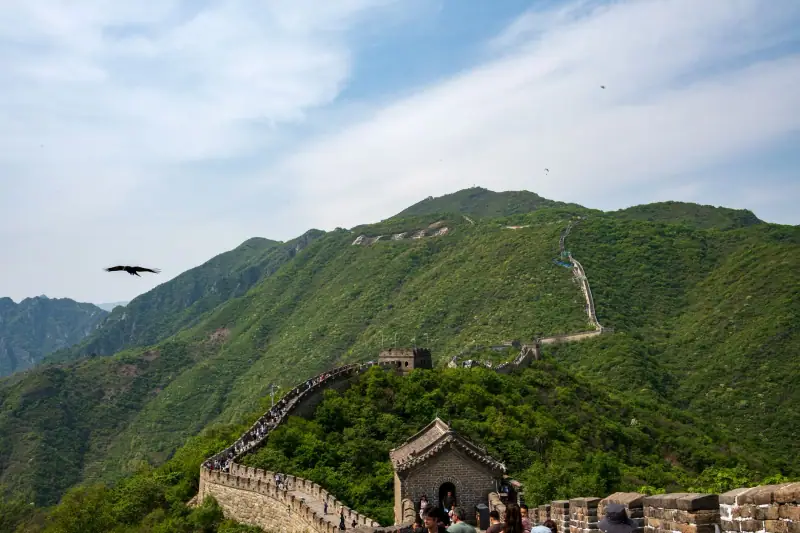
Every traveler has their own priorities, but some places come up in almost every circuit, and for good reasons.
The Forbidden City and imperial Beijing. The former imperial palace is one of the country’s great monuments. Visiting requires an online reservation in advance and time: allow at least half a day. The Temple of Heaven and the Summer Palace usefully complete the program.
The Great Wall. It is the country’s most famous image, but the experience depends entirely on the section chosen. Some are heavily restored and very busy, others wilder and calmer. Take time to compare before booking.
The Terracotta Army in Xi’an. Thousands of terracotta soldiers, buried to accompany the first emperor, are displayed in several pits. The site takes half a day to a full day, with a guide or audio guide if you want to understand what you are seeing.
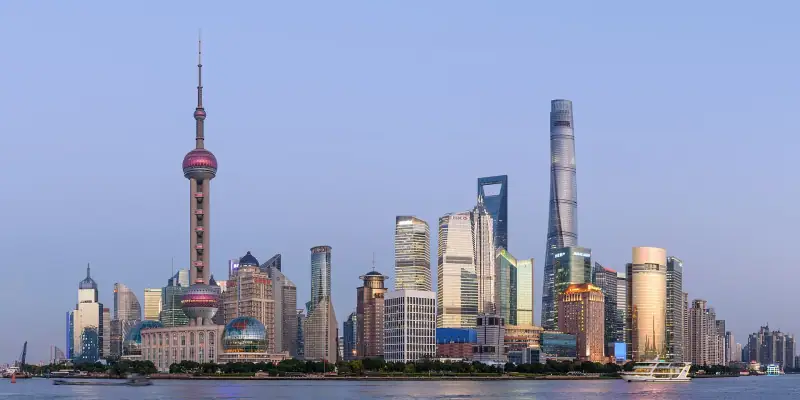
The Bund and Pudong in Shanghai. The contrast between early 20th-century architecture on the west bank and the towers of the east bank gives the city its identity. Admire them preferably late in the day, as the light falls.
The pandas of Chengdu. The research base devoted to giant pandas is one of the most popular visits for families. Go early in the morning, when the animals are most active.
The Li River and the Yangshuo karsts. A cruise, a bike ride or a light hike is enough to understand why this landscape has inspired painters and photographers for centuries.
The old town of Lijiang and its surroundings. Its alleys, canals and mountain backdrop make it the headline stop in Yunnan, even though it is very busy. The villages and lakes nearby offer more calm.
To go deeper into a place, start from the matching itinerary article, listed above. For food, which is a trip in itself, read what to eat in China: regional cuisines and dishes to try.
When to go to China
China’s climate varies enormously from one region to another. Beijing shivers in winter and bakes in summer, the Yangtze delta is hot and very humid in July, the south is subtropical with heavy rain in summer, and the Yunnan plateaus offer welcome coolness during summer.
For a classic circuit, here are the most useful landmarks:
- September to November: generally the best period for the north and east, with pleasant temperatures and often clear skies. It is also the best season for Guilin and Hong Kong
- April and May: another very pleasant window, except that holiday periods can push up crowds
- Summer: hot and humid in the east and south, very busy at tourist sites; Yunnan offers a cooler alternative
- Winter: cold and dry in the north, with lower prices; milder in the south, which lets you combine Hong Kong and Guangxi
Two periods are worth knowing before you book. Chinese New Year, in January or February depending on the year, and Golden Week, the first week of October, concentrate millions of journeys: full trains, expensive hotels, overcrowded sites. If possible, avoid them, or book very early. Our article when to go to China details the weather region by region and helps you adjust your calendar.
How to get to China
There are flights to several big Chinese cities, often with a stopover depending on the airline. The main gateways are Beijing and Shanghai, but Chengdu and Hong Kong are also well served by international flights. Durations and fares vary strongly by airline, season and stopover: we therefore give no single figure, and invite you to compare several dates.
A simple tip saves time and money: favor an “open jaw” flight. It means arriving in one city and leaving from another, for example arriving in Beijing and leaving from Shanghai or Hong Kong. You avoid backtracking, which removes an entire domestic trip.
Formalities before departure
A valid passport is essential. Entry rules depend on your passport and change often. Check the official travel advice of your government before you book: travel.state.gov (US), GOV.UK (UK), travel.gc.ca (Canada), Smartraveller (Australia) (checked November 2026).
These rules change and details matter: read China entry formalities for the passport, health, insurance and customs, then prepare your trip to China for mobile payment, internet and useful apps.
Lodging in China
Compare hostels, budget hotels and charming properties in all the country's big cities.
Getting around China
The high-speed train
The high-speed rail network is the best surprise of the trip for many visitors. Trains link big cities with comfort and punctuality, from stations generally well connected to the metro. Between Beijing and Shanghai, for example, specialized sources give a little over four hours for the fastest trains. For Xi’an, the trip from Beijing or Shanghai is a little longer, but remains very reasonable.
A few habits simplify the experience. Keep your passport within reach: it is requested to buy tickets and to board. Arrive at the station with a margin, because security and identity checks take time. Book in advance during national holidays, when seats sell quickly.
Domestic flights
For very long distances, flying remains relevant, for example to reach Yunnan or Sichuan from the north, or to combine distant regions. Compare the price, the real door-to-door time, the baggage allowance and how far the airport is from the city center.
In the city: metro, bus, taxis and ride-hailing
Urban transport is one of the country’s great strengths. Metros in big cities are modern, clean, marked in characters and Latin letters, and very cheap. Taxis and ride-hailing apps are affordable, but it is better to have your destination’s name in Chinese characters on your phone. In Beijing, a metro trip costs a few yuan depending on distance, rarely more than €1 (about $1.16).
Renting a car?
Most travelers do not need one, and driving rules for foreigners are more complicated than in many countries: a foreign driver’s license is not simply recognized, so check the local requirements for your license first. In most cases, trains, metros, ride-hailing and private drivers are enough. If you still want to compare rental offers outside the center of big cities, first check the local conditions that apply to foreigners.
Staying connected and paying on the ground
Mobile payments are everywhere. Alipay and WeChat Pay can now be linked to a foreign Visa or Mastercard card: do it before you leave. Still keep some cash for the unexpected and a backup card. For internet, some Western services are limited there, hence the value of preparing an eSIM, apps and offline translation before you land. Everything is detailed in prepare your trip to China.
Where to stay in China
Lodging is very varied: hostels in big cities, small budget hotels, big international chains, traditional guesthouses in old towns such as Lijiang, and boutique hotels in more rural areas such as Yangshuo.
A few principles for choosing well:
- Favor location. In a city as large as Beijing or Shanghai, sleeping near a well-served metro station saves a lot of time every day
- Compare neighborhoods. An old neighborhood offers charm but may be noisier; a modern one is calmer but farther from the sights
- Check that the property accepts foreigners. Some small hotels are not authorized to host foreign travelers: read the conditions before booking
- Book early during holidays. During Golden Week and Chinese New Year, the best places fill up fast and prices climb
- Keep your passport handy. It is requested at check-in
Beijing and Shanghai are generally the most expensive cities for lodging. Chengdu, Xi’an, Guilin and Dali offer better value. To know where to stay in the capital, see where to stay in Beijing.
Tours and guided visits in China
Great Wall, Terracotta Army, Li River cruises: compare guided visits and skip-the-line tickets.
Budget: how much does a trip to China cost?
Traveling in China is neither as cheap as is sometimes believed, nor as expensive as feared. Local meals and urban transport are very affordable, but distances, site entry fees and big-city hotels push up the bill. Excluding the international flight, here are the orders of magnitude per person per day:
- Budget: about €40 to 60 (about $46 to 70), with dorms or simple hotels, canteens and the metro
- Comfort: about €90 to 140 (about $105 to 160), with a 3 or 4-star hotel, local restaurants and fast trains
- High end: over €200 (about $230), with luxury hotels, private guides and fine dining
The exchange rate is about 8 yuan to €1 in 2026. Meals are the easiest item to control: eating local remains very affordable. Lodging and long-distance trains make the difference. The “international flight” item varies strongly by season: compare several dates before booking.
For figures item by item, three budget profiles and tips to save, read budget for a stay in China.
Food: a trip within the trip
People speak of Chinese cuisine in the singular when it is a set of very different regional traditions. In Beijing, think of Peking duck and dumplings; in Xi’an, noodles and Muslim Quarter specialties; in Sichuan, spicy food and chili; in Guangxi, rice noodles; in Hong Kong, dim sum and Cantonese cuisine.
To eat well, a few practical tips are enough. Dare to try canteens and restaurants frequented by locals rather than places for passersby near the sights. Use an offline translation app to read menus, or simply point to the dish that tempts you at the next table. Say so if you cannot handle chili, especially in Sichuan, where it is very present.
A cooking class or a food tour with a local guide is an excellent way to understand dishes before ordering alone. Our article what to eat in China details the dishes to try region by region.
Building your itinerary
The classic trap of a first trip is trying to do too much. Trips between regions take hours, and each change of city costs half a day. Here are three ways to build a coherent itinerary, to adapt to your length of stay.
One week: the great classic. Four days in Beijing, including a Great Wall excursion, then two or three days in Xi’an, with a return or an exit flight depending on your airport. You discover imperial history without exhausting yourself.
Two weeks: the balanced circuit. Beijing, Xi’an and Shanghai, then a nature stop in Chengdu or in Guilin and Yangshuo. You alternate big cities, heritage and landscapes, with three or four train or plane trips.
Three weeks: the grand trip. Add Yunnan, with Kunming, Dali and Lijiang, or an extension to Hong Kong at the end of the stay. You can also lengthen some stops to travel more slowly, which is often the best option.
Whatever the formula, keep three rules. Group nearby cities. Avoid sleeping just one night at each stop. Keep a margin around national holidays. The itinerary articles on the site are designed as building blocks to assemble: Beijing in 4 days, Xi’an in 2 days, Shanghai in 3 days, Chengdu in 3 days, Guilin and Yangshuo in 3 days and Yunnan in 7 days.
Health, safety and etiquette
China is generally a safe country for travelers, but some rules are worth knowing. Drug laws are extremely strict, cannabis included, including in Hong Kong and Macao. Products containing CBD are also prohibited. Also avoid behavior that disturbs public order, because loud drunkenness or a fight can lead to a fine or detention.
On health, take out travel insurance with assistance and repatriation. Ask your doctor or a travel clinic, and see the official travel health pages (CDC in the US, TravelHealthPro in the UK). Bottled and boiled water are widely available everywhere.
On etiquette, a few simple gestures are appreciated: do not stick your chopsticks upright in a bowl of rice, accept a tea when offered, and stay calm and smiling in case of a misunderstanding. Locals are generally welcoming and curious about foreign visitors.
Tips for a successful trip
Before booking, keep five priorities in mind. First, check that your passport is valid and the current entry conditions. Second, set up Alipay or WeChat Pay from home, several days before departure. Third, download an offline translation app and save your hotel addresses in Chinese characters. Fourth, book the entries to very busy sites in advance. Fifth, leave margin in the program: a trip to China is more pleasant at a moderate pace.
Finally, accept that China does not give itself up in one go. A well-built first trip makes you want to go back, to explore other regions, other seasons, other cuisines. Start with the articles listed in this guide, assemble your stops, and set off with a simple but solid plan.
Frequently asked questions
How long do you need to visit China?
Two weeks allow a classic first circuit: Beijing, Xi'an, Shanghai and a more natural stop such as Chengdu or Guilin. With three weeks, you can add Yunnan or Hong Kong without rushing. The country is huge: it is better to choose two or three regions than to skim everything.
Do you need a visa to visit China?
Entry rules depend on your passport and change often. Check the official travel advice of your government before you book: travel.state.gov (US), GOV.UK (UK), travel.gc.ca (Canada), Smartraveller (Australia) (checked November 2026).
What is the best time to go to China?
For a classic Beijing, Xi'an, Shanghai circuit, September to November and April to May are generally the most pleasant. If possible, avoid Chinese New Year and the first week of October (Golden Week), which are very busy and pricier. Guangxi and Hong Kong are especially pleasant in fall.
How do you get between big Chinese cities?
The high-speed train is the most practical way to link most big cities: comfortable, punctual and centered on stations well served by the metro. Domestic flights are better for very long distances, for example to Yunnan or Sichuan from the north.
Can you travel in China without speaking Chinese?
Yes, provided you prepare. An offline translation app, place names in characters saved on your phone and a mobile payment method linked to Alipay or WeChat Pay make the trip very doable. English is not widely spoken outside big hotels and tourist sites.
What budget should you plan for a trip to China?
Excluding the international flight, allow about €40 to 60 per person per day on a budget (about $46 to 70), €90 to 140 for comfort (about $105 to 160) and over €200 at the high end (about $230). Lodging and long-distance trains weigh the most. Our dedicated article details these profiles.
Do you need to book tourist sites in advance?
For the busiest sites, such as the Forbidden City, booking online in advance has become the rule, and your passport is often requested at the entrance. Book as soon as your dates are set, especially in high season.
More China guides
Keep reading
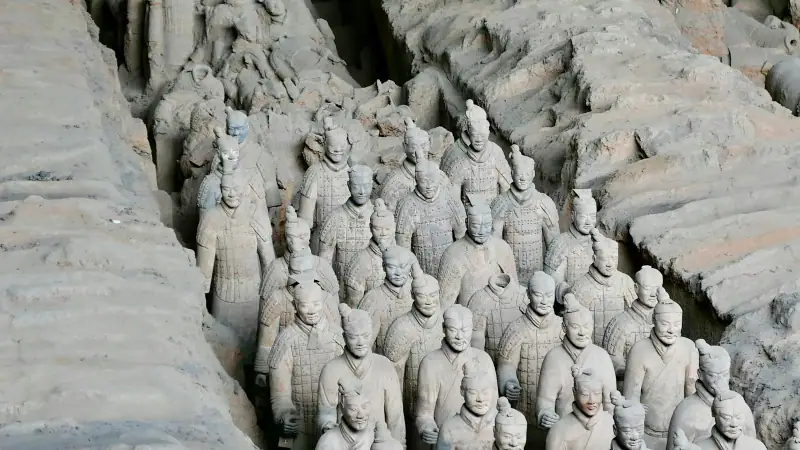
Terracotta Army: hours, prices, booking and getting there from Xi'an
Xi'an Terracotta Army: hours, fares, mandatory booking with passport, bus and metro from the center, and how to avoid the crowds.

Zhujiajiao from Shanghai: metro, tickets and a half-day visit
Zhujiajiao, a water town near Shanghai: getting there on metro line 17, tickets, walking or boat routes, hours and tips to avoid the crowds.
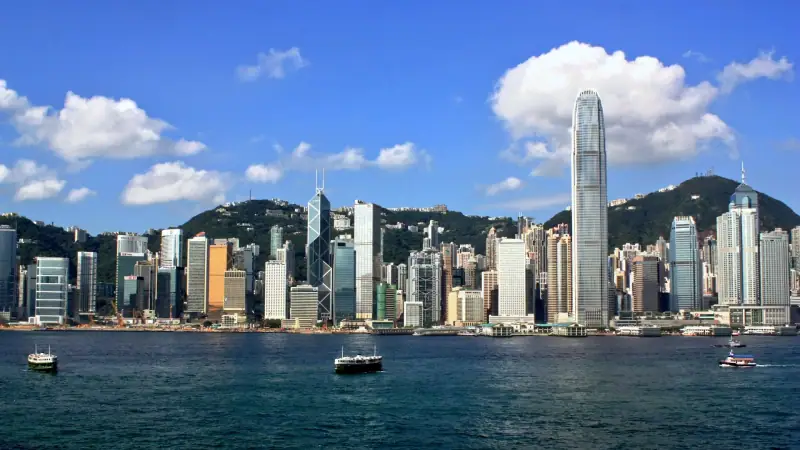
Visiting Hong Kong: neighborhoods, highlights and tips for a first stay
What to see in Hong Kong? Victoria Peak, Star Ferry, Lantau, Kowloon, markets and dim sum: a neighborhood-by-neighborhood guide for a first stay.
Ready-made
China itineraries
3 days
Shanghai in 3 days: the Bund, Pudong, the French Concession and gardens
What to do in Shanghai in 3 days? The Bund, Pudong skyscrapers, Yuyuan Garden, the French Concession and a possible day trip: a clear itinerary with tips.

3 days
Chengdu in 3 days: pandas, Sichuan food and teahouses
What to do in Chengdu in 3 days? Giant pandas, old alleys, teahouses, Sichuan opera and a day trip to Dujiangyan: a clear, practical itinerary.
4 days
Beijing in 4 days: a complete itinerary and tips
What to see in Beijing in 4 days? Forbidden City, Great Wall, Temple of Heaven, Summer Palace and hutongs: a day-by-day plan with the bookings to make.