Plan your trip
Budget for a trip to China: real costs, 3 profiles and ways to save

We may earn a commission when you book through links on this page, at no extra cost to you. We don't visit or try the places we cover: we summarize published sources. How we work
In short
- Excluding the international flight, per person per day: €40 to 60 budget (about $46 to 70), €90 to 140 comfort (about $105 to 160), over €200 high end (about $230).
- Local meals cost little; lodging and long-distance trains make the difference. Entry fees to the big sites are modest: 60 yuan for the Forbidden City in high season.
- A second-class high-speed train between Beijing and Shanghai runs about 550 to 700 yuan (about €70 to 90 / $80 to 105), a little over four hours.
- Booking early and traveling outside national holidays are the best ways to save.
Traveling in China is neither as cheap as is sometimes believed, nor as expensive as feared. Meals and urban transport are very affordable, but the huge distances, site entry fees and big-city hotels quickly push up the bill. It all depends on your pace, the season and how you get around.
This article details real costs item by item, offers three budget profiles with figures, and ends with the tips that really make a difference. Amounts are given in yuan (CNY) with an approximate conversion based on about 8 yuan to €1, a rate observed around 7.8 to 8 in 2026. Prices change: take them as orders of magnitude and check official fares when you book.
Key points:
- Excluding the international flight, plan about €40 to 60 a day on a budget (about $46 to 70), €90 to 140 for comfort (about $105 to 160), over €200 at the high end (about $230)
- Local meals cost little; lodging and long-distance trains make the difference
- Booking early and traveling outside national holidays are the best ways to save
The international flight: the first big item
Before even thinking about the stay, you have to factor in the plane ticket. For a round trip to Beijing, Shanghai or Chengdu, fares vary strongly by season: they are lower in spring and fall outside holidays, and climb around Chinese New Year, the first week of October and summer. There is no fixed price, which is why we give no single figure: compare several dates before committing.
Two levers are effective. The first is a few days of flexibility on departure and return dates. The second is the “open jaw” flight: arriving in Beijing and leaving from Shanghai or Hong Kong avoids backtracking and removes a domestic trip. If your circuit allows, look for example at the sequence offered in Beijing in 4 days and then Shanghai in 3 days.
Compare flights to China
Try several dates and several arrival airports to find the best fare.
Lodging: from hostel to 4-star hotel
This is generally the first item of spending on the ground. The orders of magnitude found in 2026 budget guides are as follows, per night for a room:
- Hostel (dorm bed): around €10 to 20 (about $12 to 23) depending on the city
- 1 to 2-star hotel or small budget hotel: about €30 to 50 (about $35 to 58)
- 3-star hotel: about €60 (about $70)
- 4 to 5-star hotel: from €100 (about $115), with large gaps depending on the city
Beijing and Shanghai are the most expensive cities, especially in central neighborhoods. Chengdu, Xi’an, Guilin or Dali offer better value. To choose your area in the capital without paying top price, read where to stay in Beijing.
A room can be shared: as a couple, the cost per person halves, which changes the overall budget a lot. Chinese hotels often offer triple or family rooms at reasonable prices.
Lodging in China
Compare hostels, budget hotels and charming properties, with free cancellation on many offers.
Transport: cheap metro, pricier fast trains
In the city
Urban transport is one of China’s great strengths. In Beijing, the metro is priced by distance: 3 yuan (about €0.40 / $0.46) up to 6 km (3.7 mi), then 4, 5, 6 and 7 yuan per step. A metro ride therefore rarely costs more than €1 (about $1.16). Buses are in the same range. Taxis and ride-hailing remain affordable, but it is better to book them for trips with luggage or late at night.
Between cities
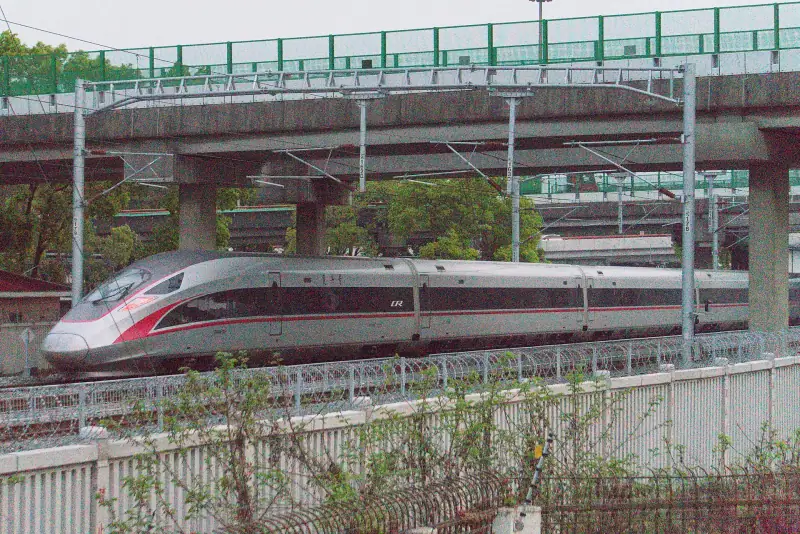
The high-speed train is the most practical and pleasant way to link big cities. As an example, second class between Beijing and Shanghai runs, according to specialized sources, around 550 to 700 yuan (about €70 to 90 / $80 to 105) for a little over four hours on the fastest trains. The longer the trip, the higher the bill: a circuit with four or five long train trips weighs several hundred euros.
For very long distances, for example to Yunnan or Sichuan from the north, a domestic flight can be competitive if booked in advance. Compare the price, the real door-to-door time and the baggage allowed. To plan a coherent circuit that limits travel time, see Yunnan in 7 days or Chengdu in 3 days.
A budget tip: group nearby cities by region. Beijing and Xi’an, Shanghai and its delta, Chengdu and its surroundings: each change of region costs you a long trip and half a day.
Meals: the easiest item to control
Food is where China is most generous to small budgets. According to 2026 budget guides, a meal in a local restaurant costs about €5 to 10 (about $6 to 12). Canteens, noodle and dumpling stalls come in well below. A street breakfast (baozi, crepes, soy milk) costs a few yuan.
Order of magnitude per day for a traveler eating local:
- Budget: €10 to 15 a day (about $12 to 17), between canteens, stalls and night markets
- Comfort: €20 to 35 a day (about $23 to 41), with local restaurants at every meal and a few cafés
- High end: €60 and up (about $70), with fine dining and tasting menus
Specialty restaurants, Peking duck at well-known places or tourist meals near the major sights cost much more than the corner canteen. To know what to order and taste regional cuisines, read what to eat in China.
Drinking is cheap too: bottled water and tea cost a few yuan. Outside cocktail bars and hotels, local beer is very affordable.
Food tours and cooking classes
Taste local specialties with a guide, a good way to eat well without picking the wrong table.
Activities and site entry fees

Entry fees to the big sites are modest in absolute terms, but they add up. A few landmarks found in 2026:
- Forbidden City (Beijing): 60 yuan in high season and 40 yuan in low season, about €5 to 8 (about $6 to 9)
- Terracotta Army (Xi’an): 120 yuan all year
- Giant panda research base (Chengdu): 55 yuan (adult)
These three entries together come to about €20 (about $23), which remains reasonable. It is rather the extras that push up the bill: shuttles, audio guides, shows, cruises, cable cars and private guided tours. Allow €10 to 30 a day on a budget (about $12 to 35), €40 to 70 for comfort (about $45 to 80), and clearly more if you take private guides or long excursions.
Many sites now require an online reservation in advance and, for some, showing your passport. So book these tickets as soon as you set your dates, especially for the Forbidden City, which can be reserved several days before the visit. For the Great Wall, the choice of section affects price and travel time: see which section of the Great Wall to choose.
Tours and excursions in China
Book skip-the-line tickets, day trips and guided visits in advance.
Other costs not to forget
A few expenses are often forgotten in budgets:
- Travel insurance: essential, with medical coverage and repatriation
- Internet connection: a travel eSIM or a VPN installed before you leave, see prepare your trip to China
- Bank fees: check your card’s fees on payments abroad
- Souvenirs and the unexpected: keep a margin of about 10% of the total budget
On entry rules, they depend on your passport and change often, and a visa can carry fees. Check the official travel advice of your government before you book: travel.state.gov (US), GOV.UK (UK), travel.gc.ca (Canada), Smartraveller (Australia) (checked November 2026).
Three budget profiles with figures
The amounts below are estimates per person per day, excluding the international flight, for a traveler sharing a double room. They match the orders of magnitude of 2026 budget guides cross-checked with the fares cited above.
Profile 1: budget, €40 to 60 a day (about $46 to 70)
- Lodging: dorm or small hotel, €12 to 25 per person (about $14 to 29)
- Meals: €10 to 15 (about $12 to 17)
- Local transport: €2 to 5 (about $2 to 6), plus an occasional train trip
- Activities: €5 to 15 (about $6 to 17)
This is the profile of the traveler who eats local, gets around by metro and bus, and accepts a few overnight trips. For two weeks, allow about €560 to 840 on the ground (about $650 to 975), plus long-distance trains if your circuit includes them.
Profile 2: comfort, €90 to 140 a day (about $105 to 160)
- Lodging: 3 or 4-star hotel, €30 to 55 per person in a double room (about $35 to 64)
- Meals: €20 to 35 (about $23 to 41)
- Transport: €10 to 25 (about $12 to 29), with second-class high-speed trains
- Activities: €20 to 40 (about $23 to 46)
This is the most common formula for a first trip: central hotels, local restaurants, a few guided visits. For two weeks, allow about €1,260 to 1,960 (about $1,465 to 2,275), with a range that depends mostly on the number of cities visited.
Profile 3: high end, over €200 a day (about $230)
- Lodging: 5-star hotel or charming property, from €60 to 100 per person (about $70 to 115) and often much more
- Meals: €50 to 80 (about $58 to 93)
- Transport: first-class trains, domestic flights, private driver
- Activities: private guides and custom excursions
This profile suits those who want maximum comfort and optimized time. The gaps are large: some luxury addresses in big cities go well beyond these figures.
Tips to spend less
- Avoid national holidays. The first week of October and Chinese New Year push up prices and fill trains. See when to go to China.
- Book early. Flights, hotels and trains are pricier when demand rises; train tickets open a few weeks before departure.
- Eat local. Canteens, noodles and dumplings: good, fast and cheap.
- Stay outside the center, near a metro station. You save on the room without losing time.
- Use Alipay or WeChat Pay. Payments are smooth and you avoid exchanging too much money.
- Group cities by region to limit long trips.
- Book site tickets online: you avoid lines and bad surprises.
- Share the room: the cost per person drops sharply as a couple or in a group.
- Compare train and domestic flight over long distances, taking door-to-door time into account.
Quick FAQ: how much to plan for two weeks?
For two weeks for two people in the comfort profile, with three or four cities, allow, in addition to flights, about €2,500 to 4,000 for the couple (about $2,900 to 4,640), depending on the season and extras. On a budget, the bill can fall to €1,200 to 1,800 for two excluding flights (about $1,390 to 2,090), provided you limit long-distance train trips. Always keep a margin for the unexpected: good preparation mostly prevents bad surprises, not small expenses.
Sources
- The Palace Museum (Forbidden City): figures checked November 2026
- Emperor Qinshihuang’s Mausoleum Site Museum: figures checked November 2026
Frequently asked questions
What daily budget should you plan to travel in China?
On the ground, plan about €40 to 60 per person per day on a budget (about $46 to 70; dorms, canteens, metro), €90 to 140 for comfort (about $105 to 160; 3 or 4-star hotel, local restaurants, fast trains) and over €200 at the high end (about $230). These amounts exclude the international flight and vary by city and season.
Is China expensive?
It is clearly inexpensive for meals, urban transport and mid-range lodging. However, entry fees to the big sites, Beijing and Shanghai hotels in high season and long-distance high-speed trains weigh more than you might imagine.
How much is a high-speed train between Beijing and Shanghai?
In second class, specialized sources give fares of about 550 to 700 yuan, roughly €70 to 90 (about $80 to 105), for a trip of a little over 4 hours on the fastest trains. The price varies with the train and the time.
What is the euro/yuan exchange rate?
In 2026, the euro traded around 7.8 to 8 yuan (7.76 at the end of June 2026 according to rates published in the Official Journal of the European Union). For a quick estimate, figure about 8 yuan to €1, and check the day's rate before you leave.
How do you pay in China without cash?
By linking a Visa or Mastercard card to Alipay or WeChat Pay before you leave. Small shops and canteens almost all work by QR code. Keep some cash for the unexpected and a backup card.
What is the cheapest time to go?
Outside national holidays (Chinese New Year, the first week of October), flight and hotel prices are lower. Spring and fall, outside holidays, are both pleasant and reasonable; winter is cheaper but colder in the north.
More China guides
Keep reading

When to go to China: the best time by region
When to go to China? Climate of Beijing, Shanghai, Xi'an, Guilin, Chengdu and Yunnan, Golden Week and Chinese New Year: choose the best time.

Terracotta Army: hours, prices, booking and getting there from Xi'an
Xi'an Terracotta Army: hours, fares, mandatory booking with passport, bus and metro from the center, and how to avoid the crowds.
Where to stay in Shanghai: which neighborhood to choose
Where to stay in Shanghai? The Bund, the former French Concession, Jing'an, Pudong or Hongqiao: a neighborhood comparison with metro and booking tips.
Ready-made
China itineraries

3 days
Shanghai in 3 days: the Bund, Pudong, the French Concession and gardens
What to do in Shanghai in 3 days? The Bund, Pudong skyscrapers, Yuyuan Garden, the French Concession and a possible day trip: a clear itinerary with tips.

3 days
Chengdu in 3 days: pandas, Sichuan food and teahouses
What to do in Chengdu in 3 days? Giant pandas, old alleys, teahouses, Sichuan opera and a day trip to Dujiangyan: a clear, practical itinerary.

4 days
Beijing in 4 days: a complete itinerary and tips
What to see in Beijing in 4 days? Forbidden City, Great Wall, Temple of Heaven, Summer Palace and hutongs: a day-by-day plan with the bookings to make.