Things to do
Hiking the Longji rice terraces: Ping'an, Dazhai and seasons
We may earn a commission when you book through links on this page, at no extra cost to you. We don't visit or try the places we cover: we summarize published sources. How we work
In short
- Longji is about 100 km (62 mi) north of Guilin, close to three hours by bus or minibus. A night there lets you enjoy the morning and evening light.
- Ping'an and Dazhai are the two main bases, linked by trails. Ping'an has more wooden lodgings; Dazhai is higher and has a cable car.
- Walking between the two villages takes a full day with breaks. The trail is not technical but long, with many stone steps.
- Each season looks different: flooded mirrors in spring, green in summer, gold before the fall harvest (September and October are often cited).
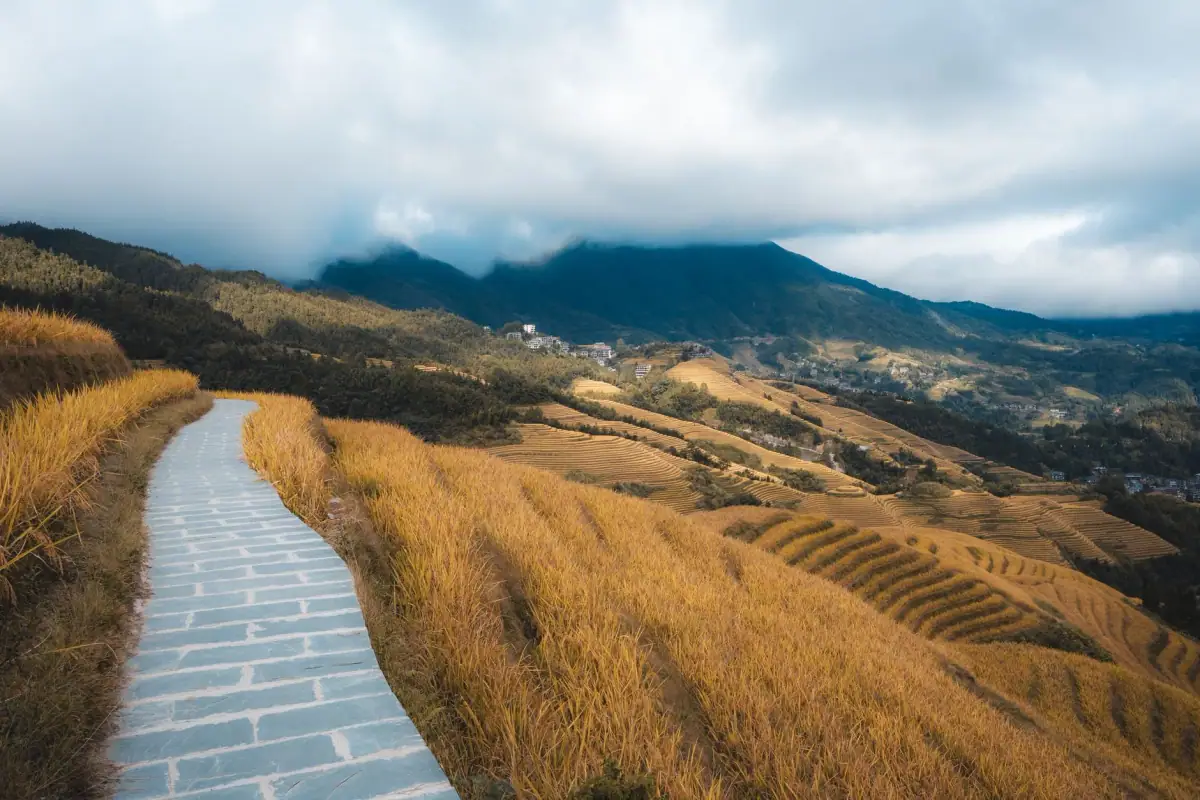
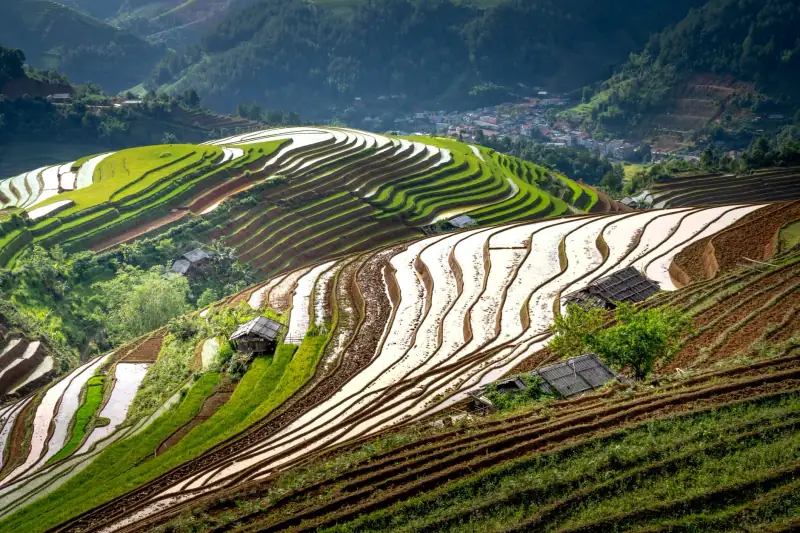
A few hours north of Guilin, entire mountains have been sculpted into staircases of rice paddies. The Longji rice terraces, in Longsheng County, are among the most striking agricultural landscapes in China: hundreds of steps that follow every curve of the slope, villages of wooden houses clinging to the ridges, and trails linking them to one another.
The name “Longji” roughly means “the dragon’s backbone”: seen from afar, the terraces recall a dragon’s scales and the mountain crest its spine. This article explains how to get organized, which village to choose, which trails to walk, which season to come, and how to fit the stop into a trip to Guangxi, for example with our itinerary Guilin and Yangshuo in 3 days.
Key points:
- Longji is about 100 km (62 mi) north of Guilin, close to three hours by road
- Ping’an and Dazhai are the two main bases, linked by trails
- Sleeping there lets you enjoy the morning and evening light
- Each season offers a different face: water, green, gold
Understanding the Longji rice terraces

The terraces are stepped on slopes located, depending on the sources, between about 600 and 800 m (1,970 and 2,625 ft) above sea level. They were reportedly built for the most part several centuries ago, over generations, by local populations, notably Zhuang and Yao communities. Each plot is held by a small earth or stone wall, and water flows from step to step from the wooded summits.
This system is no backdrop: it is very much living agriculture. Rice is grown there in the good season, and you may meet farmers still working by hand or with buffalo. Respecting the plots, not walking on the dikes and asking before photographing residents are part of good manners.
The climate is humid subtropical. Mist is frequent and can swallow a landscape in a few minutes before making it even more beautiful. Keep this in mind when setting your dates; our guide to when to go to China gives the general frame for the region.
How to get from Guilin to the rice terraces
From Guilin, the simplest is to take a regional bus to Longsheng, then a minibus or taxi up to the parking lot of the village you chose. Allow about three hours in all depending on traffic. You can also arrange a private transfer, more comfortable with luggage, or take an organized excursion.
If you are driving, the mountain road is winding but paved. The last kilometers to the villages are narrow: you generally leave the vehicle at the parking lot and finish on foot with a porter or a small trail. Bus times and fares change regularly; ask your hotel in Guilin or Yangshuo.
Sleep in the Longsheng rice terraces?
A night in a wooden house facing the terraces changes the experience completely. To compare for your dates.
Ping’an: the village of wooden houses
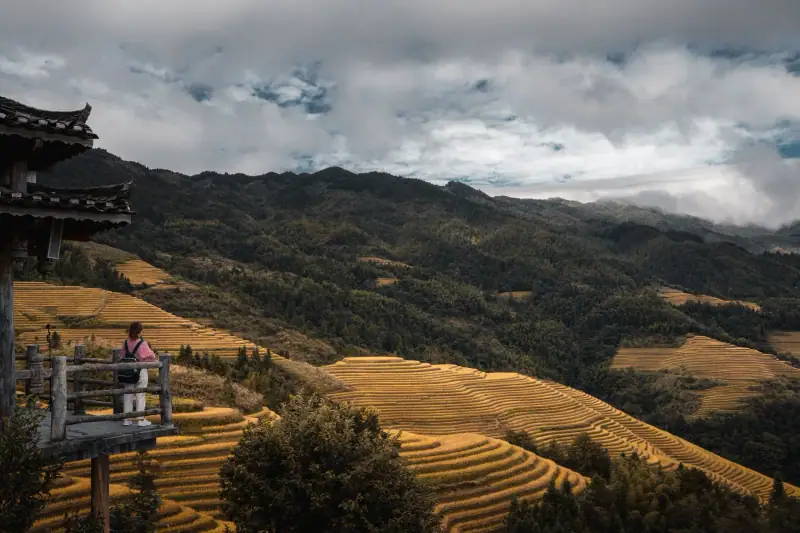
Ping’an is the best-known village. It stretches along the slope with its wooden houses, paved alleys and small built viewpoints. It is a lived-in village, but very geared to welcoming travelers: hostels, cafés, souvenir shops and family restaurants follow one another along the stairs.
Two viewpoints are particularly popular, reachable on foot from the village along paved trails. They offer wide panoramas of the terraces, and take one to two hours round trip depending on your pace. Sunset draws crowds, but sunrise is often calmer and brighter.
Arriving in Ping’an can mean climbing several hundred steps with your luggage. Traveling light is a real comfort, as is using a local porter, a common service in the village. If your bag is heavy, agree on the price before setting off.
Dazhai: the overall view and the cable car
Dazhai, slightly higher, is associated with the Yao community and its women known for their very long hair. The village is smaller and more stepped, and the viewpoints overlook a broader landscape. A cable car lets you reach the heights without effort, which is valuable for older people, children or travelers with luggage.
The Tiantouzhai area, about forty minutes’ walk from Dazhai according to local guides, offers a quieter viewpoint. If you want to avoid the crowds, it is a good option for a short walk before sunset.
Walking from Ping’an to Dazhai

The walk between the two villages is Longji’s classic hike. It passes through intermediate hamlets, bamboo forests, more isolated terraces and small streams. Sources differ depending on the route chosen: from a few hours of actual walking for the direct route to a full day if you go through all the hamlets. Allow a full day with breaks.
The trail is not technical, but it is long, with many ups and downs. It is well marked, but junctions between hamlets invite hesitation: download an offline map before you leave, because mobile coverage is patchy in the valleys. For gear, see our guide to useful accessories for China, which stresses shoes and rain protection.
A few tips for this walk:
- Start early, so you arrive before the end of the afternoon
- Bring water and snacks: there are small food stops in the hamlets, but not everywhere
- Have a plan B if rain sets in: a minibus transfer from an intermediate point is often possible
- Send your big suitcases directly to the next lodging if possible
A guided excursion to Longji?
To handle transfers and logistics without stress, excursions from Guilin exist. To compare according to your pace.
Which season for the Longji rice terraces?
The terraces change appearance through the year, and the “best” season depends on what you are looking for.
Spring (April to May). The terraces are flooded, before the plants have grown. They turn into mirrors that reflect the sky and clouds. It is often the time of the finest photographs, but also of frequent rain.
Early summer (June to July). The young shoots are transplanted, and the steps take on a tender green. Temperatures rise, and so does humidity.
Late summer and early fall (August to October). The green deepens, then turns to gold as the harvest approaches. September and October are the months most recommended by travelers for color, even though the precise calendar varies by year and plot. Beware of the Chinese national holidays in early October, when crowds are at their peak.
Winter (November to March). The terraces are more austere, sometimes wrapped in mist, and the mood is calmer. It is cool, especially in the evening and at altitude.
Where to sleep and eat
Lodgings in Ping’an and Dazhai range from simple wooden hostels to more comfortable guesthouses with a terrace over the rice terraces. Book a room on the view side if that matters to you: sunrise from the window is well worth the price difference. Comfort often remains rustic: limited heating in winter, variable hot water, thin walls.
The local food is worth the detour. The emblematic dish is rice cooked in a bamboo tube, served with vegetables and local meat. There are also specialties made with tea and bamboo, as well as a local rice liquor. To put this stop in the context of a broader cuisine, see our article what to eat in China: regional cuisines.
The budget of a Longji getaway
A two-day trip from Guilin remains affordable: local transport, entry fee, a night in a hostel and meals are easy to control. The items that make the budget vary are the type of lodging, the use of a private transfer and the use of the cable car. To place this item within a whole trip, see our article on the budget for a trip to China. Prices quoted by travelers change quickly: confirm them locally.
Fitting Longji into a Guangxi itinerary
Longji fits naturally into a Guilin-Yangshuo circuit. A common formula is to spend a day in Guilin, a night in the rice terraces, then continue to Yangshuo for cycling and the Li River. Allow one more day if you want to walk between the two main villages. If your trip continues west, the next stop could be Chengdu: see Chengdu in 3 days. China is vast, and Longji combines poorly with stops that are too far away within the same week.
A base in Guilin before or after Longji?
Guilin serves as a starting point for transfers to the rice terraces. To compare for your dates.
Practical tips and respect for the place
- Gear. Hiking shoes with a lugged sole, light poncho, sun protection and poles if your knees are fragile.
- Money. Mobile payment is everywhere in China but can be complicated for foreigners: keep some cash for small villages. Our article prepare your trip: payment and entry details the options.
- Signal. Coverage is uneven in the valley; download maps and translations in advance.
- Respect. Stay on the trails, pick nothing, do not photograph residents without their consent and avoid drones without checking local regulations.
- Insurance. Travel insurance covering medical costs and repatriation is a reasonable precaution for a hiking stay.
Frequently asked questions
Where are the Longji rice terraces and how do you get there from Guilin?
They are in Longsheng County, about 100 km (62 mi) north of Guilin, in the Guangxi autonomous region. You get there by bus or minibus from Guilin in about three hours, or by car with a driver. Check schedules locally, as they change with the season.
Should you choose Ping'an or Dazhai?
Ping'an is older, more touristy and richer in wooden lodgings, with fine viewpoints reachable on foot. Dazhai is a little higher and more spectacular for the overall view, with a cable car. For a hike of several hours, the two can be linked on foot.
What is the best season to see the rice terraces?
The terraces are beautiful all year, but in different ways: water mirrors in spring after flooding, dense green in summer, golden hues as the fall harvest approaches, sometimes mist and a mineral mood in winter. September and October are often cited for the gold, but the exact timing varies from year to year.
How much time should you allow?
One night there is ideal: arrive in the afternoon, enjoy sunset and sunrise, then hike the next day. A day trip from Guilin is possible, but it leaves little time for walking.
Is the hike difficult?
It is mostly tiring because of the stone steps and repeated ups and downs, not technical. The trails are well marked between villages. Basic fitness and good shoes are enough, and the cable car reduces the effort for less mobile people.
Do you need an entry ticket?
Yes, an entry fee is charged for the scenic area, generally valid for several days and usable for several villages. The price changes: ask at your lodging or at the entrance rather than relying on an old figure.
Can you hike in the rain?
It is possible, but the stone steps become slippery and visibility drops. Bring a light poncho and shoes with good grip, and keep a half-day margin in your schedule.
More China guides
Keep reading
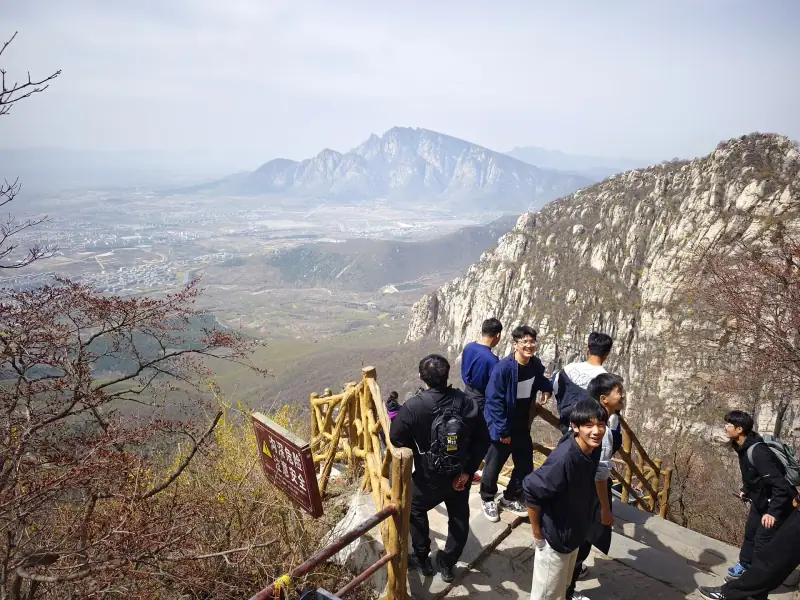
Hiking in Zhangjiajie: Wulingyuan, Tianmen and the Avatar mountains
How to plan a hike in Zhangjiajie: Wulingyuan park, Tianmen Mountain, the Bailong Elevator, trails, length of stay and practical tips.
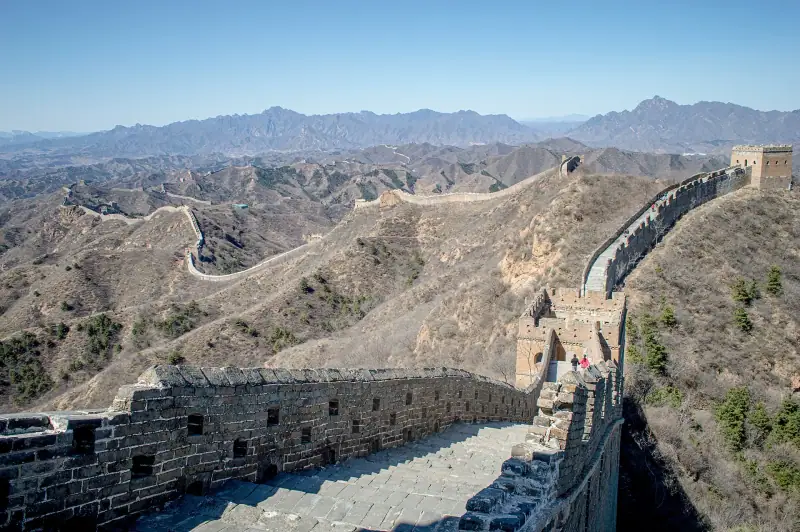
Great Wall of China: which section to choose from Beijing?
Badaling, Mutianyu, Jinshanling or Huanghuacheng? A comparison of the Great Wall sections reachable from Beijing, with access and visiting tips.
Budget for a trip to China: real costs, 3 profiles and ways to save
How much does a trip to China cost? Lodging, trains, meals, site entry fees: three daily budgets with figures, and tips to spend less.
Ready-made
China itineraries

3 days
Shanghai in 3 days: the Bund, Pudong, the French Concession and gardens
What to do in Shanghai in 3 days? The Bund, Pudong skyscrapers, Yuyuan Garden, the French Concession and a possible day trip: a clear itinerary with tips.
3 days
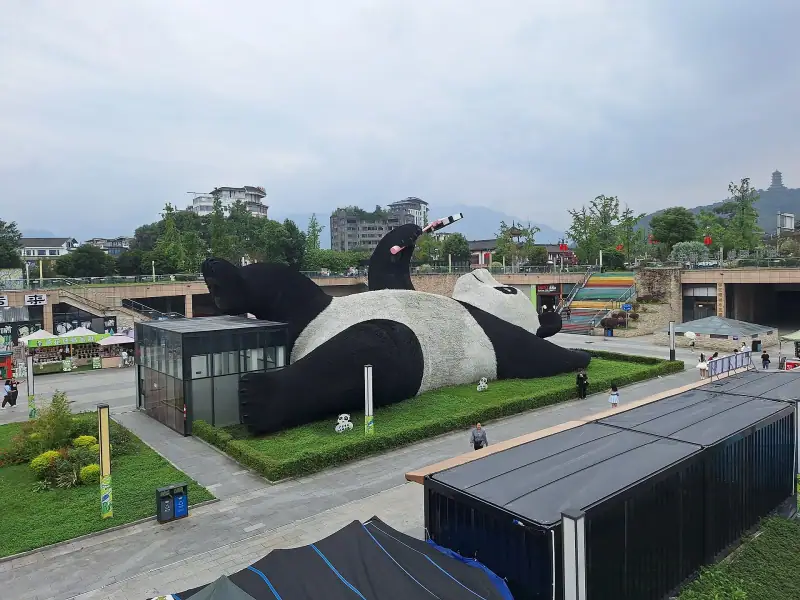
Chengdu in 3 days: pandas, Sichuan food and teahouses
What to do in Chengdu in 3 days? Giant pandas, old alleys, teahouses, Sichuan opera and a day trip to Dujiangyan: a clear, practical itinerary.
4 days
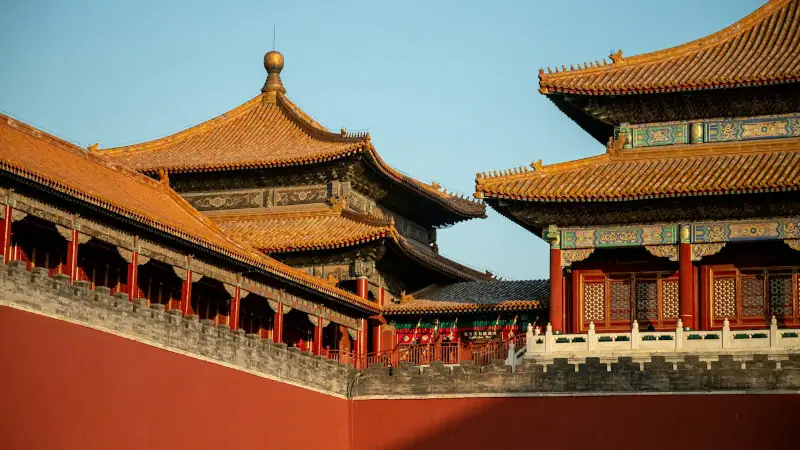
Beijing in 4 days: a complete itinerary and tips
What to see in Beijing in 4 days? Forbidden City, Great Wall, Temple of Heaven, Summer Palace and hutongs: a day-by-day plan with the bookings to make.