Itineraries
Xi'an in 2 days: Terracotta Army, city walls and the Muslim Quarter
We may earn a commission when you book through links on this page, at no extra cost to you. We don't visit or try the places we cover: we summarize published sources. How we work
Day by day
- Day 1Terracotta Army, evening around the Bell and Drum Towers
- Day 2Big Wild Goose Pagoda, city walls by bike, towers, Muslim Quarter
In short
- The Terracotta Army is about 40 km (25 mi) east of the city, roughly an hour by road: give it day 1 and allow three to four hours there.
- The city walls form a loop of about 14 km (9 mi); cycling it takes one to two hours, ideally late in the day.
- The Muslim Quarter is best in the evening, when the streets come alive, near the Bell and Drum Towers.
- From Beijing, the high-speed train takes about four and a half hours.
Xi’an was one of China’s great imperial capitals, and the starting point of the Silk Road. Today it is a large modern city that nevertheless keeps a surprisingly well-preserved old center, ringed by city walls. Above all, it is known worldwide for the Terracotta Army, discovered in the 1970s by farmers digging a well.
In two days you can see the essentials without rushing. This itinerary devotes the first day to the Terracotta Army, and the second to the historic center, on foot and by bike. If you are looking for the best time to go, our guide to when to go to China details the region’s seasons, and to complete your trip, see also Beijing in 4 days.
Key points:
- The Terracotta Army is about 40 km (25 mi) east of the city: plan a full day
- The city walls can be cycled in one to two hours, ideally late in the day
- The Muslim Quarter is best discovered in the evening, when the streets come alive
Getting to Xi’an and getting organized
Most travelers arrive by high-speed train or by air. From Beijing, the high-speed train takes about four and a half hours, which makes Xi’an a natural stop on a route through northern China. The stations and the airport are well connected to the center, and the metro is practical for reaching most sights in the historic center.
For lodging, the simplest plan is to choose a place inside the city walls, near the Bell and Drum Towers: the whole center is walkable, and you are a few minutes from the Muslim Quarter for dinner. The outer, more modern districts sometimes offer better prices but require more metro rides.
Where to stay in Xi'an?
Hotels inside the city walls, near the towers and the Muslim Quarter, to compare for your dates.
Day 1: the Terracotta Army
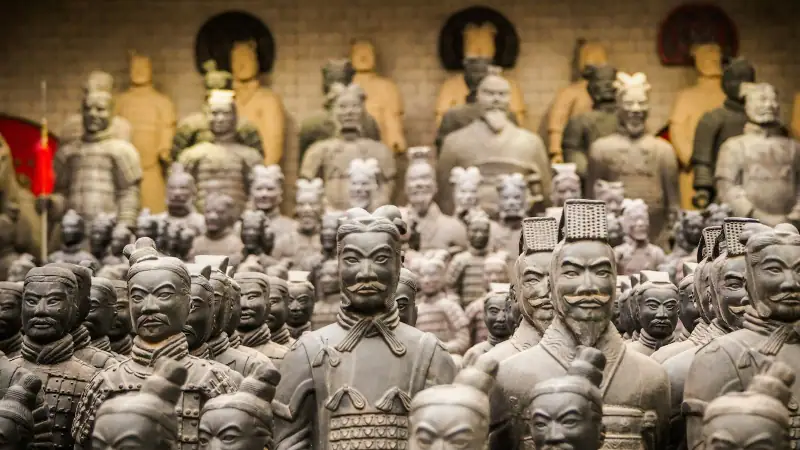
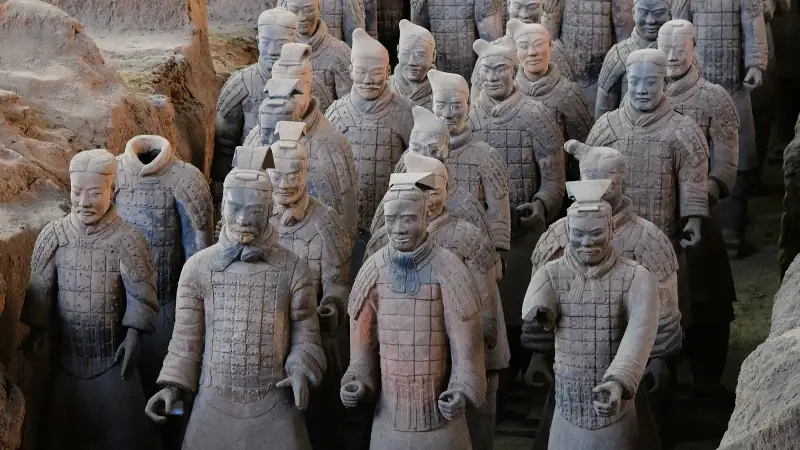
The Terracotta Army site is Xi’an’s great highlight. It is the mausoleum of China’s first emperor, Qin Shi Huang, protected by thousands of life-size clay warriors, each with his own features and hairstyle. The site is a UNESCO World Heritage site. It lies about 40 km (25 mi) east of downtown, roughly an hour by road.
The complex is organized around several large pits sheltered under vast halls. The first is the most spectacular, with its rows of soldiers lined up in formation. The other pits show excavations in progress, sometimes with statues still broken, which helps you understand the archaeologists’ work. A small museum also displays exceptional pieces, such as the bronze chariots.
Leave early: the site is very busy, and the groups arrive in mid-morning. Allow three to four hours there. A guide, audio or human, adds a lot, because the signs are sometimes brief and the historical context is dense. An organized tour with transport also simplifies logistics, especially if you do not speak Chinese.
Terracotta Army tour
Guided visits with transport from Xi'an, to save time and get a guide's explanations.
Back in the city in mid-afternoon, you can rest, then enjoy the evening in the center. The area around the Bell and Drum Towers lights up at nightfall, and it is a very pretty time for a first stroll.
Day 2: city walls, towers and the Muslim Quarter
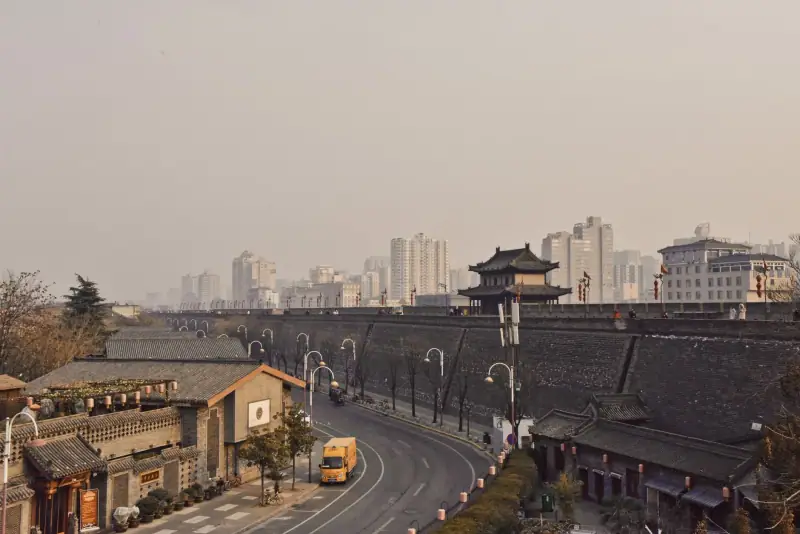
The second day is spent in the old city. Start with the Big Wild Goose Pagoda, south of the center, which dates from the Tang dynasty and remains one of Xi’an’s most emblematic monuments. The gardens around it are pleasant, and the surrounding district comes alive in the evening with fountains and light shows.
Then head to the center to visit the city walls. Xi’an’s walls are among the best preserved in China and form a loop of about 14 km (9 mi) around the historic center. The top is wide enough to ride a bike: rental shops offer bikes at several spots. Allow one to two hours for the full loop. Late afternoon offers soft light and less heat in summer.
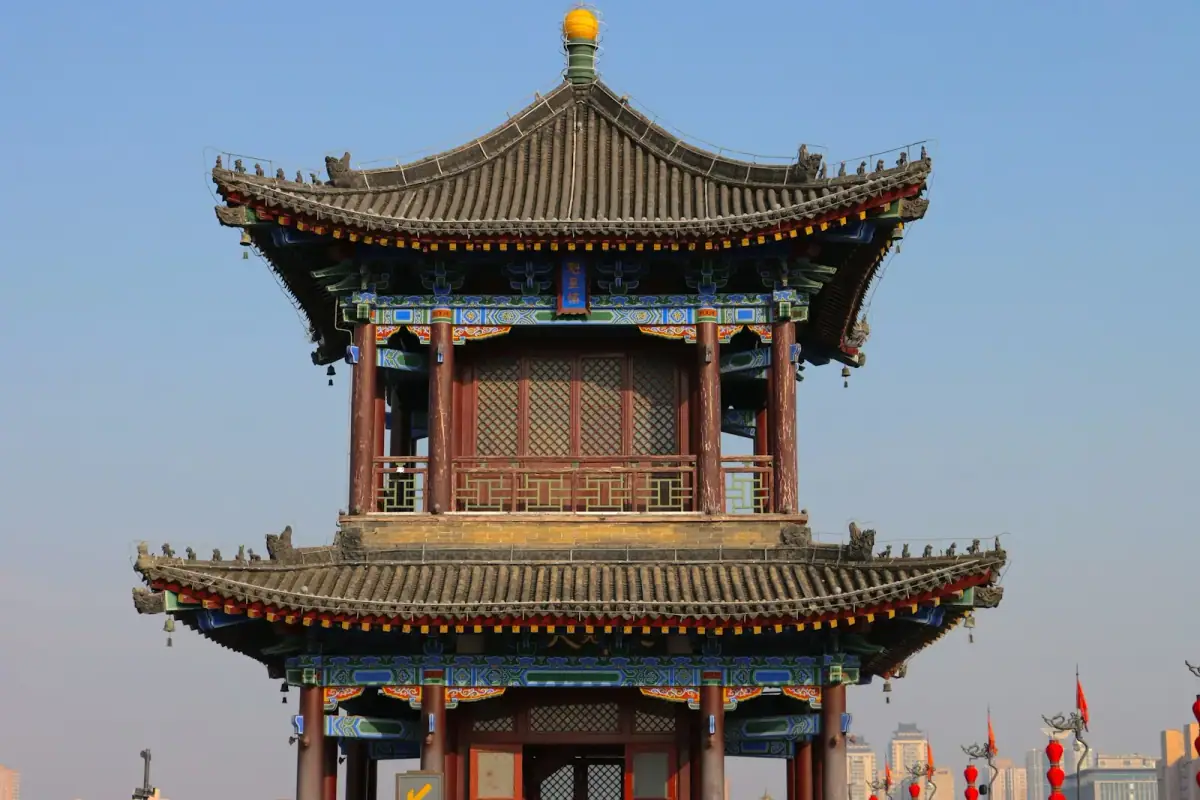
The Bell and Drum Towers face each other in the heart of the old city. They once set the rhythm of city life, one with a bell, the other with a drum. You can climb them for a view of the rooftops and avenues, and see them lit up in the evening.
Dinner in the Muslim Quarter

The Muslim Quarter, right next to the towers, is the food heart of Xi’an. Its narrow alleys are lined with street food stalls, spice stands, dried fruit and small restaurants. This is also where the Great Mosque stands, a calm complex of successive courtyards, mixing Chinese architecture and Islamic influences.
Local cuisine is known for its noodles, spiced lamb skewers, filled flatbreads and dishes of crumbled bread in broth. Go late in the day, when the atmosphere is liveliest, and be ready for crowds: it is a very busy place, especially on weekends. If you want to go further, a cooking class or a food tour with a local guide lets you discover the specialties under the best conditions.
Food tour in Xi'an
Guided tastings and food visits, to try the specialties of the Muslim Quarter.
Practical tips for your stay
Always carry your passport: it is requested for many tickets, and some museums require a named reservation. Check booking conditions shortly before your visit, because they change regularly. If possible, avoid China’s national holidays, especially the first week of October, when sites are overcrowded.
For getting around, the metro is fast and clear, with signs in pinyin and English. Taxis and ride-hailing apps are also very practical, but it helps to have the place name written in Chinese characters. Mobile payments are everywhere in China: find out before you leave which payment methods are accepted for foreign travelers, and keep some cash as a backup.
To continue your trip, Xi’an combines very well with Beijing, by high-speed train, or with Chengdu and Sichuan. If you are looking for flights to China or between two cities, compare offers in advance, because prices vary a lot by season.
Flights to China
Compare flights to Xi'an or to your other stops in China, for your dates.
Frequently asked questions
Are two days enough to visit Xi'an?
Yes, it is the comfortable minimum: one full day for the Terracotta Army and its surroundings, another for the historic center with the walls, the towers, the Muslim Quarter and the Big Wild Goose Pagoda. With a single day, you have to choose.
How do you get to the Terracotta Army from Xi'an?
The site is east of the city, about 40 km (25 mi) from the center. You can go by public transport (a bus or dedicated line from the railway station), by taxi or on an organized tour with transport. Allow about an hour of travel, a little more at rush hour.
Can you cycle the Xi'an city walls?
Yes, it is one of the city's signature activities. The walls form a loop of about 14 km (9 mi), wide enough to ride a bike on, with rental shops there. The loop is done at an easy pace in one to two hours, and late afternoon is a very good time.
Do you need to book tickets in advance in Xi'an?
For the busiest sites, it is advised. Some museums require a named reservation tied to your passport, with limited slots in high season. Check the conditions just before your visit, because they change regularly.
When should you go to Xi'an?
Spring and fall are the most pleasant seasons, with mild temperatures. Summer is hot and winter cold and dry. If possible, avoid China's national holidays, when sites are overcrowded. Our guide to choosing your dates details the seasons.
More China guides
Keep reading

Budget for a trip to China: real costs, 3 profiles and ways to save
How much does a trip to China cost? Lodging, trains, meals, site entry fees: three daily budgets with figures, and tips to spend less.
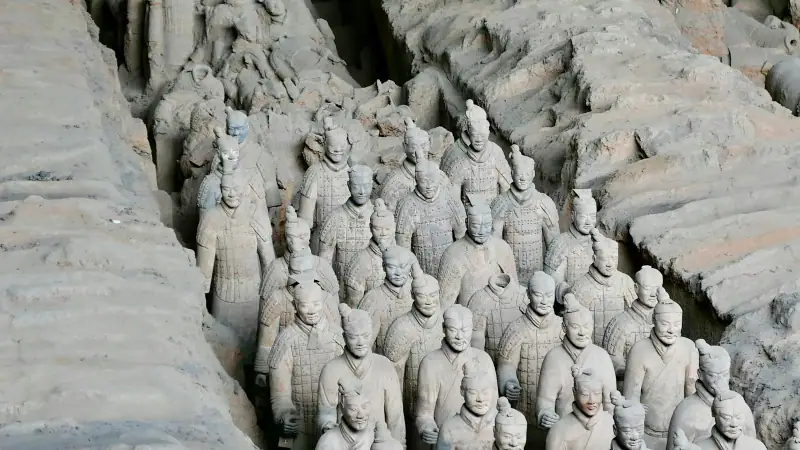
Terracotta Army: hours, prices, booking and getting there from Xi'an
Xi'an Terracotta Army: hours, fares, mandatory booking with passport, bus and metro from the center, and how to avoid the crowds.

Where to stay in Shanghai: which neighborhood to choose
Where to stay in Shanghai? The Bund, the former French Concession, Jing'an, Pudong or Hongqiao: a neighborhood comparison with metro and booking tips.
Ready-made
China itineraries

3 days
Shanghai in 3 days: the Bund, Pudong, the French Concession and gardens
What to do in Shanghai in 3 days? The Bund, Pudong skyscrapers, Yuyuan Garden, the French Concession and a possible day trip: a clear itinerary with tips.

3 days
Chengdu in 3 days: pandas, Sichuan food and teahouses
What to do in Chengdu in 3 days? Giant pandas, old alleys, teahouses, Sichuan opera and a day trip to Dujiangyan: a clear, practical itinerary.
4 days
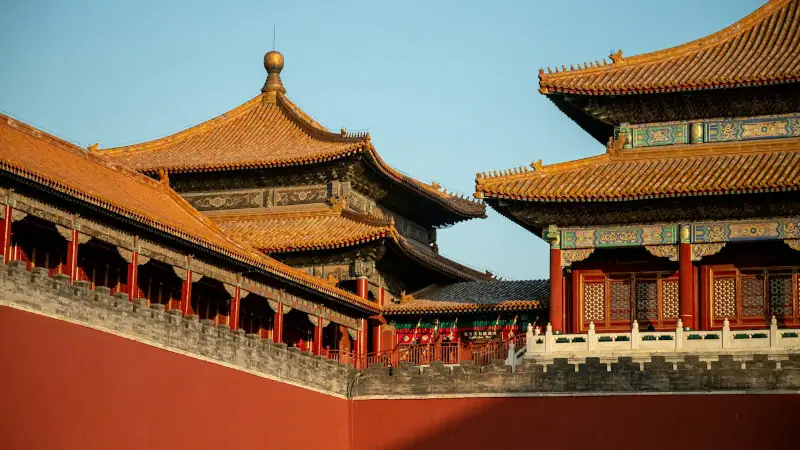
Beijing in 4 days: a complete itinerary and tips
What to see in Beijing in 4 days? Forbidden City, Great Wall, Temple of Heaven, Summer Palace and hutongs: a day-by-day plan with the bookings to make.