Where to stay
Puerto Varas or Pucón: where to stay in Chile's Lake District without a car
We may earn a commission when you book through links on this page, at no extra cost to you. We don't visit or try the places we cover: we summarize published sources. How we work
In short
- Without a car, Pucón is the more self-sufficient base: compact, with activity agencies within walking distance of most lodging.
- Puerto Varas is nicer for strolling, but nature sites (Petrohué, Osorno Volcano) need organized transport.
- Linking the two towns by bus takes about five hours, so plan a transit day; with fewer than five days, pick one base.
- Stay in the town center in both places, and book well ahead in January and February.
The Lake District is one of the most beautiful regions of Chile, but it is built around cars: the volcanoes, waterfalls and hot springs are scattered around large lakes. So when you travel by bus and on tours, the choice of the town where you sleep changes everything. Should you unpack in Puerto Varas, facing Lake Llanquihue, or in Pucón, at the foot of Villarrica Volcano?
This guide compares the two bases from the angle of people without a car: access, neighborhoods, tours, budget and pace. If you prefer to drive, our 7-day Lake District road trip details the full itinerary.
In short: which to choose for your trip
- You like action (volcano, rafting, hiking): sleep in Pucón.
- You want a pleasant town, restaurants and views of the volcanoes: sleep in Puerto Varas.
- You have fewer than five days: a single base is enough, do not lose a day on a bus.
- You have a week: three nights in Puerto Varas, three in Pucón, with a transfer day.
In both cases, you can book your tours in town or online. The logic without a car is simple: you sleep in the town center, and let agencies handle transport to the sites.
Puerto Varas without a car: what to know
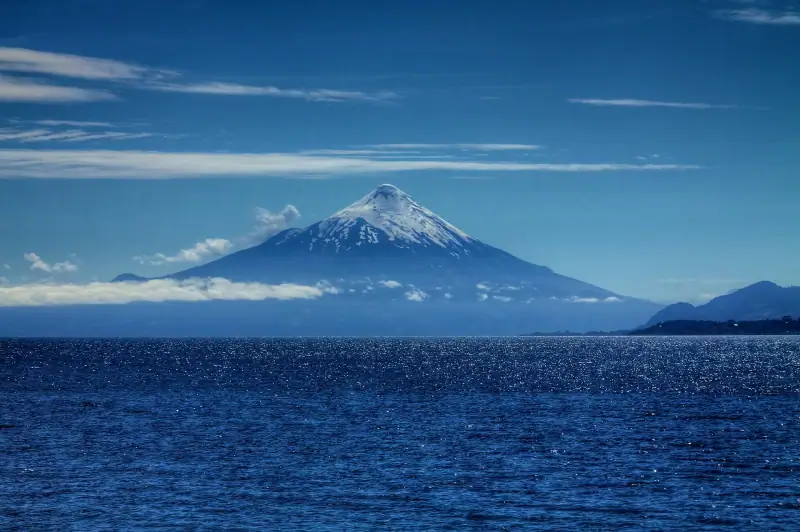
Puerto Varas stretches along the south shore of Lake Llanquihue, facing the Osorno and Calbuco volcanoes. It is about thirty minutes from Puerto Montt airport, which you reach by bus or transfer. The town is pleasant on foot, but the major natural sites are several dozen kilometers away: the Petrohué Falls, Lake Todos los Santos, the slopes of Osorno Volcano.
Where to sleep: town center or lakeshore
The town center is the most practical without a car. Restaurants, cafés, supermarkets, tour agencies and bus stops are a few minutes’ walk away. It is the best option for two or three nights.
The lakeshore offers better views of the volcanoes at sunset. On the other hand, some lodgings are several hundred meters from the center, sometimes on sloping streets. Before booking, measure the walking distance to the center on a map.
The hills and surroundings are quieter and greener, but without a car you will depend on taxis for every trip. Avoid them if you are traveling on a budget.
Stay in Puerto Varas
Compare hotels, cabañas and hostels in the center and on the lakeshore, and filter by distance from the center.
Visiting the surroundings without driving
Day tours are the key: Puerto Varas agencies offer departures to the Petrohué Falls, Lake Todos los Santos and Vicente Pérez Rosales National Park. Some circuits also include Frutillar, along the lake. Allow a full day per tour, and book the day before in high season.
Local buses also serve Frutillar and Puerto Montt, which lets you reach these towns independently if you like to improvise.
Pucón without a car: the simplest base
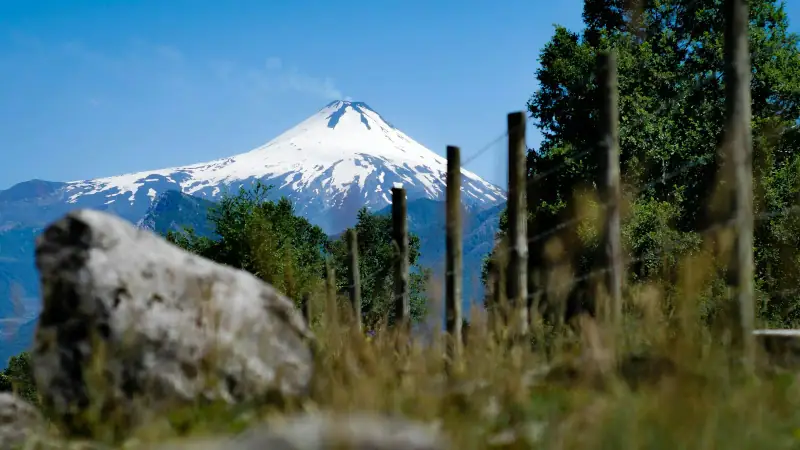
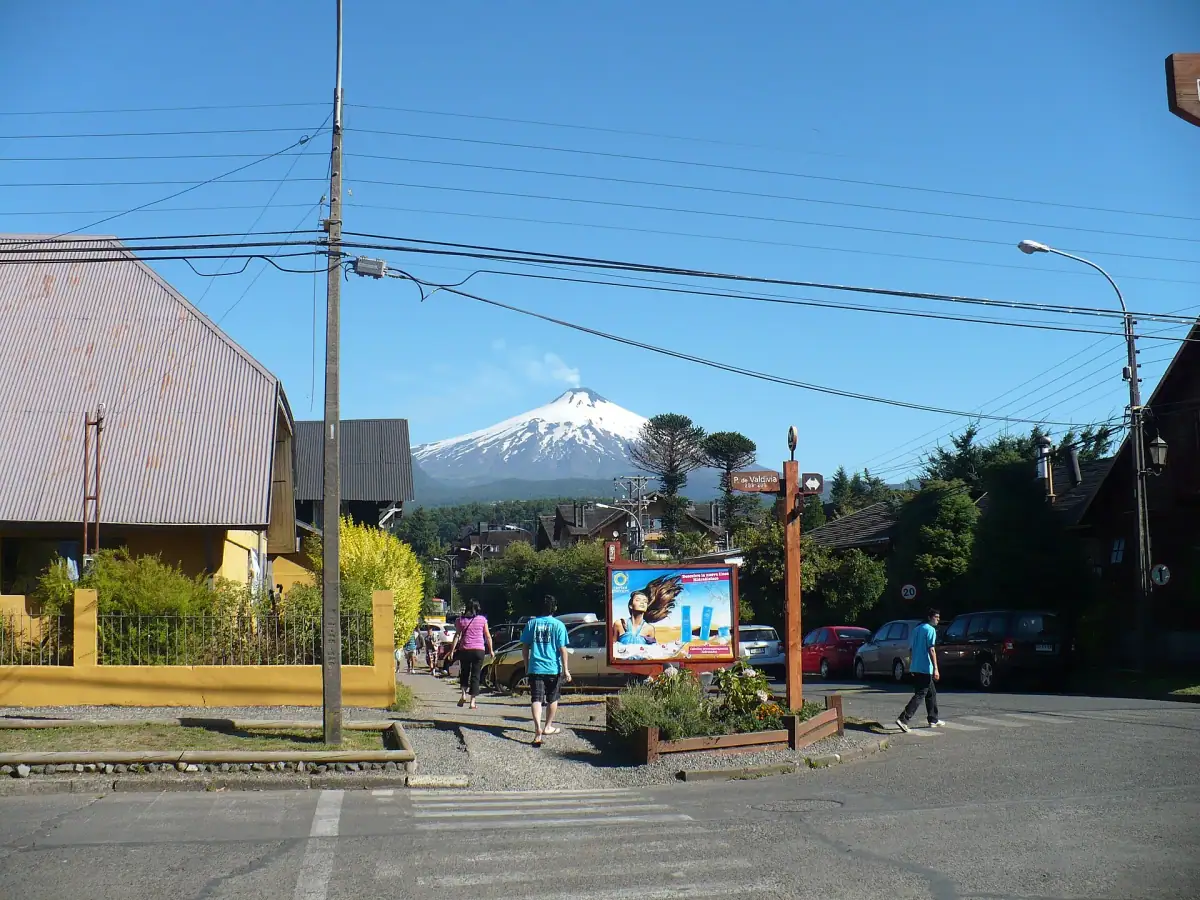
Pucón is a lake and mountain village strongly geared toward activities. Its center is compact, the main street gathers agencies, restaurants and rental operators, and Lake Villarrica beach is a few minutes away. Most tours leave directly from the center or pick travelers up at their accommodation.
Everything people come here to do is arranged through agencies: the volcano climb, Huerquehue National Park, rafting on the Trancura River, hot springs. Our guide Pucón: Villarrica Volcano, what to do details each activity.
Where to sleep in Pucón
Sleep in the center, between the main avenue and the lake. You will be within walking distance of agencies, restaurants, the bus terminal and the beach. Lodgings far from the center, especially along the road to the hot springs, may look attractive because they are quiet, but require a taxi each time.
For a stay without a car, the choice is simple: stay within a ten-minute walk of the center. In summer this area fills quickly and prices rise: book early.
Stay in Pucón
Hotels, hostales and cabañas: compare central Pucón lodging for your dates.
Linking the two towns by bus
If you want to see both, plan a transit day. According to recent guides, one company (JAC) runs a direct service of about five hours, at a fare of around 16,000 pesos. If the schedules do not suit you, you can go through Puerto Montt, with a local bus and then a long-distance bus. This information changes: check schedules and prices at the terminal or online before committing.
A few logistics tips:
- Leave in the morning to arrive before dark, and book accommodation that accepts a late-afternoon arrival.
- Keep some slack if you have a flight the next day: delays are frequent.
- A night bus exists on some routes, but the daytime trip lets you enjoy the scenery.
For the overall budget of your trip, see our budget for Chile.
Quick comparison
| Criterion | Puerto Varas | Pucón |
|---|---|---|
| Atmosphere | Lake town, calm, German heritage | Adventure village, lively |
| Self-sufficiency without a car | Medium: tours needed | Good: everything leaves from the center |
| Headline activities | Petrohué, Osorno Volcano, Frutillar | Villarrica Volcano, Huerquehue, rafting |
| Ideal for | Couples, food, photography | Hikers, sporty travelers, active families |
| Booking | Advised in summer | Strongly advised in summer |
When to go
The austral summer (December to February) offers the best weather for activities, but it is also the most expensive season. Spring and early fall are good compromises. In winter some tours are limited, but the snow on the volcanoes is spectacular. Our guide on the best time to go to Chile details it all.
Tours around Pucón
Volcano, rafting, hot springs: compare tours with transport included from Pucón.
Tips for choosing well
- Start from the number of days, not from wishes: fewer than five days, a single base.
- Always stay in the town center: without a car, every extra kilometer becomes a taxi.
- Book tours with pickup and ask for the meeting point.
- Keep a spare day for the weather, especially for the volcano.
- Choose free cancellation when possible.
- Insure your trip: mountain sports, rafting and last-minute cancellation justify suitable coverage.
To fit this region into a wider trip, see our two-week Chile itinerary or our guide on where to stay in Santiago for the first night.
Flights to Puerto Montt
Compare domestic flights to Puerto Montt to reach the Lake District.
Frequently asked questions
Puerto Varas or Pucón: which should you choose without a car?
Pucón is the more self-sufficient: the village is compact, activity agencies are within walking distance of most accommodation, and the major sites (volcano, parks, hot springs) are booked as tours. Puerto Varas is nicer for strolling and has a very photogenic setting, but the nature sites (Petrohué, Osorno Volcano) require organized transport. If you only have time for one base, Pucón is simpler without a car.
Can you go from Puerto Varas to Pucón by bus?
Yes. Scheduled buses link the two towns, sometimes with a change in Puerto Montt. Allow about five hours of travel, and check schedules and fares with the companies before you go, as they change. Plan a transit day.
Which area of Puerto Varas should you stay in without a car?
The town center is the most practical: restaurants, cafés, tour agencies and the bus terminal are close. The lakeshore has better views of the volcanoes, but some lodgings are about a twenty-minute walk from the center. Check the distance on the map before you book.
How many nights should you plan in each town?
Three nights in each town let you enjoy the tours without rushing. With only four or five days in total, pick one base. With a week, combine the two, counting a full day for the trip between them.
Do you need to book accommodation in advance?
In January and February it is strongly advised, especially in Pucón where supply fills quickly. The rest of the year it is generally easy to find a room a few days before. Well-located places in the town center go first.
Do tours leave from accommodation without a car?
Many agencies offer hotel pickup or a meeting point in the town center. Ask for confirmation when you book, especially for early departures such as the Villarrica Volcano climb.
Is there a risk of bad weather for tours?
Yes, mountain weather changes fast. The Villarrica climb can be canceled if wind or visibility require it. Keep a spare day in your stay, and prefer accommodation with free cancellation.
More Chile guides
Keep reading
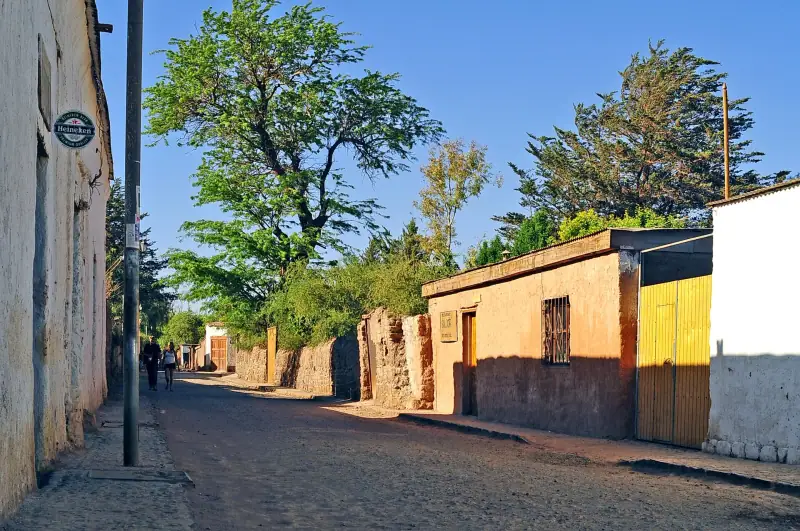
Where to stay in San Pedro de Atacama without a car: town center or outskirts?
No car in San Pedro de Atacama: stay near Caracoles Street or on the outskirts? Areas, walking distances, early-morning tours and pitfalls to avoid.
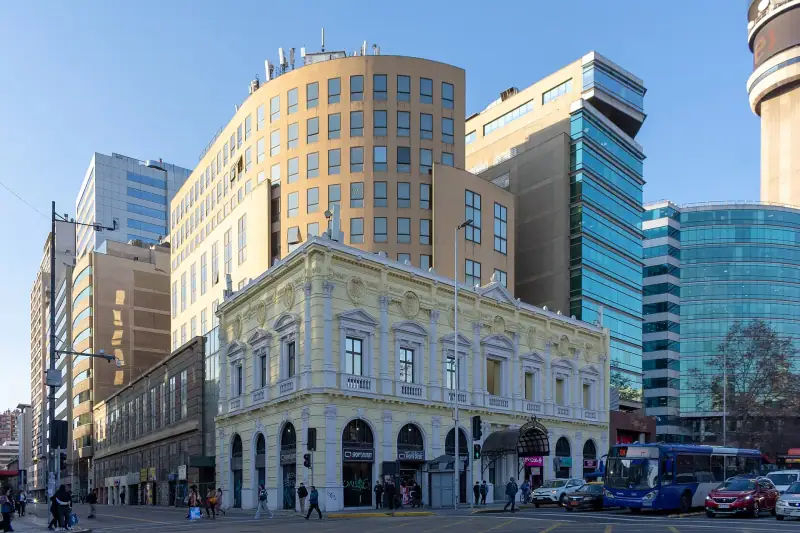
Where to stay in Santiago, Chile: neighborhoods, budgets and tips
Where to stay in Santiago, Chile? Lastarria, Bellavista, Providencia, the center, Barrio Italia: neighborhood comparison, budgets, safety and tips.
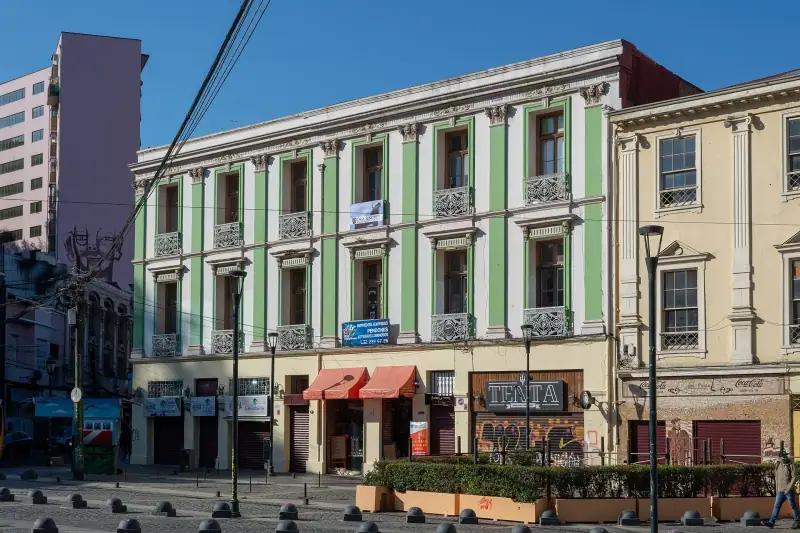
Where to stay in Valparaíso: which hill to choose, budgets and tips
Where to stay in Valparaíso? Cerro Alegre, Concepción, Bellavista, the Plan or Viña del Mar: neighborhood comparison, safety, budgets and tips.
Ready-made
Chile itineraries
7 days
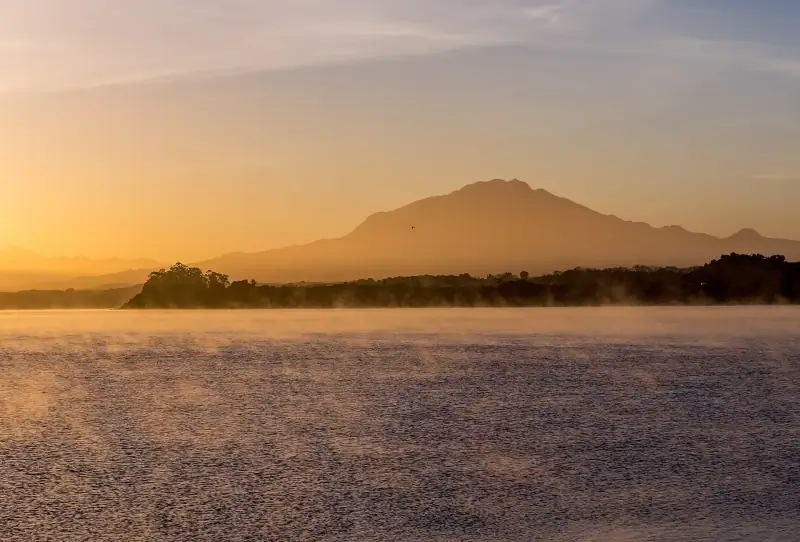
Chile's Lake District road trip: 7 days from Puerto Varas to Pucón
Puerto VarasPucón
Can be adapted in the planner
3 days
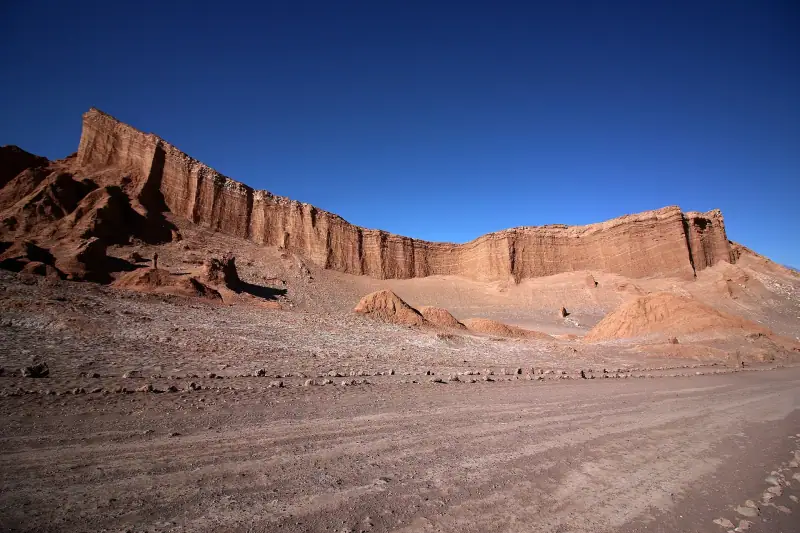
3 days in San Pedro de Atacama: a day-by-day itinerary
3 days in San Pedro de Atacama: a day-by-day plan with Moon Valley, lagoons, El Tatio geysers and stargazing, plus altitude and logistics tips.
14 days
2-week Chile itinerary: Atacama, the Lakes and Chiloé
A 14-day Chile itinerary, day by day: Santiago, Valparaíso, the Atacama Desert, Pucón, Puerto Varas and Chiloé, with flights, durations and tips.