What to see
Complete Guide to Visiting Canada: Regions, Cities, Budget and Tips
We may earn a commission when you book through links on this page, at no extra cost to you. We don't visit or try the places we cover: we summarize published sources. How we work
In short
- Visit one region properly in 10 to 15 days (Rockies and Vancouver, Ontario and Quebec, or the Maritimes); three weeks let you combine two regions.
- A car is by far the most practical way to see the Rockies, Vancouver Island and Nova Scotia; big cities work well without one.
- Displayed prices usually exclude taxes, and the tip is added to the restaurant bill.
- Foreign visitors have to pay for health care, which can be very expensive: travel insurance with solid medical coverage is strongly recommended.
Canada is the second-largest country in the world by area, and that is precisely what makes organizing a trip tricky: you do not “do” Canada in one go. You pick a region, sometimes two, and give it the time needed to enjoy the landscapes rather than the airports. Turquoise mountain lakes, conifer forests as far as the eye can see, cosmopolitan cities, spectacular falls, the indented Atlantic coasts: the diversity is immense, and each region has its ideal season, its pace and its budget.
This guide is the pillar article of our site. It helps you lay the foundations of your trip: understand the geography, spot the regions and cities that suit you, know when to go, how to get there, how to get around, where to sleep and how much to budget. At each step you will find links to our detailed guides to go deeper. Practical information (entry rules, rates, schedules) changes regularly: for anything that commits you to a booking, confirm it with official sources before departure.
Canada in brief: a country the size of a continent
The country has ten provinces and three territories, spread over six time zones. From the Atlantic to the Pacific, you need several days on the road without stopping, and a flight from one ocean to the other lasts several hours. This scale changes everything in the preparation: a map is not enough to judge whether two stops are compatible, you have to think in hours of travel rather than “it looks close”.
The population is concentrated in a narrow band in the south, near the border with the United States, and the rest of the territory is immense and sparsely populated. That explains the contrast between very lively cities like Toronto and Vancouver, and wild expanses where you can drive a long time without passing a village. This easily accessible nature is one of the country’s great strengths: you can go from a downtown restaurant to a trail beside a glacier in a few hours.
As for language, English dominates in most regions, and French is well present in Quebec and in some Acadian communities. As for money, you pay in Canadian dollars, with a bank card almost everywhere. As for culture, the traveler discovers a welcoming country, attached to nature, with its own approach to tipping and taxes: displayed prices are most often before tax, and the tip is added to the restaurant bill.
The main regions to know
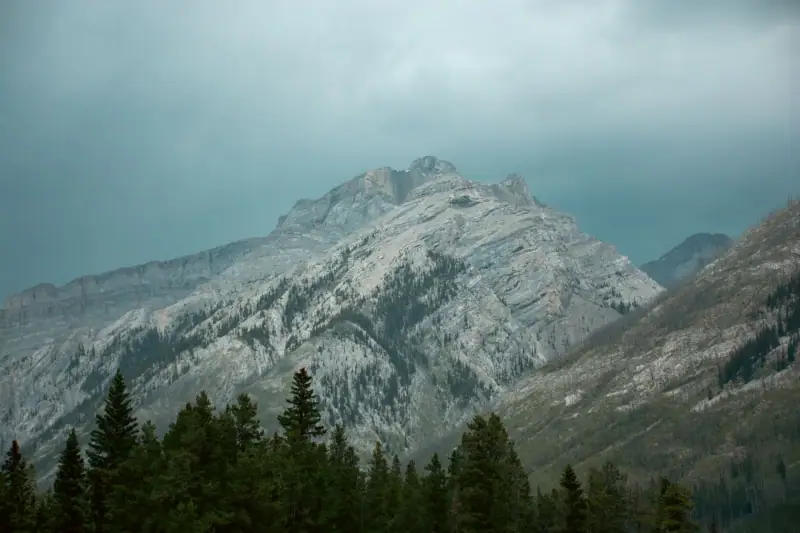
Our site covers five main areas. Here is how to place them and which type of traveler they suit.
The Canadian Rockies
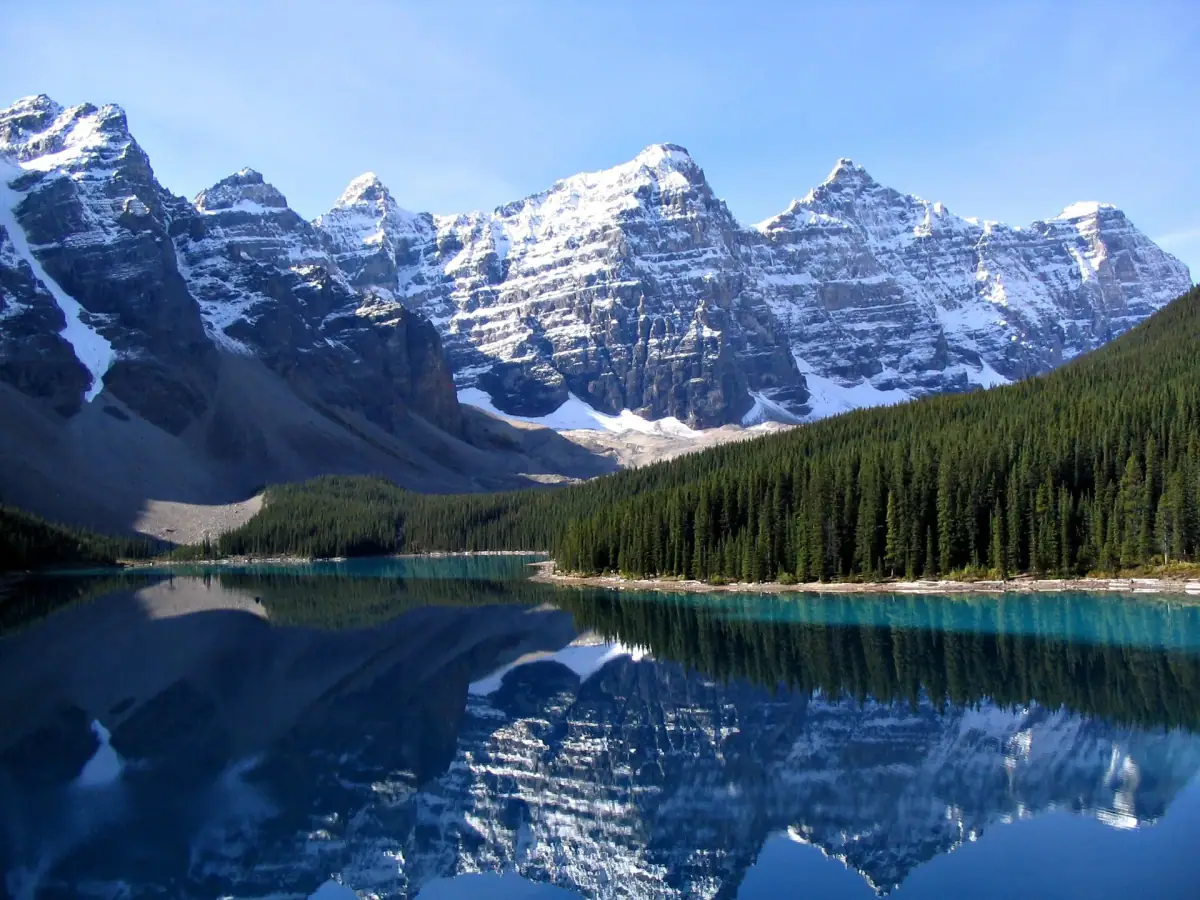
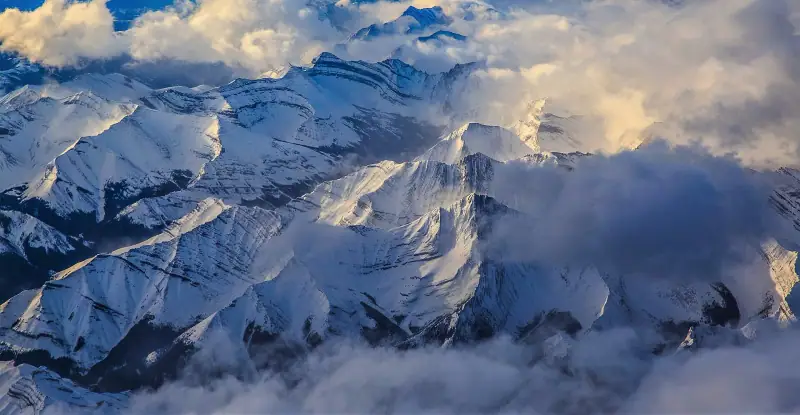
This is the most iconic region for a first trip, and the one whose images circulate the most: milky blue lakes, snowy peaks, elk at the roadside. It is organized around two hubs, Banff and Jasper, separated by one of the most famous scenic roads on the continent. The towns of Banff, Lake Louise and Jasper serve as bases for hiking, wildlife watching and glacier landscapes.
If you are torn between the two hubs, our Banff or Jasper comparison helps you decide according to atmosphere, crowds and activities. To link the two, discover our Icefields Parkway road trip, and to choose your base, read our guide where to stay in Banff and Lake Louise.
British Columbia
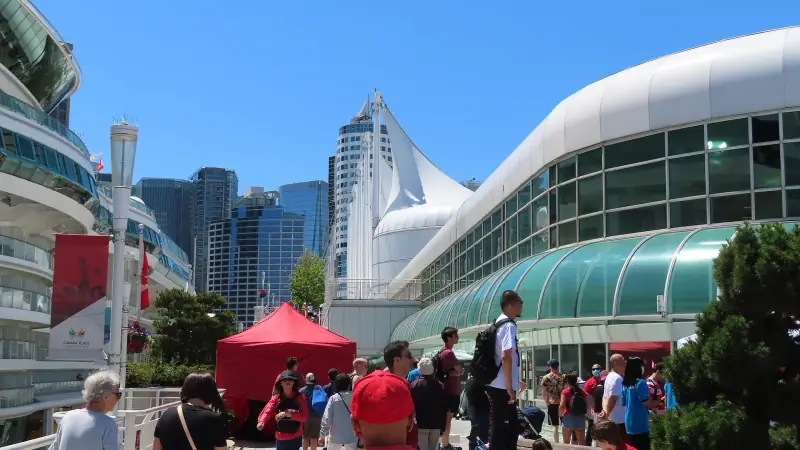
The Pacific province brings together Vancouver, a city between sea and mountains, Vancouver Island, Whistler and vast coastal forests. It is the ideal region to combine city, ocean and nature, with a milder coastal climate than in the interior of the country. Vancouver is also an air gateway and a natural starting point toward the Rockies.
We detail the city stay in Vancouver in 3 days, and the west coast in Vancouver Island in 5 days, which goes through Victoria, Tofino and the Pacific coast.
Ontario
Ontario is the most populous province in the country. It concentrates Toronto, the largest city in Canada, Niagara Falls a few dozen kilometers away, and areas of forests and lakes such as Algonquin Park. It is an excellent choice for a mainly urban stay, with an opening onto nature and water landscapes.
For a first contact with the metropolis, see Toronto in 3 days, then devote a day to the falls with our article on Niagara Falls, Canadian side.
The Maritime provinces
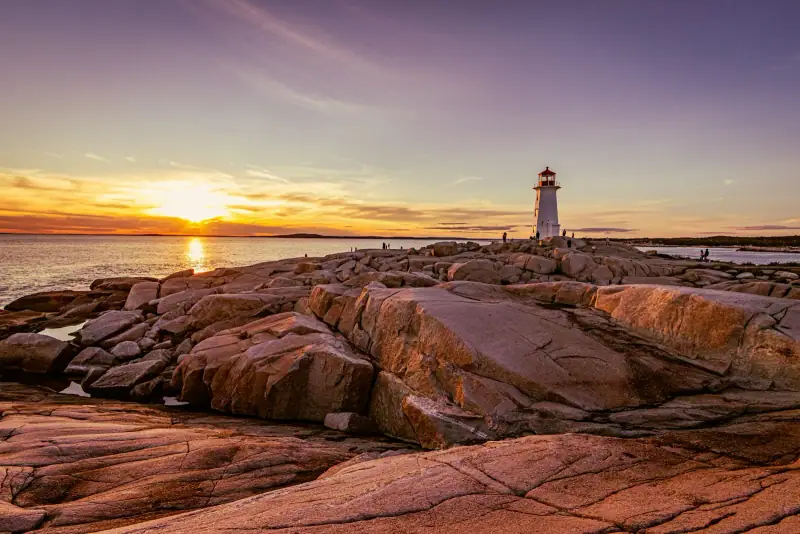
In the east, Nova Scotia, New Brunswick and Prince Edward Island (joined by Newfoundland and Labrador to form the Atlantic provinces) offer a completely different face of the country: rocky coasts, lighthouses, small fishing ports, seafood, and a strong maritime identity. The pace is calmer, distances more modest (except Newfoundland), and the road trip very natural. It is a region that appeals to travelers who prefer seascapes to high mountains.
Our itinerary Nova Scotia in 7 days starts from Halifax, follows the south coast and closes the loop on the Cabot Trail.
Yukon and the Far North
Right in the north, the Yukon and its neighboring territories are for travelers looking for extreme spaces: great wild expanses, winter nights suited to watching the northern lights, adventure experiences. These destinations require more preparation, higher budgets and real thought about the season. We have not yet published a dedicated guide for this region: save it for a second trip or for experienced travelers.
Compare lodging in Vancouver
The arrival city for many travelers, Vancouver has hotels for every budget: compare for your dates.
Cities not to miss
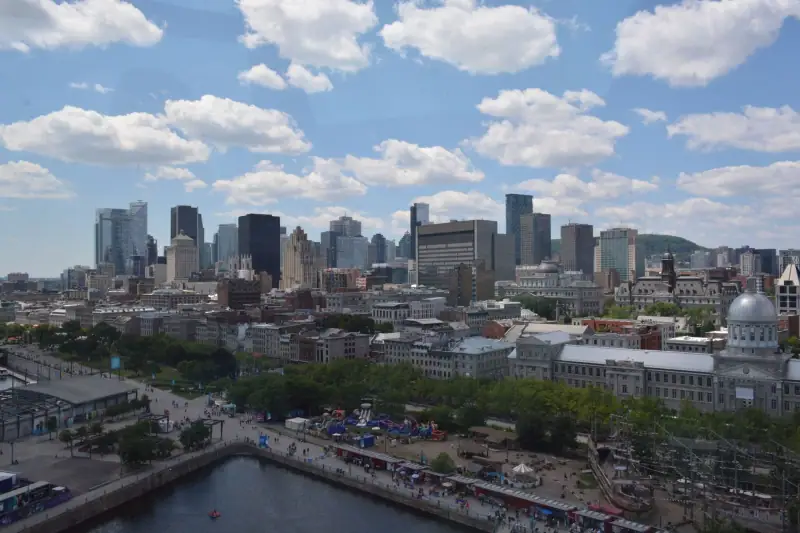
Beyond the great open spaces, Canada is also discovered through its cities. Here are those that come up most often in first-trip itineraries.
Vancouver appeals with its setting: a downtown surrounded by water, with mountains as a backdrop. You get around easily on foot, by bike and by public transit, and find a varied food scene, influenced by the proximity of Asia and the Pacific. It also serves as a starting point toward Vancouver Island and the Rockies.
Victoria, on Vancouver Island, is a more compact and peaceful city, known for its harbor and its small provincial capital atmosphere. It is well visited in a day or two, often combined with the island’s west coast.
Calgary is the big city of Alberta, and the classic gateway to the Rockies: Banff is about an hour and a half by road from the airport. Many travelers rent their car there and spend only a night or two, except in July, when the Stampede draws a considerable crowd and pushes up room prices.
Banff and Jasper are two mountain towns at the heart of national parks. They offer lodging, restaurants and services, and serve as a base for hikes, lakes and boat or bus excursions on the glaciers.
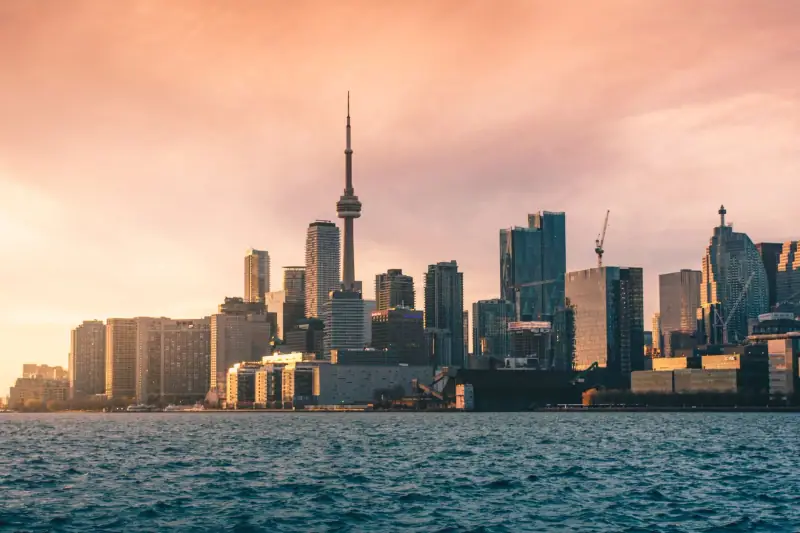
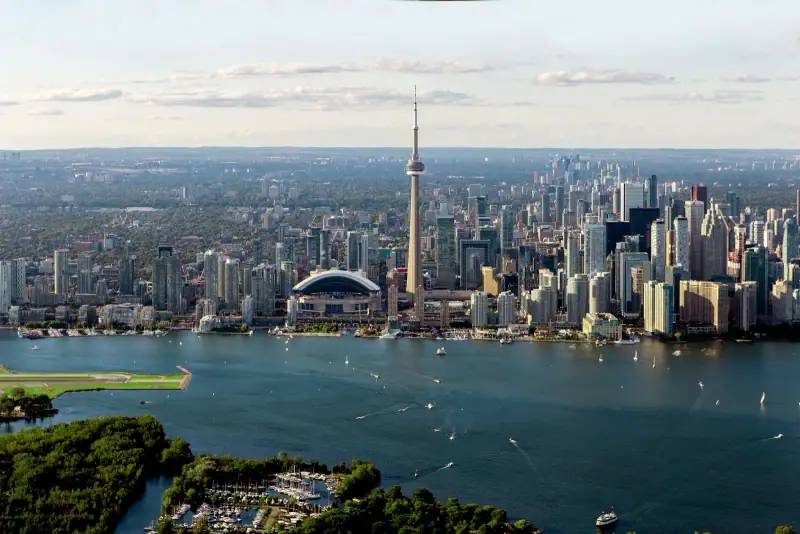
Toronto is the country’s metropolis, very multicultural: neighborhoods with strong identities, a big tower dominating the lakefront, museums, markets and a diverse food scene. It is also an excellent base to reach Niagara.
Niagara Falls lives around its falls, among the most famous in the world. The town is very touristy, but the spectacle of the water alone justifies a day, especially on the Canadian side, from where the overall view is widest.
Halifax, capital of Nova Scotia, is the natural starting point for a stay in the Maritimes: lively port, maritime history, relaxed atmosphere and quick access to the coasts.
Of course, some cities are missing from this list, starting with Montreal and Quebec City, which we have not yet covered on this site. They deserve a trip of their own, or an extension of your Ontario stay if you have more time.
Highlights of a first trip
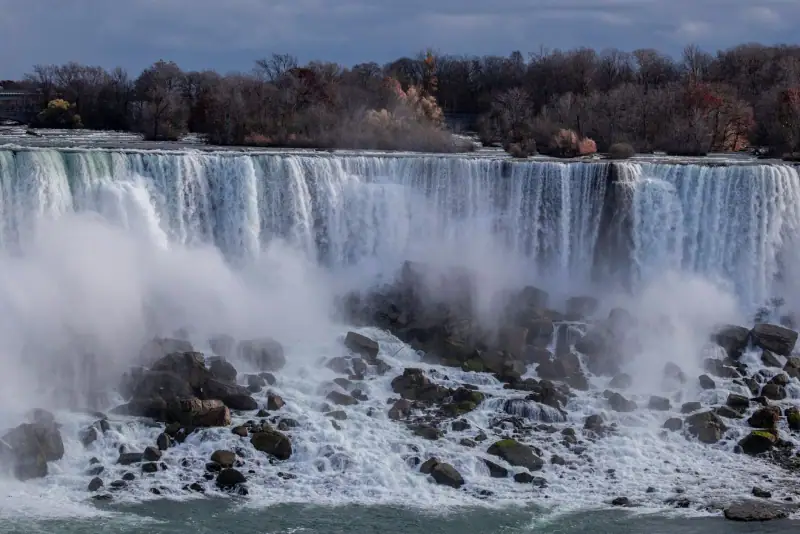
Depending on your wishes, here are the experiences that come up most often in travelers’ accounts.
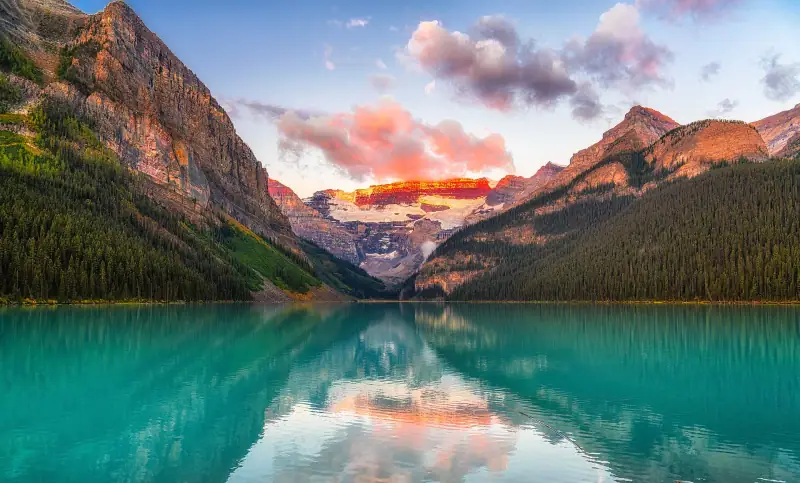
- The Rockies lakes: their color comes from glacial rock flour suspended in the water. The most famous are around Lake Louise and along the Icefields Parkway. Arriving early in the morning avoids the crowds of the middle of the day.
- The Icefields Parkway: the road linking Lake Louise to Jasper runs along glaciers, valleys and peaks. It is a destination in itself, to be driven without rushing, with many stops.
- Niagara Falls: spectacular for their width, they can be admired from the shore, from a boat or by flying over the area. You can visit in a day from Toronto.
- The Pacific coast of Vancouver Island: wet forests, long wild beaches and marine wildlife watching depending on the season, notably around Tofino.
- The Cabot Trail: a scenic coastal road in Nova Scotia, alternating cliffs, plateaus and fishing villages.
- Wildlife: elk, bears, bighorn sheep and moose are sometimes seen from the road. The behavior to adopt is strict: never approach or feed an animal, and respect the safety distances indicated by Parks Canada.
- The big cities: Vancouver and Toronto offer museums, neighborhoods to explore on foot and a very diverse cuisine, which balance a nature-focused stay well.
For hiking, the trail offer is immense, from a one-hour walk to a full day. Always check trail conditions and bear guidance from Parks Canada or visitor centers before setting out.
When to go to Canada
The climate varies enormously from one region to another, and it is the first question to settle. In general:
- Summer (June to August) is high season in the Rockies: long days, passable trails, accessible lakes. It is also the most expensive and busiest period, with lodging that must be booked far ahead.
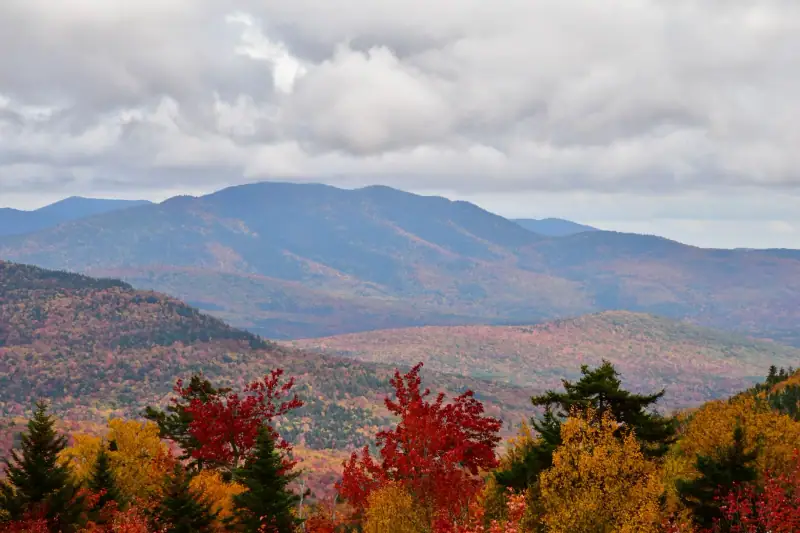
- Early fall is appreciated for forest colors, notably in the East, with thinner crowds and often more reasonable prices. At altitude, conditions can change fast.
- Winter is the season for skiing, snow activities and, farther north, watching the northern lights. You need to equip yourself accordingly, and some roads or seasonal activities are closed.
- Spring is a transition season: snowmelt, trails still snowy at altitude, some services not yet open, but lower prices.
To decide precisely, our guide when to go to Canada details the seasons, the weather and the best time for each region. Keep in mind that the ideal period for one region is not necessarily ideal for another: you do not visit the Rockies in January the way you visit them in August.
How to get there and prepare your departure
Flights
Prices vary strongly by period, with markedly higher fares in midsummer. Traveling in the shoulder season often lowers the bill noticeably.
A planning tip: if your itinerary is linear, consider an “open jaw” ticket, that is arriving in one city and leaving from another, to avoid backtracking. For example, arrive in Calgary and leave from Vancouver. This avoids several hundred needless kilometers, at the possible price of a surcharge for dropping the vehicle in another city.
Compare flights to Canada
Price gaps between dates and arrival cities are significant: compare before booking.
Entry requirements
Entry rules depend on your passport. Check the official travel advice of your government before you book: travel.state.gov (US), GOV.UK (UK), travel.gc.ca (Canada), Smartraveller (Australia) (checked November 2026). Rules can change: the only reliable source remains the official Canadian government website.
Travel insurance
Medical costs can be very high for a foreign visitor, especially as the Canadian health system is not free for tourists. Insurance with solid medical and repatriation coverage is strongly recommended, as well as a cancellation guarantee if you book long in advance. Compare limits, deductibles and exclusions (adventure sports, high-altitude hiking) before choosing the contract that fits your type of stay.
Getting around Canada
By car: the best option outside the cities
In the Rockies, on Vancouver Island or in Nova Scotia, the car is by far the most practical way. It gives the freedom to stop at viewpoints, to leave early to avoid the crowds and to reach trails that are poorly served. Driving is on the right, and main roads are in good condition. But distances are large: allow margin, avoid driving at night in wild areas, where animals cross the road, and always keep enough fuel between gas stations.
For the trip between Vancouver and the Rockies, the road is long: allow a big day of driving, or better, two stages. If you combine several distant regions, a domestic flight is often more rational than long days at the wheel. The cost of rental, fuel and possible drop-off fees in another city is detailed in our budget guide.
By domestic flight
To link East and West, the plane is the obvious choice. Airlines offer many connections between the big cities, with very variable fares depending on the booking date. Always check baggage conditions, which often differ from long-haul flights.
By train, bus and urban transit
Long-distance rail exists, including a famous cross-country journey, but it is slow and expensive, and is aimed more at travelers who make the trip itself the experience. Intercity buses complete the offer on some routes. In big cities, public transit (subway, streetcar, bus, passenger ferries in Vancouver) is often enough for a car-free stay. For a stay in Toronto or Vancouver, leaving the car in the parking lot or not renting one is a good idea.
Where to sleep by region
Lodging is the biggest expense once you are there, and it should be booked early for peak periods. Here is how to think by region.
In the Rockies, the towns of Banff and Jasper concentrate the offer: hotels, motels, hostels, cabins, campgrounds in the national parks. In summer, everything fills up months in advance, and prices climb. Staying at Lake Louise puts you closest to the most famous lakes, at the price of a more limited and more expensive offer. Our guide where to stay in Banff and Lake Louise compares the options.
In Vancouver and Toronto, you find everything, from hostels to big hotels. The choice of neighborhood matters more than the category: favoring an area well served by transit saves time and lets you do without a car.
In the Maritimes, small guesthouses, motels and family inns are common, with a more authentic atmosphere and rates often lower than in the Rockies.
For camping, national park sites are booked through Parks Canada and go very fast in season. It is an economical and immersive option, to be planned early.
A few habits for booking smartly: compare offers for your exact dates, check cancellation conditions (a free option until a few days before arrival gives flexibility), and read recent reviews rather than a property’s old reputation. Also look at extra costs, such as parking, sometimes charged extra in cities.
Compare lodging in Toronto
Hotels, apartments and hostels: compare rates and cancellation conditions for your dates.
What budget to expect
Canada is a country where the budget varies a lot depending on travel style. The main items are the international flight, lodging, car rental and fuel, meals, and paid activities (excursions, park entry, lifts). Tipping and taxes, which are not included in displayed prices, also weigh on the final bill.
To fix ideas, an independent trip for two, with a rental car, mid-range hotels and mixed meals (supermarket and restaurant), costs noticeably more than a stay in hostels with a shared kitchen, but remains very doable with some planning. The most effective ways to save are to travel in the shoulder season, book lodging and the car early, share rooms and cook some of your meals.
We have detailed all this, item by item and with three costed profiles, in our guide budget for a stay in Canada. Use it as a basis to build your own estimate and keep a margin for the unexpected.
Activities and food: what to do and what to eat
Canada is a playground for outdoor lovers: hiking in summer, skiing and snowshoeing in winter, canoeing on the lakes, whale watching on the coasts, boat rides, guided excursions on the glaciers. In the cities, museums, markets, neighborhoods to explore and nightlife take over. Many excursions should be booked in advance in high season, notably those that depend on weather or tides.
On the plate, the country stands out less for a single dish than for a diversity of traditions: multicultural cuisine in the big cities, seafood on both coasts, maple products, Québécois specialties, Western meats. Restaurant meals are generally expensive, which encourages alternating with supermarket shopping, notably in the national parks. Tastings and guided food tours are a good way to discover a city in a few hours.
Excursions and activities in Canada
Cruises, guided tours, excursions in the Rockies: book in advance in high season.
Which itinerary to choose by length of stay
Here are a few ideas for building your trip, to adapt to the season and your wishes.
One week: focus on a single hub. Either the Rockies, with Calgary, Banff, Lake Louise and the road to Jasper, or Vancouver and Vancouver Island, or Toronto and Niagara. Avoiding multiplying stops is the best decision for a week.
Two weeks: combine two neighboring hubs, for example Vancouver, Vancouver Island and the Rockies, allowing for the road between them, or a big eastern city combined with the Maritimes. It is the most comfortable length for a first trip.
Three weeks and more: you can combine West and East, with a domestic flight, or add a more distant region. Keep some breathing days: distances tire more than you think.
To avoid classic mistakes, keep a few rules in mind. Never underestimate travel times. Do not schedule two long consecutive driving stages. Plan a buffer day before the return flight. And book first the unavoidable points in high season: Rockies lodging, car, highly sought-after excursions.
To go further, here is the list of guides already published on this site, which you can read in the order that suits you:
- Preparation: when to go, budget.
- Rockies: Banff or Jasper, where to stay in Banff and Lake Louise, Icefields Parkway.
- British Columbia: Vancouver in 3 days, Vancouver Island in 5 days.
- Ontario: Toronto in 3 days, Niagara Falls.
- Maritimes: Nova Scotia in 7 days.
Practical tips for traveling well
A few simple habits avoid most bad surprises.
- Prices are displayed before tax: add them, and the tip, to your estimate. This surprises many visitors at the checkout.
- Phone: check your carrier’s international plan, or consider a travel eSIM or a local SIM card to limit fees. In mountain areas, coverage is patchy: download your maps offline.
- Power outlets: Canada uses North American-style outlets, so bring an adapter if your devices use a different plug.
- Safety in nature: follow Parks Canada’s instructions, do not stray from marked trails, tell someone your itinerary and carry water, warm clothes and sun protection, even in summer. The weather changes fast in the mountains.
- Bears: learn the recommended practices before hiking, notably on food storage and what to do if you meet one.
- Time difference: Canada spans six time zones. Plan a quiet first day, and spend your first night in the arrival city rather than going straight into a long drive.
- Money: bank cards are accepted almost everywhere. Ask your bank about fees abroad, and keep a little cash for the occasional small purchase.
- National parks: access is paid, with day or annual passes. If you plan to visit several parks, compare rates on the official Parks Canada website.
Where to start
The best way to organize a trip to Canada is to proceed in stages. First choose the region that makes you dream, then the season that suits it, then calculate the budget and book the tightest elements first: flight, Rockies lodging, car. Once these three points are secured, the rest of the program builds easily. Feel free to explore the detailed guides on this site to refine each step, and have a good trip.
Frequently asked questions
How long do you need to visit Canada?
A single region can be visited properly in 10 to 15 days: the Rockies and Vancouver, Ontario and Quebec, or the Maritimes. Trying to cross the country from east to west in two weeks means spending most of the time in transit. Three weeks let you combine two regions.
What is the best time to go to Canada?
It depends on the region and what you want to do. Summer is high season for the Rockies and hiking, early fall is known for the colors of the eastern forests, and winter is the season for skiing and the northern lights in the North. Our dedicated article details the weather region by region.
Do you need a visa to go to Canada?
Entry rules depend on your passport. Check the official travel advice of your government before you book: travel.state.gov (US), GOV.UK (UK), travel.gc.ca (Canada), Smartraveller (Australia) (checked November 2026).
Can you visit Canada without a car?
Yes for the big cities (Vancouver, Toronto, Montreal), which are well equipped with public transit. However, the Rockies, Vancouver Island and Nova Scotia are much easier to discover by car, because distances are long and public transport is infrequent outside the main routes.
Is Canada an expensive country?
It is rather expensive once you are there, especially for lodging in high season and restaurant meals, whose prices are displayed before tax and tip. The budget varies a lot with your travel style: our budget guide offers three costed profiles.
Do you need to speak English to travel in Canada?
English is the most useful language in most of the country. French is an official language alongside English at the federal level and is widely spoken in Quebec, as well as in some Acadian communities of the Maritimes. Some English remains valuable everywhere else.
What travel insurance should you plan for Canada?
Foreign visitors have to pay for health care, which can cost a lot. Travel insurance with good medical and repatriation coverage is strongly recommended. Compare coverage, limits and exclusions before subscribing.
More Canada guides
Keep reading
What to See in Ontario: Toronto, Niagara, Ottawa and the Great Outdoors
What to see in Ontario: Toronto, Niagara Falls, Ottawa, the Rideau Canal, Thousand Islands, Algonquin and the Bruce Peninsula. Routes, seasons and tips.
What to See in British Columbia: 10 Must-See Sights on the Pacific Coast
Vancouver, Whistler, Victoria, Tofino, Okanagan: what to see in British Columbia? Our must-sees, practical tips and a sample 10-day route.
What to See in the Canadian Rockies: 12 Must-See Sights
Banff, Lake Louise, Jasper, Yoho, Kootenay: what to see in the Canadian Rockies? Lakes, glaciers, canyons and wildlife, with tips to organize them.
Ready-made
Canada itineraries
3 days
Toronto in 3 Days: What to See and Do on a First Visit
Toronto in 3 days: CN Tower, the islands, markets, neighborhoods and a Niagara excursion. A day-by-day itinerary with lodging and transit tips.
2 days
Icefields Parkway Road Trip: Lake Louise to Jasper
Plan the scenic drive between Lake Louise and Jasper: stops, driving time, fuel, wildlife and tips for making the most of the Rockies.
7 days
Nova Scotia in 7 Days: Halifax, the South Shore and the Cabot Trail
A one-week Nova Scotia itinerary: Halifax, Peggy's Cove, Lunenburg, then the Cabot Trail on Cape Breton. Stages, distances and practical tips.