What to see
What to See in the Canadian Rockies: 12 Must-See Sights
We may earn a commission when you book through links on this page, at no extra cost to you. We don't visit or try the places we cover: we summarize published sources. How we work
In short
- For a first trip, the essentials are Banff and surroundings, Lake Louise and Moraine Lake, the Icefields Parkway with the Athabasca Glacier, then Jasper and Maligne Lake.
- Plan a week for a comfortable loop between Calgary, Banff, Lake Louise and Jasper; with 10 days or more you can add Yoho and Kootenay.
- The Icefields Parkway is about 230 km (143 mi) long: fill up on fuel first and plan a full day to stop at the viewpoints.
- A Parks Canada entry fee is required as soon as you stop in a national park; check current rates on the official site.
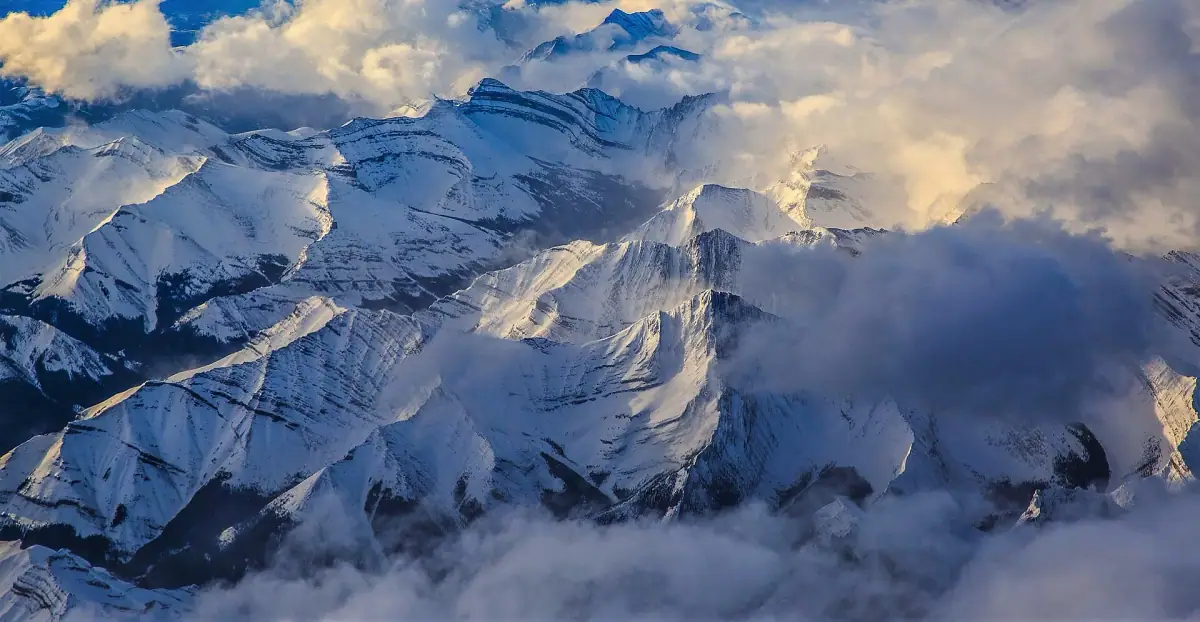
When you look for what to see in the Canadian Rockies, you quickly face an embarrassment of choice: turquoise lakes, glaciers you can approach, narrow canyons, hot springs, giant waterfalls and, around a bend, an elk grazing at the roadside. This mountain range straddling Alberta and British Columbia includes several neighboring national parks (Banff, Jasper, Yoho and Kootenay) that together form a UNESCO World Heritage site.
The trap is trying to see everything in a few days. Distances are large, the light changes quickly and the most famous sites require arriving early. This guide therefore sorts places by area, with what is really worth the detour in each, and a few pointers to build a coherent route. To choose your base, the guides Banff or Jasper and where to stay in Banff and Lake Louise will help you narrow it down.
How to organize before choosing the sights
The first thing to understand: the Canadian Rockies divide into large areas linked by a few main roads. The usual gateway is Calgary, from where you reach Banff in a little over an hour by road. From there, the Trans-Canada Highway heads west to Lake Louise and Yoho, while the Icefields Parkway heads north toward Jasper. If you spend a night in Calgary before or after, our article on visiting Calgary details what you can do there.
A few simple principles avoid disappointments:
- Arrive early at the most popular sites, especially in July and August. Parking lots fill up from the morning.
- Allow margin: a drive that looks short on the map is slowed by stops, animals on the road and seasonal roadwork.
- Dress in layers: even in summer, it is cool at altitude and the weather can change quickly.
- Check access before leaving: some roads and trails are closed depending on the season or weather, and access to a few sites is by shuttle only.
- Stay connected: mobile coverage is patchy in the parks. Check your carrier’s international plan or use a travel eSIM; our guide to SIM cards and eSIMs for Canada explains how to keep a connection.
To choose the season, see our article on when to go to Canada: summer opens up all access, fall offers beautiful light and fewer people, winter transforms the landscapes but strongly limits what you can do.
Sleep in the Rockies
In high season, lodging in Banff and Lake Louise fills up early: compare availability as soon as your dates are set.
Banff: the town and its immediate surroundings
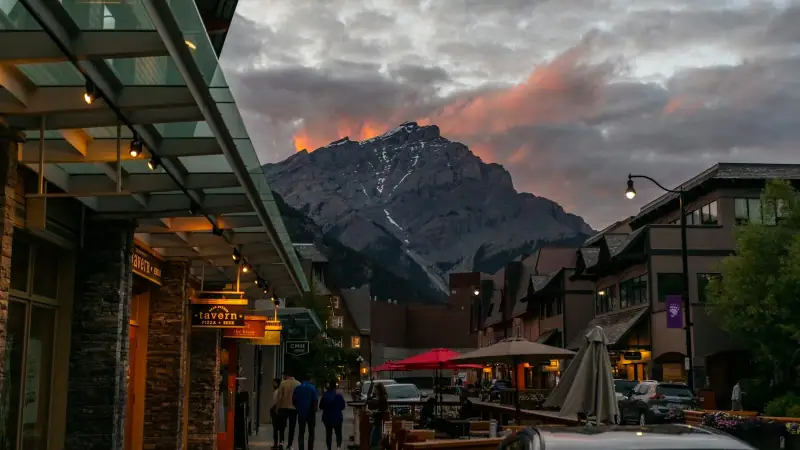
Banff is the most obvious gateway to the Rockies. Founded in the 19th century, Banff National Park is the oldest in Canada, and the small town that bears its name is its heart: a lively main street, shops, restaurants, and peaks visible from almost everywhere.
Several things are worth the detour without requiring any particular effort:
- The gondola ride up the mountain that overlooks the town, for an overview of the Bow Valley.
- Bow Falls and the trails along the river, steps from the center.
- The hot springs on the neighboring mountain, where you bathe facing the peaks, a good way to recover after a day of walking.
- The Vermilion Lakes, at the foot of the town, especially beautiful at sunrise and sunset, with good chances of spotting birds and sometimes large mammals.
A short drive away, Lake Minnewanka is the largest lake in the park. You can walk along the shore or board a narrated cruise. Johnston Canyon is a much-loved walk: a well-kept trail with walkways attached to the rock wall, leading to waterfalls. It is very busy in summer; early in the morning or late in the day, the atmosphere is much more pleasant.
If you want to compare Banff’s assets with those of its northern neighbor, read our Banff or Jasper comparison.
Lake Louise and Moraine Lake: the two most famous lakes
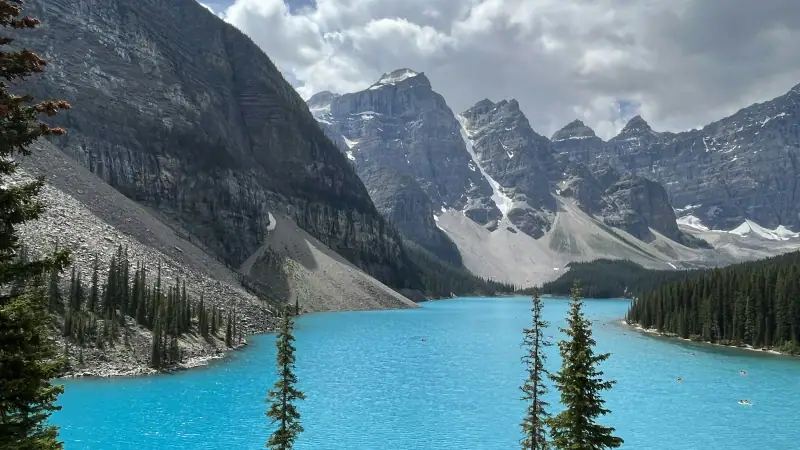
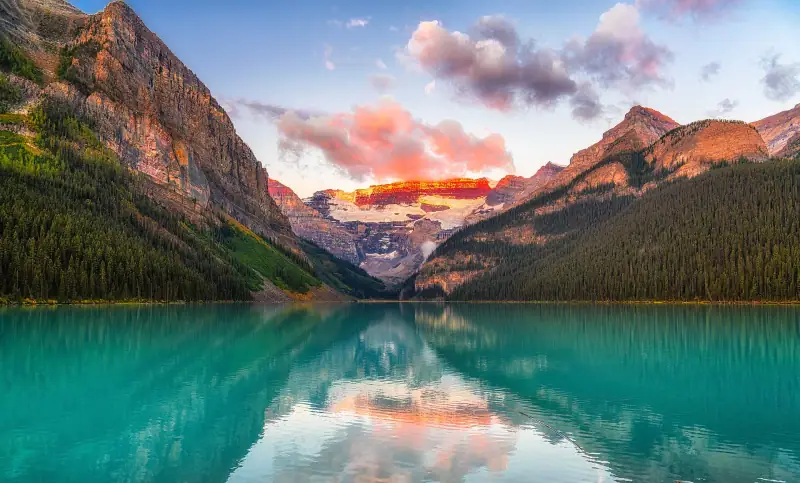
About 45 minutes by road from Banff, the Lake Louise area is the one everyone wants to see. Lake Louise looks like a large turquoise mirror framed by mountains and a glacier at the back. The walk along the shore is easy and accessible to almost everyone; for a wider view, several trails climb to the heights, such as those leading to the historic tea houses.
Moraine Lake, smaller and set higher in the Valley of the Ten Peaks, is known for its deep blue waters and its backdrop of rocky peaks. Access by private car is regulated: the road is closed to most private vehicles and you generally get there by shuttle. The details (reservation, schedules, opening season) change from year to year: check the Parks Canada website before planning.
A few tips to enjoy these two sites:
- Come very early in the morning or late in the afternoon to avoid the crowds and get better light.
- Bring warm clothes: near the glaciers, the air is cool even in midsummer.
- Allow a full day for this area if you like walking, a half day otherwise.
- Do not expect the same color all year: the turquoise brilliance depends on glacier melt and the season.
To sleep there or nearby, see where to stay in Banff and Lake Louise.
The Icefields Parkway: the glacier road
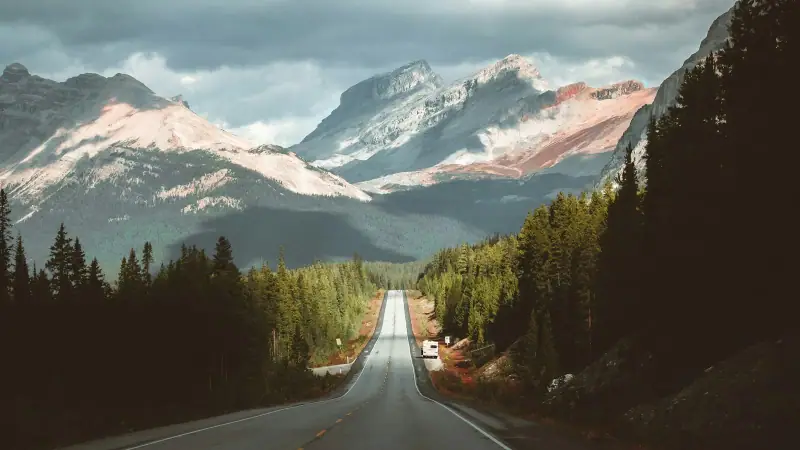
Between Lake Louise and Jasper, the Icefields Parkway is considered one of the most beautiful scenic roads in the world. About 230 km (143 mi) long, it links the two parks through a succession of glacial valleys, lakes and waterfalls. The full drive takes a few hours of pure driving, but plan a full day if you want to stop at the viewpoints.
Among the stops worth the detour:
- Bow Lake, a dazzling blue, beside the road.
- The Peyto Lake viewpoint, famous for its color and shape, reached by a short trail from the parking lot.
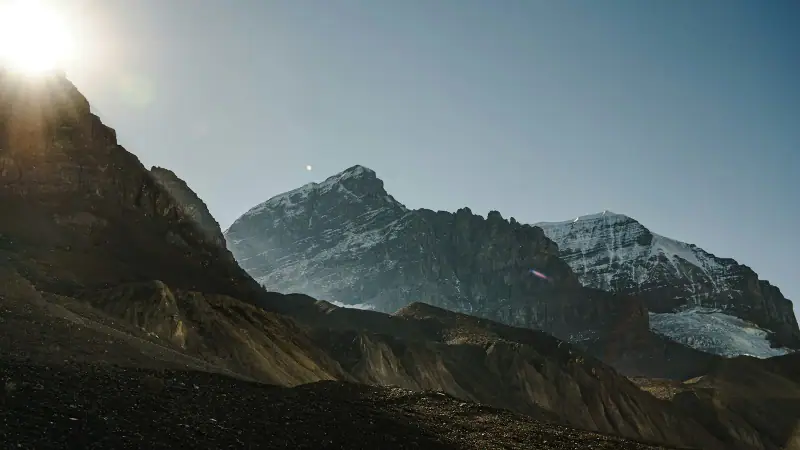
- The Columbia Icefield and the Athabasca Glacier, one of the most visited glaciers in North America. Guided tours on the ice are offered in season, with special vehicles.
- Sunwapta Falls and Athabasca Falls, two powerful and easily accessible waterfalls, toward the northern part of the road.
Two precautions are in order: fill up your tank before setting out, because gas stations are rare on this stretch, and check the state of the road, which can be affected by snow outside the good season. Our dedicated article, Icefields Parkway road trip between Lake Louise and Jasper, offers a detailed step-by-step outline.
Rent a car for the Rockies
A car gives you the freedom to leave early and stop wherever you like on the Icefields Parkway. Compare rental companies.
Jasper and its surroundings: the wild side
North of the Icefields Parkway, Jasper National Park is larger and generally less crowded than Banff. The small town of Jasper serves as a convenient base, with its shops and restaurants, and the park has kept a wilder character: it is one of the best places to watch wildlife.
The sites to remember:
- Maligne Lake, one of the park’s big lakes, known for its deep waters and its panoramas. Cruises let you reach one of the most photographed islands in the region, depending on the season.
- Maligne Canyon, a narrow gorge explored by maintained walkways.
- Mount Edith Cavell and its meadows, for those who like high mountains and hanging glaciers. Access conditions vary by season.
- Pyramid and Patricia Lakes, close to town, for a quiet walk with an open view of the mountain.
- Miette Hot Springs, to relax in a wooded valley setting.
Jasper is also recognized as a dark sky preserve: on a clear night, far from lights, the show is remarkable. Note: a major fire hit the town in July 2024. Tourist services have resumed, but check with Parks Canada before leaving on the state of lodging, trails and roads. To choose your area and type of lodging, see where to stay in Jasper.
Yoho: the neighboring park too often forgotten
Across the boundary between Alberta and British Columbia, Yoho National Park receives fewer visitors than Banff, although it offers landscapes just as spectacular. Its name comes from a Cree expression of wonder, and you quickly understand why.
The three main sites:
- Emerald Lake, surrounded by forests and mountains, which you can walk around on an easy lakeshore trail, or paddle in summer. The deep green color of the water gives it its name.
- Takakkaw Falls, among the tallest waterfalls in Canada. You approach them by a short walk from the parking lot. The access road is only open part of the year.
- The Natural Bridge, a rock formation carved by the Kicking Horse River, visited in a few minutes.
Yoho is easily visited in a day from Lake Louise, or by spending a night there to enjoy the place longer. Here too, check access before leaving.
Kootenay: canyons, ochre springs and hot springs
A little further south, Kootenay National Park is often driven through without stopping. That is a shame: it has different, more varied landscapes, with narrow canyons and colored soils.
- Marble Canyon, a deep gorge cut into limestone, discovered by well-built walkways.
- The Paint Pots, mineral-rich springs that color the ground in ochre tones, whose pigments were used by Indigenous peoples.
- Radium Hot Springs, at the park’s southern exit, for a bathing break in hot pools surrounded by cliffs.
Kootenay is a good choice if you cross the Rockies without returning by the same road, or if you look for places less crowded than Lake Louise.
Excursions and guided tours in the Rockies
Glacier outing, wildlife watching, cruise or guided hike: browse the activities offered in the region.
Watching Rockies wildlife safely
One of the great pleasures of the trip is meeting wild animals. Elk, deer, bighorn sheep, mountain goats and, with luck, black bears or grizzlies can be glimpsed near roads, meadows and lakes. The best times are generally sunrise and the end of the day.
One rule dominates all others: never approach. Stay in your car if an animal is near the road, do not feed it, and follow Parks Canada’s instructions. When hiking, check the bear alerts for the area, walk in a group and make noise in areas of limited visibility. Some guides recommend bear spray for backcountry hikes: ask locally about what is appropriate to carry.
A pair of binoculars helps you watch wildlife from afar without disturbing it.
Sample route for a week
Here is a realistic outline, to adapt to your pace and the season. It is deliberately flexible: distances between stops are short, and each day focuses on a single area.
- Day 1: Calgary to Banff. Arrival, drive to Banff, first walk by the river and settling in.
- Day 2: Banff and surroundings. Gondola, Bow Falls, hot springs or Lake Minnewanka.
- Day 3: Lake Louise and Moraine. Early start for the two lakes, walk along the shore, by shuttle if needed for Moraine.
- Day 4: Yoho. Emerald Lake, Takakkaw Falls if the road is open, Natural Bridge, then back to Lake Louise.
- Day 5: Icefields Parkway. Bow Lake, Peyto Lake, Athabasca Glacier, then arrival in Jasper.
- Day 6: Jasper. Maligne Lake and Canyon, Pyramid Lake or Miette Hot Springs.
- Day 7: return. Depending on your flight, back to Calgary in one long day, or to Edmonton, another airport reachable from Jasper.
If you have less time, limit yourself to Banff and Lake Louise: the result is more pleasant than an overly dense circuit. With ten days, add an extra night in Yoho and a stop in Kootenay.
Budget and preparation: what to know
The Rockies are an expensive destination, especially in high season. Lodging is the first expense, ahead of the car and food. Book early, choose options with a kitchen if you travel in a group, and picnic at the sites: most are equipped with tables. Our Canada budget guide helps you estimate the whole.
Entry requirements depend on your passport. Check the official travel advice of your government before you book: travel.state.gov (US), GOV.UK (UK), travel.gc.ca (Canada), Smartraveller (Australia) (checked November 2026). Also think about park entry: it is paid, and the best-value option depends on the length of your stay and the number of people. Check current conditions on the official Parks Canada website.
Tips for a successful trip
- Choose few bases: two or three nights per area are better than changing hotels every day.
- Alternate big sites and quiet moments: a very busy lake in the morning, a quiet walk in the afternoon.
- Keep a spare day for the weather: an overcast sky can erase the colors of a lake, but the next day can change everything.
- Respect nature: take your trash with you, stay on the trails and pick nothing.
- Check alerts on the Parks Canada website the same morning, for roads, trails and wildlife.
With these pointers, you can put together a stay tailored to you, from the extended weekend to the two-week road trip. Whatever route you choose, it is the combination of lakes, glaciers and wide open spaces that makes this region one of the finest playgrounds in the country.
Frequently asked questions
What should you see first in the Canadian Rockies?
For a first stay, the essentials are Banff and its surroundings, Lake Louise and Moraine Lake, the Icefields Parkway with the Athabasca Glacier, then Jasper and Maligne Lake. If you have a little more time, add Yoho National Park.
How many days do you need to visit the Canadian Rockies?
Plan a week for a comfortable loop between Calgary, Banff, Lake Louise and Jasper. With 4 or 5 days, focus on Banff and Lake Louise; with 10 days or more, you can add Yoho and Kootenay without rushing.
What is the best time to see the turquoise lakes?
Generally from June to September, when the lakes are thawed and accessible. The color of the water changes through the summer as the glaciers melt. See our guide on the best time to go to Canada to refine your dates.
Do you need to rent a car to visit the Rockies?
It is the most flexible solution, especially for the Icefields Parkway, Yoho and Kootenay, where public transit is limited. In Banff and Lake Louise, seasonal shuttles serve some very busy sites.
Do you have to pay to enter the national parks?
Yes, a Parks Canada entry fee is required as soon as you stop in a national park (Banff, Jasper, Yoho, Kootenay). Rates and options change: check them on the official Parks Canada website before leaving.
Can you see bears and other wild animals?
Yes, elk, deer, bighorn sheep, mountain goats and sometimes bears are seen near roads and trails. Always keep your distance, never feed animals and follow the rangers' instructions.
Are the Rockies suitable for families with children?
Yes: many sites can be visited on short walks along maintained trails (lakeshores, walkways, viewpoints). Choose short stops and keep some margin in the schedule.
More Canada guides
Keep reading
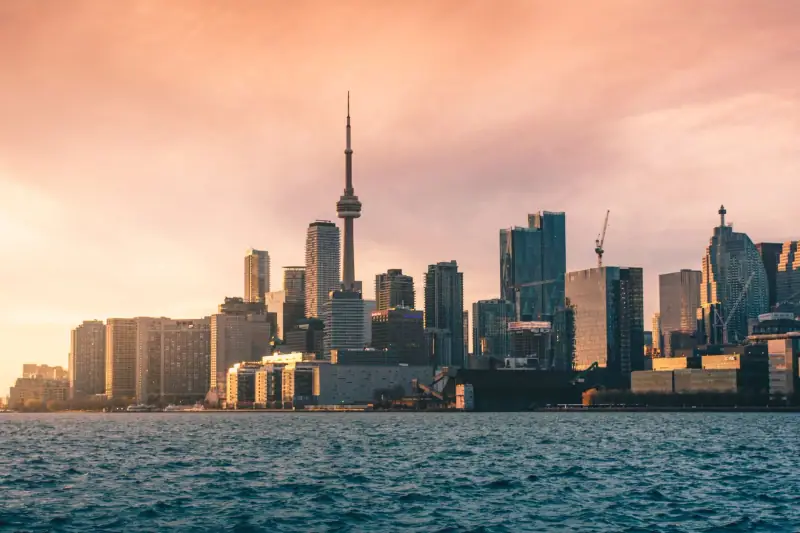
What to See in Ontario: Toronto, Niagara, Ottawa and the Great Outdoors
What to see in Ontario: Toronto, Niagara Falls, Ottawa, the Rideau Canal, Thousand Islands, Algonquin and the Bruce Peninsula. Routes, seasons and tips.
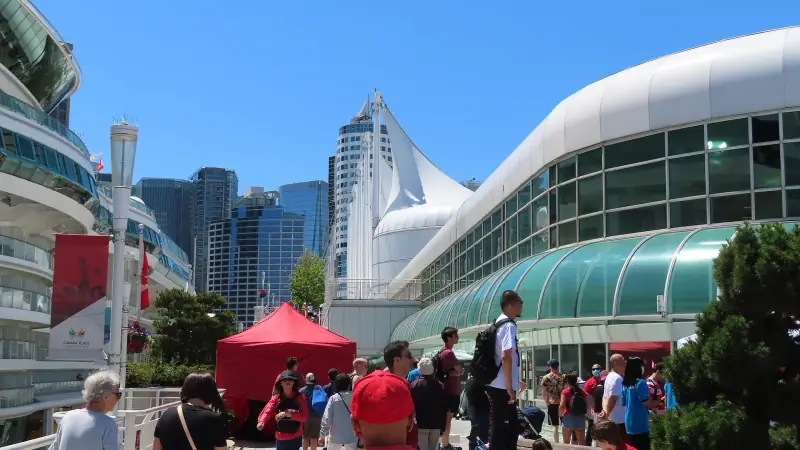
What to See in British Columbia: 10 Must-See Sights on the Pacific Coast
Vancouver, Whistler, Victoria, Tofino, Okanagan: what to see in British Columbia? Our must-sees, practical tips and a sample 10-day route.
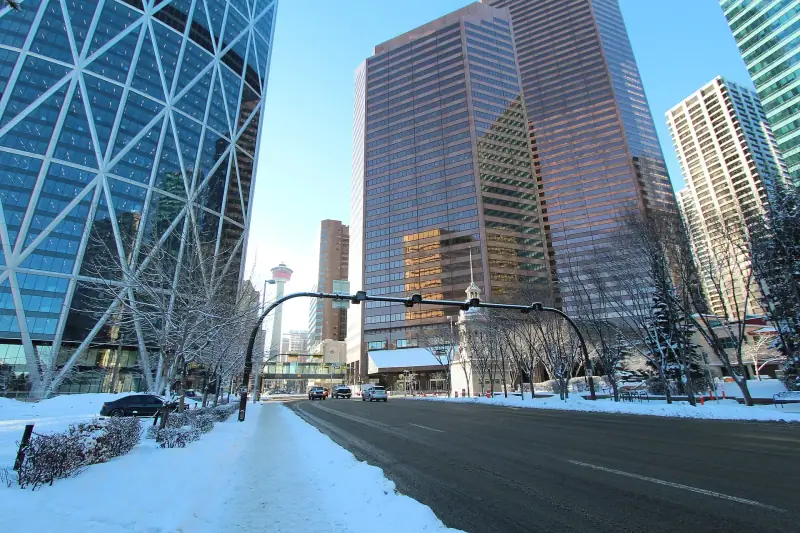
Visiting Calgary: What to See and Do at the Gateway to the Rockies
What to see in Calgary? Calgary Tower, Stampede, Heritage Park, Prince's Island, Studio Bell, Drumheller and nearby Banff: a full guide to plan your stay.
Ready-made
Canada itineraries
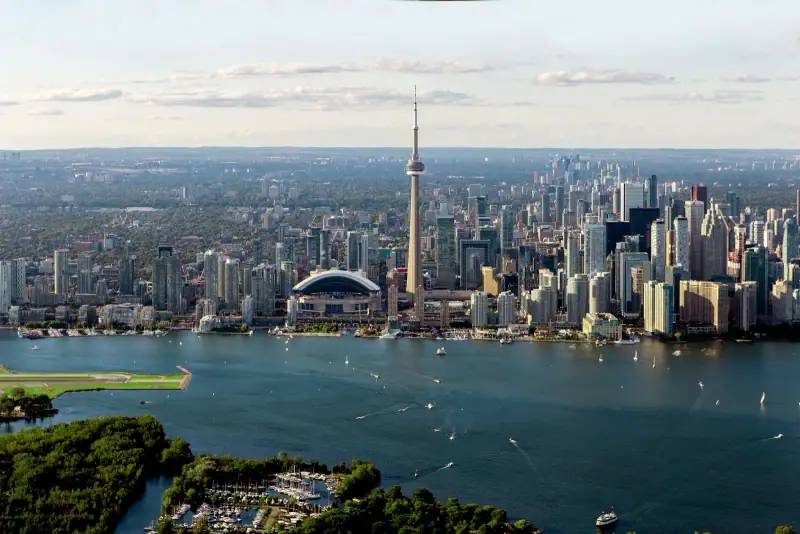
3 days
Toronto in 3 Days: What to See and Do on a First Visit
Toronto in 3 days: CN Tower, the islands, markets, neighborhoods and a Niagara excursion. A day-by-day itinerary with lodging and transit tips.
2 days
Icefields Parkway Road Trip: Lake Louise to Jasper
Plan the scenic drive between Lake Louise and Jasper: stops, driving time, fuel, wildlife and tips for making the most of the Rockies.
7 days
Nova Scotia in 7 Days: Halifax, the South Shore and the Cabot Trail
A one-week Nova Scotia itinerary: Halifax, Peggy's Cove, Lunenburg, then the Cabot Trail on Cape Breton. Stages, distances and practical tips.