Itineraries
Canada in 13 days: Toronto, Niagara, Ottawa, Montreal and Quebec City by car
We may earn a commission when you book through links on this page, at no extra cost to you. We don't visit or try the places we cover: we summarize published sources. How we work
Day by day
- Days 1-3Toronto: waterfront, markets, neighborhoods and the islands
- Day 4Pick up the car, drive to Niagara Falls
- Day 5East along Lake Ontario to Kingston
- Days 6-7Ottawa: Parliament Hill and the Rideau Canal
- Days 8-10Montreal: Old Montreal, Mount Royal, markets
- Days 11-12Quebec City: Old Quebec and Montmorency Falls
- Day 13Return the car, fly from Quebec City (YQB)
Where to sleep
- Toronto3 nights
- Niagara Falls1 night
- Kingston1 night
- Ottawa2 nights
- Montreal3 nights
- Quebec City2 nights
In short
- Thirteen days and 12 nights: Toronto (3), Niagara Falls (1), Kingston (1), Ottawa (2), Montreal (3) and Quebec City (2), with the car only from day 4.
- The two longest known drives are Ottawa to Montreal (2 h 45, 200 km) and Montreal to Quebec City (3 h 30, 256 km).
- Fly into Toronto Pearson (YYZ) and out of Quebec City (YQB). A one-way rental across two provinces usually adds a drop-off fee: check it.
- Late August to mid-October gives the best balance of weather and foliage; July and August are the busiest and most expensive months.
This route links the cities of eastern Canada in one west-to-east line: Toronto, Niagara Falls, Kingston, Ottawa, Montreal and Quebec City. It suits travelers who want big cities, one famous waterfall and a change of language along the way, without long wilderness drives. You fly into Toronto Pearson (YYZ), start with three car-free nights, and leave from Quebec City Jean Lesage International Airport (YQB).
The car comes in on day 4 and goes back on day 13. Two of the drives have a published time: Ottawa to Montreal takes 2 h 45 and Montreal to Quebec City 3 h 30. Our Ontario guide advises staying within four to five hours of driving a day, and that is the pace this plan keeps. Cities are for walking, so most days are short on the road.
The route at a glance
| Days | Base | Nights | Drive from previous base |
|---|---|---|---|
| 1-3 | Toronto | 3 | Pearson airport to downtown by rail shuttle, no car |
| 4 | Niagara Falls (Ontario side) | 1 | About 130 km (81 mi), roughly 1 h 30 without heavy traffic |
| 5 | Kingston | 1 | East along Lake Ontario, no published time |
| 6-7 | Ottawa | 2 | From Kingston, no published time |
| 8-10 | Montreal | 3 | 2 h 45, 200 km (124 mi) |
| 11-12 | Quebec City | 2 | 3 h 30, 256 km (159 mi) |
| 13 | Quebec City airport (YQB) | - | 20 min, 14 km (9 mi) |
Car rental in Canada
You pick up in Toronto and drop off in Quebec City: compare the one-way fee between companies, and book early for summer.
Day by day
Days 1-3: Toronto
Pearson International Airport is west of downtown. A rail shuttle links it to Union Station, the main downtown station, in under about half an hour. Allow a quiet first evening after the flight. Staying downtown, around Union Station and the waterfront, keeps the main sights, the subway and the streetcars close. Toronto is expensive in summer, so book early: Hotels in Toronto.
You do not need a car here: parking is expensive and rush-hour traffic is dense. Our Toronto in 3 days guide lays out the sequence, and it fits the two full days you have.
- Waterfront and CN Tower. The tower dominates the skyline, and the view from its decks depends on the weather. Book a time slot ahead in high season. Walk the waterfront to Harbourfront and have dinner in the Entertainment District.
- Markets and neighborhoods. St. Lawrence Market is known for its peameal bacon sandwich (opening days vary, so check). Then the Distillery District, Kensington Market and Chinatown, all linked by streetcar.
- The islands or the museums. A short ferry from the waterfront reaches the car-free Toronto Islands. In poor weather, swap in the Royal Ontario Museum or the Art Gallery of Ontario.
If you want an organized food walk, Toronto food tours are one option.
Day 4: Toronto to Niagara Falls
Pick up the car on the morning you leave, as the Toronto guide suggests. Niagara Falls is about 130 km (81 mi) away, roughly 1 h 30 by road when traffic flows; it can be longer at rush hour or on summer weekend departures, so leave early.
The Ontario shore faces the Horseshoe Falls, about 57 m (187 ft) high. Start with the free walk along the gorge, then choose between the boat cruise run by Niagara City Cruises and Journey Behind the Falls, where tunnels lead to platforms beside the water. The boats are generally stopped in winter. Our Niagara Falls, Canadian side guide has the details.
Sleeping here is worth it: the falls are lit in changing colors in the evening, and the site is quieter early in the morning. Hotels in Niagara Falls and Niagara Falls tickets are easy to compare. If you have time, Niagara-on-the-Lake is about 22 km (14 mi) away, with vineyards known for ice wine; pick a designated driver for tastings.
Day 5: Niagara Falls to Kingston
This day takes you back past Toronto and east along Lake Ontario. Our guides give no drive time for this leg, so check a live route and start in the morning. Kingston is about 260 km (162 mi) from Toronto, which makes it the stop the Ontario guide suggests between Toronto and Ottawa.
Kingston sits where Lake Ontario meets the St. Lawrence River. It has a historic limestone center, a lively waterfront and several forts from the colonial era. The Thousand Islands archipelago is right next door: cruises run mostly from late spring to early fall, so ask operators about schedules. The Rideau Canal begins in Kingston, which sets up the next two days. Compare Hotels in Kingston for your dates.
Days 6-7: Ottawa
Ottawa is about 450 km (280 mi) east of Toronto. Again, no published time for the drive from Kingston: plan on arriving by the afternoon. Ottawa is quieter and more compact than Toronto, with Gothic Revival architecture, national museums and green spaces.
- Parliament Hill is the natural starting point. Ceremonies and events take place on the lawn depending on the season, and parts of the buildings can be visited depending on renovation and security periods: check the official information.
- The Rideau Canal is a 202 km (126 mi) waterway to Kingston with many manual locks, a national historic site and a UNESCO World Heritage site. You can walk or bike its banks in summer; in winter part of it becomes a skating rink when the ice allows.
- Museums and ByWard Market. The big national museums cover history, civilizations and fine arts. ByWard Market is a district of restaurants and shops.
Two days are enough for a first visit, and the city is easy on foot. Our what to see in Ontario guide covers this stretch of the province. Find Hotels in Ottawa here.
Days 8-10: Montreal
Leave Ottawa after breakfast: the drive to Montreal is 2 h 45, 200 km (124 mi). You are now in Quebec, where French is the language of public life and signage; English is widely understood in tourist areas. Montreal is easy without a car, and the metro serves the main neighborhoods. Check parking when you book. In downtowns, our budget guide puts city parking at about 20 to 45 CAD a day. For the choice of area, see where to stay in Montreal: downtown is the most practical for the metro, Old Montreal the most atmospheric. Hotels in Montreal are on the same search.
The plan follows our what to see in Montreal in 3 days guide:
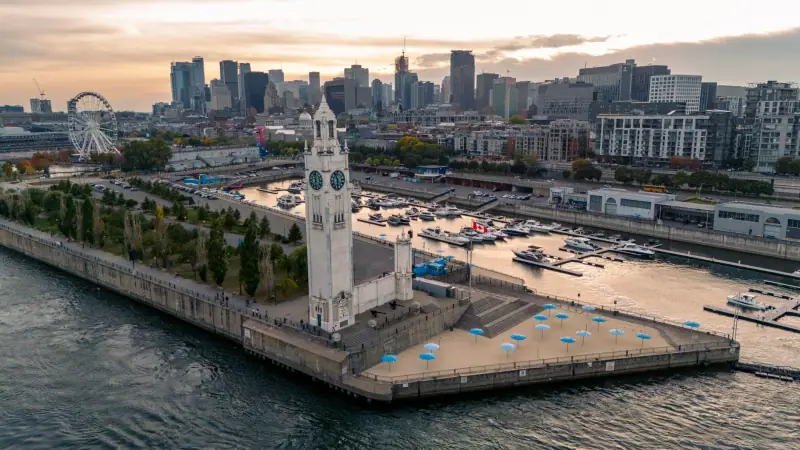
- Day 8, Old Montreal. After the drive, walk from Place d’Armes and Notre-Dame Basilica to Saint-Paul Street, Place Jacques-Cartier and the Old Port. Prices at restaurants there are generally higher than elsewhere.
- Day 9, Mount Royal and the Plateau. Climb to the Kondiaronk Belvedere early for the panorama, then walk the Plateau-Mont-Royal and its outdoor staircases, and end in Mile End for a Montreal-style bagel.
- Day 10, markets and a choice. Jean-Talon Market in the morning, then the Underground City if it is wet or cold, or Olympic Park (allow at least half a day) if the weather is good.
Guided tours in Montreal cover walking tours, food tours and cruises.
Days 11-12: Quebec City
The drive from Montreal to Quebec City is 3 h 30, 256 km (159 mi). Old Quebec is a fortified district with narrow, steep and partly one-way streets, and few hotels have their own parking. Parking is generally charged per night on top of the room rate. Our guide to a hotel with parking in Old Quebec compares four areas: inside the walls, Saint-Jean-Baptiste (10 to 15 minutes on foot from the old town), Saint-Roch (20 to 25 minutes on foot, often with garages) and Sainte-Foy (about 10 km, 6 mi, away, with large lots). Write to the hotel to confirm a reserved space. Hotels in Quebec City are linked here.
Old Quebec is explored on foot, and has been a UNESCO World Heritage site since 1985. Following what to see in Quebec City in 2 days:
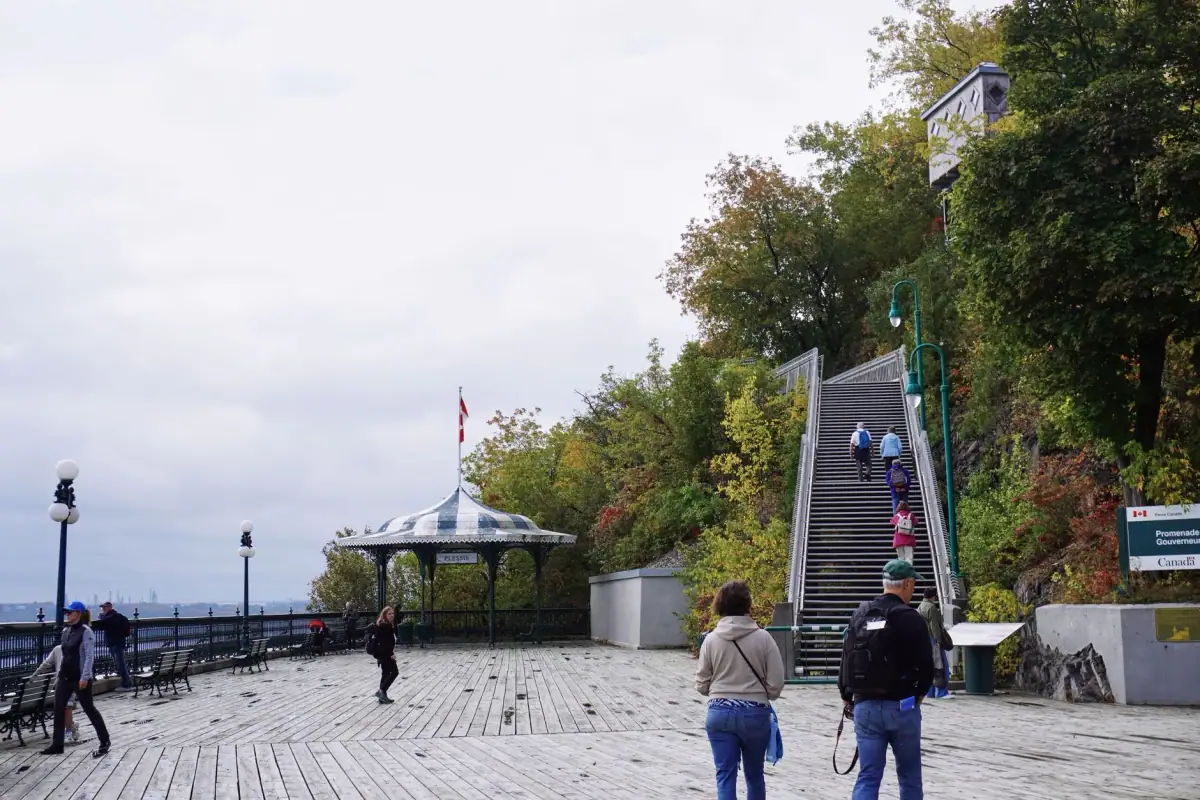
- Day 11, Upper Town. Start at Dufferin Terrace and the Château Frontenac, then the Notre-Dame de Québec Basilica-Cathedral and the ramparts, the only fortifications in North America north of Mexico to have been kept. Take the funicular or the Breakneck Stairs down to Petit Champlain, Place Royale and the Old Port.
- Day 12, Plains of Abraham and Montmorency Falls. Spend one to two hours on the Plains of Abraham, the site of the 1759 battle, and visit the Citadelle if time allows (check hours). In the afternoon, Montmorency Falls, about 83 m (272 ft) high, are about 10 km (6 mi) from downtown, 15 to 20 minutes by car.
Guided tours in Quebec City include walking tours and excursions.
Day 13: Quebec City airport
The airport is 20 minutes, 14 km (9 mi), from Quebec City. Return the car there, which is where the one-way fee applies.
Getting there and away
The usual international gateway for this route is Toronto Pearson (YYZ), and you fly out of Quebec City Jean Lesage (YQB). Montreal-Trudeau (YUL) is the other large airport on the route. Our guides do not describe flight routes or airlines, so compare flights for your dates, including connections to Quebec City, from the US, UK, Canada or Australia. Prices swing a lot with the season.
Because you pick up the car in Toronto and return it in Quebec City, rental companies usually charge a one-way (drop-off) fee, and it can be higher when the drop-off is in another province. It varies by company: check it when you compare offers. Our budget guide lists avoiding drop-off fees among its tips, which is not possible on this route.
Canada is a foreign country for every reader, Americans included. Entry rules depend on your passport, so check the official travel advice of your own government before you book: travel.state.gov (US), GOV.UK (UK), travel.gc.ca (Canada), Smartraveller (Australia).
When to go
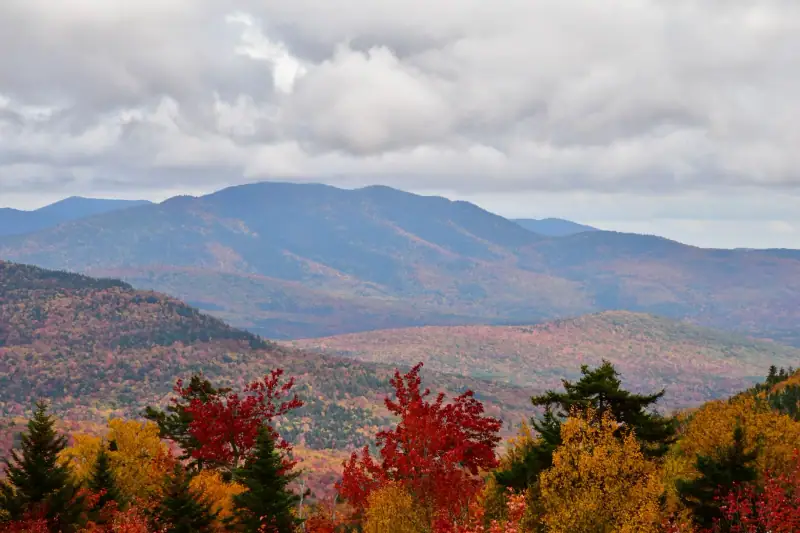
Our best time to visit Canada guide points to late August and September for a first trip: open roads, pleasant temperatures and falling crowds. Foliage in Ontario and Quebec generally runs from late September to mid-October, so keep some flexibility on dates. Summer is high season, and the Quebec guide puts Montreal around 25 °C (77 °F) with episodes of humidity. For Quebec, see when to visit Quebec: festivals fill the cities from June to August, and fall lodging books early.
Some choices depend on the season. Niagara cruises are generally stopped in winter, Thousand Islands cruises run mostly from late spring to early fall, and the Rideau Canal skating depends on the ice. Winter tires are mandatory on Quebec-registered vehicles from December 1 to March 15 and strongly recommended for any rental during this period.
Budget
All prices below are in Canadian dollars (CAD), as the guides give them, and they vary with season and booking date. Our Canada travel budget guide sets the Canada-wide figures:
- Car: about 60 to 100 CAD a day on average, with a higher price for a drop-off in another city.
- Fuel: about 1.85 CAD per liter (about 7 CAD per US gallon) on October 6, 2026, according to Natural Resources Canada.
- Mid-range hotel: about 170 to 260 CAD in summer, often 110 to 170 CAD in winter.
- Meals: a mid-range dinner is 35 to 60 CAD per person, excluding drinks; a casual lunch 18 to 28 CAD.
- Niagara cruise: 32 to 38 CAD.
- Daily profiles per person, excluding the flight: about 130 to 200 CAD for an independent traveler and 200 to 300 CAD for comfort. The guide gives about 1,820 to 2,800 CAD and 2,800 to 4,200 CAD for two weeks.
For the Quebec part, Quebec trip budget says displayed prices exclude taxes (GST 5% and QST 9.975%, close to 15% together), a lodging tax is added at hotels, and a restaurant tip is 15 to 20%. A mid-range hotel there is about C$180 to 300 for two, and a rental about C$50 to 90 per day.
Adapt it
For a shorter trip, drop Kingston and Niagara, or finish in Montreal: the car is only needed on days 4 to 13, and the Montreal and Quebec City in 5 days without a car guide covers the roughly 250 km (155 mi) between the cities by coach (3 h to 3 h 30) or train (about 3 h), so you could drop the car in Montreal (check flights from there). For a longer trip, add days in Quebec: the 9-day road trip in Quebec adds Charlevoix and Tadoussac, and the regional planner at /quebec/trip-planner/ lets you build the Quebec part with Montreal, Quebec City and the other stops. Toronto and Ontario have no planner, so use the Ontario guides linked above.
Frequently asked questions
Do you need a car for the whole trip?
No. Toronto does not need one, so the car starts on day 4 when you leave for Niagara Falls. Montreal and Quebec City are also easy without one, but the car is what links the stops in between.
Can you do this trip without driving between Montreal and Quebec City?
Yes. Our no-car guide covers the roughly 250 km (155 mi) between the two cities by coach (3 h to 3 h 30) or train (about 3 h), so you could drop the car in Montreal. Confirm durations and fares with the carriers.
Is there a drop-off fee for a one-way rental?
Rental companies usually charge one, and our budget guide notes that a drop-off in another city raises the price. This route ends in another province, so compare the fee between companies when you book.
When is the best time for this route?
Late August and September are a good balance of weather and crowds; foliage usually colors from late September to mid-October. Summer is the busiest and most expensive season, and winter calls for snow-ready cars.
Do you need a visa or travel authorization for Canada?
Entry rules depend on your passport. Check the official travel advice of your own government before you book: travel.state.gov (US), GOV.UK (UK), travel.gc.ca (Canada), Smartraveller (Australia).
Ready-made
Canada itineraries
16 days
Canada in 16 days: the Rockies, then Montreal, Quebec City and Tadoussac
BanffLake LouiseJasperMontrealQuebec CityBaie-Saint-PaulTadoussac