Where to stay
Where to Stay in Fortaleza: Neighborhoods and Types of Lodging
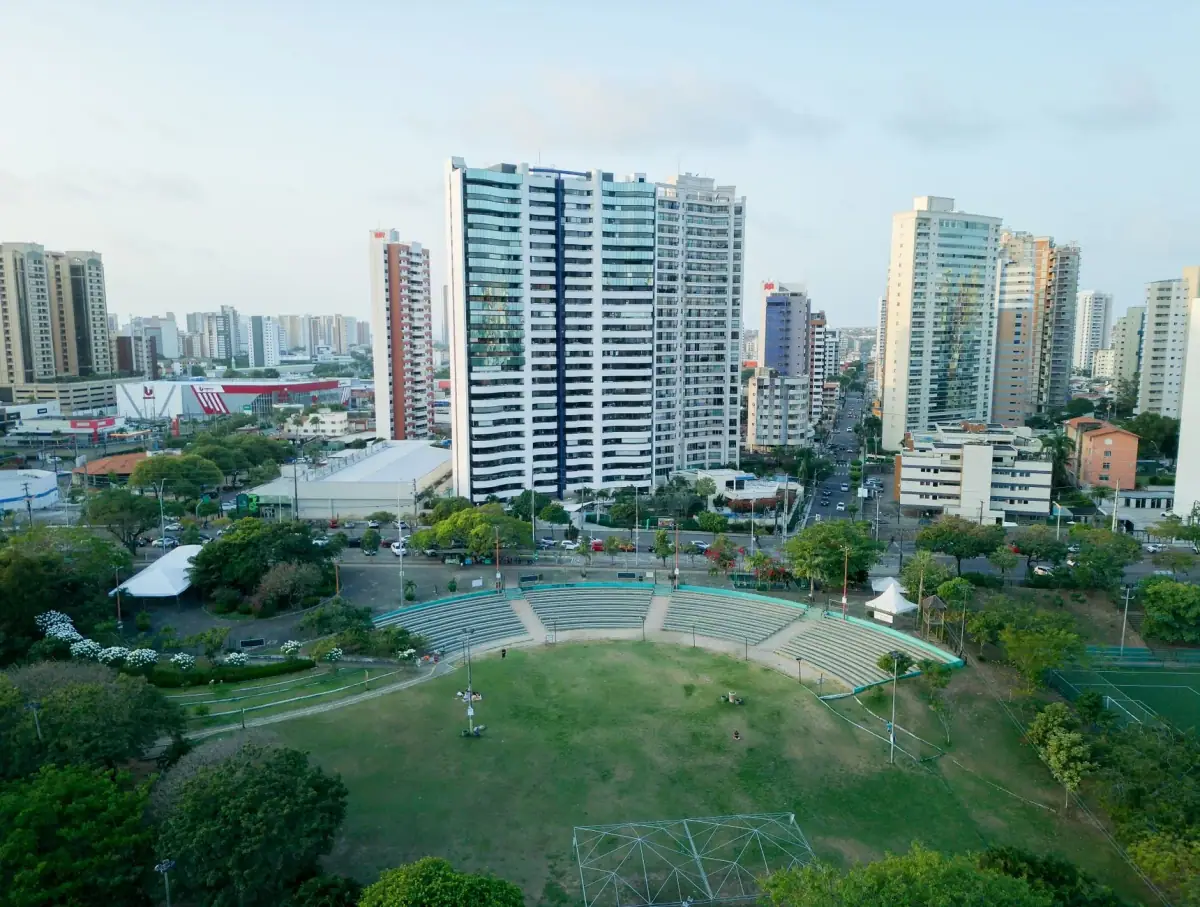
We may earn a commission when you book through links on this page, at no extra cost to you. We don't visit or try the places we cover: we summarize published sources. How we work
In short
- Meireles is the simplest choice for a first stay: busy seafront, hotels at every level, restaurants and supermarkets on foot, ride-hailing easy to find.
- Praia de Iracema suits nightlife and culture (Dragão do Mar) but is noisier and calls for more vigilance in the evening; Praia do Futuro is mainly a day beach.
- The historic center is for visiting by day, not for sleeping; use ride-hailing apps or taxis after dark.
- For a beach-focused stay, consider Cumbuco (about 30 minutes to 1 hour by road depending on traffic) or Porto das Dunas.
Fortaleza is a metropolis stretching along the Atlantic Ocean, with seafront neighborhoods very different from one another. Between the hotel strip of Meireles, the nightlife of Praia de Iracema, the fishing port of Mucuripe and the big beaches of the east, distances look short on the map but are counted in tens of minutes as soon as traffic gets involved. Choosing your neighborhood therefore really changes how the stay is organized: comfort, safety, noise, access to restaurants and evening trips all depend on it. This guide compares the main areas, details the lodging types and recalls useful precautions. To prepare your days, the article what to see and do in Fortaleza complements this one.
How to choose your neighborhood in Fortaleza
Three questions sort things out quickly. What are you looking for: a comfortable base for a few nights before heading to the dunes, a lively city with music in the evening, or a beach stay where you hardly move? How long are you staying: for two nights, practicality counts more than charm; for a week, a neighborhood with supermarkets, pharmacies and restaurants on foot becomes valuable. And finally, how do you plan to get back in the evening?
That last question is decisive. In Fortaleza, a car is not useful for visiting the city: traffic is dense, streets can be jammed at peak hours, and ride-hailing apps as well as taxis are the most practical solution, particularly after dark. Plan to be able to call a ride as soon as you arrive: a SIM card or eSIM for Brazil is very handy.
Third criterion: safety. It varies from one street to another and from one hour to another. An area that is pleasant in broad daylight can be deserted, and so not recommended, once night falls. Favor busy, lit streets close to shops, and read recent reviews, focusing on what concerns the exact address rather than the overall score. The guide visa, health and safety in Brazil details the general habits.
Meireles: the most practical choice for a first stay
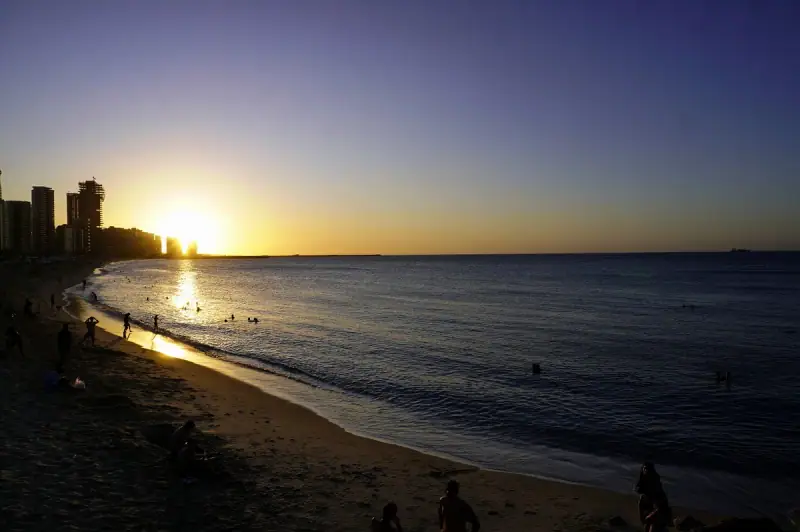
Meireles is the neighborhood where most visitors stay, and a large part of the city’s hotel offer is concentrated there. Its seaside promenade, lined with kiosks, restaurants and buildings, is busy at all hours with joggers, families and roaming vendors. In the evening, a craft fair is held there at certain times: ask your lodging about the days and hours, which vary.
The strengths are clear: a very wide choice of hotels at all levels and apartments, supermarkets and restaurants on foot, ride-hailing that is easy to find and simple access to the rest of the city. It is also the most comfortable area for arriving late or leaving early. The trade-off is a very urban setting, dominated by residential towers, with less charm than other Northeast cities.
The crowds on the seafront give an impression of relative safety, but it fades a few streets farther on, in the poorly lit interior streets. So prefer an address close to the promenade rather than set back, stay on busy routes in the evening, do not walk with your phone in hand and ask reception which routes to avoid on foot.
For swimming, the urban beaches are very busy, but the sea can have currents: respect the flag and the lifeguards’ instructions, and do not swim alone or at night. A hotel with a pool is a big plus in a climate that is hot all year.
Accommodation in Meireles
Compare hotels and apartments near the promenade for your dates, with recent traveler reviews.
Praia de Iracema: the cultural and nightlife scene
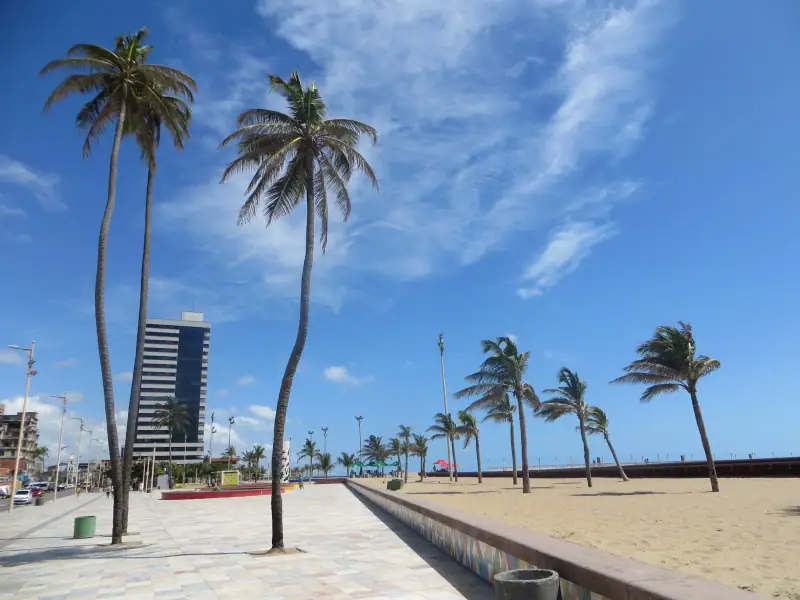
Praia de Iracema is Fortaleza’s bohemian neighborhood, between the center and Meireles. Here you find the Ponte dos Ingleses, a pier popular for sunset, and the big Dragão do Mar cultural hub, surrounded by bars and restaurants. In the evening, live music, notably forró, a popular Northeast rhythm, enlivens several streets.
Sleeping there lets you do almost everything on foot: an end-of-day stroll, dinner, a concert, back to the hotel without a long ride. Lodgings there are often simpler than in Meireles: hostels, small pousadas, mid-range hotels and apartments. Solo travelers and those on a small budget easily find what they need, and there are many chances to meet people.
The limits come from the activity itself. Noise can be significant, especially on weekends and concert nights: ask for a courtyard-side or upper-floor room, and read recent reviews on this point. Vigilance must also be higher than elsewhere: choose busy places, do not wander off alone on foot and go back by ride-hailing. Avoid deserted alleys and isolated beaches after dark. Government travel advice recommends avoiding walking at night in sparsely visited areas.
This neighborhood suits a short stay oriented toward culture and evenings, provided you accept a more urban and noisier setting than Meireles.
Mucuripe and Aldeota: between fishing port and residential district
East of Meireles, the Mucuripe area is tied to the fishing port and the life of the fishermen. There you find a fish market, seafood restaurants and traditional boats, the jangadas. The atmosphere is more local, less set up for tourists, with a certain charm for those who like ports. Lodgings there are fewer and often newer or more upscale, sometimes in large buildings facing the sea.
Farther inland, Aldeota is a large residential and commercial district, with shopping centers, restaurants frequented by residents, clinics and office buildings. You mostly meet business travelers or long apartment stays. The seafront is a few minutes away by car, but not on foot, and there is no tourist atmosphere.
These areas suit a traveler already comfortable with Brazil, who seeks quiet or a more authentic experience. For a short first stay, Meireles remains simpler. In every case, check the exact address on the map and the real distance to the beach and restaurants.
Tours and excursions in Fortaleza
A visit with a local guide is a good way to discover the city and the Ceará coast without worrying about routes to avoid.
Praia do Futuro: a day beach more than a neighborhood to sleep in
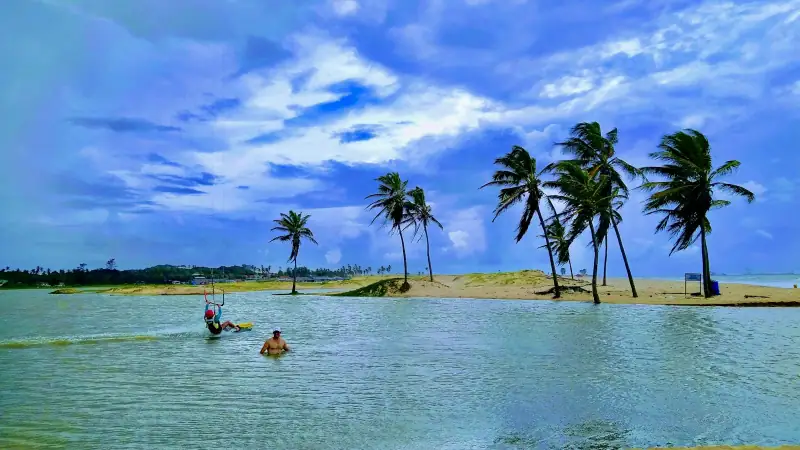
Praia do Futuro, in the east, is Fortaleza’s big beach. Over several kilometers it lines up barracas, imposing beach restaurants where you lunch on fish, shrimp and seafood, with loungers and umbrellas. On Sundays the atmosphere is very lively and families flock in.
A few large hotels and residences are nearby, with ocean views, but the area is designed more for the day. Outside busy hours, the neighborhood is quiet, and restaurants and shops are fewer than in Meireles. In the evening, you get around by ride-hailing, and it is better not to linger on the beach on foot once night falls.
The sea there is often strong, with waves and currents: respect the flag, do not go far from the shore and do not swim alone. This beach is to be experienced rather than swum. If you like calm and horizon views, a hotel facing the beach can suit, but plan trips for dinner and going out.
The historic center and Benfica: to visit, not to sleep in
Fortaleza’s center, with its cathedral, big market and historic theater, is fascinating by day. It is, however, a business and shopping area, very quiet in the evening and on weekends, and sleeping there is not recommended for a tourist stay. Visit it on a weekday morning, then leave by ride-hailing for a busier neighborhood.
The same goes for outlying or poorly served areas, sometimes offered at very attractive rates, such as certain university or industrial districts. A cheap but isolated address will cost you in trips, stress and sometimes safety. Always look at the street, not just the room: a facade photo on a platform says nothing about the rest of the block.
Sleeping in Cumbuco, Porto das Dunas or on the coast
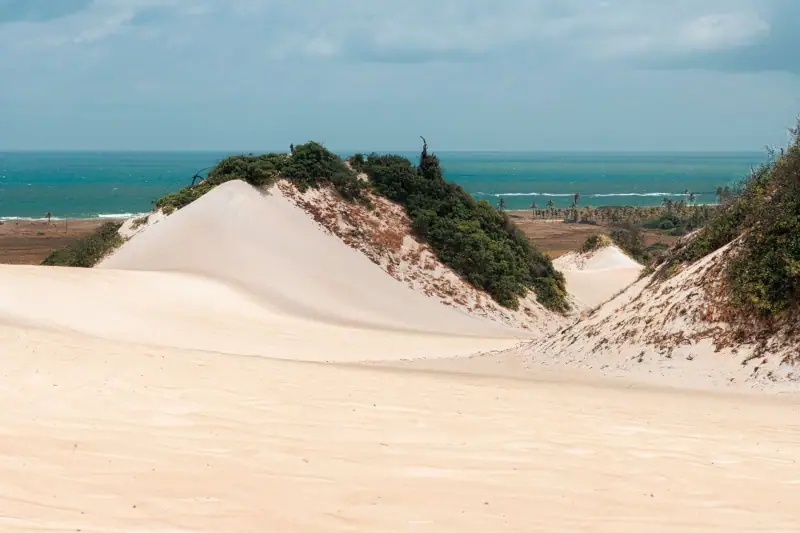
Pousadas and hotels on the Ceará coast
For a more beach-focused stay, compare accommodation in Cumbuco, close to the dunes and lagoons.
If your stay is above all about the beach, the coast around Fortaleza offers another mood. To the west, Cumbuco, about half an hour to an hour by road depending on traffic, is a fishing village that has become a reference for kitesurfing, with dunes, lagoons and buggy rides. You sleep in pousadas, residences and large hotels, in a setting clearly calmer than in the city.
To the east, the municipality of Aquiraz and Porto das Dunas beach host large seafront resort complexes, including the one at the Beach Park water park, about twenty kilometers (12 mi) from the center. It is an option popular with families with children, who enjoy the pools and activities on the grounds. Since meals and leisure are often grouped within the grounds, the budget must be watched closely.
These options keep city sightseeing and beach relaxing nicely apart. Many travelers combine two or three nights in Fortaleza with a few nights on the coast. They require a little organization: transfers from the airport or the city, a possible car, checking swimming conditions there. To go farther west, Jericoacoara is a Northeast classic, but the trip is long and needs to be prepared in advance.
Which type of lodging to choose
Hotels. Concentrated in Meireles, Mucuripe and Praia de Iracema, they offer round-the-clock reception, safe, air conditioning and often a pool, precious assets in a hot climate. They suit families, couples and those who want peace and a minimum of formalities.
Pousadas. These guesthouses typical of Brazil are numerous on the coast, in Cumbuco notably, and in some corners of Praia de Iracema. Charm is often there, with a Brazilian breakfast and the host’s advice, useful for knowing how to get back in the evening. Check air conditioning, ride-hailing access and the distance to the beach.
Hostels. Found mainly in Praia de Iracema and in a few parts of Meireles, they offer dorms and private rooms at low prices, and make meeting people easy. Check for lockers, the rules and recent reviews on noise and street safety.
Apartments. Practical for stays of a week or more, notably in Meireles and Aldeota, with kitchen and space. Check that the building has a front desk or a guard, that the address really matches the announced neighborhood and what the late-arrival arrangements are.
Beach resorts. On the coast, they bring together pool, dining and entertainment, at the price of distance from the city. They suit relaxing stays, after a few days of sightseeing.
Mobile internet in Brazil
Handy for calling a ride or locating your lodging on arrival: Saily offers plans in more than 150 countries, check the offer for Brazil.
How much to plan and when to book
Prices depend mostly on the season and the neighborhood. The Brazilian school holidays, in January and July, as well as the year-end period, are the busiest: well-placed lodgings fill up, rates rise and some impose a minimum stay. Outside these periods, the city is calmer and more affordable. The city is hot all year; the period from August to December is generally drier and sunnier. To choose your dates by weather, see the article when to go to Brazil.
As everywhere, seafront lodging costs more than a room on a street set back, with a short walk to the promenade. To estimate your overall spending, the guide budget in Brazil gives you a framework. Before booking, read recent reviews, check the cancellation policy, favor round-the-clock reception if you arrive late and check that the displayed price includes taxes. Do not rely on an amount read somewhere: compare up-to-date offers on booking platforms.
Safety: habits to adopt
Fortaleza is a warm city, but it calls for vigilance, like most big Brazilian cities. Government travel advice urges caution (travel.state.gov in the US, GOV.UK in the UK, travel.gc.ca in Canada, Smartraveller in Australia): leave passport, jewelry and valuables in the lodging safe, go out with only the essentials, spread cash across several pockets, avoid taking your phone out in the street and get around by ride-hailing or taxi after dark. Avoid deserted beaches, even if they look peaceful by day.
A few habits specific to choosing lodging: ask reception which routes to avoid on foot, check that access is controlled, notably in residences and apartments, and do not say your room number out loud. In case of a mugging, do not resist. Check your government’s travel advice for Brazil before leaving, because it is regularly updated.
On health, ask your doctor or a travel clinic, and see the official travel health pages (CDC in the US, TravelHealthPro in the UK). Mosquitoes are present all year, with risks of dengue and other diseases transmitted by bites: a suitable repellent is a good habit, especially for evenings on a terrace. Travel insurance with medical assistance and repatriation is strongly recommended.
One last practical detail, often forgotten: check whether your plugs fit Brazilian sockets (type N) and bring an adapter if they do not, rather than looking for one on arrival. The article on accessories to take to Brazil helps you pack.
Bottom line: which neighborhood for which traveler
For a first stay, Meireles is the usual pick: it is the simplest neighborhood, the best equipped and the busiest in the evening, with hotels for all budgets. Praia de Iracema appeals to those who want cultural and night life within walking distance, accepting the noise and increased vigilance. Mucuripe and Aldeota are for longer stays or travelers already familiar with Brazil. Praia do Futuro is savored by day, and the coast, from Cumbuco to Porto das Dunas, suits vacations by the water.
A balanced formula for three or four nights: two nights in Meireles to visit the city and enjoy the promenade, then one or two nights on the coast for the dunes or kitesurfing. Fortaleza combines readily with Recife, covered in the guide where to stay in Recife, and with the dunes of the Lençóis Maranhenses for a big Northeast trip.
Your accommodation in Fortaleza
Once your neighborhood is chosen, compare availability, rates and recent reviews for your dates.
Frequently asked questions
What is the best area to stay in Fortaleza for a first visit?
Meireles is the simplest choice: busy seafront, hotels at every level, restaurants and supermarkets on foot, ride-hailing easy to find. Neighboring Praia de Iracema suits those who want to go out in the evening and be close to the cultural hub. Praia do Futuro is above all a day beach.
Praia de Iracema or Meireles: which to choose?
Meireles is more residential, calmer and more comfortable for a classic stay. Praia de Iracema is livelier, with bars, music and often simpler lodging, but also more noise and more vigilance needed in the evening. The two are neighbors: you can stay in one and go out in the other by ride-hailing.
Is it dangerous to stay in Fortaleza?
As in most big Brazilian cities, street crime is high and government travel advice calls for vigilance. The tourist seafront neighborhoods are the busiest, but caution remains in order: valuables in the safe, ride-hailing or taxi in the evening, no phone in hand in the street. Check your government's travel advice for Brazil just before leaving.
Should you stay in Fortaleza or directly on the coast (Cumbuco, Jericoacoara)?
It depends on your plans. For a city stay of two or three nights, stay in Fortaleza. If you are mainly after the beach, kitesurfing or quiet, coastal places such as Cumbuco, about half an hour to an hour by road depending on traffic, let you sleep by the water while staying close to the airport. Jericoacoara requires a much longer trip and a preparation step.
When should you book lodging in Fortaleza?
The Brazilian school holidays, in January and July, as well as the year-end period, are the busiest and most expensive. Book several weeks ahead then, or more for well-located places. The rest of the year, availability is generally better. Compare up-to-date offers rather than relying on a fixed amount.
Can you do without a car when staying in Fortaleza?
Yes, to visit the city it is even advised. Traffic is dense at peak hours, parking can be complicated and ride-hailing or taxis are simpler, especially in the evening. A car only makes sense for radiating along the Ceará coast, and even there, organized excursions are a stress-free alternative.
More Brazil guides
Keep reading
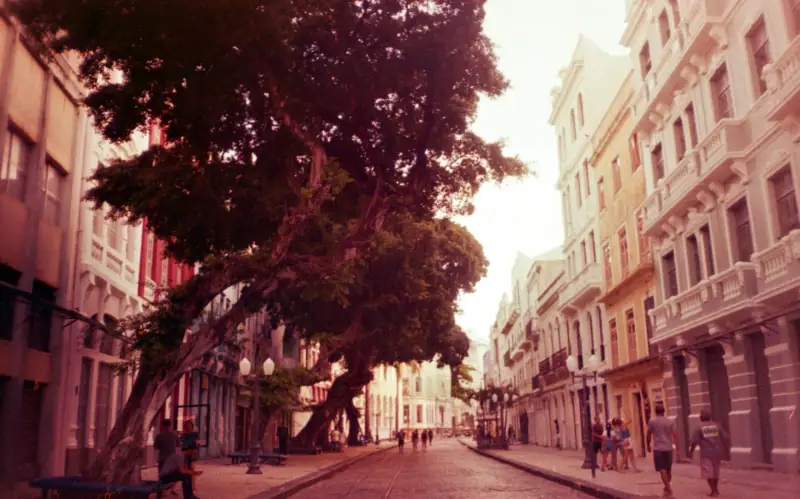
Where to Stay in Recife: Neighborhoods and Types of Lodging
Where to stay in Recife? Boa Viagem, Pina, Recife Antigo, Olinda: pros, limits, safety and shark risk to choose your neighborhood and lodging.
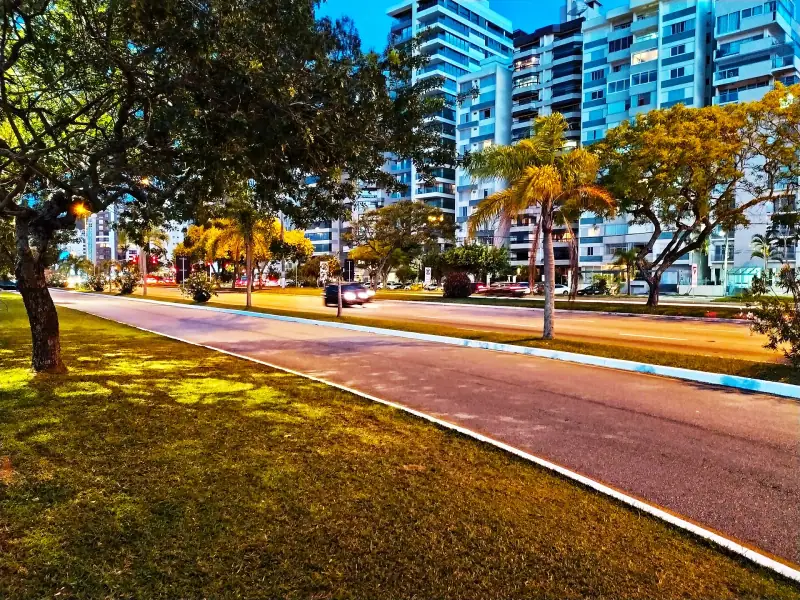
Where to Stay in Florianópolis: Neighborhoods and Types of Lodging
Where to stay in Florianópolis? Center, Lagoa da Conceição, north, Campeche, south of the island: moods, pros, limits, lodging types and safety tips.
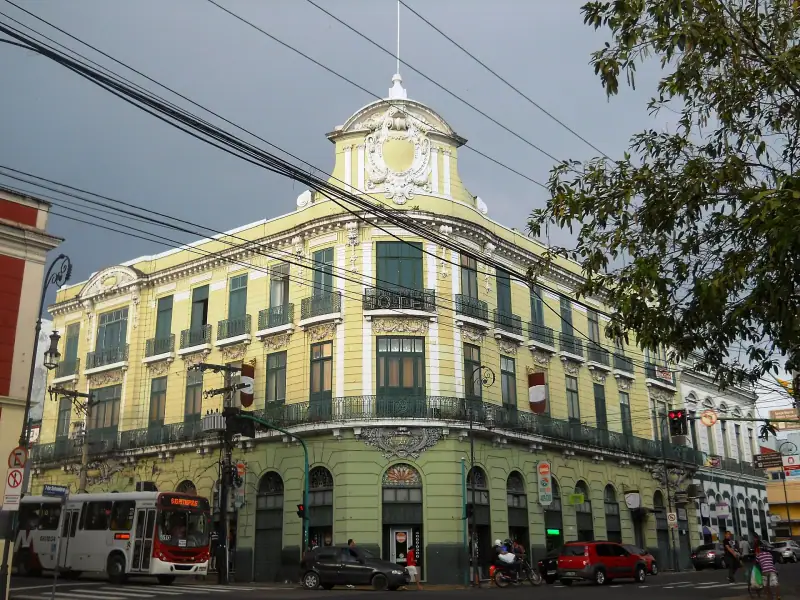
Where to Stay in Manaus: Neighborhoods and Types of Lodging
Where to stay in Manaus? Historic center, Ponta Negra, Adrianópolis, Vieiralves or a forest lodge: pros, limits and safety tips to choose well.
Ready-made
Brazil itineraries
15 days
2-Week Brazil Itinerary: Rio, Paraty, Iguaçu and Salvador
Rio de JaneiroParatyFoz do IguaçuSalvador de Bahia