What to see
Complete Guide to Visiting Brazil: Regions, Cities, Budget and Tips
We may earn a commission when you book through links on this page, at no extra cost to you. We don't visit or try the places we cover: we summarize published sources. How we work
In short
- Brazil is huge: two weeks cover three or four stops, for example Rio de Janeiro, the Costa Verde, Iguaçu Falls and Salvador. Fewer regions and fewer domestic flights work better.
- The dry season (roughly May to October) suits the Amazon, the Pantanal and the South; Rio's beaches are liveliest from December to March, hotter and stormier.
- Budget comparison sites give a median of about €50 (about $58) per person per day, excluding the international flight, which depends on where you fly from.
- The most common risk is petty theft in big cities: stay discreet, use ride-hailing apps at night and choose your neighborhood carefully.
Brazil is the largest country in South America and one of the largest in the world: more than eight million square kilometers (3.1 million sq mi), tropical beaches, the largest rainforest on the planet, wildlife-rich wetlands, cities of several million people and listed colonial towns. This diversity is an asset, but it complicates planning: you do not “do” Brazil the way you would a small European country. This pillar guide gives you the overview to build your trip: the country, regions and cities, highlights, seasons, transport, accommodation and budget. Each section points to a detailed article on the site.
Brazil at a glance: what to know before you go
The country is organized into states, with Brasília as the capital, although Rio de Janeiro, São Paulo and Salvador are the cities best known to travelers. The official language is Portuguese and the currency is the Brazilian real (R$). Brasília time applies to much of the country, but Brazil spans several time zones, so check this if you fly to the Amazon or the Pantanal, and check the time difference from home.
A few useful points for understanding the country:
- Continental size. Between two major stops you almost always have to fly. A “short” trip on the map can mean several hours in the air.
- Reversed seasons. The southern summer runs from December to March and winter from June to September. Depending on the region, the rainy season differs again.
- A unique cultural mix. Indigenous, African and Portuguese heritage plus successive waves of immigration: music, food, religious festivals and Carnival are the most visible expressions.
- A reputation for hospitality. Brazilians are generally described as warm and curious about visitors, which makes travel easier even without speaking the language.
If you are planning a first trip, start with two questions: which regions appeal to you, and how many days do you have? The answers determine everything else, from the choice of flight to the budget.
Rio de Janeiro and the Costa Verde

For many people, Rio is the gateway to Brazil. The city combines urban beaches, forested hills, sharply contrasting neighborhoods and sites that have become symbols: Christ the Redeemer, Sugarloaf Mountain, and the beaches of Copacabana and Ipanema. It suits a stay of three to five days, alternating sightseeing, beach time and walks through the neighborhoods. The article what to do in Rio de Janeiro covers the highlights and how to organize visits.
The choice of neighborhood shapes the feel of the stay: Copacabana and Ipanema for the beach and easy getting around, Santa Teresa for a bohemian atmosphere and views, other areas to keep the budget down. To compare, see the guide where to stay in Rio de Janeiro, which also addresses safety by neighborhood.
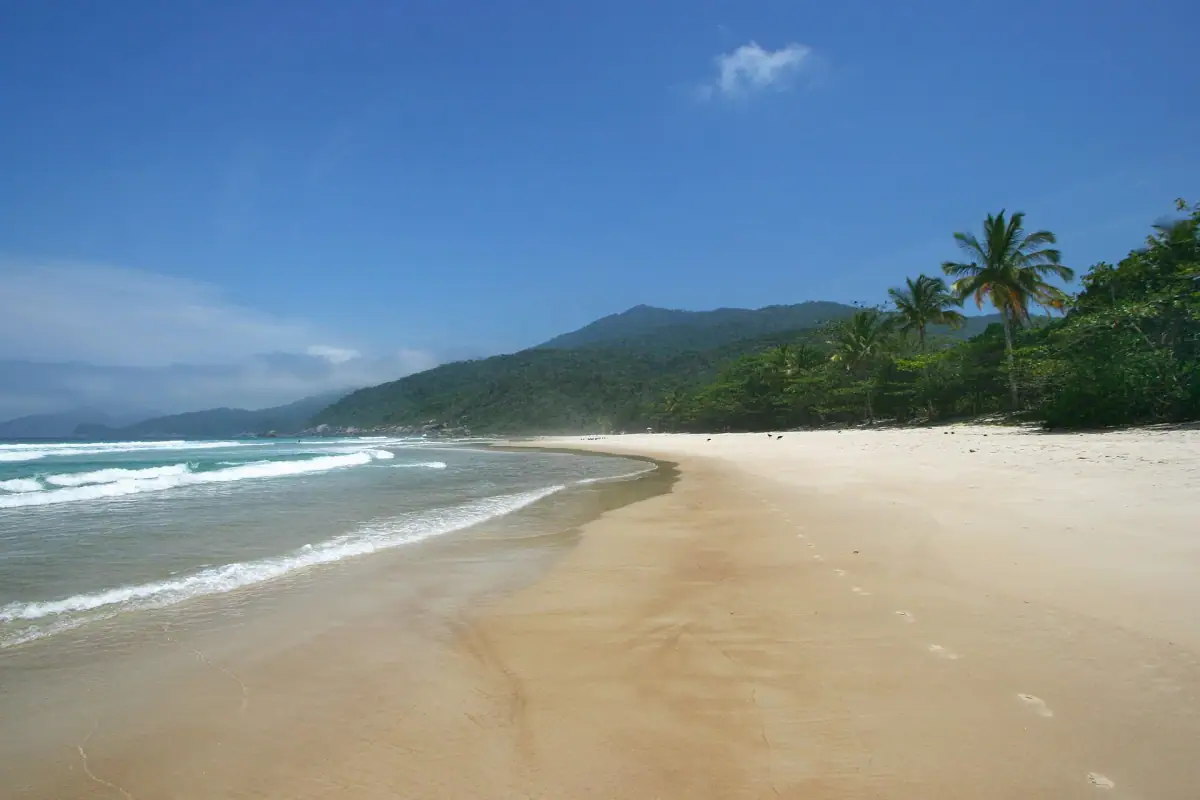
South of the city, the Costa Verde alternates beaches, bays and Atlantic forest hills. Paraty is the gem, with its colonial center of cobbled streets, and Ilha Grande offers trails, coves and a car-free atmosphere. The trip from Rio usually takes four to five hours by road. Find all the details in Paraty and Ilha Grande: what to see on the Costa Verde.
Hotels in Rio de Janeiro
Compare Rio accommodation by neighborhood, budget and travel dates.
Salvador and Bahia: the Afro-Brazilian heart

Farther north, Salvador de Bahia tells another story of Brazil. The country’s first capital in colonial times, the city is the heart of Afro-Brazilian culture: percussion, capoeira, palm-oil cooking, religious festivals. Its historic center, the Pelourinho, is a UNESCO World Heritage site. You wander cobbled lanes lined with colorful facades and Baroque churches before heading to the coastal neighborhoods for beaches and sunsets.
A stay of two to three days lets you get a feel for the city, taste the local food and consider an excursion to Itaparica Island. All the practical tips, neighborhoods and visits are in Visiting Salvador de Bahia: Pelourinho, Barra and Itaparica Island.
Beyond Salvador, the state of Bahia offers a coastline of beaches and fishing villages, as well as the interior of the Chapada Diamantina, popular with hikers. If you have three weeks, this region is an excellent extension after Salvador, especially as the climate stays warm all year.
The Amazon and the Pantanal: big wild spaces
Brazil holds a large part of the Amazon, and Manaus is its gateway. The city sits in the heart of the forest on the Rio Negro and serves as the starting point for lodges, river cruises and canoe outings. The Amazon is hot and humid all year; the rainy season runs roughly from November to April, and water levels change the experience profoundly: flooded forest at high water, river beaches and walking at low water.
The Pantanal is one of the largest wetlands in the world and a top spot for wildlife watching: birds, caimans, capybaras and, with luck, jaguars. The dry season, roughly May to October, is generally recommended for wildlife. Both regions need more preparation than cities: extra domestic flights, lodge or remote pousada accommodation, protection against mosquitoes, and health preparation to plan ahead (ask your doctor or a travel clinic, and see the official travel health pages: CDC in the US, TravelHealthPro in the UK). They suit a three-week stay or a second trip better.
In both cases, use a reputable local operator, and keep in mind that wildlife sightings are never guaranteed. The guide makes the difference between a pleasant outing and a memorable experience.
Excursions in the Amazon
Discover the nature outings offered around Manaus: boat, forest, wildlife watching.
The Northeast: dunes, lagoons and endless beaches
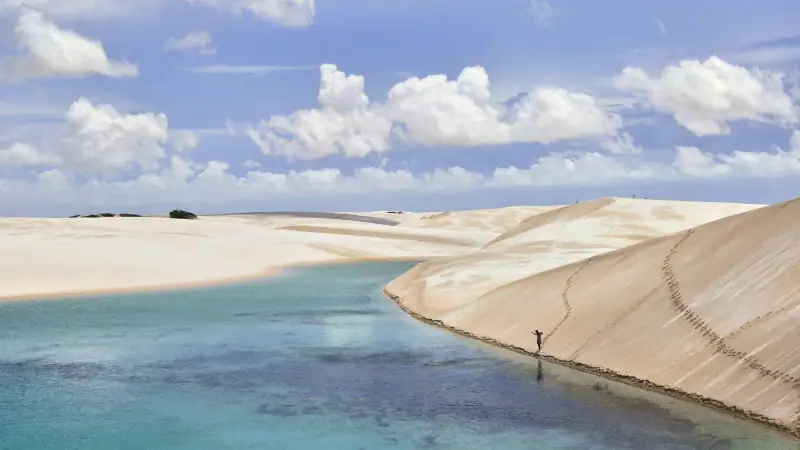
The Northeast (Nordeste) is the broad tropical coast of the northeast of the country. It has cities such as Recife and Fortaleza, miles of beaches lined with coconut palms, fishing villages and a few spectacular landscapes. Among them are the Lençóis Maranhenses: a huge field of white dunes dotted with rainwater lagoons, where you swim in the middle of the sand. Barreirinhas is the base for excursions.
The lagoons form after the rainy season and are generally at their best from about June to September, before gradually drying out. To organize the visit, the departure base and the excursions, read the guide Lençóis Maranhenses: dunes and lagoons. Jericoacoara, farther east, is also among the beach and watersports destinations popular in this part of the country.
The Northeast is a slower region to travel: distances between stops are large, infrastructure is simpler, and connections often involve domestic flights or long 4x4 transfers. Allow time and a margin in your schedule.
The South: Foz do Iguaçu and Florianópolis
In the South the seasons are more marked and the landscape changes: cooler, greener, with a visible European influence in some towns. Two stops dominate itineraries.
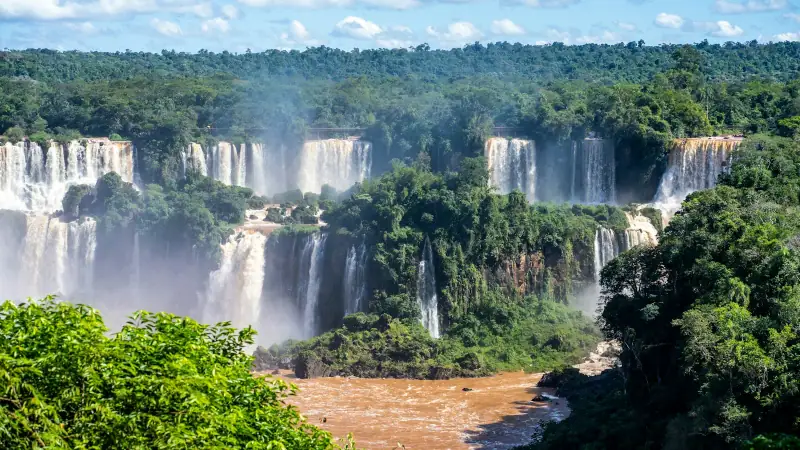
Foz do Iguaçu and its falls. On the border with Argentina and Paraguay, Iguaçu Falls rank among the most impressive in the world. The Brazilian side offers panoramic views of the whole site, while the Argentine side lets you get closer. A full day there is the minimum, with two nights there if you arrive by plane. Everything is detailed in Iguaçu Falls, Brazilian side: visiting Foz do Iguaçu.
Florianópolis. This island off the southern coast is known for its many beaches, surf spots and relaxed atmosphere. It is busiest during the southern summer, from December to March, with big crowds in January. Outside that period it is calmer and cooler, ideal for hiking and quiet.
São Paulo, the country’s largest city, is a frequent passage, often as a stopover. An immense metropolis, it is known for its cultural life and food scene; it is better visited as a one- to two-day urban break than as a beach-stay destination.
Highlights for a first trip
For a first stay, five experiences are generally singled out because they sum up the country well. They are not all compatible in one trip, but they help set priorities:
- Rio de Janeiro: Christ the Redeemer, Sugarloaf Mountain, the urban beaches and contrasting neighborhoods.
- Iguaçu Falls: a natural spectacle of rare power, to see from the Brazilian side and, if possible, the Argentine side.
- Salvador and the Pelourinho: Afro-Brazilian culture, colonial Baroque and music.
- The Costa Verde: Paraty and Ilha Grande for history, nature and the sea.
- The Lençóis Maranhenses or the Amazon: for those seeking extraordinary landscapes who accept longer journeys.
A first two-week trip combines the first four very well. For the day-by-day plan, the order of stops and transfer times, follow the 2-week Brazil itinerary: Rio, Paraty, Iguaçu and Salvador. The advice that keeps coming back: three or four stops well lived beat six stops swallowed at a run.
When to go to Brazil
There is no single answer: the climate depends on the region. Here are the broad lines, to refine according to your plans.
- Rio and the Southeast: the southern summer (December to March) is hot, humid and sometimes stormy; winter (June to August) is milder and drier, with fewer people.
- Bahia and the Northeast: the climate is hot all year, with a drier season often recommended from September to February. The Lençóis lagoons are at their best from about June to September.
- Amazon: hot and humid all year, with rain mostly from November to April; July to October is often presented as the most pleasant period.
- Pantanal: the dry season, roughly May to October, is generally recommended for wildlife.
- South: hot, humid summers and cooler winters; Florianópolis is visited mainly from December to March.
Three periods concentrate demand and prices: New Year, Carnival (February or early March depending on the year) and the Brazilian school holidays in January and July. Book very early if you are aiming for one of them. The article when to go to Brazil details each region and each period.
Getting there and getting around
Getting there. Flights connect the country’s main gateways, notably Rio de Janeiro and São Paulo, with other countries, nonstop or with a connection. Fares vary strongly by season, with clear increases over the year-end holidays and Carnival. Compare airlines, stopovers and included baggage, and book several months ahead for busy periods.
Getting around the country. Distances impose a simple logic:
- Plane to link the main stops (Rio – Foz do Iguaçu, Rio – Salvador, toward Manaus or the Northeast). The main domestic airlines are LATAM, Gol and Azul. Allow a margin for connections, because a delay can jeopardize the rest of the trip.
- Long-distance bus for journeys of a few hours, such as Rio – Paraty. Coaches are plentiful but unsuited to very long distances.
- Rental car for the Costa Verde or some parts of the South, provided you are comfortable with local driving. Compare rental offers when you book.
- Ride-hailing apps and taxis in town, often more practical and safer than walking in the evening in unfamiliar areas.
- Metro and city buses in big cities, very cheap during the day.
Keep in mind that transfer time counts as much as sightseeing time: a two-night stop is only worth it if the journey does not eat up a whole day.
Where to stay in Brazil
The offer is very varied: hostels, pousadas (small guesthouses, often with a generous breakfast), chain hotels, apartments and lodges in the wild. The right choice depends less on the category than on the neighborhood or area, especially in big cities.
- In Rio, favor a well-served neighborhood that is lively in the evening, such as Copacabana or Ipanema, or the bohemian atmosphere of Santa Teresa. The guide to Rio’s neighborhoods compares the options.
- In Salvador, the choice is between the atmosphere of the historic center and the comfort of the seafront neighborhoods.
- In Paraty, sleeping in the historic center lets you do everything on foot, including in the evening.
- In the Amazon and the Pantanal, a lodge or pousada with a guide included simplifies logistics, as long as it is reputable.
Book ahead for busy periods and choose a free-cancellation rate when possible, because plans can change with domestic flights.
Hotels in Salvador de Bahia
Compare accommodation in the Pelourinho and the seafront neighborhoods of Salvador.
Budget: how much a trip to Brazil costs
Brazil is often seen as affordable, and that is partly true: a lunch and city transport cost little. On the other hand, domestic flights, tourist excursions and accommodation in high season quickly weigh on the bill. Budget comparison sites give a median of about €50 (about $58) per person per day, excluding the international flight, with differences depending on how you get around: lower by bus, clearly higher with domestic flights or a rental car.
The international flight depends on where you fly from. All figures are estimates, not guaranteed prices. Three items make the bill vary: the international flight, accommodation (very sensitive to season) and the number of domestic flights. The article budget for a stay in Brazil details costs item by item, with three costed profiles and tips to cut spending.
On payment, bank cards are widely accepted in cities, but keep some reais in cash for beaches, markets and small shops. Check with your bank about foreign payment and withdrawal fees.
Food: what to taste
Food is one of the best reasons to travel to Brazil, and it varies strongly from region to region. Feijoada, a stew of black beans and meats, is the emblematic dish; moqueca, a fish stew with coconut milk, evokes Bahia; açaí, fresh fruit juices and pastéis punctuate the days. In many cities, por-quilo restaurants, where you serve yourself at a buffet and pay by weight, offer a hearty lunch at a low price.
For the list of what to taste, from dishes to drinks, read Brazilian food: 15 specialties to try. To go further, a food tour or a cooking class is a pleasant way to understand local products and traditions.
Tours and activities in Rio de Janeiro
Excursions, guided visits and local experiences to discover Rio with a guide.
Entry rules, health and safety
Entry rules depend on your passport. Check the official travel advice of your government before you book: travel.state.gov (US), GOV.UK (UK), travel.gc.ca (Canada), Smartraveller (Australia) (checked November 2026). More detail, with official sources, is in the article on entry requirements for Brazil.
On health, ask your doctor or a travel clinic well before departure, and see the official travel health pages (CDC in the US, TravelHealthPro in the UK). Depending on your route, also protect yourself from mosquitoes, especially in the Amazon and the Pantanal. On safety, the main risk is petty crime in big cities: keep your phone discreet, avoid showing jewelry, favor ride-hailing apps at night and find out which areas to avoid. All these points are developed in Brazil: visa, health and safety.
Travel insurance covering medical costs, repatriation and baggage theft is strongly advised, because care in private clinics can be expensive.
All our articles to prepare your trip
Here is the full list of the site’s guides, sorted by theme. Start with those that match the stage of preparation you are at.
Plan and organize
- 2-week Brazil itinerary: Rio, Paraty, Iguaçu and Salvador
- When to go to Brazil: climate, seasons and best time by region
- Budget for a stay in Brazil: real costs and three costed profiles
- Brazil: visa, health and safety, how to prepare your trip
Rio de Janeiro and the Costa Verde
- What to do in Rio de Janeiro: Christ the Redeemer, Sugarloaf and beaches
- Where to stay in Rio de Janeiro: neighborhoods, safety and tips
- Paraty and Ilha Grande: what to see on Brazil’s Costa Verde
Other destinations
- Visiting Salvador de Bahia: Pelourinho, Barra and Itaparica Island
- Iguaçu Falls, Brazilian side: visiting Foz do Iguaçu
- Lençóis Maranhenses: dunes and lagoons of Brazil, practical guide
Food
Tips for a successful first trip
To finish, a few simple principles that avoid most disappointments:
- Travel less, but better. Two to four stops for two weeks is plenty.
- Book peak periods early. New Year, Carnival and school holidays push up prices and fill accommodation.
- Keep a margin in transfers. Domestic flight delays are frequent; do not plan an international flight on the same day as a tight connection.
- Protect your belongings. A copy of your documents in your messaging app and one fewer phone to lose are more useful than an alarm.
- Learn a few words of Portuguese. “Obrigado”, “por favor” and “bom dia” open many doors.
- Protect yourself from sun and mosquitoes. Sunscreen, repellent, light clothing and a hat are essential.
- Take out insurance. It pays for itself quickly in case of a medical problem or lost luggage.
Brazil is best discovered by accepting not to see everything. Choose one or two regions, leave room for the unexpected, and come back for the rest: many travelers do.
Frequently asked questions
How long do you need to visit Brazil?
Two weeks allow three or four stops, for example Rio de Janeiro, the Costa Verde, Iguaçu Falls and Salvador. The country is immense: it is better to limit the number of regions than to multiply domestic flights. With three weeks, you can add the Northeast coast or a stop in the Amazon.
Do you need a visa to go to Brazil?
It depends on your passport. Entry rules depend on your nationality, so check the official travel advice of your government before you book: travel.state.gov (US), GOV.UK (UK), travel.gc.ca (Canada), Smartraveller (Australia) (checked November 2026). A valid passport and proof of onward travel are commonly asked for; always confirm the current conditions before you leave.
What is the best time to go to Brazil?
It depends on the region. The southern hemisphere's dry season, roughly May to October, suits the Amazon, the Pantanal and the South, while Rio's beaches are livelier from December to March, with more heat and thunderstorms.
Is Brazil dangerous for tourists?
The most common risk is petty crime (pickpocketing, phone theft) in big cities. A few habits are enough: stay discreet, avoid showing valuables, use ride-hailing apps at night and choose your neighborhood with care. Check your government's travel advice before you go.
What budget should you plan for a trip to Brazil?
Comparison sites give a median budget of about €50 (about $58) per person per day, excluding the international flight, with large variations depending on transport and comfort level. The dedicated budget article breaks down three costed profiles.
Do you need to speak Portuguese to travel in Brazil?
It is not essential in hotels and very touristy sites, where a few words of English often get you by. Outside those places, Portuguese is the only language spoken: learning a few polite phrases and using a translation app makes exchanges much easier.
Do you need vaccinations for Brazil?
Ask your doctor or a travel clinic well before departure, and see the official travel health pages (CDC in the US, TravelHealthPro in the UK).
More Brazil guides
Keep reading

What to See in the Brazilian Amazon: Beyond Manaus, Anavilhanas, Alter do Chão and Belém
What to see in the Amazon region: Anavilhanas archipelago, Tapajós beaches at Alter do Chão, Belém's Ver-o-Peso market, Parintins. Tips, health and safety.
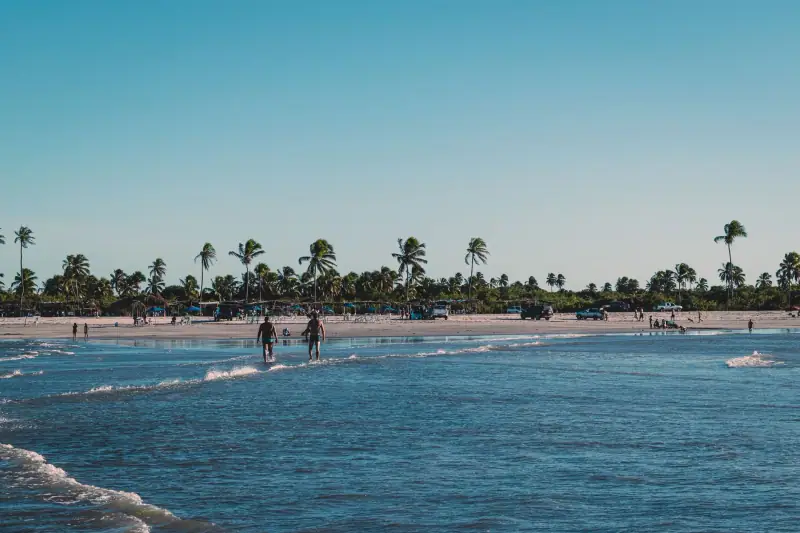
What to See in Northeast Brazil: Beaches, Dunes and Colonial Towns
What to see in Brazil's Northeast: Recife, Olinda, Porto de Galinhas, Jericoacoara, Lençóis Maranhenses, Fernando de Noronha. Tips, seasons and safety.

What to See in the Pantanal: Jaguars, Transpantaneira, Miranda and Bonito
What to see in the Pantanal: Porto Jofre jaguars, Transpantaneira, Corumbá, Miranda and Bonito. Seasons, wildlife, safety and tips to choose well.
Ready-made
Brazil itineraries
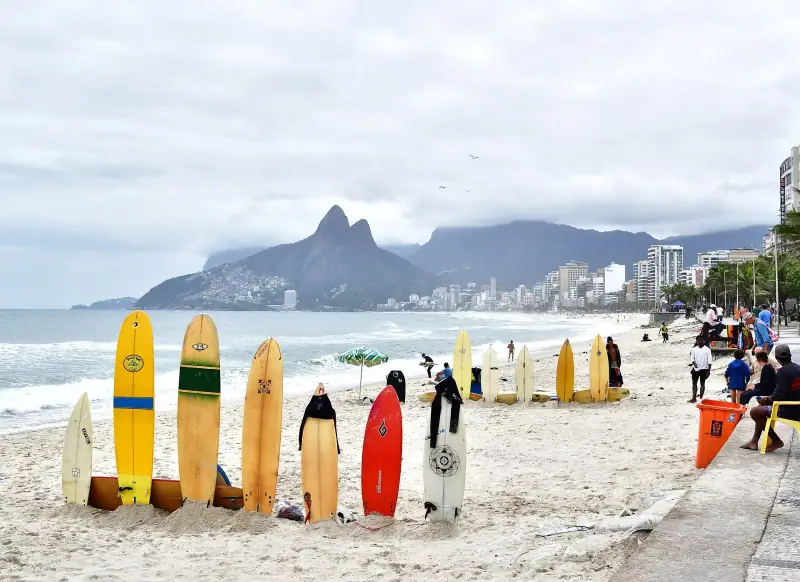
15 days
2-Week Brazil Itinerary: Rio, Paraty, Iguaçu and Salvador
Rio de JaneiroParatyFoz do IguaçuSalvador de Bahia