Things to do
The best ski resorts in Austria: Tyrol, Salzburg and Vorarlberg compared
We may earn a commission when you book through links on this page, at no extra cost to you. We don't visit or try the places we cover: we summarize published sources. How we work
In short
- For the biggest playground, choose the Arlberg (about 300 km / 186 mi of slopes, shared by Tyrol and Vorarlberg); for early snow, Sölden or Kaprun.
- For a balanced family or friends trip, Mayrhofen, Saalbach or Kitzbühel; for a quieter area, the Montafon (about 140 km / 87 mi).
- Day passes in the big areas are around €80 (~$93) in high season according to regional press, but price grids change: check the resort's site.
- Insurance with mountain rescue cover is strongly advised, and stay on marked slopes unless you have safety gear and know the avalanche risk.
Austria is one of the great alpine skiing nations, and the choice is dizzying: glaciers where the season starts in the fall, giant areas linked village to village, family resorts with gentle slopes, legendary villages that host World Cup races. This comparison reviews eight resorts spread across Tyrol, the state of Salzburg and Vorarlberg, to help you choose according to your level, your budget and the atmosphere you want.
In short: for the biggest playground, choose the Arlberg (St. Anton on the Tyrol side, Lech and Zürs on the Vorarlberg side); for early snow, Sölden or Kaprun; for a balanced stay with family or friends, Mayrhofen, Saalbach or Kitzbühel; for a more intimate area, the Montafon.
The figures cited (kilometers of slopes, number of lifts, season dates) come from the resorts’ official sites and the Austrian National Tourist Office, consulted in early November 2026. They vary depending on how things are counted, and opening dates are always provisional: confirm them on the resort’s site before booking. Not all lift pass prices for the 2026-2027 season are published; when a figure cannot be found, this guide says so rather than inventing it.
How to choose your ski resort in Austria
Four criteria are enough to sort the offer. First, level: resorts famous for steep slopes are not necessarily the most pleasant for beginners. Then size of the area: a week of skiing in a 140 km (87 mi) area is no problem, whereas the big areas of 250 to 300 km (155 to 186 mi) take more days to explore. Altitude and season: to ski in November or April, only the glaciers offer guarantees. Finally the village atmosphere: party, chic, family or authentic.
Also think about logistics: the Innsbruck and Salzburg airports serve most of these resorts, and some have a train station nearby. Holiday periods push lodging prices up; our guide when to go to Austria details the seasons, and the one on the budget in Austria gives spending benchmarks.
Quick comparison of the resorts
| Resort | Region | Area (official source) | Best for |
|---|---|---|---|
| St. Anton / Arlberg | Tyrol | ~300 km (186 mi) (Ski Arlberg) | advanced skiers, freeride |
| Lech Zürs | Vorarlberg | part of the Arlberg | chic crowd, plentiful snow |
| Sölden | Tyrol (Ötztal) | ~145 km (90 mi), glacier | early snow, sporty skiers |
| Kitzbühel | Tyrol | 233 km (145 mi) per KitzSki | all levels, town atmosphere |
| Mayrhofen | Tyrol (Zillertal) | 142 km (88 mi) | families, beginners to advanced |
| Saalbach-Hinterglemm | Salzburg | 270 km (168 mi) (Skicircus) | big area, all levels |
| Kaprun / Kitzsteinhorn | Salzburg | glacier, smaller area | year-round skiing, reliable snow |
| Montafon | Vorarlberg | 140 km (87 mi) | quieter area, all levels |
For Kitzbühel, the Austrian tourist office counts 181 km (112 mi) of groomed slopes, while the resort announces 233 km (145 mi): the gap comes from the counting method, proof that areas should be compared with caution.
Tyrol: St. Anton am Arlberg, the kingdom of advanced skiers
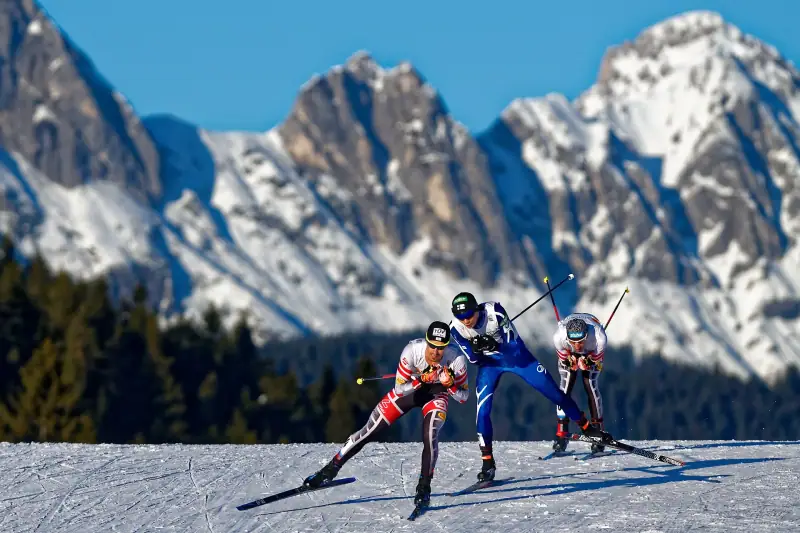
St. Anton is the Tyrolean side of the Ski Arlberg area, the largest in Austria according to the national tourist office. The official site announces 301 km (187 mi) of slopes, including more than 200 km (124 mi) of off-piste routes, and 85 lifts, with a season planned from December 2, 2026 to April 18, 2027 (provisional dates, limited operation possible at the start and end of the season).
The village has a reputation for attracting experienced skiers, drawn by its steep slopes and freeride. Evenings are lively. The area links St. Anton and St. Christoph to the neighboring Arlberg resorts, so you can go from one village to another on skis. Pass prices for 2026-2027 had not yet been published by Ski Arlberg in early November 2026: see the resort’s pricing page.
Off-piste requires safety equipment (beacon, shovel, probe) and, ideally, a mountain guide. Never go alone without training.
Where to stay in Tyrol: chalets, hotels at the foot of the slopes or family guesthouses in ski villages. Compare lodging for your dates, and book early in holiday periods.
Vorarlberg: Lech Zürs, snow and chic
On the other side of the pass, Lech, Oberlech and Zürs form the Vorarlberg part of the Arlberg area, and Warth-Schröcken is also linked to the whole. This part of the area has an upscale image, with renowned hotels and an affluent clientele, but you also ski simply there, enjoying well-exposed slopes and generally plentiful snow cover.
The advantage for a stay: a single Ski Arlberg pass covers both sides of the area, which lets you combine Lech and St. Anton. The villages are quieter than St. Anton in the evening, with a more hushed atmosphere. The lodging budget is rather high: to limit spending, look for a guesthouse or apartment outside Zürs and Oberlech.
Two other Vorarlberg names deserve mention: the Montafon (Silvretta Montafon), with about 140 km (87 mi) of slopes according to the Austrian tourist office, and Warth-Schröcken. The Montafon suits those looking for a mid-sized area, without the crowds of the biggest resorts; its opening dates and prices should be checked on the resort’s site.
Sölden and the Ötztal: skiing from the fall
Sölden is the address for those who do not want to wait for December. Its glacier opens first: according to the official site, the 2026-2027 season starts for the glacier alone on October 15, 2026, then the full area runs from November 12, 2026 to April 18, 2027, before glacier activity resumes from April 19 to May 2, 2027. Snow is announced as guaranteed up to 3,340 m (10,958 ft).
The Sölden area has about 145 km (90 mi) of slopes (147 km and 31 lifts according to the resort’s site, 144 km according to the tourist office). The Ötztal pass extends access to other sectors, including Obergurgl-Hochgurgl, for more than 360 km (224 mi) of slopes and 90 lifts according to the pass description: read the details of each option carefully. The Sölden site indicates that from three days, the pass automatically becomes the Ötztal Super Skipass at no extra charge, and that online prices are dynamic: the earlier you book, the less you pay.
It is a rather sporty area, with long red and black runs, popular with skiers who enjoy cruising. Beginners find their place there, but at altitude you need to dress well.
Kitzbühel: the town-resort with a large area
Kitzbühel is known worldwide for the Streif, the Hahnenkamm course, and for the World Cup race held there every January. But the pleasure lies elsewhere: a vast area (233 km and 57 lifts announced by KitzSki, with a season “from November to April”), slopes for all levels and an old town at the foot of the mountains where you can stroll between runs.
It is the best choice for a mixed stay: skiing by day, restaurants and shops in the evening, relaxation in the region’s spas. Lodging prices are high, especially around the Hahnenkamm race, when hotels are full. For all the details, see our guide visiting Kitzbühel and our article where to stay in Kitzbühel.
Zillertal: Mayrhofen, the safe bet for families
Mayrhofen is the flagship resort of the Zillertal. According to the municipality’s site, its area has 142 km (88 mi) of perfectly groomed slopes and 59 lifts, which offers enough variety for a week without boredom. The Zillertaler Superskipass is offered from €82 (~$95) on the resort’s page, and lets you ski throughout the valley, notably on the Hintertux glacier: check the option and minimum length before buying.
Mayrhofen suits families and groups of mixed levels: there are many ski schools, the village is lively without excess and the valley also offers non-ski activities. For family outings, our article Austria with kids gives complementary ideas, and our guide to family skiing in Austria details ski schools and children’s passes.
Salzburg: Saalbach-Hinterglemm and the Skicircus
The Skicircus Saalbach Hinterglemm Leogang Fieberbrunn is the big area of the state of Salzburg: 270 km (168 mi) of slopes and 70 lifts according to the official site. It is part of the ALPIN CARD, a pass linking three major ski regions (the Skicircus, the Schmittenhöhe at Zell am See and the Kitzsteinhorn at Kaprun) for 408 km (254 mi) of slopes. Specialized portals announce a season from November 27, 2026 to April 4, 2027; confirm dates with the resort.
On prices, regional press (Salzburg24, September 2026) cites €82 (~$95) for the adult day in high season at Saalbach-Hinterglemm, Zell am See and Kaprun, with reduced rates when booking early. It is a benchmark to confirm on the official grid.
The area is skied in a loop, village after village, with wide, well-linked slopes: ideal for intermediate skiers who want mileage without changing valleys.
Kaprun and the Kitzsteinhorn: Salzburg’s glacier
The Kitzsteinhorn overlooks Kaprun. It is a glacier area whose high point approaches 3,000 m (9,840 ft), smaller than the big complexes but very reliable for snow cover. The season starts early in the year: the first openings are in the fall. It is a good choice for skiing in October or November, or for extending at the end of the season.
Combined with the Schmittenhöhe at Zell am See and Maiskogel, it fits into the ALPIN CARD offer. Kaprun is also the gateway of the state of Salzburg for those who want to combine skiing and excursions: see our guide to the Salzkammergut lakes and the one on the Eisriesenwelt ice cave for a day off the slopes.
Winter activities in Austria: snowshoeing, sleigh rides, guided tours and mountain experiences, for non-ski days or the non-skiers of the group. Compare the offers for your dates.
Which profile, which resort?
Advanced skier looking for challenges: St. Anton and the Arlberg, or Sölden for long high-altitude runs. Off-piste is possible there but requires a guide and safety gear.
Family with children: Mayrhofen and Saalbach, for their ski schools and varied area. The Montafon is a quieter alternative.
Couple, chic stay and gastronomy: Lech, Zürs or Kitzbühel, with a pleasant town in the evening as a bonus.
Group of friends, lively evenings: St. Anton, Sölden and Saalbach offer the most active nightlife.
Reliable snow out of season: Sölden and Kaprun, whose glaciers open early.
Small budget: aim for off-peak periods (early December, March), guesthouse or apartment lodging, passes booked online early, and a mid-sized area rather than a prestige resort. Our article where to stay in Austria compares lodging types. For an urban base, Innsbruck gives access to several areas from a city: see also Innsbruck and Tyrol.
Passes, equipment and organization
Passes are sold by the day or for several days, and the price generally drops when you book online in advance. Some sites offer dynamic rates that rise with demand. Compare the resort pass with those covering several areas: the Ötztal pass, the Zillertaler Superskipass or the ALPIN CARD are worthwhile if you plan to change valleys.
You can rent equipment at the resort or online. Booking ahead avoids queues and guarantees sizes, especially in holiday periods. For your clothing and accessories, see our article accessories for Austria.
To get there, a car is practical but winter tires or chains are mandatory in certain conditions: ask the rental company. Trains and ski buses let you do without in several resorts.
Entry rules depend on your passport. Check the official travel advice of your government before you book: travel.state.gov (US), GOV.UK (UK), travel.gc.ca (Canada), Smartraveller (Australia) (checked November 2026).
Insurance and mountain safety
Skiing is a risky activity, and the cost of a mountain evacuation can be high. Standard health coverage does not always cover rescue costs or repatriation. Travel insurance with mountain rescue cover and lift pass refund is therefore a good investment. Read the policy carefully: check the exact list of guarantees and the exclusions (off-piste, risky sports) before subscribing.
On the slopes, respect the FIS code of conduct, wear a helmet (mandatory for children in several Austrian regions: check local rules) and never leave marked slopes without equipment or knowledge of the avalanche risk. Check the day’s avalanche bulletin before any off-piste outing.
And off the slopes?
No skiing? Resorts offer snowshoeing, sledding, cross-country skiing, spas and sleigh rides: our guide to Austria in winter without skiing details sled runs, spas and snowshoe outings. In December, Christmas markets add a festive atmosphere: see our guide to Christmas markets in Austria. To combine skiing and a city, pair a stay in Innsbruck or Salzburg with one or two ski days.
Sources
Frequently asked questions
What is the largest ski resort in Austria?
Ski Arlberg is presented as the country's largest ski area, with about 300 km (186 mi) of slopes (301 km and 85 lifts according to the official site) straddling Tyrol and Vorarlberg. Next come the SkiWelt Wilder Kaiser-Brixental and the Skicircus Saalbach Hinterglemm Leogang Fieberbrunn (270 km / 168 mi).
Which resort should you choose for a first week of skiing in Austria?
Mayrhofen, Saalbach or Kitzbühel suit well: varied slopes, many ski schools and lively but easygoing villages. Very advanced skiers will rather go to St. Anton or Lech, which are more demanding, and those who want snow early or late in the season to Sölden or Kaprun.
Where can you ski in Austria early or late in the season?
On the glaciers: Sölden opens its glacier in the fall (October 15 to November 11, 2026 for the glacier alone, then the full resort from November 12, 2026 to April 18, 2027 according to the official site), and the Kitzsteinhorn in Kaprun also opens early. Always check actual snow conditions before booking.
How much does a ski pass cost in Austria in 2026-2027?
Day rates in the big areas are around €80 (~$93) in high season according to regional press (for example €82 (~$95) announced for Saalbach-Hinterglemm and Kaprun), but the grids evolve. Ski Arlberg had not yet published its 2026-2027 season prices in early November 2026. Check the resort's website before booking.
Do you need insurance to ski in Austria?
It is strongly advised. Mountain rescue and repatriation costs are not always covered by standard health coverage or bank cards. Check the cover of your policy before leaving.
Can you ski in Austria without a car?
Yes in most cases. Several resorts have a train station nearby (St. Anton, Kitzbühel for example) and shuttles or ski buses serve the lifts. For more isolated valleys, such as the Ötztal, plan a transfer from the station or airport and check the schedules.
What is the best month to ski in Austria?
January and February generally offer the best snow cover but also the biggest crowds. Early December and March are quieter and often cheaper, with longer days in March. Holiday periods are the most expensive.
More Austria guides
Keep reading
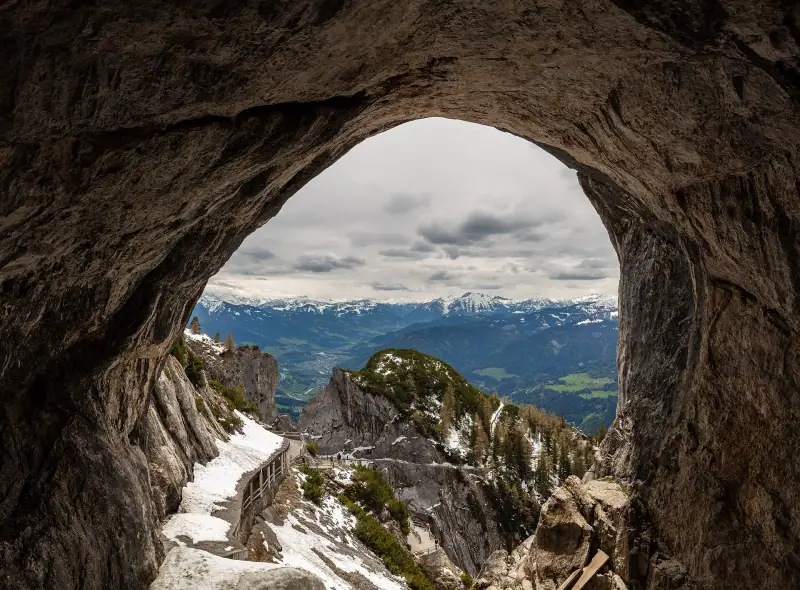
Eisriesenwelt, the ice cave near Salzburg: booking, prices and getting there without a car
Eisriesenwelt in Werfen: 2026 online and ticket-office prices, bus from the station, cable car, duration, 0 °C and tips for getting there from Salzburg.
Hallstatt salt mine: book ahead or buy on the day?
Hallstatt salt mine: 2026 prices, funicular, hours, minimum age and tips to know whether to book ahead or buy tickets on the day.
Austria travel budget: real costs and 3 priced profiles
How much does a trip to Austria cost? Real prices for lodging, transport, meals and visits, three priced budgets and tips to spend less.
Ready-made
Austria itineraries
3 days
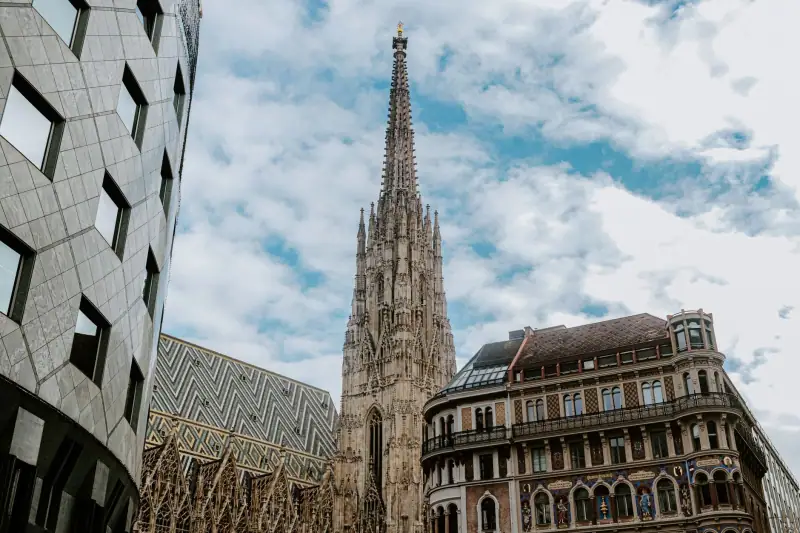
Vienna in 3 days: a day-by-day itinerary to see it all
What to see in Vienna in 3 days: the Ring, Hofburg, Schönbrunn, Belvedere, Prater and cafés, as a walking and tram itinerary with practical tips.
7 days
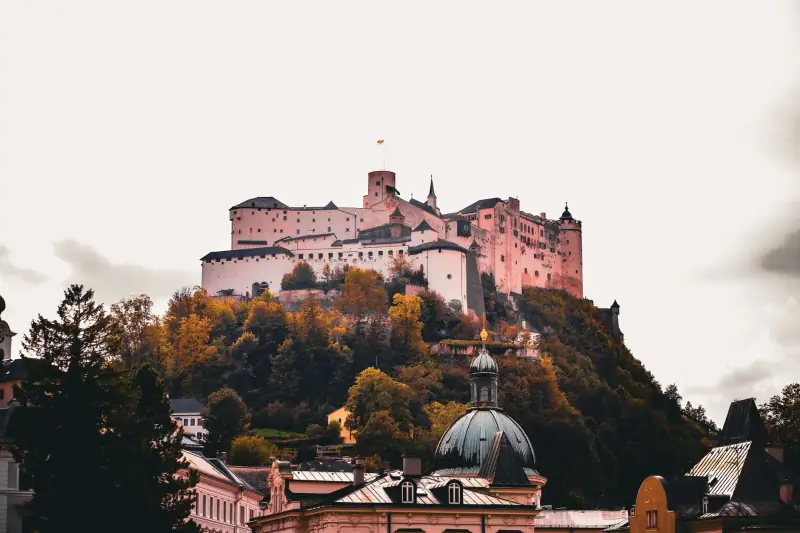
Austria in 7 days: Vienna, the Wachau, Salzburg, Hallstatt and Innsbruck
A one-week itinerary in Austria: Vienna, the Wachau, Salzburg, Hallstatt and Innsbruck, with train journeys, day-by-day stops and tips on where to stay.
2 days
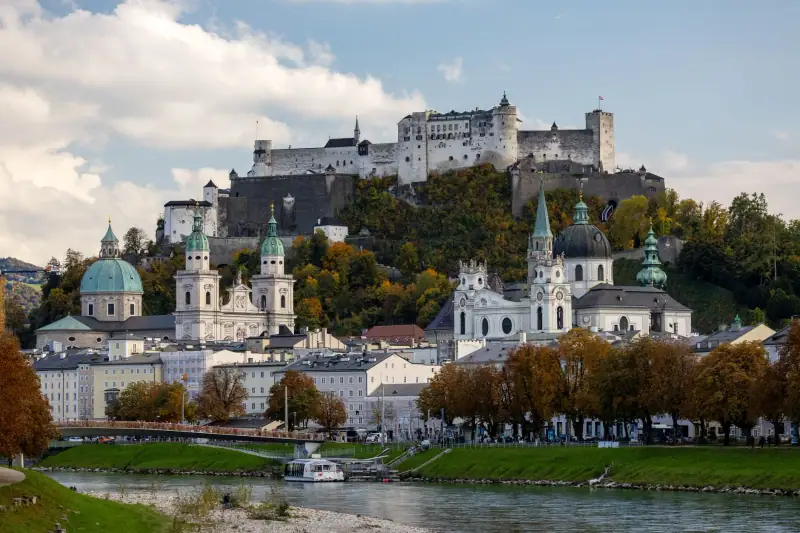
Salzburg in 2 days: an itinerary through Mozart, the fortress and the gardens
What to see in Salzburg in 2 days: old town, Hohensalzburg Fortress, Mozart's birthplace, Mirabell Gardens and Hellbrunn, as a walking itinerary.