Itineraries
Salzburg in 2 days: an itinerary through Mozart, the fortress and the gardens
We may earn a commission when you book through links on this page, at no extra cost to you. We don't visit or try the places we cover: we summarize published sources. How we work
Day by day
- Day 1Old town, Mozart's birthplace, Hohensalzburg Fortress, Mirabell Gardens
- Day 2Hellbrunn Palace, then the Mönchsberg
Weather through the year on this route
| Jan | Feb | Mar | Apr | May | Jun | Jul | Aug | Sep | Oct | Nov | Dec | |
|---|---|---|---|---|---|---|---|---|---|---|---|---|
| High °F (°C) | 362 | 394 | 479 | 5815 | 6619 | 7323 | 7625 | 7625 | 6820 | 5815 | 468 | 373 |
| Low °F (°C) | 23-5 | 25-4 | 320 | 384 | 479 | 5513 | 5815 | 5815 | 4910 | 415 | 331 | 27-3 |
| Rain in (mm) | 2.360 | 2.155 | 2.870 | 2.460 | 4.1105 | 4.7120 | 4.7120 | 4.4115 | 3.695 | 2.870 | 2.565 | 2.565 |
Normals 1991–2020 at Vienna and Salzburg: averages over 30 years, not a forecast. Source: NASA POWER (MERRA-2), grid of about 50 km. Figures computed by us in November 2026.
In short
- Two days are enough for Salzburg: the old town is compact and done on foot, with a single bus ride on day 2 to Hellbrunn.
- Day 1 covers the old town, Mozart's birthplace, Hohensalzburg Fortress and the Mirabell Gardens; day 2 covers Hellbrunn and the Mönchsberg.
- Hallstatt is about 70 km (43 mi) away and needs a full day, so do not squeeze it into these two days.
- A visitor card exists but pays off only if you visit several paid sites; compare its price with your total entry fees.
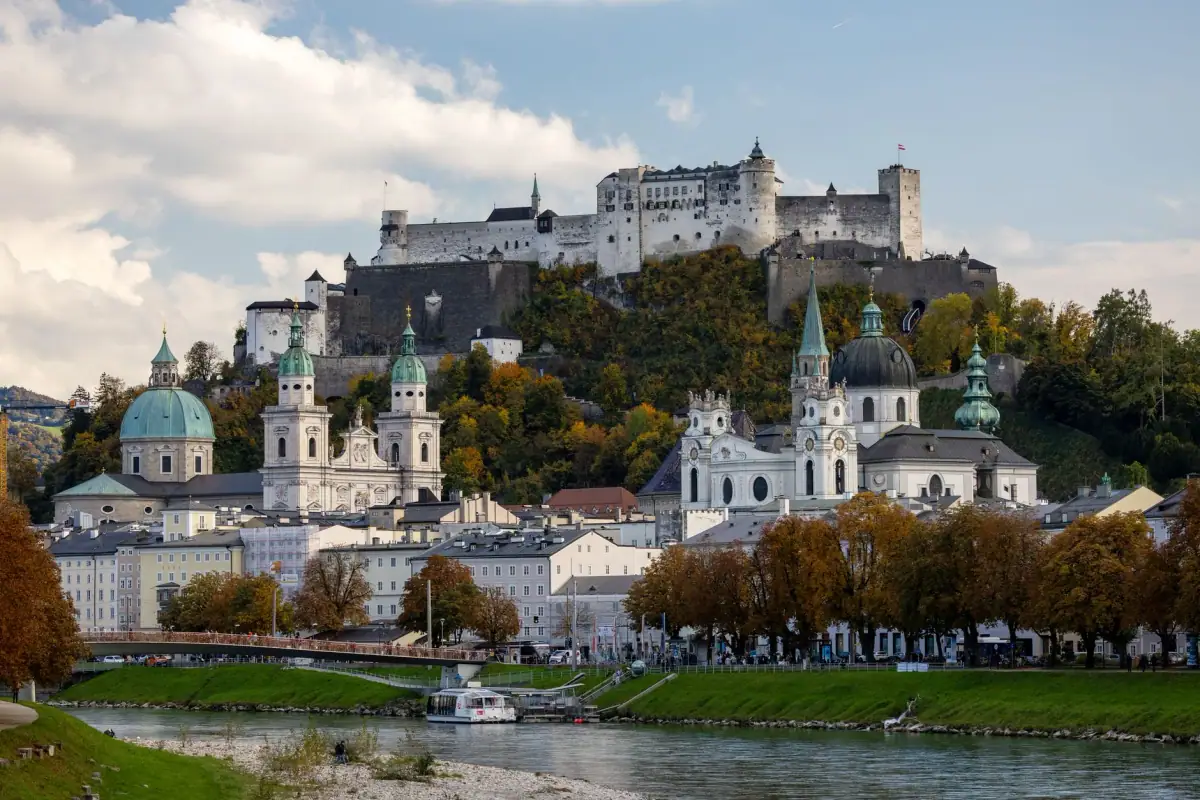
Salzburg is compact enough to take in at a glance: a Baroque old town listed by UNESCO, wedged between the Salzach River and two hills, and dominated by an immense fortress. The city is best known as Mozart’s birthplace, but it also charms with its lanes, gardens and viewpoints. Two days are enough to enjoy it without rushing, as long as you spread the visits well.
This itinerary is done entirely on foot, with a single bus ride on the second day. Opening hours, closing days and prices change with the season: check the official sites before you go. If Salzburg is only one stop on your trip, you will also find it in our 7-day Austria itinerary.
Before you go: organizing your stay
Salzburg is a modest-sized city, and most visitors stay in the old town or just across the river, a few minutes’ walk away. Staying in the center is practical and very pleasant in the evening, once the tour groups have left, but prices are higher. A hotel near the train station, a short walk or bus ride from the center, is a good budget compromise.
Arriving by train is the simplest option: the station is well connected to Vienna and several large cities in Central Europe. Munich is a few hours away by train if your trip combines Austria and neighboring Germany. For choosing your season, see our guide to the best time to visit Austria.
A tip on footwear: the old town streets are cobbled, and the climb to the fortress is steep if you do it on foot. Pack a waterproof jacket too, as the city is known for frequent showers, even in summer.
Where to stay in Salzburg: the old town is ideal for an evening stroll, but the districts near the station or across the river are often more affordable. Compare hotels for your dates.
Day 1 morning: the old town and Mozart’s street
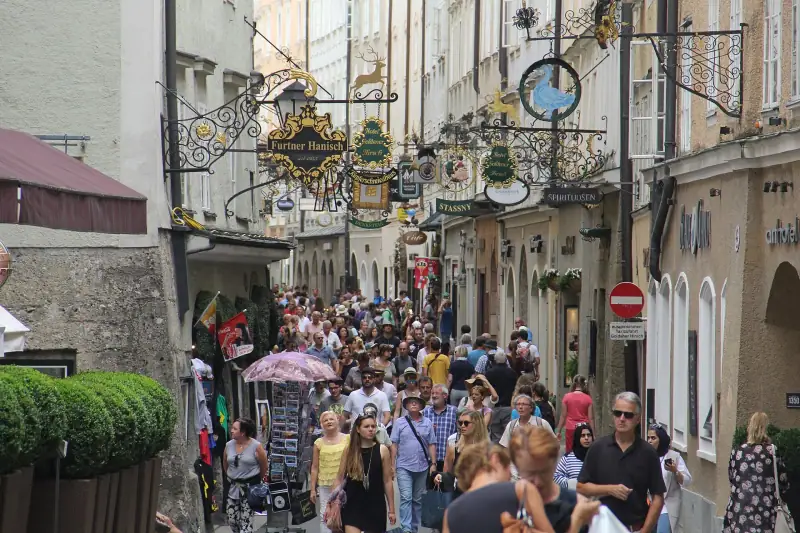
Start with the historic heart, on the left bank of the Salzach. Getreidegasse is the city’s most famous shopping street, with wrought-iron signs hanging above the shop windows. Mozart’s birthplace is here, now a museum: you can see instruments, letters and personal items of the family. In high season, arrive early to avoid the crowds.
Continue to Residenzplatz and the cathedral (Dom), whose Baroque facades open onto large neighboring squares. Residenzplatz, with its big fountain, is a good spot for a break and a look up at the fortress. Then take time to get lost in the inner courtyards and passages linking the streets: this is often where the city is quietest.
For lunch, avoid the terraces closest to the main sights and walk two or three streets farther. You will find quieter places serving regional dishes. We cover these specialties in the food guides on this site.
Day 1 afternoon: Hohensalzburg Fortress
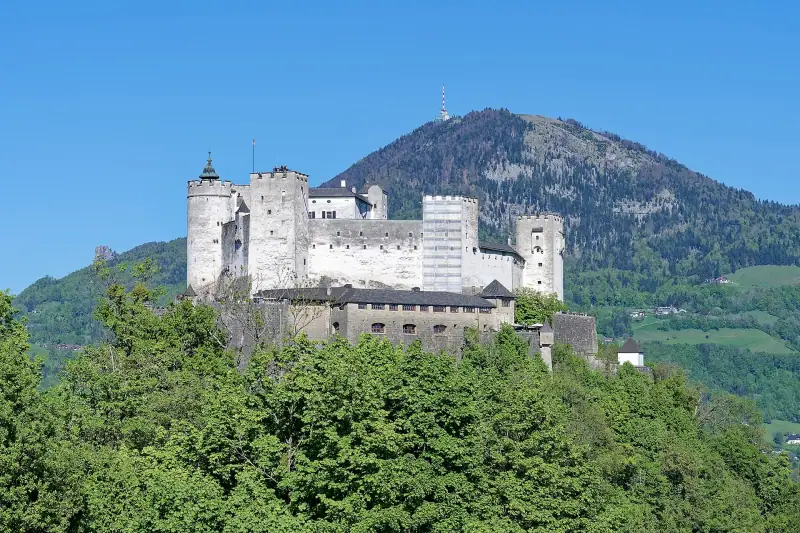
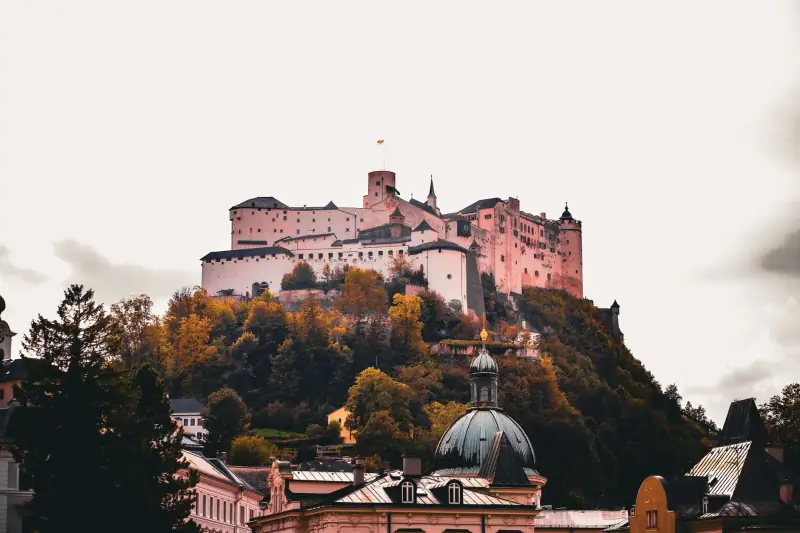
Hohensalzburg Fortress towers over the city from its hill and remains one of the largest fortified castles in Central Europe. You reach it either on foot by a steep path from the old town, or by funicular, which is more comfortable with kids or in hot weather. Inside, several parts can be visited, with furnished rooms, collections and viewpoints that take in the whole city, the river and the surrounding mountains.
Allow at least two hours there, more if you visit the museums. Then walk back down by the small streets along the hill: you will pass near Nonnberg Abbey, a Benedictine convent associated with the film The Sound of Music. Opening hours and prices for the funicular and the fortress vary with the season: check the official site before planning your day.
Tours and activities in Salzburg: guided old-town tour, a circuit of the filming locations of The Sound of Music, skip-the-line tickets... Compare the available activities.
Day 1 evening: across the river
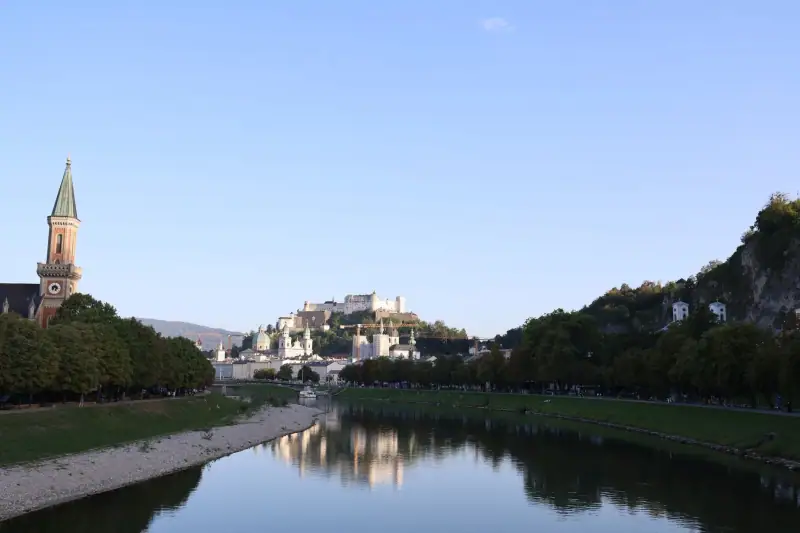
Late in the day, cross the Salzach to the modern district on the right bank. The Mirabell Gardens are a classic: geometric flower beds, statues and fountains, with the fortress in the background, make up one of the most photographed views of the city. The gardens are free to enter. The neighboring Mirabell Palace hosts events, including concerts: check the current program.
Then have dinner in the neighborhood or cross back to the old town. Try Salzburger Nockerl, a sweet soufflé dessert typical of the city, often served to share. Chocolate balls with pistachio and marzipan, the Mozartkugel, are the other local specialty, and travel easily in a suitcase.
Day 2 morning: Hellbrunn Palace
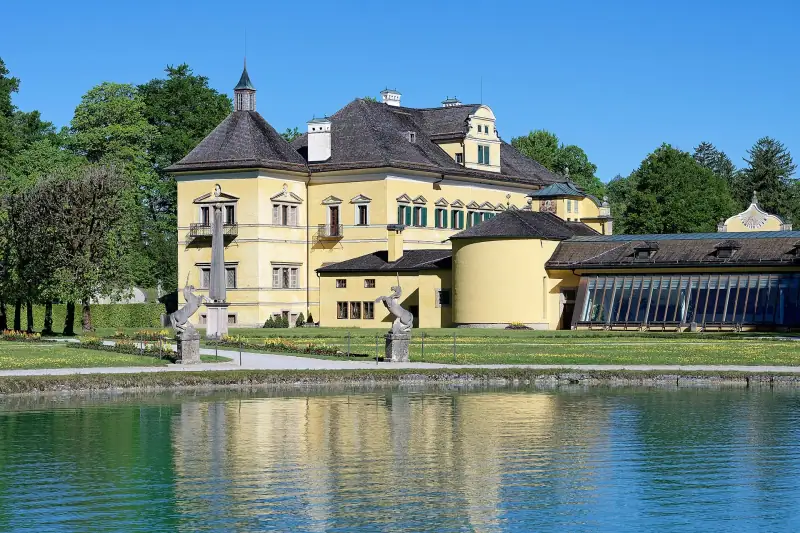
For the second day, leave the center for Hellbrunn Palace, south of the city. This former summer palace is best known for its water games: hidden fountains and jets designed to surprise guests, which the guides set off during the tour. Expect to get a little splashed, especially in summer. The neighboring park can also be explored without a guided tour and suits families well.
A bus links the center to the palace: allow about twenty minutes. It is the best option if you have no car, as parking and traffic in the center are limited. Check opening hours and the water games schedule before you go, as they are generally offered mainly in season.
Day 2 afternoon: the Mönchsberg and a last walk
To end your stay with another viewpoint, climb the Mönchsberg, the wooded hill bordering the old town. An elevator in the city center takes you up in a few minutes, and marked paths offer views over the rooftops, the fortress and the mountains. It is an easy walk, suited to a quiet late afternoon before catching a train.
If you have more time, one of the classic excursions from Salzburg is the Salzkammergut lake region and the village of Hallstatt, about 70 km (43 mi) away, reachable by car or public transport. It takes a full day, so it is better not to squeeze it into the two days of this itinerary.
Flights to Austria: Salzburg airport is served by several airlines, and Vienna offers more connections. Compare flights for your dates before booking your accommodation.
Practical tips for your stay
A visitor card including admissions and transport exists in Salzburg, but it only pays off if you string together several paid sites: compare its price with the total of your entry fees before buying it. For budget, expect the prices of a European capital in the historic center, more moderate once you move a few streets away.
Book your hotel ahead if you come in summer, during the festival season or in December, as the city is then very busy. The rest of the year, availability is more flexible. Finally, consider travel insurance to cover medical costs and cancellation.
If you come by rental car, park it in a garage outside the center: the very center is hard to reach, and everything is visited on foot.
To continue your trip to the capital, read our guide Vienna in 3 days, which pairs well with this itinerary for a five-day stay in Austria.
Frequently asked questions
Are two days enough to visit Salzburg?
Yes. The old town is compact and walkable. Two days let you see the fortress, the lanes, Mozart's birthplace, the Mirabell Gardens and an outing on the edge of town without rushing.
Do you need a car in Salzburg?
No, it is even a nuisance in the center, where traffic is restricted. The city is visited on foot, and buses serve the farther sites such as Hellbrunn Palace.
How do you get from Vienna to Salzburg?
The direct train is the simplest way: allow about 2 h 30 to 3 h. Check schedules and fares on the rail operator's website before you book.
Can you fit Hallstatt into the same trip?
It is possible in one day, since Hallstatt is about 70 km (43 mi) away, but it is nicer with a night there. Allow about 1 h 30 each way by road or public transport.
When is the best time to visit Salzburg?
Spring and early fall offer a good balance of weather and crowds. Summer is lively with festivals, and winter with Christmas markets. Our guide to the best time to go covers each season.
More Austria guides
Keep reading
Austria travel budget: real costs and 3 priced profiles
How much does a trip to Austria cost? Real prices for lodging, transport, meals and visits, three priced budgets and tips to spend less.
The best ski resorts in Austria: Tyrol, Salzburg and Vorarlberg compared
Which ski resort to choose in Austria? Sölden, St. Anton, Lech, Kitzbühel, Mayrhofen, Saalbach, Kaprun and Montafon compared: areas, seasons, profiles.
Visiting Kitzbühel: what to see and do in the heart of Tyrol
What to see in Kitzbühel? Old town, Kitzbüheler Horn, Schwarzsee, the Streif and Hahnenkamm: a guide to plan your stay in Tyrol's famous resort.
Ready-made
Austria itineraries
3 days
Vienna in 3 days: a day-by-day itinerary to see it all
What to see in Vienna in 3 days: the Ring, Hofburg, Schönbrunn, Belvedere, Prater and cafés, as a walking and tram itinerary with practical tips.
7 days
Austria in 7 days: Vienna, the Wachau, Salzburg, Hallstatt and Innsbruck
A one-week itinerary in Austria: Vienna, the Wachau, Salzburg, Hallstatt and Innsbruck, with train journeys, day-by-day stops and tips on where to stay.