What to see
Visiting Monument Valley: buttes, scenic drive and Navajo-guided tours
We may earn a commission when you book through links on this page, at no extra cost to you. We don't visit or try the places we cover: we summarize published sources. How we work
In short
- Monument Valley is a Navajo tribal park, not a national park, with its own entrance fee. A car is essential: there is no public transit nearby.
- The scenic drive loop is about 19 mi (30 km) of dirt road; allow 2 to 3 h. A licensed Navajo guide opens areas closed to private vehicles.
- Sunrise is generally less crowded than sunset; sleeping on site or nearby avoids driving isolated roads at night.
- From Page it is about 2 h 30, from the Grand Canyon South Rim about 4 h, from Moab about 2 h 30.
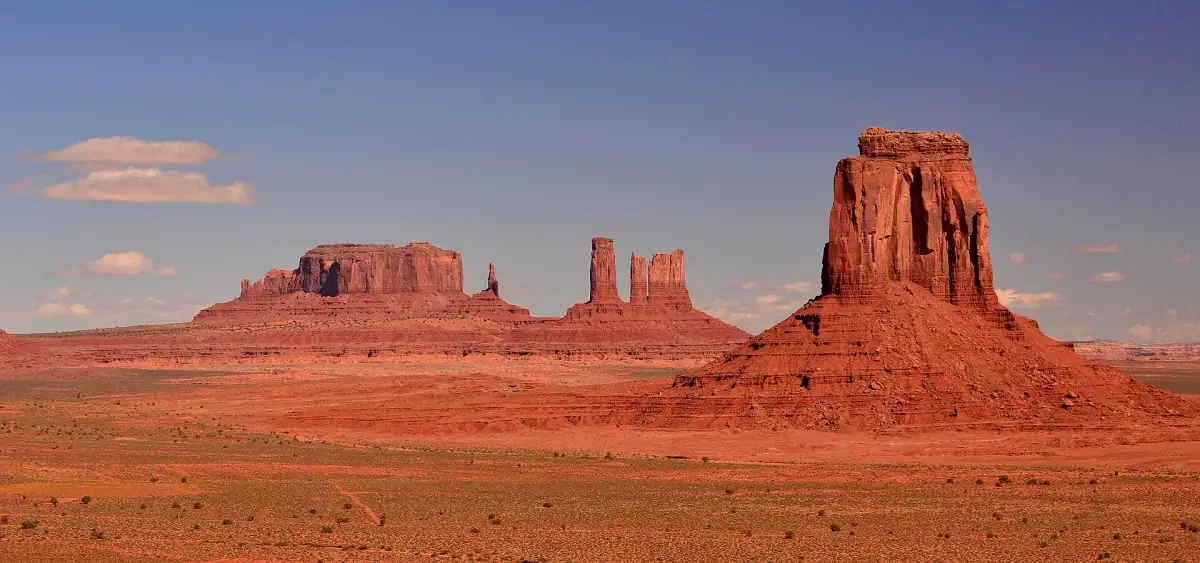
With its red sandstone buttes rising from a desert plain, Monument Valley is the landscape you instinctively associate with the American West. Westerns made it famous long before travelers arrived, and yet the place is more striking in person than on screen: the horizon is immense, the silence pronounced, and the light changes every ten minutes.
The site belongs to the Navajo Nation, and that is an important point: you are not visiting a classic national park, but tribal land with its own rules, guides and culture. This guide helps you organize the drive, the scenic loop, the visit with a Navajo guide and the night on site.
Understanding Monument Valley before you go
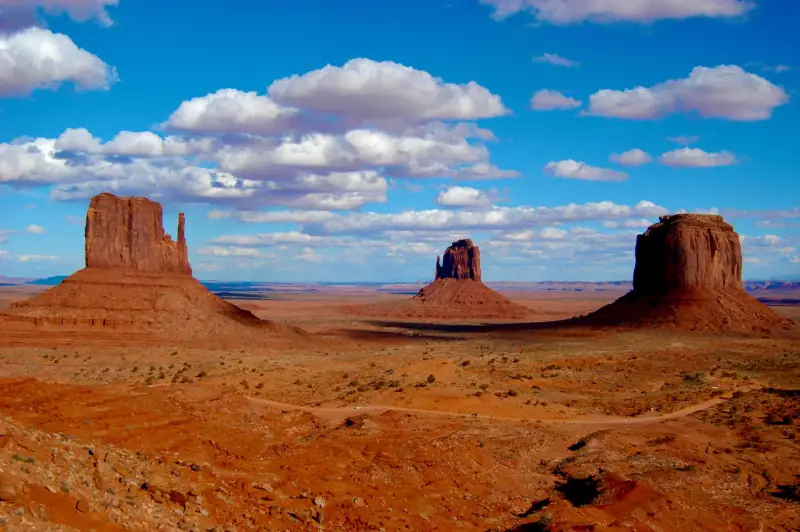
Monument Valley straddles the border between Arizona and Utah, in the Navajo Nation. The formations that make it famous are sandstone buttes and mesas: isolated landforms with vertical walls that erosion left standing while the surrounding plateau wore away around them. Their red color comes from the iron oxide in the rock.
The place is visited mostly for the panorama, more than for hiking. The sensations come from three things:
- Scale: the buttes seem close, but are spread over great distances.
- Light: at sunrise and sunset, the rock goes from ochre to deep red.
- Navajo culture: families still live in the valley, and a visit with a local guide helps you understand what this landscape means to them.
In a circuit, Monument Valley fits between the Page area and the Grand Canyon, as in our 15-day American West road trip.
Getting to Monument Valley
The valley is isolated: there is no public transit and no big city nearby, and a car is essential. A few drive benchmarks, to adjust for your stops:
- From Page (Horseshoe Bend, Antelope Canyon): about 2 h 30.
- From the Grand Canyon (South Rim): about 4 h.
- From Moab (Arches, Canyonlands): about 2 h 30.
- From Las Vegas: a long day of driving; better to break up the leg.
Roads are long and gas stations few: set off with a full tank and plenty of water. Distances look short on the map but stretch with photo stops.
A practical detail that often surprises: the Navajo Nation observes daylight saving time, unlike the rest of Arizona, which stays on standard time all year. Between March and November, the time can therefore change between Page, Monument Valley and the Grand Canyon. Always check the time of your reservations, especially for guided tour departures.
Prepare your car rental before departure, particularly if you cross several states: choose a comfortable vehicle and look for unlimited mileage.
Where to stay near Monument Valley
Lodging near the valley is limited: book early to enjoy sunrise.
The valley’s scenic drive
The big Monument Valley loop is a dirt track of about 19 mi (30 km) that starts at the visitor center and circles the most famous buttes. You drive it in your own car, at very low speed, with stops at developed viewpoints.
The silhouettes to look for:
- The “Mittens” (West Mitten and East Mitten): two buttes that evoke mittens, the emblem of the valley.
- Merrick Butte: a massive butte that completes the panorama from the starting point.
- John Ford’s Point: an overlook associated with the director of many Westerns shot here, from which the view is one of the most photographed.
- The other formations of the loop, sometimes named for their shape, to discover along the track.
Allow 2 to 3 h for the loop, taking time for stops. The condition of the track varies: after rain it can be rutted, and some sections are closed in bad weather. Ask at the entrance about the day’s conditions.
A few tips:
- Drive slowly: dust, stones and dips call for caution.
- Bring water and a hat: shade is rare and the sun intense.
- Respect closed areas: some parts of the valley are homes or sacred sites.
- Do not fly a drone over the valley without checking the tribal park’s rules, which often restrict this use.
Visiting with a Navajo guide
The main scenic drive can be done on your own, but part of the valley is only accessible with a licensed Navajo guide. It is a chance to discover places individual visitors don’t see: natural arches, rock shelters, rock art panels and viewpoints without crowds.
What a guided tour brings:
- Wider access to areas closed to private vehicles.
- Cultural insight: the guide explains the valley’s history, traditions, language and relationship to the land.
- Driving comfort: you no longer have to manage the track or the stops.
- A better choice of moments: several tours are designed for sunrise or sunset.
Options range from a one- or two-hour visit to longer excursions, including on horseback. You can generally book on site, but in high season it is better to plan ahead. To compare the available excursions, you can use a booking platform.
Monument Valley excursions
Guided valley tour, sunrise or day excursion: compare the options.
Finally, remember to respect the cultural dimension of the place: ask before photographing people or homes, and don’t buy crafts from sellers who don’t inspire your trust. Buying directly from Navajo artisans supports local families.
Sunrise and sunset over the buttes
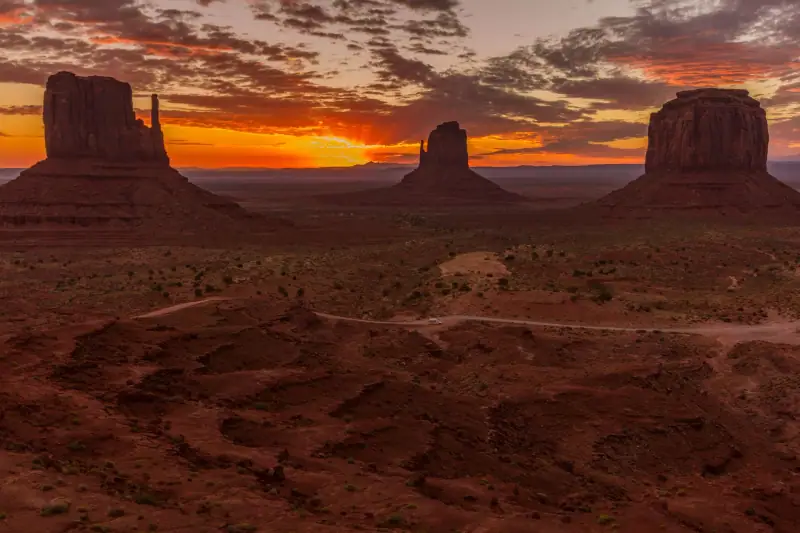
Monument Valley changes its face with the hour. At noon, the vertical light flattens the landforms and washes out the colors. At daybreak, the buttes glow red, then orange, with long shadows on the plain. Sunset offers a similar spectacle, with even warmer hues.
To enjoy it:
- Sleep on site or nearby: this avoids driving at night on isolated roads.
- Arrive before dawn: the first rays last only a short time.
- Dress warmly: mornings can be cool, even after a hot day, especially outside summer.
- Stay after sunset: the night sky is often superb far from any city light.
If you can only choose one moment, choose sunrise: it is generally less crowded, and the low light is ideal for photos.
Forrest Gump Point and the other stops on the road
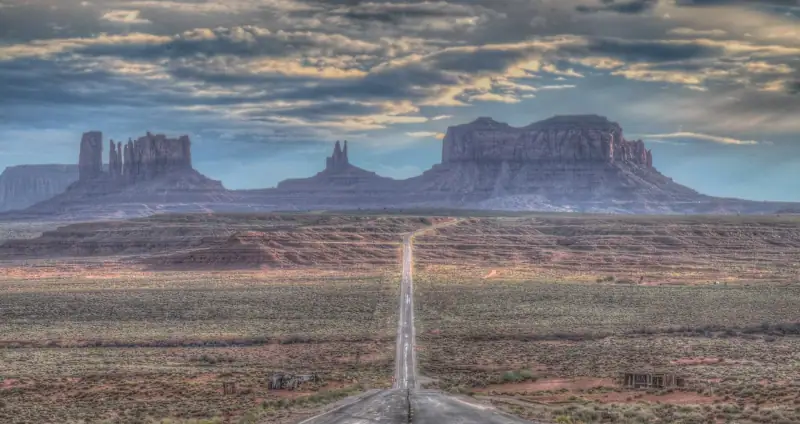
Outside the valley proper, the road that leads to it offers a few famous stops:
- Forrest Gump Point: a stretch of US-163, on the Utah side, from which you see the road running straight toward the buttes. The place owes its fame to a movie scene: the image of the road and the valley in the distance is one of the most reproduced of the American West. Park carefully on the shoulder, as traffic is real.
- Mexican Hat: a small town named after a balanced rock that evokes a sombrero.
- Goosenecks State Park: an overlook above the meanders of the San Juan River, a short distance from the road.
These stops take little time and combine easily with the valley visit if you arrive from the north or leave toward Moab.
Compare flights to Las Vegas
Las Vegas is a frequent gateway for an American West circuit: compare flights for your dates.
When to visit Monument Valley
The valley can be visited year-round, but the seasons change the experience a lot:
- Spring: pleasant temperatures, clear light, but sometimes strong, dusty wind.
- Summer: very hot days, with possible thunderstorms late in the day. Choose sunrise and avoid the middle of the day.
- Fall: one of the best seasons, with moderate heat and beautiful light.
- Winter: cold, sometimes snow on the buttes, a rare and very photogenic sight. Nights are freezing.
To compare the seasons across your whole circuit, see our guide to when to go to the American West.
Where to sleep and eat near Monument Valley
Lodging is limited: a few hotels and lodges near the tribal park entrance, motels in small neighboring towns such as Kayenta on the Arizona side, and camping options. Some properties offer a direct view of the buttes from the room, an asset for sunrise, but they book early. To compare The View, Goulding’s, Kayenta and Mexican Hat, read our guide to where to stay near Monument Valley.
For meals, dining is modest and hours can be short outside the season. Bring food for the day and plenty of water. If you want to taste local cuisine, Navajo fry bread is a specialty found in the region, as a topped or sweet flatbread.
To compare the types of lodging across the whole circuit, read our guide to where to stay in the American West.
Fitting Monument Valley into your circuit
Monument Valley fits naturally between several major sites:
- With Page: visit Antelope Canyon and Horseshoe Bend, then reach the valley in about 2 h 30.
- With the Grand Canyon: then head south to visit the Grand Canyon, about 4 h of driving.
- With Moab: if your circuit goes through Arches and Canyonlands, the valley fits on the road between Utah and Arizona.
A simple rule: if your time is short, an evening and a sunrise are worth more than a flash visit in the middle of the day.
Practical tips before you go
- Check the tribal park’s official website: entrance fees, hours, track conditions and closures.
- Check the local time: daylight saving time is observed on Navajo territory, but not in the rest of Arizona.
- Set off with a full tank and water: services are rare.
- Respect Navajo culture: ask before photographing, stay in authorized areas.
- Pack layers of clothing: temperature swings between day and night are large.
- Do not drive at night on isolated roads if you can avoid it: animals and livestock sometimes cross.
With a little organization, Monument Valley is one of the most memorable stops of an American West trip: a mythic landscape, a living culture and a light you don’t forget.
Frequently asked questions
How long does it take to visit Monument Valley?
Half a day is enough to drive the scenic loop and see the most famous buttes. To enjoy sunrise or sunset, which completely change the colors, it is better to stay on site or very close and give it a little over a day.
Is Monument Valley a national park?
No. The site is a tribal park of the Navajo Nation, on the border between Arizona and Utah. It has its own entrance fee, separate from that of the federal national parks, and the annual national parks pass does not apply there: check the conditions on the tribal park's official website.
Do you need a guide to visit Monument Valley?
Not for the main scenic drive, which you can do in your own car. A Navajo guide is however needed to access several areas of the valley not open to individual visitors, and adds valuable insight into the culture and history of the place.
Do you need a 4x4 for the scenic drive?
The track is dirt and can be bumpy or damaged after rain. Many ordinary passenger cars drive it at low speed when its condition allows, but ask at the entrance about the day's conditions. A guided tour avoids the question.
How far is Monument Valley from Page?
Allow about 2 h 30 of driving between Page and Monument Valley. It is a comfortable stage for linking Antelope Canyon, Horseshoe Bend and then the valley in the same circuit.
More American West guides
Keep reading
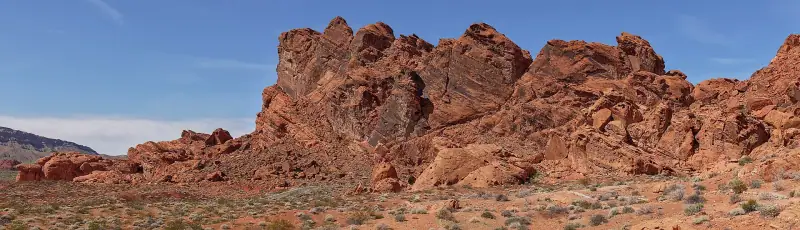
Valley of Fire or Red Rock Canyon: which to visit in half a day from Las Vegas?
Valley of Fire or Red Rock Canyon from Las Vegas: distance, fees, required reservation, hikes and a verdict based on your half day and profile.
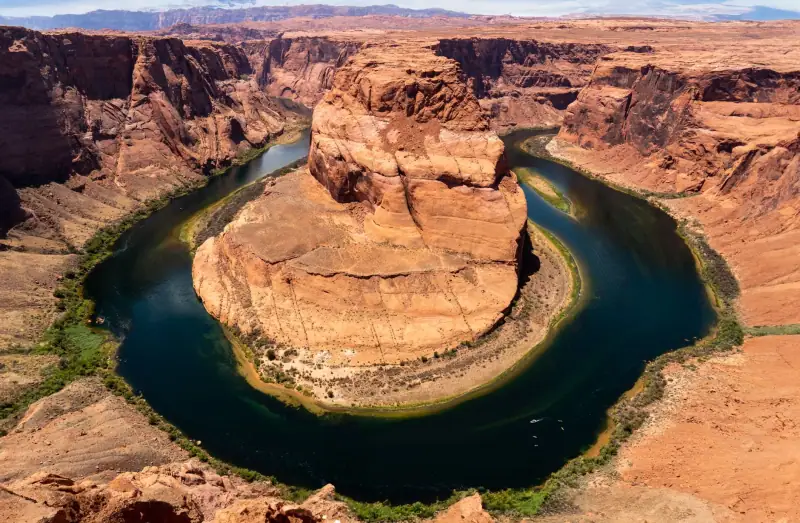
Complete guide to visiting the American West: parks, cities, budget and tips
Complete guide to the American West: regions, national parks, cities, when to go, flights, car, lodging and budget to prepare your road trip.
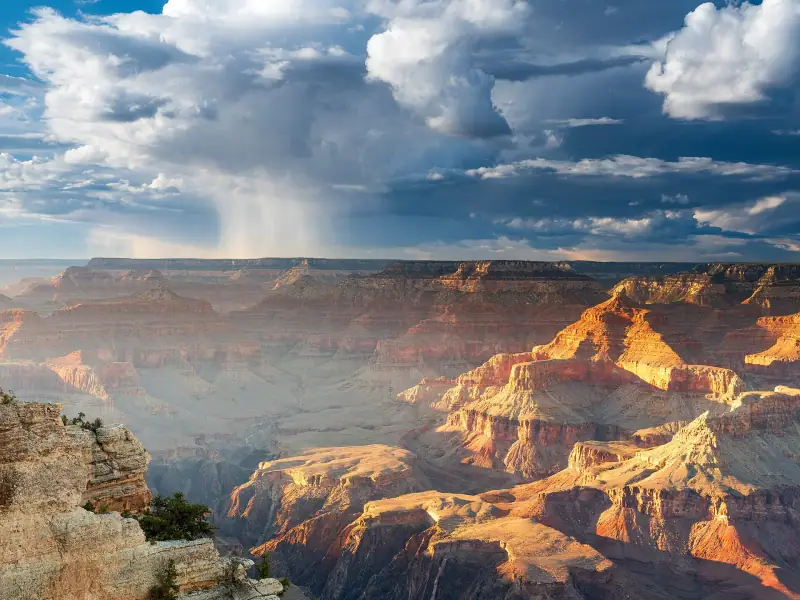
Visiting the Grand Canyon (South Rim): viewpoints, hikes and tips
Plan your Grand Canyon South Rim visit: viewpoints, shuttles, Bright Angel and South Kaibab, Desert View Drive, where to stay and the best season.
Ready-made
American West itineraries
8 days
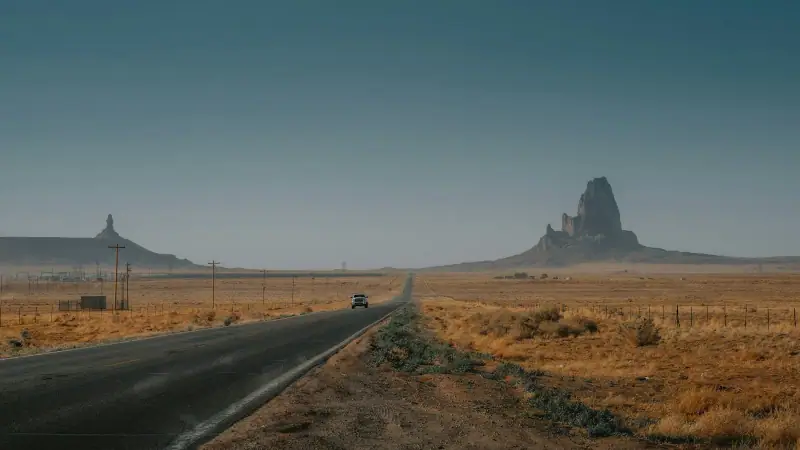
American West road trip in December: 8-day itinerary and passable roads
Las VegasSpringdaleBryce CanyonPageGrand Canyon South Rim
8 days
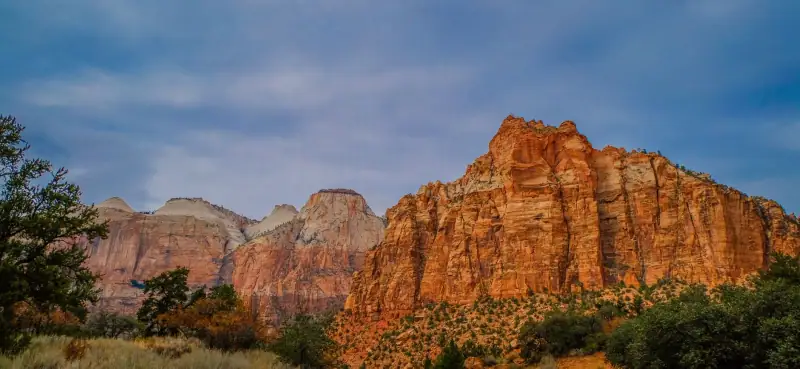
8-day road trip from Las Vegas: Zion, Bryce, Page and the Grand Canyon
Las VegasSpringdaleBryce CanyonPageGrand Canyon South RimLas Vegas
9 days
9-day road trip: San Francisco, Yosemite, Death Valley and Las Vegas
San FranciscoYosemiteLee ViningLone PineDeath ValleyLas Vegas