What to see
Pompeii and Herculaneum from the Amalfi Coast: how to organize the visit
We may earn a commission when you book through links on this page, at no extra cost to you. We don't visit or try the places we cover: we summarize published sources. How we work
In short
- Sorrento is by far the most practical starting point: the Circumvesuviana train stops at Pompei Scavi (Villa dei Misteri) and Ercolano Scavi.
- From Amalfi, Positano or Praiano there is no simple direct link: ferry to Salerno then train, bus to Sorrento then Circumvesuviana, or an organized excursion. Allow several hours each way.
- Pompeii takes about 3 to 4 hours for the main areas and has little shade. Herculaneum is more compact, about 2 hours.
- Bring a hat, water and sunscreen, wear sturdy closed shoes and watch your belongings on the train.
In AD 79, the eruption of Mount Vesuvius buried Pompeii and Herculaneum under ash and volcanic flows. Nearly two thousand years later, these two Roman cities frozen in time are among the most fascinating archaeological sites in Europe, and they are within a day’s reach of the Amalfi Coast. The trip takes a little organization, because the coast roads are slow and the villages are on the other side of the peninsula. Here is how to choose your site, get there without stress and enjoy the visit despite the heat and the crowds.
Pompeii or Herculaneum: which to choose?
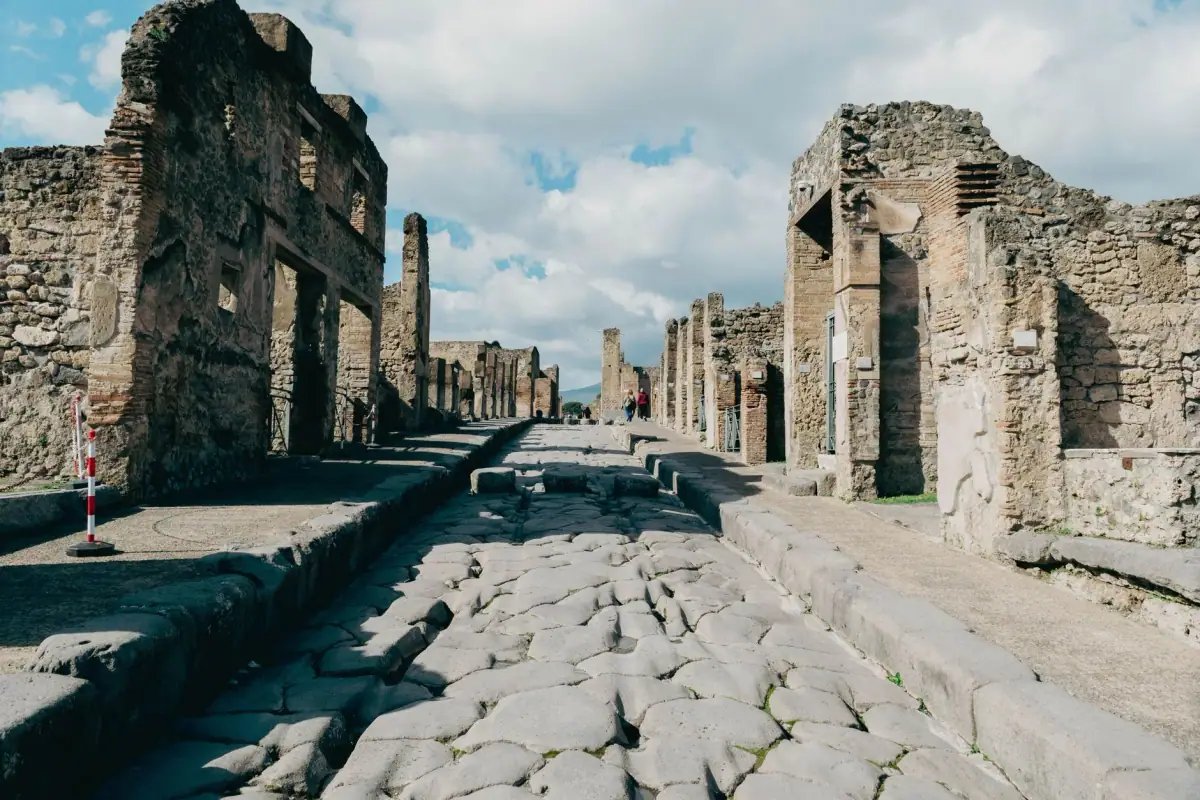
Both sites tell the same catastrophe, but not in the same way. Pompeii is an entire city, spread over many hectares: you walk its long cobbled streets and discover a forum, baths, an amphitheater, shops, frescoes and large patrician houses. The visit is impressive, but it is long and takes place almost entirely in the open air, with little shade.
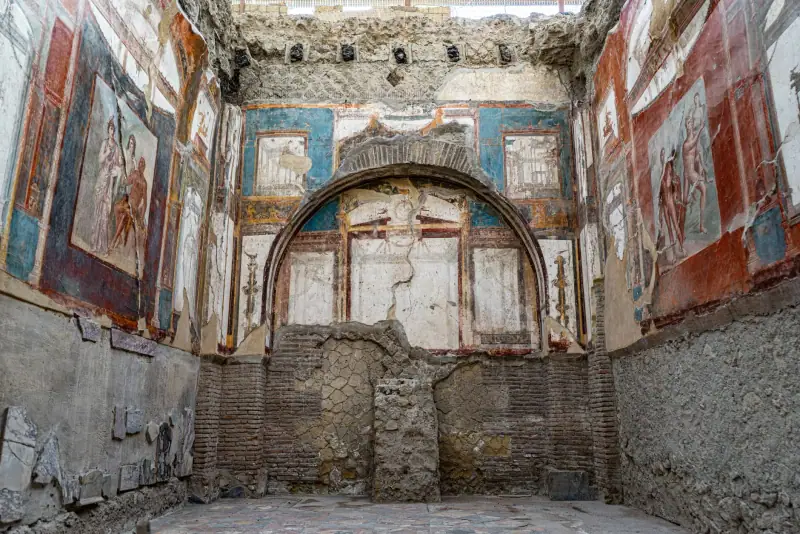
Herculaneum, for its part, was a small seaside and residential town. It was covered by a thick layer of volcanic material that protected some elements such as woodwork, mosaics and the upper floors of houses. The site is more compact: about two hours are enough to go around it, which makes it a good choice if your time is limited or if you travel with young children.
Our advice: if you have only one day, choose Pompeii for scale, or Herculaneum for calm. If you have a day and a half, combine the two, keeping Herculaneum for the end of the day, when the heat eases.
Reaching the sites from Sorrento by train
Sorrento is by far the most practical starting point. The Circumvesuviana regional rail line links Sorrento to Naples via both sites. For Pompeii, get off at the Pompei Scavi – Villa dei Misteri station, right next to the archaeological entrance. For Herculaneum, get off at Ercolano Scavi: the site is about ten minutes’ walk away, going down toward the sea.
This train is simple, cheap and direct, but it is also known for being packed at peak hours, sometimes late, and for attracting pickpockets. Keep your bag in front of you, avoid taking out your phone near the doors and preferably leave early in the morning. Check timetables and fares on the operator’s website: they change with the season and works.
If you stay in Sorrento, you are ideally placed for this excursion. Our guide to where to stay on the Amalfi Coast compares the possible bases, and the Sorrento peninsula has its place there for archaeology fans.
Sleep in Sorrento
Sorrento is the most practical base for Pompeii, Herculaneum and Capri: compare hotels on the peninsula.
From Amalfi, Positano or Praiano: the options
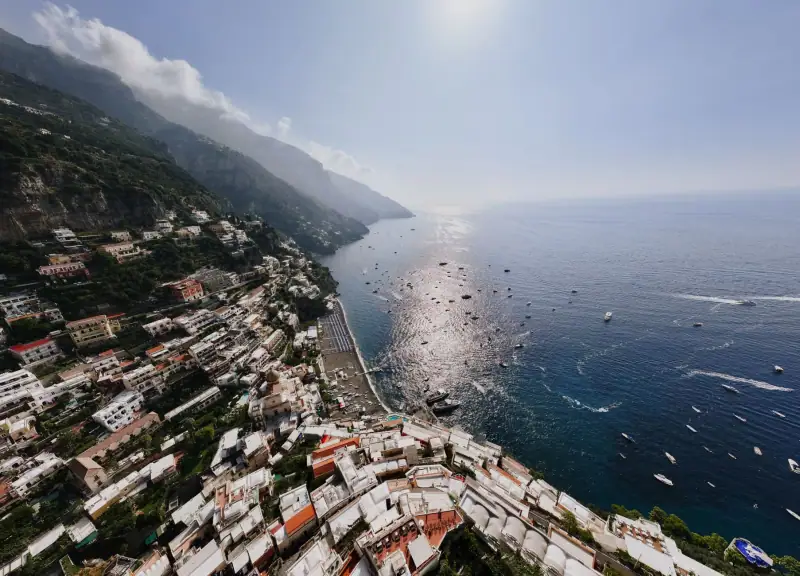
From the coastal villages, the day is longer. There is no direct, fast link, and the coast road is slow, especially in summer. Three solutions come up most often.
- Ferry then train: a boat links Amalfi or Positano to Salerno, then a regional train reaches the Pompeii area. It is the most pleasant formula, with the sea as a bonus, but it depends on seasonal ferry schedules.
- Bus then Circumvesuviana: a bus runs along the coast to Sorrento, where you take the train. This solution is cheap but slow, and buses are often full in high season.
- Organized excursion: it covers round-trip transport and sometimes the guided visit. It is the most comfortable solution if you do not want to manage connections.
In every case, allow several hours of travel over the day, and check the time of the last return before leaving. To compare connections, our guide to getting around the Amalfi Coast details buses, ferries and car.
If you arrive from abroad, Naples airport is the gateway: the airport has no Circumvesuviana station. You need to reach Napoli Garibaldi station (Alibus shuttle or taxi), then take the Naples–Sorrento line train to Ercolano Scavi or Pompei Scavi, without lingering in the city.
Visiting Pompeii: the highlights

The site is too vast to be seen entirely in one visit. It is better to choose a few stops and take the time to appreciate them. The forum, the former political and religious heart of the city, sets the tone, with Mount Vesuvius as a backdrop. The baths and shopping streets show the daily life of the inhabitants: shop counters, ruts left by carts in the paving, fountains.
The amphitheater, one of the oldest known from Roman antiquity, is at the other end of the site. The large houses, with their colorful frescoes and inner courtyards, are among the most striking moments of the visit. Some buildings may be closed for restoration work or opening rotation: ask at the entrance.
A few practical tips for the visit. The site has very little shade: a hat, water and sunscreen are essential. The cobbles are uneven: wear closed, comfortable shoes. Finally, a map or a visit app avoids getting lost, because the street network is complex. An audio guide or a guide helps you better understand what you see, especially if you do not know Roman history well.
Pompeii guided tours
Compare skip-the-line tickets, guided tours and excursions with transport from the region.
Visiting Herculaneum: a more intimate city
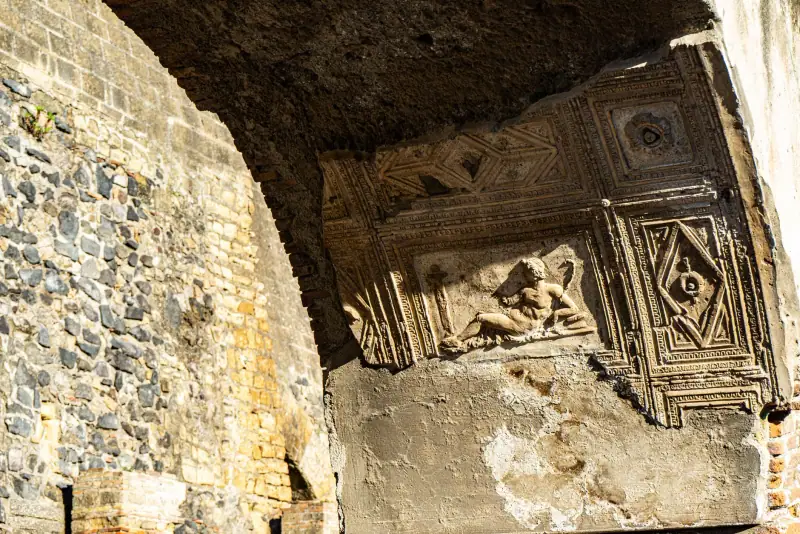
Herculaneum is visited at a calmer pace. The site lies largely below the modern town of Ercolano, which gives a striking view of the thickness of the volcanic deposits that covered it. You discover houses with preserved upper floors, mosaics, frescoes, and the old boat sheds near the former shoreline, where victims of the eruption were found.
Access from the station is easy, and the route is short enough to be combined with lunch in town or a later visit. The frescoes and mosaics are seen up close: walkways and floors can be slippery, so take care. As at Pompeii, some houses may be closed for restoration.
For travelers who prefer a calmer approach, the site is an excellent complement or an alternative to Pompeii. It lends itself well to an end-of-day visit, before taking the train back.
And Mount Vesuvius?
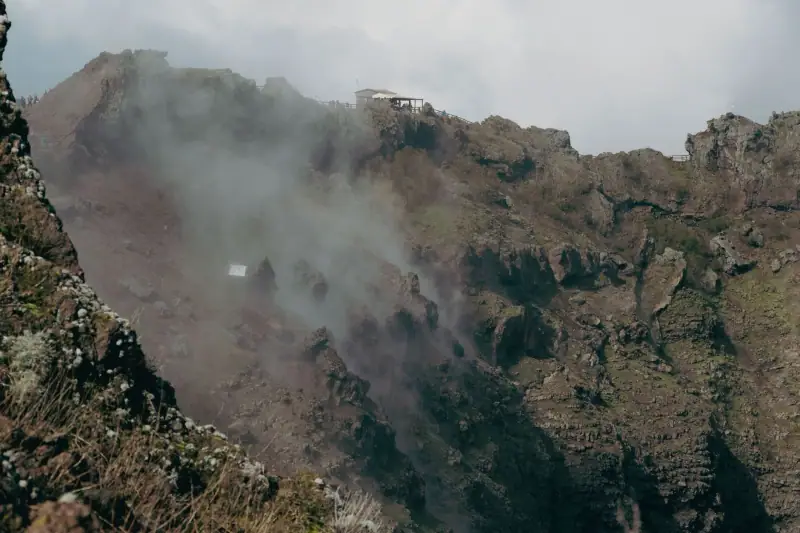
The volcano that dominates the gulf can also be visited. A road climbs to a high-altitude parking lot, from where a trail leads to the crater rim. The final climb is on foot, on a path of ash and gravel, and requires good shoes. Access is regulated and may change depending on the volcano’s activity and the weather: book in advance and check conditions before traveling.
Vesuvius is hard to add to a day with Pompeii if you start from the Amalfi Coast. If the volcano particularly attracts you, set aside a separate half day, or choose an excursion that bundles transport and the visit. In clear weather, the view over the gulf is worth the effort; in hazy weather, it is sometimes disappointing.
Flights to Southern Italy
Compare flights to Naples airport, the gateway to the Amalfi Coast and the gulf.
A sample plan for the day
Here is a realistic outline from Sorrento, to adapt to the season and train times:
- Early morning: train to Pompei Scavi, aiming to arrive at opening to enjoy the cool and the shortest queue.
- Morning: forum, main streets, baths and one or two large houses. Take a break in the shade as soon as possible.
- Lunch: bring a snack and water, or have lunch in a cafe near the entrance, keeping in mind that prices are often higher right next to the site.
- Early afternoon: amphitheater or a second area, then leave before the hottest hours.
- Late afternoon: if you have the energy, train to Ercolano Scavi for a shorter visit of Herculaneum, checking the site’s closing time.
If you prefer a lighter program, choose a single site and keep the rest of the day for a stroll or dinner in Sorrento. To place this excursion in a full stay, our 3-day Amalfi Coast itinerary shows how to spread the stops, and the day on Capri offers another kind of escape.
Practical tips for your visit
- When to come: spring and early fall are the most pleasant. In summer, the heat on the cobbles is punishing: arrive at opening and bring water.
- Tickets: in high season, booking ahead avoids part of the wait. Check fares and conditions on the archaeological park’s official website.
- Safety: watch your belongings on the train and around the stations, and beware of fake guides who approach visitors in front of the entrance.
- Gear: closed shoes, hat, water, sunscreen. A small light bag is enough, because some bulky bags may be refused at the entrance.
- Accessibility: cobbles and elevation changes complicate the visit with a stroller or wheelchair. Check for accessible routes before you come.
- Car: driving to Pompeii is possible, but parking is paid and traffic is dense. The train is generally simpler.
Pompeii and Herculaneum are one of the best complements to a stay on the Amalfi Coast: a dive into the daily life of a Roman city, a few train stops from the terraces of lemon trees. With an early start, a single well-chosen site and something to protect you from the sun, you will remember a striking day rather than a marathon.
Frequently asked questions
Can you visit Pompeii and Herculaneum on the same day?
It is possible, but the day is dense. The two stations are on the same train line, a short distance apart. If you have only one day, it is better to do Pompeii thoroughly, or choose Herculaneum alone, which is more compact.
Should you choose Pompeii or Herculaneum?
Pompeii is huge and gives an idea of the whole city, with its streets, shops and large homes. Herculaneum is smaller, easier to visit in about two hours, and its remains are often better preserved. With little time or with family, Herculaneum is an excellent choice.
How do you get to Pompeii from Sorrento?
The Circumvesuviana train links Sorrento to the Pompei Scavi – Villa dei Misteri station, near the site entrance. Timetables and fares change: check them before leaving.
How do you get to Pompeii from Amalfi or Positano?
There is no simple direct link. Common options are a ferry to Salerno then a train, a bus to Sorrento then the Circumvesuviana, or an organized excursion. Allow a trip of several hours each way.
How long should you plan for visiting Pompeii?
Allow about 3 to 4 hours for the main areas, more if you want to go deeper. The site is vast with little shade.
Do you need to book tickets in advance?
In high season, booking ahead avoids part of the queue. Check the conditions and time slots on the archaeological park's official website or with an excursion organizer.
More Amalfi Coast guides
Keep reading
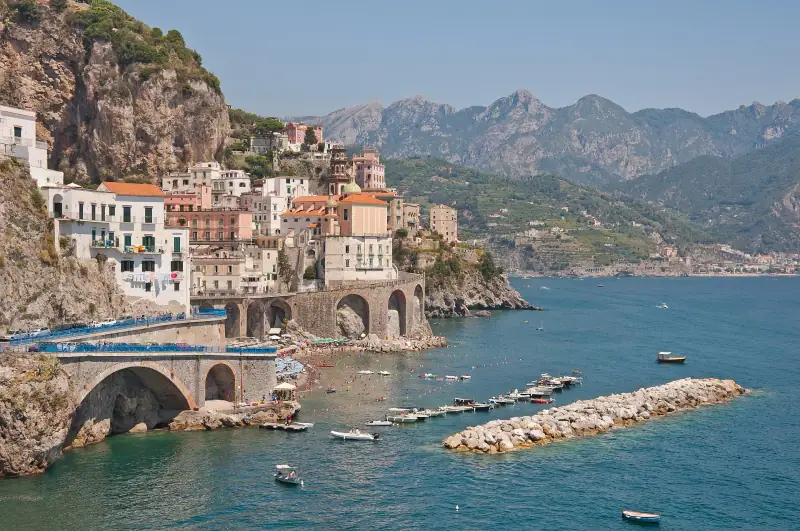
Is Atrani worth the detour from Amalfi? A half-day walking visit
Is Atrani worth the detour from Amalfi? Walking access, churches, beach, stairs to the Santuario del Bando, where to eat and visit length for half a day.
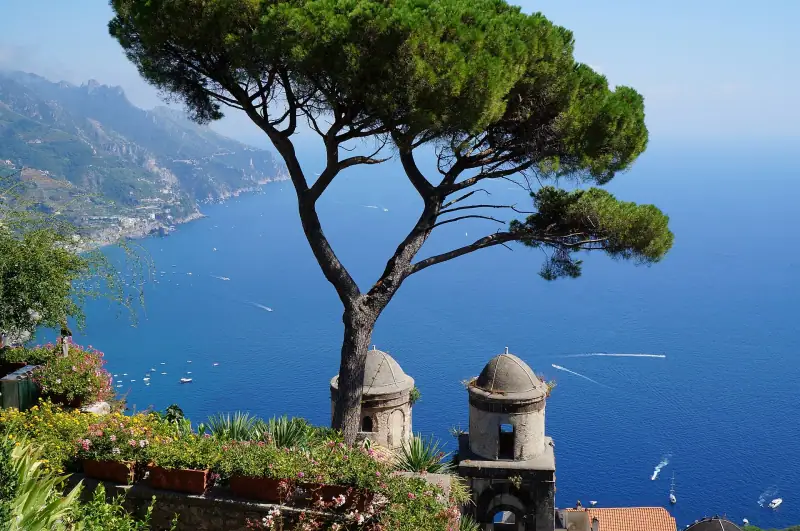
Complete guide to visiting the Amalfi Coast: towns, highlights and tips
Visit the Amalfi Coast: towns, highlights, best time to go, transport, where to stay and budget. The main guide to prepare your trip to Campania.
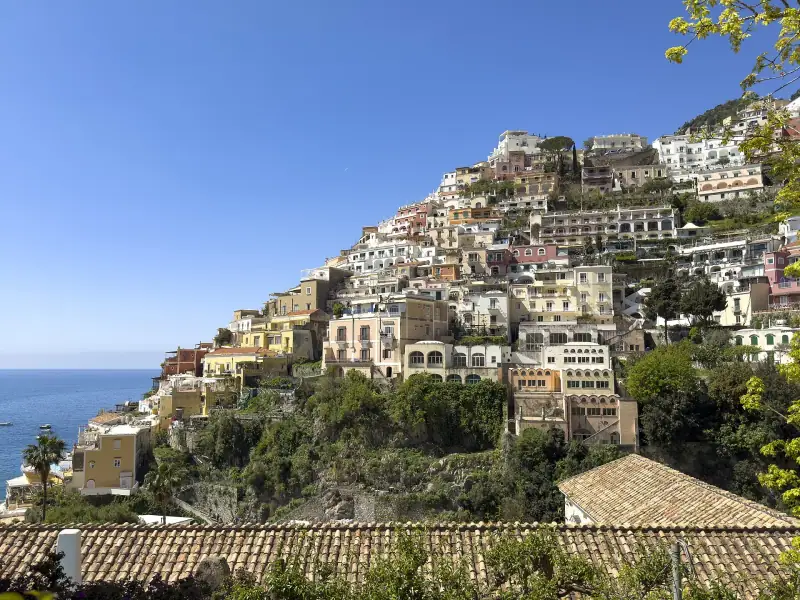
Visiting Positano: beaches, lanes and practical tips
What to do in Positano: Spiaggia Grande, Fornillo beach, lanes, Santa Maria Assunta church, getting there by bus or ferry and tips to avoid the crowds.
Ready-made
Amalfi Coast itineraries
3 days
Amalfi Coast in 3 days: a day-by-day itinerary without a car
Plan 3 days on the Amalfi Coast without a car: Amalfi, Ravello, the Path of the Gods and Positano, with bus, ferry and practical tips for each day.
5 days
Amalfi Coast road trip by car: a Sorrento to Salerno itinerary
Drive the Amalfi Coast from Sorrento to Salerno on the SS163: stops in Positano, Amalfi and Ravello, parking, and tips for narrow roads.
5 days
Amalfi Coast without a car: a 5-day itinerary by bus, ferry and train
Visit the Amalfi Coast without a car in 5 days: day-by-day itinerary by bus, ferry and train, with Amalfi, Ravello, Positano, Capri, Pompeii and tips.