Itineraries
Amalfi Coast without a car: a 5-day itinerary by bus, ferry and train
We may earn a commission when you book through links on this page, at no extra cost to you. We don't visit or try the places we cover: we summarize published sources. How we work
Day by day
- Day 1Arrive via Salerno or Sorrento, first evening in Amalfi
- Day 2Amalfi, Paper Museum, Atrani, Valley of the Mills
- Day 3Ravello: Villa Rufolo and Villa Cimbrone
- Day 4Path of the Gods to Nocelle, then Positano
- Day 5Capri by boat or Pompeii and Herculaneum by train
Where to sleep
- Amalfi4 nights
In short
- Five days by public transport with a single base in Amalfi: day trips to Ravello, Positano and the Path of the Gods, then Capri or Pompeii.
- Buses run along the SS163; ferries run mostly from spring to early fall; trains reach Salerno or, via the Circumvesuviana, Sorrento.
- Allow slack: a half-hour bus delay is not rare. Check the last return time before dinner in another village.
- Travel light: stairs, lanes and crowded buses make wheeled suitcases a pain.
Many travelers think you need to rent a car to explore the Amalfi Coast. It is the opposite: the road that winds between cliffs and villages is one of the narrowest and most congested in Italy in summer, bus crossings there are acrobatic and parking spaces are rare. Without a car, you gain serenity, you enjoy the landscape from the bus or the deck of a ferry, and you spare yourself the search for a parking spot.
Here is a five-day itinerary to see everything by public transport, with a single base in Amalfi, day excursions and a few variants depending on the season. For a shorter format, see our 3-day itinerary, and for the details of the connections, our guide to getting around the coast.
How the coast works without a car
Before leaving, you need to understand the logic of travel, very simple once you have it in mind.
- The SS163 road runs along the coast from Sorrento to Salerno. Public buses run along it all day and link the main villages: Positano, Praiano, Amalfi, Atrani, Minori, Maiori.
- Ferries link Amalfi, Positano, Salerno, Sorrento and Capri in season. They are more pleasant than the bus, but pricier, and depend on the weather.
- The train does not serve the coast itself. It brings you to Salerno (east side) or, via the Circumvesuviana line from Naples, to Sorrento (west side).
- Taxis and transfers serve as a backup, notably late in the evening or with luggage.
The key is to accept a slower pace: buses can be late because of traffic, and you sometimes have to wait. A half-hour delay is not rare; so never plan too tight a sequence, especially before a flight or a last ferry.
Day 1: arrival and first evening in Amalfi

If you arrive in Naples, the most classic way to reach the coast is to take a regional train to Salerno, then a ferry or bus to Amalfi. The alternative is the Circumvesuviana to Sorrento, then a bus along the coast. Both routes take several hours counting connections: do not plan anything important on the first day.
For a first arrival, the sea route from Salerno is the most spectacular: you see the villages clinging to the cliff go by before docking in front of the town. If the sea is rough or the times do not suit, the bus does the job very well.
Once settled in, stroll through the lanes of the center. The Cathedral of Saint Andrew, with its colorful facade and its grand staircase, overlooks the main square. Climb the steps, step into the neighboring cloister, then have dinner on a side street rather than facing the square, which is pricier. End with a walk on the seafront, very pleasant in the evening.
Sleep in Amalfi, the ideal base without a car
Hotels and B&Bs near the center and the bus stops: compare offers for your dates.
Day 2: Amalfi, Atrani and the Valley of the Mills
Start the morning by discovering Amalfi. This small town was one of the great maritime republics of Italy in the Middle Ages, and you find traces of it in its architecture and in its museum devoted to traditional papermaking. The Museo della Carta is set in an old mill and helps you understand an industry that long sustained the town.
Late in the morning, walk to the neighboring village of Atrani, very close to Amalfi. It is a maze of vaulted passages, stairs and small squares, much calmer than its neighbor. You just follow the coast road, or take a pedestrian passage, to get there in a few minutes.
In the afternoon, if you like walking, head to the Valley of the Mills, above Amalfi. The path goes up along a stream among old industrial buildings and dense vegetation, a welcome coolness in summer. It is done on foot from the center, without transport. Bring good shoes: the terrain is uneven and sometimes slippery.
If walking does not tempt you, spend the afternoon at the town beach or on the harbor, then have an aperitif at sunset. Save your strength for tomorrow.
Day 3: Ravello, villas and gardens

Ravello is perched on the heights, well above the sea, and is reached from Amalfi by a local bus that climbs in switchbacks. The ride is short but winding, and it is one of the most used connections on the coast: leave early to avoid the crowd, especially in season.
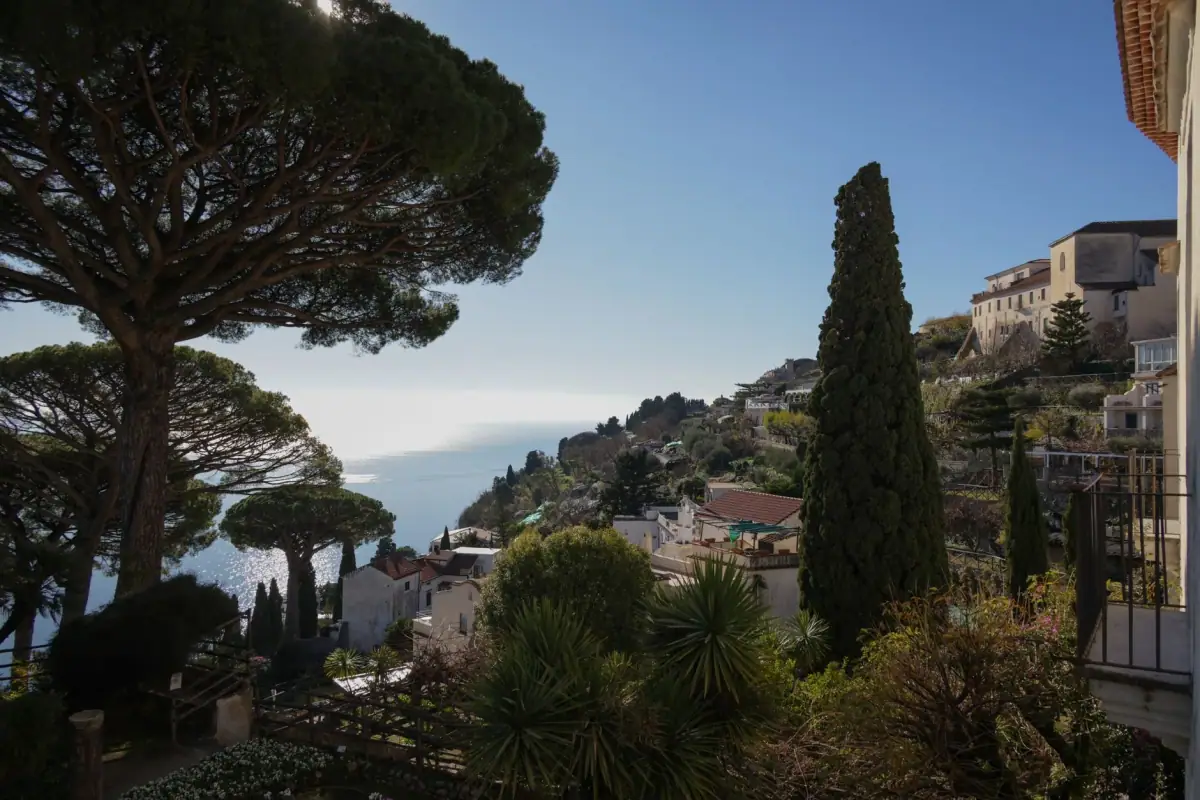
Ravello is famous for two estates open to visitors: Villa Rufolo, with its terraced gardens and plunging view of the sea, and Villa Cimbrone, known for its long avenue and its panoramic terrace. Allow a good morning for the two, and see our article on Ravello, its villas and gardens to organize the visit.
Have lunch there, then come back down in the late afternoon. Since the climb and descent by bus are fairly short, it is also possible to make the trip on foot by stairs, but that takes good fitness and a bit of organization. Take the bus instead and save your legs for tomorrow.
In the evening, enjoy a quiet dinner in Amalfi. To better understand what you are eating, you can consult our guide to the specialties of the Amalfi Coast.
Day 4: the Path of the Gods and Positano
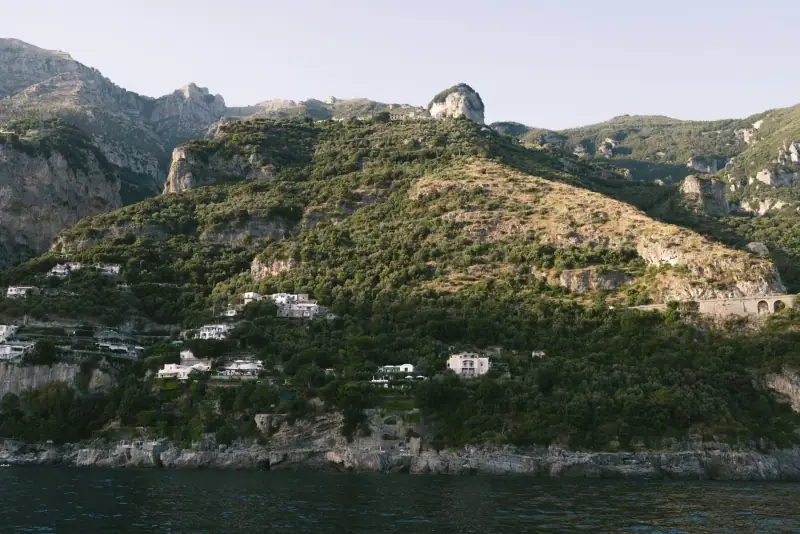
The fourth day is devoted to the most beautiful hike in the region. The Path of the Gods (Sentiero degli Dei) follows the heights above the sea between Bomerano, in the municipality of Agerola, and Nocelle, above Positano. It offers exceptional views without great technical difficulty, but requires walking and an early start.
Without a car, the simplest way is to take an early morning bus to Bomerano, then follow the path to Nocelle. From there, you can go down to Positano by a long staircase (very steep on the knees) or take a local bus. Our guide to the Path of the Gods details the route, the variants and the precautions to take.
Once in Positano, take time to stroll through the lanes and swim if the weather allows. The main beach is made of dark pebbles, and the village is famous for its colorful houses in an amphitheater. For detailed tips, see our article on visiting Positano.
To get back to Amalfi, the bus is the most reliable solution. In season, a ferry can also make the link, with a superb view of the coast: check the time of the last departure before launching into an endless lunch.
Hike with a local guide
Guided hikes and excursions on the Amalfi Coast, bookable online, with free cancellation on most activities.
Day 5: Capri or Pompeii, two options without a car

On the last day, two classic excursions are open to you. They are very different, and it is better to choose only one.
Option A: Capri by boat
Capri is reached by ferry from several ports of the coast and the Sorrento peninsula, depending on the season. It is above all a day at sea: the crossing, the arrival at the harbor, the climb to the center, then the visit on foot or by local bus. Boats are less frequent off-season, and the sea can prevent crossings: always keep a margin and check the time of the last return. Our article on the Capri excursion explains how to choose the departure port and organize the day.
Option B: Pompeii or Herculaneum by train
For history fans, a day at the ancient sites at the foot of Mount Vesuvius is an excellent choice. From Sorrento, the Circumvesuviana serves the stops near Pompeii and Herculaneum directly. If you sleep in Amalfi, the trip is longer: you have to reach Sorrento by bus or go through Salerno. So plan a full day, with an early start. Our guide to Pompeii and Herculaneum from the coast gives the practical details, notably on the heat, the almost nonexistent shade and tickets.
Day excursions without a car
Capri, Pompeii, cruises along the coast: organized outings, transport included depending on the offer, bookable online.
Adapting the itinerary to the season
The program above mostly suits late spring to early fall, when ferries run and everything is open. Outside this period, a few adjustments are needed.
- High season (July-August): buses are packed and queues are long. Leave early, avoid peak hours and keep time for walking and swimming early in the morning. Our guide to choosing the period details the seasons.
- Spring and early fall: the ideal period, with pleasant temperatures, fuller ferry schedules and fewer people.
- Winter: ferries are few or stopped, some lodgings and restaurants close, and the sea can be bad. The bus becomes your main means of travel, and Capri is harder to organize.
Variant for families or with little walking
If you travel with children or people who walk little, simplify the program.
- Replace the Path of the Gods with half a day in Positano, reaching the village directly by bus or ferry.
- Keep Ravello, but limit yourself to a single villa and a lunch on site.
- For the last day, prefer Capri by boat, more restful than a visit to an archaeological site in the sun.
- Plan regular breaks and swims: many villages have a small beach reachable on foot.
In every case, do not try to do everything. A few successful visits beat a list of places ticked off in a hurry.
Practical tips for traveling without a car
A few simple rules make the stay much more comfortable.
- Travel light. Lanes, stairs and crowded buses do not go well with big suitcases. A soft bag or a small carry-on is enough for five days.
- Leave early. Buses are fuller in the middle of the day, and the light is nicer in the morning.
- Always keep a fallback. If a ferry is canceled, the bus takes over; if a bus is full, wait for the next one or book a taxi.
- Check the last return time before going to dinner in another village.
- Choose lodging near a stop whose access does not require long climbs. Our guide to choosing where to stay compares the villages.
- Prepare your gear. Good shoes, a hat, water and sunscreen are essential. See our list of useful accessories for the coast.
- Think about insurance. A last-minute cancellation or a health problem while traveling can be costly: compare travel insurance offers before you leave.
Budget: car or public transport?
Without a car, you avoid the rental, fuel, parking and the stress of driving. Bus tickets are generally cheap individually, while ferries are pricier, especially to Capri. In the end, a car-free stay generally costs less than one with a rental car, especially if you stay in a single village and travel by the day. To detail your spending, see our article on the budget for a stay.
If you still prefer to rent a vehicle for part of the stay, for example to explore the hinterland, you can take it only for a few days rather than for the whole duration.
Summary
Five days are enough to see the essentials of the Amalfi Coast without a car: one day to settle in, one for Amalfi and Atrani, one for Ravello, one for the Path of the Gods and Positano, and a last one for Capri or Pompeii. It all rests on a simple rule: a single base, day excursions and timetables checked the day before. By accepting a slightly slower pace, you will discover a coast that is more pleasant, calmer and far less stressful than from behind the wheel.
Frequently asked questions
Can you really visit the Amalfi Coast without a car?
Yes, and it is often simpler. The coast road is narrow, very busy, and parking is scarce and expensive in the villages. Buses along the SS163, seasonal ferries and trains to Sorrento or Salerno link all the major sites, provided you accept sometimes approximate schedules.
What is the best base for a car-free stay?
Amalfi is the most practical base: buses to Ravello, Positano and Sorrento, seasonal ferries and a small town where everything is on foot. A second night in Positano or Praiano is possible if you want a change of atmosphere.
Do the ferries run all year?
No. Sea connections are mostly developed from spring to early fall and reduced, even suspended, in winter or in rough seas. Always check the operator's timetable the same day, and keep the bus as a fallback.
How do you get from Naples airport to the Amalfi Coast without a car?
The most common way is to reach Naples station, then take the Circumvesuviana to Sorrento, where buses leave for Positano and Amalfi. Another option is the train to Salerno, then the ferry or bus to Amalfi. Allow a comfortable margin for the connection.
Do you need to book buses in advance?
In general, bus tickets are bought locally or from authorized sellers, without a reservation. In high season, buses can be full: arrive early at the stop and favor morning departures, notably for Positano and Amalfi.
What do you do with large luggage?
Travel light: stairs and lanes make wheeled suitcases a pain, and buses are crowded in season. A soft bag or a small carry-on is ideal. Some lodgings keep suitcases after check-out, so remember to ask.
How many days should you plan without a car?
Five days let you see Amalfi, Ravello, the Path of the Gods, Positano, and Capri or Pompeii without rushing. With three days, you have to make choices; beyond five, you can slow down and add beaches or quieter villages.
More Amalfi Coast guides
Keep reading
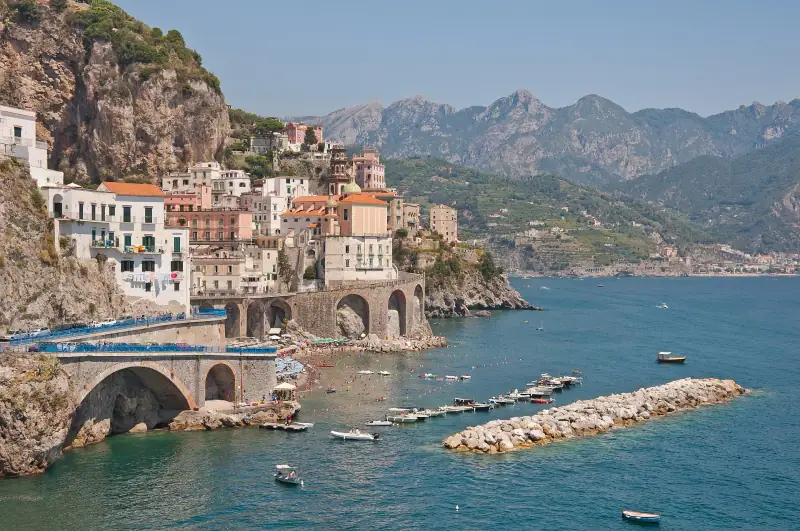
Is Atrani worth the detour from Amalfi? A half-day walking visit
Is Atrani worth the detour from Amalfi? Walking access, churches, beach, stairs to the Santuario del Bando, where to eat and visit length for half a day.
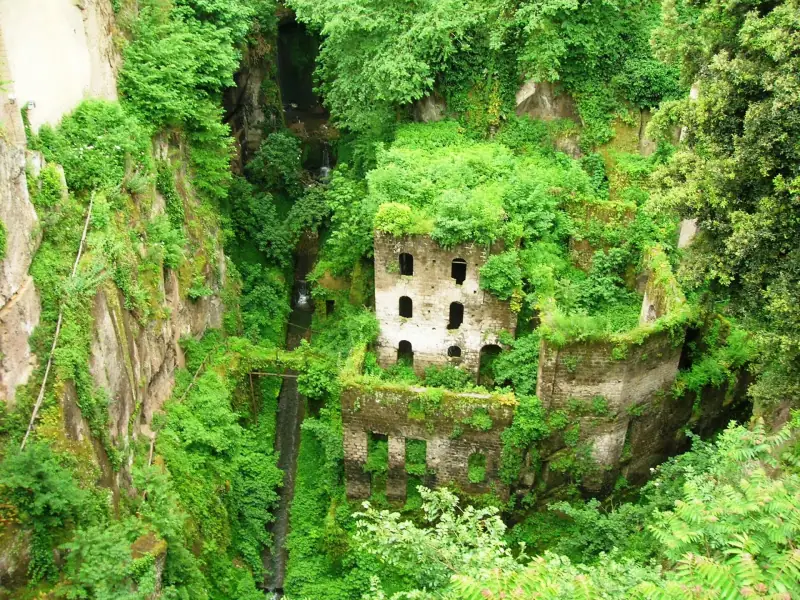
Valley of the Mills and Valle delle Ferriere in Amalfi: hiking without a guide, time, access and difficulty
Valley of the Mills and Valle delle Ferriere above Amalfi: hiking without an agency, duration, access to Pontone, difficulty, Paper Museum and FAQ.
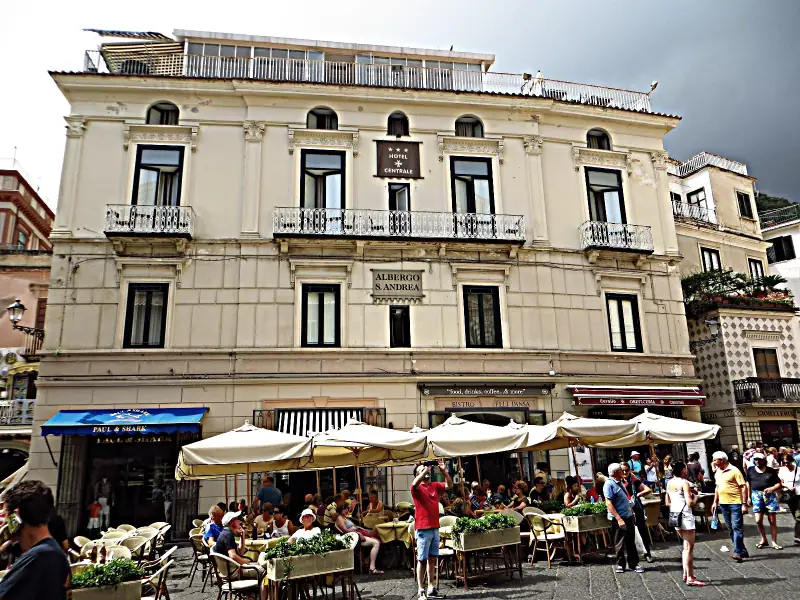
Where to stay in Amalfi, Atrani and Ravello: which base to choose on the coast
Where to stay in Amalfi, Atrani, Minori or Ravello? Bases compared, from seafront to hilltop, with tips on luggage, noise, transport and budget.
Ready-made
Amalfi Coast itineraries
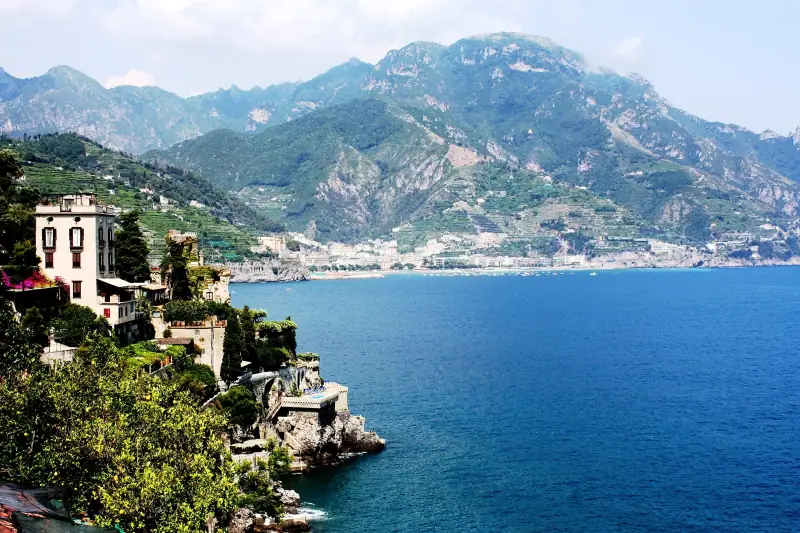
3 days
Amalfi Coast in 3 days: a day-by-day itinerary without a car
Plan 3 days on the Amalfi Coast without a car: Amalfi, Ravello, the Path of the Gods and Positano, with bus, ferry and practical tips for each day.
5 days
Amalfi Coast road trip by car: a Sorrento to Salerno itinerary
Drive the Amalfi Coast from Sorrento to Salerno on the SS163: stops in Positano, Amalfi and Ravello, parking, and tips for narrow roads.