Where to stay
Where to stay in Positano: neighborhoods, lodging types and tips for choosing well
We may earn a commission when you book through links on this page, at no extra cost to you. We don't visit or try the places we cover: we summarize published sources. How we work
In short
- Where you sleep on the slope decides the view, noise, number of steps and price. Ask how many steps lead from the bus stop to your room.
- The beachfront is the most convenient but the liveliest; Fornillo is calmer; the middle section near Via Pasitea is a good compromise for a first stay.
- Montepertuso and Nocelle are quiet hamlets up high, with less frequent buses. Nocelle is the end of the Path of the Gods.
- Two to three nights are enough in Positano. Book several months ahead for high season, with free cancellation.
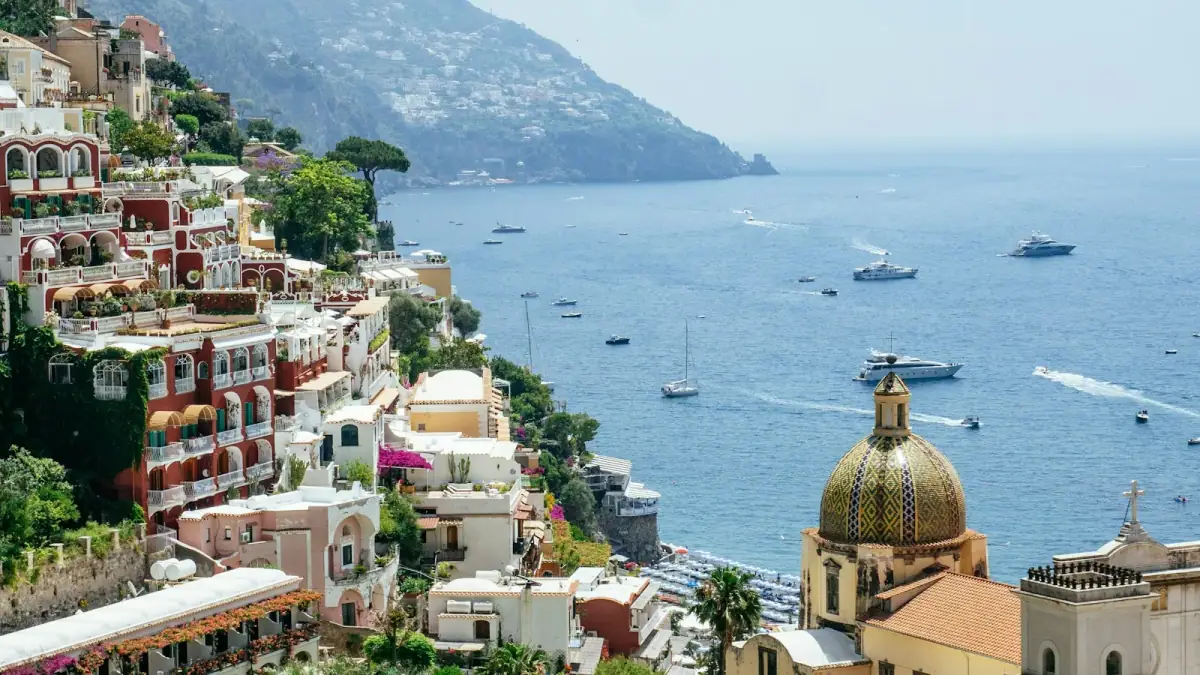
Choosing where to sleep in Positano is less a question of a “good hotel” than a question of level. The village tumbles from a ridge road down to the sea, and the position of your room on this slope decides everything: the view, the noise, the number of steps, the price and even your mood on coming back from the beach. The same building can offer very different experiences depending on the floor.
This guide breaks down Positano’s neighborhoods, lodging types, classic pitfalls and a few tips for booking without regret. It complements our general comparison on choosing your village on the Amalfi Coast, to read first if you are still torn between Positano, Amalfi and Praiano.
Understanding Positano’s geography before you book
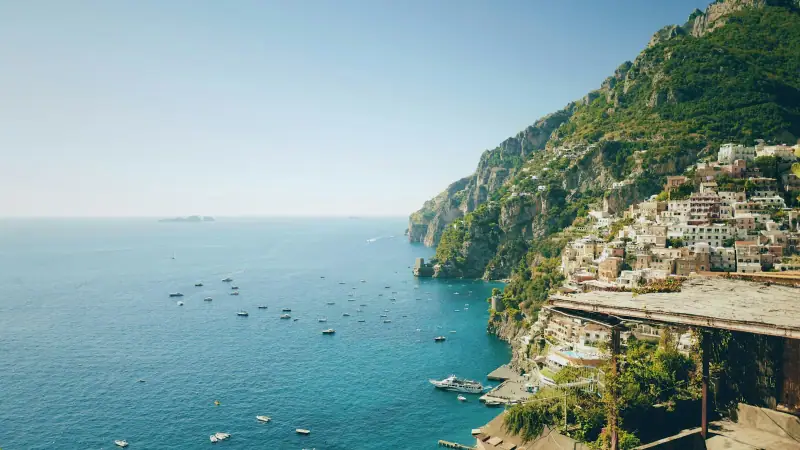
Positano is organized as an amphitheater around a bay. At the bottom, the main beach and the small harbor; in the middle, a tangle of lanes and stairs; at the top, the road that crosses the town and on which the buses run. Almost everything is done on foot, and most internal movements come down to “going up” or “going down”.
Three practical consequences:
- The higher you are, the wider the view, but the longer the climb back at the end of the day, especially after a dinner and a sunset.
- The lower you are, the closer to everything, but also to restaurant terraces, the daytime crowds and the voices that rise in the evening.
- Luggage becomes an issue. Cars do not reach all lodgings, and you sometimes have to carry your suitcases up several flights of steps.
Before booking, check not only the neighborhood but also the position of the address relative to the drivable road and the beach. A map and the “satellite view” function are your best allies. To understand the general atmosphere of the village, see also our article on visiting Positano, its beaches and its lanes.
The waterfront and Spiaggia Grande: practical, but lively
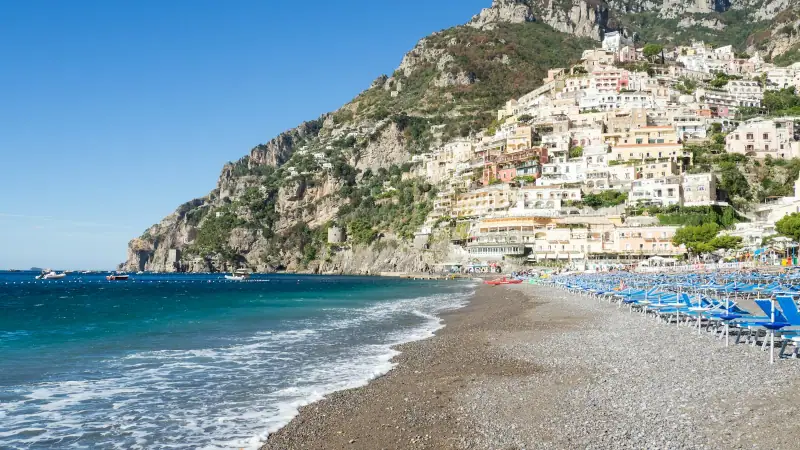
Sleeping near the main beach is the “everything on foot” formula: beach a few steps away, shops, restaurants, boat departures. For a short weekend or a late arrival, this convenience is valuable, since you have almost no stairs to climb with your luggage.
In return:
- The activity: in season, the terraces and promenades stay lively late into the evening. Rooms facing the pedestrian lanes can be noisy; ask for a room on the quiet side or on an upper floor.
- The prices: the location is a selling point, and rates reflect it.
- The crowds: by day, day visitors and tour groups flood the beach and nearby lanes. The village changes as soon as the last boats leave, and that is when you really appreciate being right there.
This area suits short stays, late arrivals, travelers who want to swim as soon as they wake up and those who cope badly with elevation changes.
Lodging in Positano
Compare hotels, B&Bs and apartments in Positano for your dates, with free cancellation when offered.
Fornillo: the quieter alternative
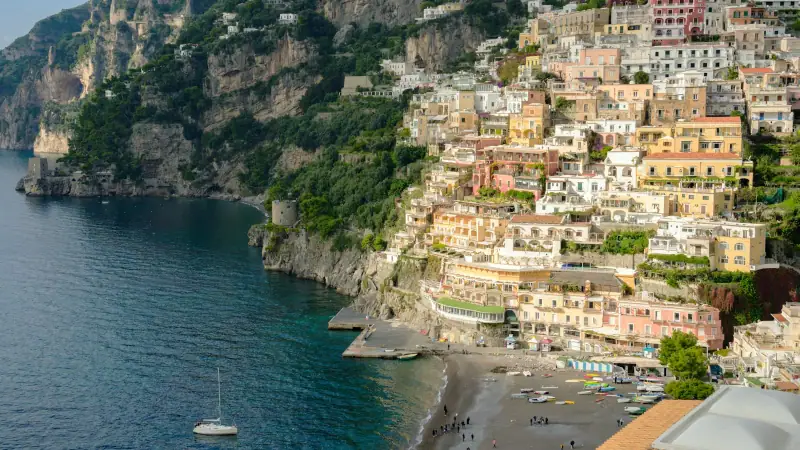
West of the main beach, Fornillo bay has long been the quietest corner of the village. It has a smaller beach, a few seaside restaurants and a more relaxed atmosphere, reached from the center by a coastal path in a few minutes’ walk.
Fornillo’s strength is its balance: you stay within walking distance of everything while escaping some of the bustle of the main beach. The lodging there is often hotels or houses on the hillside, with stairs to reach the sea. Fans of an end-of-day swim also appreciate that the beach is less crowded in the early evening.
This neighborhood suits couples, travelers who like a morning swim and those who want a compromise between village life and serenity.
Via Pasitea and the middle section: the best compromise for a first stay
The road that winds along the mid-slope, Via Pasitea, concentrates much of the lodging supply: hotels, guesthouses, apartments. It is also where local buses run, which simplifies arrivals, departures and excursion days.
Why this area appeals to many travelers:
- Open views over the bay and the colorful houses, without having to climb to the top of the village.
- Bus access at the door or a few minutes away, handy for reaching Amalfi, Sorrento or hike starting points.
- Variable rates: often gentler than the waterfront, with a wide choice of categories.
The downside: to go down to the beach, you take stairs or a sloping road, and then you have to climb back. Expect a significant walking time, especially in summer heat. If that worries you, favor lodging near a bus stop and a well-lit staircase, and plan to come back by bus after dinner.
To learn how to travel between the villages, see our guide to getting around the Amalfi Coast.
Montepertuso and Nocelle: calm up high
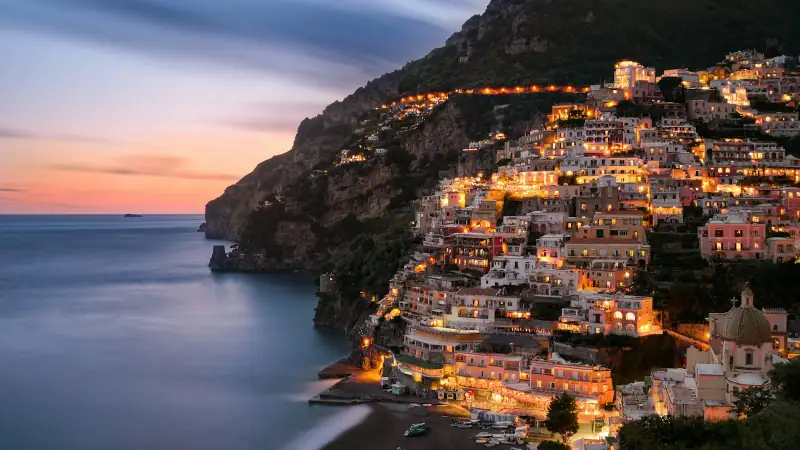
Above Positano, two hamlets offer a very different experience: Montepertuso and Nocelle. They sit on the heights, in a setting of terraces and vegetation, with wide views of the sea and the mountain. People come for the silence, the relative coolness and the authenticity of a small mountain village.
Nocelle is famous in the hiking world: it is the end point of the Path of the Gods, which links Bomerano to this hamlet before descending to Positano. Sleeping there lets you extend the spirit of a hike, enjoy quiet evenings and gaze at the sea from the heights.
The limits are clear:
- Distance: you do not walk down to the beach in ten minutes. You have to rely on local buses or long stair descents.
- Schedules: service is less frequent than in the center, especially in the evening. Check the times before committing.
- Logistics: for a short stay, the daily travel time can become burdensome.
These hamlets are ideal for hikers, fans of calm and travelers who stay several days and do not want to depend on the beach all the time.
Hotel, B&B, apartment, guesthouse: which type of lodging to choose?
In Positano, the supply falls into a few main families, with clearly distinct advantages.
The hotel
This is the most comfortable formula for a short stay: reception, breakfast, sometimes a terrace, pool or sea access. High-end establishments are numerous and in high demand; mid-range categories exist but book early. In a village this vertical, a hotel with an elevator, shuttle or porter service is a big plus.
The B&B and guesthouse
More modest, often run by families, these places offer a personal welcome, local advice and breakfast on the terrace. The value for money can be attractive, provided you read the reviews on access, stairs and noise level.
The apartment or vacation house
Useful for stays of several nights, families or groups of friends: kitchen, space, sometimes a private terrace. Check the arrival conditions (who greets you, at what time), the number of steps and the presence of air conditioning in summer. Stay rules and the tourist tax apply, and they vary by municipality.
The hostel or budget option
Positano is not a destination for small budgets, but cheaper solutions exist, notably in the surroundings. If price is a deciding criterion, it can be smarter to sleep in Praiano, Amalfi or Minori and come to Positano for the day by bus or boat. Our page on the budget for a stay on the Amalfi Coast gives guidelines for organizing your spending.
Flights to Southern Italy
Compare flights to Naples, the gateway to Positano, before locking in your lodging dates.
The criteria that really matter (and are often forgotten)
Beyond the neighborhood and the type of lodging, a few details make the difference between a successful stay and a week of frustration.
- The number of steps: this is question number one. Write to the lodging and ask how many steps separate the bus stop or drop-off point from the room door.
- Air conditioning: essential from June to September, especially in rooms under the roof.
- Sound insulation: old houses let lane and terrace noise through. Traveler reviews are often precise on this point.
- The terrace or view: a “sea view” can be full or partial. Look at travelers’ photos and not only the property’s.
- Breakfast: on a terrace facing the bay, it is a highlight of the stay; check that it is included or easy to add.
- Luggage holding: if you arrive before check-in time or leave late, ask whether they can keep your bags.
- Cancellation policy: in a destination where weather and sea links can change, a flexible rate is almost always worth its slight extra cost.
When to sleep in Positano? Seasons, crowds and prices
High season runs from late spring to early fall, with a peak in July-August: heat, crowds, rising rates and reduced availability. Conversely, April-May and September-October generally offer a better balance between pleasant weather, a sea still mild in early fall and more reasonable crowds. Our article on the best time to go to the Amalfi Coast details these periods.
Keep in mind that in winter, some hotels, restaurants and seasonal services may close or run at reduced capacity. If you travel off-season, check that your lodging is open, the bus times and the frequency of boats.
How to arrive in Positano with luggage
Most travelers arrive from Naples or Sorrento. Buses and boats are the most common solutions, and a private transfer is possible if you prefer to avoid connections. Whatever the solution, arriving in Positano follows the same pattern: you get off at a stop on the road, then reach your lodging on foot via stairs, unless the address is accessible by car or shuttle.
A few tips:
- Travel light: a soft suitcase or a backpack is much more comfortable than a big hard-shell suitcase.
- Tell your lodging your arrival time and means of transport; they can point you to the best stop or send someone to help.
- Avoid the car: narrow roads, dense traffic in season, scarce and paid parking. If your lodging has parking, ask about its conditions before counting on it.
- Plan the departure: buses and boats have their schedules, and a strike or a rough sea can delay everything; keep a margin, especially before a flight.
Sleeping in Positano or nearby: what if you changed base?
Positano is magnificent, but you do not have to sleep there to enjoy it. Depending on your budget and wishes, you can:
- Sleep in Praiano, calmer and often cheaper, a few minutes away by bus or boat.
- Choose Amalfi, more central, to branch out to Ravello, Minori and the rest of the coast.
- Split the stay: two nights in Positano, then two in Amalfi or Ravello, to see two sides of the coast without multiplying travel.
If the elevation change worries you, or if you travel with young children, it is even the most reasonable solution: Positano as a day trip, with a flatter base elsewhere.
Lodging in Praiano
A calmer and often more affordable alternative, a few minutes from Positano.
Which neighborhood for your profile?
- Short stay, late arrival, little desire to walk: the waterfront, accepting the activity.
- Couple seeking calm and swimming: Fornillo.
- First stay, good compromise of view, price and access: the middle section, near Via Pasitea.
- Hikers and fans of silence: Montepertuso or Nocelle, with bus times in mind.
- Small budget: a neighboring base (Praiano, Amalfi, Minori), with Positano as an excursion.
In every case, read the reviews on accessibility carefully, check the number of steps, book early for high season and choose a flexible rate. Positano rewards those who plan ahead: once you find the right room, all that remains is to enjoy the view, the sunset on the colorful houses and the easygoing charm that gives the village its reputation.
Frequently asked questions
What is the best neighborhood to stay in Positano?
For a first stay, the area near Via Pasitea, in the middle of the village, offers a good compromise: views, access to bus stops and a walk down to the beach. The waterfront is more convenient but noisier and pricier.
Should you sleep near the beach in Positano?
Not necessarily. Being near Spiaggia Grande avoids stairs, but it is also the liveliest and busiest area by day. Fornillo, calmer, is a popular alternative, with its own beach.
Is Positano suitable for travelers with reduced mobility or families with strollers?
It is difficult: the village is built on a hillside and its lanes are largely made of stairs. If you have trouble walking, choose lodging along the drivable road and ask the number of steps before booking.
How many nights should you plan in Positano?
Two to three nights are enough to enjoy the village, the beach and an excursion. Beyond that, it is worth changing base (Praiano, Amalfi or Ravello) to limit travel and vary the atmosphere.
Is it cheaper to sleep in Praiano or Amalfi than in Positano?
Generally yes: Positano is one of the most expensive villages on the coast. Praiano, Amalfi, Minori or Maiori often offer gentler rates, with bus or boat links to Positano.
When should you book lodging in Positano?
Several months ahead for high season, because supply is limited in a very compact village. Choose free-cancellation rates to keep flexibility.
Can you arrive in Positano with suitcases without a car?
Yes, by bus or boat, but the last stretch is often on foot on stairs. Travel light, or ask your lodging whether it offers a porter service or a transfer from the stop.
More Amalfi Coast guides
Keep reading
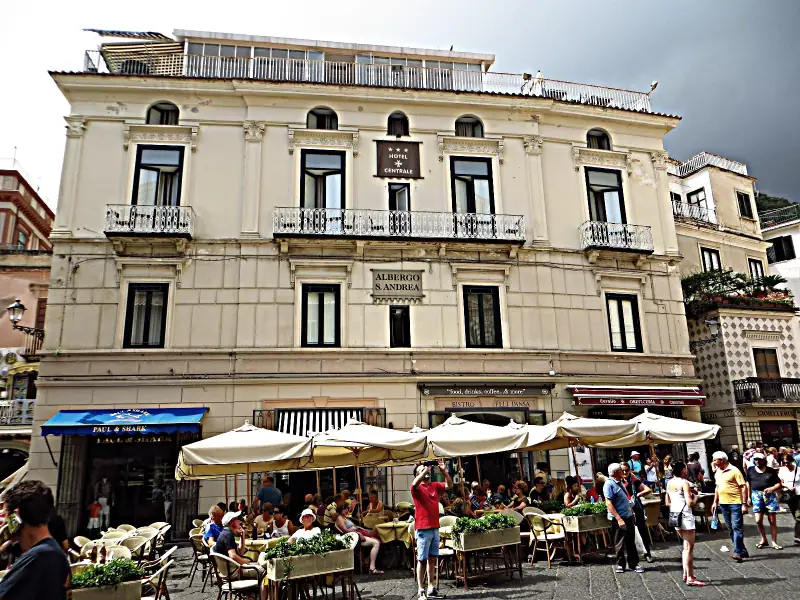
Where to stay in Amalfi, Atrani and Ravello: which base to choose on the coast
Where to stay in Amalfi, Atrani, Minori or Ravello? Bases compared, from seafront to hilltop, with tips on luggage, noise, transport and budget.
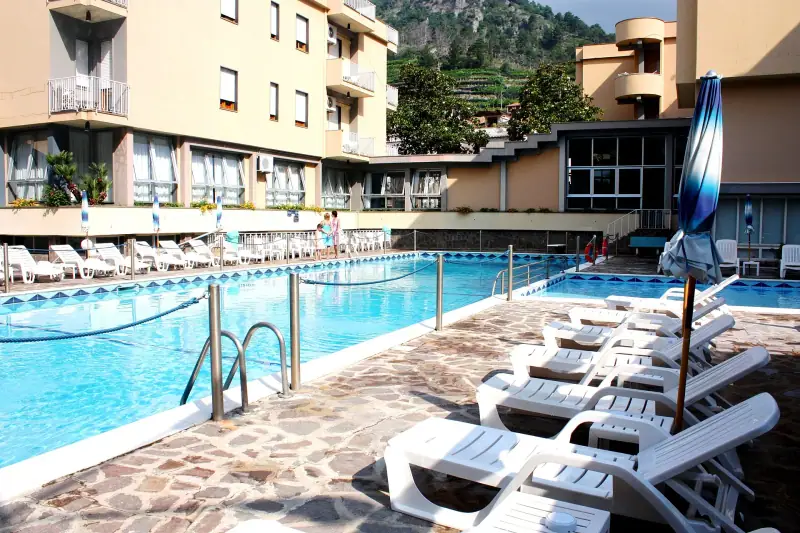
Hotels with parking on the Amalfi Coast: which town to choose?
Hotel with parking on the Amalfi Coast: Praiano, Maiori, Minori, Amalfi, Positano and Sorrento compared, to sleep without parking or ZTL hassles.
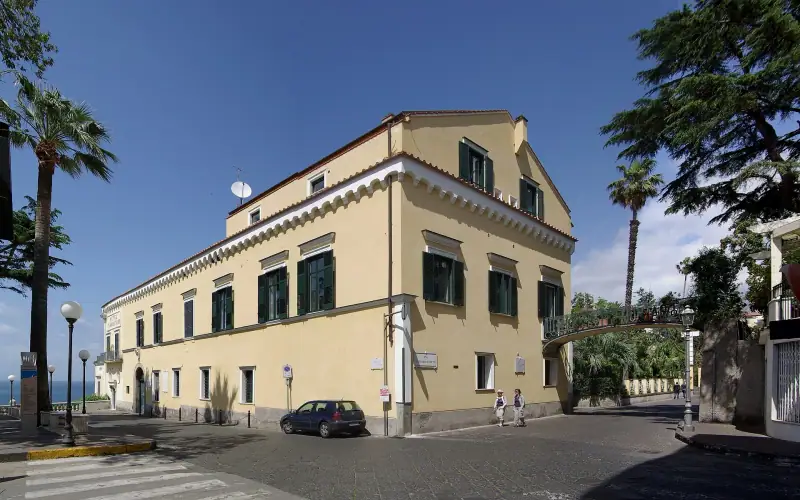
Staying in Sorrento to visit the Amalfi Coast: a good idea or not?
Staying in Sorrento to visit the Amalfi Coast: bus, ferry, train, realistic travel times, pros, limits and who it suits (or not).
Ready-made
Amalfi Coast itineraries
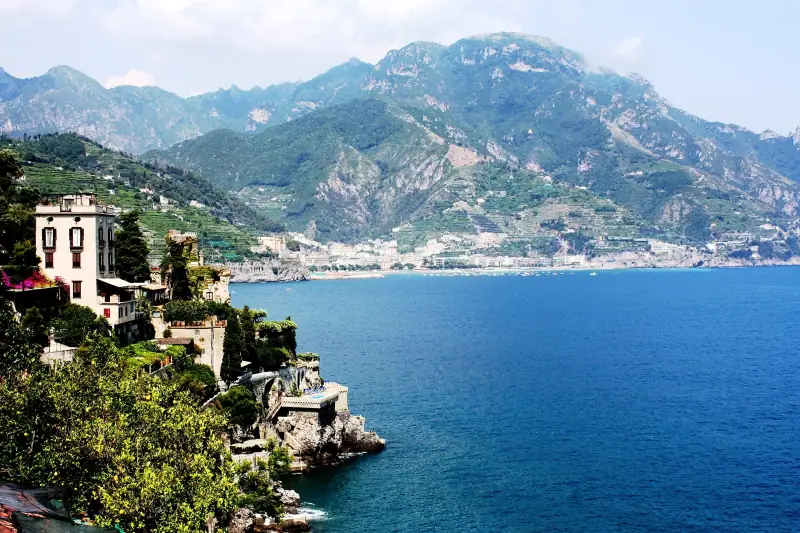
3 days
Amalfi Coast in 3 days: a day-by-day itinerary without a car
Plan 3 days on the Amalfi Coast without a car: Amalfi, Ravello, the Path of the Gods and Positano, with bus, ferry and practical tips for each day.
5 days
Amalfi Coast road trip by car: a Sorrento to Salerno itinerary
Drive the Amalfi Coast from Sorrento to Salerno on the SS163: stops in Positano, Amalfi and Ravello, parking, and tips for narrow roads.
5 days
Amalfi Coast without a car: a 5-day itinerary by bus, ferry and train
Visit the Amalfi Coast without a car in 5 days: day-by-day itinerary by bus, ferry and train, with Amalfi, Ravello, Positano, Capri, Pompeii and tips.