Things to do
Surfing, Paddleboarding and Water Sports in the Algarve: Spots, Seasons and Schools
We may earn a commission when you book through links on this page, at no extra cost to you. We don't visit or try the places we cover: we summarize published sources. How we work
In short
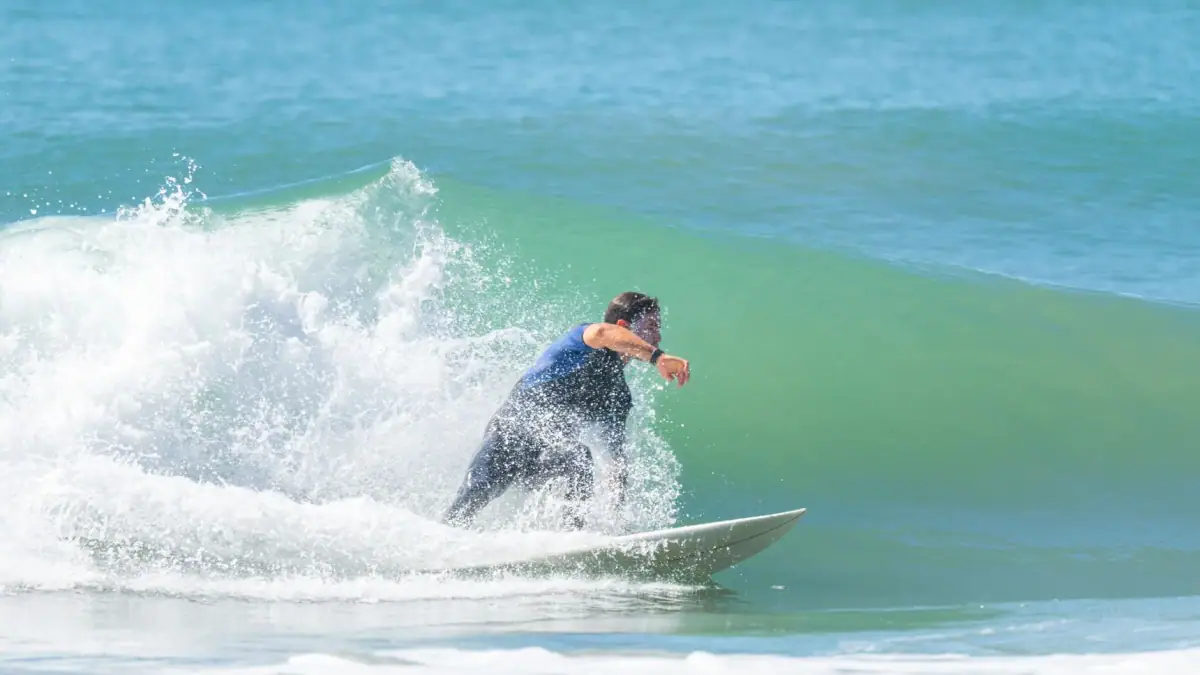
- The west coast and southwest tip (Sagres, Arrifana, Amado, Bordeira) get the swell for surf and bodyboard; the south coast and Ria Formosa suit paddleboard and kayak.
- Beginners can start with supervised lessons on sheltered beaches; schools pick the best beach for the day's conditions.
- Fall often has the most regular swell with still-mild water; winter brings the biggest waves, for experienced surfers; summer waves are smaller.
- A car is almost essential for the west coast beaches; Sagres is the most practical base, Lagos suits mixing surf, beaches and boat trips.
The Algarve is often summed up by its golden cliffs and sheltered beaches, but the region is also one of the most accessible board-sports destinations in Europe. Its geography has a lot to do with it: in the west and southwest, the Atlantic sends its swells onto a wild coast; in the south, the sea is calmer and suits paddleboarding, kayaking and swimming. Depending on which side you drop your bags, you will find waves to surf or calm water to paddle. This guide helps you pick your spot, the right season, your level and the best way to get started.
Understanding the geography: two coasts, two moods
To choose your activity well, you first need to look at the map. The Algarve forms an angle: the south coast runs west to east, facing the sea; the west coast, facing the ocean, runs north along the Costa Vicentina. Between the two, the Sagres headland and Cape St. Vincent mark the turn.
The west coast and the southwest tip receive the Atlantic swell directly. This is where surf and bodyboard spots are concentrated, with long beaches, dunes, cliffs and little development. The water is cooler and the wind more present.
The south coast, east of Sagres, is more sheltered. Waves are smaller, the sea milder, and the coves suit kayaking, paddleboarding and snorkeling. The further east you go, the more you enter the Ria Formosa zone, a protected lagoon where you paddle among the barrier islands.
This distinction explains a simple rule: waves and thrills in the west, calm and exploration in the south. Many travelers combine both over a stay, which fits well with a road trip from east to west.
Sagres and the southwest tip: the heart of board sports
Sagres is the unofficial capital of Algarve surfing. The village, right at the southwest end of Portugal, has several beaches facing different directions, which lets you find a workable spot depending on the wind and swell direction. This is one of its great assets: when one beach is unusable, another a bit further often offers better conditions.
Beaches frequently cited around Sagres include Praia do Tonel, Praia da Mareta, Praia do Martinhal and Praia do Beliche. Their exposure varies: some are more sheltered and suit beginners, others take the swell head on and require experience. Local schools know the day’s conditions and direct their students to the most suitable beach.
Sagres is also a place of wider discovery: the fortress, the cliffs and Cape St. Vincent can be visited between two sessions. Our article on Sagres and Cape St. Vincent details these visits, useful to fill the days when the sea is not suited to board sports.
As for atmosphere, the small town is laid-back, with hostels, surf camps, cafés and schools. You meet travelers from all over the world who come for a few days or several weeks. Off season, the place is calmer, and you can still easily find room.
Places to stay in Sagres
Hotels, hostels and apartments in Sagres, close to the surf beaches.
The Costa Vicentina: Arrifana, Amado and Bordeira
Going north from Sagres, you enter the Southwest Alentejo and Vicentine Coast Natural Park, a protected territory where the coast remains wild. It is the preferred zone of experienced surfers as well as lovers of big deserted beaches.
Three names come up often:
- Praia da Arrifana, near Aljezur, a crescent-shaped bay overlooked by a cliff, popular for its setting and regular waves.
- Praia do Amado, near Carrapateira, a long sand beach lined with cliffs, frequented by surf schools and surfers of all levels.
- Praia da Bordeira, next door, wider and wilder, surrounded by dunes and crossed by a small stream at low tide.
These beaches are exposed to the Atlantic: the swell can be powerful there, especially in winter, and currents call for vigilance. They lend themselves well to learning on small-swell days, as long as you stay with an instructor.
To get there, a car is almost essential: roads serve these beaches poorly by public transport, and distances between villages are long. Bring water, sunscreen and a windbreaker, as wind often shows up on this coast. The most beautiful beaches in the Algarve are described by area in another article, useful to spot those that suit your travel style.
Starting out in surfing: lessons, equipment and required level
Surfing demands fitness, but no particular talent to get started. An introductory lesson generally lets you stand up on a board in the first session, especially on a beach with regular waves. Here are the benchmarks to keep in mind.
Choosing a school
- Check that the school is registered and the instructors qualified. Serious operations display their certifications and insurance.
- Look at group size: the smaller it is, the more the instructor can correct you. A small group is a good sign.
- Ask what is provided: board, wetsuit, sometimes booties and rash guard.
- Find out the policy in case of bad weather: postponement, replacement or refund.
Online traveler reviews help sort things out, but read them with perspective: they reflect one-off experiences, on one beach on one day.
Basic equipment
For a first session, everything is generally provided. If you plan several days, daily or weekly rental is possible from schools and board shops. A foam board, wider and more stable, is ideal for starting out. Also bring a rash guard or UV shirt, water-resistant sunscreen and a quick-drying towel. Our guide to essential accessories for the Algarve lists the small items useful for an active stay.
Safety at sea
The ocean remains unpredictable. A few common-sense rules:
- Surf preferably on a supervised beach, between the flags.
- Watch the sea for a few minutes before going in: spot the currents, the point where waves break and the swimming zone.
- Do not overestimate your level: a wave bigger than expected can tire you quickly.
- Keep your board attached with the leash, but stay alert to other surfers.
Bodyboard, skimboard and other board sports
Surfing is not the only option. Bodyboarding, done lying on a short board, is easier to pick up and very common on the west coast beaches. It needs less initial technique and gives immediate thrills, which makes it a good choice for teenagers and travelers who want to enjoy the waves without long sessions learning the take-off.
Bodysurfing, that is riding waves without a board, needs only a pair of fins, but requires good comfort in the water and a good read of the current. It is reserved for confident swimmers.
For wind lovers, the region also has kitesurf and windsurf spots, notably around Sagres, where the wind often blows. These disciplines need longer learning and serious supervision, as the equipment is more technical. Ask local schools about the periods and beaches that suit.
Paddleboard and kayak: exploring the south coast gently
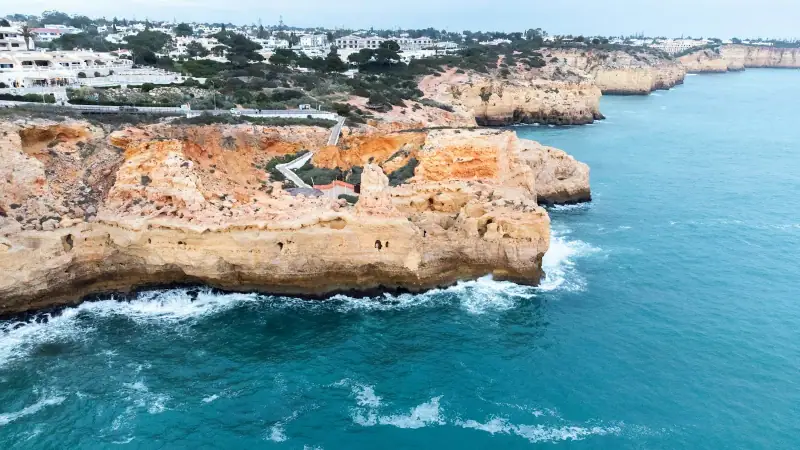
If waves do not appeal to you, the south coast is an ideal playground for paddleboarding (SUP) and kayaking. Between Lagos and Carvoeiro, the golden cliffs shelter caves, arches and coves that you reach only by sea. It is another way to discover the coastline, away from the noise of crowded beaches.
Around Lagos, the rocky coast of Ponta da Piedade is one of the most appreciated routes: rocks, arches and small caves are discovered at water level, on a sea that is generally calm early in the morning. Further east, the Benagil area also attracts paddlers, but access to the cave is regulated: read our guide to Benagil Cave to learn the rules in force.
A few tips for a successful trip:
- Set out early: wind often picks up during the day, which makes the sea less comfortable.
- Wear a life jacket, even if you are a good swimmer.
- Bring water, a hat, sunscreen and a waterproof bag for your phone.
- Favor a guided trip if you do not know the coast: a guide spots conditions, currents and access zones.
Surf lessons and paddleboard trips
Compare surf lessons, equipment rental and supervised trips in the Algarve.
The Ria Formosa: paddling among the barrier islands
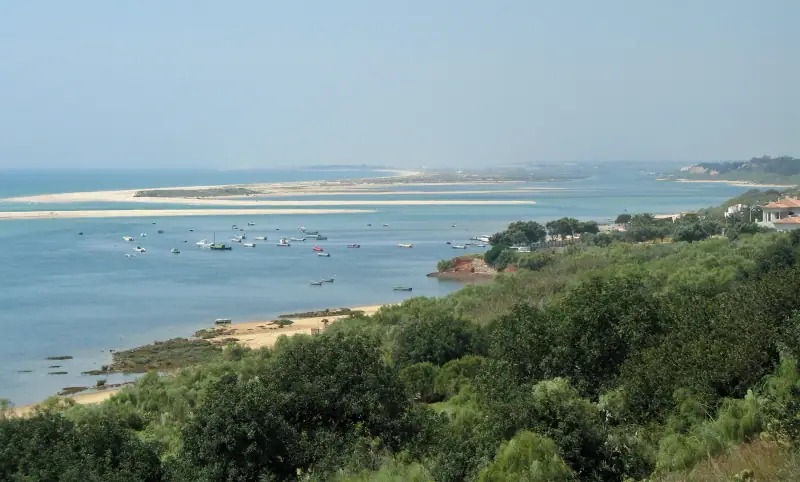
In the east of the region, the Ria Formosa is a natural park made of a lagoon, channels and sandy barrier islands. It stretches over several dozen kilometers, near Faro, Olhão and Tavira. The water is calm, shallow and sheltered from the swell: an ideal spot for kayaking and paddleboarding, including for beginners and families.
You glide among marshes, sandbanks and areas where many birds nest. It is also one of the best places to watch wildlife in silence, from the water. Respect the protected zones, do not disturb the birds and follow the instructions of operators, who know the channels and the tide times. Tides strongly influence navigation in the lagoon.
Our article on Tavira and the Ria Formosa presents the town and the lagoon in detail, with visit ideas to combine.
Which season to choose for water sports?
Each season has its advantages, depending on your level and activity.
Spring (March to May): the swell is still regular, the weather softens and the beaches are less crowded. A good period to learn or progress, with a full wetsuit.
Summer (June to September): waves are generally smaller, which suits beginners and families. The south coast is ideal for paddleboarding and kayaking. However, crowds are heavier, and schools fill up: book ahead.
Fall (October and November): many surfers like this period, because the swell becomes more regular while the water keeps part of the summer’s warmth. The crowds have gone, and conditions are often favorable.
Winter (December to February): the biggest waves arrive on the west coast. It is the season of experienced surfers, who find more powerful conditions. Beginners are better off staying on sheltered beaches and being careful.
For an overview of weather and temperatures, see our guide when to go to the Algarve. Keep in mind that conditions change from day to day: check the local swell and wind forecasts before going out.
Getting organized: transport, accommodation and budget
To combine several spots, a car is by far the most practical solution. The beaches of the west coast are far from the centers and poorly served by public transport. It also lets you adapt to the day’s conditions: if the wind picks up on one side, you change beach.
For accommodation, three bases suit board sports well:
- Sagres to be closest to the spots at the southwest tip, with a surf-village vibe.
- Lagos to alternate surf, beaches, boat trips and nightlife. Our guide where to stay in Lagos helps pick the right area.
- Aljezur or Carrapateira for a wilder and calmer feel, facing the big beaches of the west coast.
As for budget, a group introductory lesson generally costs a few dozen euros per person, and daily equipment rental a little less. Prices vary with the season and the school: compare before booking. For an overall view of spending, our article on the budget for a stay in the Algarve gives benchmarks.
Do not forget to check that your travel insurance covers water sports: some policies exclude surfing or limit coverage for it.
Flights to the Algarve
Compare flights to Faro, the region's most practical entry point.
Respecting the ocean and the coast
The Costa Vicentina is a protected area. A few simple actions preserve this heritage:
- Take all your trash with you, including cigarette butts and wrappers.
- Stay on the trails and do not cross the dunes outside the designated passages.
- Do not disturb birds nesting on the cliffs and in the lagoon.
- Use a sunscreen that respects the marine environment when possible.
These rules also apply to busier beaches: the influx of visitors in summer weakens the environments, and everyone can help preserve them.
Our advice for planning your stay
For a first board-sports stay, the simplest is to drop your bags in Sagres or Lagos for a few days, take an introductory lesson in the morning, then devote the afternoon to the beach or a visit. If you travel as a family or with non-practitioners, the south coast and its paddleboard or boat trips offer fine alternatives. And if the sea is too rough, there are always the cliffs, villages and trails to explore.
Whether you are looking for the perfect wave or simply a calm sea to paddle, the Algarve offers a rare diversity on a small territory. Take the time to read the conditions and pick a serious school, and leave the rest to the ocean.
Frequently asked questions
Can you surf in the Algarve as a beginner?
Yes. Sheltered beaches and supervised schools let you start in good conditions. Introductory lessons are offered all year on the west coast and in Sagres, with wetsuit and board provided. Choose a beach where the waves are regular and not too steep.
What is the best time to surf in the Algarve?
Fall often offers the most regular swell with the sea still mild, which makes it a season surfers like. Winter brings bigger waves, more for experienced levels. Spring is a good compromise, and summer gives smaller waves, suited to learning.
Do you need a wetsuit to surf in the Algarve?
Yes, the Atlantic water stays cool on the west coast, even in summer. A full wetsuit is recommended for most of the year. On the milder south coast, a shorty may be enough in summer.
Where can you paddleboard or kayak without waves?
The south coast, between Lagos and Carvoeiro, and the Ria Formosa lagoon in the east are the calmest. Trips generally leave early in the morning, when the wind is light. Caves and coves are better discovered from the water than on foot.
Can you rent equipment without booking?
Yes, most schools and rental shops accept last-minute customers, except in high season, when it is safer to book a few days ahead. Ask about cancellation terms in case of bad weather.
Is surfing dangerous in the Algarve?
As everywhere on the Atlantic, currents and waves call for caution. Swim and surf preferably on supervised beaches, respect the day's flag and follow the advice of lifeguards and instructors.
Where should you stay to surf in the Algarve?
Sagres is the most practical base to reach several spots at the southwest tip. Lagos suits you if you alternate surf, beaches and boat trips. The villages of the west coast, toward Aljezur and Carrapateira, are quieter but need a car.
More Algarve guides
Keep reading
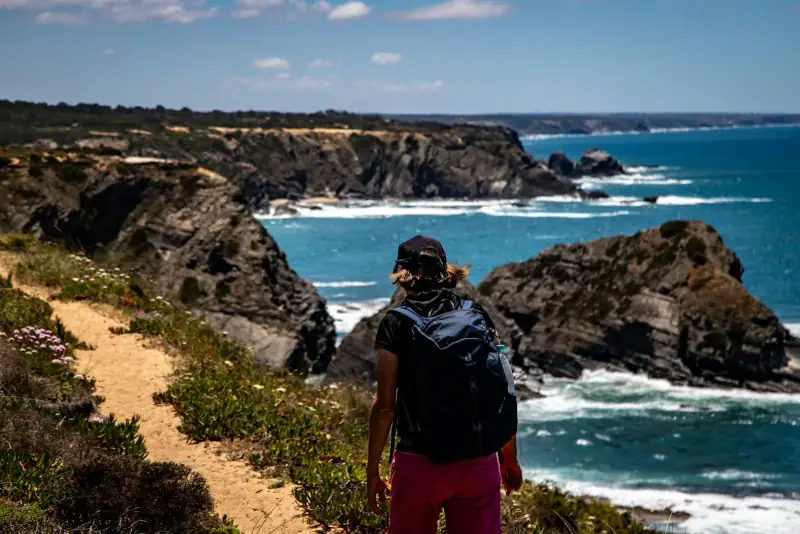
Hiking in the Algarve: The Best Coastal and Inland Trails
Hiking in the Algarve: Seven Hanging Valleys trail, Rota Vicentina, Via Algarviana, Ria Formosa and Monchique. Levels, seasons, gear and tips.
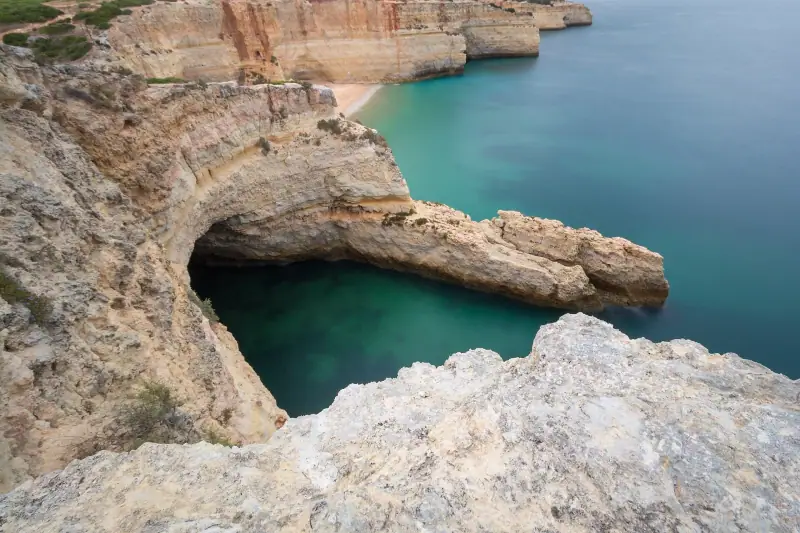
Benagil Cave: How to Visit by Boat, Kayak or SUP
Visiting Benagil Cave in the Algarve: access rules, boat, kayak or paddleboard, best time, departures from Lagos or Carvoeiro and practical tips.
Algarve Trip Budget: Real Costs and 3 Priced Traveler Profiles
What budget for the Algarve? Real costs by item (stay, transport, meals, activities), three priced profiles and tips to spend less.
Ready-made
Algarve itineraries
3 days
4 days
7 days
Algarve Road Trip: A 7-Day Itinerary from East to West
A 7-day Algarve road trip from Faro to Sagres: stops, distances, beaches, white villages and tips for driving and sleeping along the coast.