Things to do
Hiking in the Algarve: The Best Coastal and Inland Trails
We may earn a commission when you book through links on this page, at no extra cost to you. We don't visit or try the places we cover: we summarize published sources. How we work
In short
- The Seven Hanging Valleys trail runs from Marinha beach to Vale de Centeanes: 5.7 km (3.5 mi) one way, 2 h 30 to 3 h, no shade, cliff edges.
- Spring (March to May) and fall (late September to November) are the best seasons; in July and August leave at dawn or choose short walks.
- Bring closed shoes, a hat, sunscreen and at least 1.5 to 2 liters (50 to 68 fl oz) of water per person; most coastal trails have no water point.
- Cliff edges can be unstable: stay on the path and keep away from arches and overhangs, even for a photo.
People come to the Algarve for the beaches, but the region reveals itself best on foot. Golden cliffs, hidden coves, the dunes of the Costa Vicentina, the lagoons of the Ria Formosa and the wooded hills inland offer trails for every level, from a one-hour walk to a multi-day crossing. This guide presents the hikes to know, explains how to choose them according to your fitness and the season, and gives the precautions to take to walk safely.
Choosing your hike according to your profile
The Algarve divides into three main walking terrains, with very different characters.
- The cliffs of the Barlavento, between Lagos and Carvoeiro: short, spectacular paths, with views of arches, caves and the turquoise sea. Ideal for half a day.
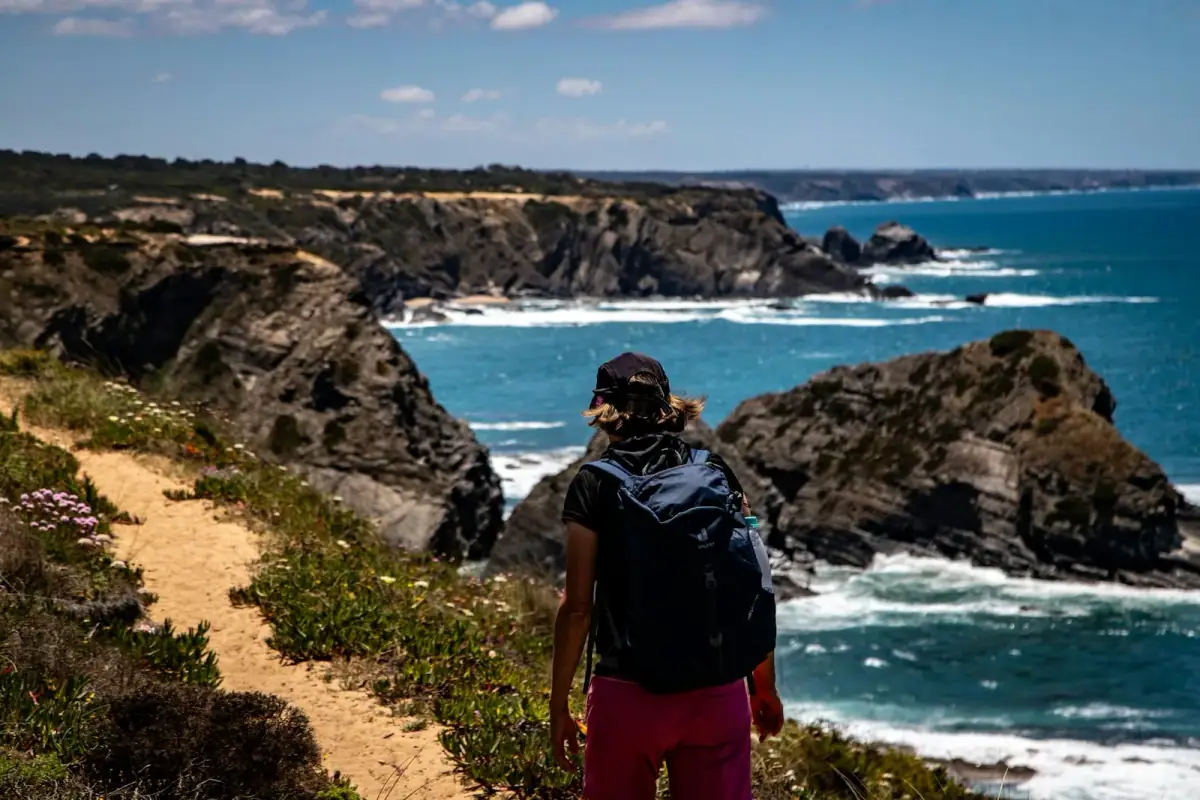
- The Costa Vicentina, in the west, around Sagres and Aljezur: a wild coast, sandy trails and often wind. The setting is more isolated and more demanding.
- The inland area, around Silves and Monchique, and the Sotavento, in the east: cork oak forests, hills, villages and lagoons, with milder summer temperatures at altitude.
For a stay of a few days, a simple combination works well: a long coastal walk in the morning, a beach in the afternoon, and a quieter day inland.
The Seven Hanging Valleys trail
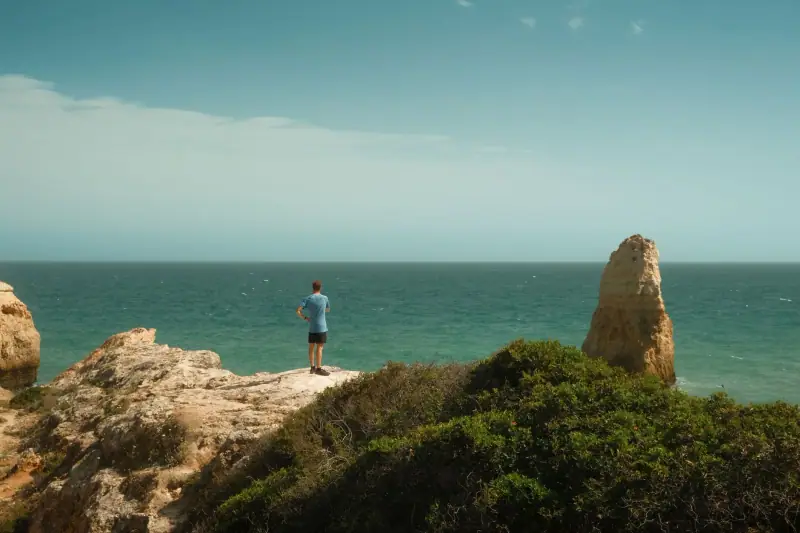
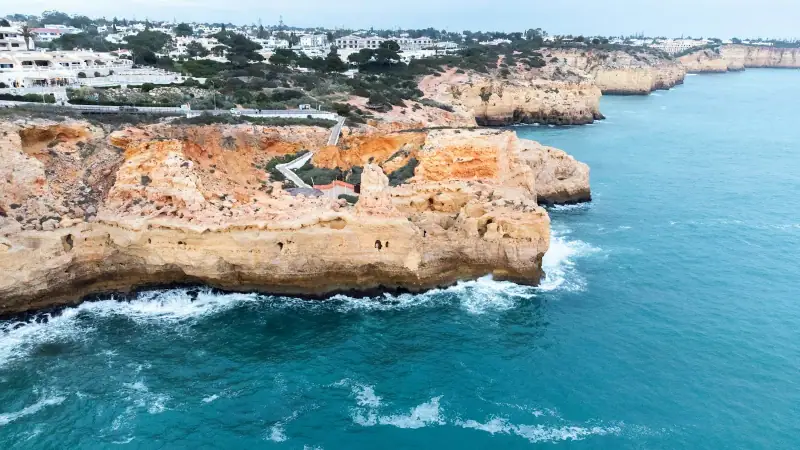
This is the most famous hike in the Algarve, and rightly so. The Percurso dos Sete Vales Suspensos links Marinha beach to Vale de Centeanes beach, over about 5.7 km (3.5 mi), in the Carvoeiro and Benagil area. It is marked and takes about 2 h 30 to 3 h one way.
The path follows the top of the cliff: you see natural arches, coves invisible from the sea, limestone chimneys and, at a viewpoint, the opening of the vault of Benagil Cave. The ground alternates packed earth, rocks and sand. There is practically no shade.
A few practical tips:
- Set out early in the morning or late in the afternoon, especially from May to September.
- Plan a way back: the route is linear, and a taxi or ride-hailing car can take you back to the starting point.
- The cliff edge can be crumbly: do not lean over the drop.
- Combine the walk with a swim at Marinha beach, one of the most beautiful in the region.
To see the same coast from the water, our guide to Benagil Cave by boat, kayak or paddleboard complements this walk well.
Stay near the cliffs
Hotels and apartments in Carvoeiro, close to the Seven Hanging Valleys trail.
Lagos and Ponta da Piedade: easy walks
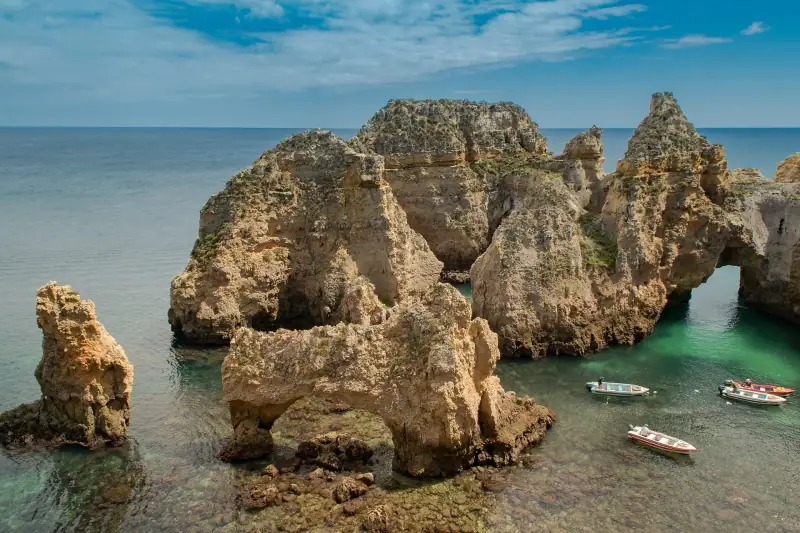
Around Lagos, the coast is cut into ocher rocks, arches and small beaches. Walks from town are short and easy, with no special gear: you mostly walk on paths and boardwalks above the sea. It is the right option for a first approach, with family or if you are short of time.
Ponta da Piedade is the high point of this coast: cliffs, rock pillars and caves that you can also explore by boat or kayak. A staircase goes down toward the sea; be careful on the steps, which can be slippery. You will find the details in our article Visiting Lagos: Ponta da Piedade, beaches and old town.
At sunset, the light on the cliff gives warm colors. Bring a headlamp or your phone’s flashlight if you plan to come back after dark.
Sagres and the Costa Vicentina: the wild coast
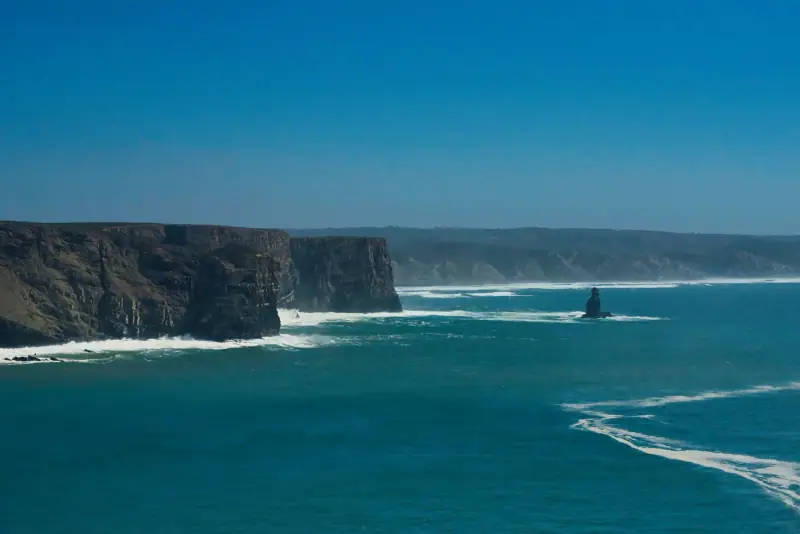
West of Lagos, the scenery changes. The cliffs are higher and darker, the wind more present and the crowds smaller. This is where hiking takes on the dimension of a long crossing.
The Rota Vicentina and the Fishermen’s Trail
The Rota Vicentina is a network of marked trails running along the southwest coast of Portugal. Its best-known section, the Fishermen’s Trail (Trilho dos Pescadores), follows the coast on foot between the Alentejo and the Algarve and reaches the Cape St. Vincent area. It uses old fishermen’s paths that led to fishing spots on the cliff edge.
The trail is single track and the ground is very often sandy, which makes walking more tiring than it looks on the map. Stages are generally done over several days, with nights in villages along the route. Those who do not want to do it all can opt for a one-day portion, for example around Aljezur or Sagres, arranging a taxi back.
The network’s official website, rotavicentina.com, details the stages, distance and up-to-date practical tips.
Around Sagres
The Sagres headland, the fortress and Cape St. Vincent are linked by trails that offer 180-degree views of the ocean. The place is exposed to wind: a windbreaker is useful even in summer. To prepare this stop, read our guide Sagres and Cape St. Vincent.
Guided hikes in the Algarve
Compare supervised walks on the coast, with guide and transport depending on the option.
The Ria Formosa: walking between lagoons and barrier islands
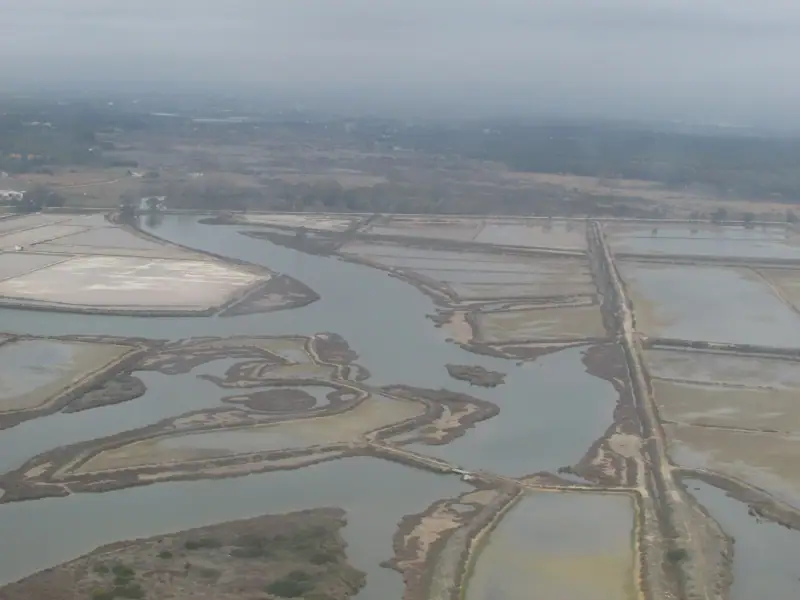
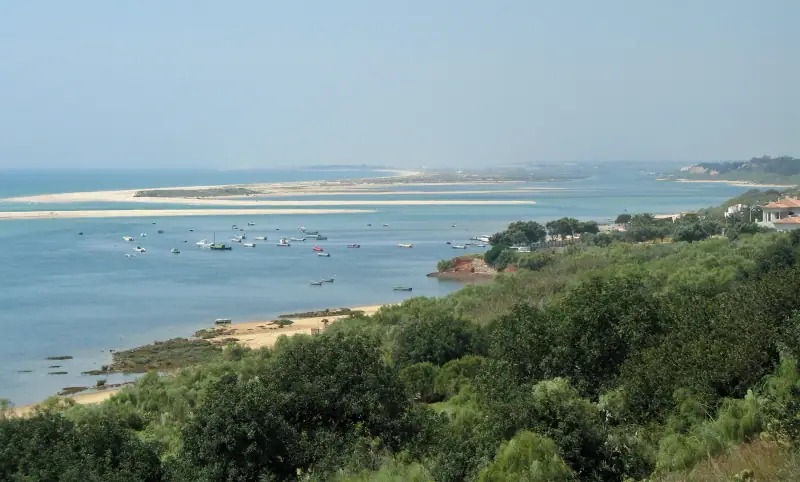
In the east, the Sotavento offers another kind of hiking: flat walking by the water, among salt pans, lagoons and dunes. The Ria Formosa is a natural park protecting a system of lagoons separated from the ocean by barrier islands. It is a popular place with bird watchers: you can see water birds, including flamingos and waders depending on the season.
Walks there are easy, accessible to children and with no elevation change. The main constraint is the sun: little shade, and glare off the water is strong. Bring binoculars if you like watching birds. To organize a visit to this area from Tavira, see our article Visiting Tavira and the Ria Formosa.
The inland area: Monchique, Silves and the Via Algarviana
Far from the sea, the Algarve is hilly, wooded and much cooler in summer. The Serra de Monchique is the high point of the region, with forests, springs and perched villages. It is a good plan when heat crushes the coast: altitude brings a few degrees less.
The Via Algarviana is the long route of the inland area. It crosses the region from east to west, from Alcoutim to the Sagres headland, over about 300 km (186 mi) split into a dozen stages, through villages, hills and farmland. It is aimed at experienced hikers who like solitude. For a first approach, a single stage is enough to feel the atmosphere.
To understand this lesser-known part of the territory, read Silves, Monchique and the inland Algarve.
Seasons, weather and timing
Summer is the season when you are most tempted to walk, but also the riskiest. Daytime temperatures can be very high, with direct sun on trails without shade. Set out at dawn and finish before midday.
Spring is the best season: the banks are in flower, the air is mild and the days are long. Fall is also pleasant, with the sea still warm for a swim after the walk. Winter is more uncertain, with rain and wind, but the trails are quiet and the light magnificent. To refine your travel period, see our article When to go to the Algarve.
Gear and safety
A good hike in the Algarve rests on a few simple habits.
- Shoes: closed hiking or trail shoes with a grippy sole. Sand and stones are painful in flip-flops.
- Water: at least 1.5 to 2 liters (50 to 68 fl oz) per person, more in summer. There is no water point on most coastal trails.
- Sun: hat, sunglasses, sunscreen and light long sleeves.
- Wind: a windbreaker can be useful, especially on the west coast.
- Phone: a power bank and an offline map of the trail, as coverage can be patchy. Note that the European emergency number is 112.
- Respect for the environment: stay on the trails, do not cut through the dunes, take your trash with you and light no fires. Fire risks are high in summer.
For general trip gear, our selection of essential accessories for the Algarve gives a few ideas. Also consider travel insurance suited to your trip: if you set out for several days of walking, it is a plus.
Organizing your hiking stay
For a week, a realistic plan is to choose one base per area. Lagos suits walkers who want beaches, restaurants and easy departures to the west and east. Carvoeiro is the natural starting point for the Seven Hanging Valleys. Sagres is for those looking for the wild coast and calm. Tavira is ideal for the Ria Formosa and a slower pace. To compare the areas, our article Where to stay in the Algarve details the advantages of each town.
A rental car greatly simplifies the logistics of linear hikes and access to isolated starting points. Public transport mostly runs between big towns and serves the trails poorly.
Our take
Hiking is probably the best way to discover a less photographed Algarve. For a first stay, start with the Seven Hanging Valleys or a walk around Lagos, then add a stage on the Costa Vicentina if you like wild landscapes. Always adapt your outing to the weather and the heat, keep a margin on water, and use the end of the day for a swim: it is the perfect reward after walking.
Frequently asked questions
What is the best time to hike in the Algarve?
Spring (March to May) and fall (late September to November) are the most pleasant: mild temperatures, beautiful light and trails less crowded than in summer. In July-August, the heat makes exposed trails punishing: set out at dawn or choose short walks.
Is the Seven Hanging Valleys trail difficult?
It is of medium difficulty. The elevation change is moderate but the terrain is sometimes sandy or stony, without shade, and the path runs along the cliff edge. Allow about 5.7 km (3.5 mi) one way, which is 2 h 30 to 3 h of walking.
Can you hike in the Algarve without a car?
Yes for some loops and sections near towns, such as Lagos or Tavira. For linear trails, you need to plan a way back: taxi, ride-hailing, an organized transfer or a bus where the line exists. Check schedules in advance, as connections are limited off season.
Do you need a guide to walk the Rota Vicentina?
No, the trails are marked and follow public tracks. A guide or a trip organizer is mostly useful for logistics: booking accommodation, luggage transfer and returns to starting points.
What gear should you bring for a coastal hike?
Closed shoes with good grip, a hat, sunscreen, at least 1.5 to 2 liters (50 to 68 fl oz) of water per person, a light windbreaker and a power bank. Sand and stones make sandals unsuitable.
Can you walk with children?
Yes on the short marked walks and on the Ria Formosa boardwalks. With young children, avoid the sections that run along unprotected drops, such as some cliff passages.
Are there particular dangers on the cliffs?
Yes. Cliff edges can be unstable and collapse. Stay on the path, keep away from the drop, and do not approach arches or overhangs, even for a photo. In strong wind, caution is needed.
More Algarve guides
Keep reading
Surfing, Paddleboarding and Water Sports in the Algarve: Spots, Seasons and Schools
Surf, bodyboard, paddleboard, kayak, kitesurf: where to do water sports in the Algarve, which season, which level and how to pick a school.
Benagil Cave: How to Visit by Boat, Kayak or SUP
Visiting Benagil Cave in the Algarve: access rules, boat, kayak or paddleboard, best time, departures from Lagos or Carvoeiro and practical tips.
Algarve Trip Budget: Real Costs and 3 Priced Traveler Profiles
What budget for the Algarve? Real costs by item (stay, transport, meals, activities), three priced profiles and tips to spend less.
Ready-made
Algarve itineraries
3 days
4 days
7 days
Algarve Road Trip: A 7-Day Itinerary from East to West
A 7-day Algarve road trip from Faro to Sagres: stops, distances, beaches, white villages and tips for driving and sleeping along the coast.