Where to stay
Where to stay in Córdoba: neighborhoods and types of accommodation
We may earn a commission when you book through links on this page, at no extra cost to you. We don't visit or try the places we cover: we summarize published sources. How we work
In short
- Córdoba's UNESCO-listed historic center is compact and almost everything is done on foot; walking times between areas are generally 5 to 25 minutes.
- The Judería, next to the Mezquita-Cathedral, is the most practical and evocative base for a first stay, but also among the priciest.
- Prices tend to drop the farther you get from the river: Santa Marina, Plaza de las Tendillas and the station area are gentler options.
- Book early for May (Patios Festival) and Holy Week; air conditioning is essential from June to September.
Córdoba is one of the easiest stops to organize in Andalusia: its UNESCO-listed historic center is compact, and almost everything is done on foot. The choice of accommodation therefore depends less on distance than on atmosphere, calm, car access and type of lodging. A traditional house around a patio has nothing in common with a modern hotel near the station, and this choice greatly influences the stay.
This guide reviews the neighborhoods to stay in, the different types of accommodation and the mistakes to avoid. If you first want to know what to do there, see our one-day Córdoba itinerary; to compare with its big neighbor, also see where to stay in Seville.
Córdoba in brief: how the city is laid out
Before choosing, you need to understand the geography. The Guadalquivir flows south of the old town, crossed by the Roman bridge. On the north bank spreads the historic center, with the Mezquita-Cathedral near the river. North of this old core lies the modern, commercial center, organized around the Plaza de las Tendillas, then more recent districts up to the station, located north of the city.
This layout has a simple consequence: the farther you get from the river, the more prices tend to drop, but the more you walk to reach the Mezquita. Distances remain modest, however. From one area of the center to another, generally allow 5 to 25 minutes on foot.
The other thing to remember is the heat. Córdoba’s summers are among the hottest in the country, and walking in the middle of the afternoon is hard. To choose your dates, read our guide to when to go to Spain: spring and fall are the most pleasant periods, May also being the most in demand.
The Judería: sleeping in the heart of the old town
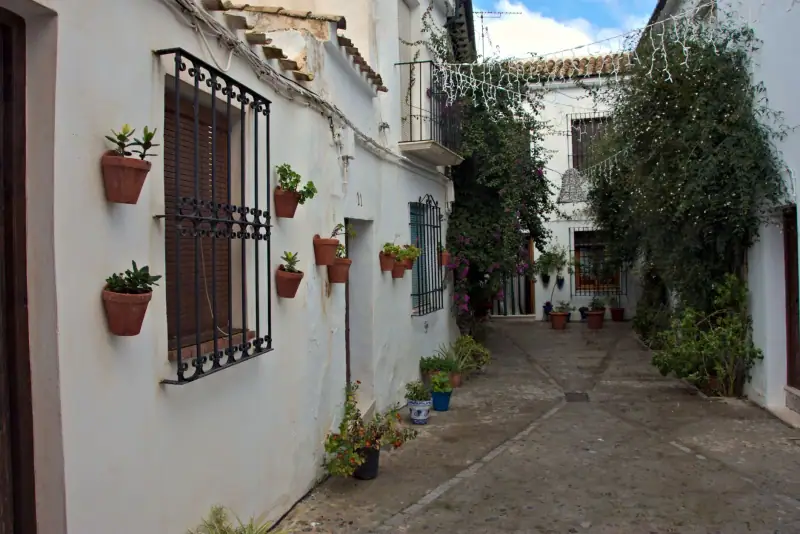
The Judería is the former Jewish quarter, a labyrinth of narrow whitewashed lanes, small squares and flowered patios, right next to the Mezquita-Cathedral. It is Córdoba’s most evocative area, and the one most travelers choose for a first stay.
The advantages are obvious: you visit the mosque-cathedral at opening time, before the groups arrive, you go back to rest during the hot hours and you head out again in the evening for a walk in lanes much calmer than during the day. Many properties there occupy old houses with patios, with an atmosphere hard to find elsewhere.
There are drawbacks too. Prices there are generally among the highest in the city, especially in spring. The lanes are narrow and cobbled, impractical with a big suitcase, and cars cannot reach everywhere. Finally, some restaurants in the area mainly target passing trade: to eat local, move a few streets away from the busiest axes.
Where to stay in Córdoba
Compare hotels and patio houses in the historic center for your dates.
San Basilio and the Alcázar: the patio district
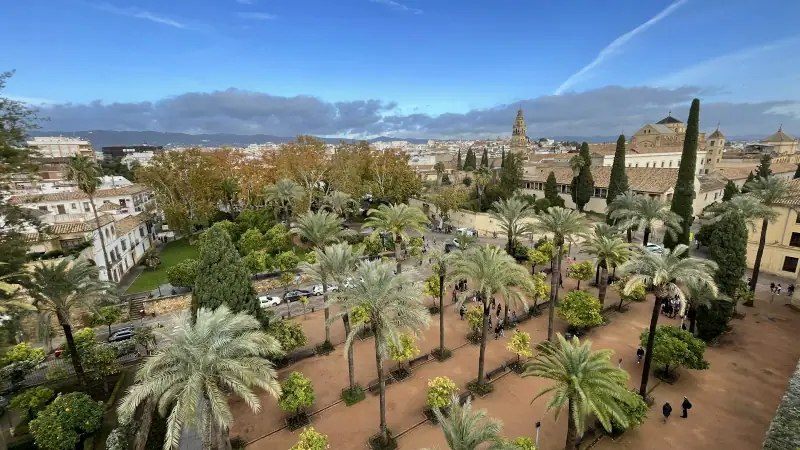
Southwest of the Mezquita, around the Alcázar of the Christian Monarchs, the San Basilio district is known for its patios. During the Patios Festival in May, several of these private courtyards open to the public, and visitor numbers in the area rise accordingly.
For sleeping, it is an excellent alternative to the Judería: the atmosphere is more residential and quieter in the evening, while remaining a few minutes’ walk from the main monuments and the Guadalquivir. You mostly find small guesthouses and apartments, sometimes set in old mansions.
The main point of attention is access: as in the Judería, streets are narrow and traffic rules strict. If you come by car, ask your host where to park and how to drop off your luggage before booking.
Santa Marina, San Agustín and the Axerquía: authenticity at gentler prices
East and northeast of the Mezquita stretches the Axerquía, the part of the old town that was once the most working-class. The Santa Marina and San Agustín districts, with their churches and quiet squares, have kept a neighborhood life there: local shops, bars frequented by residents, terraces at aperitif time.
It is a good compromise for travelers who want to stay in the old town without paying top price for the Judería. The Mezquita is reached on foot in about 10 to 15 minutes depending on the address. The atmosphere is more local, and you will often eat better than on the most touristy routes. To know what to order, our article on the specialties to try in Spain gives the essentials, and salmorejo, a Córdoba specialty, deserves to be tasted there.
In return: there are fewer major monuments in the immediate vicinity, some streets are poorly lit in the evening and the accommodation offer is smaller than in the central areas. Read recent reviews to check how quiet the street is.
Centro and Plaza de las Tendillas: practical, lively and well served
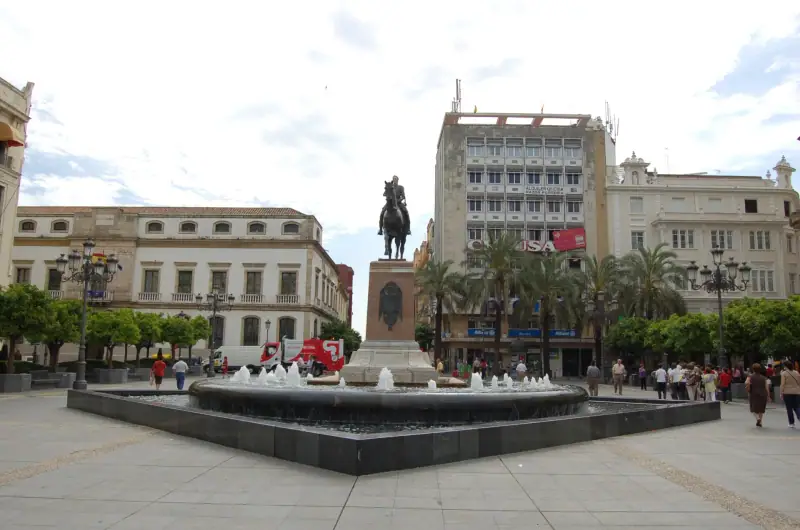
North of the old town, the Plaza de las Tendillas is the nerve center of modern Córdoba: shops, cafés, cinemas, banks and bus lines converge here. You find more classic mid-range hotels, with a front desk open late, an elevator and air conditioning, which is reassuring after a day of walking.
This area suits stays of one or two nights, travelers who arrive late by train and those who prefer a conventional hotel to a guesthouse. The Mezquita is reached on foot in about 10 to 20 minutes depending on the address, through pleasant shopping streets.
The flip side is a less picturesque setting than the lanes of the Judería, and noise in the evening on the liveliest axes. Ask for a room at the back or on a quiet street if you are a light sleeper.
Tours and activities in Córdoba
Mezquita tickets, guided tours, patios and excursions from Córdoba.
Near the station: the practical option for one night
Córdoba’s station is in the north of the city, served by the high-speed trains linking Madrid and Seville. The surroundings, more recent, offer modern hotels, often with parking, and prices generally lower than in the historic center.
This option makes sense in three cases: you arrive late or leave very early, you travel by car and want to avoid the old town’s access restrictions, or you are looking for the best price for a single night. On the other hand, you are far from the atmosphere that gives Córdoba its charm. The historic center is reached on foot in about 20 to 30 minutes, or in a few minutes by bus or taxi.
If you are linking several cities, our 7-day Andalusia itinerary helps you decide whether a single night in Córdoba is enough.
The other side of the Guadalquivir: a different viewpoint

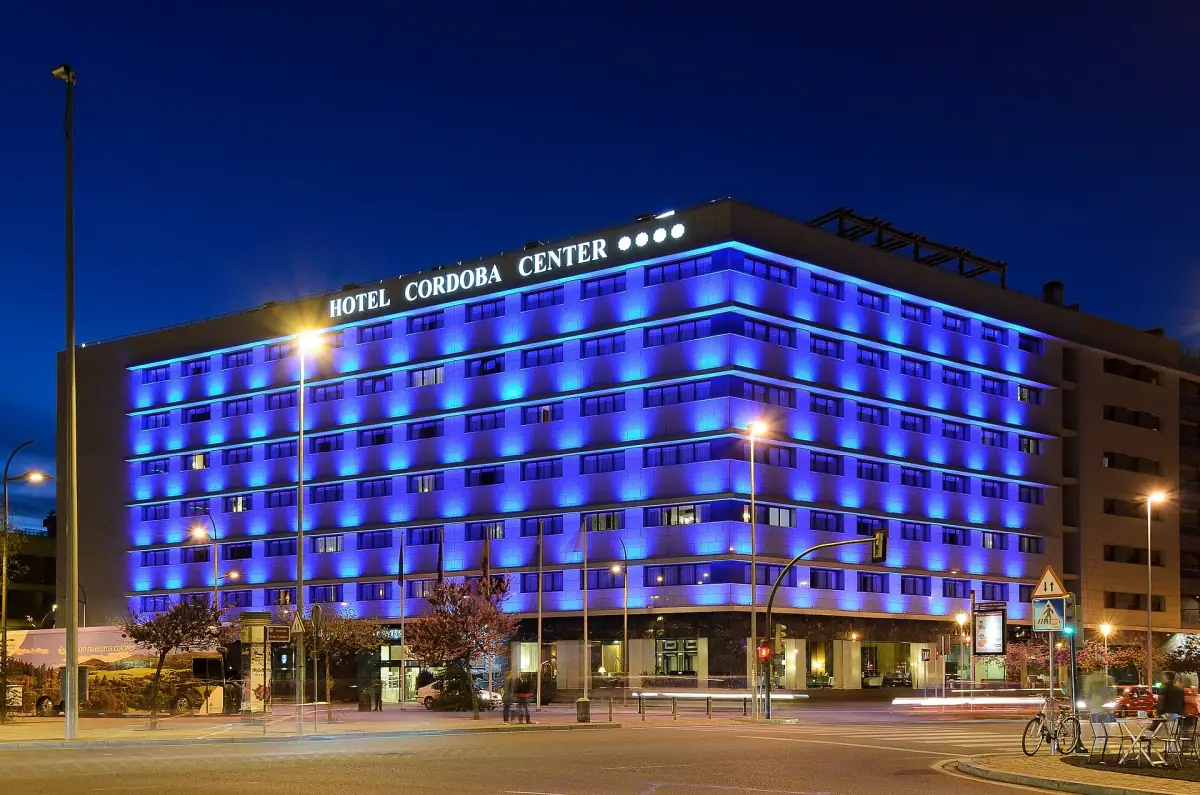
South of the Roman bridge, on the opposite bank, the area around the Calahorra Tower offers one of the finest viewpoints over the Mezquita and the river, especially at sunset. A few properties are there, calmer than the center.
This bank suits those who like walks by the water and appreciate a little distance. It is, however, less lively in the evening, and you will have to cross the bridge back to dine in the old town. For a short first stay, the north bank remains more practical.
Which type of accommodation to choose in Córdoba?
Neighborhoods are not everything: the type of lodging matters just as much.
Patio houses and hotels
This is Córdoba’s specialty. Many small hotels and guesthouses occupy old mansions organized around a flowered patio, with a fountain and galleries. Rooms are often few, which gives an intimate setting, and breakfast is frequently taken in the courtyard. Their weak point: stairs without an elevator, sometimes small rooms and tricky access with luggage. State your mobility constraints before booking.
Classic hotels
Chain or mid-range hotels, especially around the Plaza de las Tendillas and near the station, offer predictable comfort: elevator, air conditioning, extended front desk hours, sometimes parking. It is a reassuring choice for a stopover night or for families.
Apartments
They suit stays of three nights or more, groups and families: kitchen, more space, sometimes lower price per person. Check the air conditioning, arrival arrangements and any cleaning fees. Choose lodging with many recent reviews and find out about parking.
Hostels
Córdoba has several hostels in the old town and in the center. They offer the lowest prices, friendly common areas and sometimes activities for travelers, such as tapas evenings. Read the reviews to judge noise and cleanliness, and compare with an economy hotel room if you travel as a pair.
Paradors and charm hotels
Spain has a network of paradors, hotels set in historic buildings or remarkable sites. Ask directly about what is available in Córdoba and its province: the offer varies, and the rates are those of upscale accommodation.
Apartments and hotels in Córdoba
Filter by neighborhood, budget and amenities (air conditioning, parking) before choosing.
When to book and how much to plan?
Córdoba has very marked seasons. Spring is the most sought-after period: May, with the Patios Festival and other celebrations, is often full weeks ahead, and rates rise. Holy Week is the other high point. Book in these periods as soon as your dates are set, and favor free-cancellation accommodation to keep flexibility.
Conversely, summer is the low season because of the heat: rates are generally lower, but air conditioning becomes essential and it is better to sightsee early in the morning and in the evening. Fall and winter offer a good balance between mild weather and reasonable prices.
Prices vary too much by date, neighborhood and type of lodging for a precise grid to be reliable: compare several dates on a booking platform. To place this item in your overall budget, see our budget for a trip to Spain. As a general rule, the Judería is pricier than the modern center, which is itself pricier than the area around the station.
Which neighborhood to choose for your profile?
- First stay, one to two nights, want atmosphere: the Judería or San Basilio.
- Couple looking for calm and charm: a patio house in San Basilio or Santa Marina.
- Tight budget: the Plaza de las Tendillas area or around the station.
- Late arrival or very early train departure: near the station or at Tendillas.
- Trip by car: accommodation with parking, often simpler outside the old town.
- Stay of three nights or more, with family: an apartment in the Axerquía or the center.
Practical tips before booking
- Check access: in the old town, ask how to arrive with a suitcase or by car. Narrow streets and traffic restrictions sometimes complicate luggage drop-off.
- Read recent reviews on noise: patios amplify sounds, and the lively terraces of some squares can echo late.
- Check the air conditioning for any stay between June and September.
- Think about the elevator: many old houses do not have one, which matters for people with reduced mobility or families with strollers.
- Confirm the arrival time with small properties, which do not always have a continuously staffed front desk.
- Combine smartly: Córdoba is linked to Seville and Madrid by high-speed train. Many travelers visit it as a day trip, but spending a night there lets you avoid the daytime crush.
Should you sleep in Córdoba or visit as a day trip?
It is a real question, because Córdoba is easy to visit in a single day from Seville or Madrid. Sleeping in town nevertheless has three concrete advantages: seeing the Mezquita early, when the light is beautiful and attendance lower; enjoying the lanes and patios in the evening, away from the groups; and dining quietly without watching the time of the last train. If your schedule is tight, a single night is enough. If you like to stroll, two nights let you add a slower visit to the Alcázar, the working-class districts and the surroundings.
To organize your day once settled, return to our one-day Córdoba itinerary. And if you continue on your way, compare with Seville’s neighborhoods to spread your nights in Andalusia as well as possible.
Frequently asked questions
What is the best neighborhood to stay in on a first visit to Córdoba?
The Judería and its immediate surroundings are the most practical choice: the Mezquita-Cathedral, the white lanes and the patios are explored on foot from your hotel door. The downside is generally higher prices and heavy tourist traffic during the day.
Where to stay in Córdoba on a limited budget?
The neighborhoods around the Plaza de las Tendillas, as well as the more residential areas near the station or north of the center, generally offer gentler rates than the Judería, while staying within walking or bus distance of the historic center.
Is one night in Córdoba enough?
For the essentials, yes, especially when combined with Seville or Madrid. Sleeping in town does let you see the Mezquita early in the morning, enjoy the city in the evening once the groups have left and avoid chasing a train.
Is a car useful in Córdoba?
Not for visiting the historic center, which is done on foot and where car access is limited. If you arrive by car, choose accommodation that offers parking or a parking solution, and ask about access arrangements before booking.
When should you book accommodation in Córdoba?
As early as possible for May, which concentrates the Patios Festival and other celebrations, as well as for Holy Week and spring weekends. Outside those periods, booking a few weeks ahead is generally enough.
Do you need air conditioning in Córdoba?
Yes, from June to September. Córdoba is among the hottest cities in Spain in summer: check for air conditioning in the lodging description and read recent reviews on the subject.
More Spain guides
Keep reading
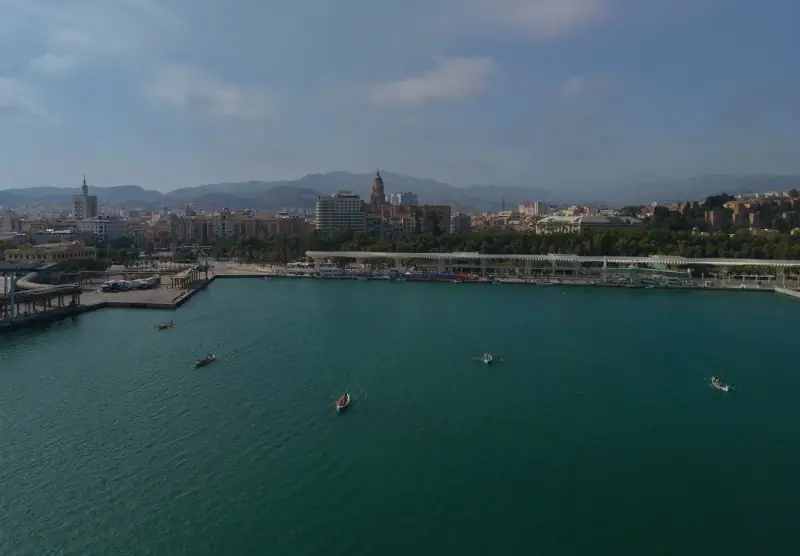
Where to stay in Málaga: neighborhoods and types of accommodation
Historic center, Soho, La Malagueta, Pedregalejo or Perchel: compare Málaga's neighborhoods and types of accommodation to choose where to stay.
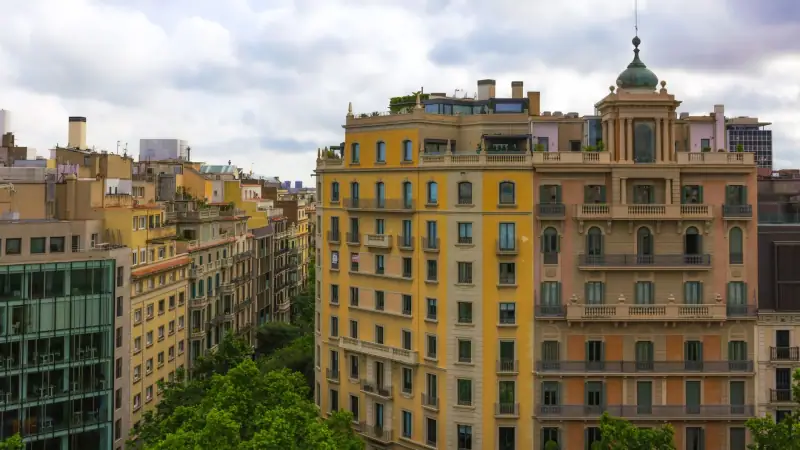
Where to stay in Barcelona: neighborhoods and types of accommodation
Barri Gòtic, El Born, Eixample, Gràcia, Barceloneta: compare Barcelona's neighborhoods and types of accommodation to choose where to stay for your budget.
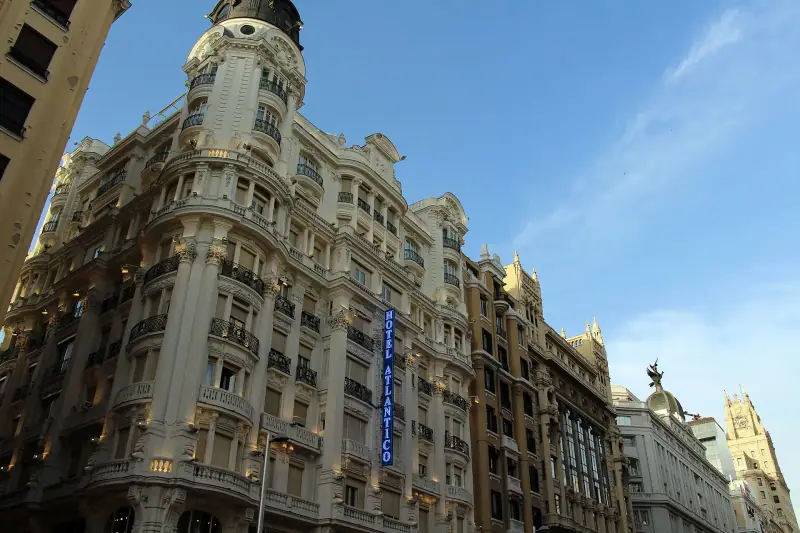
Where to stay in Madrid: neighborhoods and types of accommodation
Sol, Malasaña, La Latina, Salamanca, Chamberí: compare Madrid's neighborhoods and types of accommodation to choose where to stay for your budget and trip.
Ready-made
Spain itineraries
2 days
Valencia in 2 days: an itinerary through the old town, the Turia and the beach
What to do in Valencia in 2 days? Historic center, market, City of Arts and Sciences, Turia Gardens, paella and beach: our day-by-day itinerary.

7 days
Andalusia in 7 days: Seville, Córdoba, Granada and Málaga
A 7-day Andalusia route: Seville, Córdoba, Granada and Málaga, with travel times, a day-by-day pace, useful reservations and pitfalls to avoid.
3 days
Barcelona in 3 days: a day-by-day itinerary for a first stay
Sagrada Família, Park Güell, Barri Gòtic, Montjuïc and Barceloneta: a 3-day Barcelona itinerary with the best order of visits, transport and tips.