Where to stay
Where to stay in Kruger National Park: SANParks camps, lodges and private reserves
We may earn a commission when you book through links on this page, at no extra cost to you. We don't visit or try the places we cover: we summarize published sources. How we work
In short
- For a first safari, a SANParks rest camp inside the park is an excellent compromise: you sleep in the park, drive a rental car and keep a reasonable budget.
- Private reserve lodges (Sabi Sand, Timbavati) include guided safaris and meals, and are more comfortable but clearly more expensive.
- Book as early as possible, especially for South African school holidays and long weekends, when popular camps fill months ahead.
- The dry season, roughly May to September, is generally the best for wildlife viewing and also the busiest.
Kruger Park is one of the most accessible safari destinations in Africa, but the choice of lodging there greatly changes the experience. Sleeping in a rest camp on your own, in an isolated bush camp or in a private reserve lodge are three different trips, with budgets, rhythms and viewing chances that are not alike. This guide helps you choose where to stay in Kruger Park according to your profile, your season and your way of traveling.
If you are still preparing the whole experience, start with our guide to a first safari in Kruger, then come back here to refine the lodging.
The three main families of lodging
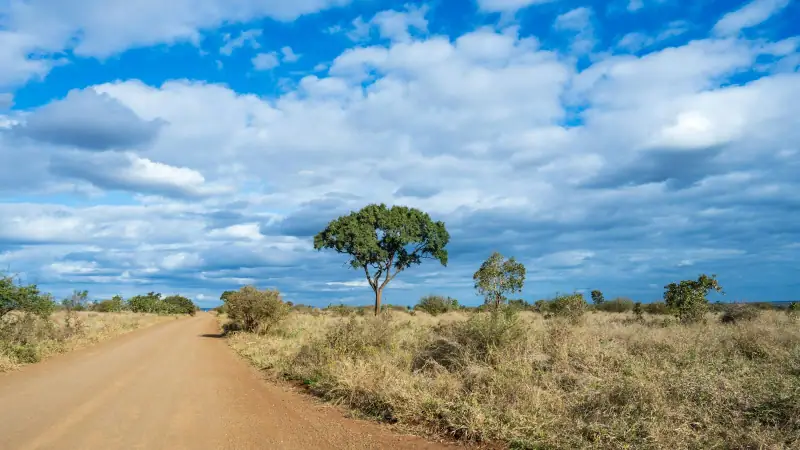
Before comparing addresses, you need to understand the general logic of the sector:
- SANParks rest camps: located inside the park, they offer bungalows, tents, cottages, camping sites, a restaurant or a shop, often a pool. This is the cheapest and most independent option.
- Bush camps and isolated camps: smaller, quieter, sometimes with no shop or restaurant. You come for the silence and the feeling of nature.
- Private reserve lodges: located in neighboring reserves, with guided safaris included, meals, a guide and a tracker. This is the most comfortable and most expensive option.
On top of that come lodgings outside the park, in the villages and small towns near the entry gates: guesthouses, roadside lodges, hotels. They suit arrival and departure stops, but not a stay centered on safaris.
Sleeping in a rest camp inside the park
This is the most logical choice for a first stay on your own. Sleeping inside the park has a decisive advantage: you are there when the gates open, when the light is beautiful and animals are most active, with no approach drive from outside.
Among the best-known camps are Skukuza, the largest and best equipped, Lower Sabie, appreciated for its terrace overlooking a river, Satara, known for big cat sightings in the open savanna, as well as Letaba and Olifants, often cited for their views over watercourses. Each has its own personality, and its position in the park influences the type of landscape and wildlife you will meet.
Types of accommodation
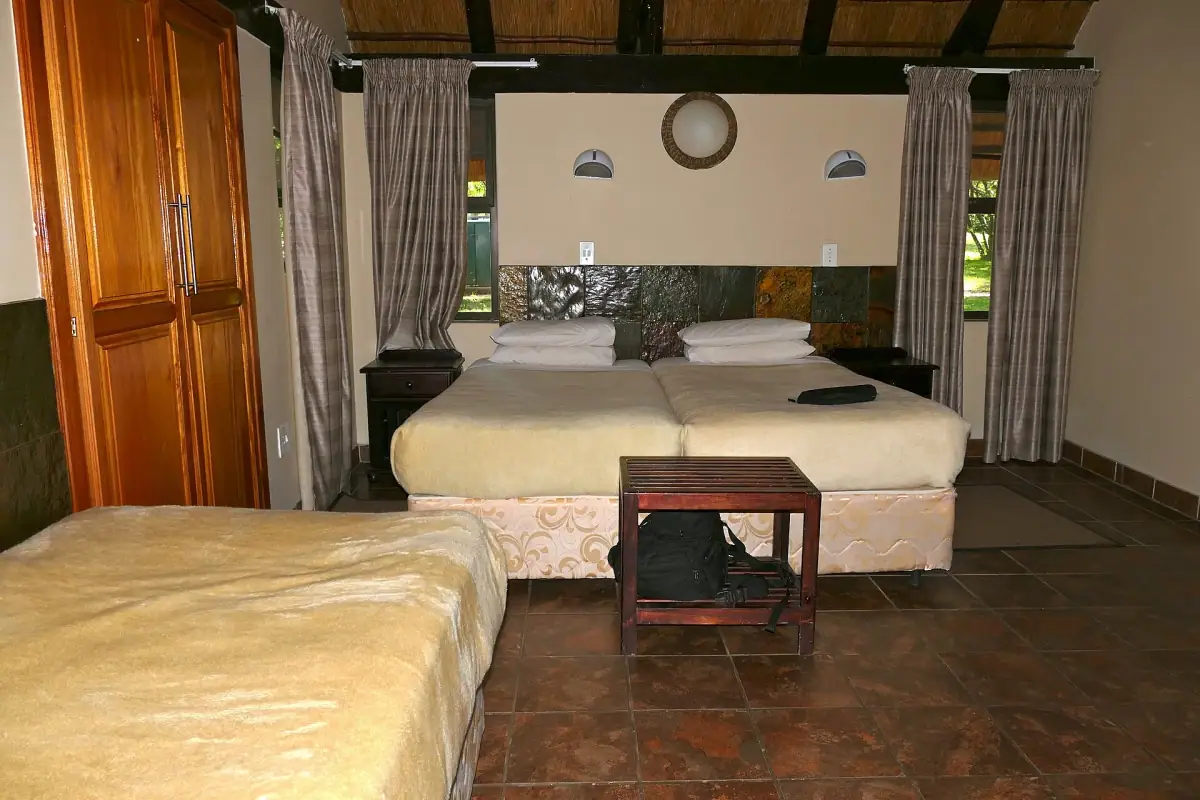
Camps generally offer several comfort levels: equipped tents for small budgets, bungalows with a bathroom and sometimes a kitchen, cottages or family houses for groups, and camping sites for those traveling with their own gear. Facilities vary from camp to camp: always check air conditioning, the kitchen and whether there is a private bathroom before booking.
The advantages
- A rate clearly lower than that of a private lodge.
- A flexible schedule: you leave when you want, within the opening hours of the gates and camps.
- A relaxed, accessible atmosphere, including for families.
- The possibility of linking several camps to cross the park from south to north.
The limits
The most popular camps can be very crowded. The roads near the big camps are sometimes congested as soon as a big cat is spotted. And most important: on your own, you are the one looking for the animals. An experienced guide sees far more than a novice driver. Consider booking at least one guided safari from the camp to benefit from a trained eye.
A useful reminder: never set out with an almost empty tank. Gas stations are rare in the park, and our guide on car rental and driving in South Africa details the habits to adopt.
Compare lodging near Kruger Park
Lodges, guesthouses and hotels around the entry gates: ideal for an arrival or departure night, or if the park is full.
Bush camps: calm above all
The small isolated camps are designed for travelers who want to hear the African night without the noise of a big camp. They have few units, are often away from the main roads and sometimes reserve access to guests only.
They suit a second or third stay well, when you already know how the park works. The trade-off: fewer services on site. You sometimes have to plan your meals, supplies and water. Check exactly what is available before arriving, because once there, it is too late to improvise.
Lodges in private reserves
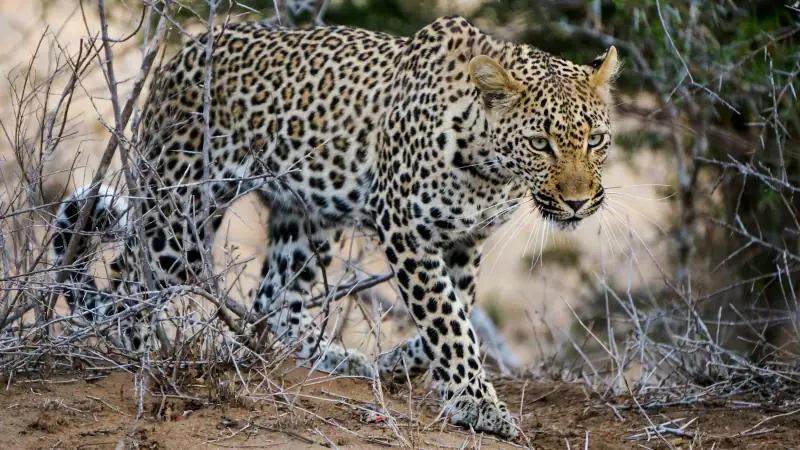
Private reserves, such as those in the Sabi Sand or Timbavati area, border the national park. In several of them, animals move freely between the two spaces. The appeal is twofold: supervision by guides and trackers, and the possibility of leaving the official tracks, which brings remarkable sightings closer.
What a lodge stay generally includes
The usual package includes lodging, meals, two safaris a day (one at dawn, one at the end of the day) and sometimes bush activities. The atmosphere is more intimate: small groups, shared tables, a debrief around the fire. The comfort level ranges from rustic chic to very high end.
Who is it for?
- Travelers who want to maximize their viewing chances, notably of big cats.
- Those who do not want to drive in the park.
- Honeymoons or special occasions, when the budget allows.
The budget
The price of a night in a lodge is not comparable to that of a rest camp. As rates vary greatly with the season and the lodge, compare several offers and check what is included: meals, drinks, safaris, entry fees, transfers. An “all-inclusive” package can prove clearer than an attractive base price with many extras.
For a good compromise, many travelers combine two or three nights in a rest camp on their own with one to two nights in a private lodge to benefit from a quality guided safari.
Book a guided Kruger safari
Dawn, evening or full-day safaris: compare excursions with a guide from the park.
Sleeping around the park: entry gates and villages
It is sometimes wise to sleep outside the park, for example the night before your first safari or the night after your return. The park has several entry gates spread along its perimeter, and choosing lodging near the one you will use lets you enter at opening without stress.
Lodgings in this area range from the family guesthouse to the lodge with a pool and restaurant. They are generally cheaper than private reserve lodges, and make a fallback if the park’s camps are full. Check carefully the distance to the chosen gate, as well as its opening hours, which vary with the season.
Which option for your profile?
With family
Rest camps are the simplest: cottages or bungalows with several bedrooms, a pool, a relaxed atmosphere. Check the age rules applying to guided safaris, as some private lodges restrict access for younger children.
As a couple
A bush camp or a private lodge offers a more intimate setting. If the budget is tight, a river-view bungalow in a rest camp remains very romantic.
Small budget
Camping or equipped tents in rest camps, with picnics and groceries from the camp shops or in town before entering the park. Our article on the budget for South Africa gives reference figures for dividing your spending.
For wildlife photography
Aim for a private reserve lodge for freedom of movement, or a well-placed rest camp near a waterhole with dawn outings.
When to book and which season
The dry season, approximately May to September, is generally considered the best viewing period, because the vegetation is less dense and animals gather around waterholes. It is also the period when demand is highest. The rainy season offers greener nature, spectacular landscapes and often lower prices, but viewing is trickier. Our guide to the best time to visit South Africa details these trade-offs.
In every case, book as early as possible, especially for the most in-demand rest camps and for South African school holidays. Preferably choose rates with flexible cancellation as long as your flights are not confirmed.
Flights to South Africa
Compare flights to Johannesburg, a common entry point for reaching Kruger, before locking in your nights.
Practical tips for choosing well
Alternate camp types. A stay of four to six nights benefits from being split between two camps in different areas, which diversifies landscapes and wildlife.
Respect the hours. The gates of the park and the camps open and close at times that vary with the season. Arriving late can lead to a penalty: allow a comfortable margin.
Bring the essentials. Insect repellent, layered clothing for cool mornings, binoculars, a headlamp. For useful gear, see our selection of accessories for South Africa.
Plan for health. Ask your doctor or a travel clinic, and see the official travel health pages (CDC in the US, TravelHealthPro in the UK), before you go.
Think about insurance. Travel insurance covering medical assistance is recommended for a stay in an isolated area.
Check the cancellation terms. A safari stay is a significant budget: favor flexible terms.
Example of a five-night stay
Here is a realistic outline, to adapt to your dates and budget:
- Night 1: lodging near an entry gate, to leave at opening.
- Nights 2 and 3: a rest camp in the south of the park, on your own, with a guided late-day safari.
- Night 4: a camp farther north or a bush camp for a change of scenery.
- Night 5: a private lodge to end with a guided experience, or back toward Johannesburg depending on your flight.
This rhythm leaves time to watch without rushing. Keep in mind that distances in the park are significant and speed is limited: better a few well-chosen camps than daily lodging changes.
Key takeaways
- SANParks rest camp: the best value, ideal on your own.
- Bush camp: calm and nature, for repeat visitors.
- Private lodge: guided safaris and comfort, for a higher budget.
- Outside the park: useful for arrival and departure, or when it is full.
To continue preparing your trip, reread our guide to the Kruger safari and keep when to go handy to set your dates.
Frequently asked questions
Where should you sleep for a first safari in Kruger Park?
For a first safari, a SANParks rest camp is an excellent compromise: you sleep inside the park, drive a rental car and the budget stays reasonable. If you want guided safaris in an open vehicle and an all-inclusive approach, a private reserve lodge is more comfortable, but clearly more expensive.
Can you sleep inside Kruger Park without a luxury lodge?
Yes. The park runs rest camps with bungalows, safari tents, camping and caravan sites, as well as more isolated bush camps. They are booked online with the South African national parks authority, often long in advance in high season.
Do you need to book far ahead?
Yes, especially for South African school holidays and long weekends, when the most popular camps fill months ahead. Outside holidays, availability is better, but it is best to book early as soon as your dates are set.
What is the difference between Kruger Park and a private reserve?
The national park is open to visitors who drive themselves on a network of roads, with strict traffic rules. The neighboring private reserves, several of which share unfenced boundaries with the park, offer guided safaris in open vehicles, sometimes at night, and more upscale lodging.
Where should you sleep if you do not have a car?
The simplest is to choose a lodge or an organized stay that includes safaris and transfers. On your own, a car is almost essential in the park: see our guide to driving in South Africa before deciding.
Is Kruger lodging safe with regard to wildlife?
Camps are fenced and the rules are clear: do not leave your vehicle outside authorized areas, do not feed animals, do not walk in the camp at night without need. Follow the posted instructions and those of the staff.
More South Africa guides
Keep reading
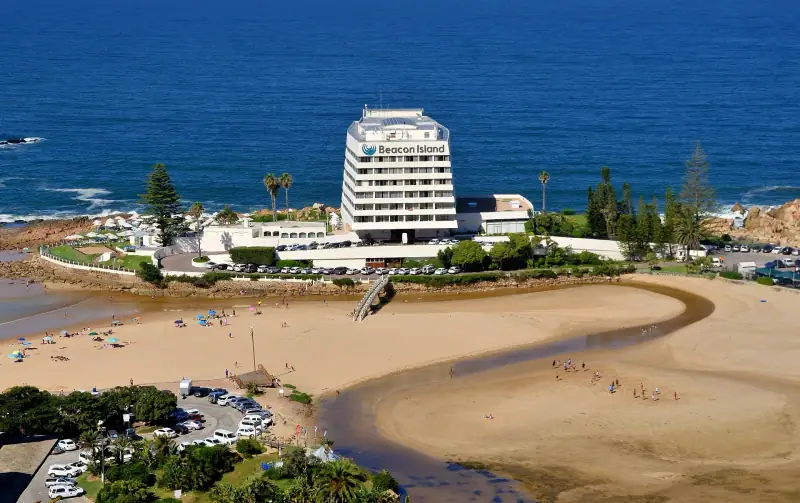
Knysna or Plettenberg Bay: where to stay on the Garden Route
Knysna or Plettenberg Bay for sleeping on the Garden Route? Lagoon or beaches, neighborhoods, number of nights, car and tips to choose without regrets.
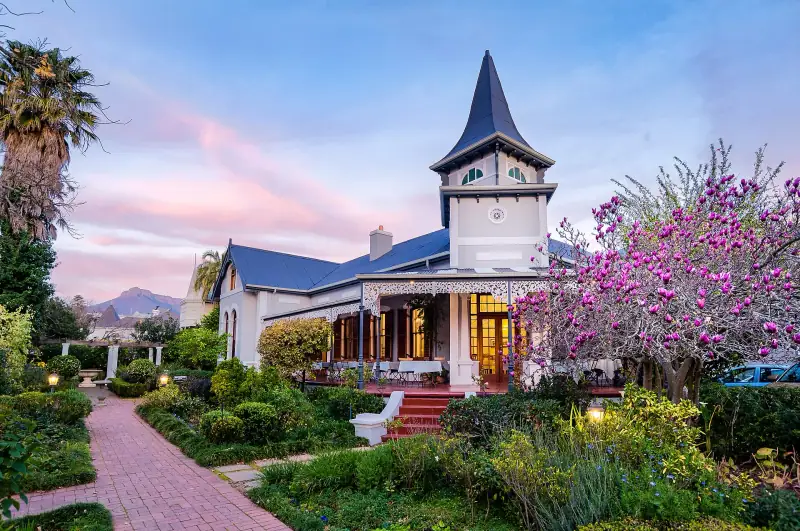
Where to stay in the Winelands: Stellenbosch, Franschhoek or Paarl?
Where to stay in the Winelands? Stellenbosch, Franschhoek, Paarl: bases compared, types of lodging, budget, seasons and tips for booking well.
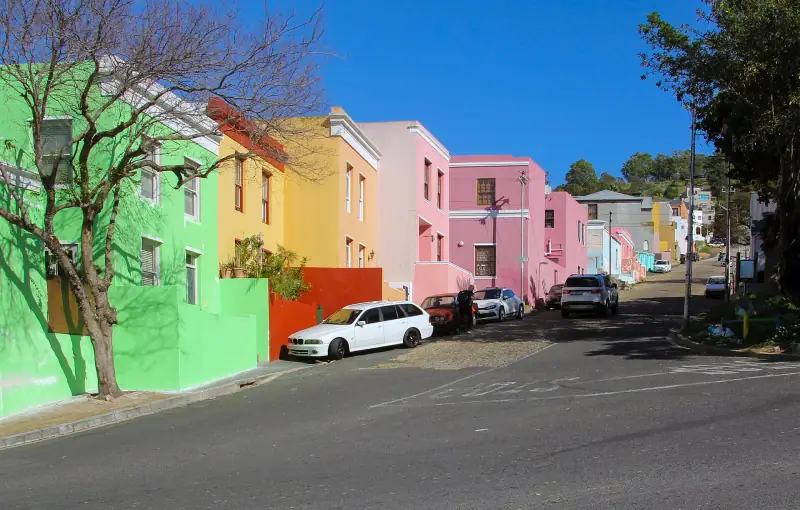
Where to stay in Cape Town: neighborhoods, budget and tips for choosing well
Where to stay in Cape Town? Waterfront, City Bowl, Camps Bay, Sea Point, Constantia: neighborhoods compared, safety, budget and booking tips.
Ready-made
South Africa itineraries
8 days
Garden Route road trip: 8 days from Cape Town to Gqeberha
An 8-day Garden Route road trip: Hermanus, Swellendam, Mossel Bay, Knysna, Plettenberg Bay and Tsitsikamma, with realistic stages and distances.
14 days
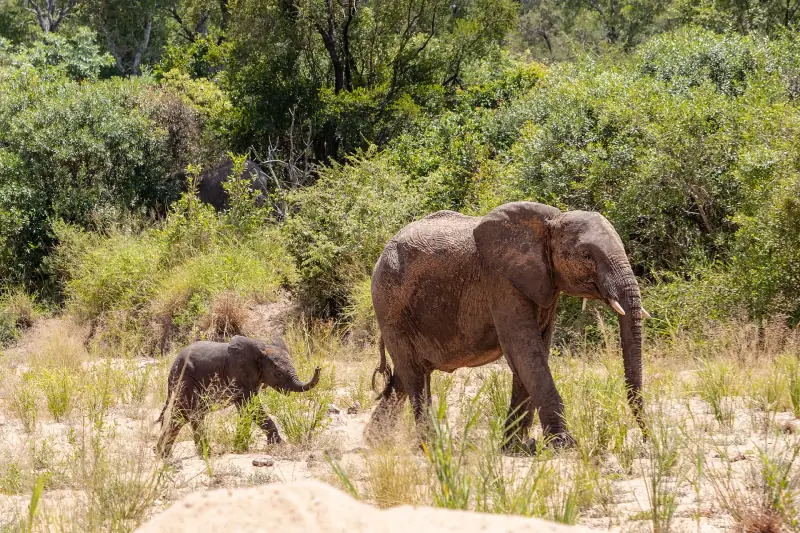
South Africa in 2 weeks: Kruger, Cape Town and Garden Route itinerary
A 14-day South Africa itinerary: Kruger safari, Cape Town, Winelands and the Garden Route, with domestic flights, drives and practical tips.
5 days
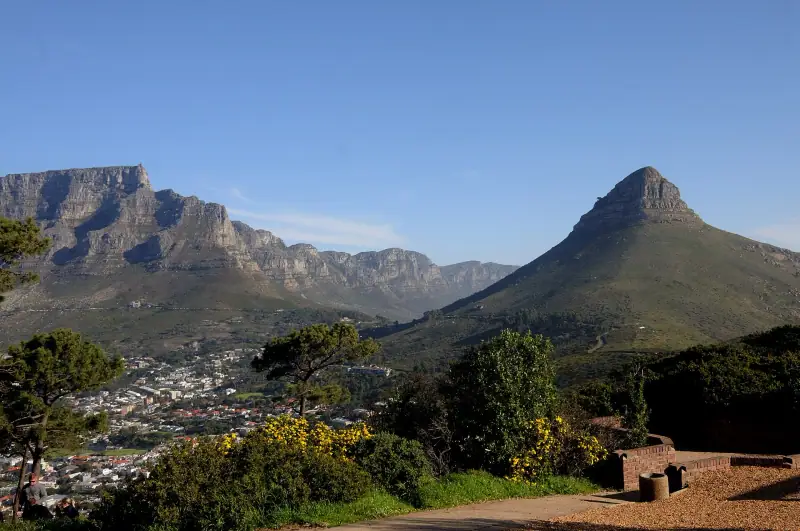
Cape Town in 5 days: day-by-day itinerary, peninsula and Winelands
A 5-day Cape Town itinerary: Table Mountain, Waterfront, Bo-Kaap, the Cape of Good Hope peninsula, Winelands and Hermanus, with distances and tips.