What to see
What to see in Cape Town and the Peninsula: 10 highlights
We may earn a commission when you book through links on this page, at no extra cost to you. We don't visit or try the places we cover: we summarize published sources. How we work
In short
- Plan at least three days: one for Table Mountain and the center, one for the peninsula (Cape Point, Boulders) and one for Robben Island, the Waterfront or Kirstenbosch.
- Table Mountain's summit is over 1,000 m (3,300 ft) high; the cable car can close in strong wind, so keep your schedule flexible.
- Robben Island departures can be canceled in rough seas: book ahead and do not leave it for your last day.
- Cape Point is about 1 h to 1 h 30 from the center of Cape Town; a full day is better to combine it with Boulders Beach.
Few cities in the world offer such a setting: a flat-topped mountain overlooking the ocean, beaches lined with rocks, vineyards an hour away by road and, at the end of the peninsula, a cape that has shaped sailors’ imaginations for centuries. If you are wondering what to see in Cape Town, the difficulty is not finding ideas but organizing them, because weather, wind and distances often dictate the schedule.
Here are ten highlights, split between the city and the peninsula, with tips for linking them sensibly.
Table Mountain, the symbol of Cape Town
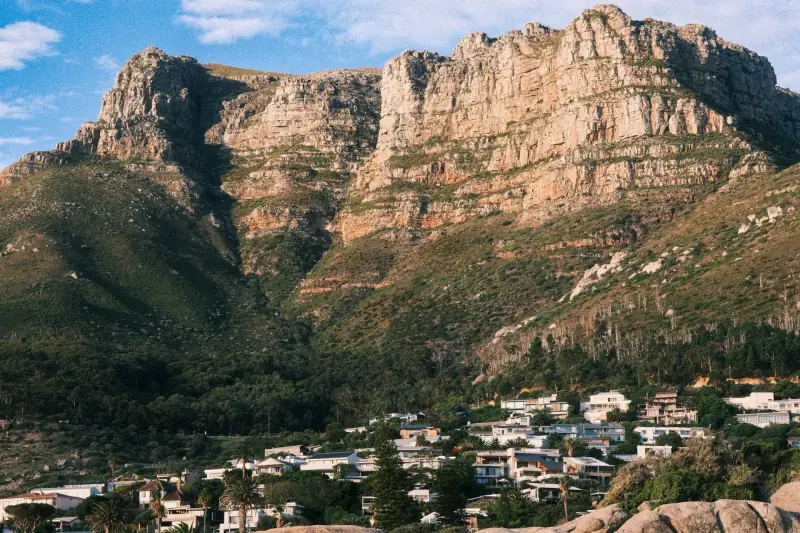
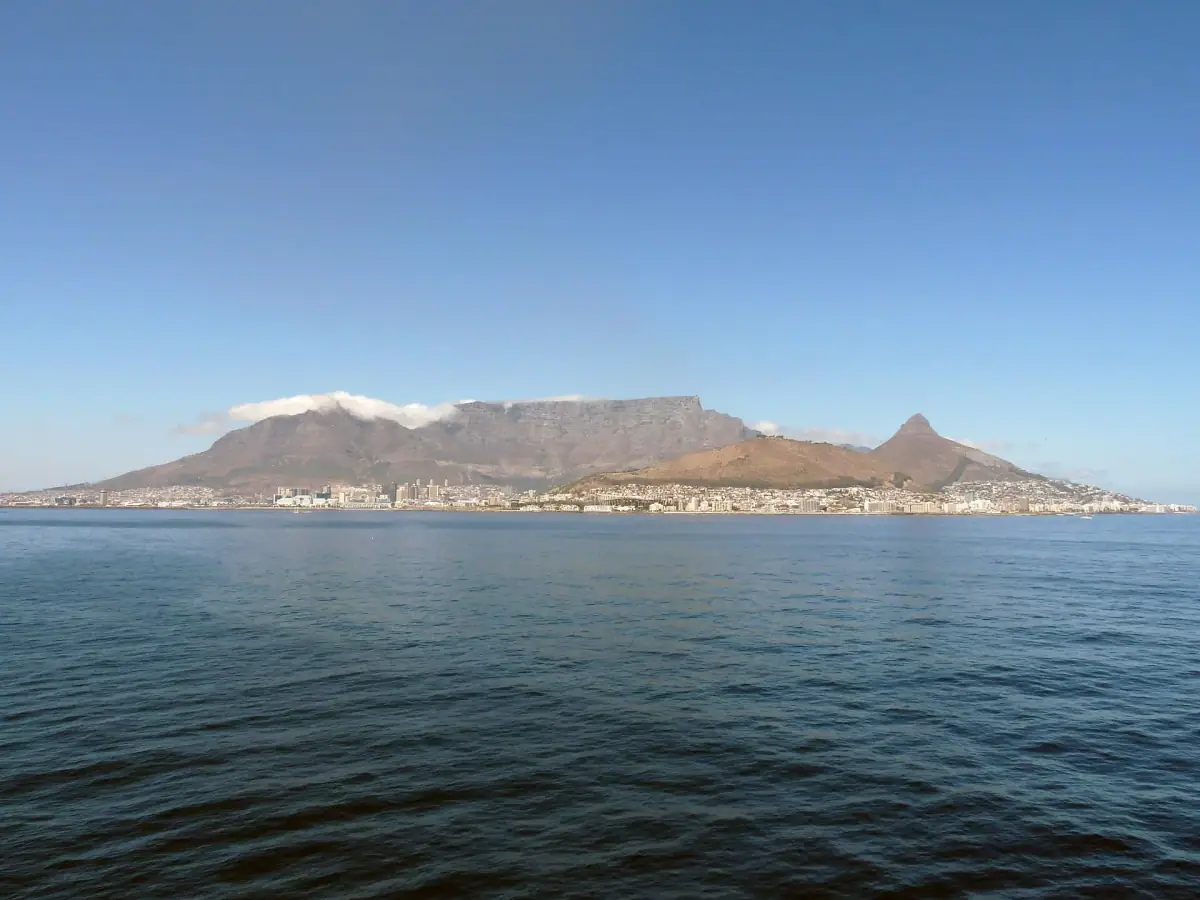
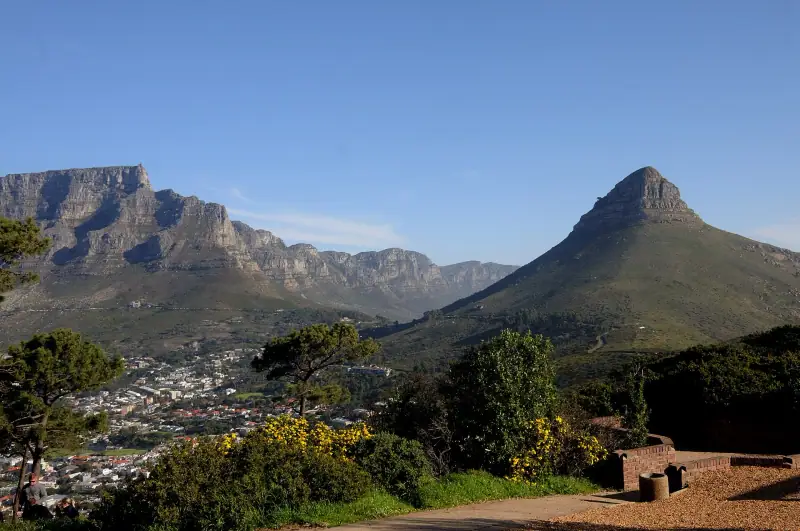
Table Mountain is the city’s landmark. Its flat summit rises over the center at more than 1,000 meters (3,300 ft) and, in clear weather, offers a 360° view over the bay, Robben Island and the coastal neighborhoods. You have two options: the cable car, which reaches the top in a few minutes, or the more demanding hike on one of the trails that climb from the city or from the Kirstenbosch gardens.
A few simple rules: leave early, as crowds grow during the day, bring water and a windbreaker, and check the same morning that the cable car is running. In strong wind it can be stopped, and the mountain sometimes covers itself with a thick cloud called the “tablecloth”. If you hike, never go alone and check conditions: the weather can change quickly at altitude.
To plan your visit around the season, see our guide to the best time to visit South Africa.
Signal Hill and Lion’s Head, for sunset
Next to Table Mountain, the hill of Lion’s Head is climbed on a short but fairly steep hike, very popular at sunrise and sunset. The summit offers a panoramic view over downtown, Camps Bay and the Atlantic. Bring a headlamp if you come down at nightfall, and avoid climbing in mist or high wind.
Signal Hill, right beside it, is easier to reach: you can drive there to watch the sunset over the bay without effort. It is a good option if you are traveling with young children or after a long day of sightseeing.
The V&A Waterfront and the central neighborhoods
The former port, now a lively district, is called the Victoria & Alfred Waterfront. You stroll there with Table Mountain as a backdrop, among shops, restaurants, covered markets and the quays where boats leave from. It is also the departure point for crossings to Robben Island.
The atmosphere is touristy but pleasant, especially in the late afternoon. The Waterfront suits a first evening or a rainy day well, as many spaces are covered. The historic city center, very close, gathers several sites of interest, including the Castle of Good Hope, a fortress built in the 17th century by the Dutch East India Company and considered one of the oldest colonial buildings in the country.
Hotels in Cape Town
Compare lodging at the Waterfront, in the center or in Camps Bay by your dates and budget.
Robben Island, a memorial to apartheid
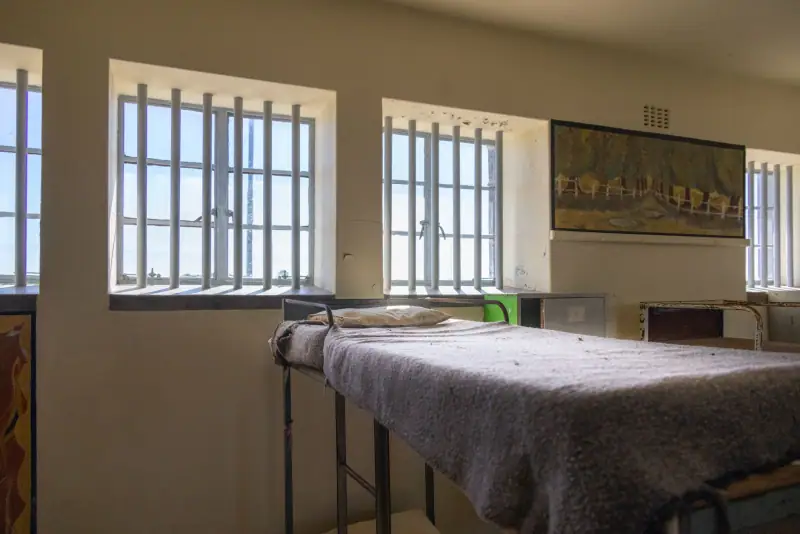
A few kilometers from the Waterfront, Robben Island is a major place of memory. The island served as a political prison during apartheid, and Nelson Mandela was held there for eighteen years. A UNESCO World Heritage site, it is visited on an organized excursion: the boat crossing is followed by a guided tour, often led by former political prisoners, which makes the experience particularly powerful.
Book ahead, especially in high season, as places are limited. Departures can be canceled in rough seas or wind, which happens regularly: it is better not to schedule this visit on your last day. Allow half a day in all, and keep some energy for the emotion the place stirs.
Bo-Kaap, the colorful neighborhood
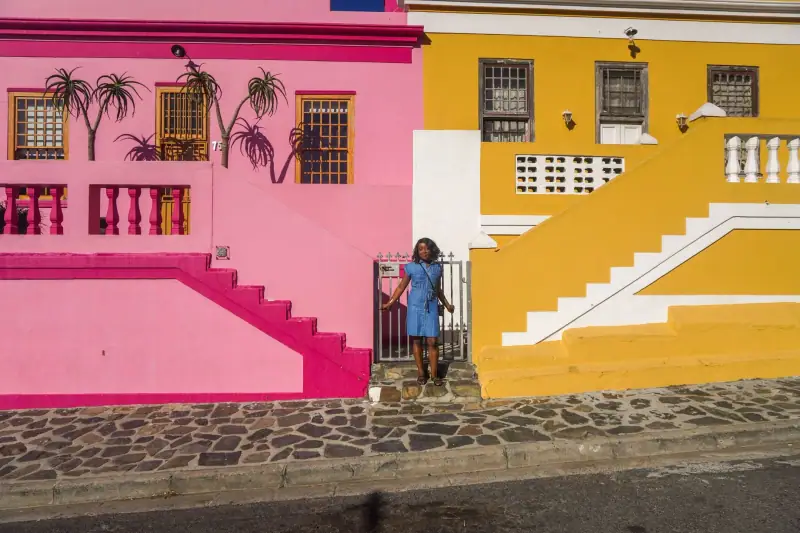
Perched on the slopes of Signal Hill, Bo-Kaap is famous for its houses painted in bright tones, lined up along cobbled streets. The neighborhood has a strong history: it is tied to the Cape Malay community, whose roots go back to people displaced and enslaved in the colonial era, and which has preserved a distinctive culture, cuisine and religious traditions.
Walk through with respect: it is a residential neighborhood, where residents do not like intrusive photos. A guided visit helps you understand the history of the place and reach addresses where you can taste Cape Malay cooking, with its mild, spiced flavors. In the morning or late afternoon, the light is most flattering.
Kirstenbosch, the botanical garden at the foot of the mountain
Backed against the eastern slope of Table Mountain, the Kirstenbosch National Botanical Garden is one of the most beautiful in Africa and is also part of a World Heritage site, as part of the Cape Floral Region. It is devoted to the native flora of southern Africa, notably proteas, the symbols of the country, and the many plants of the fynbos, the typical vegetation of the region.
You wander on foot, picnic on the lawns, and can take a walkway suspended above the trees. Allow half a day. In summer, open-air concerts are sometimes held there: check the program during your stay. It is also a possible starting point for hikes to the top of the mountain.
Chapman’s Peak Drive, the cliffside road
Between Hout Bay and Noordhoek, Chapman’s Peak Drive is one of the most spectacular coastal roads in the country. Cut into the cliff, it overlooks the Atlantic over a series of bends and viewpoints. Access is paid (toll) and the road can be closed in bad weather or when there is a risk of falling rocks: check that it is open before setting out.
To enjoy it fully, drive it early in the day or in the late afternoon, when the light is beautiful and traffic is lighter. The road is part of the classic peninsula itinerary: it is often combined with Hout Bay, a small fishing port known for its seafood and boat trips to a seal colony.
Excursions around Cape Town
Peninsula tours, cruises, guided visits: discover the activities on offer in Cape Town.
Cape Point and the Cape of Good Hope
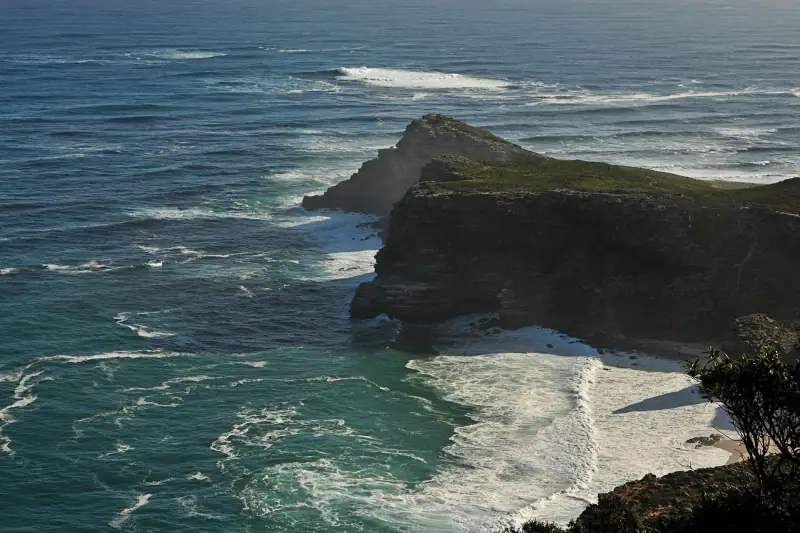
At the southern tip of the peninsula, the Cape Point nature reserve is part of Table Mountain National Park. It has high cliffs dropping into the ocean, a historic lighthouse, hiking trails and wild beaches. The Cape of Good Hope, very close, is another classic stop, with its famous sign where visitors have their photo taken.
A small funicular reaches the highest point near the lighthouse, but you can also climb on foot. Bring warm clothes: the wind is often strong there, even in fine weather. Also keep an eye on your belongings and on the reserve’s baboons, which can be very insistent: never feed them and keep your bags closed.
From the center of Cape Town, allow about one hour to one and a half hours by road, depending on traffic and the route chosen. A full day is better to combine Cape Point with the following stops.
Boulders Beach and the African penguins
On the False Bay coast, near Simon’s Town, Boulders Beach is home to a colony of African penguins, also called jackass penguins. Boardwalks let you watch them up close without disturbing them, and you can swim in small coves sheltered by enormous rounded granite boulders.
The penguins are protected: do not touch them, do not feed them and stay in the areas set aside for visitors. Arrive early to avoid the crowd, then enjoy the small town of Simon’s Town, a former naval base, with its waterfront and cafés. This stop fits naturally on the way back from Cape Point.
Camps Bay, Clifton and the Atlantic beaches
On the Atlantic coast, at the foot of the Twelve Apostles, Camps Bay and Clifton are the city’s best-known beaches. The sand is fine, the setting spectacular, and the cafés and bars of Camps Bay are ideal for a drink at sunset. Note, however, that the Atlantic water is cool, even in summer, as it is fed by a cold current from the south.
In summer, the southeast wind, often called the “Cape Doctor”, can blow hard. Some more sheltered beaches are then more pleasant than others: ask for advice locally. Do not forget sunscreen, as the sun is strong even when the air feels cool.
Combining the city and the Winelands
The vineyards of Stellenbosch and Franschhoek are about an hour’s drive from Cape Town, so you can easily add them to a stay. One day is enough for a first taste, and two days let you sleep there. We detail the estates and tasting tips in our guide to the Winelands.
Flights to Cape Town
Compare flights to Cape Town, the natural gateway of this circuit.
How to organize your days in Cape Town
Here is a realistic four-day sequence, to adapt to the weather:
- Day 1: city center, Castle of Good Hope, Bo-Kaap, then sunset on Signal Hill.
- Day 2: Table Mountain early in the morning, then Kirstenbosch in the afternoon.
- Day 3: the peninsula by car, with Chapman’s Peak, Cape Point, Boulders Beach and Simon’s Town.
- Day 4: Robben Island in the morning, the Waterfront in the afternoon, evening in Camps Bay.
Stay flexible: Table Mountain and Robben Island depend a lot on the wind. If an activity is canceled, replace it with another from the list and move it to another day. For logistics, a rental car is practical for the peninsula; in town, ride-hailing is widespread and safer than walking in the evening. To choose your neighborhood, read our guide on where to stay in Cape Town.
Safety and practical tips
Cape Town is a very pleasant city, but caution is needed as in any large metropolis. Leave no object visible in the car, park in busy areas, keep your phone and camera discreet, and avoid walking alone at night. On hiking trails, it is better to go in a group and at reasonable hours.
Remember that driving is on the left. Take it easy over the first kilometers, and bring cash or a card for the Chapman’s Peak toll and park entrances. Finally, entry rules depend on your passport: check the official travel advice of your government before you go (travel.state.gov in the US, GOV.UK in the UK, travel.gc.ca in Canada, Smartraveller in Australia; checked November 2026).
With a flexible program and an eye on the weather, Cape Town and its peninsula offer one of the finest concentrations of landscapes, history and nature in southern Africa.
Frequently asked questions
How many days do you need to visit Cape Town and the Peninsula?
Allow at least three days to see the essentials: one day for Table Mountain and the center, one day for the peninsula (Cape Point, Boulders) and one day for Robben Island, the Waterfront or Kirstenbosch. Four to five days let you take your time and adapt to the weather.
Do you need a rental car to visit the Cape Peninsula?
It is the most flexible solution for the road to Cape Point, Chapman's Peak and Simon's Town. You can also opt for an organized day trip if you prefer not to drive, as driving is on the left.
What if Table Mountain is in the clouds?
The cable car closes in strong wind and the view can be hidden by the famous "tablecloth" of cloud. Keep flexibility in your schedule, check the cable car status the same morning and move the visit to another day if needed.
Can you swim at Boulders Beach?
Yes, swimming is possible in a sheltered cove, but the water stays cool all year. African penguins are protected: do not touch or feed them, and respect the marked areas.
Is Cape Town safe for tourists?
The tourist areas are busy, but caution is still needed: avoid leaving objects visible in the car, do not walk alone after dark, favor ride-hailing for evenings and follow your accommodation's advice. Also check the official recommendations before you go.
More South Africa guides
Keep reading
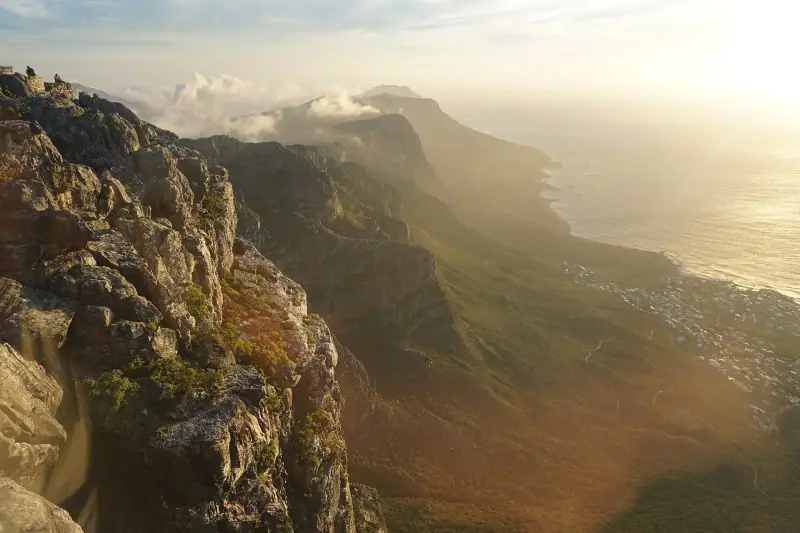
Complete guide to visiting South Africa: regions, budget, tips
Visiting South Africa: regions, cities, highlights, when to go, transport, lodging and budget. The pillar guide to prepare your trip.
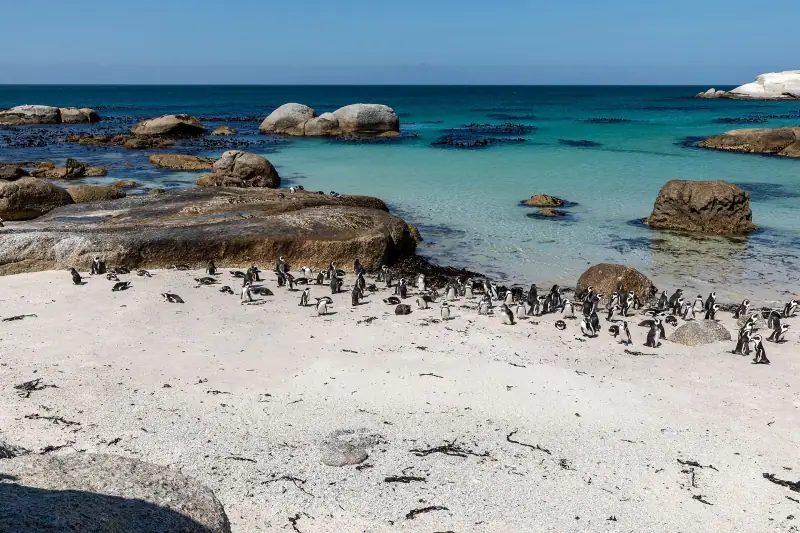
Boulders Beach: seeing the penguins, access, fees and how to avoid the crowd
Boulders Beach in Simon's Town: how to get there from Cape Town, free boardwalks or paid beach, hours, best time of day and season to avoid the crowd.
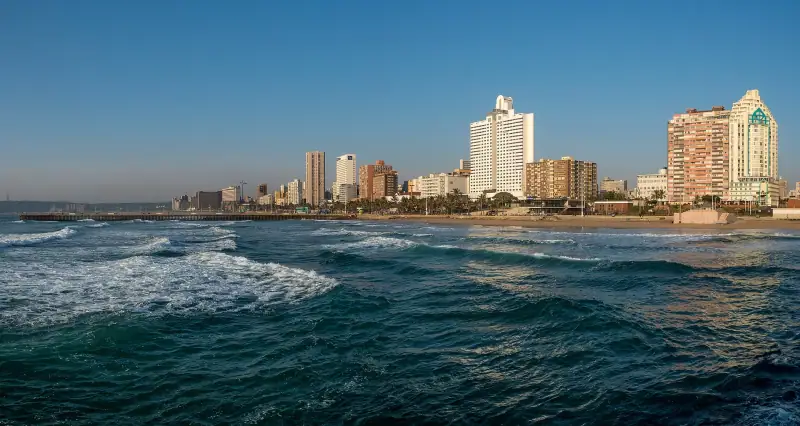
Visiting Durban: beaches, Indian food and Zulu culture
What to do in Durban: Golden Mile, uShaka Marine World, Victoria Street market, bunny chow, Umhlanga and Zulu culture. Practical tips for your stay.
Ready-made
South Africa itineraries
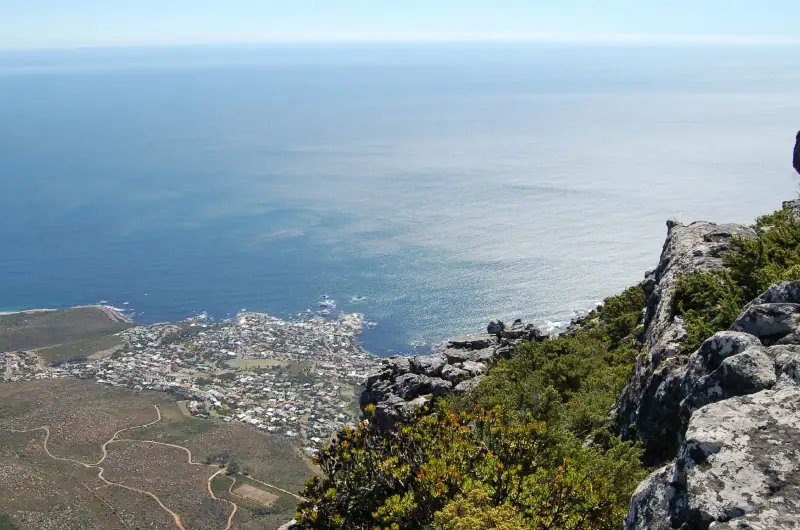
8 days
Garden Route road trip: 8 days from Cape Town to Gqeberha
An 8-day Garden Route road trip: Hermanus, Swellendam, Mossel Bay, Knysna, Plettenberg Bay and Tsitsikamma, with realistic stages and distances.

14 days
South Africa in 2 weeks: Kruger, Cape Town and Garden Route itinerary
A 14-day South Africa itinerary: Kruger safari, Cape Town, Winelands and the Garden Route, with domestic flights, drives and practical tips.
5 days
Cape Town in 5 days: day-by-day itinerary, peninsula and Winelands
A 5-day Cape Town itinerary: Table Mountain, Waterfront, Bo-Kaap, the Cape of Good Hope peninsula, Winelands and Hermanus, with distances and tips.