Where to stay
Where to Stay in Wrocław: Neighborhoods and Types of Accommodation
We may earn a commission when you book through links on this page, at no extra cost to you. We don't visit or try the places we cover: we summarize published sources. How we work
In short
- The Old Town (Stare Miasto), around the Market Square (Rynek), is the simplest choice: the main sights, restaurants and the Oder banks are all reached on foot.
- The main station, Wrocław Główny, is about a twenty-minute walk from the Market Square, with trams and buses to shorten the trip; the district is less picturesque but well connected.
- Two nights are enough for the essentials; plan three or four if you want to add excursions in the region or stroll through the districts.
- Book several weeks ahead for summer, long weekends, the Christmas market period and city events, preferably with free cancellation.
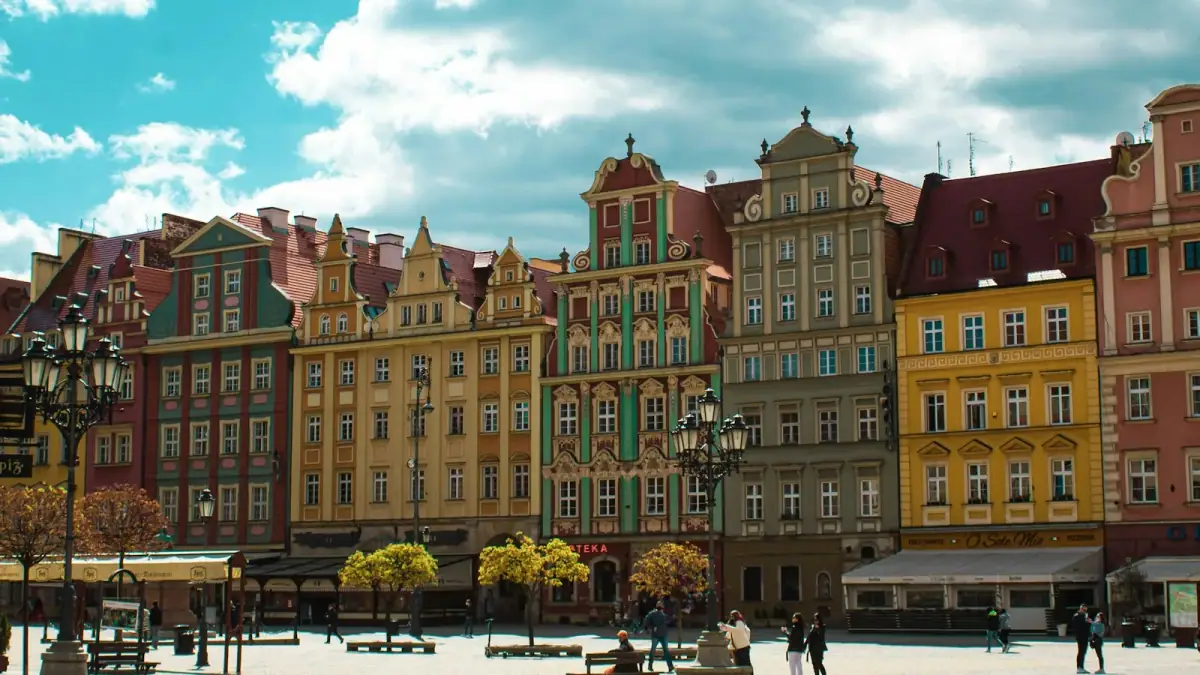
Wrocław is one of the most pleasant cities in Poland: a Market Square of colorful façades, islands and bridges on the Oder, hundreds of little bronze dwarfs hidden in the streets, and a student life that keeps the cafés busy late. Unlike Warsaw, the city is compact, and almost everything can be done on foot. But the districts do not all have the same atmosphere, and choosing where to sleep changes how you experience the stay.
This guide compares Wrocław’s main areas, then the types of accommodation found there: hotels, apartments, hostels, guesthouses. As in our other guides, no specific establishment is named: availability, prices and reviews change from one season to the next, and it is better to compare when you book. If you are planning your program first, our two-day Wrocław itinerary will help you decide how many nights to plan.
How Wrocław’s geography works
Wrocław developed on the banks of the Oder, which splits here into several branches. The result is an archipelago of islands and bridges that structures the city. The historic heart is on the left bank, around the Market Square (Rynek) and Salt Square (Plac Solny), enclosed by a former defensive moat now turned into a green promenade and a canal. The center is thus well delimited, which makes orientation easy.
Northeast of the Old Town, across the Oder, are Cathedral Island (Ostrów Tumski), quieter and older, and, beyond it, the Nadodrze district. Southwest of the center, the main station, Wrocław Główny, marks the entrance to the city for train travelers. To the east, Centennial Hall, Szczytnicki Park and the Biskupin district form a greener area.
Good news: the tram and bus network is dense. As long as you stay near a stop, you are never isolated, and the center remains reachable in a short time from most districts.
The Old Town (Stare Miasto): the default choice
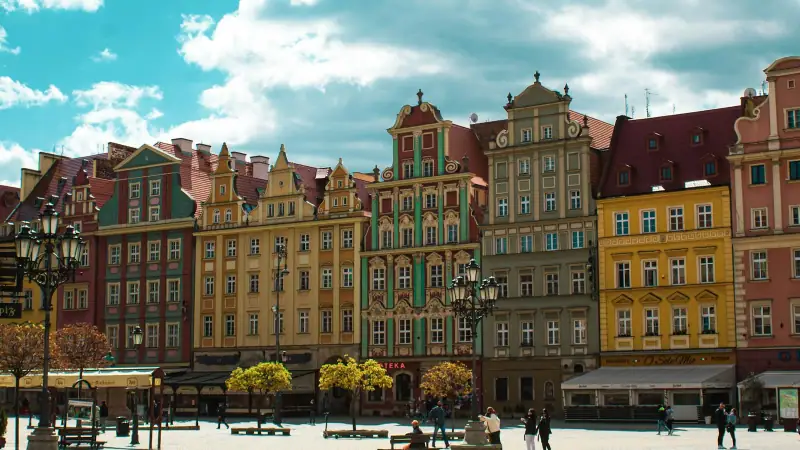
This is the area that concentrates most of what visitors come looking for: the Market Square and its Gothic town hall, the churches, the lanes leading off it, Salt Square, the university and the first quays. Restaurants, bars and cafés are plentiful, so you can leave your accommodation for dinner and be back in a few minutes.
Pros. You walk everywhere, you enjoy the square in the evening, once the groups have left, and you can return to rest between visits. It is also the ideal place to set off on the hunt for the little bronze dwarfs, one of the city’s pleasures. For eating, our guide to Polish cuisine specialties will give you ideas for dishes to try.
Cons. The noise. In summer and on weekends, the café terraces on the square and neighboring streets stay lively late, and street-facing rooms can be noisy. Ask for a courtyard room or an upper floor if you are a light sleeper. Rates there are also, as a rule, higher than in the outlying districts, and many old buildings have no elevator.
Who it suits. A first stay, a weekend, a trip as a couple, or a short stop of one or two nights. You find charming hotels in old buildings, international chains, apartments and several hostels.
🏨 Compare accommodation in central Wrocław: hotels, apartments and hostels near the Market Square. Check the dates, the cancellation policy, the floor and the orientation of the room before booking.
See accommodation in Wrocław on Booking.com Compare on Booking.com
Cathedral Island (Ostrów Tumski): calm and an old atmosphere
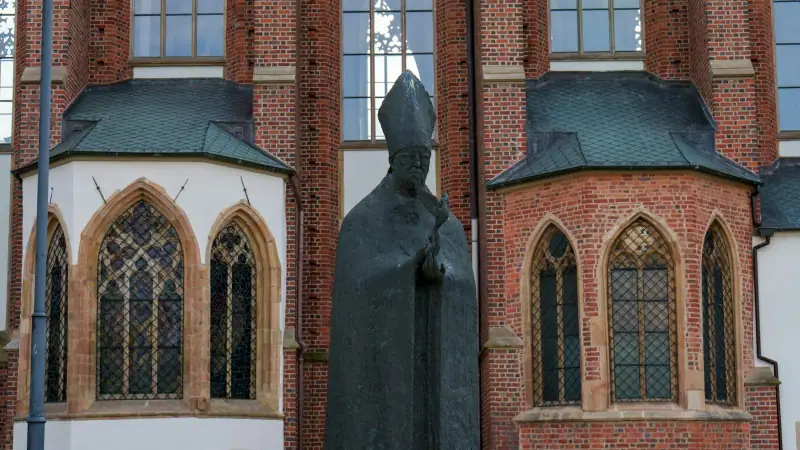
A few minutes’ walk from the Old Town, Cathedral Island is Wrocław’s oldest district. There you find the cathedral, several churches, cobbled lanes and, in the evening, an almost village-like atmosphere, notably when the day visitors have gone. Its surroundings, along the Oder, are especially pleasant for a walk at sunset.
Pros. Calm, the setting and the immediate proximity of the center. You can reach the Market Square on foot without taking any transport.
Cons. The choice of accommodation there is limited: it comes down to a few establishments, and restaurants are fewer than in the Old Town. You generally dine across the bridge.
Who it suits. Travelers looking for charm, tranquility and a romantic stay, without giving up proximity to the center. It is better to book early, as capacity is small.
Nadodrze: the alternative, creative district
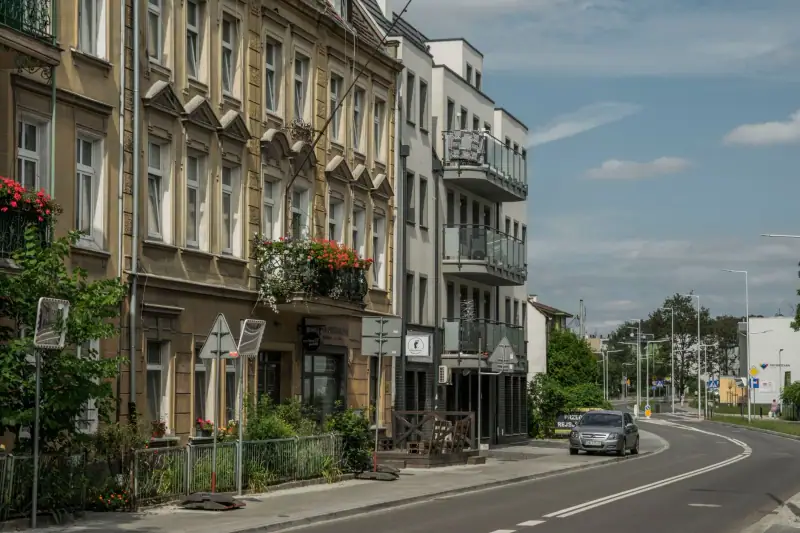
North of the Oder, Nadodrze is a former working-class district whose image has changed a lot. Its late-19th-century buildings, inner courtyards, murals and independent cafés make it one of the favorite districts of those looking for a more local atmosphere. The Old Town is reached on foot or in a few minutes by tram.
Pros. An authentic atmosphere, rates often softer than in the center, and many places frequented by residents rather than groups. It is an excellent area for those who like to stroll without a precise goal.
Cons. The district is still uneven: some streets are renovated, others less so. Old buildings have steep stairs and rarely an elevator. Read recent reviews carefully and look at the exact street on the map before booking.
Who it suits. Curious travelers, stays of several nights, reasonable budgets and those who prefer a lively district to a postcard backdrop.
The station district: practical for arriving and leaving
The area around the main station (Wrocław Główny) holds a large share of the budget and mid-range hotel offer. The station, a large old building, is well served by trains from Warsaw, Kraków and other cities in the country, as well as by the bus and tram network.
Pros. Ideal if you arrive late, leave early the next day or plan train excursions in the region. The historic center is about a twenty-minute walk away, or a few tram or bus stops. Rates are often more reasonable.
Cons. The atmosphere is less charming than in the center: it is a transit district, with traffic and streets that are sometimes unappealing in the evening. Some accommodation there is more functional than picturesque.
Who it suits. One-night stopovers, train travelers and those who put logistics before picturesqueness.
Biskupin, Szczytniki and Centennial Hall: the green side
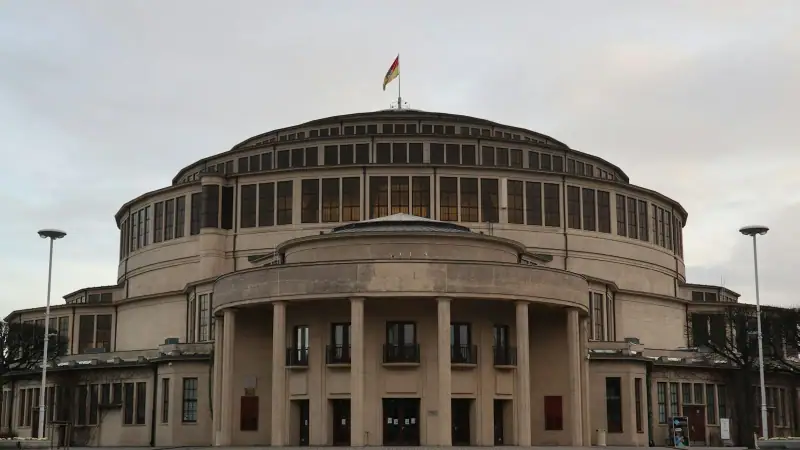
East of the center, Szczytnicki Park, Centennial Hall and the residential Biskupin district make up the city’s airiest area. The streets are tree-lined, the villas and early-20th-century buildings well kept, and the neighboring parks invite a stroll. Centennial Hall is one of the city’s great modernist monuments; it is reached from the center by tram or bus.
Pros. Calm, greenery and a residential setting. Accommodation there often takes the form of apartments or small hotels, suited to families and longer stays.
Cons. The center is farther: allow a public transport trip, not a walk. Nightlife is limited.
Who it suits. Families with children, travelers who like alternating city and nature, and those staying several nights.
Grunwaldzki Square and the university area
Along the Oder, on the east side, the Grunwaldzki Square area has university buildings, office buildings and several hotels. It is linked to the center by bridges and several tram lines. It is an interesting option if you are looking for international-standard accommodation at a slightly softer price, with good transport.
Pros. A good balance between proximity to the center, trams and rates. The banks of the Oder offer fine walks.
Cons. The area lacks architectural charm and activity in the evening, apart from student life.
Who it suits. Business travelers, stays of several nights and mid-range budgets.
🛏️ Search for an apartment or a room in Wrocław: filter by district, rating and amenities (elevator, air conditioning, kitchen) to find the option that fits your stay.
Types of accommodation in Wrocław
Beyond the neighborhood, the type of accommodation affects comfort and budget. Here are the main families you will meet.
Hotels. Wrocław has establishments of every category, from international chains to charming hotels set in old buildings. Compare included breakfasts, which are common, and check whether the hotel has air conditioning, useful in hot summers.
Apartments. Very common, they suit families, groups of friends and stays of more than three nights. A kitchen reduces the meal budget. Check the floor, the presence of an elevator, the arrival arrangements and the noise level, notably on the Market Square.
Hostels. They are numerous in the center, offer dorms and private rooms, and suit solo travelers or those on a tight budget. Reviews help spot the quieter establishments. Since the city is a university town, the atmosphere there is often sociable.
Guesthouses and small family hotels. Fewer in the historic heart, you find more in residential districts like Biskupin or around Cathedral Island, with a more personal atmosphere.
Hotels for business travelers. Wrocław hosts many business trips: some places offer good rates on weekends, when the business clientele has gone. Compare Friday and Saturday nights with weeknights.
To estimate the weight of these choices in your trip, see our budget for Poland. Poland generally remains affordable, and Wrocław is often a little cheaper than Kraków or Warsaw, which makes it an interesting destination for a city break.
Which neighborhood for your profile
A few pointers to decide quickly:
- First stay, short weekend: Old Town, to do everything on foot.
- Romantic and quiet stay: Cathedral Island, booking early.
- Local atmosphere, cafés and inner courtyards: Nadodrze.
- Late arrival or early train departure: station district.
- Family or stay of several nights in greenery: Biskupin and Szczytniki.
- Mid-range budget, good transport: Grunwaldzki Square area.
- Tight budget: hostels in the center or apartments in Nadodrze.
Also think about the season. Summer is lively, with packed outdoor cafés and long evenings. December draws many people with the Christmas markets on the Market Square, and rooms in the center are then booked early. Between fall and spring, the atmosphere is calmer, the light softer and accommodation easier to find, but days are short and the cold can be sharp in winter. To choose your period, read our guide when to go to Poland.
Practical tips before booking
Check the exact location on the map. Listings use the expression “central Wrocław” broadly: check the real distance to the Market Square and to the nearest tram stop.
Read recent reviews about noise. It is the first subject of complaints in the Old Town, especially in summer and on weekends.
Check the cancellation conditions. A booking that is cancellable for free leaves you the option to adjust your stay until the last moment.
Plan your arrival. Many apartments work with a key handover at a set time or a code lockbox: confirm the arrival time with the host.
Think about parking. If you come by car, ask whether the accommodation has a space: in the historic center, parking is limited and often paid. To rent a vehicle and explore Lower Silesia, you can compare rental companies before leaving.
Keep some zlotys and a card. Poland uses the zloty (PLN), not the euro, but bank cards are accepted almost everywhere. Entry rules depend on your passport. Check the official travel advice of your government before you book: travel.state.gov (US), GOV.UK (UK), travel.gc.ca (Canada), Smartraveller (Australia) (checked November 2026). Also check your carrier’s international plan or consider a travel eSIM.
🎟️ Tours and activities in Wrocław: guided tours of the old town, dwarf-hunting circuits, walks on the Oder. Compare the options and book ahead in high season.
Combining Wrocław with the rest of Poland
Wrocław fits easily into a circuit. To the southeast, our three-day Kraków itinerary offers a logical next step, and our guide where to stay in Kraków, Warsaw and Zakopane complements this one. If you continue to the Baltic, also read where to stay in Gdańsk.
Located in the west of the country, Wrocław is also a natural gateway if you arrive from Germany. For a multi-country trip, neighboring Germany and Hungary are possible additions.
Insurance. Before leaving for abroad, check your health and repatriation coverage.
In short
For a first visit, the Old Town remains the simplest choice; for calm, Cathedral Island; for a local atmosphere and a softer budget, Nadodrze; for logistics, the station district. In every case, the tram lets you change scenery in a few minutes: the key is to choose accommodation well placed relative to a stop, to read recent reviews about noise and to book early in high season.
Frequently asked questions
Which neighborhood should you stay in for a first visit to Wrocław?
The Old Town (Stare Miasto), around the Market Square (Rynek), is the simplest choice: the main sights, restaurants and the Oder banks are all reached on foot. It is the best base for a weekend or a stay of two to three days.
Is it practical to stay near Wrocław station?
Yes, if you arrive late or leave early by train. The main station, Wrocław Główny, is about a twenty-minute walk from the Market Square, with trams and buses to shorten the trip. The district is less picturesque than the Old Town but well connected.
Is the Nadodrze district safe and pleasant?
Nadodrze, north of the Oder, is a former working-class district undergoing transformation, with inner courtyards, cafés and murals. It is appreciated by travelers who want a local atmosphere. As everywhere, read recent reviews about the specific street of the accommodation and stay alert in the evening.
Do you need a car to stay in Wrocław?
No. The historic center is visited on foot and the tram serves the more distant districts. A car is only useful for exploring Lower Silesia and its castles; in that case, check that the accommodation has parking, often limited in the center.
How many nights should you plan in Wrocław?
Two nights are enough for the essentials (Market Square, Cathedral Island, Centennial Hall). Plan three or four nights if you want to add excursions in the region or take the time to stroll through the districts.
When should you book accommodation in Wrocław?
Book several weeks ahead for summer, long weekends, the Christmas market period and city events. Off-season, there is more choice and rates are generally softer. Favor a booking that is cancellable for free.
More Poland guides
Keep reading
Where to Stay in Poland: Recommended Areas in Kraków, Warsaw and Zakopane
Where to stay in Poland: the best areas of Kraków, Warsaw and Zakopane for your budget and travel style, with booking tips.
Where to Stay in Poznań: Neighborhoods and Types of Accommodation
Where to stay in Poznań: Old Market, Śródka, Jeżyce, Garbary, the station or Lake Malta. Neighborhoods and accommodation types by length of stay.
Where to Stay in Toruń: Neighborhoods and Types of Accommodation
Where to stay in Toruń: Old Town, New Town, Vistula bank, Podgórz or the station. Comparison of neighborhoods and accommodation types for your stay.
Ready-made
Poland itineraries
2 days
Gdańsk in 2 Days: An Itinerary Through the Old Town, the Shipyard and the Baltic
Gdańsk in 2 days: Royal Way, St. Mary's Basilica, Motława quays, European Solidarity Centre, Westerplatte and a getaway to Sopot.
3 days
What to Do in Kraków in 3 Days: A Complete Itinerary
Kraków in 3 days: old town, Wawel Hill, the Kazimierz district, the Wieliczka salt mine and a respectful visit to Auschwitz-Birkenau.
2 days
What to Do in Wrocław in 2 Days: A Complete Itinerary
Wrocław in 2 days: Market Square, Cathedral Island, bronze dwarfs, Centennial Hall and the Racławice Panorama. Walking itinerary, tips and budget.