Where to stay
Where to Stay in Gdańsk: Neighborhoods and Types of Accommodation
We may earn a commission when you book through links on this page, at no extra cost to you. We don't visit or try the places we cover: we summarize published sources. How we work
In short
- The historic center (Główne Miasto and the Old Town) is the simplest choice for one to three days: sights, restaurants and quays are on foot, and the station is close.
- Wrzeszcz is a good base for families and longer stays; Oliwa is calm and green; Sopot is the seaside option, about a quarter hour by train from Gdańsk.
- The SKM commuter train and the tram link the districts, so staying near a station or tram stop means you are never isolated.
- Book several weeks ahead for summer (July and August) and long weekends.
Gdańsk is not a big city by European standards, but it stretches across several very different areas: a carefully rebuilt historic center, former port districts in the midst of transformation, leafy residential zones and, a few train stops away, the seaside resort of Sopot. Choosing where to sleep therefore really changes how you experience the stay.
This guide compares the neighborhoods of Gdańsk and its immediate surroundings, then the types of accommodation found there: hotels, apartments, hostels, guesthouses. As in our other guides, no specific establishment is named: availability, prices and reviews change from one season to the next, and it is better to compare when you book. If you are planning your program first, our two-day Gdańsk itinerary will help you decide how many nights to plan.
How Gdańsk’s geography works
Before choosing a neighborhood, a quick orientation helps. The heart of the city is organized around the Motława River, which flows toward the Baltic. On its left bank are the historic center and its pedestrian streets; opposite, Granary Island (Wyspa Spichrzów), a former site of port granaries, is now a district being redeveloped.
North of the center, along the bay, are Wrzeszcz, Oliwa, then Sopot and Gdynia, linked by a commuter rail line, the SKM, which forms the backbone of getting around. Together, these three cities form the “Tricity” (Trójmiasto). This line is the key to choosing accommodation: as long as you stay near a station or a tram stop, you are never isolated.
Another useful landmark: the main station, Gdańsk Główny, is at the edge of the historic center. If you arrive by train, for example from Warsaw, you can reach most accommodation in the center on foot or with a very short trip.
The historic center: Główne Miasto and the Old Town
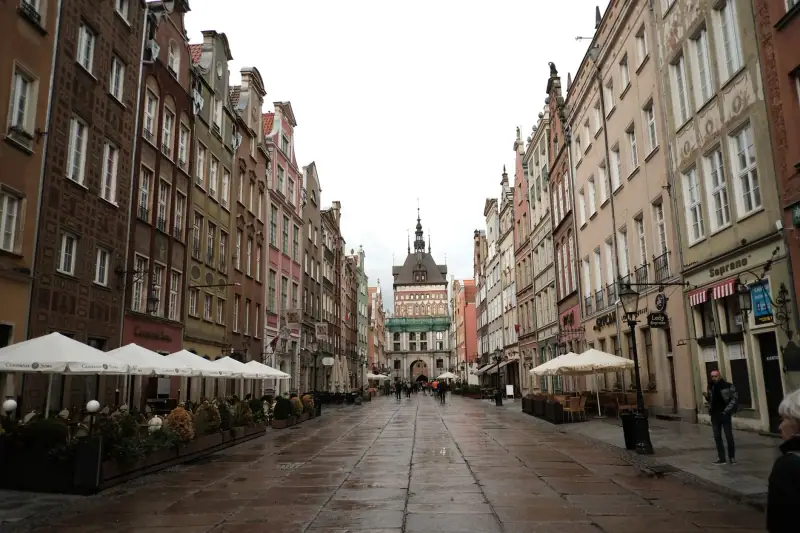
This is the default choice, and not by chance. The Main Town (Główne Miasto) brings together Długa Street, the long royal street lined with colorful façades, the Neptune Fountain, the town hall and the quays on the Motława. All around, the Old Town (Stare Miasto) holds several churches and quieter lanes. Almost everything a visitor passing through wants to see lies within a radius of a few hundred meters.
Pros. You walk everywhere, you can easily return to your accommodation for a break, and you enjoy the evening light on the quays, which is one of the finest moments of the stay. Restaurants, cafés and amber shops, amber being the emblematic product of the Baltic, are within reach. For meals, our guide to Polish cuisine specialties will give you ideas before choosing a table.
Cons. The bustle. In summer and on weekends, the pedestrian streets and café terraces stay lively late into the evening. Rooms facing Długa Street or the quays can be noisy. Ask for a courtyard room or an upper floor if you are a light sleeper. Rates there are also, as a rule, higher than in the outlying districts.
Who it suits. A first stay, a weekend, a trip as a couple or a stopover of a night or two. You find charming hotels set in old or rebuilt buildings, apartments and several hostels.
🏨 Compare accommodation in central Gdańsk: hotels, apartments and hostels near Długa Street and the quays. Check the dates, the cancellation policy and the floor before booking.
See accommodation in Gdańsk on Booking.com Compare on Booking.com
Granary Island: water views, a district in transformation
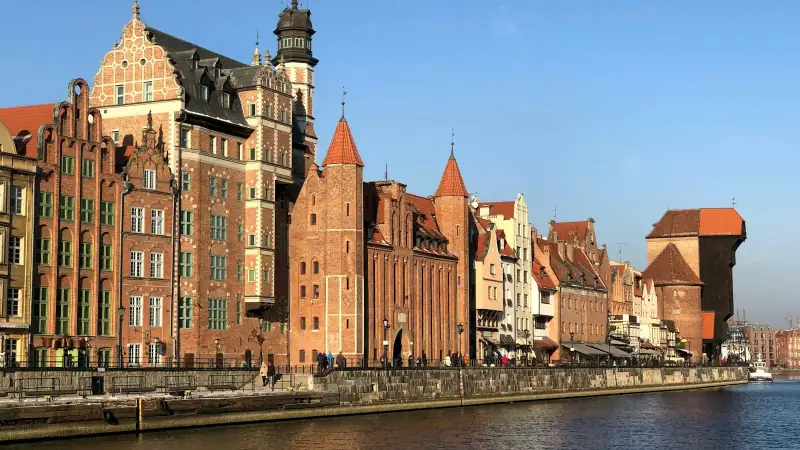
Opposite the historic center, on the other side of the Motława, Granary Island is linked to the main bank by several bridges, including a pedestrian swing bridge. Long occupied by warehouses, it now has recent buildings, hotels and apartments, with open views of the center’s façades. Its development continues: some sectors are still construction sites or vacant lots.
Pros. Often modern rooms, sometimes with a view of the water or the city skyline, and access on foot to the center in a few minutes. The atmosphere is calmer than on Długa Street once night falls.
Cons. The district still lacks the soul of the old center and some surroundings are under construction. Photos online can give a more finished impression than the reality of the moment: read the most recent reviews.
Who it suits. Those who like recent accommodation and comfort, without giving up proximity to the center.
Dolne Miasto and the shipyard area: a more historic, rawer Gdańsk
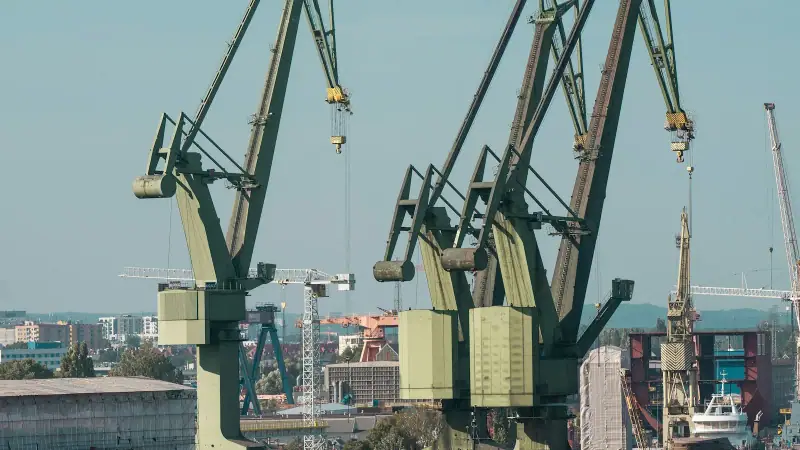
Southeast of the center, the Lower Town (Dolne Miasto) is a residential district of canals and old houses, quieter than the tourist center. Toward the north, the area of the former shipyards, where the Solidarity union was born in the 1980s, anchors the city’s contemporary history. Here you find notably the European Solidarity Centre, an important museum for understanding that period.
Pros. A more authentic stay, rates often more reasonable than in the center, and proximity to the places of remembrance of recent history. The historic center remains within walking distance or a tram ride.
Cons. The choice of accommodation there is more limited, and the district is less lively in the evening. Some streets are still being renovated.
Who it suits. Travelers interested in history, who stay several nights or who prefer calm to activity.
Wrzeszcz: the residential neighborhood, well connected
Wrzeszcz is the liveliest residential and student district north of the center. It is reached in a few minutes by commuter train from the main station, or by tram. Its tree-lined streets, cafés, small restaurants and neighborhood shops give it a clearly more local atmosphere than the tourist center. It is also a convenient area for those who arrive by air: Gdańsk airport is linked to the Tricity rail line.
Pros. Generally better value than in the center, often larger accommodation (apartments, family studios), and neighborhood life as a bonus. The train puts you in the historic center in a few minutes.
Cons. You do not have the charm of old façades outside your hotel, and an evening downtown means getting back by train or tram. Check the last transport times if you go out late.
Who it suits. Families, stays of several nights, travelers on a tight budget who want to stay well connected.
Oliwa: calm, park and cathedral
Further north, Oliwa is Gdańsk’s green district. It has a large park, a botanical garden and a cathedral known for its organ, which gives concerts, notably in summer. The area is residential, airy and quiet, with tree-lined paths. The bay beach is accessible from the north of the urban area.
Pros. Calm, nature within reach, a peaceful atmosphere away from the crowds. Rates can be more affordable than in the center.
Cons. The historic center is farther: allow a train or tram trip rather than a walk. Nightlife is limited.
Who it suits. Long stays, families with children, travelers who like alternating city and walks in greenery.
Sopot: stay by the sea, visit Gdańsk by train
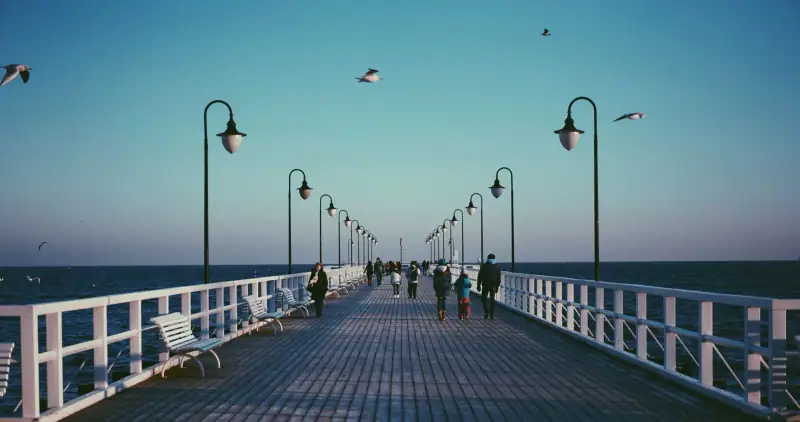
Sopot is the seaside resort of the Tricity, about a quarter hour by train from Gdańsk. Its pedestrian street, café terraces, beach and wooden pier, often cited among the longest in Europe, create a holiday atmosphere. In summer, the town is lively day and night, with visitors from all over Poland. The Baltic water stays cool, but the seafront promenade remains pleasant outside summer.
Pros. The seaside atmosphere, the beach, the walks, a wide choice of accommodation, from resort-style hotels to holiday apartments. The train links you to Gdańsk and Gdynia very regularly.
Cons. It is the most expensive and busiest area in July and August, and rates there vary strongly with the season. In the evening, the music from some establishments can be heard. You also lose time on each round trip to Gdańsk’s monuments.
Who it suits. A stay mixing city and sea, summer holidays with swimming, those who prefer a seaside setting to urban life.
🏖️ Sleeping in Sopot, by the sea: compare the hotels and apartments of the seaside resort, especially if you visit in summer, when availability shrinks.
See accommodation in Sopot on Booking.com Compare on Booking.com
Gdynia, Brzeźno and other options
Gdynia, at the other end of the Tricity, is a modern city born in the 20th century, with its port, its seafront and modernist architecture. It appeals to those who like a more contemporary and less touristy setting, at the price of a longer trip to central Gdańsk.
Brzeźno and Jelitkowo, Gdańsk’s coastal districts, offer direct access to the beach and a seafront promenade, with a resort atmosphere calmer than Sopot. They suit those looking for the coast without leaving Gdańsk, but remain far from the historic center.
Types of accommodation in Gdańsk
Beyond the neighborhood, the type of accommodation affects comfort and budget. Here are the main families you will meet.
Hotels. They come in every range in the center, on Granary Island and in Sopot. Charming establishments take advantage of old or rebuilt buildings; chains offer standardized rooms, often well located. Compare included breakfasts, which are common.
Apartments. They are very common in Gdańsk and suit families, groups of friends and stays of more than three nights. A kitchen saves on meals. Check the floor, the elevator, the arrival arrangements and the noise level, notably in the center.
Hostels. They are numerous in the historic center, offer dorms and private rooms, and suit solo travelers or those on a tight budget. Reviews help spot the quieter establishments.
Guesthouses and small family hotels. Rarer in the heart of the center, you find more in Oliwa, Wrzeszcz or the residential districts, with a more personal atmosphere.
Holiday accommodation in Sopot. In summer, holiday apartments and guesthouses complete the hotel offer. Demand is strong and last-minute bookings are trickier.
To estimate what these choices will weigh on your trip, see our budget for Poland. Poland generally remains affordable, but Gdańsk, Kraków and Warsaw are the cities where accommodation rates come closest to Western European standards in high season.
Which neighborhood for your profile
A few pointers to decide quickly:
- First stay, short weekend: historic center (Główne Miasto), to do everything on foot.
- Modern comfort and water views: Granary Island, checking the construction around.
- Recent history and calm: Dolne Miasto and the shipyard area.
- Family or a stay of several nights at a reasonable price: Wrzeszcz.
- Nature and tranquility: Oliwa.
- Sea and summer atmosphere: Sopot, or Brzeźno and Jelitkowo for more calm.
- Tight budget: hostels in the center or apartments in Wrzeszcz.
Finally, think about the season. In summer, the Baltic draws many people, and prices and availability vary strongly. Conversely, between fall and spring, the city’s atmosphere is calmer, the light softer and accommodation easier to find. Days are short in winter, though, and the sea wind can be sharp: pack warm clothes.
Practical tips before booking
Check the exact location on the map. The names “central Gdańsk” or “old town” are used broadly by listings: check the real distance to the station and the quays.
Read recent reviews about noise. It is the first subject of complaints in the historic center and in Sopot in summer.
Check the cancellation conditions. A booking that is cancellable for free leaves you the option to adjust your stay until the last moment.
Plan your arrival. Many apartments work with a key handover at a set time or a lockbox: confirm the arrival time with the host.
Think about parking. If you come by car, ask whether the accommodation has a space, because parking in the historic center is limited.
Keep some zlotys and a card. Poland uses the zloty (PLN), not the euro, but bank cards are accepted almost everywhere. Entry rules depend on your passport. Check the official travel advice of your government before you book: travel.state.gov (US), GOV.UK (UK), travel.gc.ca (Canada), Smartraveller (Australia) (checked November 2026). Also check your carrier’s international plan or consider a travel eSIM.
🎟️ Activities and guided tours in Gdańsk: city tours, cruises on the Motława or excursions to Westerplatte and Malbork Castle. Compare the options and schedules.
Combining Gdańsk with the rest of Poland
Gdańsk fits easily into a circuit: Warsaw is about three hours away by train, which lets you link the two cities without too much fatigue. Our two-day itinerary for Warsaw offers a logical next step, and our guide where to stay in Kraków, Warsaw and Zakopane complements this one for the rest of the country.
For a wider trip, Gdańsk also suits a multi-country circuit, with neighboring Germany and Hungary as possible additions.
Insurance. Before leaving for abroad, check your health and repatriation coverage.
In short
For a first visit, the historic center remains the simplest choice; for a local atmosphere and a softer budget, Wrzeszcz is an excellent base; for the sea, Sopot stands out. In every case, the Tricity train line and the tram let you change scenery in a few minutes: the key is to choose accommodation well placed relative to a station or a stop, then to book early if you travel in summer.
Frequently asked questions
Which neighborhood should you stay in for a first visit to Gdańsk?
The historic center (Główne Miasto, the Main Town, and the neighboring Old Town) is the simplest choice: monuments, restaurants and quays are all reached on foot, and the main station is close. It is the area to favor for a stay of one to three days.
Is it better to stay in Gdańsk or Sopot?
Gdańsk if you come for the city, its history and its museums; Sopot if you want a seaside atmosphere, the beach and the pier, especially in summer. The two are linked by the commuter train, so you can stay in one and visit the other without difficulty.
Is Gdańsk a safe city in the evening?
The historic center is lively and busy late in the evening, which makes it a reassuring area. As in any European city, keep an eye on your belongings in very touristy places and on transport, and prefer well-lit streets when going back at night.
Do you need a car when staying in Gdańsk?
No. The center is visited on foot, and the tram and the commuter train serve the outer districts and Sopot well. If you have a car, check that your accommodation has parking: it is often limited or paid in the historic center.
When should you book accommodation in Gdańsk?
For summer, notably July and August, and for long weekends, book several weeks ahead: the beach season pushes up demand, in Gdańsk as in Sopot. Off-season, there is more choice and rates are generally softer.
What type of accommodation should you choose when traveling as a family?
An apartment in the center or in Wrzeszcz offers space, a kitchen and often better value than a family hotel room. Check for an elevator, as many old buildings do not have one.
More Poland guides
Keep reading
Where to Stay in Poland: Recommended Areas in Kraków, Warsaw and Zakopane
Where to stay in Poland: the best areas of Kraków, Warsaw and Zakopane for your budget and travel style, with booking tips.
Where to Stay in Poznań: Neighborhoods and Types of Accommodation
Where to stay in Poznań: Old Market, Śródka, Jeżyce, Garbary, the station or Lake Malta. Neighborhoods and accommodation types by length of stay.
Where to Stay in Toruń: Neighborhoods and Types of Accommodation
Where to stay in Toruń: Old Town, New Town, Vistula bank, Podgórz or the station. Comparison of neighborhoods and accommodation types for your stay.
Ready-made
Poland itineraries
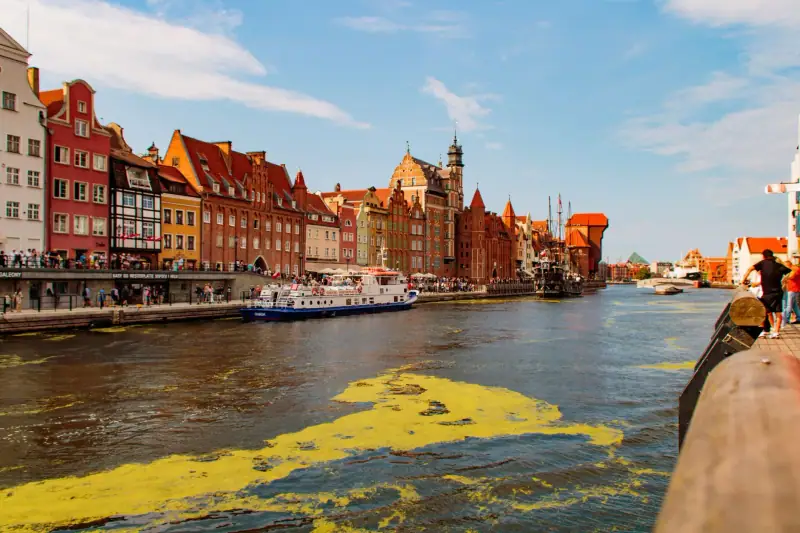
2 days
Gdańsk in 2 Days: An Itinerary Through the Old Town, the Shipyard and the Baltic
Gdańsk in 2 days: Royal Way, St. Mary's Basilica, Motława quays, European Solidarity Centre, Westerplatte and a getaway to Sopot.
3 days
What to Do in Kraków in 3 Days: A Complete Itinerary
Kraków in 3 days: old town, Wawel Hill, the Kazimierz district, the Wieliczka salt mine and a respectful visit to Auschwitz-Birkenau.
2 days
What to Do in Wrocław in 2 Days: A Complete Itinerary
Wrocław in 2 days: Market Square, Cathedral Island, bronze dwarfs, Centennial Hall and the Racławice Panorama. Walking itinerary, tips and budget.