What to see
Visiting Muscat: a complete guide to Oman's capital
We may earn a commission when you book through links on this page, at no extra cost to you. We don't visit or try the places we cover: we summarize published sources. How we work
In short
- Plan 2 to 3 days for the essentials: Sultan Qaboos Grand Mosque, Mutrah corniche and souk, and the old town with its forts.
- Non-Muslims can visit the Grand Mosque from 8 am to 11 am, Saturday to Thursday. Entry is free and modest dress is required.
- The city stretches over 80 km (50 mi) and public transport is limited, so a rental car is strongly recommended.
- The best season is October to April; June to August brings 38 to 46 °C (100 to 115 °F) with high humidity.
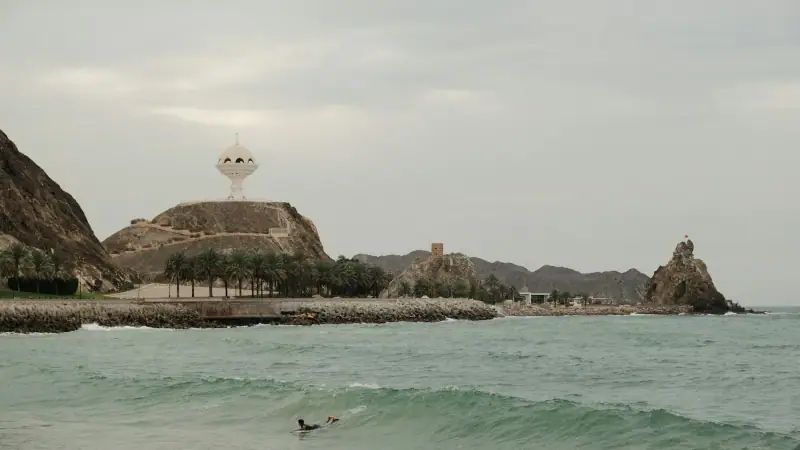
Muscat is one of the most surprising capitals in Arabia. Nothing here looks like Dubai or Abu Dhabi: no outsized skyscrapers, no pharaonic malls, no glass towers. Instead, a low, white city stretches for more than 80 kilometers (50 mi) along the Gulf of Oman, between the Hajar mountains and the sea. Portuguese fortresses watch over the coves, a majestic mosque welcomes non-Muslims every morning, and the fishermen of Mutrah still moor their boats at the corniche as they always have. Here is the complete guide to visiting Muscat.
The Sultan Qaboos Grand Mosque: the must-see
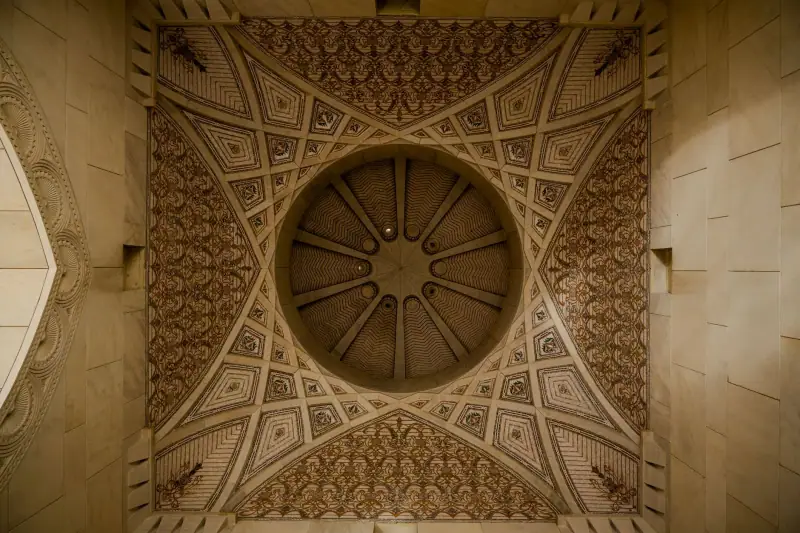
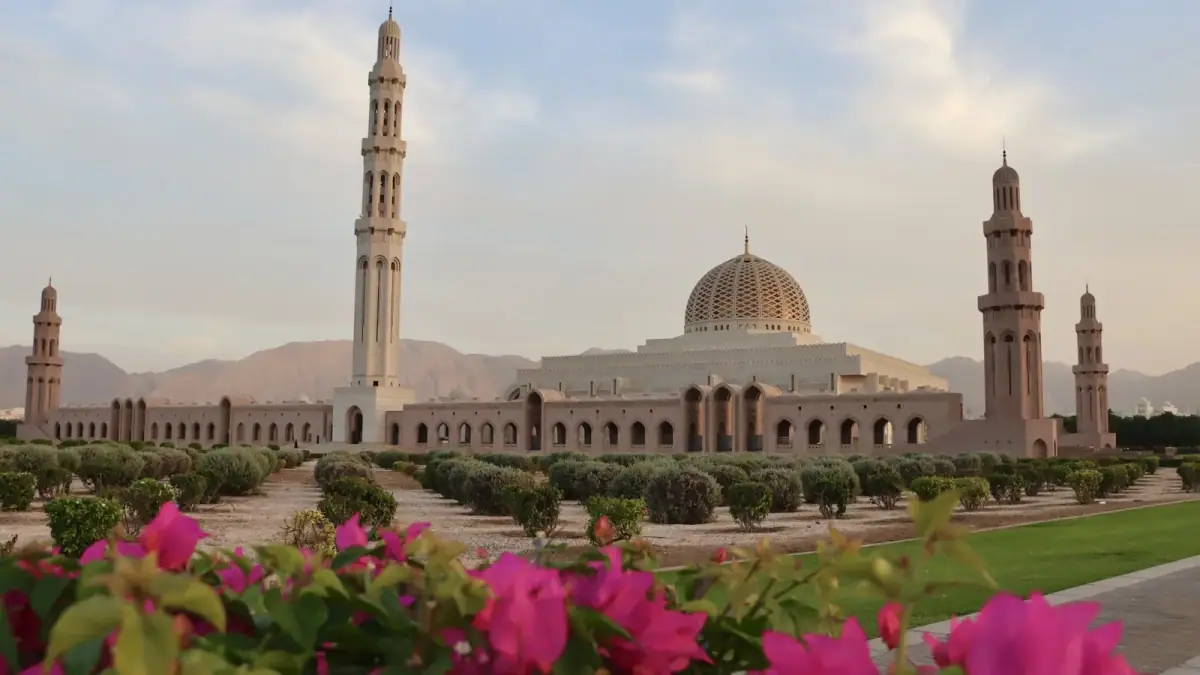
No visit to Muscat would be complete without the Sultan Qaboos Grand Mosque, one of the most beautiful and largest mosques in the world. Inaugurated in 2001 after six years of construction using 300,000 metric tons (about 330,000 US tons) of Indian sandstone, it can hold 20,000 worshippers at once in its prayer halls and outdoor courtyards.
What makes the mosque extraordinary:
- The main prayer carpet: hand-woven in Iran, it measures 70 m × 60 m (230 × 197 ft) and weighs 21 metric tons (about 23 US tons). For a long time, it was the largest one-piece carpet in the world
- The central chandelier: hung at 14 m (46 ft), it has 1,122 bulbs and 600,000 Swarovski crystals for a total weight of about 8 metric tons (about 9 US tons). Its total height is 14 m (46 ft)
- The gardens: the 4 hectares (10 acres) of gardens around the mosque are irrigated and in flower year-round, a horticultural challenge in this desert climate
- The calligraphy: the mosque’s 28 portals carry Quranic verses in calligraphy from different artistic schools
Visiting conditions:
- Hours for non-Muslims: 8 am to 11 am, Saturday to Thursday
- Closed: all day Friday, and on exceptional prayer days
- Entry: free
- Dress: abaya (provided at the entrance for women who do not have one), hair covered, long trousers and long sleeves for men. The guards are strict but courteous
Arrive early in the morning: before 9:30 am the light is ideal for photos and there are few visitors. Allow at least 1.5 to 2 hours on site.
Guided tours of Muscat
The Grand Mosque, Mutrah and the old town in a half day with a guide.
The Mutrah corniche and souk
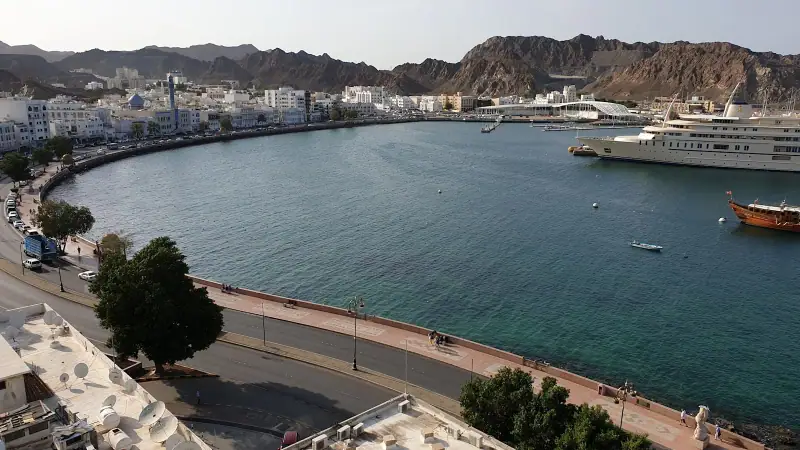
Mutrah is the historic and commercial heart of Muscat, distinct from the royal old town. Its corniche, lined with houses with carved wooden balconies and fish shops, runs along the natural harbor for about 3 kilometers (1.9 mi). It is one of the most pleasant waterfronts in Oman, especially in the evening when the sea breeze cools the air.
Mutrah souk
Tucked behind the corniche, Mutrah souk is the largest and oldest covered market in Muscat. Its labyrinthine lanes hold hundreds of specialized shops: incense and perfumes, khanjars (Omani daggers), silver and jewelry, shawls, spices, crafts and tourist trinkets.
How to find your way:
- Perfume and incense section: look for the shops lining up dozens of bottles of attar (alcohol-free oil perfume) and frankincense resins. The top-quality resin (hojari) comes from Dhofar
- Silver section: kummah (embroidered caps), bracelets and rings in chased silver worked in Nizwani and Bedouin traditions
- Khanjar section: the ceremonial Omani daggers, a national emblem, come in an authentic version (very expensive) and an affordable decorative version. Find out the rules for carrying them on a plane before you buy
The souk is open every day, but the atmosphere is best in the morning (8 am to noon) and in the evening (4 pm to 10 pm). Avoid the hottest hours of the afternoon.
Bargaining tip: prices are rarely fixed. A friendly discussion generally leads to a 15 to 30% discount.
The Mutrah corniche in the evening
Toward the end of the day, the Mutrah corniche comes alive. Omani families stroll, fishermen return to port, and the local cafés serve cardamom tea and flatbreads. It is the best time to see authentic local life, and to photograph Mutrah Fort overlooking the bay in golden light.
The old town (Old Muscat) and its forts
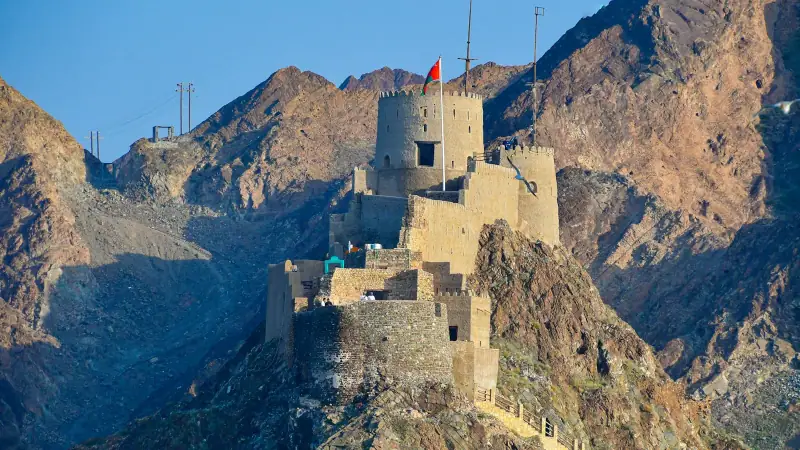
Three kilometers (1.9 mi) east of Mutrah, protected by its walls and forts, the royal old town of Muscat is one of the best-preserved districts on the Arabian Peninsula. The main entrance is through the Bab Al Kabir gate, a fortification in itself.
Al Alam Palace and the two forts
Al Alam Palace (the Flag Palace) is the official residence of the Sultan of Oman. Its blue and gold facade, recently renovated, faces an esplanade open to the public, but the inside stays closed. It is not so much the palace that deserves the visit as the architectural ensemble it forms with the two Portuguese forts on either side.
- Jalali Fort: built by the Portuguese in the 16th century, it long served as a state prison. It is not open to the public, but its silhouette towering over the cove from its rocky promontory is striking
- Mirani Fort: facing Jalali, it also dates from the Portuguese era (built in 1587-1588 by the Portuguese). It, too, is not accessible, but the view from the harbor promenade is spectacular, especially at sunset
Tip: the best angle to photograph the palace and forts together is from the promenade along the old town’s harbor, late in the afternoon.
Car rental in Muscat
Essential for linking the city's districts and heading out on excursions to the wadis.
The Royal Opera House Muscat
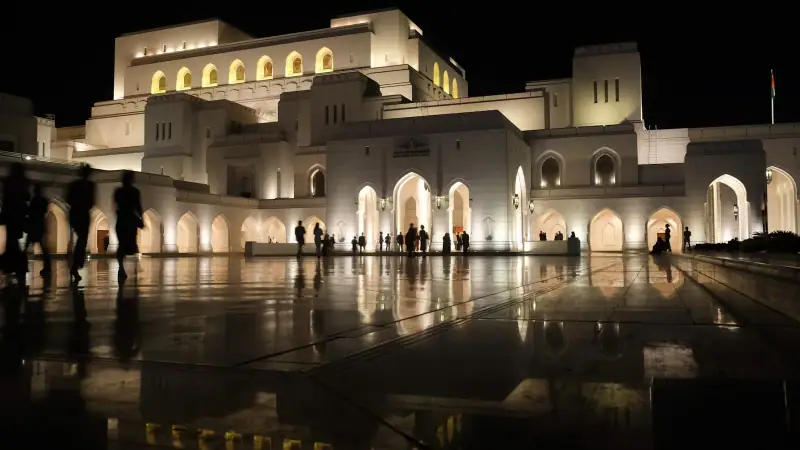
Inaugurated in 2011 by Sultan Qaboos, the Royal Opera House Muscat (ROHM) is one of the finest opera houses in the Arab world. Its white limestone facade in classic Islamic style houses a 1,100-seat hall, as well as a smaller theater and art galleries.
The programming is eclectic and of very high quality: international symphony orchestras, ballets, operas, renowned Arab artists and local productions. Tickets are available online and prices are reasonable for the level of programming.
Even if you do not attend a performance, a look at the architecture of the exterior and the lobby is worthwhile. The adjacent Arabic garden is an oasis of greenery in the middle of the city.
Practical information:
- Website: check the official calendar for performance dates
- Reservations: online booking recommended; the best seats go quickly for major productions
- Lobby tours: on some days without a show, guided tours of the interior are offered
Museums in Muscat
Muscat has several museums that help you understand Oman’s history and culture before you set out to explore the rest of the country.
Bait Al Zubair Museum
This private museum, set in a former Omani house in Old Muscat, is one of the best in the country. It presents an exceptional collection of khanjars, traditional weapons, jewelry, costumes and everyday objects spanning several centuries of Omani history.
- Hours: 9:30 am to 1 pm and 4 pm to 7 pm, closed Friday morning
- Price: about 2 OMR (check before your visit)
- Highlight: explanations are in Arabic and English, with a welcome level of detail
National Museum of Oman
Opened in 2016, the National Museum of Oman is the largest and most recent museum in the country. Its 14 permanent galleries cover geography, prehistory, the incense trade routes, navigation and Omani diplomacy from Antiquity to the 21st century. Highlights include Bronze Age artifacts found in the territory, traditional sailing vessels and a life-size reproduction of a traditional Omani house.
- Hours: 9 am to 5 pm (Sunday to Thursday), 9 am to 1 pm (Friday and Saturday)
- Price: 5 OMR for adults
Muscat’s beaches
The Omani capital is lined with beaches that tourists often overlook, yet they are accessible and pleasant outside the hottest months.
Qurum Beach (Al Qurum Beach)
The most accessible from the city center, Qurum is a long beach of fine sand with parking and a few facilities. It is popular with expats and Omani families on weekends. The sea can be rough in autumn, but from November to April conditions are good.
Qantab Beach
About 15 km (9 mi) east of the center, Qantab is a small fishing village with a beach sheltered in a cove. The water is calm and clear, ideal for swimming. Less known to tourists, it is much appreciated by residents.
Bandar Al Khayran Beach
About forty minutes by road southeast of Muscat, this area of sheltered coves is perfect for snorkeling and kayaking. Boat trips let you see sea turtles in their feeding areas.
Tip: Oman’s beaches are public and swimming is free. Wear covered clothing when leaving the water if Omani families are nearby.
Excursions from Muscat
Muscat is the ideal starting point for several day trips or weekend excursions to some of Oman’s most spectacular landscapes.
Wadi Shab and Wadi Tiwi (1.5 to 2.5 hours by road depending on the destination)
The wadis of the Sharqiyah coast are among the most beautiful in Oman. Wadi Shab in particular, reached after a boat crossing and then a 40-minute hike, reveals turquoise natural pools set between pink cliffs. The hidden waterfall at the end of the gorge is one of the most photogenic spots in the country. See our guides to hiking in Oman and to Oman’s wadis for all the details.
Nizwa and Jebel Akhdar (2 hours by road)
The historic capital of the Omani interior is easy to visit as a day trip from Muscat, or with a night there to catch the Friday livestock market. See our complete guide to Nizwa.
Sur and the east coast (3 hours by road)
The coastal city of Sur is the traditional center of Omani dhow building. Its shipyard is still active. Nearby, the Ras al Jinz lagoon is one of the largest green turtle (Chelonia mydas) nesting sites in the world, where you can watch turtles come ashore to lay eggs at night. See our guide to Sur.
Where to eat in Muscat
Muscat’s food scene is one of the richest on the Arabian Peninsula, driven by the city’s diversity (Omani, Indian, Pakistani, Lebanese, Asian) and by very high-level hotel dining. See our detailed guide to restaurants in Muscat for full listings.
Omani culinary essentials to taste in Muscat:
- Shuwa: lamb or camel marinated in spices and cooked in an underground oven for 24 to 48 hours. A ceremonial dish, easier to find on Fridays in local restaurants
- Mashuai: kingfish (kanad) grilled whole on a spit, served with lemon rice (Omani lime), a coastal specialty of Muscat
- Harees: a porridge of wheat and meat, filling and comforting, served at breakfast in local restaurants
- Dates and cardamom coffee: the Omani welcome ritual. Nizwa dates (Fard, Khlas, Khanezi) are available in every souk
Neighborhoods and types of restaurants:
- Mutrah: local restaurants and small stalls for cheap local food
- Al Qurum and Shatti Al Qurum: the expat district with varied international restaurants
- Luxury hotels: the best tables are often in the big hotels, notably on the corniche
Hotels in Muscat
From charming stays in Mutrah to luxury resorts on the corniche, all the options.
Getting around Muscat
By car
Muscat is a city designed for cars. The roads are excellent, signage is clear (in Arabic and English) and traffic flows well outside rush hours (7 am to 9 am and 5 pm to 8 pm). Renting a car is the most practical and most economical way to explore the city and its surroundings. Expect 15 to 30 OMR a day for a small car.
By taxi and ride-hailing
Regular taxis are available but negotiate the price before getting in. The Marhaba and inDriver apps let you order a ride at a fixed price. Uber and Careem are also available in Muscat.
By bus
The company Mwasalat runs an urban bus network, but frequency and coverage remain insufficient for tourists. A few lines serve the main districts, but a car remains essential for distant sites.
Getting to Muscat
Muscat International Airport (MCT) is Oman’s main air hub.
From the airport to the center:
- Taxi: about 10 to 15 OMR to Mutrah or the old town (30 to 45 minutes depending on traffic)
- Mwasalat bus: bus 18 links the airport and the center (less than 1 OMR, but slower)
- Car rental: the main agencies have desks at the airport
When to visit Muscat
| Period | Temperatures | Advice |
|---|---|---|
| October-November | 25-35 °C (77-95 °F) | Ideal, sea still warm |
| December-February | 18-28 °C (64-82 °F) | Best period, slightly cool in the evening |
| March-April | 25-38 °C (77-100 °F) | Pleasant, sites less crowded |
| May-September | 38-46 °C (100-115 °F) | Not recommended, extreme heat and humidity |
The golden rule: avoid June, July and August. Muscat’s heat is made even more painful by coastal humidity. November to March is the ideal time to explore without suffering.
Practical tips for visiting Muscat
Dress and dress code: Omanis are hospitable but attached to their culture. Cover shoulders and knees in public spaces, and especially in mosques, souks and religious sites. Beachwear stays on the beach. Women can go without a headscarf except in mosques.
Currency: The Omani rial (OMR) is one of the strongest currencies in the world (1 OMR is about €2.40 / $2.80). ATMs are available everywhere. Major bank cards (Visa, Mastercard) are accepted in hotels, rated restaurants and large shops. Carry cash for markets and small shops.
Internet connection: Oman Telecom (Omantel) and Ooredoo are the two main operators. A local SIM with data can be bought at the airport or at the many points of sale in town, about 5 OMR for 10 GB, ideal for GPS navigation and searches on the road. You can also check your carrier’s international plan or use a travel eSIM.
Safety: Muscat is one of the safest capitals on the planet. Incidents involving tourists are extremely rare. Respect local customs (no alcohol in public, proper dress) and all will be well.
Photography: Avoid photographing women and military installations. The Grand Mosque is photogenic from every angle. The forts, the corniche and the markets are fair game. Always ask before photographing people in the markets; a smile and a “mumkin sura?” (“may I take a photo?”) are usually enough.
Muscat is a capital best discovered at your own pace, between Omani tradition and openness to the world. To prepare your full itinerary, see our complete guide to Oman and our suggested 7 days in Oman. And if you are still undecided, read our comparison Muscat vs Salalah to decide where to stay first.
Frequently asked questions
How many days do you need to visit Muscat?
Plan 2 to 3 days to cover the essentials: Grand Mosque, Mutrah corniche, souk, and the old town with its forts. Four to five days let you add the Royal Opera House, the museums and excursions to the surrounding wadis.
Do you need a car to visit Muscat?
The city is very spread out (more than 80 km / 50 mi from east to west) and public transport is limited. A rental car is strongly recommended. Taxis are available but costly over time. Apps such as Marhaba or inDriver are useful.
How do you visit the Grand Mosque in Muscat?
The Sultan Qaboos Grand Mosque is open to non-Muslims from 8 am to 11 am, Saturday to Thursday (closed Friday). Entry is free. Modest dress is required: women in an abaya or clothing covering hair, arms and legs; men in long trousers and a long-sleeved shirt.
Is Muscat an expensive city?
Muscat is more expensive than other Omani cities but remains affordable compared with Gulf destinations such as Dubai. A daily budget of €50 to €80 per person (about $58 to $93) for mid-range lodging, local meals and entry fees is reasonable. Expect €100 to €150 (about $115 to $175) if you choose more elaborate restaurants.
What is the best time to visit Muscat?
October to April, with temperatures between 20 and 32 °C (68 and 90 °F). December to February are the most pleasant months. Summer (June to September) is extreme: 40 to 46 °C (104 to 115 °F) with high coastal humidity. The Khareef (monsoon) mainly affects Salalah, not Muscat.
Is Muscat safe for solo travelers?
Yes, Muscat is one of the safest capitals in the region. Crime is very low and locals are known for their hospitality. Women traveling alone generally have no problem as long as they dress in line with local codes.
Can you drink alcohol in Muscat?
Alcohol is allowed in star-rated hotels, some hotel restaurants and a few clubs. It is forbidden in public places, ordinary restaurants and, of course, near mosques. Sober behavior is expected in public at all times.
More Oman guides
Keep reading
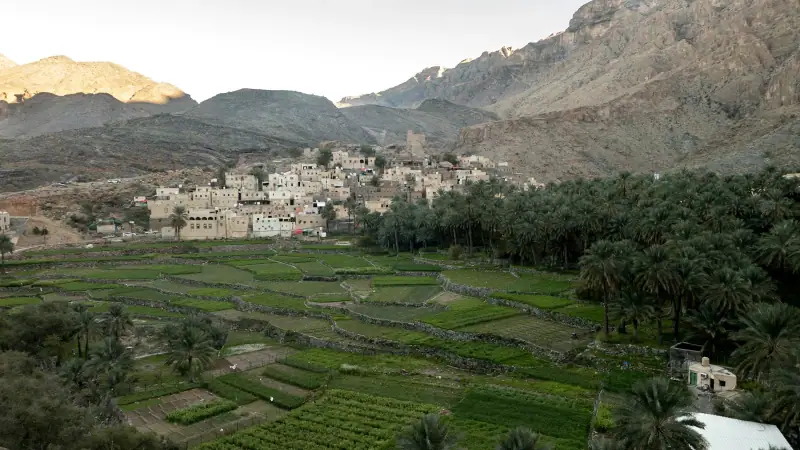
Visiting Jebel Akhdar: a complete guide to Oman's Green Mountain
Jebel Akhdar: Damask roses, hiking, perched villages and luxury resorts. A complete guide to visiting Oman's Green Mountain.
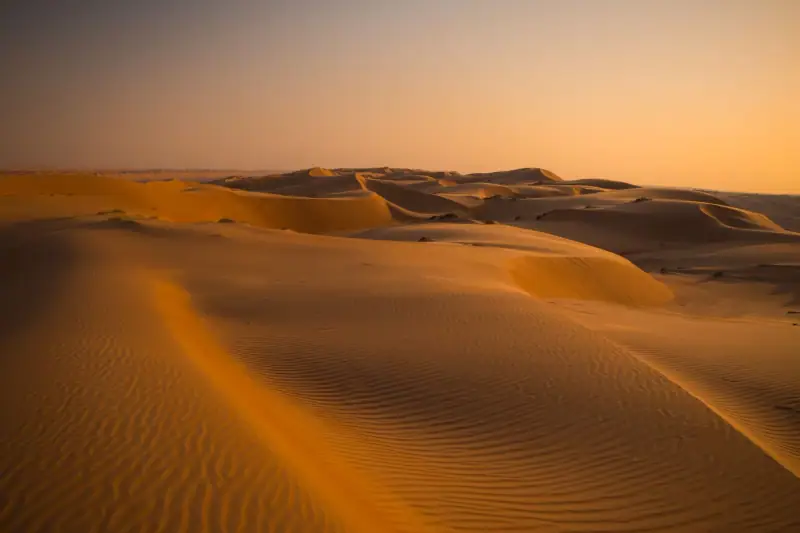
Visiting the Sharqiyah: Wahiba Sands, wadis and Oman's east coast
Complete guide to the Sharqiyah region: Wahiba Sands, Wadi Bani Khalid, Sur, Ras al Jinz and Wadi Shab. 4-day itinerary, lodging, practical tips.
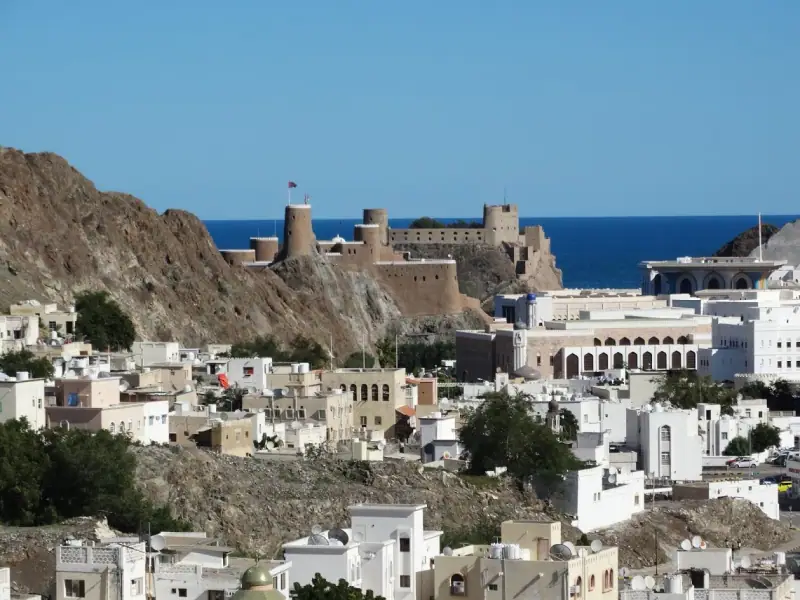
Muscat's top sights: the must-sees of Oman's capital
What to see in Muscat? Grand Mosque, Mutrah souk, Al Alam Palace and the corniche: the essential visits in the Omani capital.
Ready-made
Oman itineraries
10 days
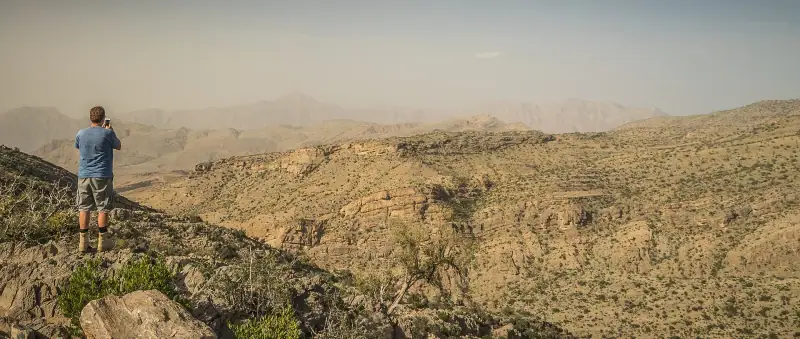
Oman road trip: a 10-day itinerary to explore the sultanate
MuscatNizwaJebel AkhdarWahiba desertSurSalalah
3 days
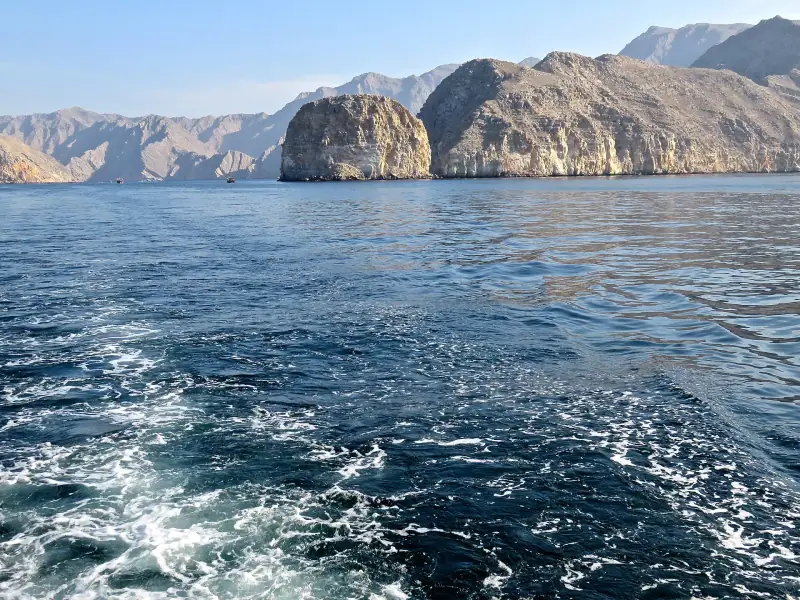
Musandam in 3 days: an itinerary through Oman's fjords
3-day Musandam itinerary: fjords, dolphins, dhow cruise and Khasab. All you need to plan a stay on Oman's enclave peninsula.
7 days