Itineraries
Musandam in 3 days: an itinerary through Oman's fjords
We may earn a commission when you book through links on this page, at no extra cost to you. We don't visit or try the places we cover: we summarize published sources. How we work
Day by day
- Day 1Arrive in Khasab: fort, old town, souk and corniche
- Day 2Dhow cruise in the Khor ash Sham, snorkeling, dolphins
- Day 3Jebel Harim, mountain villages, Bukha, departure
Where to sleep
- Khasab2 nights
Weather through the year on this route
| Jan | Feb | Mar | Apr | May | Jun | Jul | Aug | Sep | Oct | Nov | Dec | |
|---|---|---|---|---|---|---|---|---|---|---|---|---|
| High °F (°C) | 7625 | 8127 | 8630 | 9435 | 10139 | 10541 | 10340 | 10139 | 9937 | 9334 | 8530 | 8027 |
| Low °F (°C) | 5915 | 6116 | 6519 | 7323 | 8127 | 8429 | 8530 | 8329 | 8027 | 7524 | 6820 | 6217 |
Normals 1991–2020 at Muscat and Nizwa: averages over 30 years, not a forecast. Source: NASA POWER (MERRA-2), grid of about 50 km. Figures computed by us in November 2026. Rain is shown only where a weather station confirms the figures.
In short
- Three days cover Khasab (fort, old town), a dhow cruise in the Khor ash Sham, and Jebel Harim with its mountain villages.
- Getting there: flight from Muscat (about 1 hour) or ferry from Shinas (5 h 30 to 7 h; irregular, confirm with the operator).
- The best season is November to March, with 20 to 28 °C (68 to 82 °F) and calm seas for snorkeling.
- Book the dhow cruise at least a week ahead; plan 2 to 3 nights on site rather than a day trip from Dubai.
Musandam, often nicknamed the “Norway of Arabia”, is one of Oman’s great surprises. This enclave peninsula at the tip of the Arabian Peninsula, separated from the rest of the sultanate by United Arab Emirates territory, reveals spectacular fjords, turquoise waters home to dolphins, and a calm that even seasoned travelers did not expect to find in the middle of the Gulf of Oman. In three days you can see the essentials and come back with images you will find nowhere else in Arabia.
3-day itinerary overview
| Day | Main program | Night |
|---|---|---|
| D1 | Arrival in Khasab, fort, old town | Khasab |
| D2 | Dhow cruise in the Khor ash Sham | Khasab |
| D3 | Jebel Harim, perched villages, departure | Khasab or return flight |
Getting there: flight from Muscat (about 1 hour) or ferry from Shinas (northern Oman, 5 h 30 to 7 h of crossing). The land route through the UAE is possible, but rental cars are no longer admitted into Musandam.
Muscat - Khasab flights
Compare Oman Air and SalamAir fares for your Musandam stay.
Day 1: arrival in Khasab, port of the fjords
Arriving by plane
Khasab Airport (KHS) is tiny: a runway set between the mountains and the sea. The trip from Muscat takes less than an hour. At the exit, taxis or rental cars wait to take you to the town center, barely 5 km (3 mi) away.
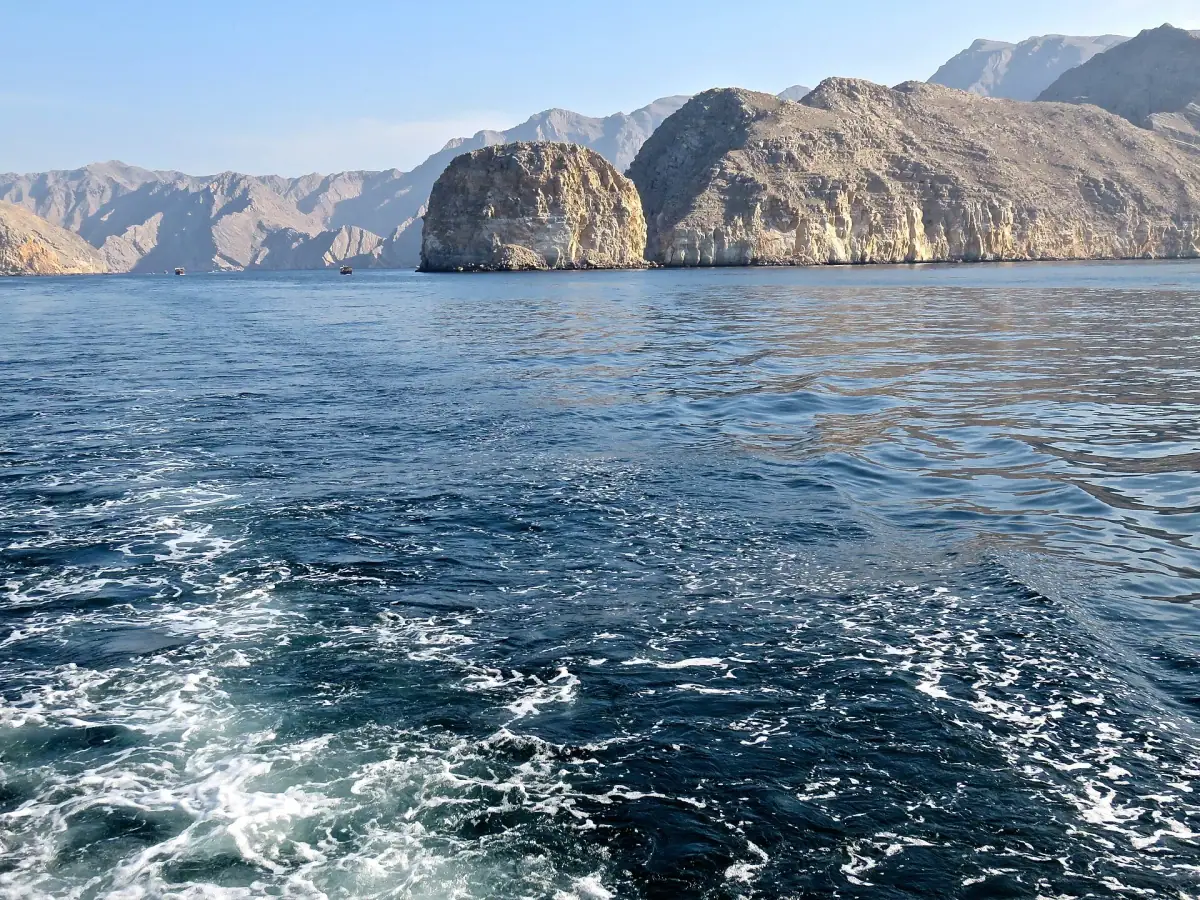
If you arrive by ferry from Shinas, the crossing already gives you a foretaste of the scenery: the mountains plunge straight into the sea, jagged and ocher, while the boat cuts through deep blue water.
Khasab: the small capital
Khasab is a modest town of about 20,000 people, organized around its port and its fort. There is no big shopping avenue or nightlife: life is concentrated along the marina and in the streets around the souk.
Khasab Fort is your first stop. Built by the Portuguese in the 17th century and later reinforced by the Omanis, it overlooks the port from a rocky promontory. Entry is inexpensive (under 2 OMR) and the visit lasts about an hour. The interior collections present the region’s maritime history and local fishing traditions. From the ramparts, the view over the fjords and the boats moored in the port sets the tone for what you will discover in the following days.
Where to stay in Khasab
Hotels and guesthouses with views of the Musandam fjords.
Khasab souk and the corniche
Late in the afternoon, explore the souk on foot. You will find spices, dates, dried fish and local crafts. The atmosphere is relaxed, far from the bustle of Mutrah or Nizwa. The people of Musandam belong to the Shihuh tribe, distinct from other Omani tribes, and speak a particular Arabic dialect mixed with Persian borrowings.
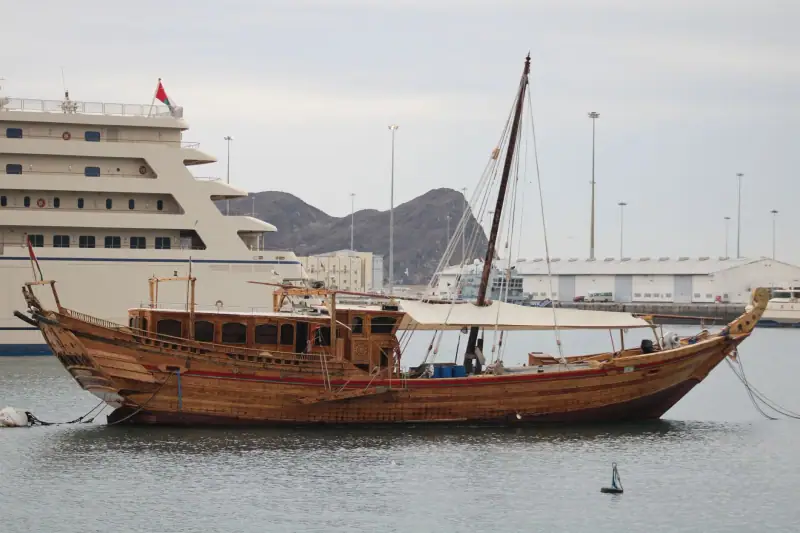
The port’s corniche, where traditional wooden dhows are moored, is worth a walk at sunset. Fishing boats return at the end of the day, and the atmosphere is caught in a golden light that bounces off the mountains.
Day 2: dhow cruise in the Khor ash Sham fjords
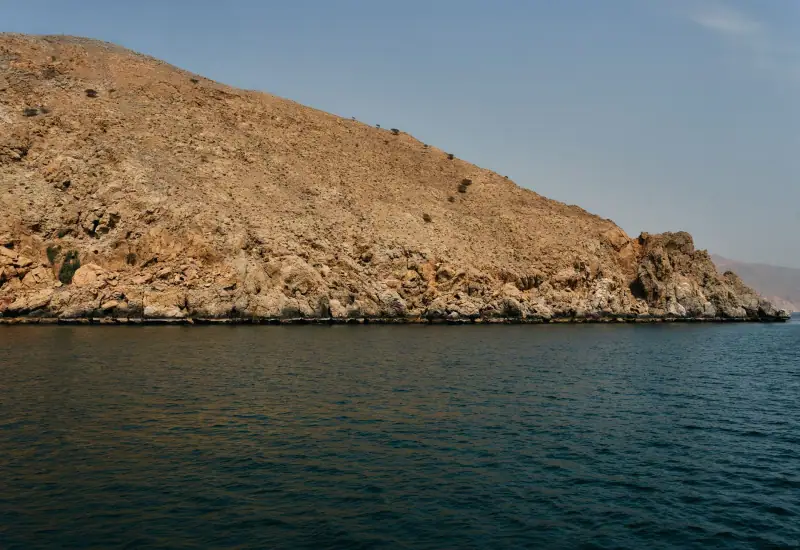
The cruise, the heart of the Musandam experience
The day on a dhow in the Khor ash Sham (Musandam’s largest khor, about 16 km / 10 mi long) is the highlight of any stay in the region. Local operators offer day cruises, generally from 9 am to 4 pm, with lunch on board, snorkeling and dolphin watching included.
What you will see:
- The fjord cliffs: limestone and dolomite walls plunging straight into the sea from heights of 400 to 800 m (1,310 to 2,625 ft). The silence is striking, broken only by the engine and the lapping water.
- Coastal villages: several fishing communities are accessible only by sea. Some cruises stop briefly to see dwellings clinging to the cliffs, linked to the world by a simple mule path or a boat.
- Telegraph Island (Jazirat al Maqlab): this small rocky islet was used in the 19th century as a relay for the submarine telegraph cable linking Karachi to Fao (Al Faw, mouth of the Shatt al-Arab). Abandoned today, it offers excellent snorkeling spots in clear waters teeming with tropical fish.
Musandam’s dolphins
The Musandam fjords are home to large populations of long-beaked and common dolphins. Watching them from the deck of a dhow, sometimes in schools of hundreds playing in the boat’s wake, is an experience hard to describe. The encounter is never guaranteed, but it happens on the great majority of cruises.
Cruises and activities in Musandam
Dhow cruise, snorkeling and dolphin watching in the Khasab fjords.
Snorkeling in the fjords
Musandam’s water is exceptionally clear and rich in marine life. Snorkeling sites around Telegraph Island and in the khor’s side coves offer visibility often above 15 m (49 ft). You come across schools of groupers, parrotfish, rays and sea turtles. Equipment is generally provided on board the dhows.
Evening in Khasab
Returning to port in the late afternoon marks the end of an intense day. Enjoy the evening with dinner at a local restaurant in the town center (classic Omani cooking based on rice, fish and spices) and prepare for the next day’s land excursion.
Day 3: Jebel Harim and the mountain villages
Jebel Harim, roof of Musandam
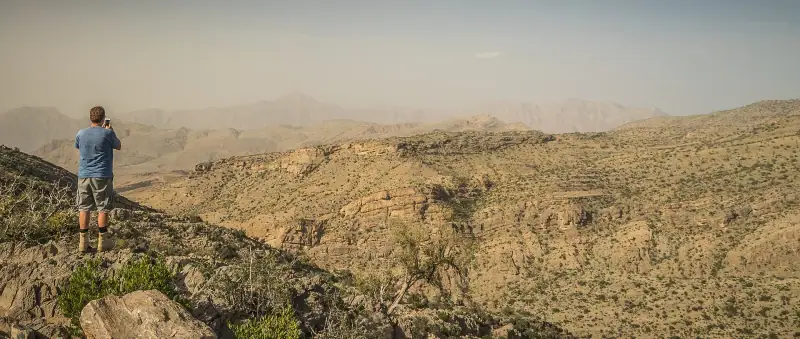
Jebel Harim (“the mountain of women”) rises to 2,087 m (6,847 ft), making it the highest point in Musandam. The road up, paved but narrow and winding, crosses landscapes of bare rock and dizzying sinkholes. A 4x4 is recommended, although some ordinary cars in good condition manage to reach the summit in dry conditions.
What you see on the way up:
- Marine fossils embedded in the limestone, at altitudes above 1,500 m (4,921 ft), proof that these mountains rose from the floor of the ancient Tethys Sea.
- Prehistoric rock engravings depicting animals and warriors, dating back several millennia and protected by the Omani government. They are found on rock outcrops along the road.
- Nearly inaccessible perched villages, inhabited by the Shihuh tribe, sometimes linked to the rest of the world by mule paths.
The summit plateau
At the top of Jebel Harim (reachable by car up to a relay antenna), the view extends in every direction: the Strait of Hormuz to the north, the Gulf of Oman to the east, the United Arab Emirates to the west and the Khor ash Sham fjords to the south. On a clear day, the Iranian coast is visible at about 40 to 50 km (25 to 31 mi) (the actual width of the Strait of Hormuz).
The descent lets you stop in mountain villages to see local architecture: flat-roofed dry-stone houses, often decorated with colorful pottery on the facades. Residents are welcoming but discreet; respect their privacy by not entering homes without an invitation.
Bukha and the return
On the way down toward the coast, a detour through Bukha (about 30 km / 19 mi south of Khasab on the west coast) is worth a look. This small town has a well-preserved 16th-century Portuguese fort, more modest than the one in Khasab but pleasantly authentic in a still-active fishing village.
If your return flight is in the evening or the next morning, the afternoon can be spent on a last stroll in Khasab or a snorkeling session from the public beach facing the port.
Practical info for your Musandam stay
Getting to Musandam: the 3 options
Option 1: flight from Muscat (recommended) Oman Air and SalamAir operate daily Muscat-Khasab flights. Flight time is about 50 minutes. Fares range from €40 to €100 (about $45 to $115) depending on the season and how early you book. It is the simplest solution for travelers doing a classic Oman circuit.
Option 2: ferry from Shinas The port of Shinas, in northern Oman (about 3 hours from Muscat by road), is the departure point of the ferry to Khasab. The crossing takes 5 h 30 to 7 h depending on conditions and the boat, with beautiful views of the coast. This service, run by National Ferries Company, is irregular (a few departures a week, sometimes suspended): confirm that it exists and check the timetable with the operator before building your itinerary around it.
Option 3: road via the UAE If you are traveling from Dubai or Abu Dhabi, the land route passes through UAE territory. The distance from Dubai is about 200 km (124 mi) (2 h 30 to 3 h depending on traffic). Check entry rules for both countries with your government’s official travel advice before you go, and note that rental cars are no longer admitted into Musandam (vehicle insurance is required). This option is popular for day trips from Dubai.
Lodging in Musandam
Hotel supply in Khasab is limited compared with Oman’s big cities. You mainly find mid-range hotels, a few family guesthouses and one luxury resort overlooking the sea. Book ahead in high season (November to March), because capacity is small.
For all the options, see the dedicated guide: Where to stay in Khasab.
Budget for 3 days in Musandam
| Item | Average budget |
|---|---|
| Muscat-Khasab return flight | €80-160 (~$93-185) |
| Lodging (3 nights) | €150-300 (~$175-350) |
| Dhow cruise (D2) | €40-70/person (~$46-81) |
| Car rental (D3) | €50-80 (~$58-93) |
| Meals | €15-30/day (~$17-35) |
| Estimated total | €400-700/person (~$465-810) |
When to go
The best period is November to March: temperatures between 20 and 28 °C (68 and 82 °F), calm sea, excellent visibility for snorkeling. In summer (June to September), heat is intense and southwest monsoon winds can stir up the Musandam sea.
Avoid Islamic public holidays (Eid al-Fitr, Eid al-Adha) if you want less crowded cruises.
Tips for a successful Musandam stay
1. Book the cruise in advance. Dhows fill up fast in high season. Book at least a week ahead from Oman or several weeks ahead if you are coming from Dubai.
2. Bring cash. ATMs are rare in Khasab and not all local operators accept cards. Bring enough Omani rials for the cruise, restaurants and small expenses.
3. Sunscreen and hydration. Light reflecting off the fjord water is intense. SPF 50+ sunscreen and a hat are essential on the dhow.
4. Aim for early morning for Jebel Harim. Leave before 8 am to enjoy the cool and avoid the trucks that use the road in the morning. Morning fog generally clears before 9 am.
5. Do not plan Musandam as a stopover from Dubai. If you have less than 12 hours, opt for an organized excursion. To truly experience the fjords, sleep on site at least two nights.
Going further
If Musandam has made you want to explore all of Oman, see these other guides:
- Oman road trip in 10 days: the full circuit of the country
- Oman in 7 days: day-by-day itinerary: for a concentrated first trip
- Visiting Khasab: everything you need to know: detailed guide to the town
Frequently asked questions
How do you get to Musandam from Muscat?
Two options: the direct Muscat-Khasab flight (about 1 hour, Oman Air or SalamAir), or the Shinas-Khasab ferry (leaving from northern Oman, 5 h 30 to 7 h of crossing depending on conditions; irregular service, confirm with the operator). The land route goes through the UAE, but rental cars are no longer admitted into Musandam.
Do you need a separate visa to visit Musandam?
Musandam is part of Oman. Entry rules depend on your passport. Check the official travel advice of your government before you book: travel.state.gov (US), GOV.UK (UK), travel.gc.ca (Canada), Smartraveller (Australia) (checked November 2026). If you enter by road from Dubai, you cross the UAE, so check the rules for both countries.
What is the best season to visit Musandam?
Winter (November to March) is ideal: pleasant temperatures between 20 and 30 °C (68 and 86 °F), and calm seas suited to diving and cruises. In summer, heat exceeds 40 °C (104 °F) and khareef winds make navigation trickier.
Can you do Musandam as a day trip from Dubai?
Yes, many agencies in Dubai offer day excursions to Khasab with a dhow cruise. But to fully enjoy the fjords, coastal villages and snorkeling, a stay of 2 to 3 nights is far preferable.
Is Musandam accessible outside the main Oman route?
Absolutely. Most travelers combine Musandam with a round-trip flight from Muscat (2 hours round trip by air), added to their main circuit. It can be slotted in at the start or end of a trip to Oman.
What is Telegraph Island in Musandam?
Jazirat al Maqlab, nicknamed Telegraph Island, is a rocky islet in the Khor ash Sham where the British set up a submarine telegraph cable relay in the 19th century. It is abandoned today and a classic stop on dhow cruises, with excellent snorkeling spots around it.
More Oman guides
Keep reading
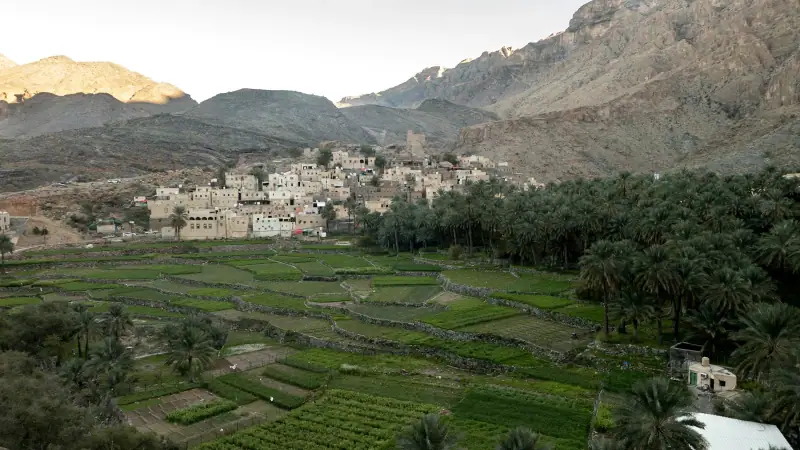
Visiting Jebel Akhdar: a complete guide to Oman's Green Mountain
Jebel Akhdar: Damask roses, hiking, perched villages and luxury resorts. A complete guide to visiting Oman's Green Mountain.
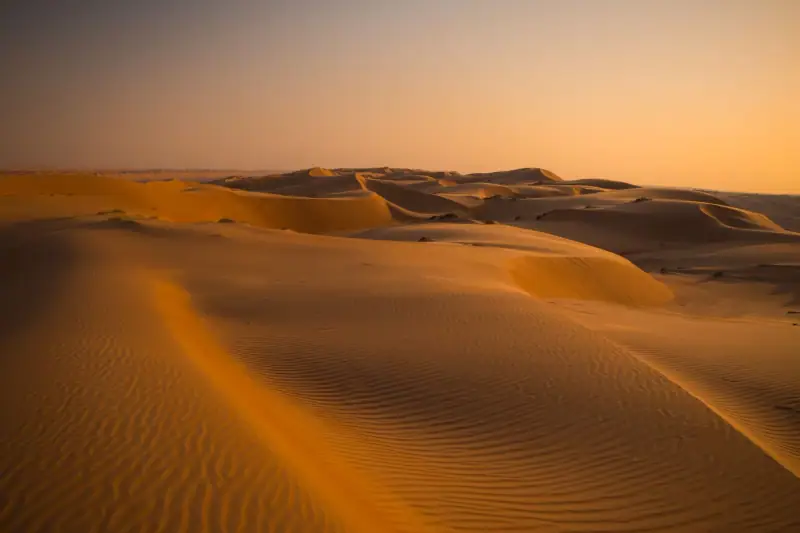
Visiting the Sharqiyah: Wahiba Sands, wadis and Oman's east coast
Complete guide to the Sharqiyah region: Wahiba Sands, Wadi Bani Khalid, Sur, Ras al Jinz and Wadi Shab. 4-day itinerary, lodging, practical tips.
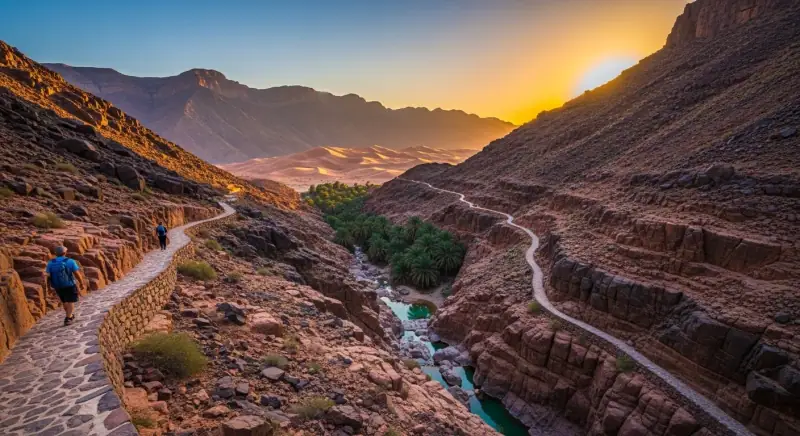
The best hikes in Oman: wadis, mountains and desert
Guide to the best hikes in Oman: Jebel Akhdar, Wadi Nakhr, Jebel Shams and coastal trails. Levels, distances and practical tips.
Ready-made
Oman itineraries
10 days
Oman road trip: a 10-day itinerary to explore the sultanate
MuscatNizwaJebel AkhdarWahiba desertSurSalalah
7 days