What to see
Visiting Jebel Akhdar: a complete guide to Oman's Green Mountain
We may earn a commission when you book through links on this page, at no extra cost to you. We don't visit or try the places we cover: we summarize published sources. How we work
In short
- Jebel Akhdar is a plateau at 1,900 to 2,100 m (6,230 to 6,890 ft), about 185 km (115 mi) from Muscat and 30 km (19 mi) from Nizwa.
- A 4x4 is mandatory: a military checkpoint turns back two-wheel-drive vehicles, and the access road is steeper than 20% in places.
- The Damask rose bloom runs from mid-March to mid-May; plan at least 2 days and 1 night on the plateau.
- Lodges cost about 50 to 120 OMR a night; the Anantara resort is generally 150 to 250 OMR.
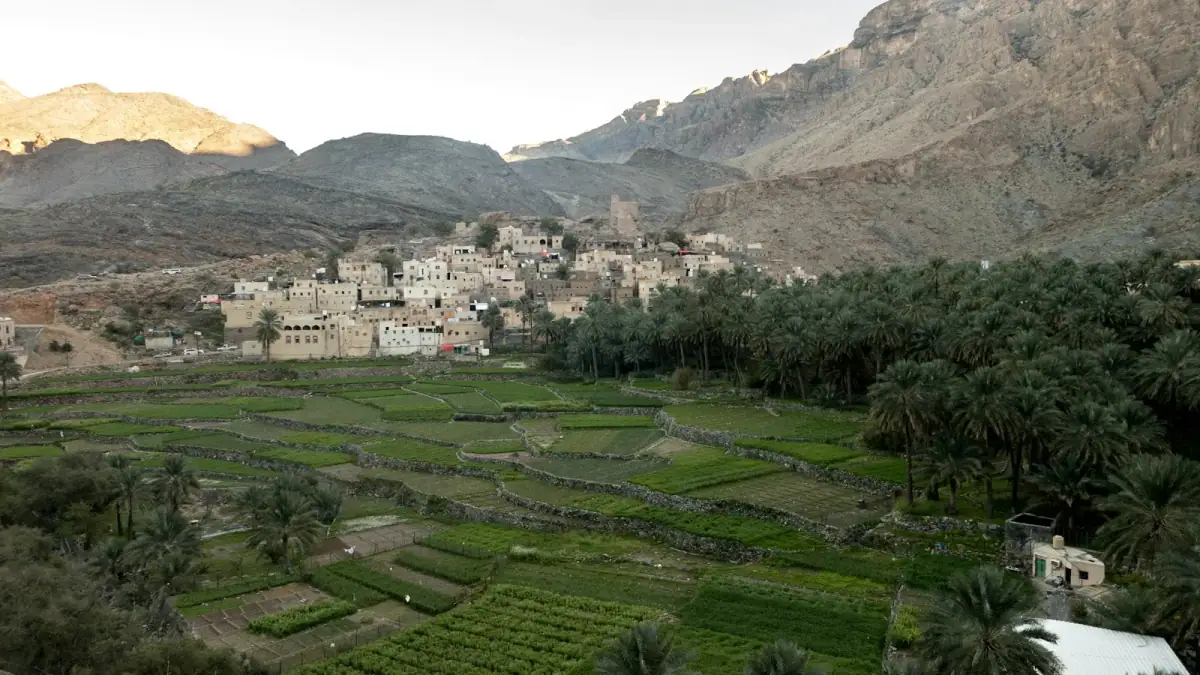
Jebel Akhdar, the “Green Mountain” in Arabic, is one of the most striking surprises Oman has in store. Picture a rocky plateau hanging at 2,000 m (6,560 ft) above the scorching plains of the Omani interior, crossed by terraced villages, rose gardens and dizzying gorges. Out of reach for ordinary cars, this mountain sanctuary in the Hajar range offers a complete change of scene only three hours by road from Muscat. Here is the complete guide to visiting Jebel Akhdar.
What is Jebel Akhdar?
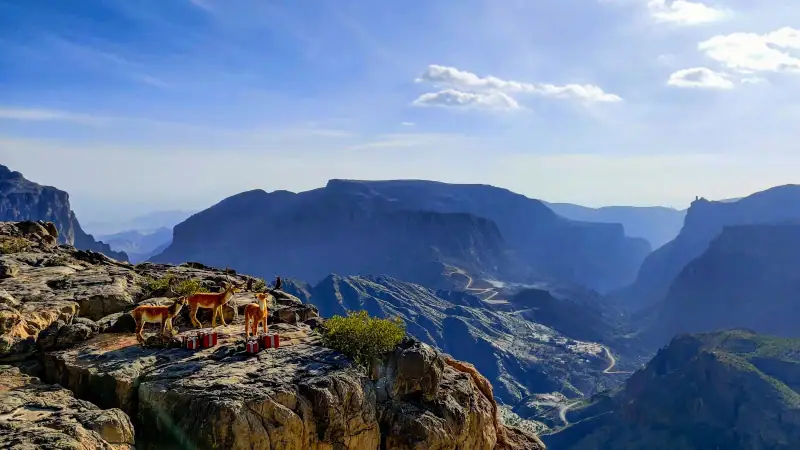
Jebel Akhdar is part of the western Hajar range, the mountain chain that crosses northern Oman from Musandam to the interior region. Its name, “green mountain”, may be surprising at first: the plateau is largely rocky and arid. But up close, the nickname makes sense: terraces irrigated by thousand-year-old canal systems (the aflaj) allow roses, pomegranates, apricots, figs and walnuts to grow, crops that are extremely rare on the Arabian Peninsula.
Jebel Akhdar in numbers:
- Plateau altitude: 1,900 to 2,100 m (6,230 to 6,890 ft)
- Distance from Muscat: about 185 km (115 mi), 2.5 to 3 hours by road
- Distance from Nizwa: 30 km (19 mi), 40 minutes
- Access road: from Birkat Al Mawz, 32 km (20 mi) of very steep climbing, 4x4 mandatory
- Plateau area: about 500 km² (193 sq mi)
Administratively, Jebel Akhdar belongs to the Ad Dakhiliyah governorate. It is officially classified as a protected area by the Omani government, which limits development to preserve the environment and traditional crops.
Guided tours to Jebel Akhdar
Discover the plateau on an organized tour from Muscat or Nizwa, with a guide.
Damask roses: the treasure of Jebel Akhdar
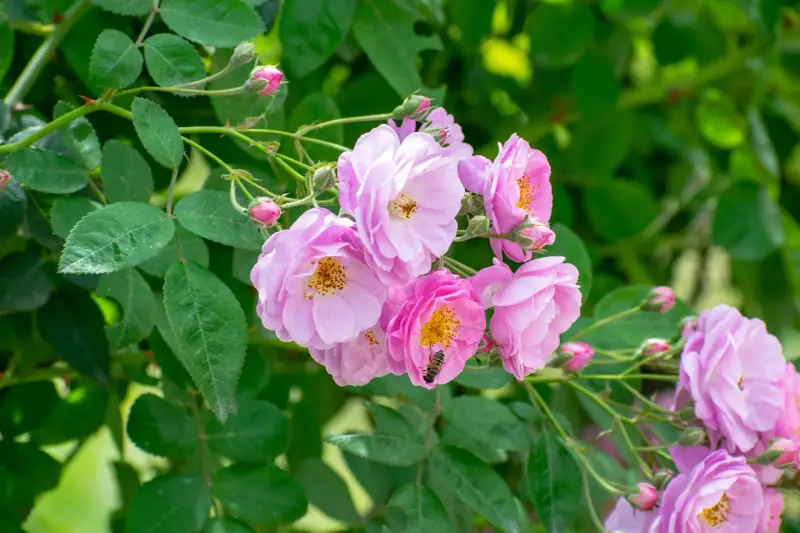
Growing the Damask rose (Rosa damascena) is the deep identity of Jebel Akhdar. Cultivated on the plateau for more than 1,200 years, a tradition documented as one of the oldest on the Arabian Peninsula, this fragrant variety has found ideal conditions in the plateau’s unique microclimate (cool nights, altitude, fertile soils irrigated by the aflaj) that cannot be reproduced on the plains.
Bloom season: mid-March to mid-May
During this period the plateau’s terraces are covered in pink and white flowers. The harvest takes place at dawn, before the heat evaporates the essential oils. Village women and children pick the petals by hand from 5 am into large cloth sacks. The harvest peaks in April and May, the crucial months for the year’s rosewater production.
Omani rosewater
After the harvest, the petals are distilled immediately in traditional wood-fired copper stills. The finished product, rosewater, is used in cooking (in halwa and drinks), in cosmetics (skin care) and in social ritual (guests are sprinkled at the entrance of homes). Jebel Akhdar rosewater is renowned throughout the Gulf for its superior quality.
Where to buy:
- At the small stalls in the villages of Al Ayn and Ash Shirayjah
- At the craft distilleries visible from the road
- In the shops of the Anantara hotel and the plateau’s lodges
- Expect to pay 3 to 8 OMR for a 250 ml (8.5 fl oz) bottle of pure rosewater
Even outside rose season you will find rosewater for sale. But watching the harvest at dawn remains the most memorable experience Jebel Akhdar can offer.
Wadi Bani Habib: the main hike on Jebel Akhdar
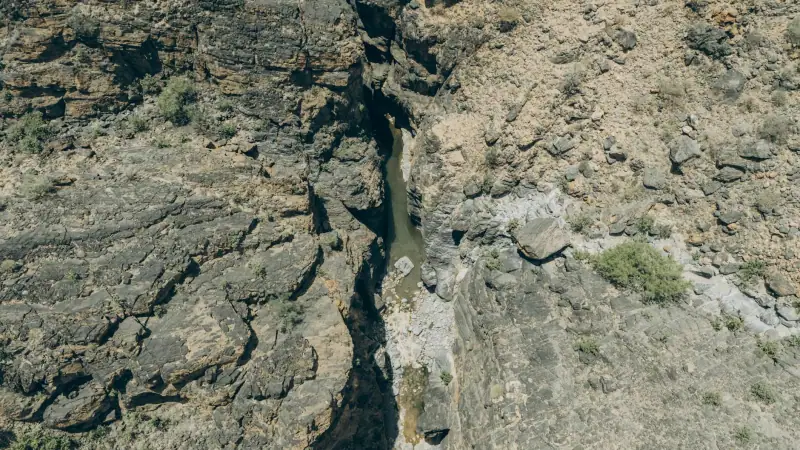
Jebel Akhdar has several remarkable hikes. The best known is Wadi Bani Habib (about 1.5 to 2 hours, a descent of 200 steps, easy), which follows the edge of a dizzying cliff at more than 1,700 m (5,577 ft), with plunging views of the Wadi Al Ayn gorges.
Note: the Balcony Walk (W6), often mentioned in Oman guidebooks, is the main hike on Jebel Shams (3,009 m / 9,872 ft), a separate mountain in the same Hajar range, about 140 km (87 mi) from the Jebel Akhdar plateau (8 km / 5 mi round trip, about 4 hours of walking).
The Wadi Bani Habib route: The trail goes down a series of 200 steps (uneven, to be taken with care) and then follows the cliff edge. You then descend toward the irrigated terraces and the old dwellings. The elevation change is moderate (200 to 300 m / 660 to 985 ft), but some sections along the drop require sure footing.
What you see:
- The ruins of Wadi Bani Habib: a partly abandoned village whose beige stone houses blend into the cliff. Some families still live there during the farming seasons
- Stepped terraces irrigated by the aflaj, planted with pomegranate, fig and apricot trees
- Griffon vultures and Bonelli’s eagles gliding at eye level
- Breathtaking views over the gorges and the villages below
Practical information:
- Duration: 1.5 to 2 hours round trip
- Difficulty: easy (rocky ground in places, a few exposed sections)
- Best time: early morning (before 8 am) or late afternoon (after 4 pm) to avoid the heat and harsh light
- Equipment: hiking shoes are essential, water (at least 2 liters / about 2 qt), a cap
- Access: park near the Al Ayn terraces and follow the trail marked with cairns
4x4 rental in Oman
A 4x4 is essential to reach Jebel Akhdar. Compare the best offers.
Villages of the plateau: Al Ayn and Ash Shirayjah
The Jebel Akhdar plateau is dotted with small villages whose farming life has endured for centuries thanks to the aflaj. The two most interesting villages to visit are Al Ayn (or Al Ain Al Akhdar) and Ash Shirayjah.
Al Ayn
Al Ayn is the main village on the plateau, set on the cliff edge facing the gorges. It is where the most photographed rose terraces, the small producers’ stalls and a few lodges for overnight stays are concentrated. The village has kept a very characteristic local stone architecture: two-story houses, small windows and inner courtyards that protect against the heat.
The village’s central square often hosts small informal markets on weekends (Friday and Saturday), where villagers sell rosewater, Omani saffron, dried pomegranates and aromatic herbs.
Ash Shirayjah
East of Al Ayn, Ash Shirayjah is a quieter village with easy access to the lower terraces and several less-visited viewpoints. Most of the more budget-friendly lodges are located here. The canyon trail (Wadi Ash Shirayjah) starts from this village and descends into the gorge for about 2 km (1.2 mi). It is less well known than the Balcony Walk on Jebel Shams, but very pleasant for soaking up the atmosphere.
Wadi Bani Habib: the hanging village
Wadi Bani Habib deserves a special mention. This semi-abandoned village, whose stone houses seem carved into the cliff itself, offers the most iconic image of Jebel Akhdar. Some buildings have been partly restored, others are in ruins. The few remaining residents (a handful of families) return during the farming seasons. Visiting is free and open; respect private spaces.
Viewpoints not to miss
Diana’s Point
This is the best-known viewpoint on the plateau and one of the most spectacular in Oman. Named in honor of Princess Diana, who is said to have visited during an official trip, it offers a 180° view over the Wadi Al Muaydin gorges hundreds of meters below. Sunset from this lookout is extraordinary. Easy access from the main road, with parking at the side of the track.
Wadi Al Muaydin viewpoint
Slightly apart from Diana’s Point, this second lookout lets you see the bottom of the gorge and the villages perched on the opposite slope. It is ideal for sunrise photos, when the low light colors the ocher and pink cliffs.
The terraces from the access road
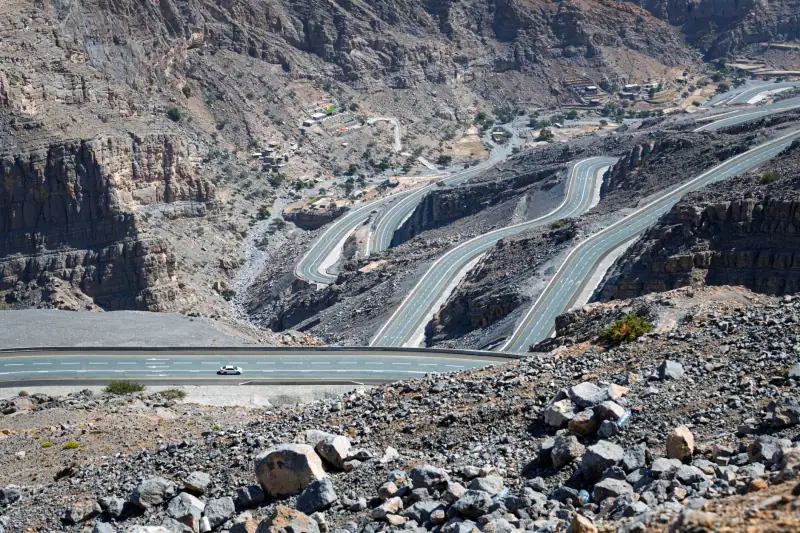
The road up to the plateau from Birkat Al Mawz is a spectacle in itself. The dizzying climb offers panoramic stops over the Nizwa plains far below and, after the first hairpin bends, over the first green terraces hanging in the void.
Where to stay on Jebel Akhdar
Anantara Al Jabal Al Akhdar Resort (5 stars)
The Anantara is the best-known property on Jebel Akhdar and one of the most spectacular in all of Oman. Its 115 rooms and villas are built right on the cliff edge, above Wadi Al Muaydin. The infinity pool overlooking the gorges has become one of the emblematic images of Omani tourism.
- Price: generally 150 to 250 OMR a night (about €350 to €650 / $405 to $755), more in high season; check rates on the hotel’s website
- Highlights: spa, several restaurants including a fine-dining one, organized excursions, direct access to trails
- Good to know: non-guests can use the restaurant and bar during the day by reservation
The plateau’s lodges
For a more reasonable budget, several lodges and guesthouses have sprung up in the villages of Al Ayn and Ash Shirayjah. Expect 50 to 120 OMR a night for a clean room with a view over the terraces.
Recommended options:
- Sama Al Sahar Resort: a simple lodge with a terrace and panoramic view, family atmosphere
- Jebel Akhdar Hotel: a mid-range option with a pool, well located between the villages
- Local guesthouses: a few families rent rooms in their homes, a more authentic experience, found via booking platforms
Hotels and lodges in Jebel Akhdar
From family lodges to luxury resorts, find the best accommodation with a view over the gorges.
Where to eat on Jebel Akhdar
Dining options on the plateau remain limited outside hotel restaurants, but what you find is authentic and tasty.
What people eat on Jebel Akhdar:
- Saffron and rosewater halwa: the local version of Oman’s national confection, flavored with products from the plateau
- Fresh pomegranates and figs: in season (autumn), villagers sell them by the roadside for a few baisas
- Local-style grilled mutton: in the small village restaurants, especially on weekends
- Cardamom coffee and dates: at any time, in even the smallest cafés
Practical places to eat:
- Lodge restaurants: the best option for a full meal. Dishes between 3 and 8 OMR
- Informal cafés in Al Ayn: for a quick lunch, chai and samboosa (filled fritters) while watching village life
- The Anantara: for a fine dinner with a view, book well in advance
How to get to Jebel Akhdar
Access is by 4x4 only. There is just one access road to the plateau: the road from the village of Birkat Al Mawz (30 km / 19 mi north of Nizwa). This road is extraordinarily steep, with some sections over 20% grade, and a military checkpoint screens vehicles at the entrance. Two-wheel-drive cars are turned back every time.
From Muscat (185 km / 115 mi):
- Take the N1 highway toward Nizwa
- Pass Nizwa center (N22) and continue north toward Birkat Al Mawz
- Follow the “Jebel Akhdar” signs from Birkat Al Mawz
- Pass the military checkpoint (your 4x4 is inspected)
- 32 km (20 mi) of spectacular climbing up to the plateau; allow 40 to 50 minutes for this stretch alone
- Total time: 3 to 3.5 hours from Muscat
From Nizwa (30 km / 19 mi):
- Allow 45 minutes to 1 hour, checkpoint included
- This is the preferred option if you combine Nizwa and Jebel Akhdar on a road trip
On an organized tour: Agencies in Muscat and Nizwa offer one-day or overnight excursions to Jebel Akhdar with a 4x4 and guide. It is the ideal option if you are not renting a car or prefer to be accompanied on hikes.
When to visit Jebel Akhdar
March to April: rose season (best time) This is Jebel Akhdar at its peak. The roses bloom, the distilleries are running, the terraces are in flower and temperatures are ideal (15 to 25 °C / 59 to 77 °F by day, 8 to 12 °C / 46 to 54 °F at night). Book accommodation and excursions several weeks ahead.
October to March: the cool season An excellent time for hiking. Temperatures are pleasant by day and cool at night. Autumn (October-November) brings the pomegranate and dried apricot harvest. Fewer people than in rose season.
May to September: avoid if possible May and June are still acceptable (25 to 30 °C / 77 to 86 °F on the plateau), but July and August can be very hot even at altitude (35 °C / 95 °F). It is also the monsoon period on the coast, which sometimes creates heavy clouds over the plateau.
Weekend or midweek? The plateau is noticeably busier on Fridays and Saturdays (the Omani weekend since 2013). For a calmer experience, visit midweek.
Essential practical tips
The 4x4: how to go about it If you did not rent a 4x4 from Muscat, you can rent one in Nizwa for the length of your Jebel Akhdar visit (from 25 to 35 OMR a day). Some agencies in Nizwa specifically offer this option. Do not attempt the climb in an ordinary vehicle even if the road looks passable; the checkpoint will send you back.
Layering: bring warm clothes The temperature difference between Nizwa and the plateau can exceed 15 °C (27 °F). In winter, nights on the plateau sometimes drop to 5 to 8 °C (41 to 46 °F). Even in October or March, always bring a warm jacket; you will need it for sunrise and for hikes at altitude.
Water and supplies Small village shops sell bottled water, but prices are high. Bring your supplies from Nizwa or Muscat. There are no supermarkets on the plateau.
Respecting local culture Jebel Akhdar is home to local communities who live from farming. Respect the crops: do not cross private terraces, do not pick fruit unless invited, and always ask permission before photographing residents, especially women.
Network and electricity Mobile coverage (Omantel and Ooredoo) is unreliable on the plateau, with some dead zones. The lodges and the Anantara offer Wi-Fi. If you plan to use Google Maps for the trails, download offline maps before you leave. Check your carrier’s international plan or use a travel eSIM.
Fitting Jebel Akhdar into your itinerary
Jebel Akhdar fits naturally into a circuit of the Omani interior. Here is the most common combination:
3-day interior circuit (from Muscat):
- Day 1: Nizwa (fort, souk, palm grove), overnight in Nizwa
- Days 2-3: Jebel Akhdar (climb, hikes, sunset, night on the plateau, roses at daybreak), then descent to Muscat
For a more ambitious circuit, see the 10- to 14-day Oman road trip, which includes Jebel Akhdar, the wadis and the Wahiba desert.
Jebel Akhdar is one of the most original destinations on the Arabian Peninsula: a green mountain plateau in the middle of the desert, roses blooming at 2,000 m (6,560 ft), breathtaking gorges and a gentle, unspoiled village life. Whether you come to hike, photograph the flowering terraces or simply escape the Omani heat in an exceptional setting, the Green Mountain is sure to surprise you. Round out your preparation with the practical guide to visiting Nizwa and the selection of the best hikes in Oman.
Frequently asked questions
Is a 4x4 really mandatory to drive up Jebel Akhdar?
Yes. It is a legal requirement checked at a military checkpoint at the start of the access road. Two-wheel-drive vehicles are turned back every time, whatever the season. The 4x4 is needed because of the extreme slope of the road (more than 20% in places), not because of a dirt track.
When do the roses bloom on Jebel Akhdar?
The Damask roses bloom every year from mid-March to mid-May, with the main harvest in April and May. It is the ideal time to visit: you can watch the harvest at dawn, tour the rosewater distilleries and buy fresh rosewater directly from the producers.
How long should you plan for Jebel Akhdar?
At least 2 days and 1 night on the plateau, to enjoy sunset and sunrise, do the Wadi Bani Habib hike and explore a few villages. Three days are better if you want to hike several routes and visit Nizwa on the way down.
Can you camp on Jebel Akhdar?
Wild camping is not allowed on the Jebel Akhdar plateau. There are a few designated sites, but the most popular option remains the lodges and resorts on the plateau. Rates run from 50 OMR for a simple lodge to more than 150 OMR a night at the Anantara.
Is Jebel Akhdar worth the trip outside rose season?
Absolutely. Outside March and April, the plateau offers ideal hiking temperatures (15 to 25 °C / 59 to 77 °F in winter), constant views over the gorges and terraces, and a calm atmosphere far from the heat of the coast. Pomegranates and figs ripen in autumn.
What is the altitude of Jebel Akhdar?
The Jebel Akhdar plateau sits between 1,900 and 2,100 m (6,230 to 6,890 ft). The highest point of the western Hajar range, Jebel Shams, is a few dozen kilometers away at 3,018 m (9,902 ft). The difference in altitude with Nizwa (516 m / 1,693 ft) is why it is usually 8 to 12 °C (about 14 to 22 °F) cooler at the top.
More Oman guides
Keep reading
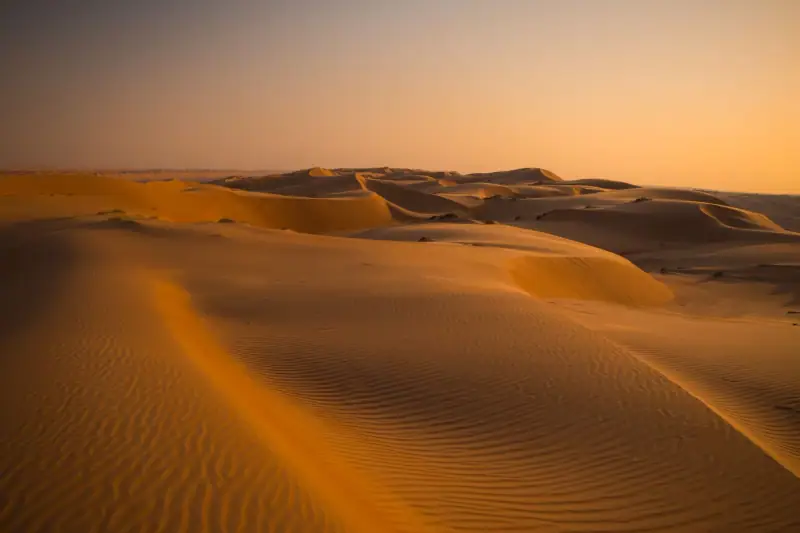
Visiting the Sharqiyah: Wahiba Sands, wadis and Oman's east coast
Complete guide to the Sharqiyah region: Wahiba Sands, Wadi Bani Khalid, Sur, Ras al Jinz and Wadi Shab. 4-day itinerary, lodging, practical tips.
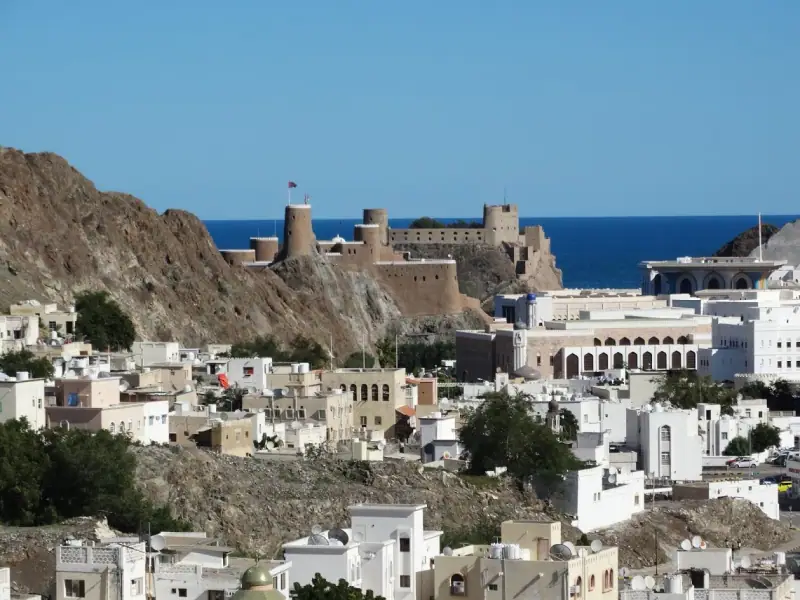
Muscat's top sights: the must-sees of Oman's capital
What to see in Muscat? Grand Mosque, Mutrah souk, Al Alam Palace and the corniche: the essential visits in the Omani capital.
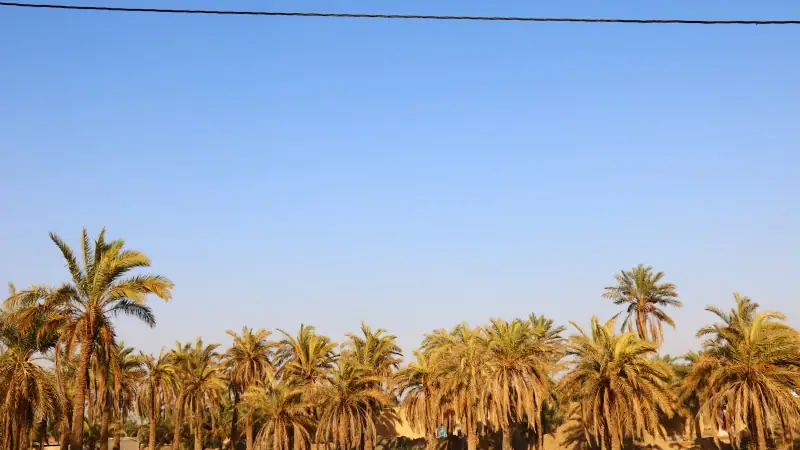
Visiting Nizwa: a complete guide to Oman's cultural capital
Nizwa in practice: medieval fort, Friday souk, Hajar mountains and oases. All you need to know to visit the pearl of inland Oman.
Ready-made
Oman itineraries
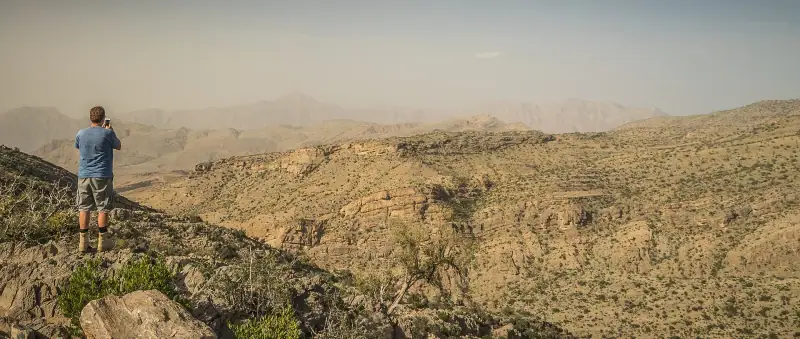
10 days
Oman road trip: a 10-day itinerary to explore the sultanate
MuscatNizwaJebel AkhdarWahiba desertSurSalalah
3 days
Musandam in 3 days: an itinerary through Oman's fjords
3-day Musandam itinerary: fjords, dolphins, dhow cruise and Khasab. All you need to plan a stay on Oman's enclave peninsula.
7 days