What to see
Visiting Nizwa: a complete guide to Oman's cultural capital
We may earn a commission when you book through links on this page, at no extra cost to you. We don't visit or try the places we cover: we summarize published sources. How we work
In short
- One full day covers the fort, the souk and the old town; plan 2 days to add Jebel Akhdar or the surrounding oases.
- Nizwa is about 165 km (103 mi) from Muscat, 1 h 45 to 2 h by highway. The Friday livestock market runs from 6 am to 11 am.
- Nizwa Fort costs 5 OMR for adults (about €12 / $14) and is open 8 am to 6 pm, Saturday to Thursday.
- The best season is October to March (20 to 30 °C / 68 to 86 °F); summers reach 40 to 45 °C (104 to 113 °F).
Nizwa is the top destination in inland Oman. Former capital of the Sultanate, it was for centuries the political, religious and commercial heart of Oman. Today it is a quiet town of 90,000 people that proudly preserves its heritage: a medieval fort among the most visited in the country, a centuries-old livestock souk, and a palm grove running up to the foothills of the Hajar. Here is everything you need to know to visit Nizwa.
Nizwa Fort: symbol of inland Oman
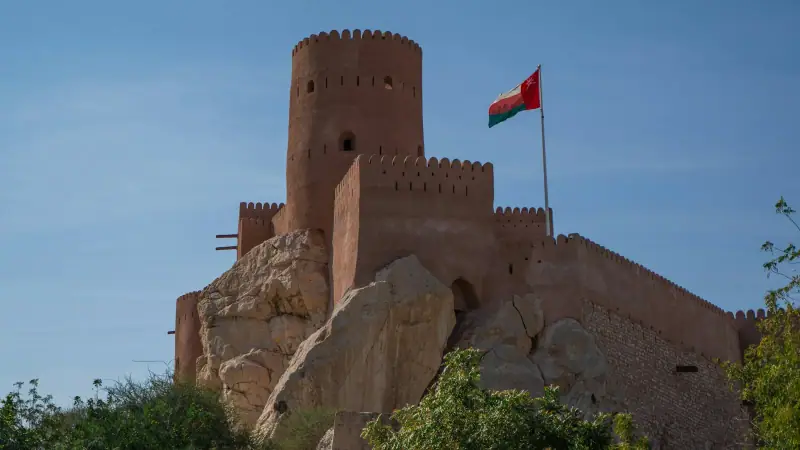
Nizwa Fort is the main attraction of the town, and one of the most impressive in the whole country. Its massive round tower, 30 m (98 ft) high with walls 6 m (20 ft) thick, has dominated the old town since the 17th century. Built under the reign of Imam Sultan bin Saif Al Ya’aruba between 1649 and 1668, it was erected to repel the Portuguese after their expulsion from Oman.
What makes the fort remarkable:
- The cylindrical tower: the largest in Oman, it could hold hundreds of soldiers and stored ammunition, water and supplies to withstand a long siege
- The defense system: ingenious traps dot the corridors: low doors to force attackers to bend down, holes in the ceilings to pour boiling oil, and baffles to break up charges
- The panoramic roof: from the top terrace, the view over the palm grove, the old town and the Hajar mountains is stunning, especially late in the day
- The interior exhibitions: traditional weapons, carved Omani doors, a collection of khanjars (national daggers) and reconstructions of life in that era
A full visit to the fort takes about 1.5 to 2 hours. Take your time to explore the underground levels, the storerooms and the firing positions.
Practical information:
- Hours: 8 am to 6 pm (Saturday to Thursday); on Friday, reduced hours with a break in the middle of the day (check before you come)
- Price: 5 OMR (about €12 / $14) per adult
- Tip: arrive early in the morning to avoid the heat and the groups
Guided excursions in Nizwa
Fort, souk and oases on an organized tour from Muscat or from Nizwa.
Nizwa souk: the soul of authentic Oman
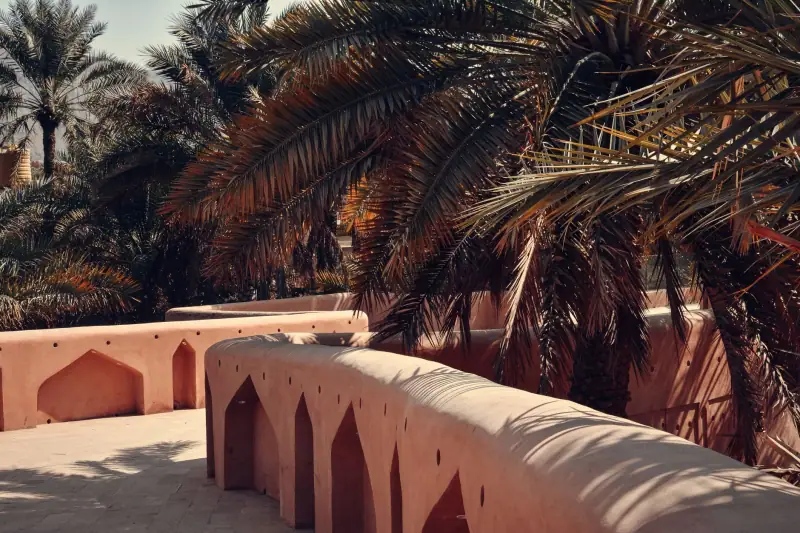
Nizwa souk is double: on one side the permanent covered market, on the other the legendary Friday morning livestock market. Both are worth the trip.
The covered market (every day)
Next to the fort, Nizwa souk is one of the best in Oman for shopping. Unlike the tourist souk of Mutrah in Muscat, Nizwa’s remains rooted in local life.
What you find:
- Dates: Nizwa is known for its dates, among the best in Oman. The Fard, Khlas and Khanezi varieties are worth tasting and bringing home
- Incense and frankincense: incense from the Dhofar region often transits through Nizwa. Blends of bukhoor (scented incense) and copper burners make nice souvenirs
- Khanjars and crafts: ceremonial Omani daggers, carved wooden chests, pottery in the Hajar tradition
- Silver and jewelry: rings, bracelets and sets in the traditional Nizwani style, more affordable than in Muscat
Tip: bargain with a smile. A 20 to 30% discount is common and expected.
The Friday livestock market (6 am to 11 am)
This is the most authentic sight in Oman, and probably in the whole Arabian Peninsula accessible to tourists. Every Friday at dawn, herders from the mountains and plains converge on Nizwa to sell goats, sheep, cows and sometimes camels.
The atmosphere is electric: bleating, smells of animals and spices, haggling in Omani Arabic, men in white dishdasha and embroidered kummah talking animatedly. Buyers check teeth, weigh legs, offer and counter-offer.
How to go:
- Arrive before 7 am to see the market at its peak
- Park on the palm grove side and walk toward the noise
- Keep your distance and ask before photographing people
- Bring water: the morning heat can be striking even in winter
Nizwa’s palm grove and falaj
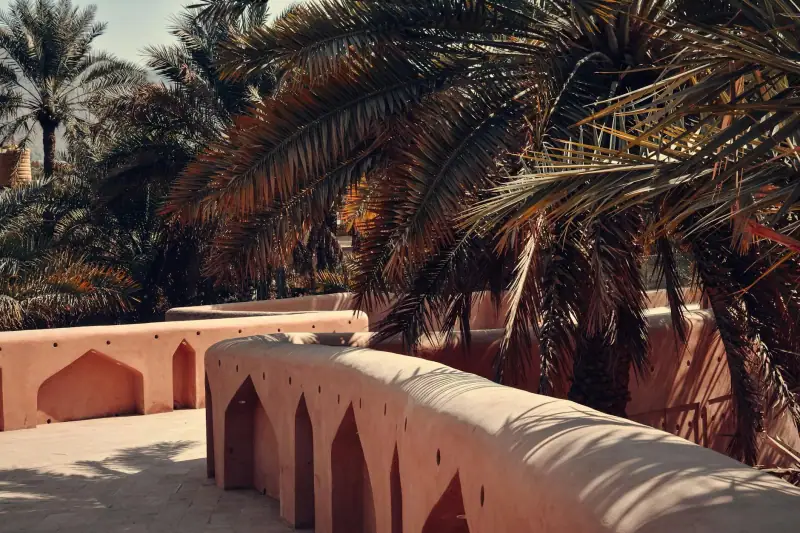
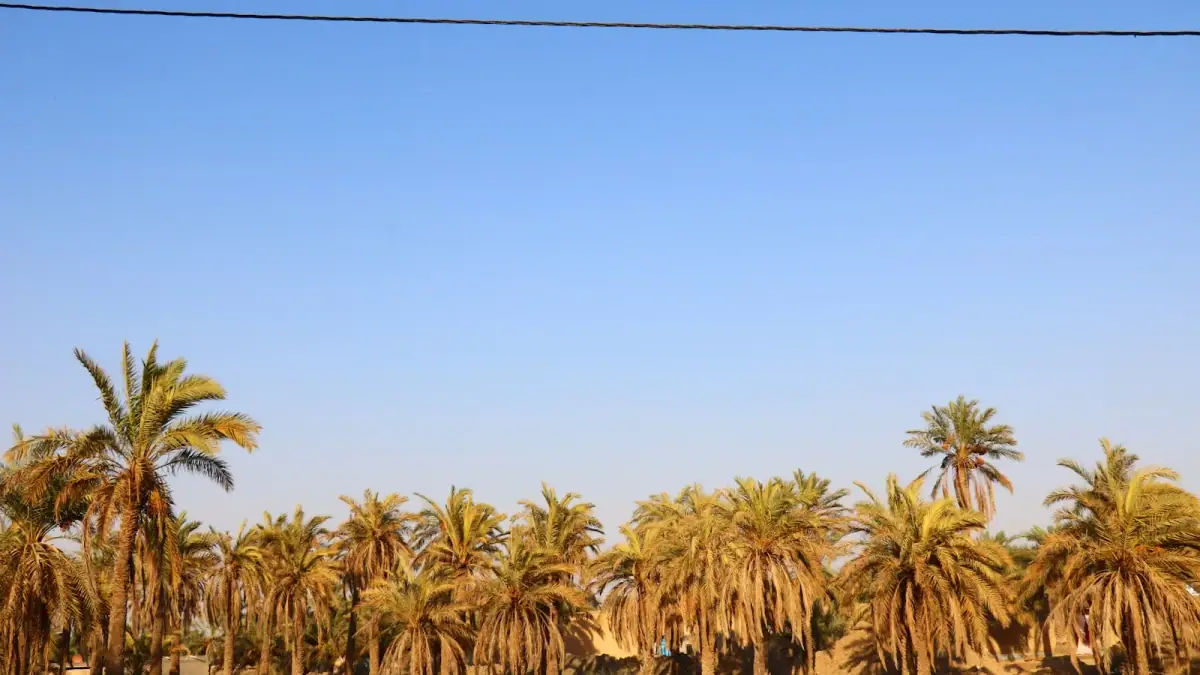
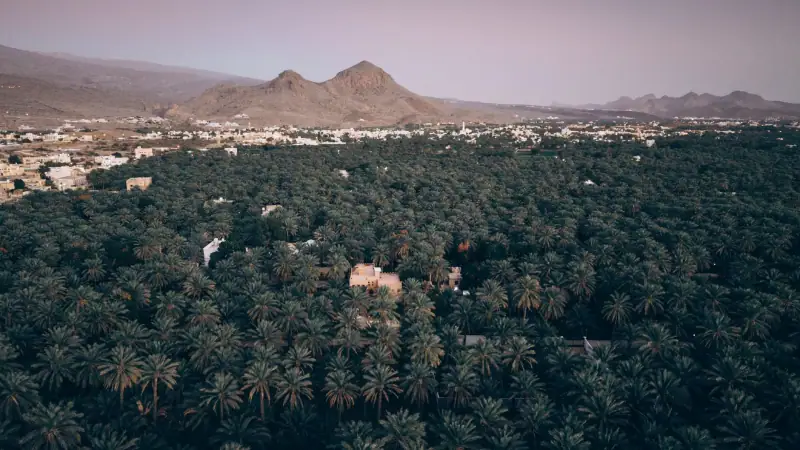
Nizwa is crossed by a thousand-year-old irrigation network: the aflaj (singular: falaj). These underground and open-air channels capture water from the Hajar mountains and irrigate the palm grove that stretches over several kilometers around the town. Oman’s aflaj have been a UNESCO World Heritage site since 2006.
Strolling through the palm grove at sunset, between palms heavy with dates and small fields of alfalfa or vegetables watered by the falaj, offers a sense of Omani rural life that tourist sites do not. Look for the Falaj Al Khatmeen and Falaj Al Daris, the two main ones in the area.
Around Nizwa: a perfect base
Nizwa’s position makes it the best starting point for exploring inland Oman. Here are the most interesting excursions from the town.
Jebel Akhdar (30 km / 19 mi north)
The “Green Mountain” is a mountain plateau at 2,000 m (6,560 ft), tucked into the Hajar mountains. It is reached by a spectacular, winding road from Nizwa. The altitude creates a unique microclimate that allows the growing of Damask roses (from which rosewater is made), pomegranates and apricots, crops that are extremely rare in the region.
- Wadi Bani Habib village: an abandoned and partly inhabited village on a dizzying drop
- Balcony Walk (W6, on Jebel Shams, a separate mountain in the Hajar range): a panoramic hike along the cliffs with views over the valley
- Rose plantation (March-April): roses bloom in abundance and the dawn harvest is a magical sight
Important: a 4x4 is mandatory to drive up Jebel Akhdar. Military checkpoints verify it.
Bahla (40 km / 25 mi west)
Bahla Fort is one of the largest in Oman and one of the first three sites inscribed by UNESCO (1987). Built by the Banu Nebhan tribe between the 13th and 15th centuries, its walls stretch for 12 km (7.5 mi) around the town. Bahla’s old town is also interesting to explore on foot.
Jabrin (50 km / 31 mi west)
Jabrin palace-castle (17th century) is often judged even more beautiful than Nizwa Fort. Its ceilings painted with calligraphy and floral motifs, its restored apartments and its terraces offer a dive into Omani palace architecture. Entry: 5 OMR.
Adam and the pottery villages
Seventy kilometers (43 mi) south of Nizwa, the Adam area is known for its traditional pottery. In the surrounding villages you can still find craftsmen shaping jars, dishes and cups by hand using ancestral techniques.
Where to stay in Nizwa
Nizwa offers a much more limited range of lodging than Muscat, but enough for a stay of 1 to 3 nights.
The categories:
- High-end: the Falaj Daris Hotel and the Anantara Al Jabal Al Akhdar Resort (on the plateau, extraordinary views) are the most comfortable options
- Mid-range: Nizwa Hotel and Golden Tulip Nizwa offer good value with a pool
- Budget: a few guesthouses in the town center, around 15 to 25 OMR a night
Tip: if you visit Nizwa by day from Muscat, staying in Nizwa will let you see the Friday souk at dawn and explore Jebel Akhdar without rushing.
Hotels in Nizwa
All the lodging options, from budget to mountain resort.
Where to eat in Nizwa
Nizwa’s cooking is that of inland Oman: simpler and spicier than the coast, with a strong tribal influence.
Not to miss:
- Shuwa: the ceremonial Omani dish par excellence: lamb or camel marinated in spices and slow-cooked in an underground oven for 24 to 48 hours. An incomparable smoky, melting flavor. You find it in local restaurants on Fridays
- Harees: a simmered porridge of wheat and meat, simple and filling, a perfect local breakfast
- Fresh dates and camel milk: in date season, the stalls are covered with them
Recommended restaurants:
- Al Masa Restaurant (near the souk): home-style Omani cooking, very popular with locals
- Bin Ateeq (Omani chain): an excellent introduction to local food, clean setting
- Souk cafés: for cardamom coffee and dates while watching the market
How to get to Nizwa
From Muscat:
- By car: the N1 highway then the N22, 165 km (103 mi), 1 h 45 to 2 h depending on traffic. No difficulty
- By bus: Mwasalat runs services from Muscat to Nizwa (about 2 h 30, 3 to 4 OMR); check the departure station and timetables on mwasalat.om
- By taxi: expect 25 to 35 OMR from Muscat one way
From Jebel Akhdar: Nizwa is the only access to Jebel Akhdar. All visitors to the plateau necessarily pass through the town.
When to visit Nizwa
Best period: October to March Temperatures are pleasant (20 to 30 °C / 68 to 86 °F by day), nights are cool, and the markets are lively. It is also rose season on Jebel Akhdar.
To avoid: June to August The heat is crushing (40 to 45 °C / 104 to 113 °F). Life slows considerably and exploring becomes a chore.
Events to target:
- Friday morning: essential for the livestock market
- Ramadan: a special atmosphere, with reversed rhythms (activity at night), but some businesses close by day
- Eid al-Fitr and Eid al-Adha: festivities with traditional music and dance in the old town
Practical tips for visiting Nizwa
Dress: Cover shoulders and knees. In Nizwa, a conservative town with a tribal tradition, light clothing is frowned upon, even for tourists. Women will appreciate a long shawl or a light dress covering the arms.
Language: Fewer tourists means less English. A few Arabic words (shukran = thank you, kayf halak = how are you) open doors. Souk vendors are generally resourceful.
Money: Bring cash. Although big hotels and restaurants accept cards, markets and small shops are cash only. ATMs are available in town.
Safety: Nizwa is one of the safest towns in the region. The only “danger” is getting lost in the palm grove at sunset, which is not really a problem.
Nizwa remains one of the most fascinating places in Oman, spared from mass tourism but perfectly accessible. Between the fort, the Friday souk and the excursions to the mountains and oases, the capital of the interior deserves at least two days in your Omani itinerary. See our complete guide to Oman and our Oman road trip to fit Nizwa into a wider circuit.
Frequently asked questions
How long do you need to visit Nizwa?
One full day is enough for the fort, the souk and the old town. Plan 2 days if you want to head out to Jebel Akhdar or the surrounding oases.
Is Nizwa far from Muscat?
Nizwa is about 165 km (103 mi) from Muscat, or 1 h 45 to 2 h by road on the highway. The road is excellent and the trip easy.
Is Nizwa's Friday souk really worth the detour?
Absolutely. The Friday morning livestock market (6 am to 11 am) is one of the most authentic sights in Oman. You see goats, sheep and camels sold by herders in traditional dishdasha. It is a highlight of any trip.
Can you visit Nizwa without a car?
Technically yes (bus from Muscat), but it is very impractical. To explore the surroundings (Jebel Akhdar, Bahla oasis, Jabrin), a rental car is essential. A 4x4 is not needed for central Nizwa.
How much is entry to Nizwa Fort?
Entry to Nizwa Fort costs 5 OMR (about €12 / $14) for adults. Children under 6 enter free. The site is open from 8 am to 6 pm, Saturday to Thursday; on Friday, hours are reduced with a closure in the middle of the day (check before you come).
Is Nizwa very hot in summer?
Yes, summers are extreme: 40 to 45 °C (104 to 113 °F) in July and August. The best time to visit Nizwa is October to March, when temperatures are mild (20 to 30 °C / 68 to 86 °F). In winter, nights can even be cool in the surrounding mountains.
More Oman guides
Keep reading
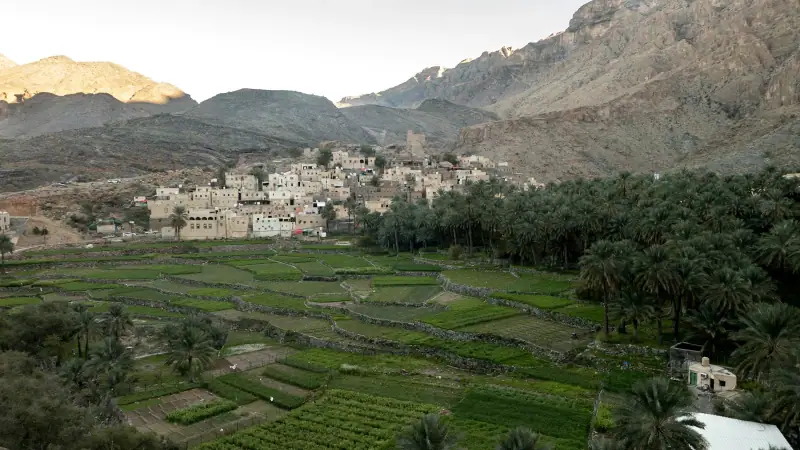
Visiting Jebel Akhdar: a complete guide to Oman's Green Mountain
Jebel Akhdar: Damask roses, hiking, perched villages and luxury resorts. A complete guide to visiting Oman's Green Mountain.
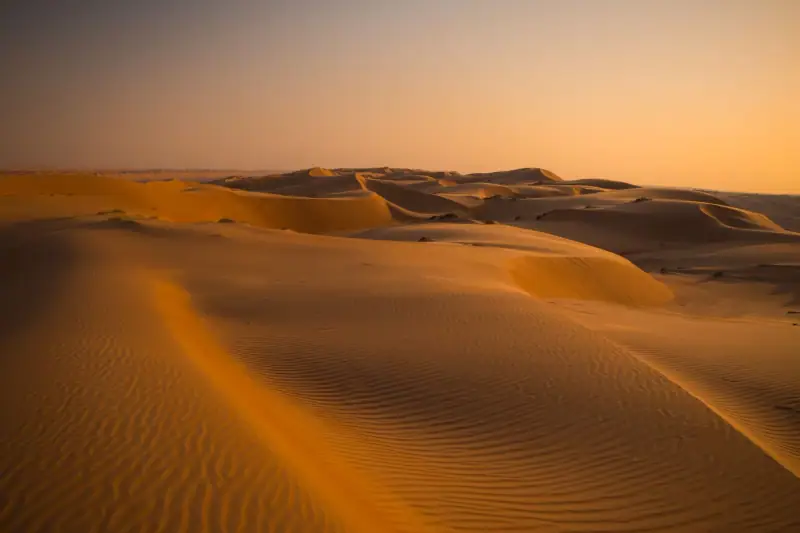
Visiting the Sharqiyah: Wahiba Sands, wadis and Oman's east coast
Complete guide to the Sharqiyah region: Wahiba Sands, Wadi Bani Khalid, Sur, Ras al Jinz and Wadi Shab. 4-day itinerary, lodging, practical tips.
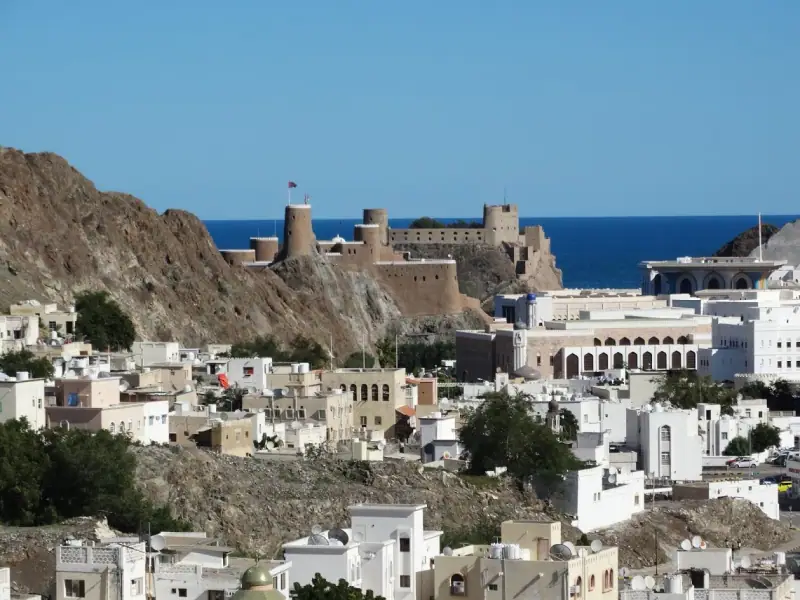
Muscat's top sights: the must-sees of Oman's capital
What to see in Muscat? Grand Mosque, Mutrah souk, Al Alam Palace and the corniche: the essential visits in the Omani capital.
Ready-made
Oman itineraries
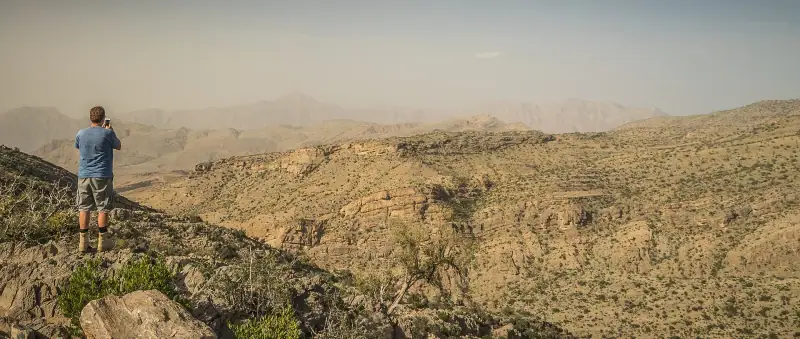
10 days
Oman road trip: a 10-day itinerary to explore the sultanate
MuscatNizwaJebel AkhdarWahiba desertSurSalalah
3 days
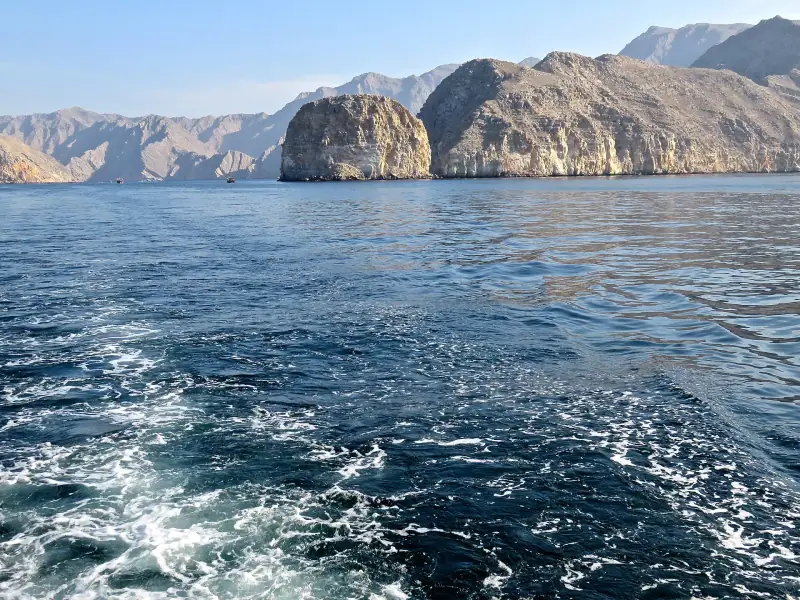
Musandam in 3 days: an itinerary through Oman's fjords
3-day Musandam itinerary: fjords, dolphins, dhow cruise and Khasab. All you need to plan a stay on Oman's enclave peninsula.
7 days