What to see
Visiting the Lofoten Islands: Complete Guide to Norway's Archipelago
We may earn a commission when you book through links on this page, at no extra cost to you. We don't visit or try the places we cover: we summarize published sources. How we work
In short
- Plan at least 4 to 5 days for Svolvær, Henningsvær, Reine and a few hikes; 7 to 10 days lets you go deeper.
- The best time depends on what you want: midnight sun and hiking in summer, northern lights from late September to late March.
- A rental car is the most practical way to get around; the E10 runs about 130 km (81 mi) between Å and Svolvær.
- Budget roughly €100-220 (~$116-255) per day on a tight budget, €340-730 (~$395-850) for comfort.
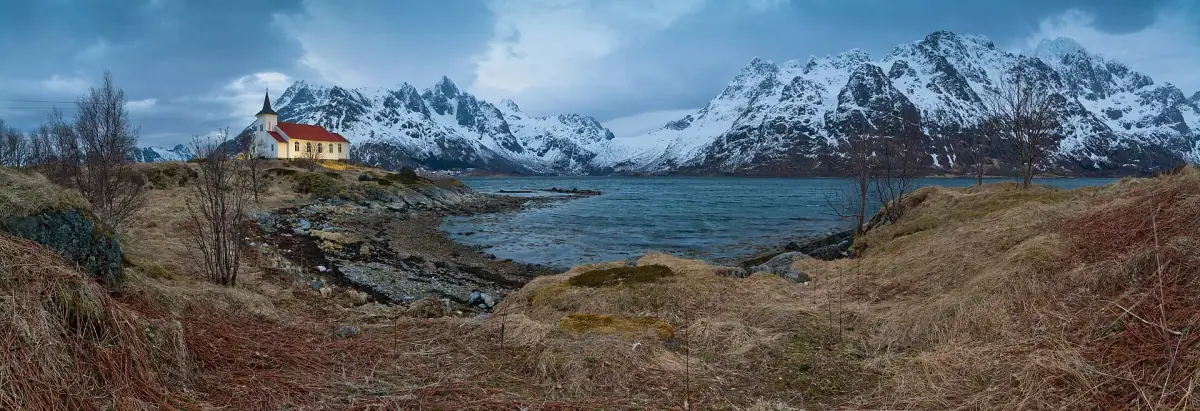
At 68° north, hanging above the Arctic Circle, the Lofoten Islands form one of the most striking archipelagos in the world. Jagged peaks rise straight out of the sea like knife blades, fjords reflect shades of blue-green you would expect only in tropical waters, and fishing villages of red and yellow wooden houses seem frozen in another century.
For a long time, the Lofoten Islands were known mainly to Norwegians and to landscape photographers. Since the 2010s they have become one of the most sought-after destinations in Europe, without losing their wild character or their authenticity. The Lofoten Islands are almost impossible to spoil: nature here is so powerful and so present that it always wins out.
This guide gives you what you need to visit the Lofoten Islands: the villages to see, the hikes worth doing, the specialties to taste, practical information and the best times to go.
Reine, Henningsvær and the signature villages of the Lofoten Islands
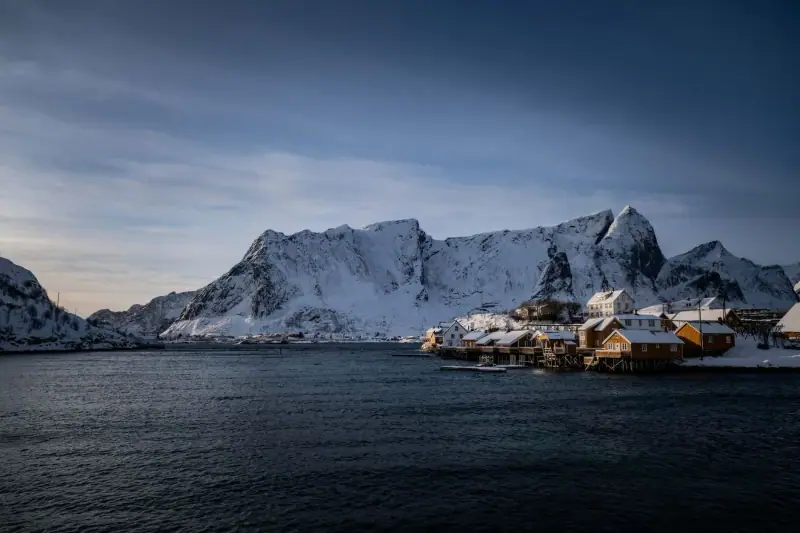
The Lofoten Islands have around ten fishing villages, each worth a visit. Here are the essentials.
Reine: Norway’s most photographed village
Reine is often described as the most beautiful and most photographed village in Norway, a reputation that is well earned. Set on the Reinefjord and surrounded by dizzying peaks that drop into the water, this small village of a few hundred residents offers views that look retouched.
The view from the top of Reinebringen (about 448 m / 1,470 ft), reached after a steep climb of about 1.5 hours, is considered one of the most spectacular in Norway. In a single glance you take in the village, the fjord, the surrounding islands and the peaks around them.
Henningsvær: the “Venice of the Lofoten Islands”
Henningsvær is built on a series of small islets joined by bridges, in the middle of the archipelago. Its harbor, framed by mountains, is one of the most photographed in the Lofoten Islands. The village is also known for its lifestyle: you will find galleries, good restaurants and a livelier atmosphere than in other villages of the archipelago. If you are short on time and need to choose between these two villages, read our comparison Reine or Henningsvær.
Nusfjord: a protected village
Nusfjord, on the south coast of the island of Flakstadøya, is one of the best-preserved fishing villages in Norway. Its red wooden fish warehouses (rorbuer) date from the 19th century and are heritage-protected. There is an entrance fee to the village, but a walk through its lanes and along its quays is well worth it.
Å: the end of the road
The village of Å (pronounced “oh”) marks the end of the E10, which Norwegians call the terminus of Europe. This tiny village, entirely designated a living museum, houses the stockfish (tørrfisk) museum and several traditional rorbuer. It is a place out of time, far from tourist bustle.
To find where to stay in the Lofoten Islands, see our complete guide Where to stay in the Lofoten Islands.
Places to stay in the Lofoten Islands
From traditional waterfront rorbuer to hotels in Svolvær, compare availability and prices for your stay on the islands.
Hiking in the Lofoten Islands: the peaks not to miss
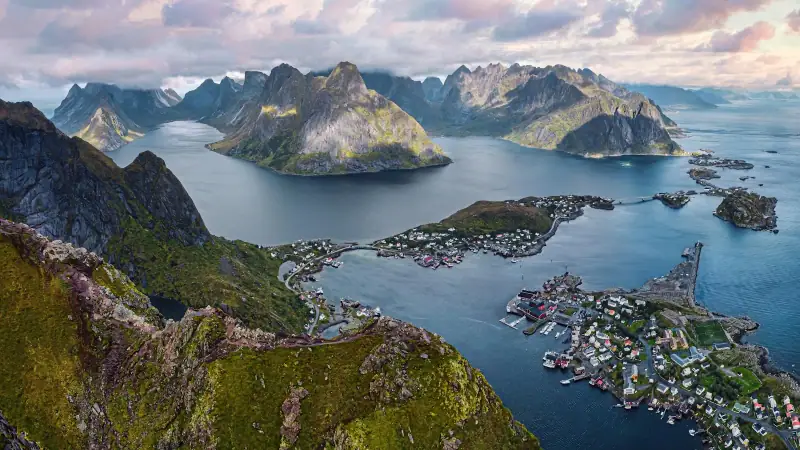
The Lofoten Islands are a paradise for hikers. The summits, though not high in absolute terms (rarely above 1,000 m / 3,280 ft), are extremely steep and offer breathtaking views over the fjords, the islands and the open sea.
Reinebringen: the signature hike
Reinebringen (about 448 m / 1,470 ft) is the most famous hike in the Lofoten Islands. It starts from the village of Reine, and the very steep climb has steps cut into the rock for the most technical sections. The view from the top, over the Reinefjord and the red village at the water’s edge, has no equal.
Difficulty: Moderate to difficult (the slope is sustained) Time: About 2 to 3 hours round trip Tip: Start early in the morning to avoid the summer crowds and enjoy the low morning light
Ryten and Kvalvika beach
The hike to the summit of Ryten (about 543 m / 1,780 ft) is another memorable experience. The trail starts at Fredvang and climbs to a rocky plateau overlooking Kvalvika beach, reachable only on foot: a crescent of pale sand ringed by vertical walls. The view of this wild beach from Ryten is one of the most iconic images of the Lofoten Islands.
Time: About 4 to 5 hours round trip Difficulty: Moderate
Munkebu and the hut above the sea
The hike to the Munkebu hut (reached from Sørvågen, near Å) is ideal for combining a panorama with a look at a more austere landscape. The more determined continue to Lake Munketjørna, ringed by cliffs.
Practical tips for hiking in the Lofoten Islands
- Essential gear: Trails can be slippery even in summer. Hiking boots with a lugged sole are essential, and poles are recommended
- Changeable weather: Weather in the Lofoten Islands is very unstable. Check yr.no (the Norwegian weather service) before every outing
- Off-trail: Stay on marked trails, especially on ridges where wet rocks are treacherous
- Offline maps: Download maps on Maps.me or AllTrails before you leave, as mobile coverage is sometimes patchy
For more hiking ideas in Norway, see our guide Hiking in Norway.
Activities and excursions in the Lofoten Islands
Guided hikes, sea kayaking, boat trips, traditional fishing, northern lights tours: book your activities in advance.
Midnight sun and northern lights
The Lofoten Islands are one of the few places in the world where you can see two fascinating astronomical phenomena, depending on when you go.
The midnight sun (summer)
From late May to mid-July, the sun never sets in the Lofoten Islands. For several weeks it stays above the horizon 24 hours a day, bathing the landscape in a golden, unreal light. Hiking at 11 pm under a sun skimming the ridges, swimming in the cool water of a fjord at midnight, photographing lit-up villages with night never falling: it is an experience that stays with you.
Note: The midnight sun disturbs sleep. Bring a sleep mask and blackout curtains for nights in a rorbu.
The northern lights (winter)
From late September to late March, night returns to the Lofoten Islands, and with it the chance to see the northern lights. The islands are one of the best destinations in the world for this, for two reasons: they lie in the optimal auroral zone, and their dramatic relief (fjords, villages, snowy peaks) makes an exceptional photographic setting.
The best conditions come on clear, cloudless nights with strong magnetic activity (high Kp index). The “My Aurora Forecast” app lets you follow forecasts in real time.
To learn everything about this unique phenomenon, read our guide Northern lights in Norway.
Lofoten food: the stockfish culture
Food in the Lofoten Islands is inseparable from the sea. The islands are the heart of world stockfish production (tørrfisk in Norwegian), cod air-dried on wooden racks called hjell, which is the very image of the Lofoten Islands in winter.
Stockfish: a thousand-year heritage
Stockfish production in the Lofoten Islands goes back more than a thousand years. Every winter, Arctic cod migrate to the warmer waters of the Lofoten Islands to spawn, and fishermen have been waiting for them for centuries. Dried naturally from January to June without salt or additives, Lofoten cod is exported to southern Europe (Italy, Portugal, Spain, Croatia) and West Africa.
Visit the Tørrfisk Museum in Å to understand the whole history of this production. It is a fascinating look at a kind of medieval “globalization.” Admission is about 155 NOK per adult (2024-2025 rate) and free for children under 6. The stockfish exhibition is now presented under the name SKREI (Museum Nord network), so check current prices and hours with the museum.
What to eat in the Lofoten Islands
- Tørrfisk prepared as baccalà, in soup or on open-faced sandwiches, the most direct way to taste local identity
- Skreimølje: fresh seasonal cod (January to April), served boiled with its liver and roe in a simple, tasty traditional dish
- Fresh shrimp: bought straight from the boats in Svolvær harbor, peeled on the spot with a little bread and butter
- King crab: caught in the waters of northern Norway and served grilled or steamed in the archipelago’s restaurants, a memorable meal at a high but justified price
- Aquavit: the Scandinavian spirit, ideal after a day of hiking in the rain
Restaurants in the villages (especially in Henningsvær and Svolvær) offer menus built around local seafood. Prices are high, as everywhere in Norway. Expect about 250 to 400 NOK for a main course in an ordinary restaurant.
How to get to the Lofoten Islands
By air
The fastest option is to fly to Harstad/Narvik (Evenes) airport, about 2 h 30 by road from Svolvær, or to Bodø, from where a ferry reaches the archipelago. You will generally need one or two connections (Oslo, Bergen or Tromsø).
Small airports also serve Svolvær and Leknes directly from Oslo (mainly Widerøe; check current airlines and routes), but frequencies are limited and fares are often high.
By ferry from Bodø
The Bodø to Moskenes or Bodø to Svolvær ferry is the most popular option. The Bodø to Moskenes crossing by car ferry takes about 3 h 15 to 3 h 30. A fast passenger-only service (no cars) runs to Svolvær (about 3 h 30). The variant via Røst and Værøy takes about 7 hours. It is the ideal solution if you want to bring your car to the islands, or if you take the train from Oslo to Bodø (about 18 hours by train, but that is a journey in itself).
By car from the mainland
The Lofoten Islands are connected to the mainland by the E10 (Lofast), a series of tunnels and bridges that branches off at Bjerkvik, about 20 km (12 mi) from Narvik. This approach is longer (several hours from Narvik) but offers breathtaking scenery along the way. It is an excellent option if you rent a car from Tromsø or Narvik.
Car rental in the Lofoten Islands
Essential for exploring remote villages at your own pace: compare rentals from Evenes airport, Bodø or Svolvær.
Getting around the islands
The car: essential
A car is the most practical and flexible way to visit the Lofoten Islands. The E10 crosses the archipelago from east to west for about 130 km (81 mi) between Å and Svolvær, passing through all the main villages. The roads are good quality, though winding and sometimes narrow in the mountains.
Winter warning: Some passes may require snow tires or chains. Conditions are posted on the Norwegian Public Roads Administration website (vegvesen.no).
Bus
A bus network links the main villages along the E10. Frequencies are limited (often 2 to 4 departures a day depending on the route) and schedules are not always convenient for sightseeing. The bus works for simple trips between Svolvær and Leknes or Å.
Bicycle
The Lofoten Islands can be cycled in summer, with moderate elevation gain on the main road. There are bike paths in some areas. It is a wonderful way to discover the archipelago, but bring a rain jacket and good fitness for days of strong wind.
For everything about Svolvær, our guide Visiting Svolvær covers the capital of the Lofoten Islands.
When to go to the Lofoten Islands
| Season | Period | Highlights | Drawbacks |
|---|---|---|---|
| Summer | June-Aug | Midnight sun, hiking, kayaking | Big crowds, high prices |
| Fall | Sept-Oct | Northern lights, light, fewer people | Unstable weather |
| Winter | Nov-March | Northern lights, snowy landscapes, fishing | Very short days, some services closed |
| Spring | April-May | Stockfish drying, quiet, lower prices | Variable weather |
Our recommendation: If you want the best conditions for hiking and to see the midnight sun, choose July. For the northern lights and a wilder, more authentic atmosphere, go November to February. March is a good compromise, with auroras still possible and lengthening days.
For a full analysis of seasonality, see our guide Best time to visit Norway.
Budget and accommodation
Accommodation in the Lofoten Islands
The Lofoten Islands offer several types of lodging:
- Rorbuer: traditional fishermen’s cabins converted into tourist lodging. Often built on stilts over the water, they are the most iconic experience on the islands. Prices range from €150 to €500 (about $175-580) per night depending on size, season and location
- Hotels: concentrated in Svolvær and Leknes, rated 3 to 4 stars. Generally expect €150 to €300 (about $175-350) per night in high season
- Campgrounds: several well-equipped campgrounds exist along the E10, with cabins and tent pitches. An economical option in summer (€30 to €80, about $35-93, per night for a simple cabin)
- Hostels: rare in the Lofoten Islands, but a few exist in Svolvær and the main villages
Estimated daily budget
| Item | Tight budget | Comfort budget |
|---|---|---|
| Lodging (per night) | €50-100 (~$58-116), campground/hostel | €150-350 (~$175-405), rorbu/hotel |
| Meals (per day) | €40-60 (~$46-70), supermarket + 1 restaurant | €80-150 (~$93-175), restaurants |
| Activities (per day) | €0-30 (~$0-35), self-guided hikes | €60-150 (~$70-175), guided tours, kayaking |
| Transport (per day) | €10-30 (~$12-35), bus + shared fuel | €50-80 (~$58-93), rental car |
| Total per day | €100-220 (~$116-255) | €340-730 (~$395-850) |
Money-saving tips:
- Shop at supermarkets (Rema 1000 or Kiwi in Svolvær, Coop Extra in Leknes) for breakfasts and picnics
- All the hikes are free
- Buy shrimp directly at the harbor rather than in a restaurant
- Travel outside July and August to find lodging 20 to 40% cheaper
Getting to the Lofoten Islands
Compare flights to Oslo, Bodø or Harstad/Narvik. Connections via Oslo are generally the cheapest.
Essential practical information
Entry requirements
Norway is part of the Schengen Area. Entry rules depend on your passport: check the official government site before you book. Norway is not a member of the European Union, and its currency is the Norwegian krone (NOK).
Money and payment
Bank cards are accepted everywhere, even in the smallest villages. Cash is rarely needed. ATMs are available in Svolvær and Leknes.
Connectivity
Mobile coverage (4G) is good in the main villages but can be absent in remote areas and on some hiking trails. Download your offline maps before you leave (Google Maps, Maps.me, AllTrails).
Health and safety
The Lofoten Islands are a very safe destination. Nature still deserves respect: the weather can change quickly, trails are sometimes dangerous when wet, and the sea is cold all year. Travel insurance that includes medical repatriation is recommended.
Norwegian emergency numbers: 112 (police), 113 (ambulance), 110 (fire).
Language
Norwegian is the official language. English is spoken fluently by almost everyone, including in the most remote villages.
Why the Lofoten Islands are a unique experience
The Lofoten Islands look like nowhere else. The combination of dizzying landscapes, a living maritime culture, incomparable far-north light and relative accessibility from Europe makes this a destination apart in the world of travel.
Whether you come to hike to the ridges above the fjords, to photograph the northern lights reflected in the water, to taste stockfish by the harbor or simply to get lost in villages where time seems to have stopped, the Lofoten Islands will leave their mark.
It is one of those rare places where reality goes beyond the postcard.
Plan your full stay in Norway with our 7-day Norway itinerary and discover the country’s other treasures.
Frequently asked questions
Are the Lofoten Islands really worth the trip?
Absolutely. The Lofoten Islands are regularly named among the most spectacular destinations in Europe, even in the world. Sharp peaks plunging into emerald water, red and yellow fishing villages and the particular light of the far north create a complete change of scenery. The trip takes some logistical and financial effort, but the Lofoten Islands remain an unforgettable experience.
How many days do you need to visit the Lofoten Islands?
Plan at least 4 to 5 days to cover the essentials: Svolvær, Henningsvær, Reine and a few hikes. With 7 to 10 days you can explore the more remote villages, try longer hikes, go kayaking and leave room for surprises. A long weekend (3 to 4 days) is too short to really enjoy the islands.
How do you get to the Lofoten Islands?
The fastest route is to fly to Oslo or Bergen, connect to Harstad/Narvik (Evenes) airport or to Bodø, then reach the islands by ferry or by car. The overnight ferry from Bodø is a popular and economical option.
Can you drive in the Lofoten Islands?
Yes. All the main islands are linked by the E10 road (Lofotveien), which connects to the mainland through the Lofast, opened in 2007, a series of tunnels and bridges that branches off at Bjerkvik, about 20 km (12 mi) from Narvik. This scenic road crosses extraordinary landscapes and links Å, the southernmost village, to Svolvær in the northeast. A rental car is still the most practical way to explore the Lofoten Islands at your own pace.
Can you see the northern lights in the Lofoten Islands?
Yes, and the Lofoten Islands are one of the best places in the world to watch them. The ideal period runs from late September to late March, when nights are dark enough. The islands' scenery, with fjords, lit-up fishing villages and snowy peaks, makes an exceptional setting for photographing the phenomenon.
What is the best season to visit the Lofoten Islands?
Each season has its appeal. Summer (June to August) offers the midnight sun and the best conditions for hiking and kayaking. Winter (December to March) is the season of northern lights and snowy landscapes. Spring (April to May) and fall (September to October) are good compromises, with fewer people and beautiful photographic light.
More Norway guides
Keep reading
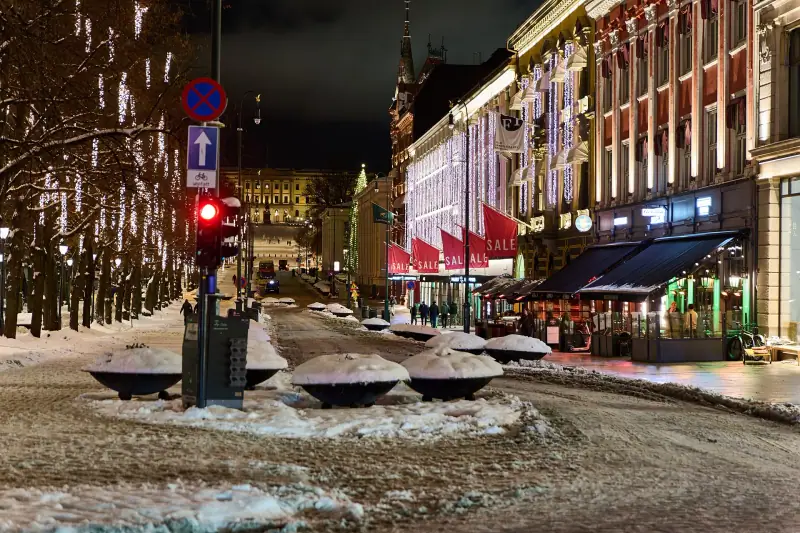
Oslo's Top Sights: 15 Things to Do
Oslo's top sights: Munch Museum, Opera House, Vigeland Park, Aker Brygge. A practical guide to visiting Norway's capital in 2, 3 or 5 days.
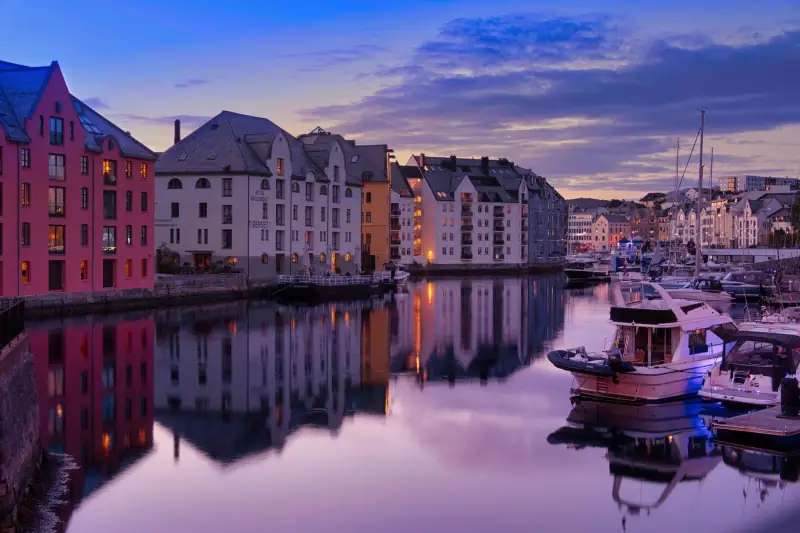
Visiting Ålesund: A Complete Guide to Norway's Art Nouveau City
Ålesund: Art Nouveau architecture, Sunnmøre fjords, Atlanterhavsparken, Geirangerfjord. A complete guide to planning your stay in western Norway.
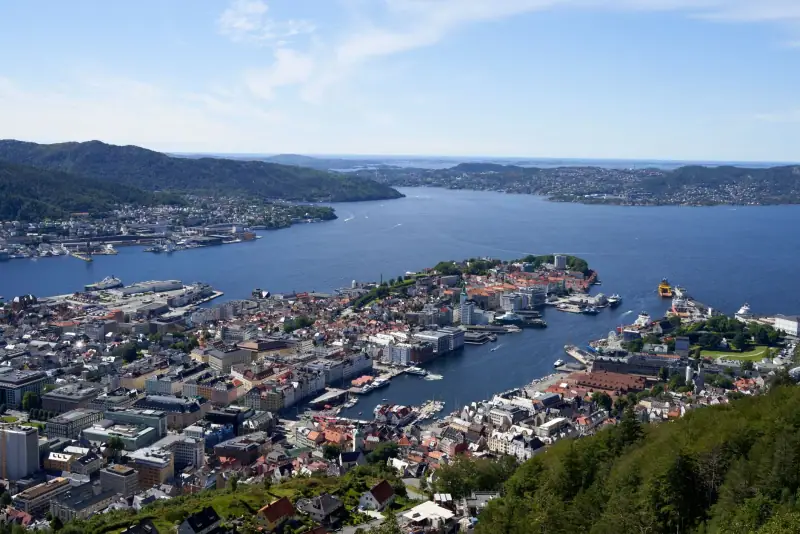
Visiting Bergen: A Complete Guide to the Gateway to the Fjords
Bergen, Norway's second city: Bryggen, Mount Fløyen, fjords and food. A complete guide to planning your stay in Bergen in 2026.
Ready-made
Norway itineraries
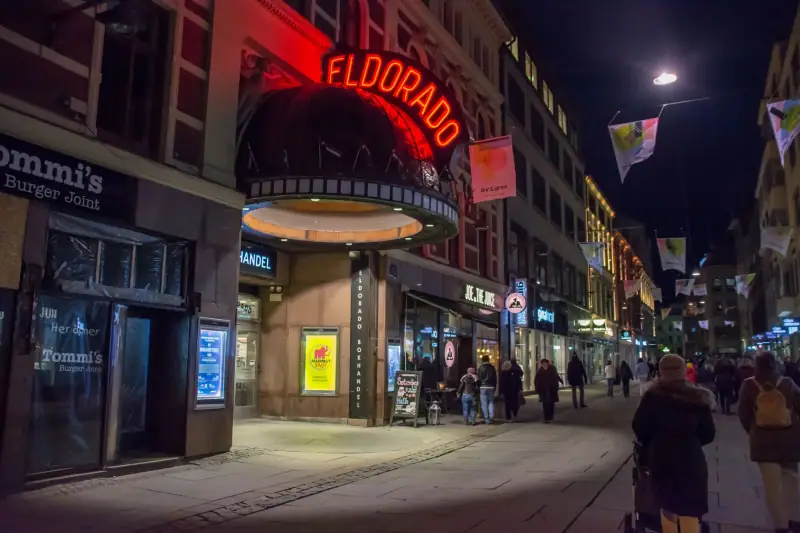
7 days
Norway in 7 Days: Complete Itinerary for Oslo, Bergen and the Fjords
OsloBergen
Can be adapted in the planner
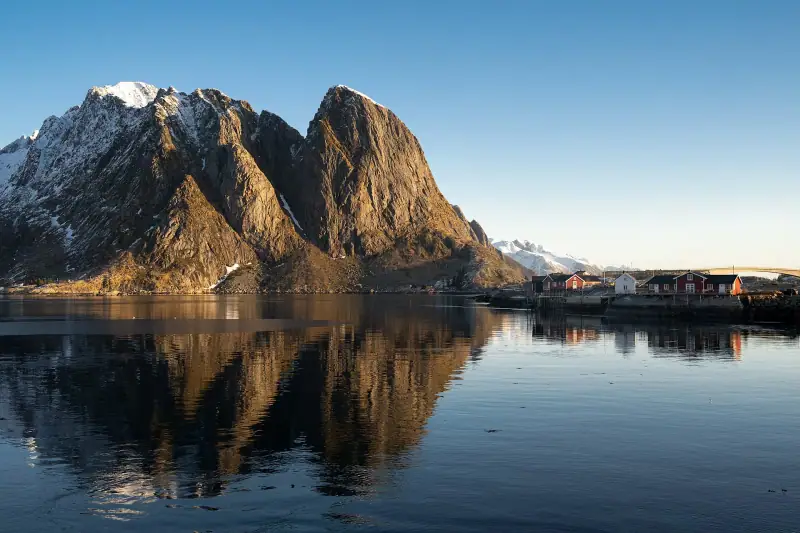
Road Trip Through the Norwegian Fjords: Itinerary and Tips
Complete guide to a fjords road trip in Norway: scenic routes, Geirangerfjord, Nærøyfjord, stops and practical driving tips.
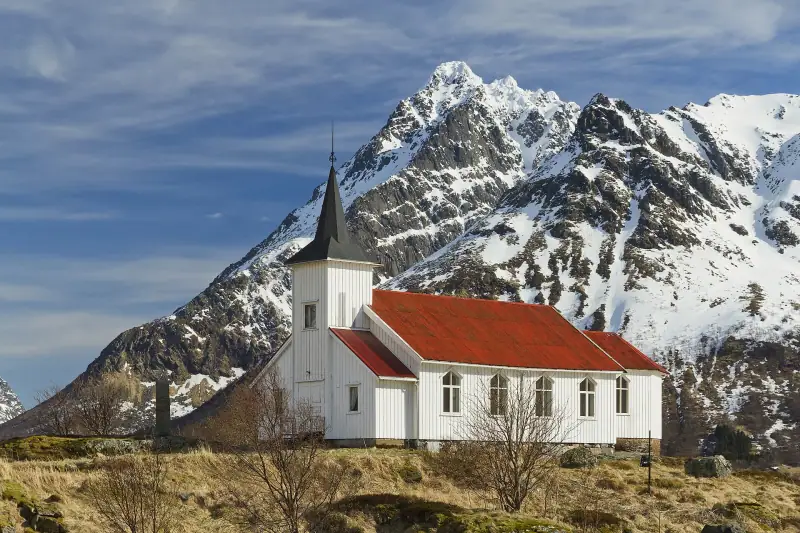
7 days
Lofoten and Tromsø in one week: doable or too ambitious?
Combining Lofoten and Tromsø in 7 days: real distances, travel times, a day-by-day plan and alternatives if the pace is too tight.