What to see
Visiting Bergen: A Complete Guide to the Gateway to the Fjords
We may earn a commission when you book through links on this page, at no extra cost to you. We don't visit or try the places we cover: we summarize published sources. How we work
In short
- Two to three days cover Bryggen (UNESCO), the Fløibanen funicular up Mount Fløyen, the museums and the fish market.
- Bergen is a base for fjord trips: Hardangerfjord, Sognefjord, Nærøyfjord (UNESCO) and the Norway in a Nutshell tour.
- Expect rain year-round: about 2,250-2,500 mm (89-98 in) a year and more than 200 rainy days.
- Budget roughly €115-210 (~$135-245) a day on a tight budget, €320-560 (~$370-650) at comfort level.
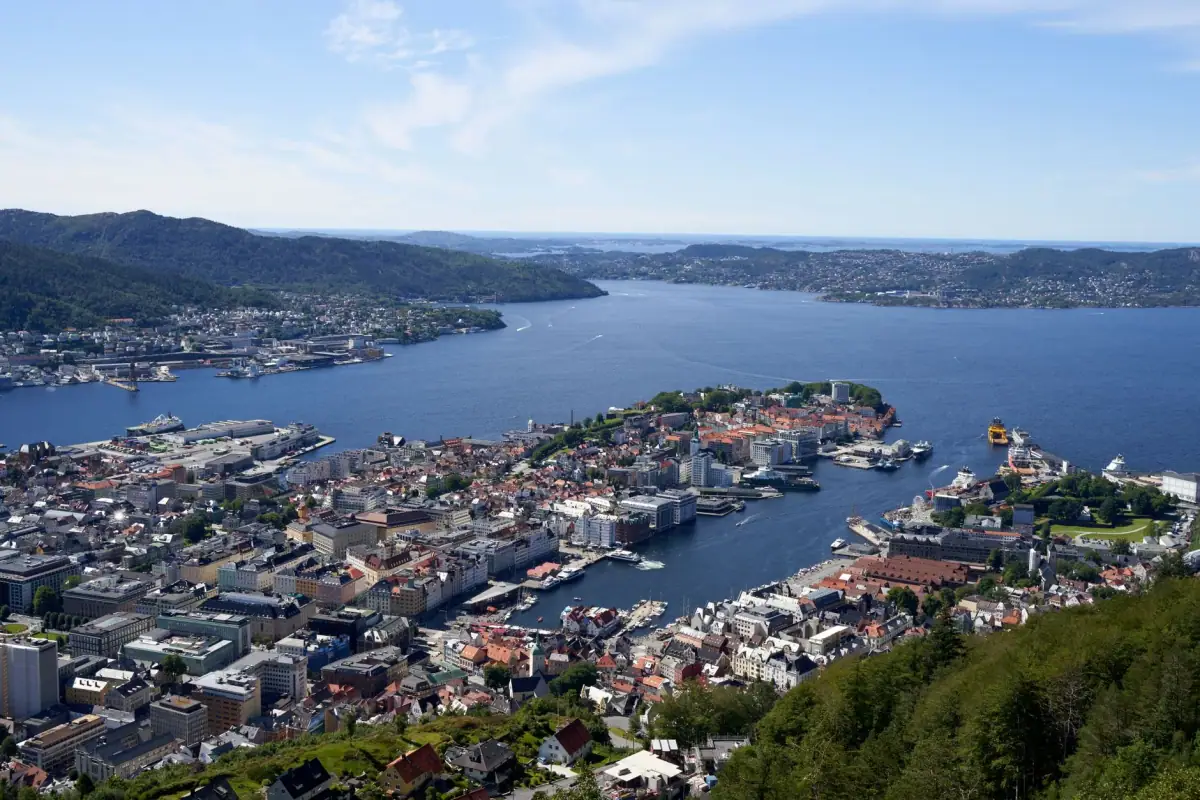
Bergen is a city that fully owns who it is. It knows it is beautiful, that it is rainy, that it is the second city of Norway, and it carries all of this with a quiet serenity that makes it instantly likable. Set between seven mountains and cut by two fjords, this former capital of the medieval Hanseatic League is today the cultural and tourist capital of western Norway.
With 285,000 inhabitants, Bergen is big enough to offer a rich urban life (museums, food, concerts, festivals) and compact enough to explore on foot in a day. But it is above all what lies around Bergen that sets it apart: within an hour are some of the most spectacular fjords in the world, fishing villages hanging between water and rock, and landscapes that have inspired painters, poets and composers for centuries.
This guide gives you the keys to planning a stay in Bergen: the main sights, the city’s secrets, fjord excursions, places to eat and practical information.
Bryggen: the historic heart of Bergen
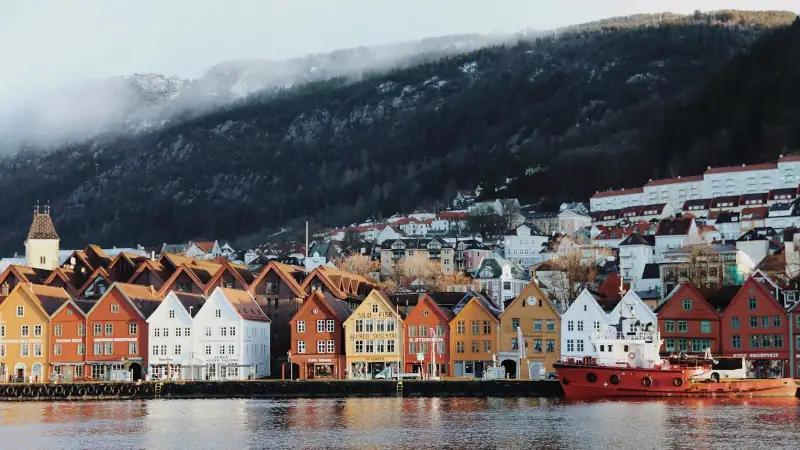
You can’t talk about Bergen without starting with Bryggen. This district of colorful wooden houses lined up along the Vågen harbor is the most emblematic image of Norway, and one of the most photographed in Scandinavia. Bryggen has been a UNESCO World Heritage Site since 1979.
A history going back to the Middle Ages
The first houses of Bryggen were built in the 14th century, when Bergen was one of the most important trading posts of the Hanseatic League, the commercial network that linked the coastal cities of Northern Europe. German Hanseatic merchants settled here for years at a time, making Bergen one of the busiest trading ports in Northern Europe.
After many fires (the last major one was in 1955), the current houses were rebuilt identically, respecting traditional techniques and materials. What impresses today is that behind the colorful facades hide real labyrinths of inner courtyards, narrow passages and buildings nested into one another.
Exploring Bryggen on foot
The best way to discover Bryggen is to leave the main frontage (the one everyone photographs) and head into the inner lanes. There you will find craftsmen’s workshops, small Norwegian design shops, art galleries and restaurants set in carefully preserved spaces.
The Bryggen Museum (Bryggens Museum) traces the history of the district through archaeological digs carried out after the 1955 fire. The remains of medieval houses, tools and everyday objects of the Hanseatic merchants are displayed on site, directly above the excavations, a striking museum presentation.
For lodging in this historic district, see our complete guide Where to stay in Bergen.
Hotels in Bergen
From traditional charm near Bryggen to contemporary design hotels, compare availability and rates for your stay.
Bergen’s seven mountains

Bergen is surrounded by seven mountains, which locals fondly call “de syv fjell,” forming a spectacular natural amphitheater above the city. Two of them are easily reached by mechanical lifts.
Mount Fløyen and the Fløibanen funicular
Fløyen (320 m / 1,050 ft) is the Bergeners’ mountain. The Fløibanen funicular leaves from the center, a few minutes’ walk from Bryggen, and climbs to the summit in 8 minutes, where you take in the whole city, the harbor, the surrounding fjords and, in clear weather, the offshore archipelagos.
At the top, a network of marked trails crosses birch and fir forests. The most popular trail walks back down to town in about 45 minutes, a nice way to finish the funicular ride without retracing the same route.
Practical information:
- Fløibanen: departs from Vetrlidsallmenningen, in central Bergen
- Round-trip fare: about 145 NOK (adult) in winter and 200 NOK from April 1 to September 30. Discounts exist for children
- Runs year-round, from early morning until midnight in summer
Ulriken and its cable car
Ulriken (643 m / 2,110 ft) is the highest of Bergen’s seven mountains. The Ulriksbanen cable car climbs in a few minutes from the Haukeland district to the summit, where the panorama is even wider than from Fløyen. In good weather, you can make out Hardangerfjord to the south and Sognefjord to the north.
From the summit of Ulriken, a hiking trail links the seven mountains, a multi-hour crossing reserved for well-equipped walkers.
For hikers who want to explore Norwegian trails further, our guide Hiking in Norway details the best options around Bergen.
Culture and museums
Bergen is a city of culture, driven by a strong musical tradition and a lively art scene. The museums are of remarkable quality for a city of this size.
KODE: Bergen’s art museums
KODE groups four museum buildings around the Lille Lungegårdsvannet lake, a few minutes’ walk from Bryggen. It is one of the largest museum complexes in Scandinavia.
The collections cover Norwegian decorative arts (silverware, furniture, traditional textiles), painting by 19th-century Scandinavian masters, including Edvard Munch, J.C. Dahl and Harriet Backer, as well as works by Picasso and Klee in the international collection. KODE also manages composers’ houses, including Troldhaugen (Grieg).
Admission: About 200 NOK (adult); check prices and hours at kodebergen.no.
Grieg’s home: Troldhaugen
About 8 km (5 mi) south of the center is Troldhaugen, the house where Edvard Grieg (1843-1907) lived the last 22 years of his life and composed most of his work. The villa is under restoration and closed to visitors: check kodebergen.no before making the trip. The park remains accessible, and the museum and concert hall (Troldsalen) open only on event and concert days, held in a small hall with exceptional acoustics.
Practical information: Reachable by bus from central Bergen. Check the concert schedule: attending one during your stay is an unforgettable experience.
Bergenhus Fortress
On the north shore of the Vågen harbor, Bergenhus Fortress is one of the best-preserved medieval fortresses in Norway. The Rosenkrantz Tower (16th century) and Haakon’s Hall (Håkonshallen, 13th century), a large Gothic hall built around 1260-1261 under King Haakon IV, which notably hosted the wedding of King Magnus Håkonsson in 1261, are the centerpieces of an impressive historic complex.
Access to the fortress grounds is free. Visiting the buildings costs money (about 100 NOK).
Food in Bergen
Bergen has a well-deserved food reputation, driven by the exceptional quality of its seafood and a new generation of chefs reinterpreting traditional Norwegian cooking.
The Fish Market (Fisketorget)
The Fisketorget, on the quays of the Vågen harbor facing Bryggen, is the most famous fish market in Norway. Open for centuries, it brings together stalls of fresh fish, seafood, Norwegian caviar, Arctic shrimp and local specialties.
You can eat on the go or buy to cook. Be sure to try the fresh shrimp (reker) peeled on slices of dark bread, or a portion of gravlax salmon. The market is liveliest in the morning.
Tip: Prices are higher than elsewhere, but the quality and freshness of the products are there.
Specialties to try in Bergen
- Bergen-style bacalao: Bergen has its own version of bacalao (salted cod), inherited from centuries of exchange with the Mediterranean via the Hanseatic League. It is prepared with tomatoes, olives and peppers, a surprisingly Mediterranean recipe for a Nordic city
- Komle: potato dumplings mixed with barley flour, served with smoked pork and rutabaga. A traditional Bergen dish, served on Thursdays in many restaurants
- Atlantic salmon: raised in the surrounding fjords, it is of exceptional quality. As sashimi, gravlax or simply grilled
- Oysters and mussels: the fjords around Bergen produce remarkably delicate shellfish, served in the restaurants of the old town
- Kvæfjordkake: the Norwegian “national cake” (sponge cake, meringue, almonds and cream) is found in every bakery in Bergen
Food tours and activities in Bergen
Guided fish market visits, local product tastings, walking food tours through Bryggen: experience Bergen differently.
Bergen, gateway to the fjords
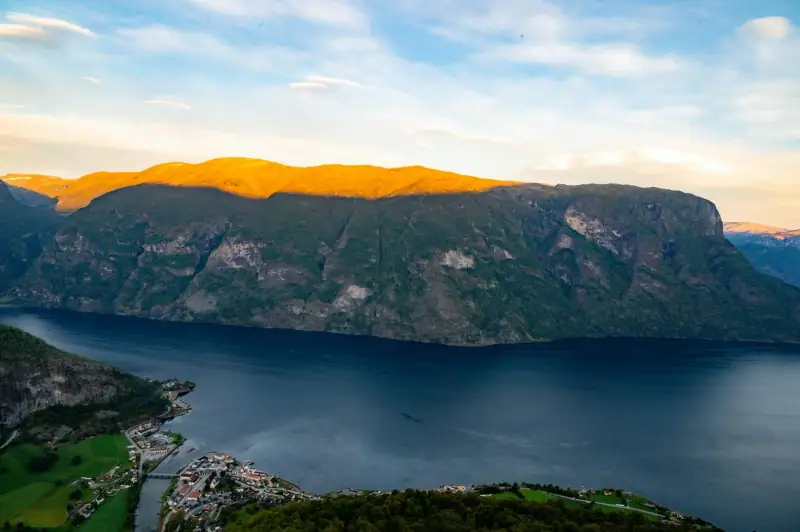
This may be Bergen’s greatest strength: its geographic position at the crossroads of the most spectacular fjords in Norway. Within an hour by road or boat, you leave the city and enter landscapes beyond anything you can imagine.
Hardangerfjord
Hardangerfjord (the “garden fjord”) is the second-longest fjord in Norway, about an hour southeast of Bergen. It is famous for its orchards (in spring, blossoming apple and cherry trees are reflected in the water) and for Vøringsfossen, a waterfall that drops 182 m (597 ft) into a dizzying canyon.
The village of Eidfjord is an excellent base for exploring the region.
Sognefjord and Nærøyfjord
Sognefjord is the longest fjord in Norway (204 km / 127 mi) and the deepest in Europe (1,308 m / 4,291 ft). From Bergen, it can be reached by express boat to Flåm (about 5 hours, a seasonal service from spring to fall) or by car on the E16.
Nærøyfjord, an arm of Sognefjord, is a UNESCO World Heritage Site. Its rock walls rise 1,300-1,400 m (4,265-4,590 ft) above water that is sometimes only 250 m (820 ft) wide, a breathtaking sight.
The “Norway in a Nutshell” tour
The Norway in a Nutshell tour is the most popular organized trip in Norway, and it passes through Bergen. It combines the Flåm railway (Flåmsbana, one of the most scenic railway lines in the world), a cruise on Nærøyfjord, a panoramic bus and the Bergen-Oslo train, all in a day (or two to enjoy it more). Most visitors do the tour in the Bergen → Oslo or Oslo → Bergen direction.
Find cruise details in our guide Fjord cruises.
Fjord cruises from Bergen
Nærøyfjord, Hardangerfjord, Norway in a Nutshell: book your boat excursions from Bergen online.
Getting around Bergen
In the city
Bergen is a very pleasant city to walk. The historic center around Bryggen, the Vågen harbor and the shopping district is entirely walkable from the main hotels.
The Skyss bus network and the light rail (Bybanen) cover the whole urban area. A single ticket costs about 40-45 NOK. The light rail links Flesland Airport to central Bergen in 45 minutes.
For excursions
Renting a car is recommended if you want to explore the fjords at your own pace, especially Hardangerfjord and the scenic roads. Roads are well maintained but can be winding and sometimes narrow. In summer, they are passable without special equipment.
See our Western Fjords road trip guide for a detailed itinerary from Bergen.
Car rental in Bergen
Compare offers from Flesland Airport or the city center. Essential for exploring the fjords freely.
Essential practical information
Getting to Bergen
By air: Bergen Flesland Airport (BGO) has many direct connections from European cities, or connections via Oslo. The Bybanen (light rail) links the airport to the city center in 45 minutes.
By train from Oslo: The Bergensbanen is one of the most beautiful railway lines in Europe. 7 to 8 hours across the Hardangervidda plateau, the fjords and forests, a journey in itself. Book ahead at vy.no for good fares.
By Hurtigruten boat: The legendary coastal postal ship (Hurtigruten or Havila Kystruten, which share the route) calls at Bergen on the Bergen-Kirkenes route. A romantic, slow way to arrive or leave.
When to visit Bergen
Bergen can be visited year-round, but each season has its own character:
- Summer (June to August): The best weather (relatively speaking), long days, the fjords at their finest. The city is very busy, so book ahead
- Spring (April to May): The Hardangerfjord orchards are in bloom, the light is soft, and there are fewer people than in summer
- Fall (September to October): Foliage changes, the light is magnificent, prices drop
- Winter (November to March): Bergen is not an obvious winter destination (no northern lights in town, little snow), but the museums are easier to access and the atmosphere is more authentic
For a full analysis, see our guide Best time to visit Norway.
Bergen day to day
Language: Norwegian is the official language, but English is spoken fluently by the whole population.
Currency: Norwegian krone (NOK). Card payments are universal; cash is rarely needed.
Weather: Bergen is known for its rain, and rightly so. Bring a waterproof jacket in any month. A poncho or waterproof anorak is better than an umbrella in the wind.
Safety: Bergen is a very safe city. The usual city precautions are more than enough.
Budget: how much does a stay in Bergen cost?
Bergen is an expensive city, like all of Norway, but less so than Oslo.
| Item | Tight budget | Comfort budget |
|---|---|---|
| Lodging (per night) | €70-100 (~$80-115) (hostel / Airbnb) | €120-200 (~$140-230) (3-4 star hotel) |
| Meals (per day) | €35-55 (~$41-64) (supermarket + 1 restaurant) | €70-120 (~$80-140) (2 restaurants) |
| Activities (per day) | €0-40 (~$0-46) (walk up Fløyen + a museum) | €80-150 (~$95-175) (guided tours) |
| Transport (per day) | €10-15 (~$12-17) (bus) | €50-90 (~$58-105) (car) |
| Total per day | €115-210 (~$135-245) | €320-560 (~$370-650) |
Tips for saving money:
- Walk up Fløyen (free, 45 minutes from the center) rather than taking the funicular round trip
- Shop at supermarkets (Rema 1000, Kiwi) for breakfasts
- The fish market is more affordable on weekdays and early in the morning
- KODE sometimes offers free admission on certain evenings
- The Bybanen light rail is cheap and handy for reaching the airport
For a full budget analysis of Norway, see our guide Norway budget.
In short: why Bergen is a must-see
Bergen is one of those cities that needs nothing but itself to charm you. Its colorful Bryggen houses, its seven mountains dropping into the sea, its fish market and seafood cuisine, its cultural life carried by Grieg and its art museums: all of this would make it a remarkable destination anywhere in the world.
But Bergen has the added, unique advantage of being the gateway to the wildest and most spectacular landscapes in Europe: the Norwegian fjords. That is why people come to Bergen, and why they come back.
To plan your trip around Bergen and through the fjords, see our guide Western Fjords road trip and our selection of fjord cruises.
Frequently asked questions
How long do you need in Bergen?
Two to three days let you see the essentials: Bryggen, Fløyen, the museums and the fish market. With four or five days, you can add a fjord cruise from Bergen (Hardangerfjord or Sognefjord) and explore the residential neighborhoods and the surroundings.
Is Bergen really as rainy as people say?
Yes. Bergen is one of the rainiest cities in western Europe, with about 2,250 to 2,500 mm (89-98 in) of precipitation a year depending on the reference period, and more than 200 rainy days. Bring a waterproof jacket and waterproof shoes in any season. The locals take it with humor.
How do you get from Oslo to Bergen?
By air: 50 minutes, with hourly flights on Norwegian and SAS. Bergen Flesland Airport (BGO) is about 20 km (12 mi) from the center, linked by the Bybanen light rail (about 45 minutes) or the Flybussen airport bus (about 30 minutes). By train (Bergensbanen): a legendary 7 to 8 hour journey through the fjords and across the Hardangervidda plateau, highly recommended for the experience and the scenery.
Is Bergen a good base for visiting the fjords?
Absolutely. Bergen is nicknamed the "gateway to the fjords" for a reason: within a few hours at most by boat, train or car, you reach spectacular fjords like Hardangerfjord, Sognefjord (the longest in Norway) or the UNESCO-listed Nærøyfjord. Most "Norway in a Nutshell" tours include Bergen as a starting or ending point.
What is the average budget for a stay in Bergen?
Expect about €100-150 (~$115-175) a night for a decent 3-star hotel, €30-50 (~$35-58) a meal in an ordinary restaurant, and about €12 (~$14) for a 24-hour transit ticket (136 NOK for one zone). A 3-night stay for two people comes to roughly €1,000-1,500 (~$1,160-1,740) excluding international travel, depending on meals and activities. Bergen is cheaper than Oslo but still a high-cost European city.
What is there to do in Bergen in bad weather?
Rain is no obstacle in Bergen. Use it to visit the four KODE buildings (art museum), the Bryggen Museum, Troldhaugen (Edvard Grieg's home, a villa under restoration: check opening status), or the Bergen Aquarium's remarkable collection. A warm café in a Bryggen house is also an excellent option.
More Norway guides
Keep reading
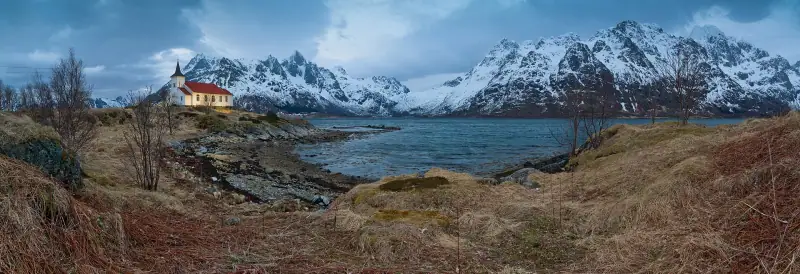
Visiting the Lofoten Islands: Complete Guide to Norway's Archipelago
Everything you need to visit the Lofoten Islands: fishing villages, hikes, northern lights, food and practical tips. 2026 guide.
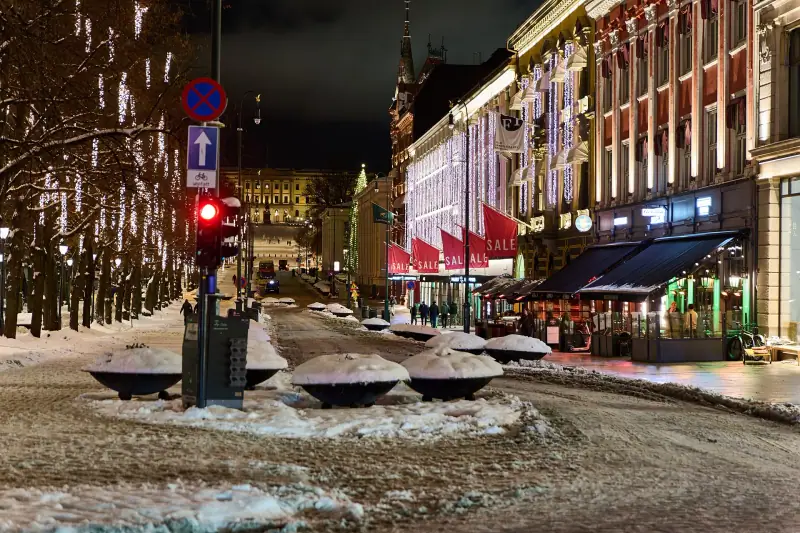
Oslo's Top Sights: 15 Things to Do
Oslo's top sights: Munch Museum, Opera House, Vigeland Park, Aker Brygge. A practical guide to visiting Norway's capital in 2, 3 or 5 days.
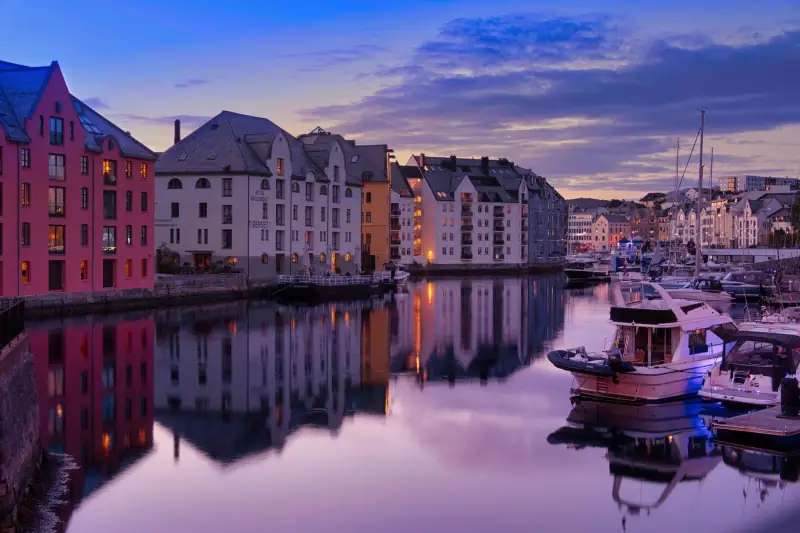
Visiting Ålesund: A Complete Guide to Norway's Art Nouveau City
Ålesund: Art Nouveau architecture, Sunnmøre fjords, Atlanterhavsparken, Geirangerfjord. A complete guide to planning your stay in western Norway.
Ready-made
Norway itineraries
7 days
Norway in 7 Days: Complete Itinerary for Oslo, Bergen and the Fjords
OsloBergen
Can be adapted in the planner
Road Trip Through the Norwegian Fjords: Itinerary and Tips
Complete guide to a fjords road trip in Norway: scenic routes, Geirangerfjord, Nærøyfjord, stops and practical driving tips.
7 days
Lofoten and Tromsø in one week: doable or too ambitious?
Combining Lofoten and Tromsø in 7 days: real distances, travel times, a day-by-day plan and alternatives if the pace is too tight.