Things to do
Things to do in Rotorua: geysers, Māori culture and nature
We may earn a commission when you book through links on this page, at no extra cost to you. We don't visit or try the places we cover: we summarize published sources. How we work
In short
- Two days cover one geothermal site, a Māori cultural experience and a forest walk; three days add a second thermal site, Lake Tarawera or rafting.
- Te Puia is the easiest site with the Pohutu geyser, Wai-O-Tapu is known for colorful pools, and Waimangu for its volcanic valley.
- Auckland is a little over 200 km (124 mi) away, about 3 hours by road.
- Stay on the marked paths in geothermal areas, and bathe only in places signed for it.
Rotorua is unlike any other town in New Zealand. Here, steam escapes from the sidewalks, mud pools bubble in the parks and a light smell of sulfur drifts in the air. Set on an active volcanic zone of the North Island, the town is also one of the great centers of Māori culture, with traditions that are still alive.
In two or three days, you can mix geothermal sites, forests, lakes, food and cultural encounters. This guide details what to see, how to organize your stay and how to avoid common mistakes. To choose your dates, also see our article when to go to New Zealand.
Why Rotorua is unique
Rotorua lies in the Taupō Volcanic Zone, a region where the earth’s crust is thin and underground heat rises easily to the surface. The result: geysers, steam vents, pools of unlikely colors and hot springs found right in public gardens.
The town is bordered by a large lake and surrounded by other smaller lakes, forests and hills. It is an obvious stop on the road between Auckland and the center of the North Island. The distance from Auckland is a little over 200 km (124 mi), about 3 hours by road.
Rotorua is also an important center for the Māori people, and notably for the region’s communities. There are many cultural visits: take time to choose experiences that really tell a story rather than a simple show.
Te Puia and the Whakarewarewa geysers
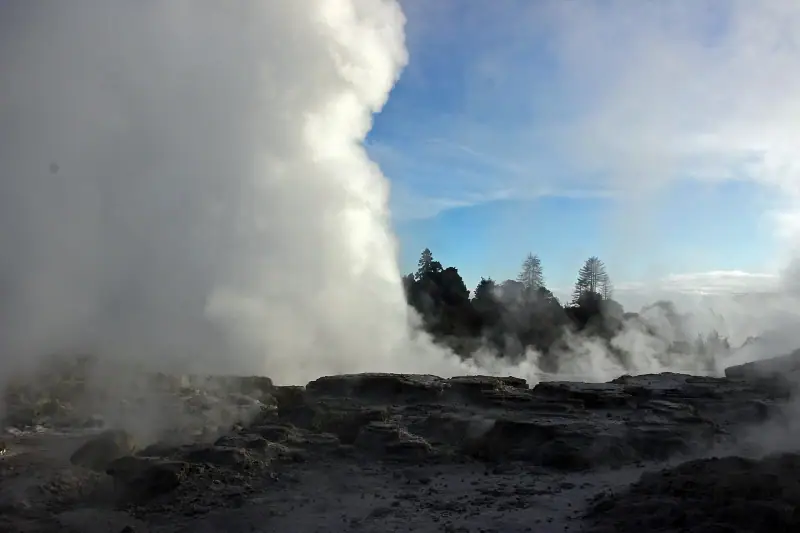
Te Puia is the easiest site to reach, right by downtown. It is best known for its Pohutu geyser, one of the most active in the Southern Hemisphere, which erupts several times a day. Eruptions are frequent but their height varies, so a little patience is needed.
The site also houses the Māori arts and crafts institute, where you can see wood carvers and weavers at work. It is a good way to understand that Māori culture is not just a memory of the past, but a skill passed on today. You will also meet kiwis, those discreet birds, in an enclosure adapted to their nocturnal habits.
Allow about two to three hours there. Arrive preferably early in the morning or late in the afternoon to avoid the largest groups, and keep a light layer: steam and wind can make it feel cool even in sunny weather.
Next door, the village of Whakarewarewa offers a guided visit by residents, who explain how their families have used natural heat for cooking and bathing for generations.
Hotels in Rotorua
Motels, lodges and hotels near the lake: compare accommodation by your dates.
Wai-O-Tapu: the geothermal wonderland
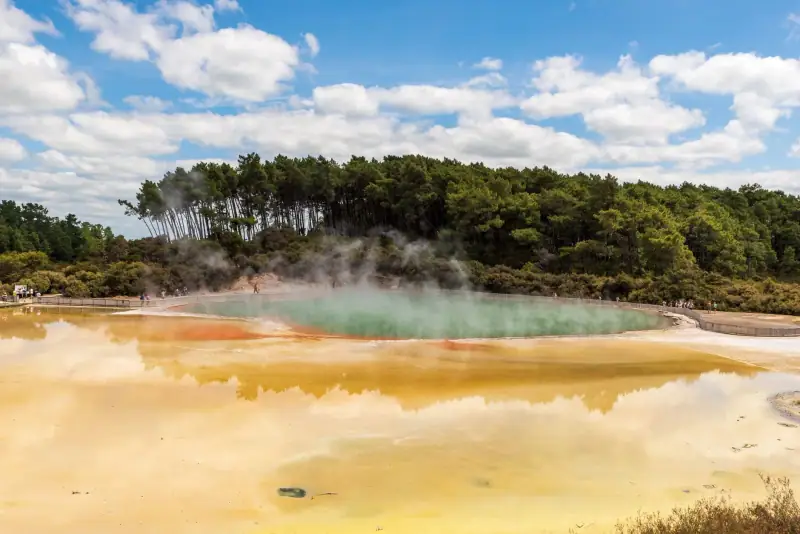
About 30 km (19 mi) south of Rotorua, Wai-O-Tapu is known for its multicolored pools. Depending on the dissolved minerals, the water takes on green, orange or bright yellow hues, and the contrasts are particularly striking in clear weather.
The route is marked in loops of different lengths, which lets you adapt the visit to your pace. You see craters, mud pools and mineral terraces. Allow between an hour and a half and three hours depending on the circuit chosen.
It is a very popular site: mornings are often calmer. Always stay on the paths, because the ground can be fragile and very hot near the pools.
Waimangu, the volcanic valley
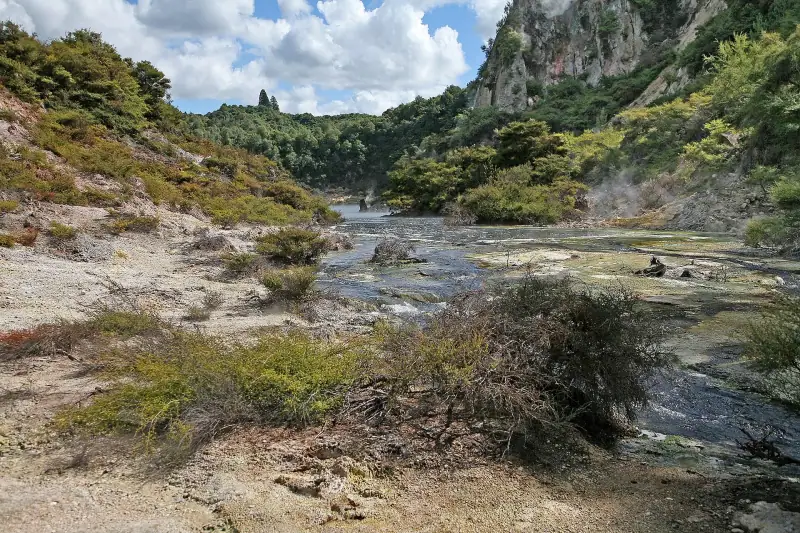
Waimangu Volcanic Valley is a wilder site, formed after the eruption of Mount Tarawera in 1886. The trail descends gently through vegetation that has recolonized the landscape, to the edge of a lake with steaming waters.
What you appreciate there is less the spectacular effect than the atmosphere: the silence, the birds, the steam rising from the shores. A shuttle generally brings visitors back to the entrance, which avoids walking back up. A lake cruise option is offered at certain times.
If you must choose only one geothermal site, Waimangu suits hiking enthusiasts, Te Puia those who want to combine geysers and culture, and Wai-O-Tapu those who are after the colors.
The Whakarewarewa Redwoods
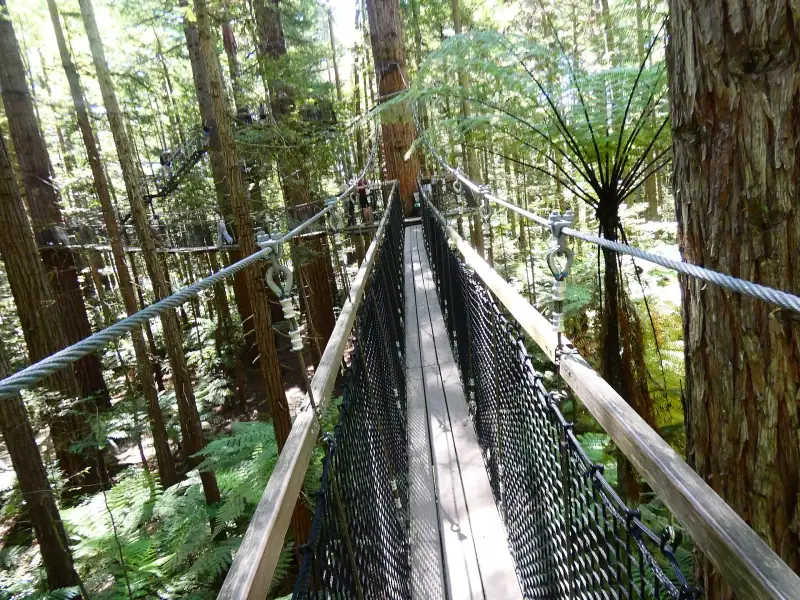
On the edge of town, the Whakarewarewa forest, often simply called “the Redwoods”, surprises with its giant redwoods planted in the early 20th century. Walking and mountain-biking trails there number in the dozens, from the easiest to the most technical.
A suspended walkway in the trees lets you walk at canopy height, and in the evening, lanterns light the route. It is a pleasant family outing, and a good plan for a quieter half day after the geothermal sites.
Mountain biking is one of the big local specialties: the trails are renowned among the best in the country, and you can rent equipment there.
Activities in Rotorua
Cultural visits, Māori evenings, excursions: compare and book ahead.
Experiencing Māori culture
Rotorua is the ideal place to discover Māori culture. Several venues offer evenings with a traditional welcome, songs, dances (including the haka) and a meal prepared by the hāngī method, steam cooking in an earth oven dug into the ground.
A few tips for choosing:
- Choose experiences run or co-run by local Māori communities.
- Ask whether the meal is included and whether vegetarian options exist.
- Book ahead in high season, because evening slots fill quickly.
The haka is not a simple show: it is an expression of pride, history and identity. Listening to the guides’ explanations makes the experience much richer.
Relaxing in the hot springs
After a day of walking, nothing beats a hot bath. The Polynesian Spa, on the shore of Lake Rotorua, is one of the town’s best-known thermal establishments, with pools of different temperatures overlooking the water.
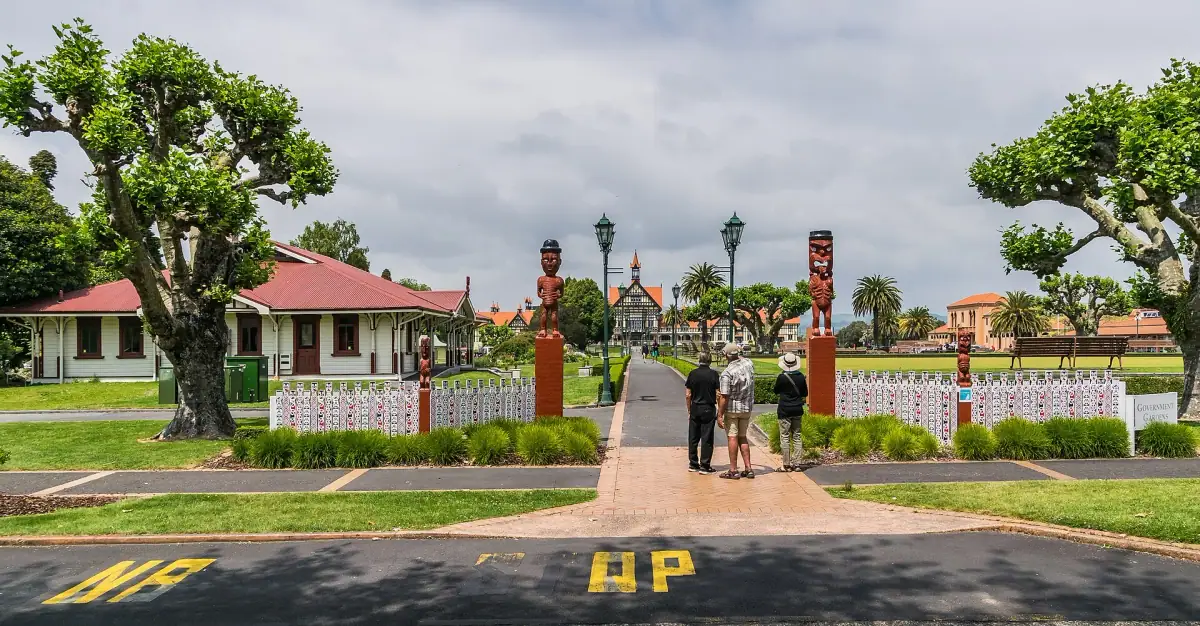
In the nearby Government Gardens, the former Tudor-style bath house houses the Rotorua Museum, closed since 2016 for earthquake-strengthening work, with reopening expected in 2027. Check its status before you leave: the building’s exterior, very photogenic, remains visible from the gardens.
Some natural hot streams are also accessible free of charge around the town. Find out locally before bathing: temperature and acidity can vary, and some places are off limits or dangerous.
Outdoor activities around Rotorua
The surroundings of the town are full of more physical activities:
- Rafting on the Kaituna River, known for its drop of about seven meters (23 ft), presented as the highest in the world for commercial rafting.
- Luge and gondola on the heights of the town, with a view over the lake.
- Ziplining and canopy activities in the heart of the forest.
- Walks and kayaking on the region’s lakes, including quieter Lake Tarawera.
Flights to Auckland
Most travelers arrive via Auckland, about 3 hours by road from Rotorua.
Excursions from Rotorua
Rotorua is a practical base for fanning out across the region:
- Hobbiton Movie Set, in Matamata, about an hour by road, for fans of the Lord of the Rings and Hobbit films. The visit is in a guided group: book ahead.
- Taupō, about an hour south, with its large lake and Huka Falls.
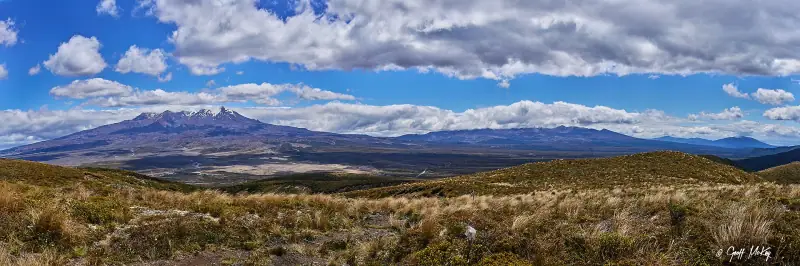
- Tongariro National Park, farther south, for the famous Tongariro crossing, to be considered as a dedicated day.
A rental car is the most flexible way to link these stops. Our tip: put the Hobbiton excursion on the day you leave the region, if you are continuing north.
Where to eat and what to taste
The town offers a varied food scene, with cafés, modern New Zealand restaurants and Asian-inspired addresses. The downtown restaurant district, nicknamed “Eat Streat”, concentrates bars and outdoor seating, and stays lively in the evening.
Be sure to try hāngī, New Zealand seafood, lamb and local fruit depending on the season. Menus vary and places change regularly: check recent reviews before choosing.
How long to stay and when to go
Two days are enough to see the classics; three days let you slow down. A four-day stay is justified if you include Hobbiton, Taupō and rafting.
Rotorua can be visited all year, making it a good option in winter, when the South Island is harder to reach. The southern summer is the busiest period, and hot baths are particularly pleasant in cool weather.
Practical tips
- Bring warm clothes and a rain jacket, even in summer.
- Never step off the paths in geothermal areas.
- Book cultural evenings and guided visits ahead in high season.
- Do not leave anything of value visible in the car, including in tourist-site parking lots.
- Keep a little free time: the best of Rotorua is sometimes the unexpected, like a hot bath at sunset.
Frequently asked questions
How long does it take to visit Rotorua?
Two days let you see the essentials: a geothermal site, a moment of Māori culture and a walk in the forest. With three days, you add a second thermal site, Lake Tarawera or a more sporty activity such as rafting.
Why does Rotorua smell like rotten eggs?
The smell comes from hydrogen sulfide, a gas released by the region's geothermal activity. It is stronger near hot springs and mud pools, but you get used to it quickly.
What is the best geothermal site in Rotorua?
It depends on what you are after. Te Puia combines geysers and Māori culture, Wai-O-Tapu is known for its colorful pools, Waimangu for its volcanic valley and quiet walks. A single one of these sites is enough for a short stay.
How do you get from Auckland to Rotorua?
By car, allow about 3 hours for a little over 200 km (124 mi) on the state highway. It is also a common long-distance bus route. A car remains the most practical for visiting the sites around Rotorua.
Can you bathe in natural hot springs?
Yes, in certain places only, and with caution. Some springs are developed and safe, others are dangerous because they are very hot or acidic. Bathe only in places signed as such and follow local signs.
Do you need to book activities ahead?
It is advisable in high season (December to February) for Māori cultural evenings, rafting and guided visits. Off season, you can generally find a spot by booking a few days before.
More New Zealand guides
Keep reading
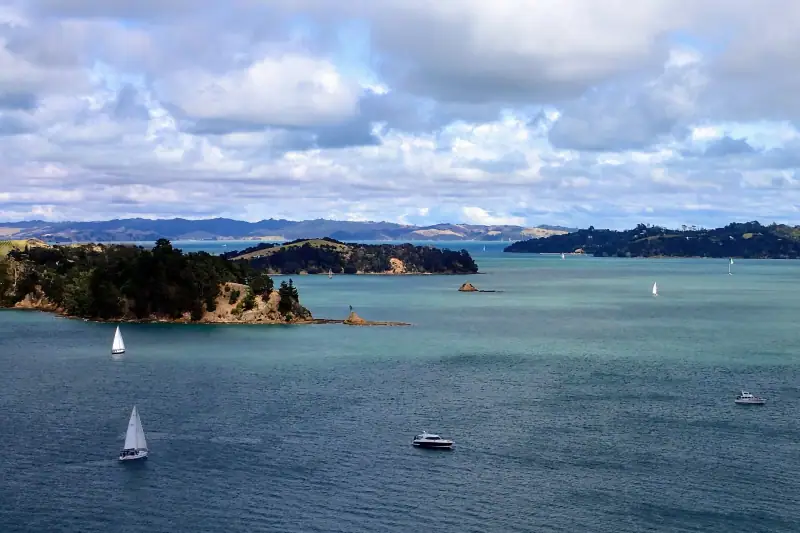
Waiheke from Auckland without a car: ferry, bus, vineyards and prices
Get to Waiheke Island by ferry from Auckland without a car: crossing, buses on the island, beaches, vineyards, a day's budget and mistakes to avoid.
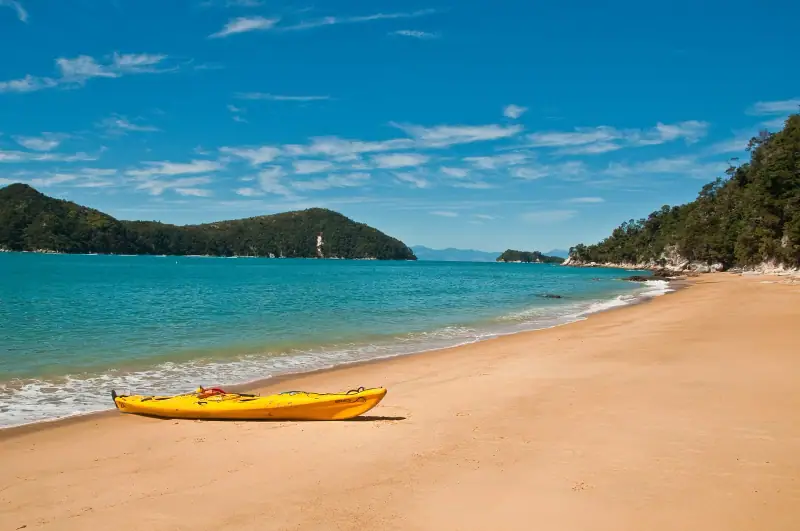
Abel Tasman National Park: hiking, kayaking and beaches
Abel Tasman, New Zealand: Coast Track, kayaking, water taxis, seals and golden beaches. A guide to plan 1 to 4 days in this South Island coastal park.
New Zealand budget: real costs, 3 profiles and money-saving tips
How much does New Zealand cost? Real prices by item (lodging, transport, food, activities), three 15-day budgets and tips to pay less.
Ready-made
New Zealand itineraries

3 days
3 days in Auckland: a day-by-day itinerary with islands, volcanoes and beaches
What to do in 3 days in Auckland: Sky Tower, urban volcanoes, Waiheke Island and west coast beaches, with a day-by-day plan and practical tips.
3 days
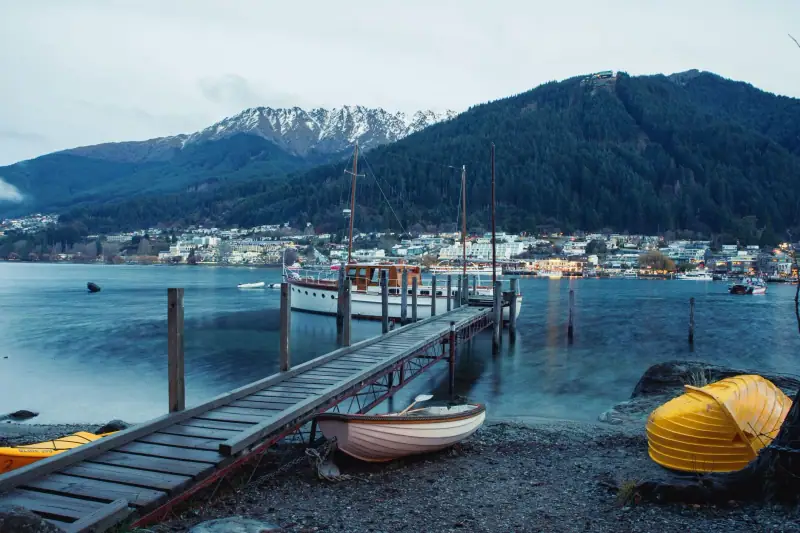
3 days in Queenstown: a day-by-day itinerary with activities and tips
What to do in 3 days in Queenstown: Lake Wakatipu, Arrowtown, Glenorchy and adventure activities, in a day-by-day plan with tips to organize it.
7 days
North Island road trip in 7 days: Auckland to Wellington
7-day North Island road trip: Auckland, Waitomo, Rotorua, Taupō, Tongariro and Wellington, with drive times, stops and practical tips.