Things to do
Abel Tasman National Park: hiking, kayaking and beaches
We may earn a commission when you book through links on this page, at no extra cost to you. We don't visit or try the places we cover: we summarize published sources. How we work
In short
- The Coast Track is a Great Walk of about 60 km (37 mi), done in three to five days; book huts and campsites with the Department of Conservation.
- One day is enough for a taste: a water taxi north, then a few hours' walk back to Marahau along the beaches.
- From Nelson, allow about 1 h to 1 h 30 by road to Marahau, the main entrance, via Motueka.
- Check tide times for the Awaroa crossing and book water taxis and kayaks ahead from December to February.
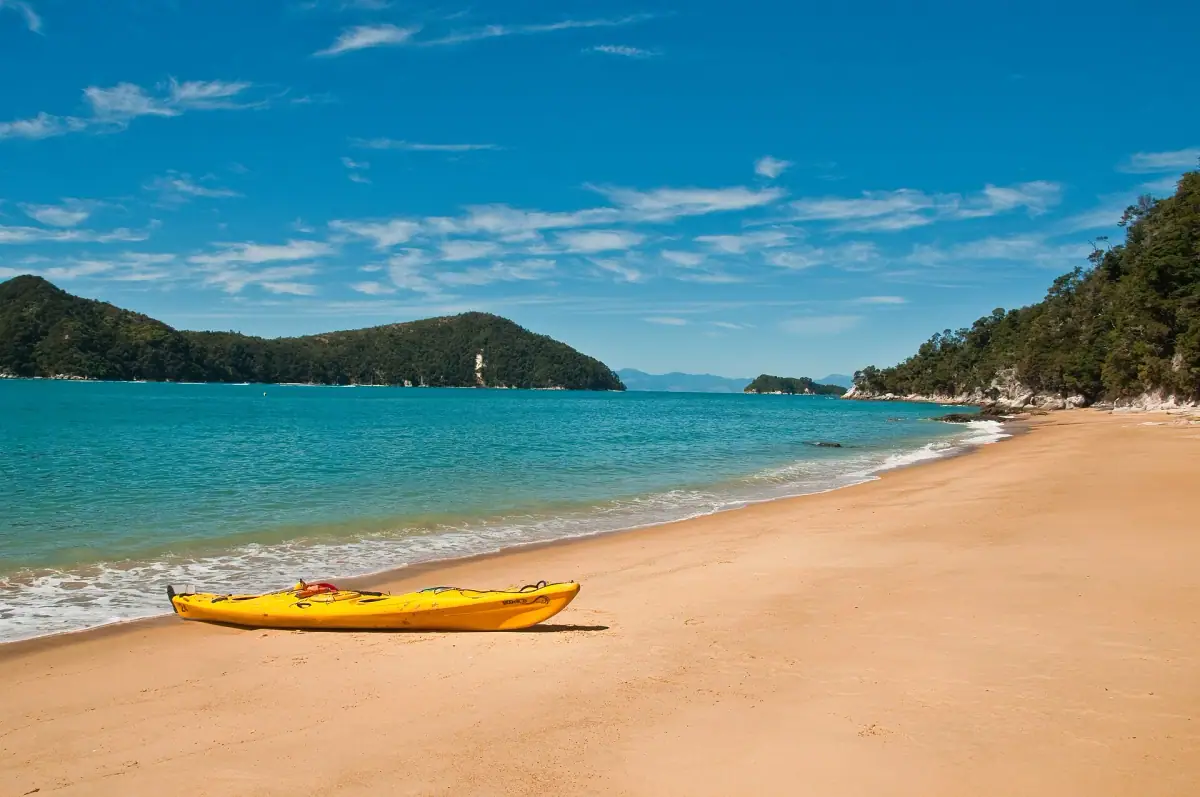
In the north of the South Island, Abel Tasman National Park is the smallest in New Zealand, but among the best loved. It has golden sand coves, clear water, fern forests running down to the sea and seals lounging on the rocks. There are no high mountains here: the setting is a gentle coast, explored on foot, by kayak or by boat.
This guide helps you choose between hiking and paddling, understand how the Coast Track works and organize your stay. The park fits naturally into a 10-day South Island road trip, and to choose your dates, you can see our article when to go to New Zealand.
Location and access to the park
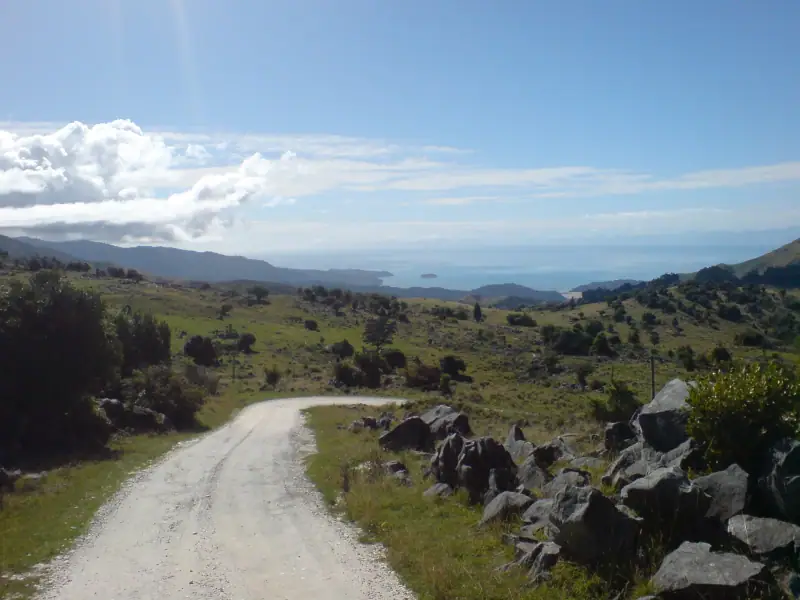
The park is in the Tasman region, west of the city of Nelson, on the coast bordering Tasman Bay. The main entry point in the south is the hamlet of Marahau, reached via Motueka. From Nelson, the road takes about one hour to one and a half hours depending on traffic. In the north, access is via Wainui or Totaranui, on the Golden Bay side.
This geography makes it a park where you travel largely by sea. The trails follow the shoreline, and water taxis drop off and pick up walkers and kayakers in the various bays. This flexibility lets you compose your own route: walk one way and come back by boat, or the reverse.
A car is handy for reaching Marahau and getting around the region. If you plan to continue south, note that the Nelson region is also a pleasant stop before following the West Coast.
Places to stay near Abel Tasman
Motels, guesthouses and hotels in Nelson, Motueka or Marahau: compare by your dates.
The Abel Tasman Coast Track
The Coast Track is one of New Zealand’s Great Walks, that is, a long-distance trail managed by the Department of Conservation (DOC). It is about 60 km (37 mi) long and follows the coast between Marahau and Wainui. It is generally walked in three to five days, with short stages and gentle terrain.
Its charm lies in its variety: forest, beaches, estuaries and viewpoints over the islets alternate. The trail is wide and well marked, which makes it accessible to families and less experienced hikers. Huts and campsites are spread along the route, but they are booked ahead with the DOC, especially in summer.
A few points to keep in mind:
- The trail can be done in both directions, depending on water taxi logistics.
- One crossing at Awaroa depends on the tide: it is crossed on foot around low tide. Check tide times before you set out.
- You need to carry your food, stove and sleeping bag if you sleep in a hut: services are limited.
- The weather changes fast, even in summer: a waterproof jacket is essential.
If you have only one day, many travelers take a water taxi to the north of the park and walk back toward Marahau in a few hours, enjoying the beaches along the way.
Kayaking in the bay
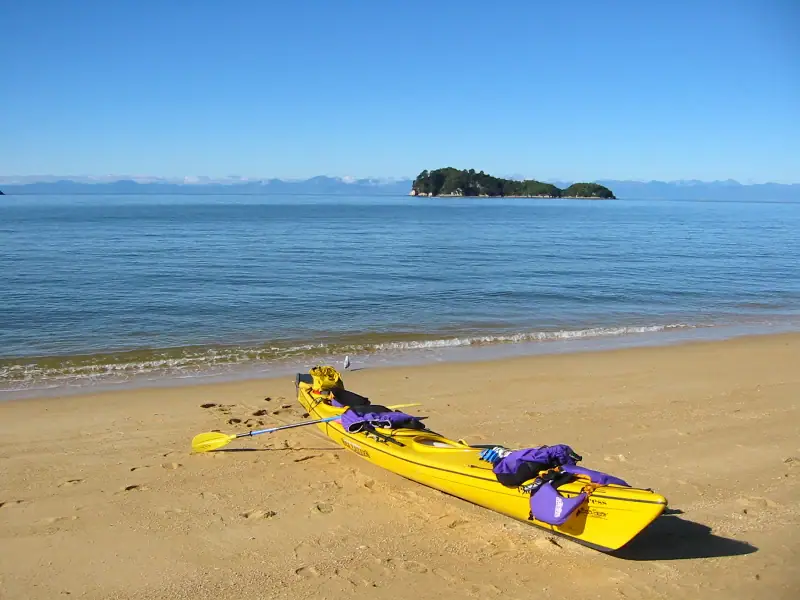
Sea kayaking is Abel Tasman’s signature activity. The coast, cut into coves, and the generally calm waters of the bay lend themselves well to beginners. Several operators based in Marahau and the region offer guided outings of half a day, a day or several days, with or without a night camping.
Day outings often follow a simple pattern: you paddle along the coast, stop on a beach for a picnic, then a water taxi brings back the kayaks or the paddlers. A mixed formula, kayak one way and walking the other, is very popular and requires no experience.
Among the park’s well-known landmarks, people often mention Split Apple Rock, a big rock split in two off Kaiteriteri, and Tonga Island, where you can watch fur seals. Always keep a respectful distance from the animals and follow your guides’ instructions.
For beginners, prefer a guided outing: sea and wind conditions can change during the day, and tides affect which beaches are accessible.
Activities in Abel Tasman
Kayak outings, cruises and guided excursions: compare and book ahead.
Water taxis and cruises
Water taxis are the key to the park. They are small fast boats serving the main beaches, with departures from Marahau and Kaiteriteri. They let you shorten or lengthen a walk, drop your pack at a hut or come back tired without retracing the whole way.
There are also more contemplative cruises, which follow the coast, pass near seal colonies and stop in one or two bays for a short walk. It is a good option if you travel with children or seniors, or if the weather does not suit kayaking.
Schedules depend on the season and the tides: some departures leave from the beach itself, at high tide. Book ahead, especially from December to February, and check the return time so you do not miss the last boat.
The most beautiful beaches and bays
The park has many beaches, each with its own atmosphere. Here are well-known landmarks to organize your stops:
- Anchorage, a large sheltered bay, much appreciated at high tide for swimming and kayak departures.
- Bark Bay, quieter, with a fine beach and a campground.
- Awaroa, an estuary where you can walk on the sand at low tide.
- Totaranui, a large golden sand beach in the north of the park, also reachable by road from Golden Bay.
The water is cool, even in summer, and people swim mostly from January to March. Bring water and sunscreen: shade is limited on some beaches, and sandflies, those tiny biting flies, can be annoying, especially late in the day. A suitable repellent is a good investment.
To protect the site, take your trash with you, do not collect shells and respect protected areas. Dogs are generally banned in the park.
Organizing your stay
Here are three formulas to fit your pace:
- 1 day: water taxi to a bay in the north, a few hours’ walk along the coast, back to Marahau. It is the simplest version, suited to a road trip stop.
- 2 to 3 days: kayak on the first day with a camp or a night in a hut, hike the next day, return by boat. A good balance between effort and discovery.
- 3 to 5 days: the full Coast Track, at your own pace, with nights in huts or campsites booked ahead with the DOC.
To sleep outside the park, three bases are common: Nelson, more urban and lively, Motueka, practical and close to Marahau, and Kaiteriteri, a coastal village near a renowned beach. This area is quite touristy in high season: book early.
Flights to New Zealand
Nelson has a small airport; most travelers arrive via Auckland or Christchurch.
Where to eat and what to taste
The Nelson and Motueka region is known for its orchards, vineyards and seafood. You will find farmers’ markets, craft breweries and roadside cafés. Seasonal fruit, white wines such as sauvignon blanc and cooking based on fresh fish are worth tasting.
In the park, there is no restaurant on the trails: bring provisions for the day and water. Shop in Motueka or Nelson before setting out. Places change regularly, so check recent reviews before choosing.
Practical tips
- Book the Coast Track huts and campsites ahead through the DOC, as well as water taxis in high season.
- Check the tides before planning the Awaroa crossing and boat departures.
- Bring a waterproof jacket, a hat, sunscreen and a sandfly repellent.
- Plan water and snacks: supply points are rare.
- Do not leave any valuables visible in the car at tourist-site parking lots.
- Keep flexibility in your schedule: the weather can shift a boat departure.
Abel Tasman is the ideal stop for slowing down between two grand mountain landscapes. Even a single day is enough to understand why this small park is so endearing.
Frequently asked questions
How long does it take to visit Abel Tasman?
One day is enough for a taste of the park with a water taxi ride and a walk from one site to the next. Two to three days let you combine kayaking and hiking. The full Coast Track is generally done in three to five days.
Is the Abel Tasman Coast Track difficult?
No, it is one of the most accessible Great Walks: the trail is well maintained, with moderate elevation gain. The difficulty comes mostly from the cumulative distance, the tides at Awaroa and the weather. Normal fitness is enough.
Do you need to book ahead?
Yes for sleeping in the huts and campsites of the Coast Track, which are booked with the Department of Conservation (DOC), well ahead for the southern summer. Water taxis and kayak rentals should also be booked ahead from December to February.
What is the best time to go?
From November to April, days are longer and the sea better suited to boating. The park is very busy in January and February. The shoulder season, in spring and early fall, often offers a good compromise.
Can you see seals at Abel Tasman?
Yes, fur seals live on the rocks offshore, notably around Tonga Island. Kayak or boat outings let you watch them from a respectful distance. You should never approach them too closely.
How do you get to Abel Tasman from Nelson?
By car, allow about one hour to one and a half hours to Marahau, the main starting point, via Motueka. Seasonal shuttles also serve the park from Nelson and Motueka.
More New Zealand guides
Keep reading
Waiheke from Auckland without a car: ferry, bus, vineyards and prices
Get to Waiheke Island by ferry from Auckland without a car: crossing, buses on the island, beaches, vineyards, a day's budget and mistakes to avoid.

Things to do in Rotorua: geysers, Māori culture and nature
What to do in Rotorua? Te Puia geysers, Wai-O-Tapu, Waimangu, the Redwoods, hot springs and Māori culture: a guide to plan 2 to 3 days there.
New Zealand budget: real costs, 3 profiles and money-saving tips
How much does New Zealand cost? Real prices by item (lodging, transport, food, activities), three 15-day budgets and tips to pay less.
Ready-made
New Zealand itineraries

3 days
3 days in Auckland: a day-by-day itinerary with islands, volcanoes and beaches
What to do in 3 days in Auckland: Sky Tower, urban volcanoes, Waiheke Island and west coast beaches, with a day-by-day plan and practical tips.
3 days
3 days in Queenstown: a day-by-day itinerary with activities and tips
What to do in 3 days in Queenstown: Lake Wakatipu, Arrowtown, Glenorchy and adventure activities, in a day-by-day plan with tips to organize it.
7 days
North Island road trip in 7 days: Auckland to Wellington
7-day North Island road trip: Auckland, Waitomo, Rotorua, Taupō, Tongariro and Wellington, with drive times, stops and practical tips.