Things to do
Waiheke from Auckland without a car: ferry, bus, vineyards and prices
We may earn a commission when you book through links on this page, at no extra cost to you. We don't visit or try the places we cover: we summarize published sources. How we work
In short
- The passenger ferry from downtown Auckland to Matiatia takes about 35 to 40 minutes; local buses then link the beaches, Oneroa and most wine estates.
- Adult one-way fare is around NZ$30 to 35, a child aged 5 to 15 around NZ$14, and under-5s travel free; confirm fares with the operator.
- Buses run on the AT HOP card, sold at Matiatia terminal and Oneroa library; cash and bank cards are not accepted on board.
- Note the last ferry back before lunch, and book wine tastings in summer and on weekends.
Yes, you can visit Waiheke very well without a car: a passenger ferry leaves downtown Auckland for Matiatia in about 35 to 40 minutes, then local buses link the beaches, the village of Oneroa and most of the wine estates. You only need to pick two or three stops, not ten.
In short: take the ferry in the morning, get off at Matiatia and keep just two stops (a beach and an estate, or a walk and a lunch). Plan a full day, a reasonable transport budget and a reservation for the cellars in summer.
The Auckland to Waiheke ferry: schedule, duration, price
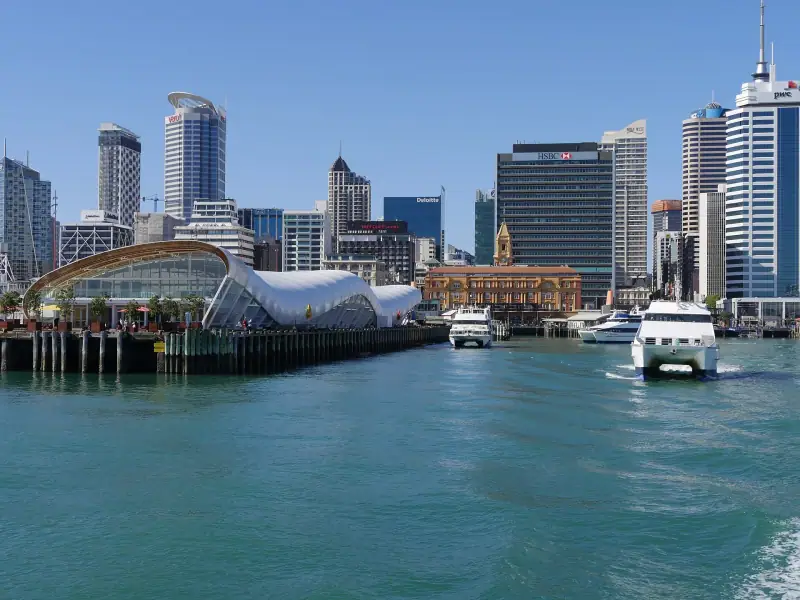
Departure is from the downtown Auckland ferry terminal, right by the harbor station and Queen Street. The crossing takes about 35 to 40 minutes. In summer, departures run roughly hourly through the day, with extra sailings at peak times, and some boats stop at Devonport before crossing the gulf.
On price, the fare table published by the company, when this article was written, gave about NZ$33 one way for an adult (around NZ$30 when booking online) and NZ$14 for a child aged 5 to 15. Under-5s travel free, and a family fare exists. These amounts change: treat them as rough figures and confirm them when you buy.
For planning:
- First boat of the morning: the calmest, and the simplest way to get a full day on the island.
- Last return: find it before you eat, and leave yourself a margin. Missing the last ferry means sleeping on the island, without a reservation.
- Car: the passenger ferry does not carry vehicles. Another operator runs a crossing with cars, but it is not useful for a day trip.
Getting around the island: bus, taxi or excursion
At Matiatia, you face three options.
The local bus
Auckland Transport runs routes that follow the island’s main roads, from Onetangi in the east to the Rocky Bay and Te Whau areas in the south, via Oneroa. Buses are timed to ferry arrivals and departures at Matiatia. The official Waiheke tourism site says the fare is lower with an AT HOP card, sold at Auckland ticket offices, at Matiatia terminal and at Oneroa library.
The bus is the cheapest option, but frequency varies by time of day: look at the return timetable before moving away from the terminal.
The tourist bus and excursions
One option combines ferry and a hop-on hop-off bus, stopping at the main points of interest. It is comfortable if you want to see several places without thinking about logistics. For wine, an excursion with a driver avoids the problem of getting back after a tasting.
Waiheke excursions and tastings
Compare guided visits with transport, tasting or a walk on the island.
The taxi
Taxis are rare and expensive on an island this size. Use them for a specific ride (from the cellar to the beach, for example) rather than for the whole day.
Waiheke without a car for a family with kids
With children, the simplest plan has three parts: ferry, beach, ice cream. The bus leads to family beaches such as Oneroa, near the village, or Onetangi, longer and more open, on the east side. The ferry child fare is reduced and little ones under 5 do not pay.
What to keep in mind: little shade on the beach, strong sun even on hazy days, and bus times that are best checked before settling in. A cap, water and high-SPF sunscreen belong in the bag.
Waiheke without a car for wine lovers
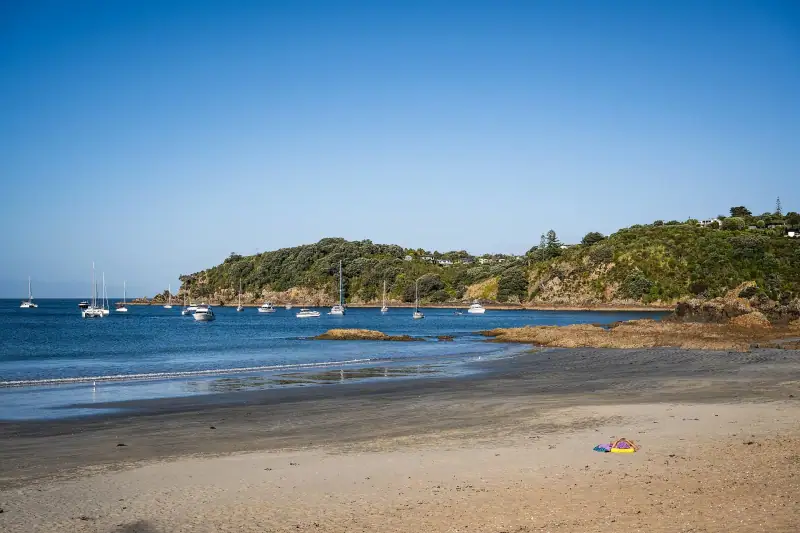
The island is best known for its red wines and its chardonnay, which our article on the wine route in New Zealand also presents. Without a car, two methods work.
- The single estate: choose a cellar reachable by bus or a short taxi ride, book the tasting or lunch, and stay there. It is the most restful.
- The excursion with a driver: transport is included, you can taste at several estates and the return to the ferry is handled.
In both cases, do not plan on improvising on the day in summer: book, and note the time of the last ferry before you start.
Waiheke without a car for walkers
Waiheke has coastal trails and reserves. The Department of Conservation notably describes the Stony Batter historic reserve, where you can see remains of Second World War batteries, as well as the Te Matuku Bay scenic reserve and its marine reserve. Opening hours and entry fees for Stony Batter depend on the site operator: find out before you come.
With the bus, you can combine a short walk with lunch. Bring good shoes, water and a windbreaker: the wind rises quickly on the coast.
A day’s budget on Waiheke
Here is a rough guide to adapt to your pace. Prices are indicative and should be confirmed.
| Item | What to plan for |
|---|---|
| Ferry round trip (adult) | About NZ$46 to 50 |
| Ferry round trip (child 5-15) | About NZ$23 |
| Local bus | A few dollars per trip, cheaper with AT HOP |
| Lunch | Variable: from a bakery to a wine estate |
| Tasting | Varies by estate, often to be booked |
| Excursion with a driver | More expensive, but transport and return included |
To place this day in your trip, our budget guide for New Zealand gives the other items to plan for.
Practical tips so you miss nothing
- Decide on the last ferry time before noon and set an alarm.
- Buy an AT HOP card before boarding the bus (at Matiatia, at Oneroa library or in Auckland).
- Book the cellar or lunch in summer and on weekends.
- Avoid trying to do everything: a beach, an estate and a short walk, no more.
- Keep a full battery: maps and ticketing go through your phone. Our guide on SIM cards and eSIMs in New Zealand can save you from hunting for Wi-Fi.
To fit Waiheke into a wider stay, our 3-day Auckland itinerary offers it as one of the day 3 options. If you prefer to sleep in town the night before, compare accommodation downtown.
Hotels in Auckland
Sleep near the ferry terminal to leave early for Waiheke.
Sources
Frequently asked questions
Do you need a car to visit Waiheke?
No. The passenger ferry arrives at Matiatia, where local buses leave for Oneroa, Onetangi, Palm Beach and Rocky Bay. With a bus, a few taxis or an excursion with tasting, a car-free day is entirely feasible.
How long is the Auckland to Waiheke crossing?
About 35 to 40 minutes from the downtown Auckland terminal to Matiatia. Some departures go via Devonport and are a little longer: check the timetable details before you buy.
How much does the ferry cost?
According to the fare table published by the operator, an adult pays around NZ$30 to 35 one way and a child aged 5 to 15 around NZ$14, with under-5s traveling free. Fares change: check them on the company's website, where booking online is a little cheaper.
Can you pay for the bus in cash?
Local buses run on the AT HOP card, sold notably at Matiatia terminal and at Oneroa library. Cash and bank cards are not accepted on board: buy the card before boarding, and check current terms with Auckland Transport.
Is one day enough for Waiheke?
Yes for a simple plan: a beach, a wine estate and a walk. If you want to visit several cellars, a hike and a swim without rushing, sleeping one night on the island is more comfortable.
Do you need to book wine tastings?
In summer (December to February) and on weekends, yes: the best-known estates fill up quickly, especially at lunchtime. On weekdays and off season it is easier to find a spot, but it is better to confirm you will be welcome before you travel.
Can you take a bike on the bus?
Some buses have front racks for a limited number of standard bikes. Space is not guaranteed: do not rely on it on a busy day.
More New Zealand guides
Keep reading
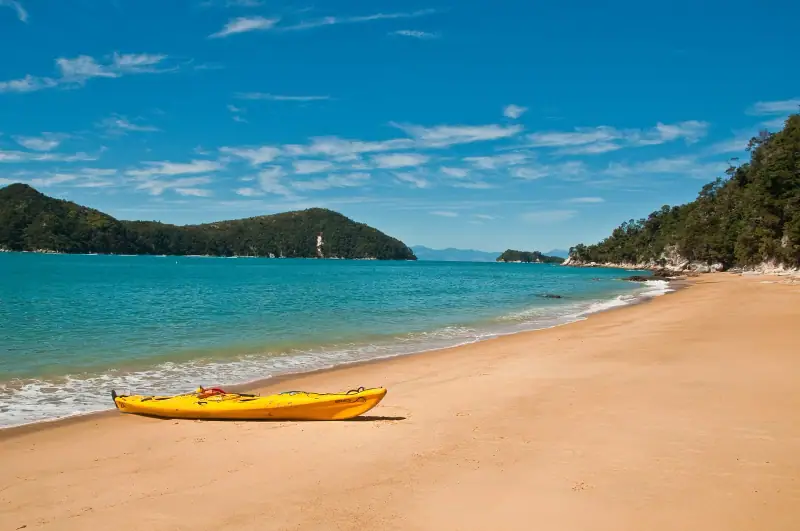
Abel Tasman National Park: hiking, kayaking and beaches
Abel Tasman, New Zealand: Coast Track, kayaking, water taxis, seals and golden beaches. A guide to plan 1 to 4 days in this South Island coastal park.
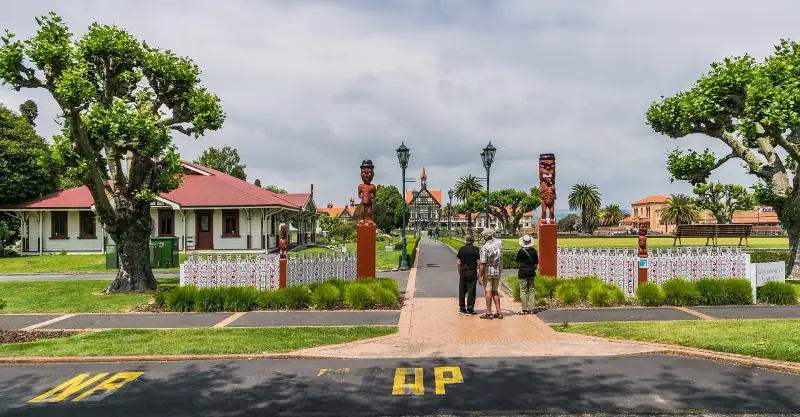
Things to do in Rotorua: geysers, Māori culture and nature
What to do in Rotorua? Te Puia geysers, Wai-O-Tapu, Waimangu, the Redwoods, hot springs and Māori culture: a guide to plan 2 to 3 days there.
New Zealand budget: real costs, 3 profiles and money-saving tips
How much does New Zealand cost? Real prices by item (lodging, transport, food, activities), three 15-day budgets and tips to pay less.
Ready-made
New Zealand itineraries

3 days
3 days in Auckland: a day-by-day itinerary with islands, volcanoes and beaches
What to do in 3 days in Auckland: Sky Tower, urban volcanoes, Waiheke Island and west coast beaches, with a day-by-day plan and practical tips.
3 days
3 days in Queenstown: a day-by-day itinerary with activities and tips
What to do in 3 days in Queenstown: Lake Wakatipu, Arrowtown, Glenorchy and adventure activities, in a day-by-day plan with tips to organize it.

7 days
North Island road trip in 7 days: Auckland to Wellington
7-day North Island road trip: Auckland, Waitomo, Rotorua, Taupō, Tongariro and Wellington, with drive times, stops and practical tips.