Itineraries
3 days in Auckland: a day-by-day itinerary with islands, volcanoes and beaches

We may earn a commission when you book through links on this page, at no extra cost to you. We don't visit or try the places we cover: we summarize published sources. How we work
Day by day
- Day 1Waterfront, Viaduct Harbour, Sky Tower, Auckland Domain
- Day 2Mount Eden, Ponsonby, One Tree Hill, dinner at the harbor
- Day 3Waiheke or Rangitoto by ferry, or Piha on the west coast
Weather through the year on this route
| Jan | Feb | Mar | Apr | May | Jun | Jul | Aug | Sep | Oct | Nov | Dec | |
|---|---|---|---|---|---|---|---|---|---|---|---|---|
| High °F (°C) | 7122 | 7122 | 6720 | 6217 | 5714 | 5312 | 5111 | 5312 | 5614 | 5915 | 6317 | 6619 |
| Low °F (°C) | 5513 | 5614 | 5412 | 4910 | 468 | 436 | 415 | 426 | 447 | 468 | 4910 | 5312 |
Normals 1991–2020 at Wellington and Christchurch: averages over 30 years, not a forecast. Source: NASA POWER (MERRA-2), grid of about 50 km. Figures computed by us in November 2026. Rain is shown only where a weather station confirms the figures.
In short
- Three days cover downtown and the Sky Tower, urban volcanoes such as Mount Eden, and either Waiheke Island or the west coast beaches.
- You do not need a car for downtown and the islands; a car helps for the west coast beaches such as Piha.
- The Waiheke ferry takes about 40 minutes from downtown. Check seasonal timetables the day before.
- Swim on the west coast only in the areas patrolled by lifeguards, between the flags.
Auckland is most often the gateway to New Zealand: it is where most international flights land. Many travelers spend one night here, long enough to recover from jet lag, before heading south. That is a shame, because the country’s largest city has real assets: a busy harbor, extinct volcanoes in the heart of town, islands reachable by ferry and wild beaches a short drive away.
This guide offers a three-day itinerary that mixes these ingredients without rushing. It is designed for a first visit, with or without a car, and can be combined with the 7-day North Island road trip if you want to continue the adventure.
Before you go: preparing your 3 days
A few choices shape the stay before you even put down your bags.
Where to stay. For a short stay, downtown and the waterfront district are the most practical: everything is reachable on foot or by public transport, and the ferry terminal is close by. Neighborhoods a little farther out are often quieter and more affordable, but require a bus or a car.
Entry requirements. Entry rules depend on your passport. Check the official travel advice of your government before you book: travel.state.gov (US), GOV.UK (UK), travel.gc.ca (Canada), Smartraveller (Australia) (checked November 2026).
Weather. Auckland’s climate is oceanic and changeable: it is not unusual to go through a shower and then a sunny spell within the same hour. Bring a light windbreaker, good shoes and sun protection: the sun is strong, even on cloudy days. To choose your dates, see our guide to the best time to visit New Zealand.
Jet lag. After a long flight, the time difference is significant. Day 1 is therefore deliberately light: walking in daylight is the best way to reset your internal clock.
Hotels in Auckland
Compare accommodation downtown and in nearby neighborhoods by your dates.
Day 1: downtown, the harbor and the Sky Tower
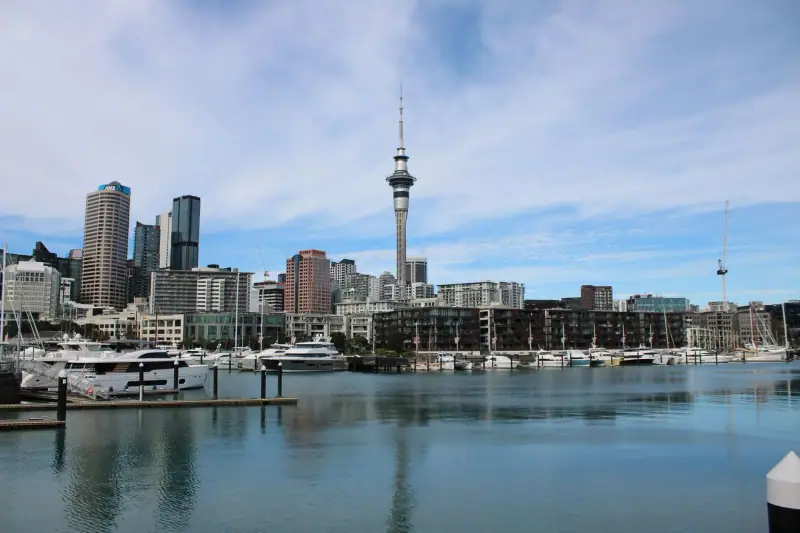
The first day is for getting your bearings and walking. The heart of Auckland is compact and easy to cover on foot, on mostly flat ground near the waterfront.
Morning: the waterfront and the harbor district. Start at the water’s edge, where former wharves have been turned into promenades, cafés and terraces. Viaduct Harbour, lined with pleasure boats, is the ideal place to feel why Auckland is nicknamed the “City of Sails”: the bay is a playground for sailboats, and the city has one of the highest numbers of boats per capita in the world.
Midday: a food break. Downtown is full of cafés and restaurants with very varied influences: Asian, Pacific and European cuisines sit side by side. To taste local products, our article on specialties to try in New Zealand gives ideas of dishes to try.
Afternoon: gaining height. The Sky Tower, a telecommunications tower that dominates the skyline, has an observation deck with views far over the city, the two harbors and the volcanoes. In clear weather, it is the simplest way to understand Auckland’s geography, built on a narrow isthmus between two seas. Some visitors add thrill activities from the tower: they are optional.
Late in the day: the Auckland Domain. If you still have the energy, this large urban park occupies a former volcanic crater. It is home to the Auckland War Memorial Museum, which devotes a large part of its collections to Māori culture and the Pacific Islands: a good introduction to the country’s history before you hit the road. The museum is also a good plan for a rainy late afternoon.
Day 2: urban volcanoes and Auckland’s neighborhoods
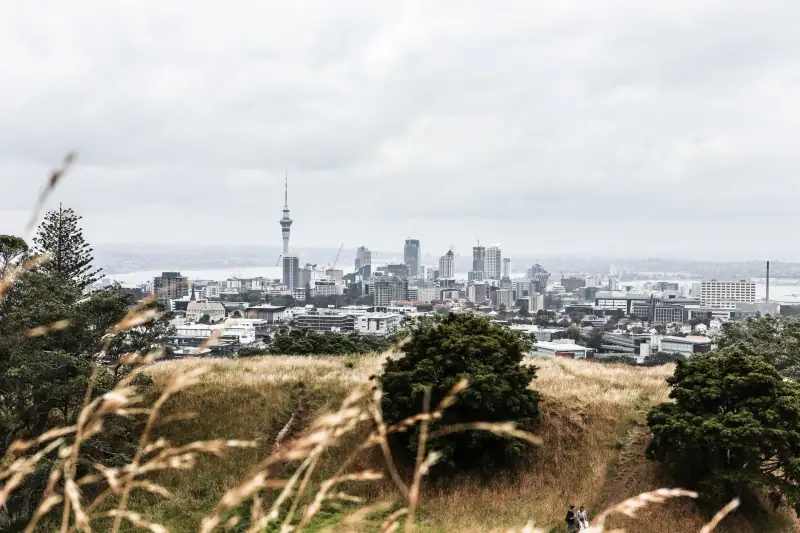
Auckland is built on a volcanic field made up of several dozen cones, now extinct. Several of them have been preserved and can be visited freely: it is one of the city’s singular features.
Morning: Mount Eden. Maungawhau, the Māori name for Mount Eden, is the highest of the central cones. A short path leads to the summit, where a grassy crater opens beneath your feet and the view of the whole city unfolds in 360 degrees. You can usually walk up from the surrounding streets, in about half an hour depending on your pace. Stay on the marked trails: these sites carry great cultural value for Māori.
Midday: lunch in a nearby neighborhood. The neighborhoods around Mount Eden and Ponsonby are known for their cafés and small restaurants. It is a good chance to get away from the downtown addresses and see how locals live.
Afternoon: One Tree Hill or a museum. Another large cone, One Tree Hill, rises above a vast park south of the city, with meadows, trees and open views. It is easy to reach by car or public transport. If the weather is uncertain, replace this outing with a museum visit or a stroll through the shops.
Guided tours of Auckland
Compare guided tours of the city and its volcanoes, with cancellation terms depending on the offer.
Evening: dinner by the water. Head back to the harbor for dinner: terraces are lively in summer and restaurants serve plenty of fish and seafood. To go deeper, our article on seafood in New Zealand gives an overview of what to taste.
Day 3: a Hauraki Gulf island or the west coast
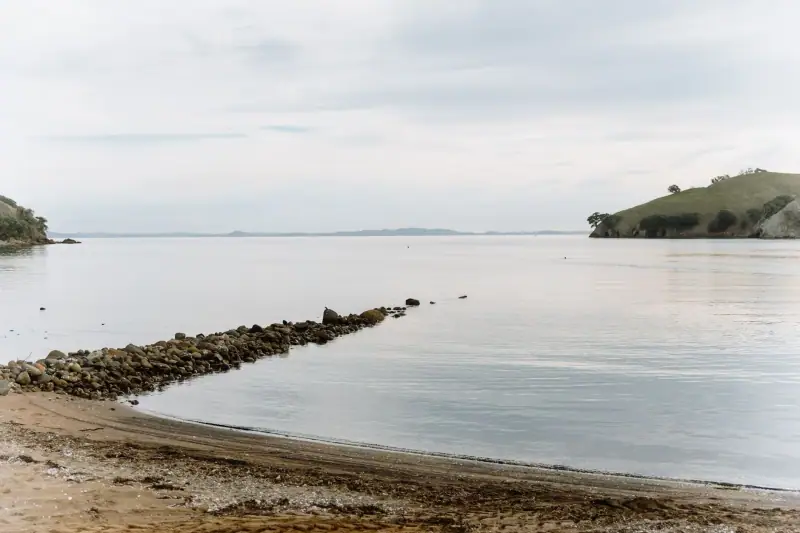
The third day is deliberately a choice: you can pick an island, reached by ferry and fairly quiet, or the wild beaches of the west coast, which require a car or an organized excursion.
Option A: Waiheke Island
Waiheke is the best known of the Hauraki Gulf islands. A ferry reaches it from downtown in about forty minutes, making it a very easy day trip without a car. The island is known for its vineyards, beaches and coastal trails.
On the island, the simplest way is to take a local bus or shuttle to reach the main points of interest. Wine lovers will find several estates open for tastings, often with sea views: ask about visiting conditions, sometimes by reservation. Walkers may prefer the coastal trails, which offer fine views over the gulf. To learn more about the country’s wine, see our article on the wine route in New Zealand. Details on the ferry, bus and budget are in our guide to visiting Waiheke from Auckland without a car.
If you like volcanoes, Rangitoto, the volcanic island that dominates the harbor entrance, is another classic ferry destination: the island is uninhabited, covered in lava and forest, and a walk leads to the summit. Bring good shoes and water, as there is little shade and no shops.
Option B: the west coast and its black sand beaches
West of Auckland, beyond the wooded Waitākere Ranges, the coast changes face completely: dark sand beaches pounded by the Tasman Sea, lined with cliffs and forest. Piha, the best known, is dominated by a large rock, Lion Rock. Allow about 45 minutes of driving from downtown, a little more in traffic.
There, you can walk along the beach, climb to a viewpoint in the hills or simply enjoy the scenery. Be careful: currents there are strong, and swimming is advised only in areas patrolled by lifeguards, between the flags. The mountain roads are winding; drive without rushing, on the left, and plan to be back before dark.
If you are not comfortable driving, organized excursions offer day trips in this region, with pickup downtown.
Getting around Auckland
Downtown can be covered on foot, but the city spreads over a wide area and distances matter as soon as you leave it. Here are the options:
- Public transport: buses, commuter trains and ferries, with a rechargeable card. They are enough for the main urban sites and the islands.
- Taxis and rideshare cars: handy for a one-off trip, more expensive for a whole day.
- Rental car: essential for the west coast and for excursions outside the city, but you will need to get used to driving on the left. Downtown parking is paid and can be expensive. If you plan a longer tour afterwards, it is also the best way to reach your next stops.
If you are leaving Auckland for a longer tour, our article on Wellington helps you picture the next part of your trip south on the North Island.
Variations: extending or adapting the itinerary
Three days is a basic format. Here is how to adjust it to your wishes.
With one more day. The simplest is to add a day trip to a neighboring region, or to spend a night on Waiheke Island to enjoy the evening calm. Farther north, the Bay of Islands needs more time: it is better to give it several days than to see it in a rush.
With family. Replace the Mount Eden climb with an afternoon in a big park, a museum or a sheltered east coast beach. Kids love the ferry, which is already part of the adventure.
In winter. Beaches lose some of their appeal, but museums, cafés and walks on the volcanoes remain pleasant in dry weather. Waiheke Island is still a good choice for a quiet day.
Combined with a road trip. Auckland is the natural starting point for a North Island tour. Our 7-day North Island road trip shows how to link the stops from the city.
How much do these 3 days cost?
Auckland is one of the country’s most expensive cities, mostly because of accommodation. Fortunately, a large part of the itinerary is free: the waterfront, volcanoes, parks and beaches cost nothing. The paid items are mainly the Sky Tower, museums, ferries and meals.
To estimate the overall budget of your trip, see our article on the budget for a trip to New Zealand. A few tips: travel outside local school holidays, stay a little away from the center, use a rechargeable transport card and cook some meals in lodging with a kitchen.
Tips for a successful stay
- Keep some slack. A flight that arrives early or leaves late can add half a day: do not overfill the schedule.
- Watch the weather. It changes fast: keep the option of swapping days 2 and 3 according to the forecast.
- Check ferry timetables. They vary by season and day of the week: a quick look the day before avoids bad surprises.
- Protect yourself from the sun. Ultraviolet radiation is high in New Zealand, even under cloud.
- Respect sacred sites. The volcanoes are places of great importance to Māori: stay on the trails and follow the signs.
- Consider travel insurance. For medical care and the unexpected, travel insurance can be useful before you leave.
In short
In three days, Auckland shows a more varied face than you might imagine: a port city, volcanoes among the houses, islands a short crossing away and black sand beaches. The itinerary above can be followed at your own pace, with or without a car, and makes a fine introduction before you set off to explore the rest of the country.
Frequently asked questions
Are three days enough to visit Auckland?
Yes for a first look: three days let you see downtown, one or two urban volcanoes, an island in the Hauraki Gulf and a west coast beach. If you want to add the Bay of Islands or Rotorua, plan several more days.
Do you need to rent a car in Auckland?
You do not need one for downtown and the islands, which you can reach on foot and by ferry. A car becomes useful for the west coast beaches. It is also handy if you continue on a North Island tour. Remember that you drive on the left.
How do you get to Waiheke Island?
Ferries leave regularly from downtown, from the waterfront terminal, and the crossing takes about 40 minutes. Timetables vary by season: check them the day before, especially for evening sailings.
What is the best season to visit Auckland?
The southern summer, from December to February, is the most pleasant for beaches and islands. Spring and early fall are quieter, with mild temperatures. Winter is mild but rainier: have an indoor plan B.
Is Auckland the capital of New Zealand?
No, the capital is Wellington. Auckland is, however, the country's largest city and its main international arrival point, which often makes it the first stop of a trip.
Can you swim in Auckland?
Yes, there is no shortage of beaches, on the more sheltered east coast as well as the wilder west coast. On the west coast, currents can be strong: swim only in areas patrolled by lifeguards, marked by flags.
What budget should you plan for 3 days in Auckland?
Accommodation weighs the most, followed by meals and paid activities. The volcanoes, parks and beaches are free. Our New Zealand budget guide details the main expenses.
More New Zealand guides
Keep reading
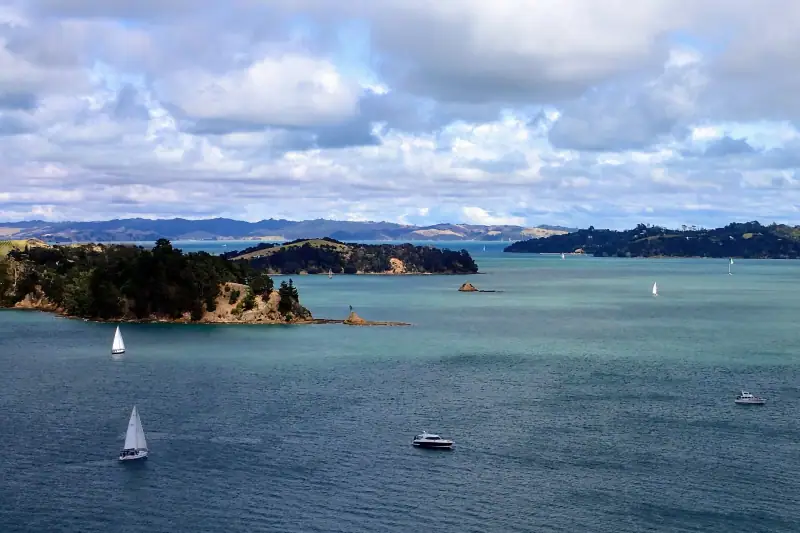
Waiheke from Auckland without a car: ferry, bus, vineyards and prices
Get to Waiheke Island by ferry from Auckland without a car: crossing, buses on the island, beaches, vineyards, a day's budget and mistakes to avoid.
New Zealand budget: real costs, 3 profiles and money-saving tips
How much does New Zealand cost? Real prices by item (lodging, transport, food, activities), three 15-day budgets and tips to pay less.
Te Anau or Queenstown: where to stay to visit Milford Sound?
Sleep in Te Anau or Queenstown for Milford Sound? Distances, drive time, budget and recommended nights: the comparison to choose without losing a day.
Ready-made
New Zealand itineraries
3 days
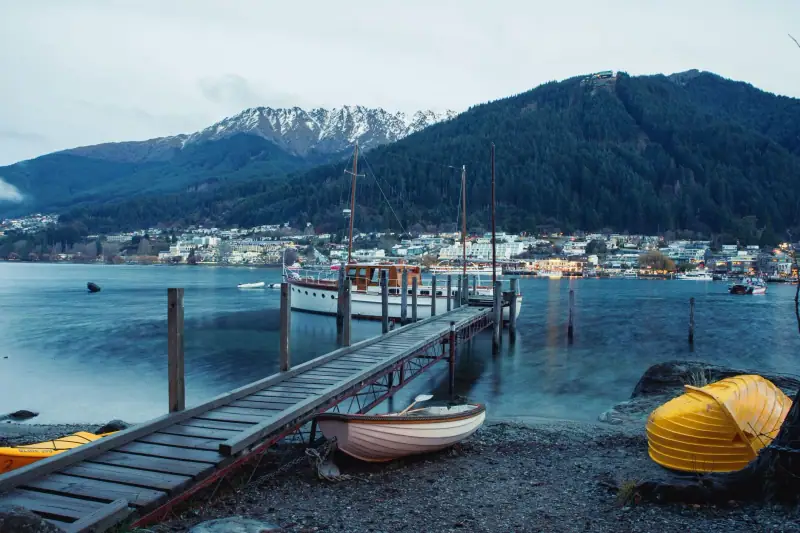
3 days in Queenstown: a day-by-day itinerary with activities and tips
What to do in 3 days in Queenstown: Lake Wakatipu, Arrowtown, Glenorchy and adventure activities, in a day-by-day plan with tips to organize it.
7 days
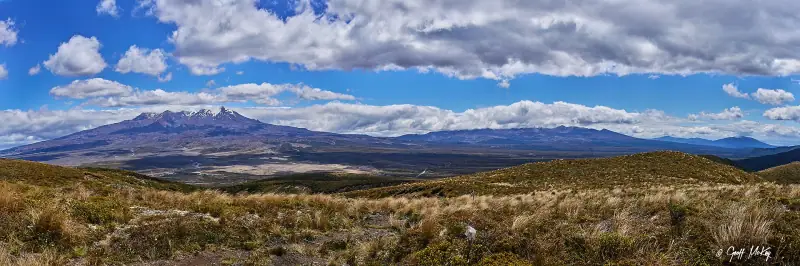
North Island road trip in 7 days: Auckland to Wellington
7-day North Island road trip: Auckland, Waitomo, Rotorua, Taupō, Tongariro and Wellington, with drive times, stops and practical tips.
10 days
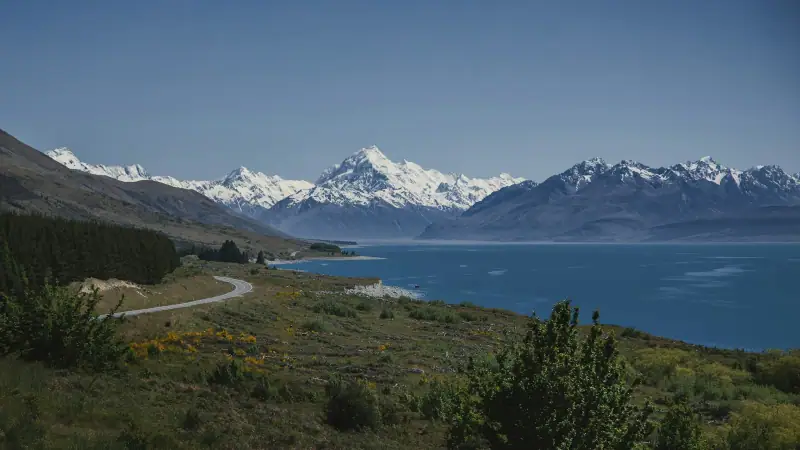
South Island road trip in 10 days: Christchurch to Queenstown
10-day South Island road trip: Tekapo, Mount Cook, Wānaka, Queenstown and Milford Sound, with distances, stops and practical tips.