Itineraries
North Island road trip in 7 days: Auckland to Wellington
We may earn a commission when you book through links on this page, at no extra cost to you. We don't visit or try the places we cover: we summarize published sources. How we work
Day by day
- Day 1Auckland: waterfront, Sky Tower, Mount Eden volcanic cone
- Day 2Drive to Waitomo glowworm caves, then on to Rotorua
- Day 3Rotorua: geothermal sites and Māori cultural evening
- Day 4Rotorua to Taupō, Lake Taupō and Huka Falls
- Day 5Tongariro crossing
- Day 6Long drive to Wellington
- Day 7Wellington: Te Papa, cable car, Mount Victoria lookout
Weather through the year on this route
| Jan | Feb | Mar | Apr | May | Jun | Jul | Aug | Sep | Oct | Nov | Dec | |
|---|---|---|---|---|---|---|---|---|---|---|---|---|
| High °F (°C) | 7122 | 7122 | 6720 | 6217 | 5714 | 5312 | 5111 | 5312 | 5614 | 5915 | 6317 | 6619 |
| Low °F (°C) | 5513 | 5614 | 5412 | 4910 | 468 | 436 | 415 | 426 | 447 | 468 | 4910 | 5312 |
Normals 1991–2020 at Wellington and Christchurch: averages over 30 years, not a forecast. Source: NASA POWER (MERRA-2), grid of about 50 km. Figures computed by us in November 2026. Rain is shown only where a weather station confirms the figures.
In short
- Seven days link Auckland to Wellington via Waitomo, Rotorua, Taupō and Tongariro National Park.
- Day 6 is the longest drive: more than 300 km (186 mi) and about 5 hours without stops.
- The Tongariro crossing takes a full day and depends on the weather; keep a spare day in your schedule.
- In New Zealand you drive on the left, with a general limit of 100 km/h (62 mph) on open roads.
The North Island is often presented as the “easy” half of New Zealand, and that is a mistake: with its volcanoes, forests, lakes, caves and Māori culture, it offers as much variety as its bigger sister to the south. Above all, it concentrates its major sites along a very readable north-south axis, from the country’s largest city to the capital.
This 7-day itinerary links Auckland to Wellington via Waitomo, Rotorua, Taupō and Tongariro National Park. It is designed for travelers who want a real road-trip rhythm without spending every day behind the wheel. If you plan to cross Cook Strait afterwards, the next part is in our 10-day South Island road trip.
Itinerary overview
Here is the plan at a glance:
- Day 1: Auckland, first day in the city
- Day 2: Auckland, Waitomo, then Rotorua
- Day 3: Rotorua, geothermal activity and Māori culture
- Day 4: Rotorua, then Taupō and its surroundings
- Day 5: Tongariro crossing
- Day 6: road to Wellington
- Day 7: Wellington
Distances stay reasonable up to Tongariro. Only the stage to Wellington clearly exceeds 300 km (186 mi); more on that below. To choose your dates, see our guide on when to go to New Zealand.
Day 1: Auckland, the city of two harbors

Auckland is the gateway for most travelers. The city stretches between two harbors, which earned it the nickname “City of Sails”. After a long flight, do not try to see everything: the goal is to recover and adjust to the time difference.
A good first day can be organized like this:
- a stroll along the waterfront and through the harbor district, very pleasant on foot;
- a trip up the Sky Tower, the tower that dominates downtown, to understand the city’s geography;
- a detour to one of the volcanic cones dotted around the urban area, such as Mount Eden, which has a clear view over the city.
If you arrive in the morning, do not pick up your car right away: downtown is easy to visit without a vehicle, and parking there is harder than in the rest of the country. Pick up the vehicle the next morning, rested, to get used to driving on the left.
Hotels in Auckland
Hotels, apartments and hostels for the first night: compare by your dates.
Day 2: Waitomo and its glowworm caves
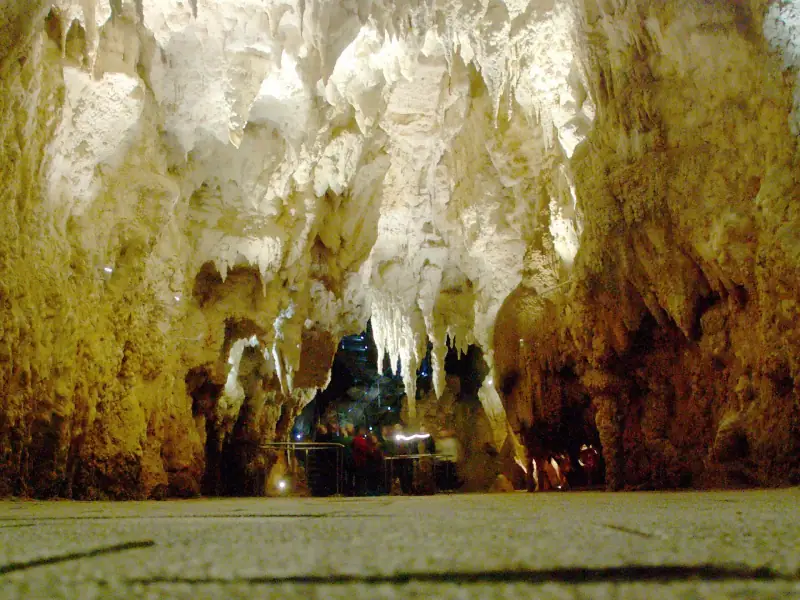
Leave Auckland early on the state highway south. Allow about 2 h 30 of driving to Waitomo, a little under 200 km (124 mi). The village is famous for its limestone caves, home to glowworms whose bluish light lines the ceilings of the chambers.
Several options exist: a walking tour, a boat ride on the underground river, or more athletic excursions with abseiling and tubing. Guided tours are the classic choice, and the glowworm light remains a memorable experience. Photography is generally banned inside so as not to disturb the insects: just enjoy the moment.
If you have a little time on the road, you can also stop in Matamata, where you can visit the hobbit village set from the films, but that lengthens the day. Choose one or the other according to your taste.
After Waitomo, take the road to Rotorua, about 2 hours of driving. You arrive in late afternoon, just in time to smell the town’s characteristic sulfur.
Activities in Waitomo
Caves, glowworms and guided excursions: compare and book ahead.
Day 3: Rotorua, geothermal activity and Māori culture
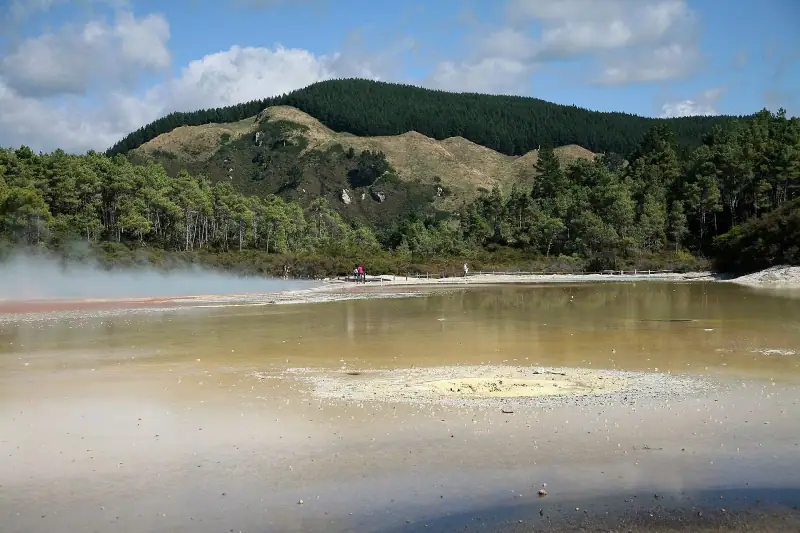
Rotorua is the geothermal heart of the country. Steam vents in the streets, mud pools and geysers make it an essential stop. The Te Puia site, with its Pohutu geyser, is the easiest to reach, but other parks are worth the detour for their colorful pools or their volcanic valley.
The town is also a major center of Māori culture. A cultural evening with songs, dances and a traditional meal is a good way to discover this side of the trip. Choose experiences that explain history and traditions rather than a simple show.
For details on the sites, visit times and hot springs, read our guide on things to do in Rotorua. Plan a full day: it is a good time to catch your breath after the road.
Day 4: from Rotorua to Taupō
The drive between Rotorua and Taupō is short: about 1 hour for 80 km (50 mi). You can therefore enjoy the morning in Rotorua before leaving, or stop along the way at one of the geothermal sites on the road.
Taupō sits on the shore of the country’s largest lake, a huge former volcanic crater. The town is pleasant for a walk by the water, a swim or a cruise on the lake. A few kilometers away, Huka Falls are easy to visit: the Waikato River narrows there into a rocky channel before flowing into a large turquoise pool, a powerful sight.
At the end of the day, settle in facing the lake. On a clear day, you can make out the peaks of Tongariro National Park in the distance, which you will discover the next day.
Day 5: the Tongariro crossing
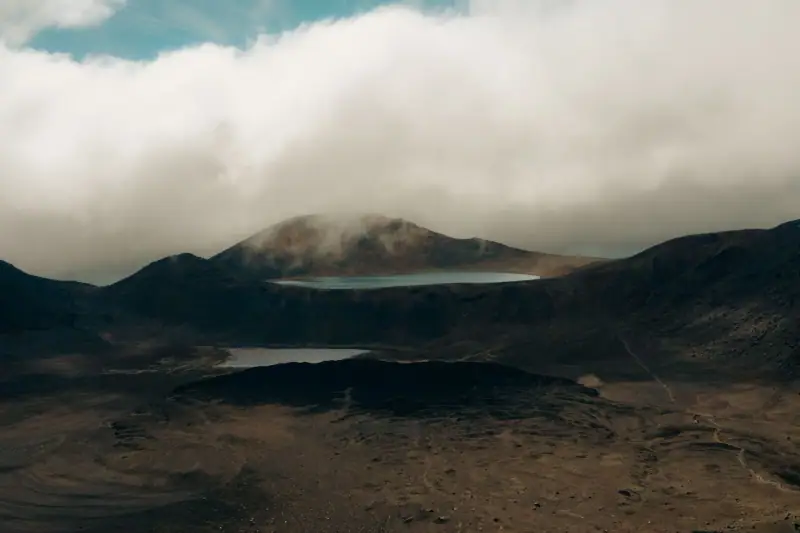
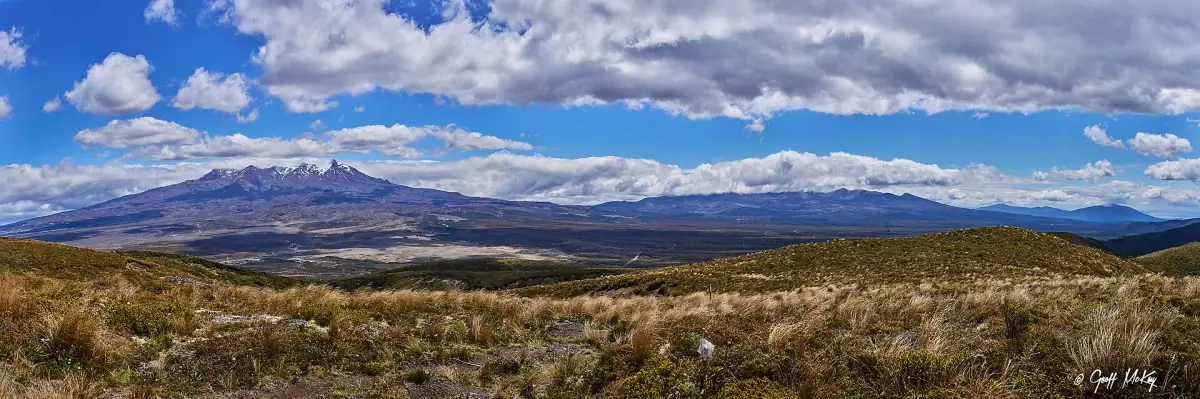
This is the highlight day of the itinerary. Tongariro National Park is a UNESCO World Heritage site, for both its volcanic nature and its cultural value to the Māori. The one-day crossing is considered one of the finest day hikes in the country.
The route passes craters, colorful lakes and mineral landscapes. It is long and demanding: allow several hours of walking, sturdy shoes, water, and warm, windproof clothing, even in summer. The weather at altitude changes fast, and shuttles are generally needed to connect the start and the finish, since the trail is not a loop.
To prepare for the day, see our dedicated guide to the Tongariro Alpine Crossing. Keep some slack in your schedule: in bad weather the crossing may be discouraged or closed, and it is better to be able to move it back a day.
Places to stay near Tongariro
Lodges, motels and cabins near the park: book early, supply is limited.
Day 6: heading for Wellington
This is the longest driving day: allow more than 300 km (186 mi) and about 5 hours, not counting stops. Leave early, especially if you walked the day before, and plan one or two breaks to stretch your legs.
The road crosses farmland and green hills, with mid-sized towns where you can stop for coffee or lunch. The arrival in Wellington, squeezed between the sea and the hills, is spectacular at the end of the day.
If this pace seems too brisk, you can split the stage by sleeping in an intermediate town, at the cost of an extra day. Return the car in Wellington the next day if you are not taking it on to the South Island.
Day 7: Wellington, the compact capital
Wellington is the country’s capital and one of its most pleasant cities to explore on foot. The center is compact and bordered by a lively waterfront.
A few ideas for the day:
- the Te Papa museum, the national museum, very complete on natural history and Māori culture;
- the cable car, a small funicular that climbs to the botanic garden and offers a fine view over the bay;
- the Mount Victoria lookout, for a panorama of the city and the harbor.
In the evening, enjoy the local food scene, known for its cafés and restaurants. To taste the country’s specialties, see our article on New Zealand food.
If you are continuing your trip to the South Island, the ferry to Picton crosses Cook Strait in about three and a half hours. The crossing is beautiful, especially at the entrance to the Marlborough Sounds.
Practical tips for this road trip
A few pointers so you can set off with peace of mind:
- Driving: you drive on the left, with a general limit of 100 km/h (62 mph) on open roads. Roads are often winding, and travel times are longer than you imagine from a map.
- Rental: book your car ahead, especially in high season. A one-way Auckland-Wellington rental can come with a surcharge: compare it with the other options.
- Accommodation: book ahead in Rotorua, Taupō and near Tongariro, where supply is more limited in high season.
- Weather: pack warm layers and a rain jacket in every season; the weather changes quickly.
- Pace: if you have more than seven days, add an extra night in Rotorua or Taupō rather than multiplying stops.
Going further
This itinerary is deliberately simple and easy to adapt. With more time, you can add the north of the country and the Bay of Islands, or the Coromandel Peninsula from Auckland. If you want to continue the adventure southward, link it to our South Island itinerary to build a complete three-week trip.
Frequently asked questions
Is seven days enough to see the North Island?
Seven days let you link Auckland to Wellington with only the main stops: Waitomo caves, Rotorua, Taupō and Tongariro National Park. The pace is brisk. With ten days, you can add the Coromandel Peninsula or the Bay of Islands region, further north.
Do you need to rent a car for this road trip?
Yes, it is the simplest way. Buses link the main cities, but natural sites, viewpoints and trailheads are hard to reach without a vehicle. Book early for high season, from December to February.
What is the best time of year for this itinerary?
The southern summer, from December to February, is the warmest but also the busiest. Spring and fall often strike a good balance between weather and crowds. For the Tongariro crossing, check conditions before you set out, because the weather at altitude changes fast.
Can you fit the Tongariro crossing into this itinerary?
Yes, it takes a full day. It calls for good fitness, sturdy shoes and favorable weather. Keep some slack in your schedule so you can move the stage back a day in bad weather.
How do you continue to the South Island from Wellington?
Ferries cross Cook Strait between Wellington and Picton, taking about three and a half hours. Book ahead in high season, especially if you are taking a vehicle on board. You can then follow on with our South Island road trip.
Do you drive on the left in New Zealand?
Yes, you drive on the left. The first few hours take concentration, especially at roundabouts and intersections. Avoid driving tired right after a long flight and respect speed limits, generally 100 km/h (62 mph) on open roads.
More New Zealand guides
Keep reading
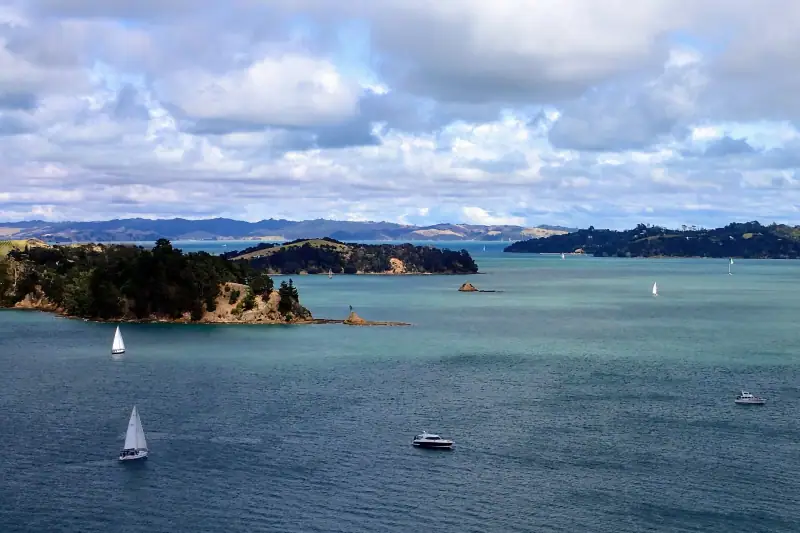
Waiheke from Auckland without a car: ferry, bus, vineyards and prices
Get to Waiheke Island by ferry from Auckland without a car: crossing, buses on the island, beaches, vineyards, a day's budget and mistakes to avoid.
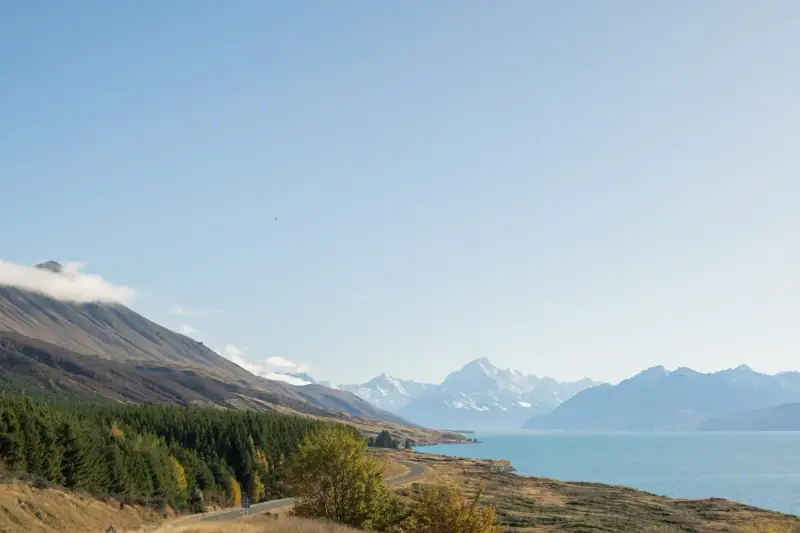
New Zealand budget: real costs, 3 profiles and money-saving tips
How much does New Zealand cost? Real prices by item (lodging, transport, food, activities), three 15-day budgets and tips to pay less.
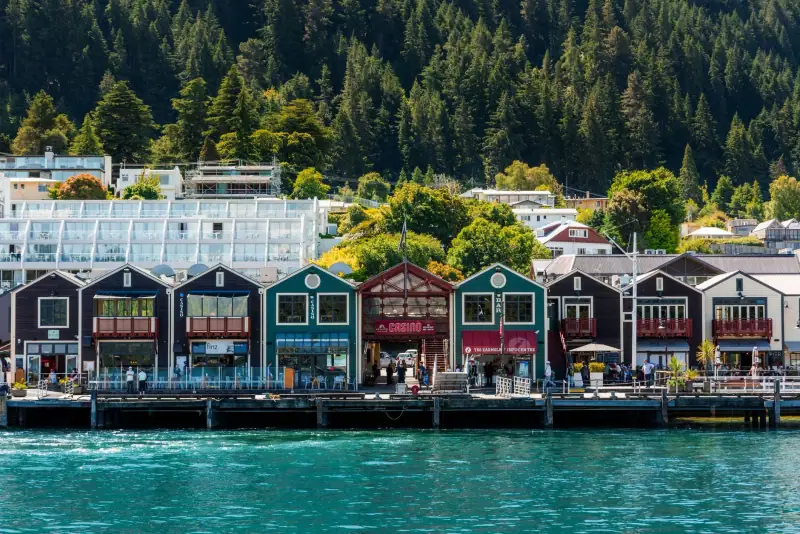
Te Anau or Queenstown: where to stay to visit Milford Sound?
Sleep in Te Anau or Queenstown for Milford Sound? Distances, drive time, budget and recommended nights: the comparison to choose without losing a day.
Ready-made
New Zealand itineraries

3 days
3 days in Auckland: a day-by-day itinerary with islands, volcanoes and beaches
What to do in 3 days in Auckland: Sky Tower, urban volcanoes, Waiheke Island and west coast beaches, with a day-by-day plan and practical tips.
3 days
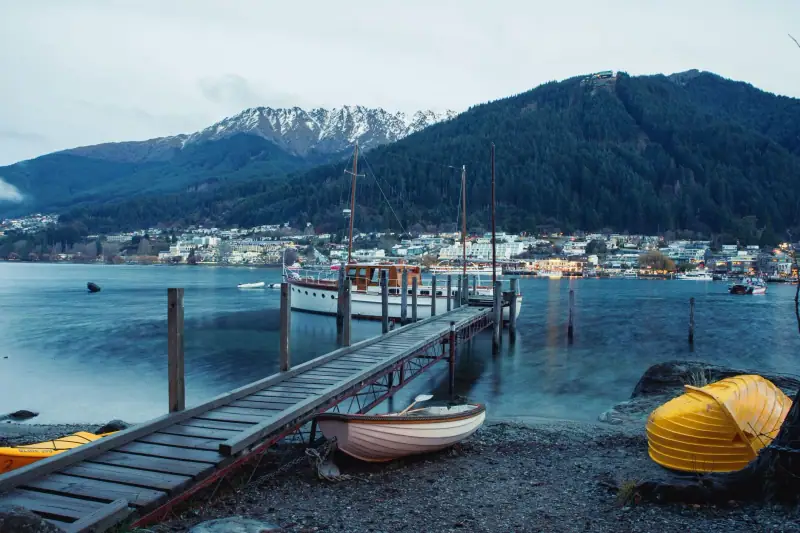
3 days in Queenstown: a day-by-day itinerary with activities and tips
What to do in 3 days in Queenstown: Lake Wakatipu, Arrowtown, Glenorchy and adventure activities, in a day-by-day plan with tips to organize it.
10 days
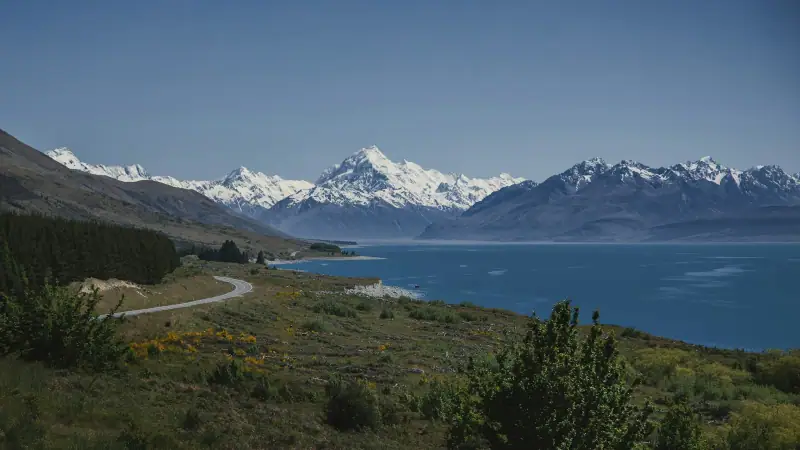
South Island road trip in 10 days: Christchurch to Queenstown
10-day South Island road trip: Tekapo, Mount Cook, Wānaka, Queenstown and Milford Sound, with distances, stops and practical tips.