What to see
Visiting Sossusvlei: a complete guide to the heart of the Namib Desert
We may earn a commission when you book through links on this page, at no extra cost to you. We don't visit or try the places we cover: we summarize published sources. How we work
In short
- Plan at least 2 full days: Sesriem Canyon at sunset on day one, then dunes, Deadvlei and hidden vleis at dawn on day two.
- Since May 1, 2026, self-driving the last 5 km (3 mi) to the vleis is not allowed: take the shuttle or a guide in a 4x4.
- Finish dune climbs and vlei visits before 10 am in summer (before 11 am in winter); the ground can reach 70 °C (158 °F).
- Park fees since April 2026: about N$280 per foreign adult per day plus about N$60 per small vehicle; confirm with NWR.
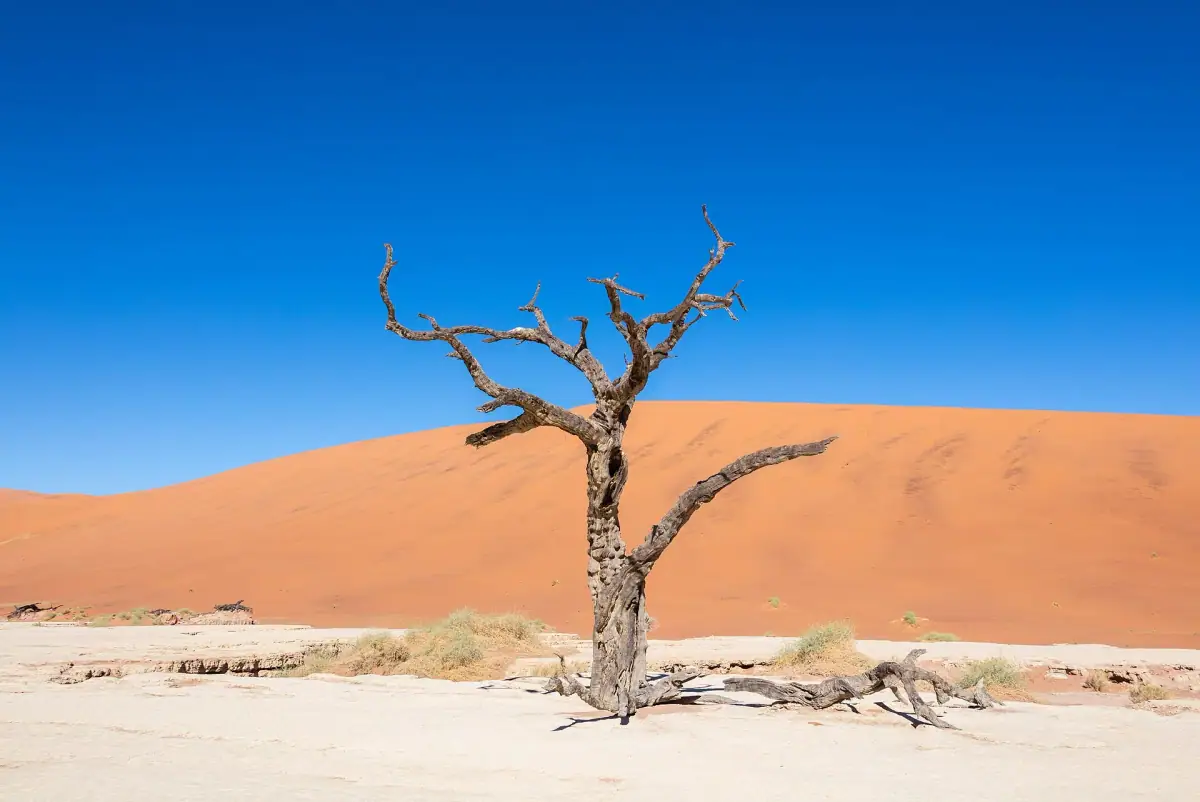
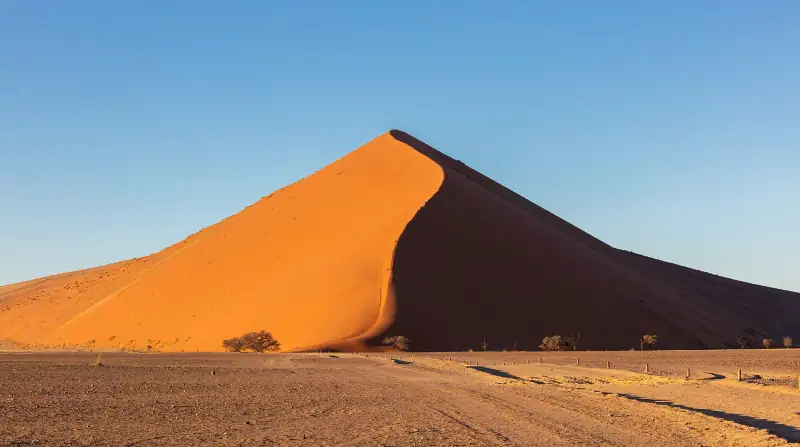
Sossusvlei is the image the whole world associates with Namibia: red-orange sand dunes rising 300 meters (985 ft) above a plain of white clay, skeletons of acacias dead for centuries standing against an absolute blue sky, and a silence so deep you can hear sand sliding down the dune flanks. But Sossusvlei is much more than a postcard. Set within Namib-Naukluft Park (49,768 km² / 19,215 sq mi, Namibia’s largest national park), the Sossusvlei tourist area holds forgotten canyons, hidden vleis, discreet wildlife and landscapes that change hour by hour with the angle of the sun.
Visiting Sossusvlei properly means getting up before dawn, organizing your logistics carefully, and taking the time to go beyond the marked path to Deadvlei. This guide gives you everything you need to know to make the most of it.
Understanding the Sossusvlei area
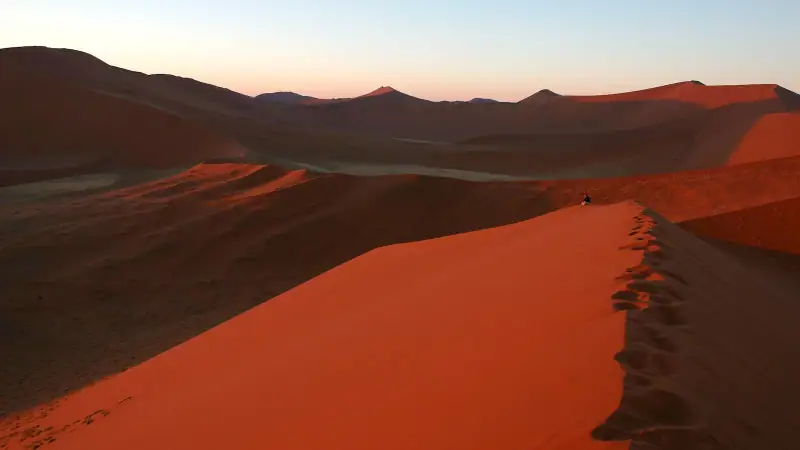
Contrary to what its name might suggest, “Sossusvlei” refers both to the main vlei (clay pan) and to the whole tourist area accessible from Sesriem, about 350 km (217 mi) southwest of Windhoek.
Namib-Naukluft Park is divided into several access zones. The Sossusvlei zone, accessible from the Sesriem gate, covers the most spectacular part of the Namib Desert: the mega-dunes of the Tsauchab dune field, built by the prevailing wind from the Atlantic over millions of years.
The geography is simple but striking. From the Sesriem gate, a road (paved, then gravel) runs for 55 km (34 mi) along the dry Tsauchab River, flanked by ever-higher dunes. This river, which flows only a few days a year during exceptional rains, has carved over millennia the salt clay vleis at the bottom of which acacias die and fossilize, creating the famous ghostly silhouettes.
At 55 km (34 mi) from the gate, a parking area marks the limit of the road passable with two-wheel drive. From there, the last 5 km (3 mi) over deep sand to the vleis are covered by shuttle (or with a guide in a 4x4): since May 1, 2026, self-driving there is forbidden for rental vehicles. Check conditions with your lodge before you go.
Sesriem Canyon: a grand opening
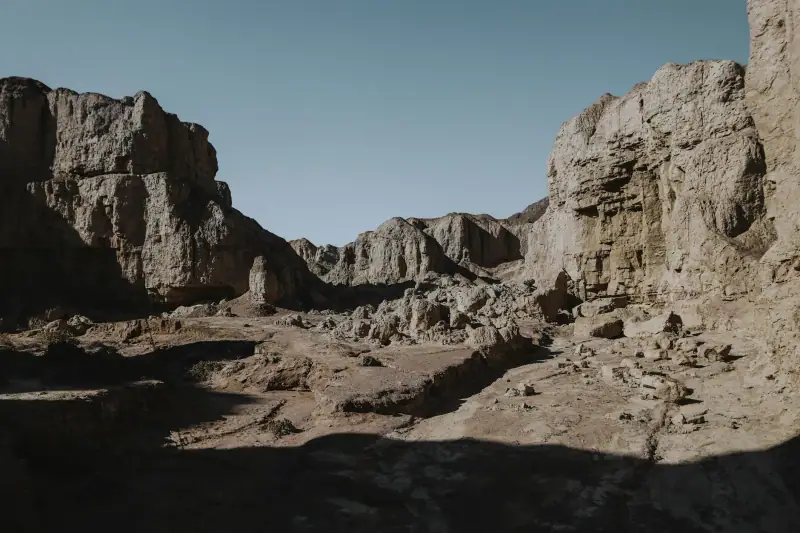
Even before heading to the dunes, stop at Sesriem Canyon, only a few hundred meters from the entrance gate. This canyon, 30 meters (98 ft) deep and about 1 km (0.6 mi) long, was carved by the Tsauchab River in deposits of conglomerate and sandstone several million years old.
The name “Sesriem” comes from Afrikaans and means “six straps”: pioneers had to tie six leather straps together to lower their buckets to the water that remained at the bottom of the canyon even in the middle of the dry season.
The canyon is the best place to get used to the Namibian light. Come early in the morning or late in the afternoon: the oblique light colors the walls dark red and ochre, creating extraordinary play of shadows. Avoid midday when temperatures in the canyon are stifling. The descent into the canyon follows a simple trail (1 to 1.5 hours round trip) along the riverbed. In the rainy season, natural pools remain at the bottom, a rare source of fresh water in this desert.
Lodges in Sossusvlei
Sleep as close to the dunes as possible to reach the vleis before the park opens to the public. Lodges and campsites for every budget.
The vleis: Deadvlei, Big Mama and Hidden Vlei
Visitors often ask what the difference is between all these vleis? Here is a clear guide.
Sossusvlei: the main vlei
Sossusvlei proper is a large white clay basin framed by dunes up to 200 meters (656 ft) high. The vlei is fed by the Tsauchab River during rare episodes of heavy rain: once or twice a decade, water collects in the clay bottom and the acacias come back to life. The rest of the time, the cracked white floor contrasts sharply with the reddish sand of the dunes, creating breathtaking photographic compositions.
The vlei is reached from the 2WD parking by shuttle (or with a guide in a 4x4). The walk from the shuttle stop to the heart of the vlei takes 10 to 15 minutes in hot sand.
Deadvlei: the photographic icon
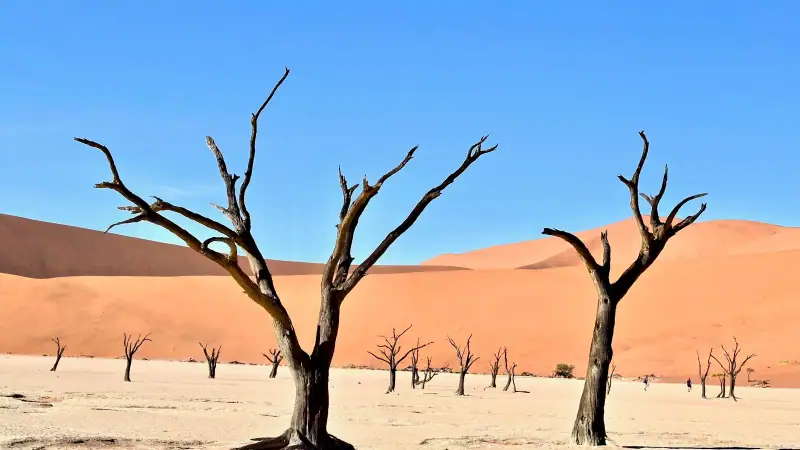
About 1 km (0.6 mi) on foot from Sossusvlei (marked, 20 to 25 minutes), Deadvlei is probably the most photographed site in Namibia. This white clay vlei is dotted with dead camelthorn acacias whose black trunks, scorched by the sun, do not decompose in the ultra-dry desert air; their age is estimated at about 600 to 700 years.
A feature of Deadvlei: the Big Daddy dune (about 325 meters / 1,066 ft high) towers directly over it, forming the classic panorama of Namibian postcards. Climbing Big Daddy takes 45 to 90 minutes depending on your fitness. Running straight down into Deadvlei through the sand is an intense pleasure (5 minutes). For details on climbing the dunes, see our guide to the Sossusvlei dunes.
Best time for Deadvlei: at dawn, when the light hits the dunes from the east and backlights the dead acacias. Avoid 9:30 am to 4 pm in summer; the heat at the bottom of the vlei (surrounded by dunes that reflect the heat) frequently exceeds 45 °C (113 °F).
Hidden Vlei: the vlei for solitary visitors
Less visited than Deadvlei, Hidden Vlei is about 2 km (1.2 mi) on foot from the final parking, in a different direction. This vlei is less spectacular visually but has a wilder and quieter atmosphere; you can find yourself alone there, even in high season. The cracked clay floor and the few remaining dead acacias make it an authentic photo spot.
The walk to Hidden Vlei passes between dunes and crosses hardened sand areas, passable without particular difficulty, but allow 4 to 5 hours round trip from the parking, including a stop at Sossusvlei.
Big Mama Vlei
Between Sossusvlei and Deadvlei, Big Mama Vlei is often ignored by visitors in a hurry. Yet this vlei offers a clear view of the Big Mama dune, slightly lower than Big Daddy but more accessible, and enjoys sometimes spectacular afternoon light. Stop for a few minutes on the way between the two main vleis.
Excursions and safaris from Sossusvlei
Guided tours in the dunes, night safaris and quad excursions in the Namib Desert.
Wildlife around Sossusvlei
Sossusvlei is often associated only with dunes, but the area holds surprising wildlife for such an arid desert. The key is to watch at the right times: early in the morning and at nightfall, when temperatures are bearable.
Large mammals
The gemsbok is the symbol animal of the Namibian desert. These majestic antelopes, with straight horns up to 1.2 meters (4 ft), tolerate body temperatures of 45 °C (113 °F) thanks to a unique vascular network in their nostrils. They are regularly seen on the flanks of the dunes or on the plains at dawn. The springbok (the Namibian gazelle) is smaller and more nervous; it is often found in herds in the less dune-covered areas.
The black-backed jackal is present throughout the area; you may hear it howl at night from your camp. More discreet, Cape foxes hunt small reptiles at dawn. Brown hyenas also frequent the area but are rarely seen by day.
Birds
The Sossusvlei sky is dominated by vultures soaring on the dune thermals. Ostriches often wander the plains between the dunes, their tall, comical silhouettes planted in the sand. The Cape francolin (spurfowl) calls hoarsely from dawn. Small dune passerines, notably the Namib lark (Calendulauda erythrochlamys), endemic to the Namib, find water in the dew that condenses on grass blades at the dune tops in the early morning.
Reptiles and insects
Bibron’s gecko and agama lizards are everywhere on the rock faces. But the stars of the coastal desert are the fog beetles: these insects collect fog water by standing head down on dune crests in the early morning, letting the droplets roll toward their mouths. An extraordinary adaptation that illustrates the survival logic of the Namib.
Getting there and logistics
From Windhoek
Sossusvlei is about 350 to 360 km (217 to 224 mi) from Windhoek, or 5 h 30 to 7 h on the road depending on the route and the condition of the tracks. Two main routes exist: (1) via Naukluft: B1 south to Rehoboth, then the C24 to Solitaire, then the C19 and D826 to Sesriem (gravel track via the Naukluft massif); (2) via Mariental: B1 south to Mariental, then the C19 to Sesriem (via Tsaris Pass). These two routes are distinct; do not combine them. A standard high-clearance car is enough in the dry season on both.
Leave Windhoek before 7 am to reach Sesriem in the early afternoon; this gives you time to settle in, visit Sesriem Canyon at sunset, and be ready for the gate opening at dawn.
From Swakopmund
The road from Swakopmund to Sossusvlei is one of the most spectacular drives in Namibia. Allow about 340 to 380 km (211 to 236 mi) depending on the route (C14 via Solitaire or the coastal road via Walvis Bay), or 4 to 5 hours. The stop at Solitaire (an isolated fuel station with a legendary bakery) is a must-stop; fill the tank even if you think you don’t need it.
Fuel and supplies
Sesriem has a fuel station and a small general store. Outside Sesriem, the next option is Maltahöhe (about 156 km / 97 mi, ~2 h 20) or Solitaire (about 90 km / 56 mi toward Swakopmund). Fill up at every opportunity. Always carry at least 10 liters (2.6 US gal) of water per person for a day in the park; the plastic water dispensers sold in the lodges are practical.
The 2WD shuttle
From the large final parking (55 km / 34 mi from the gate), a shuttle run by a private concessionaire covers the last 5 km (3 mi) to the vleis through deep sand. Since May 1, 2026, rental vehicles can no longer continue on their own on this stretch; only registered guides in 4x4s can. Shuttle cost: around N$200 per adult according to sources, with no regulated rate (check with your lodge or the parking ticket office).
4x4 car rental in Namibia
A 4x4 or high-clearance car to reach Sossusvlei, Sesriem and drive freely in Namib-Naukluft Park.
Best time to visit Sossusvlei
Dry season (May to October): the ideal time
High season is the southern winter (June to August): cool mornings (2 to 10 °C / 36 to 50 °F at dawn in the desert), hot afternoons (25 to 30 °C / 77 to 86 °F), invariably blue skies. It is the favorite period of photographers: the winter light is soft and visibility perfect. Drawback: crowded lodges and reservations needed several months ahead.
September to October is often the best compromise: rising temperatures (15 to 38 °C / 59 to 100 °F in the afternoon), fewer people, the same light conditions. Gemsbok and springbok are still well present.
May is pleasant and quiet, with night temperatures still cold but bearable.
Rainy season (November to April): a rare sight
The rainy season transforms Sossusvlei into something unique. When enough rain falls in the upper Namib, the Tsauchab River flows and the vleis fill with water; the dead acacias of Deadvlei are reflected in a shallow mirror of water. This only happens a few times a decade, but 2021 and 2022 saw spectacular partial fillings. The dunes themselves change: ephemeral grass grows on the flanks, making the crests less sharp but the colors more vivid.
Drawbacks of the rainy season: tracks sometimes impassable after heavy rain, extreme heat (35 to 42 °C / 95 to 108 °F in the afternoon), mosquitoes in the evening.
Extreme temperatures: essential precautions
The sandy ground at Sossusvlei in summer can reach 70 °C (158 °F) at the surface at midday. Temperatures inside the dunes rise faster than you think. Absolute rule: finish your dune climb and vlei visit before 10 am in summer (before 11 am in winter). In the afternoon, stay in the shade or in your air-conditioned lodge, and return to the park in late afternoon for Sesriem Canyon and wildlife.
A 2-day visit plan
Day 1: Arrival and Sesriem Canyon
- 1 pm to 3 pm: Arrive at Sesriem, settle into the lodge or campsite, have lunch.
- 4:30 pm: Visit Sesriem Canyon at sunset (1.5 hours of hiking in the canyon, magnificent light).
- 6 pm: Wildlife watching on the way back to camp; gemsbok and springbok come out at this hour.
- 7 pm: Dinner at camp. Early to bed, wake-up planned at 4:30 to 5 am.
Day 2: Dawn on the dunes
- Before the gate opens (if staying in inner lodges) or right at opening: Take the road to the final parking in complete darkness. The road in the park is lit only by headlights and stars.
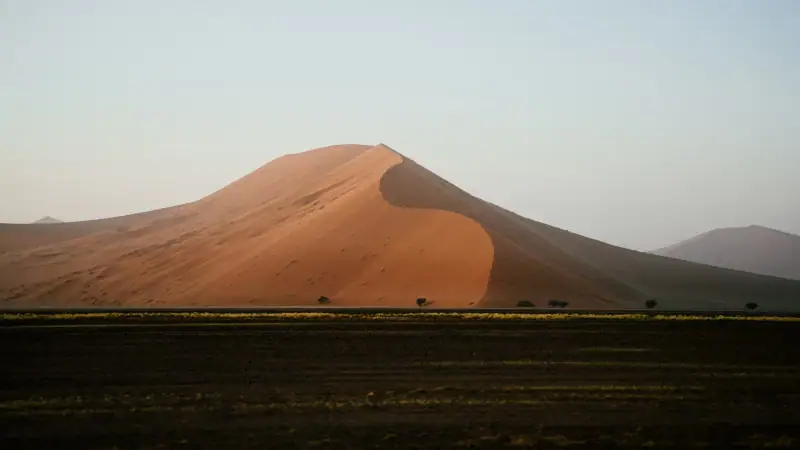
- Sunrise: Arrive at Dune 45 (about 45 km / 28 mi from the gate) for an optional climb, or go directly to the final parking for the shuttle.
- 6:30 am to 8 am: Visit Sossusvlei and walk to Deadvlei (out via Big Mama Vlei, direct return). Climb Big Daddy for the bravest.
- 9 am to 10 am: Hidden Vlei if you have the energy and water.
- 10 am to 11 am: Return to camp, late breakfast, well-deserved nap.
- 4:30 pm to 6 pm: Second outing at dusk for wildlife and the last light on the dunes from the inner road.
For details on the different dunes and climbing technique, see our complete guide to the Sossusvlei dunes.
Practical tips
Essential equipment:
- Plenty of water: at least 3 liters (0.8 US gal) per person for the morning in the vleis (more in strong heat)
- Category 4 sunglasses; the glare off Deadvlei’s white clay is blinding
- Wide-brimmed hat and light long sleeves
- Closed shoes for climbing the dunes (sand gets into flip-flops)
- Light gaiters if you plan Hidden Vlei; they keep sand out of your shoes
- Camera with a full battery from the day before; the desert’s cold temperatures drain batteries faster
Reservations: Book your accommodation (lodges inside the park or the NWR Sesriem campsite) at least 3 months ahead for high season (June to August). Lodges inside the park let you enter before the park opens to the general public, a considerable advantage for photographing at dawn without crowds. Find our selection in our guide to where to stay in Sossusvlei.
Estimated daily budget:
- Backpacker budget (NWR camping, your own food): N$400 to 600 per day excluding park entry
- Mid-range budget (guesthouse/mid-range lodge): N$1,500 to 3,000 per day all-inclusive
- Luxury budget (eco-premium lodges inside the park): N$5,000 to 15,000 per night
Connectivity: There is no phone network inside the park between the gate and the vleis. Download offline maps (Maps.me, offline Google Maps) before you go. The Sesriem gate and some lodges have limited Wi-Fi. Check your carrier’s international plan or consider a travel eSIM.
Photos and light: Sossusvlei’s light is the most beautiful in Namibia, perhaps in all southern Africa. Two golden windows: the first 40 minutes after sunrise (golden raking light on the dune crests, dramatic shadows) and the 30 minutes before sunset (colors going from orange-red to deep purple). Avoid midday; the white light flattens all relief.
Sossusvlei in your Namibian itinerary
Sossusvlei is an essential stop on any Namibian itinerary of more than 7 days. Its central geographic position makes it a natural hinge between the coast and the interior of the country.
Position in the classic Namibian circuit: Most travelers arrive in Windhoek, head down to Sossusvlei (350 km / 217 mi), go back up to Swakopmund via Solitaire (340 to 380 km / 211 to 236 mi), then north to Etosha (~520 to 570 km / 323 to 354 mi from Swakopmund to Anderson Gate) before returning to Windhoek. This loop covers the four major areas of Namibia in 10 to 14 days.
For a 3-week road trip, add Lüderitz (to the south, ~450 km / 280 mi from Sesriem), the Skeleton Coast and Damaraland. Our Namibia road trip guide gives the detailed itinerary with distances, driving times and logistics tips for each stage.
Sossusvlei is not just a destination for photographers or a box to tick on a list of African wonders. It is a place where geological time becomes visible, where millions of years of wind, sand and water can be read in the layers of the dunes, the cracked vleis and the skeletons of petrified acacias. Getting up in the cold of the Namibian dawn, walking to Deadvlei under the first pink light, and standing silent before the dead acacias: that is what Sossusvlei has to offer, well beyond the photographs.
To prepare your full stay in Namibia, see our Namibia road trip guide and our selection of accommodation in Sossusvlei for all budget ranges.
Frequently asked questions
How long do you need to visit Sossusvlei?
Allow at least 2 full days to enjoy Sossusvlei at its best: on the first evening, arrival and Sesriem Canyon at sunset; on the second morning (leaving before dawn), dune climbing, Deadvlei and the hidden vleis. A third day lets you explore the wildlife areas and secondary trails at your own pace.
Do you need a 4x4 to get to Sossusvlei?
Not necessarily. The main road from Sesriem to the 2WD parking (about 55 km / 34 mi) is a good gravel track passable in a high-clearance sedan in the dry season. However, the last 5 km (3 mi) to the vleis are deep sand: you must leave your vehicle at the 2WD parking. Since May 1, 2026, driving yourself on those last 5 km is forbidden; you must take the shuttle (or a guide in a 4x4). Check conditions with your lodge.
What time does the Sesriem gate open?
The Sesriem gate opens 1 hour before sunrise and closes 30 minutes after sunset. Exact times vary by season (around 5:30 to 6 am in winter, 5 am in summer). Visitors sleeping in the lodges inside the park can reach the dunes before the official opening to the general public, a decisive advantage for the morning light.
Can you camp at Sossusvlei?
Yes. The Sesriem campsite (run by NWR) is a few hundred meters from the main gate. It is the cheapest way to sleep close to the dunes. Sites have running water and basic toilets. Book well ahead, especially in high season (June to September), as places are in high demand.
What is there to do at Sossusvlei besides the dunes?
Sossusvlei offers much more than dunes: Sesriem Canyon (a gorge 30 m / 98 ft deep) to visit early in the morning or in the evening, Hidden Vlei (less visited than Deadvlei), Big Mama Vlei, wildlife watching (gemsbok, springbok, ostriches, jackals), and the hiking trails of the surrounding Namib-Naukluft Park.
Is Sossusvlei accessible all year?
Yes, but conditions vary. The dry season (May to October) is ideal: passable tracks, moderate heat in the morning, clear skies. The rainy season (November to April) can turn tracks to mud and fill the vleis with water, a rare but unpredictable sight. Some lodges close or reduce services in low season.
How much is the Namib-Naukluft Park entry fee at Sossusvlei?
Since April 2026, entry fees for Namib-Naukluft Park are about N$280 per foreign adult per day (about N$180 for SADC nationals), plus a fee of about N$60 per small vehicle (rates subject to change; check with NWR before you leave). The shuttle between the 2WD parking and the vleis costs extra. The park is run by NWR (Namibia Wildlife Resorts) under the authority of Namibia's Ministry of Environment. NamibRand Nature Reserve is an independent private reserve bordering the park.
More Namibia guides
Keep reading
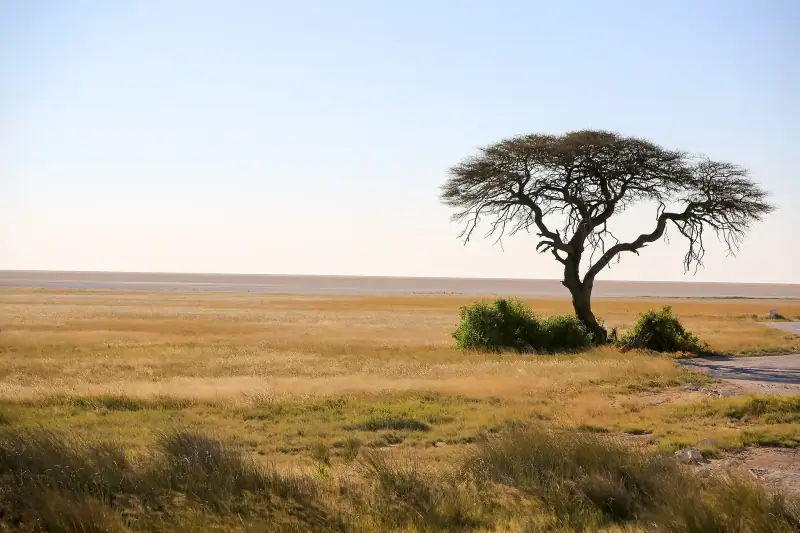
Visiting Etosha National Park: a complete guide to the Namibian safari
Complete guide to Etosha National Park: best season, camps, waterholes and animals to see. Everything to plan your safari in Namibia.
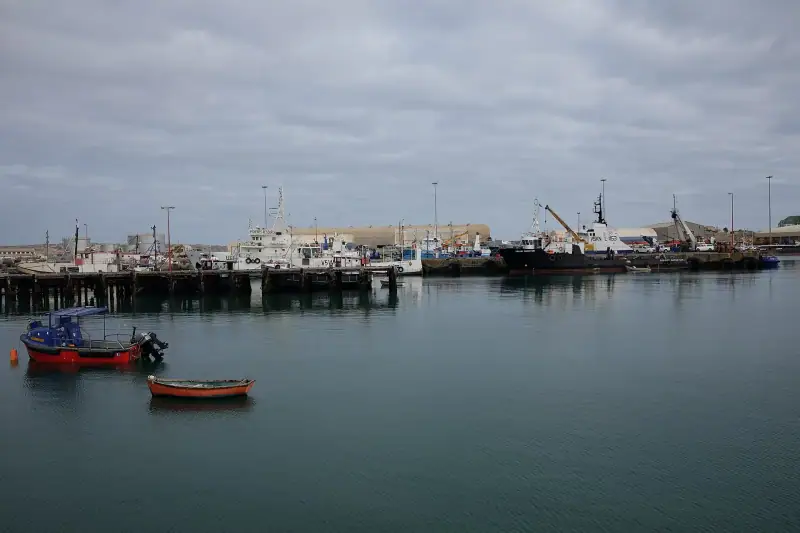
Visiting Lüderitz: a complete guide to the desert ghost town
Complete guide to Lüderitz: Kolmanskop, penguins, German architecture and the Namib Desert. All you need to visit this unique town in Namibia.
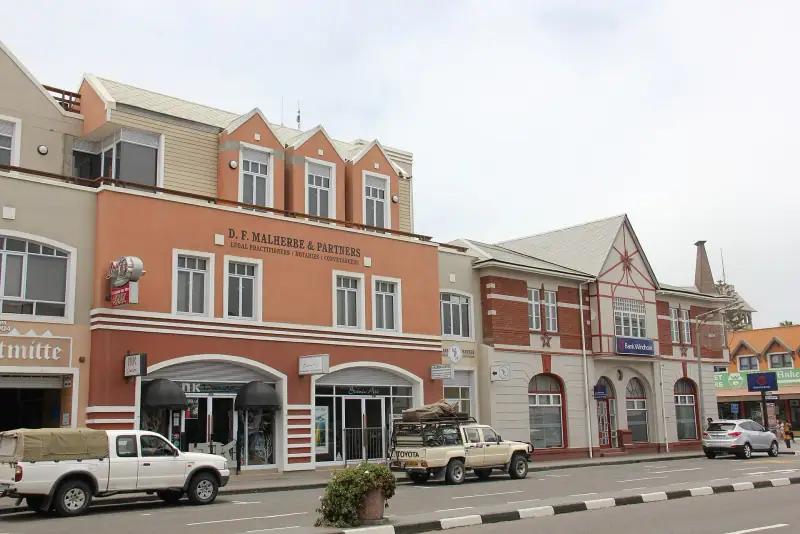
Visiting Swakopmund: a complete guide to Namibia's colonial pearl
Complete guide to Swakopmund: German architecture, sandboarding, Living Desert tours and restaurants. Everything to visit this unique Namibian town.
Ready-made
Namibia itineraries
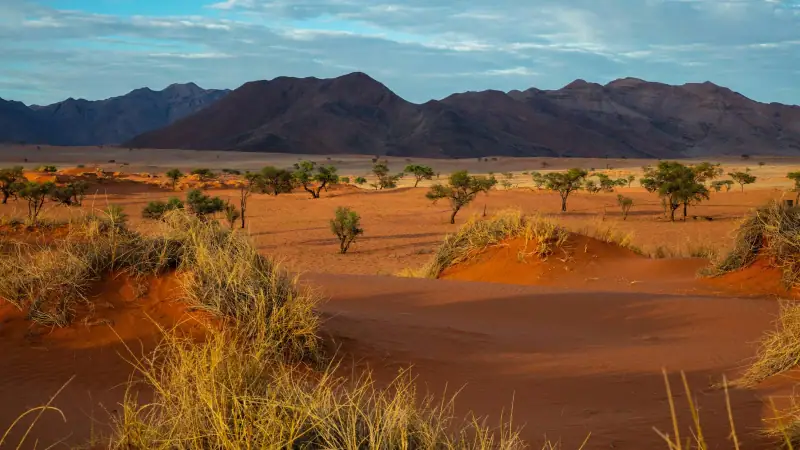
10 days
Namibia in 10 days without a car: a realistic itinerary by shuttle and transfer
WindhoekEtoshaDamaralandSwakopmundSesriem / SossusvleiWindhoek
10 days
Namibia road trip in the rainy season (January to March): itinerary and passable roads
WindhoekEtosha (Okaukuejo)Khorixas / TwyfelfonteinSwakopmundSesriemWindhoek

21 days
Namibia road trip: a complete 2 to 3 week 4x4 itinerary
WindhoekSossusvlei / Namib-NaukluftSwakopmund / Walvis BayDamaraland / SpitzkoppeTwyfelfonteinSkeleton Coast, southern partEtoshaWaterberg PlateauFish River CanyonLüderitz and return to Windhoek