Things to do
Hiking in the High Atlas: Imlil, Berber Valleys and Toubkal
We may earn a commission when you book through links on this page, at no extra cost to you. We don't visit or try the places we cover: we summarize published sources. How we work
In short
- Imlil, about 60 km (37 mi) and 1 h 30 to 2 h from Marrakech at around 1,700 m (5,580 ft), is the base for hikes in the Toubkal massif.
- Toubkal (4,167 m / 13,671 ft) is a long walk at high altitude; the classic trek takes 2 days with a refuge night, or 3 days.
- Spring and early fall are the most pleasant; in winter snow makes the climb a mountaineering outing that may need crampons and an ice axe, best with a guide.
- A local guide is not required for easy valley walks but is strongly recommended for Toubkal, especially off season or in uncertain weather.
An hour and a half or two from the bustle of Marrakech, a very different Morocco begins: that of deep valleys, adobe villages clinging to slopes, cultivated terraces and summits that stay snow-capped for much of the year. The High Atlas is an ideal playground for walkers, whether they want a simple stroll between two villages or the challenge of climbing Toubkal, the highest peak in North Africa. This guide helps you choose your route, prepare and avoid common mistakes.
Why hike in the High Atlas
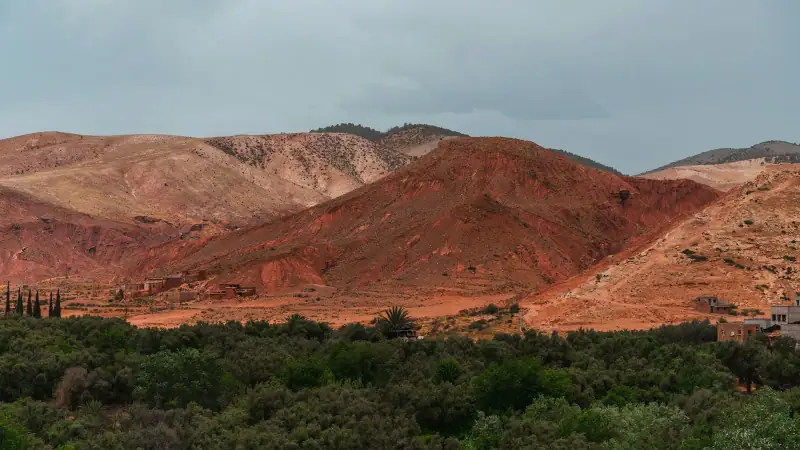
The High Atlas is a range that crosses Morocco from west to east and separates the Atlantic plains and Marrakech from the arid expanses of the South. At the foot of its highest peaks, the Toubkal massif is protected by a national park, which keeps its landscapes well preserved.
Several things explain its popularity with travelers:
- Proximity to Marrakech: you can leave in the morning and sleep in the mountains in the evening, which makes it easy to add a nature leg to an urban stay.
- A wide range of levels: from a two-hour stroll to a multi-day hike, everyone finds a route.
- The human dimension: trails link Berber villages where you are often invited to have mint tea.
- Contrasting landscapes: walnut orchards, torrents, red scree, rocky ridges and, higher up, an almost lunar world.
Before you set off, keep in mind that a mountain is still a mountain: the weather changes quickly, distances are longer than they look and altitude tires even trained walkers.
Imlil, the starting point for hikes
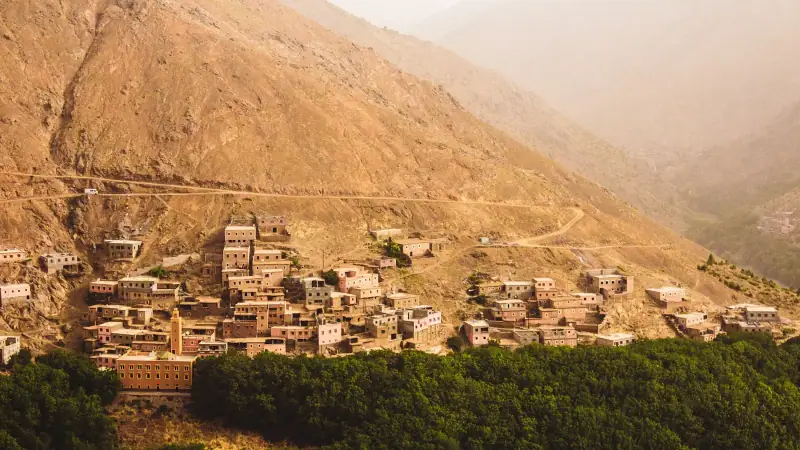
Imlil is the mountain village where most hikes in the Toubkal massif begin. About 60 km (37 mi) from Marrakech, it sits at around 1,700 m (5,580 ft) of altitude, at the end of a winding road up the valley. It is sometimes nicknamed the “Moroccan Chamonix”, because of the many hikers and climbers who pass through each year.
The village is an excellent base camp. You find lodges, guesthouses, small shops, simple restaurants and guide offices. Mules are commonly used to carry luggage to the refuges, so on a multi-day trek you can walk with a light pack.
To get there, you have several options:
- Private or shared taxi from Marrakech, which remains the most widespread solution. Agree on the fare before leaving.
- Organized transfer, often included in guided trek offers, which spares you the arrangements.
- Rental car, handy if you want to stay free. The last stretch calls for caution, with tight bends and sometimes stones on the road.
If you are preparing a wider trip, our 7-day itinerary between Marrakech, Essaouira and the Atlas shows how to fit a day in the mountains into a circuit.
Sleeping in Imlil and in the mountains
Lodges, guesthouses and small hotels at the foot of Toubkal: compare lodgings for your dates.
Easy walks around Imlil
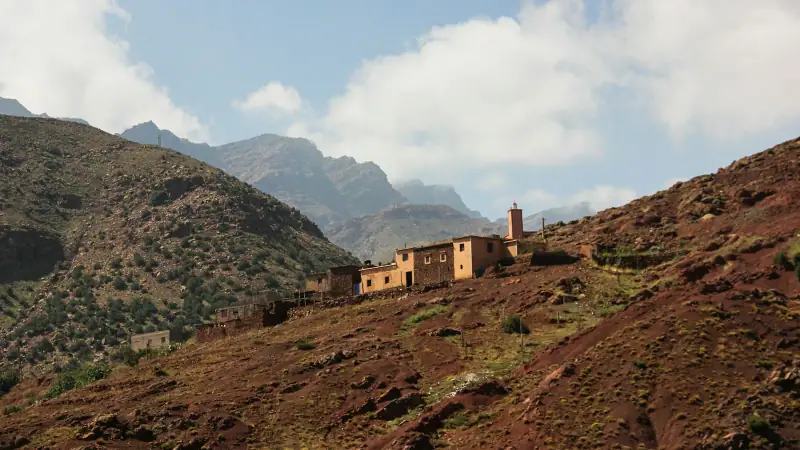
You do not need to aim for a summit to enjoy the High Atlas. Around Imlil, many trails offer outings of two to four hours, suited to families and occasional walkers. The principle is always the same: you go up a valley, cross one or two villages, stop for tea and come back by another slope.
What makes these loops charming:
- Adobe villages, whose earthen houses blend into the color of the mountain.
- Cultivated terraces, where walnut, cherry and apple trees grow, magnificent in spring when they blossom.
- Modest passes, which offer fine views of the valley without excessive effort.
- Waterfalls and streams, especially lively at snowmelt.
For these walks, a local guide is a big plus: they know the trails, avoid wrong turns and make encounters easier. Many travelers also enjoy having lunch in a village guesthouse, where a tagine prepared with local produce is served. To find out what you might taste, see our Moroccan dishes to taste.
Plan for a slower pace: walking speed is lower than on the plains, especially above 2,000 m (6,560 ft). Bring enough water, and a reserve for the unexpected.
Climbing Toubkal: what to know
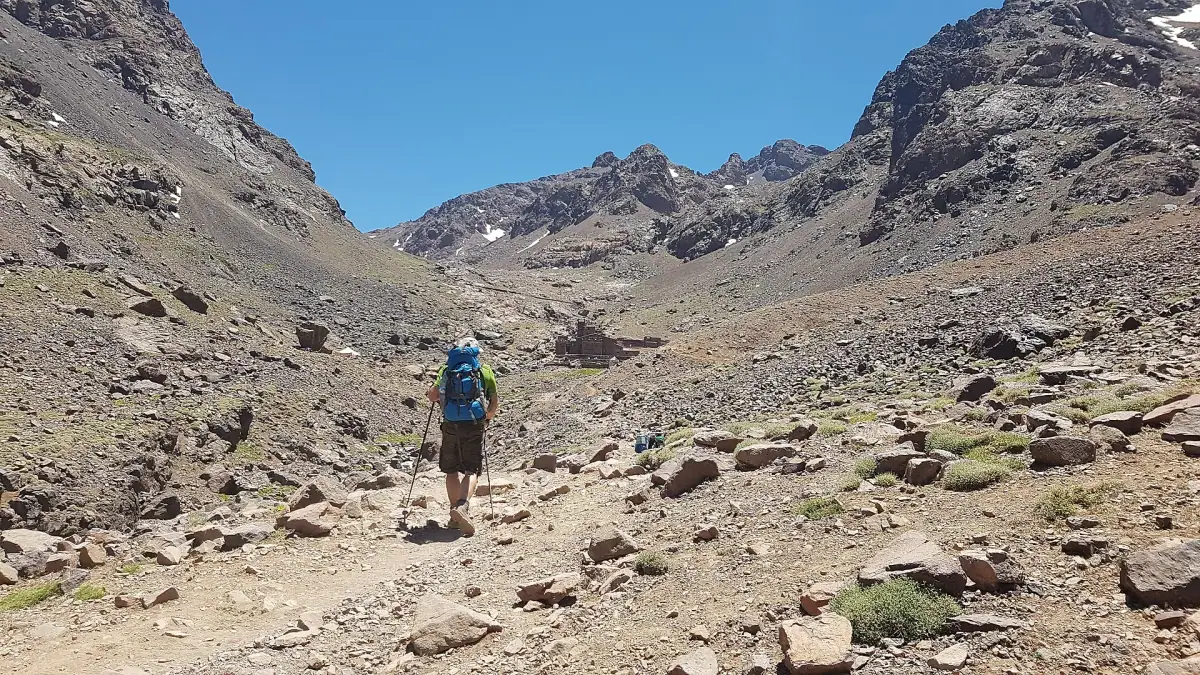
At 4,167 m (13,671 ft), Toubkal is the highest summit of the High Atlas, of Morocco and of all North Africa. The climb attracts many hikers each year, because in the right season it does not require mountaineering skills: it is a long walk at altitude, on a well-marked trail.
The classic two-day plan
The most common option is a two-day trek from Marrakech:
- Day 1: transfer to Imlil, then a walk of about five to six hours to one of the refuges at around 3,200 m (10,500 ft). You sleep in a dormitory, have dinner and go to bed early.
- Day 2: leave before dawn to reach the summit at sunrise, then descend to the refuge, have breakfast, and return to Imlil during the day. The transfer to Marrakech ends the expedition.
This plan is demanding: it concentrates a large elevation gain into a short time. It suits people in good physical shape who are used to walking several hours in a row.
The three-day version
If you have time, add a night. An extra day lets you walk at a more comfortable pace and enjoy the scenery instead of focusing only on the goal. Questions about altitude and your own health are for your doctor or a travel clinic: ask them before you go, and see the official travel health pages (CDC in the US, TravelHealthPro in the UK).
The main difficulties
- Altitude: breath is shorter, sleep sometimes restless, and fatigue more marked than expected.
- Cold: even in summer, mornings at the summit are cool, and the wind can be biting.
- Scree: the last part of the climb is on unstable stones, which demand concentration, especially on the way down.
- Descent: often underestimated, it tires the knees and thighs.
Listen to your body and stay with your guide’s advice: turning back is always the right decision when things feel wrong. The summit will still be there next year.
Treks and excursions in the Atlas
Guided Toubkal climb, day in the Berber valleys, transfers from Marrakech: compare offers.
When to go: choosing the right season
The season completely changes the nature of the experience, and it is best to choose it carefully.
- Spring (April to June): snowmelt feeds the streams, valleys are green and orchards bloom. It is a much-loved period, even if snow can remain at altitude early on.
- Summer (July-August): the valleys and Marrakech are hot, but the high mountains stay cool, which suits the Toubkal climb well. Still allow for the possibility of brief storms at altitude.
- Fall (September to November): days are stable and bright early in the season, with fewer visitors. Nights quickly turn cool.
- Winter (December to March): snow covers the summits. The Toubkal climb becomes a mountain outing that may require crampons and an ice axe, and is best reserved for experienced hikers accompanied by a guide. Valley walks remain possible, with superb landscapes under snow.
To compare seasons across the country, see our guide on when to go to Morocco.
Other hiking grounds in the High Atlas
Imlil is not the only entry point. Other valleys near Marrakech offer more accessible and less crowded walks.
The Ourika Valley
This green valley, south of Marrakech, is one of the most popular day trips. It leads to the village of Setti Fatma, from which trails lead to waterfalls. The crowds can be heavy on weekends: favor a weekday and start early.
More remote valleys
For those seeking quiet, local guides offer routes in neighboring valleys, where visitors are rare and villages more traditional. These multi-day treks, with a guide, mules and nights with host families, are a good way to discover Berber ways of life.
Combined with the rest of the country
Many travelers fit in one or two days of hiking between visiting Marrakech and the road to the desert. Just leave a margin in your schedule: mountain roads are slower than distances suggest.
Choosing a guide and organizing your trek
In Morocco, mountain guiding is regulated: official guides are generally certified, and it is better to go through one of them than through a tout met in the street.
Here is how to proceed:
- Book ahead for high season, especially if you want a specific date and a refuge bed.
- Ask what is included: transfers, meals, a night in a refuge, mules for luggage, tips. Price differences often come from there.
- Check the group: a small group allows a better-suited pace and more attention from the guide.
- Allow a margin for the weather: if the weather is bad, a good guide may decide to change the program or give up, and that is a good thing.
- Think about tipping: it is customary to thank the guide and team at the end of the trek.
To get an idea of the overall cost of your trip, our article on the Morocco budget gives useful benchmarks.
Gear: what to bring
Flights to Marrakech
Compare flights to Morocco before booking your stay in the mountains.
The key in the mountains is to layer clothing to adapt to temperature swings between the predawn start and midday.
To wear:
- High-cut hiking boots, already broken in (never new)
- Technical socks, with a spare pair
- Hiking pants and, for Toubkal, warm tights or base-layer pants
- A breathable t-shirt, a fleece and a waterproof or windproof jacket
- A hat, gloves and a buff
- A sun hat or cap and sunglasses
In the pack:
- Enough water (allow at least 2 liters, roughly half a gallon, per day of walking)
- Energy snacks: dried fruit, bars, fresh fruit
- A headlamp with spare batteries for the predawn start
- High-SPF sunscreen and lip balm
- A first-aid kit with blister bandages
- Trekking poles, very useful to ease the knees on the descent
- A light sleeping bag if the refuge does not provide blankets
For more practical ideas to slip into your suitcase, you can browse our selection of accessories for Morocco.
Safety, health and insurance
Hiking at altitude carries risks that should not be neglected, even on a trail reputed to be easy.
- Hydrate regularly and eat before you are hungry: altitude cuts appetite, but the body needs energy.
- Climb at your own pace: the pace should let you talk without being out of breath.
- Watch the weather: in summer, storms can break out late in the day, and in winter visibility can drop very fast.
- Tell someone your route and do not set off alone on long outings.
- Check entry requirements and health guidance before you leave: see our page on entry requirements for Morocco, ask your doctor or a travel clinic, and see the official travel health pages (CDC in the US, TravelHealthPro in the UK).
Travel insurance including assistance and repatriation is strongly advised for hiking at altitude. Check carefully that your policy covers mountain hiking and the altitude you are aiming for before leaving.
Program ideas depending on your time
To help you decide, here are three options suited to different profiles:
- One day: leave Marrakech in the morning, loop walk around Imlil with lunch in a village, return in late afternoon. It is the ideal format for a first taste.
- Two days: climb to the refuge on the first day, Toubkal summit the next. For hikers in good shape with a short window.
- Three to four days: a progressive trek with nights in lodges or refuges, crossing several valleys and with rest time. It is the most comfortable format and the richest in encounters.
In every case, keep half a day of margin on the return if you have a flight to catch: a setback in the mountains, such as a storm or a slowed road, happens easily.
Bottom line
The High Atlas is one of the best surprises of a trip to Morocco: within reach of Marrakech, it offers grand landscapes, warm villages and routes for all levels. If you are with family or not very fit, opt for walks around Imlil and Ourika. If you are in good shape and have two or three days, climbing Toubkal is an unforgettable experience, as long as you prepare well, choose the right season and go with a guide. In every case, start early, move at your own pace and take time to drink the tea offered along the way: it is often what you remember best.
Frequently asked questions
Do you need to be a mountaineer to climb Toubkal?
No. In summer, the normal route from Imlil is a hiking trail with no technical difficulty. It does require good physical fitness, because the altitude (4,167 m / 13,671 ft at the summit) makes the effort harder than a walk of the same length on the plains.
How long does it take to climb Toubkal?
The most common is a 2-day trek: climb to a refuge around 3,200 m (10,500 ft) on the first day, summit and return to Imlil on the second. A 3-day version, with an extra night, leaves time for a more comfortable pace and to enjoy the scenery.
What is the best time to hike in the High Atlas?
Spring (April to June) and early fall (September to October) generally offer the most pleasant conditions. Summer is hot in the valleys but suits the high mountains well. In winter, snow turns the Toubkal climb into a mountaineering outing that requires specific equipment.
Do you need a guide to hike around Imlil?
For easy walks in the valley, a guide is not mandatory but adds a lot: route-finding, explanations about village life, conversations with residents. For Toubkal, hiring a local guide is strongly advised, especially off season or in uncertain weather.
How do you get from Marrakech to Imlil?
Imlil is about 60 km (37 mi) from Marrakech, roughly 1 h 30 to 2 h by road. You go by shared or private taxi, organized transfer or rental car. The last stretch is a winding mountain road.
Can you hike the High Atlas with family?
Yes, as long as you choose short, gentle routes in the valleys and start early. The villages of Imlil and its surroundings suit half-day walks well, with tea breaks along the way.
What gear should you bring?
Good, already broken-in hiking boots, several layers of clothing, a windbreaker, a hat and gloves for Toubkal, sun protection, a water bottle or hydration bladder and a headlamp for the predawn start.
More Morocco guides
Keep reading
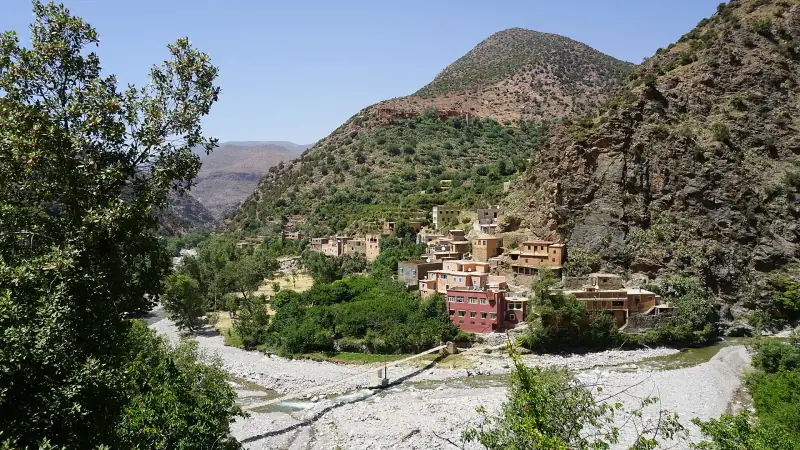
Setti Fatma Waterfalls (Ourika) Without a Tour: Transport, Guide, Difficulty
Setti Fatma on your own from Marrakech: grand taxi, bus or car, whether a guide helps, which waterfalls to pick by level, season and flash-flood risk.
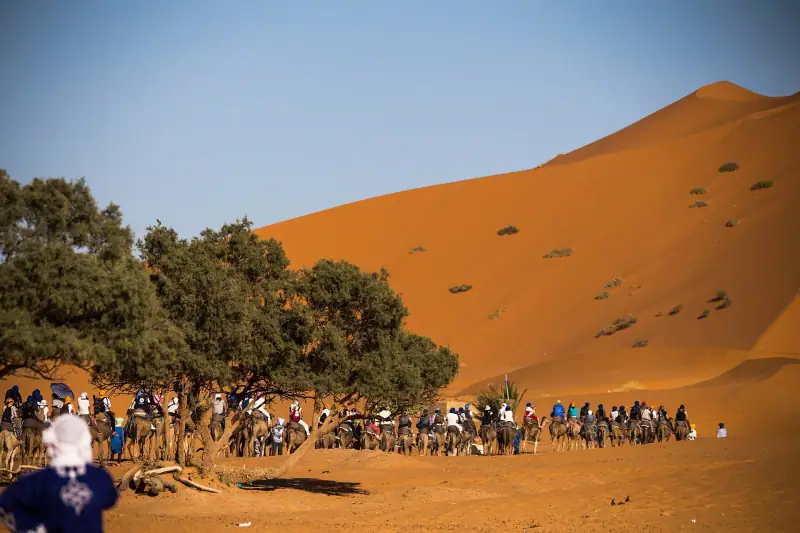
Merzouga Desert: How to Plan Your Erg Chebbi Excursion
Excursion to the Merzouga desert: access from Marrakech or Fes, a night in a desert camp, camel ride, ideal season and tips for choosing well.
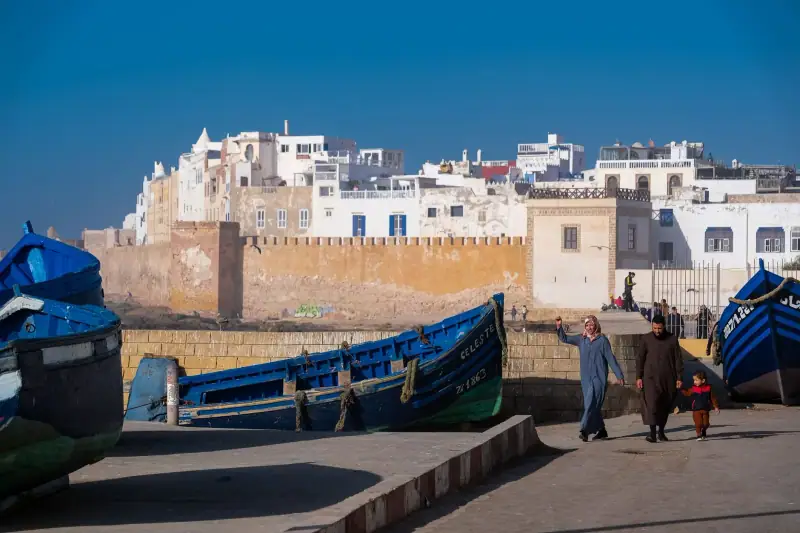
Things to Do in Essaouira: Medina, Ramparts, Port and Beaches
What to do in Essaouira? UNESCO-listed medina, ramparts, fishing port, kitesurfing and crafts: a guide to organizing 2 days in the windy city.
Ready-made
Morocco itineraries
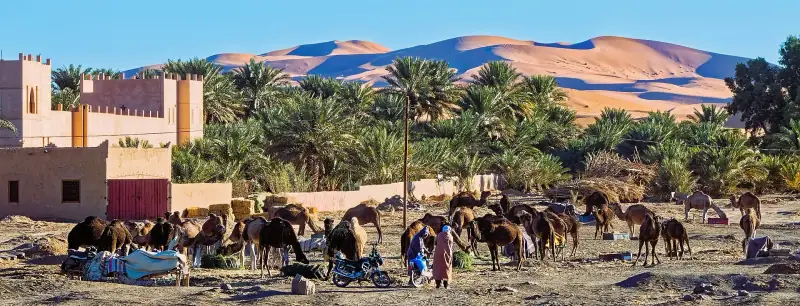
10 days
Morocco in 10 Days: Marrakech, the Merzouga Desert, Fes and Chefchaouen
A 10-day Morocco itinerary, day by day: Marrakech, the Atlas, Aït Ben Haddou, Todgha Gorges, Merzouga desert, Fes and Chefchaouen, with drive times.
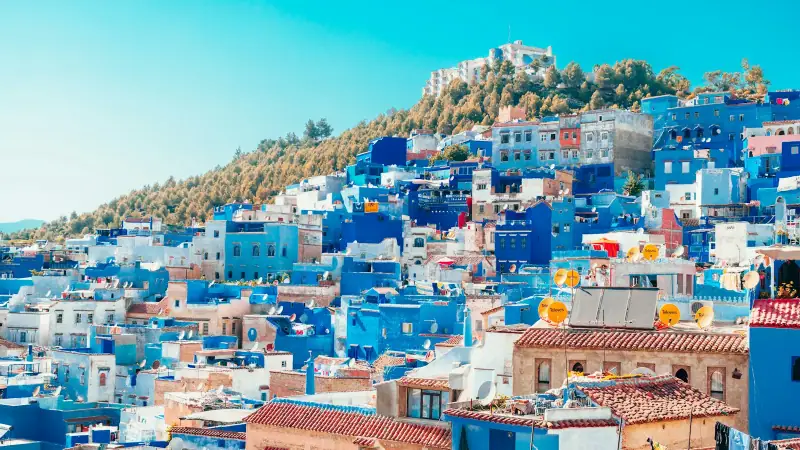
8 days
Morocco in 8 Days Without a Car: A Realistic Train and Bus Itinerary
Morocco in 8 days without a car: Marrakech, Essaouira, Rabat, Fes and Chefchaouen by train and CTM bus, with distances, travel times and pitfalls to avoid.
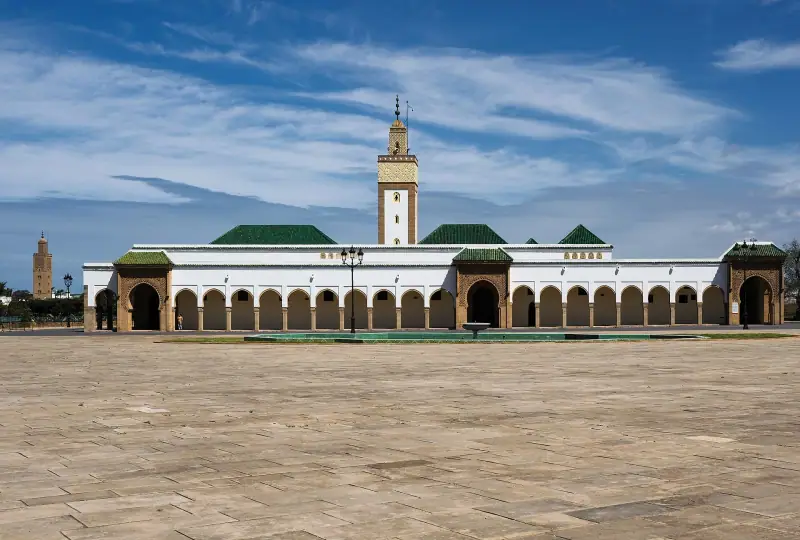
5 days
Morocco's Imperial Cities: Rabat, Meknes, Volubilis and Fes in 5 Days
RabatMeknesFes
Can be adapted in the planner