Plan your trip
Morocco Budget: How Much Does a Trip Cost? Real Prices and 3 Costed Profiles
We may earn a commission when you book through links on this page, at no extra cost to you. We don't visit or try the places we cover: we summarize published sources. How we work
In short
- Daily budgets per person, flight excluded: €30 to 40 ($35 to $46) economy, €60 to 80 ($70 to $93) mid-range, €120+ ($140+) comfortable.
- Lodging is the biggest item, often a third to a half of the budget; meals are where you save most (street snack about €2 to 5, $2 to $6).
- Between cities, train and bus are cheap; the Al Boraq high-speed train runs Tangier, Kenitra, Rabat and Casablanca but not Marrakech or Fes.
- Pay in dirhams, carry small change for tips and taxis, book early outside school holidays, and group your excursions to cut the bill by 20 to 30%.
Morocco has a reputation as an affordable destination, and it is true, as long as you know where the real spending is. A meal at a medina stall costs a few euros, but a night in a charming riad in Marrakech or a private desert excursion can quickly push the bill up. This article details the real costs item by item, offers three daily budget profiles per person, then lists the tips that really let you spend less without giving up the essentials.
The figures cited are ballpark figures cross-checked across several guides and travel sites in 2026 (partir.com, lemagvoyage.fr, fares published by ONCF). They vary with the season, the city and your ability to negotiate: treat them as benchmarks for building a budget, not as guaranteed rates. For conversion, assume about 10 to 11 dirhams (MAD) to 1 euro; euro amounts below also show a dollar equivalent at €1 = $1.16.
Overview: three budget profiles
Here are the average daily budgets, per person, excluding the international flight. They serve as the basis for the rest of the article.
| Item | Economy | Mid-range | Comfortable |
|---|---|---|---|
| Lodging | €15-25 (~$17-29) | €40-60 (~$46-70) | €80+ (~$93+) |
| Meals | €8-12 (~$9-14) | €15-25 (~$17-29) | €30+ (~$35+) |
| Local transport | €3-8 (~$3-9) | €8-15 (~$9-17) | €20+ (~$23+) |
| Activities | €5-10 (~$6-12) | €10-20 (~$12-23) | €25+ (~$29+) |
| Total per day | €30-40 (~$35-46) | €60-80 (~$70-93) | €120+ (~$140+) |
Over a week, that comes to about €210 to 280 ($245 to $325) for the economy profile, €420 to 560 ($485 to $650) for mid-range, and from €840 ($975) for comfortable, always excluding the flight.
Lodging: the first expense item
Lodging often weighs between a third and a half of the budget. It is also the item with the biggest gaps.
Price ranges to know
- Hostel or dormitory: the lowest rate, often in the range of €10 to 15 ($12 to $17) per night in town.
- Simple hotel or riad: about €15 to 25 ($17 to $29) per night for a plain double room, outside high season.
- 2-3 star hotel: about €40 to 60 ($46 to $70) a night.
- Traditional charming riad: about €50 to 80 ($58 to $93), with breakfast often included and a setting around a patio.
- Desert camp: from €35 to 70 ($41 to $81) a night depending on the comfort level, with dinner and breakfast generally included.
The riad remains the emblematic experience of the country. To compare Marrakech neighborhoods and choose between the medina and Guéliz, our guide to where to stay in Marrakech details typical addresses and selection criteria.
What makes prices vary
Season is the first factor: spring, fall and school holidays are the most expensive, while summer inland and some winter weeks are more affordable. Location also matters: a riad inside the medina costs more than a room in a residential neighborhood ten minutes’ walk away. Finally, included breakfast, a pool or heating in winter noticeably change the rate. To pin down your dates, see the best time to go to Morocco.
Compare stays in Morocco
Riads, hotels and guesthouses: filter by budget and spot free-cancellation offers for your dates.
Transport: bus, train, taxi or car
Morocco has a very cheap transport network, as long as you accept not doing everything by private car.
Getting around town
Petit taxis are the most common solution for urban trips: expect to pay about €3 to 5 ($3 to $6) for a ride in a big city, often less for a short trip. Insist on the meter, or agree on the price before getting in if the driver refuses to use it. City buses cost a few dirhams, less than €1 (about $1.16), but they are harder for a visitor to use.
Trips between cities
Between cities, several options coexist:
- The ONCF train is comfortable and reliable on the Atlantic axis. The Al Boraq high-speed train links Tangier, Kenitra, Rabat and Casablanca: about 149 to 224 MAD in second class for Tangier-Casablanca in roughly 2 h 20, with promotional fares from 89 MAD when booking ahead. Casablanca-Rabat costs between 40 and 60 MAD depending on the train. Note that the Al Boraq currently serves neither Marrakech nor Fes.
- Long-distance buses (such as those of national companies) are the cheapest option to reach Essaouira, Chefchaouen or Ouarzazate, with tickets from a few euros to about €15 ($17) depending on distance.
- The shared grand taxi links nearby towns, with fares split among passengers. For a grand taxi taken privately over long distances, expect to pay about €15 to 55 ($17 to $64) depending on the trip.
Car rental
Renting a car makes sense for a circuit in the Atlas and the South, where public transport is rare. Fuel costs about €1.30 per liter (about $1.51 per liter, or $5.70 per gallon), but add highway tolls, parking in town and the cost of full insurance. For a stay centered on cities, it is rarely worthwhile: choose train and bus then. For the typical route of a grand circuit, our 10-day Morocco itinerary shows the stages where a car is justified.
Meals: the item where you save most
Good news: eating cheaply in Morocco is easy and tasty. Street food and small local restaurants are both the cheapest and the most authentic.
Price ranges
- Street snack (skewers, msemen, sandwiches): about €2 to 5 ($2 to $6).
- Full meal in a local restaurant (tagine, couscous, salad): about €6 to 10 ($7 to $12).
- Mid-range or fine-dining restaurant: about €15 to 30 ($17 to $35) per person, drink included depending on the place.
- Mint tea on a terrace: a few dirhams in a local café, a bit more in tourist spots.
What pushes the bill up
The terraces of Jemaa el-Fna square and rooftop restaurants in the medinas charge higher prices, justified by the view or atmosphere. Alcohol, available only in some establishments, costs noticeably more. To eat well and cheaply, look for places frequented by residents and read the posted menu before sitting down. Our article on Moroccan dishes to taste helps you know what to order.
Cooking classes and food tours
Learn to prepare a tagine or taste street food with a local guide: an experience that replaces a meal or two.
Activities and visits: what is free, what is paid
Many Moroccan pleasures cost nothing: strolling the alleys of a medina, watching the dyers, looking at the light on the ramparts, walking the Essaouira seafront. The budget depends mostly on the sites and excursions you choose to pay for.
Monuments, museums and wellness
A museum or palace entrance is generally around €6 to 10 ($7 to $12). A traditional hammam costs €5 to 20 ($6 to $23) depending on whether you opt for a simple public bath or a treatment in a tourist establishment. A guide for a two- to three-hour medina visit is negotiated at about €15 to 30 ($17 to $35). For an organized visit, use recognized official guides.
Excursions and desert
Excursions are the most variable item:
- Day excursion in a valley or the mountains: about €25 to 50 ($29 to $58).
- Camel ride: about €20 to 35 ($23 to $41).
- Half-day 4x4 excursion: about €40 to 70 ($46 to $81).
- Cooking class: about €25 to 40 ($29 to $46).
For the desert experience, compare the options: our guide to the Merzouga excursion details durations and comfort levels, from the simple camp to the luxury camp. A group option is almost always cheaper than a private service, at comparable comfort.
Excursions from Marrakech
Agafay desert, Atlas valleys, Ouzoud waterfalls: compare day excursions and book with flexible cancellation.
Profile 1: the budget traveler (€30 to 40 / $35 to $46 a day)
This budget suits a solo traveler or a couple who values authenticity over comfort. You sleep in a hostel, dormitory or simple riad (€15 to 25 / $17 to $29 a night), you eat at street stalls and markets, and you get around by bus, second-class train and petit taxi.
Sample day in Marrakech: night in a hostel, Moroccan breakfast in a neighborhood café, wandering the medina, lunch in a small local restaurant, tea on a terrace, skewer dinner at a stall. Paid visits are limited to one or two sites a day. Over a week, expect €210 to 280 ($245 to $325) excluding the flight.
Profile 2: the mid-range traveler (€60 to 80 / $70 to $93 a day)
This is the most common profile for a two-week stay. You stay in a riad or 3-star hotel (€40 to 60 / $46 to $70 a night), you alternate local restaurants and good sit-down meals, you take the train in first class on some trips and you do one or two paid excursions during the stay (desert, Atlas valleys).
Sample ten-day stay: three nights in Marrakech in a riad, a day excursion in the Atlas, two nights in the South with one night in a desert camp, then Fes and Chefchaouen. The total runs around €600 to 800 ($695 to $930) excluding the flight. A reasonable budget to enjoy yourself without counting pennies at every meal.
Profile 3: the comfortable traveler (€120+ / $140+ a day)
This profile matches a charming stay: riads with character and a pool, fine-dining restaurants, a private driver for stages in the South, a luxury desert camp or nights in a renovated kasbah. The price of a night easily exceeds €80 to 150 ($93 to $175), and private excursions with a driver-guide run to hundreds of euros a day for a small group.
This budget offers real freedom: no time constraints, stops chosen for pleasure rather than price, and the ability to treat yourself to exceptional moments. A week thus comes to at least €850 ($985) per person excluding the flight, and much more in high season.
Tips for spending less
A few habits are enough to cut the bill by 20 to 30% without sacrificing anything of the experience.
- Travel outside school holidays. Flights and lodging are noticeably more expensive during school holidays. Shifting the departure by a few weeks sometimes saves several tens of euros per ticket.
- Book flights and riads early. The best addresses at a fair price go fast in spring and fall. Choose free cancellation where you can.
- Eat local. A tagine in a restaurant frequented by residents costs a fraction of the price of a table on a tourist square. The riad breakfast, often included, spares you a meal outside.
- Bargain with method. In the souks, do not show eagerness, compare in two or three shops, and set your limit before starting. For taxis without a meter, agree on the price before leaving.
- Use train and bus. For trips between cities, they cost much less than a private taxi. The night train or the Al Boraq at a promotional fare offer excellent value.
- Group your excursions. Small-group options cost less than private outings, and the encounters are often a bonus.
- Withdraw in dirhams. Avoid paying in your home currency and letting a merchant pick the conversion rate. Withdraw from city ATMs, and check your bank’s fees for payments abroad.
- Keep small change. It eases tips, taxis and small purchases, and avoids paying more for lack of change.
Expenses people often forget
Several items escape budgets prepared in advance and yet weigh on the total:
- Tips: modest but frequent (restaurants, guides, porters, drivers).
- Souvenirs: rugs, pottery, babouches and spices tempt more than you might expect. Set aside an envelope from the start.
- Travel insurance: essential to cover medical costs and cancellation, it is a small percentage of the total cost.
- Bank fees: withdrawals and payments abroad can carry commissions depending on your card.
- Airport transfers: a taxi from the airport to the city center costs more than the bus or train where they exist.
- Mobile connection: a local SIM card costs less than roaming depending on your plan; check your carrier’s international plan, or consider a travel eSIM.
Building your own budget
The weekly ballpark figures above, excluding the flight, are indicative. The safest way is to build your own budget by adding up the items above, keeping a margin of 10 to 15% for the unexpected.
Bottom line: a manageable budget with a little planning
Morocco lets you travel well at very different prices: from under €40 ($46) a day for a simple stay to more than €120 ($140) for a charming trip. The real levers for savings are known: choosing your dates carefully, booking early, eating local, choosing train and bus, and grouping excursions. Once your profile is defined, all that remains is to build the itinerary. Take inspiration from our 10-day program to split your budget between stops.
Frequently asked questions
What daily budget should you plan in Morocco?
Excluding the international flight, expect about €30 to 40 ($35 to $46) per person per day for a budget trip, €60 to 80 ($70 to $93) for mid-range comfort (riad, restaurants, a few excursions) and €120 ($140) or more for a comfortable stay with charming lodgings and a driver. These are ballpark figures, to adjust by season and city.
Is Morocco cheap?
On most items, yes: local meals, taxis, public transport and simple lodging cost very little. Gaps narrow for charming riads, tourist restaurants in Marrakech and organized excursions, whose rates approach European prices.
Should you pay in dirhams or your home currency?
Pay in dirhams (MAD). Bank cards are accepted in hotels and tourist shops, but cash remains essential for taxis, souks, small restaurants and tips. Withdraw from city ATMs rather than exchanging large sums at once.
Should you bargain in Morocco?
Yes in the souks and for taxis without a meter: the first price quoted is often well above the final price. In restaurants, trains, buses and shops with posted prices, you do not bargain. Stay courteous and smiling, it is an exchange, not a conflict.
What is the cheapest time to go?
Low periods, notably summer inland and some weeks outside school holidays, offer the best lodging rates, but the heat is strong. The best value is often to travel outside school holidays and book flights and riads early.
How much should you tip in Morocco?
Tipping is customary but modest: a few dirhams for a service, about 10% at a restaurant if service is not included, and a small sum for guides and drivers depending on the length of the service. Keep small change on you.
Is an organized trip more expensive than traveling independently?
Generally yes, because the price includes organization, a driver and supervision. In return, a circuit in the South (Atlas, kasbahs, dunes) is simpler and sometimes more cost-effective as a group excursion than a rental car for a solo traveler or a couple.
More Morocco guides
Keep reading
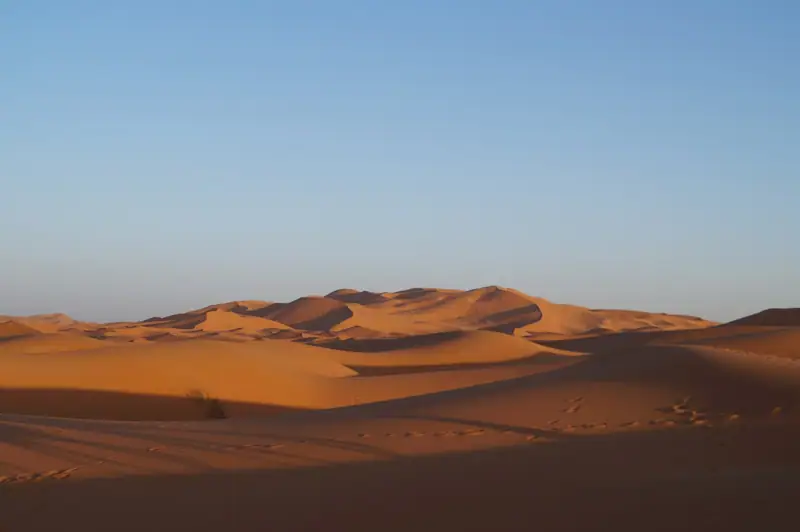
When to Go to Morocco: Seasons, Climate and Best Time by Region
When to go to Morocco? Climate of Marrakech, the desert, the coast and the North: seasons, periods to avoid, Ramadan and tips for choosing your dates.
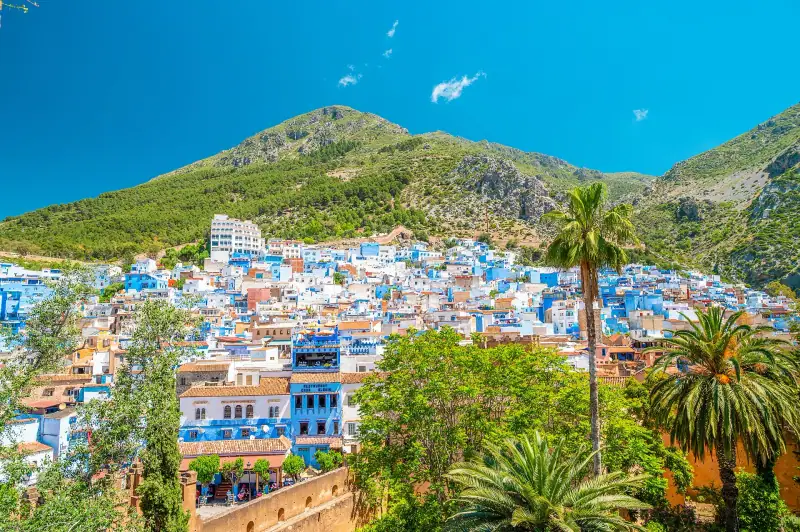
Visiting Chefchaouen: Guide to the Blue City of the Rif
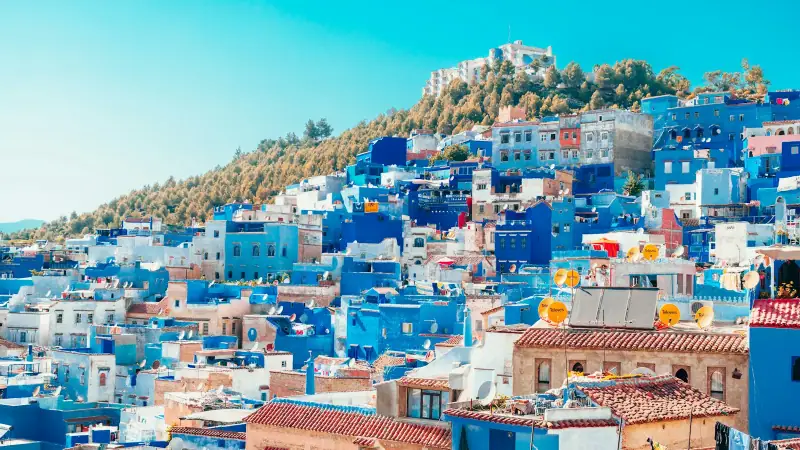
Visiting Chefchaouen: blue medina, Outa el Hammam square, kasbah, the Ras el Maa spring and hikes to Akchour. Tips to organize your stay.
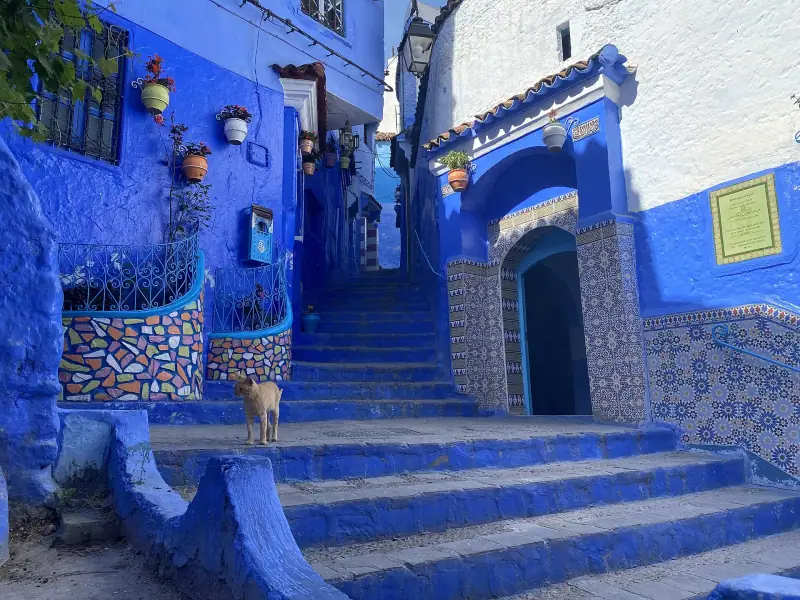
Where to Stay in Chefchaouen by Car: Medina, Parking and Which Area to Pick
Driving to Chefchaouen: stay in the car-free medina, near Bab el Ain, or at a hotel with parking? Criteria to choose without struggling with luggage.
Ready-made
Morocco itineraries
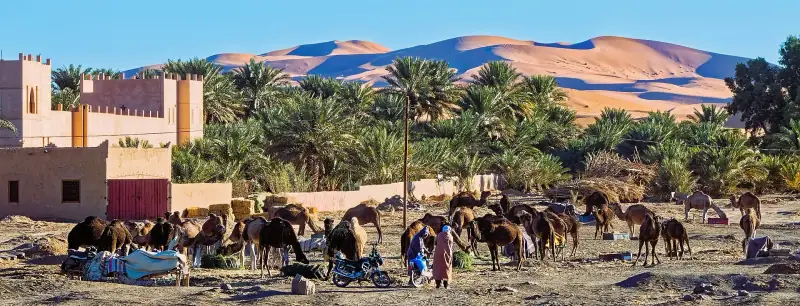
10 days
Morocco in 10 Days: Marrakech, the Merzouga Desert, Fes and Chefchaouen
A 10-day Morocco itinerary, day by day: Marrakech, the Atlas, Aït Ben Haddou, Todgha Gorges, Merzouga desert, Fes and Chefchaouen, with drive times.
8 days
Morocco in 8 Days Without a Car: A Realistic Train and Bus Itinerary
Morocco in 8 days without a car: Marrakech, Essaouira, Rabat, Fes and Chefchaouen by train and CTM bus, with distances, travel times and pitfalls to avoid.
5 days
Morocco's Imperial Cities: Rabat, Meknes, Volubilis and Fes in 5 Days
RabatMeknesFes
Can be adapted in the planner