What to see
What to see on the Great Hungarian Plain: Hortobágy, Kecskemét, Szeged and Debrecen
We may earn a commission when you book through links on this page, at no extra cost to you. We don't visit or try the places we cover: we summarize published sources. How we work
In short
- The Great Plain (Alföld) covers the eastern and southern half of Hungary: puszta steppe, Debrecen, Szeged, Kecskemét and many thermal resorts.
- Allow three to five days for a coherent circuit: one day at Hortobágy, one or two in Debrecen, one in Kecskemét and one or two in Szeged.
- Kecskemét is about an hour and a quarter by train from Budapest; Szeged and Debrecen about two hours.
- Trains link the cities; the puszta villages and national parks are easier by car or organized tour. The best season runs from April to October.
When planning a trip to Hungary, you first think of Budapest, Lake Balaton, Eger or Tokaj. Yet more than half the country is occupied by an immense plain: the Alföld, known in English as the Great Plain. Endless horizons, herds of gray cattle, well sweeps, isolated farms, but also elegant towns, thermal baths and generous food: this region offers another image of Hungary, more rural, more authentic and much less visited by travelers.
This guide presents what to see on the Great Plain, how to travel around it and how to split your time between the puszta, the towns and the baths.
The Great Plain in brief: a land of steppe and rivers
The Alföld extends east of the Danube to the borders of Romania, Serbia and Ukraine. It is crossed by the Tisza, the great Hungarian river, and by several of its tributaries. The relief is almost nonexistent: the highest points are measured in tens of meters, and the horizon merges with the sky.
The word puszta designates the grassy expanses of this plain, shaped for centuries by extensive livestock farming. It is not a desert, despite its Hungarian name evoking emptiness, but a grazed steppe where you will see herders, horses and herds. This image of riders galloping under an immense sky has become a national symbol.
The region is divided into several sub-areas: the northern Great Plain around Debrecen and Hortobágy, the southern Great Plain around Szeged, and the intermediate zone between the Danube and the Tisza where Kecskemét lies. Each has its own character, and a successful circuit combines at least two.
To place the Great Plain within the country as a whole, you can see our complete guide to Hungary.
Hortobágy National Park: the heart of the puszta
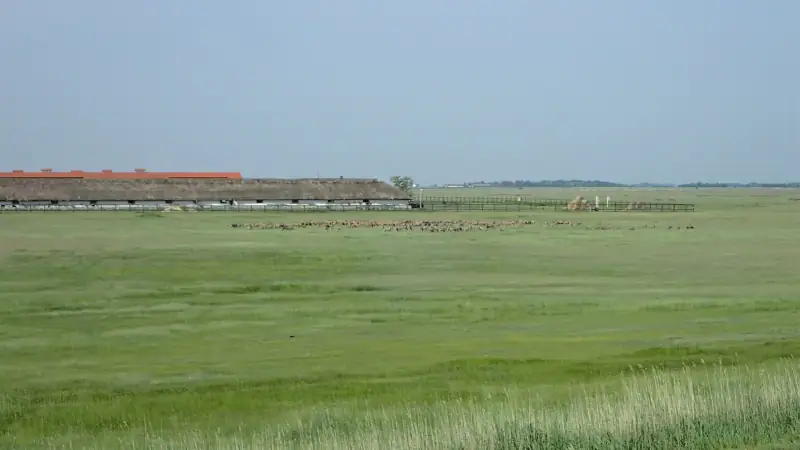
Hortobágy National Park is stop number one on the Great Plain. Created in the 1970s, it is considered Hungary’s first national park, and its pastoral landscape is a UNESCO World Heritage site. It lies about 40 km (25 mi) west of Debrecen.
What you see there
The landscape is the main show: steppes as far as the eye can see, ponds, reed beds, and a sky that takes on spectacular colors at dawn and dusk. The village of Hortobágy has a famous old multi-arched bridge, which has become the emblem of the region. Around it are museums devoted to pastoral life, traditional inns and park visitor centers.
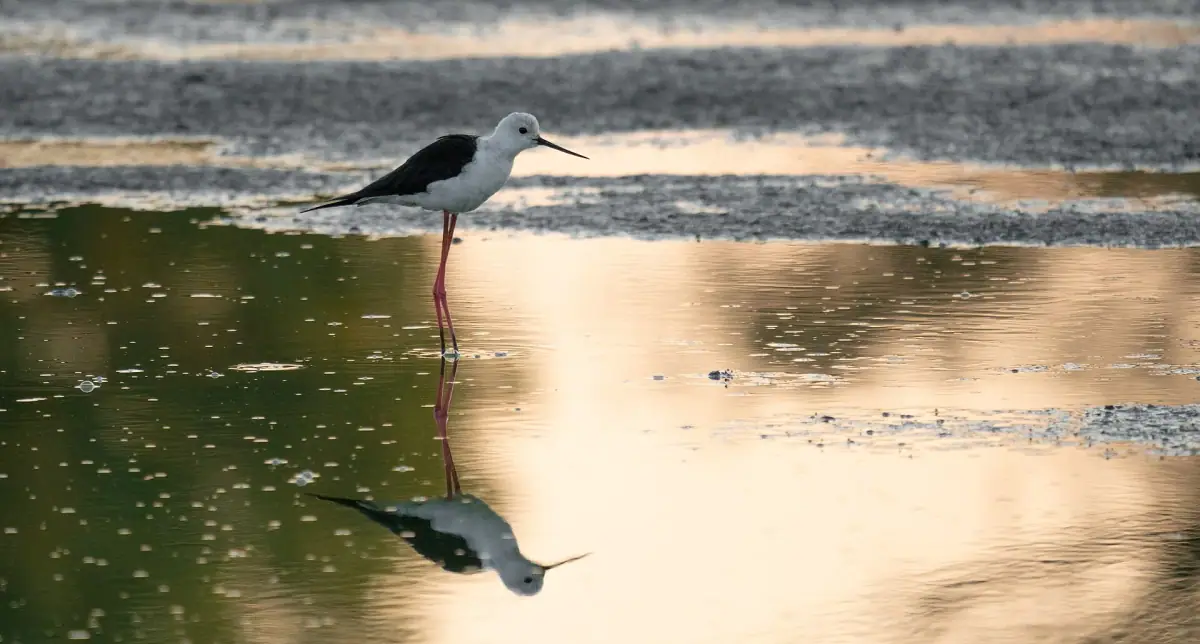
The local fauna includes ancient breeds of farm animals: Hungarian gray cattle with large horns, Racka sheep with corkscrew horns, horses and buffalo. For bird lovers, the wetlands host many species, notably during the spring and autumn migrations. The common crane is one of the most awaited species in autumn.
How to organize the visit
Several options are available:
- From Debrecen: this is the most practical base. The visit can be done in one day, by train, bus, car or organized tour.
- On a guided tour: practical if you do not want to depend on transport schedules and want to understand how the park works.
- By car: you gain freedom to stop in villages or at observation points.
Bring water, a hat and comfortable shoes. In summer, shade is rare. The ideal period runs from May to September for the pastoral shows, with a special mention for September and October if you like migratory birds.
Excursion to Hortobágy
Guided tours, puszta visits and activities around the Great Plain: compare and book in advance.
Debrecen: the big Protestant city of the east
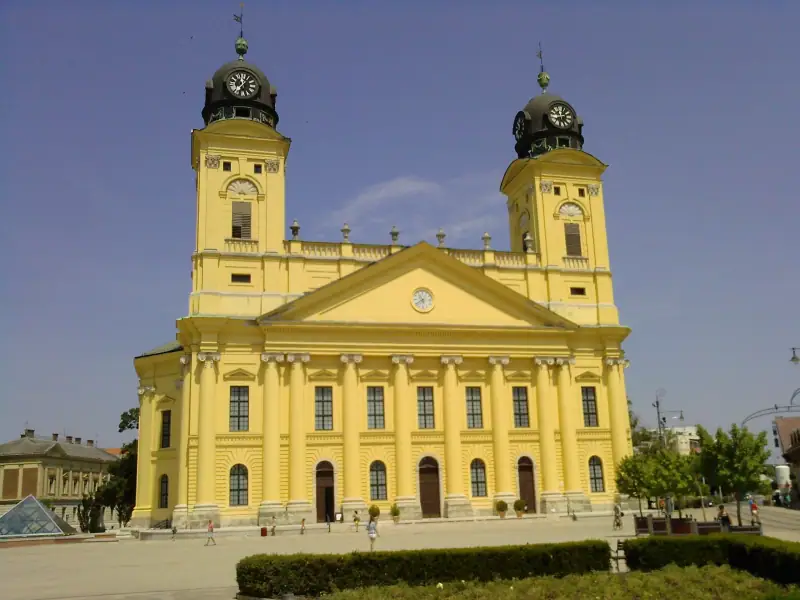
Debrecen is the largest city in the region and the natural gateway to the northern Great Plain. Nicknamed the “Calvinist Rome”, it keeps a unique Protestant heritage: the Great Reformed Church, on Kossuth Square, is the symbol of the city and the place where Hungary’s independence was proclaimed in 1849.
The city also has a very interesting museum, the Déri Museum, a vast urban park, Nagyerdő, and a thermal complex, Aquaticum, set in that park. Its pedestrian center is pleasant to walk through, with its terraces and pastry shops.
We have a full article on this city: visiting Debrecen, what to see and do. If you are looking for where to stay, our guide where to stay in Debrecen details the neighborhoods and lodging types. Debrecen is the best base for combining the city, Hortobágy and the region’s baths.
Hajdúszoboszló and the thermal baths of the plain
The Great Plain rests on major hot-water aquifers, which explains the density of thermal resorts. About twenty kilometers (12 mi) from Debrecen, Hajdúszoboszló is one of the most famous in the country. Its large complex of baths and pools attracts Hungarian visitors all year, with outdoor areas in summer and indoor areas for winter.
The atmosphere is very different from that of the large establishments of the capital described in our guide to Budapest’s thermal baths: here people come as a family, for the day, and the pace is calmer. Prices and hours vary with the season, so check the official information before you leave.
A few tips for enjoying the baths of the plain:
- bring a swimsuit, towel and sandals, or ask about rentals,
- avoid weekends and public holidays if you prefer calm,
- alternate hot pools and rest periods, following each complex’s posted guidelines,
- check each complex’s health notices and rules on its official site.
Kecskemét: Art Nouveau between the Danube and the Tisza
Kecskemét, a medium-sized town, is the easiest to reach from the capital: a direct train links it to Budapest in a little over an hour. It is therefore an excellent first approach to the Great Plain, even as a day trip.
A showcase of Art Nouveau architecture
The heart of the town is the main square, lined with remarkable monuments. The town hall, the work of architect Ödön Lechner, is one of the most beautiful Art Nouveau buildings in Hungary, with its colored ceramic roofs. Its carillon rings regularly and sets the rhythm of life on the square. Not far away, the Cifrapalota, the “ornate palace”, charms with its facades covered in colored majolica and houses art exhibitions.
Around the square, several churches, museums and cafés complete the walk. Half a day is enough to go around the center, more if you want to go into the museums.
The surroundings: farms and Kiskunság National Park
Kecskemét is also a gateway to Kiskunság National Park, another large puszta area. Around Bugac, you can watch equestrian demonstrations and discover traditional farms. There is no direct service from Budapest: access is usually by train and bus via Kecskemét or Kiskunfélegyháza, or by car. Check seasonal timetables before you leave.
This region is also known for its apricot orchards and the brandy made from them, pálinka, much loved in Hungary. Tastings should be done in moderation and, if you are driving, obviously without alcohol.
Rent a car for the puszta
To link Kecskemét, Bugac, Hortobágy and the villages of the plain at your own pace, compare rental companies.
Szeged: the city of sun and paprika
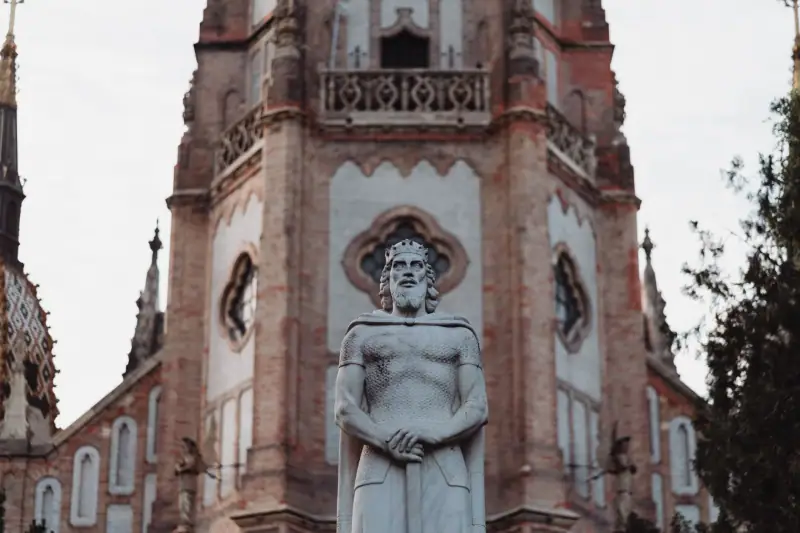
In the south of the plain, Szeged is the big university city of southeastern Hungary, set on the banks of the Tisza. It was rebuilt after the great flood of 1879, which gives it a regular plan of circular boulevards and late 19th-century facades. It is one of the sunniest cities in the country, which explains its nickname “city of sun”.
Cathedral Square and the Votive Church
The main monument is the Votive Church, also called Szeged Cathedral, on the vast Dóm Square. Its construction began in 1913 and ended in 1930, in homage to the rebuilding of the city after the flood. Its organ is among the largest in Europe. Beside it stands the Dömötör Tower, considered the oldest building in the city.
Every summer, the square hosts a renowned open-air festival, with opera, concerts and theater. If your trip coincides with this period, check the official program and book well in advance.
Walks along the Tisza and architecture
The Tisza embankment is a promenade much loved by locals. Along the boulevards and streets of the center, you will discover many Art Nouveau buildings, including the Reök Palace, with its elaborate decoration. The Great Synagogue, one of the most remarkable in Central Europe, also deserves a visit for its architecture and inner dome.
Paprika, salami and fish soup
Szeged is paprika country, grown in the region and used throughout Hungarian cooking. You will also taste the famous river fish soup, halászlé, spicy and served in a large pot, as well as Szeged salami. Our article on Hungarian specialties to try will help you compose your meals.
For fans of historical theme parks, the Ópusztaszer National Historical Park, about thirty kilometers (19 mi) from Szeged, evokes the arrival of the Hungarians in the Carpathian Basin. Check the hours and current exhibitions before going.
Sleep in Szeged
Hotels and apartments in the center or near the Tisza: compare prices for one or two nights.
Plain villages and the banks of the Tisza
Outside the towns, the Great Plain hides small treasures. Along the Tisza, fishing villages, dikes and wetlands lend themselves to bike rides, an ideal way to get around on terrain with no elevation change. Cycle paths are increasingly numerous, and distances are easy to manage for a beginner cyclist.
In the puszta, villages keep low thatched-roof houses, well sweeps and isolated inns called csárda, where country cooking is served. These stops are worth as much for the atmosphere as for the meal. Allow time to stop, chat with locals and take photos at sunset, when the low light reveals all the beauty of the landscape.
How to get around the Great Plain
The Hungarian rail network radiates out from Budapest, which means direct links between two provincial towns are sometimes less frequent. To link Debrecen, Kecskemét and Szeged, you often have to go back through the capital or plan a connection. So plan your itinerary ahead and check current timetables.
- Train: the simplest mode between Budapest and the big towns of the plain. Allow about an hour and a quarter to Kecskemét and a little over two hours to Debrecen or Szeged.
- Car: essential for freely linking the villages and parks, with flat, lightly trafficked roads.
- Bike: very suitable for the region, especially in spring and autumn.
- Organized tours: practical for Hortobágy and Kiskunság.
Our guide to getting around Hungary by train, bus or car details booking tips and the differences in comfort between these modes of transport.
A five-day circuit on the Great Plain
Here is a suggested itinerary, starting from Budapest, that remains realistic with or without a car.
- Day 1: Budapest to Kecskemét. Train to Kecskemét, visit the town hall, the Cifrapalota and the museums. Overnight there.
- Day 2: Kecskemét to Szeged. Morning around Kecskemét or at Bugac, then continue to Szeged. End the day on the Tisza embankment.
- Day 3: Szeged. Dóm Square, Votive Church, synagogue, Reök Palace. Lunch with a halászlé.
- Day 4: Szeged to Debrecen. Transfer late in the morning, visit Kossuth Square, the Great Reformed Church and the Déri Museum.
- Day 5: Hortobágy or Hajdúszoboszló. Excursion into the puszta or a day of relaxation at the baths, then return to Budapest by train.
This program leaves you time to wander. If you have fewer days, focus on Debrecen and Hortobágy, or on Kecskemét and Szeged. To extend the trip north, our article on the wine route between Eger and Tokaj follows naturally from Debrecen.
When to go and budget
The best period for the Great Plain runs from April to October. Spring offers mild temperatures and green landscapes; summer is hot, sometimes very hot, with little shade; autumn brings golden light and bird migrations. Winter is cold and calm, ideal for the baths. Our guide when to go to Hungary details the climate season by season.
On budget, the Great Plain is generally cheaper than Budapest: lodging, meals and museum entries are often less expensive. Find general pointers in our article on the budget for traveling in Hungary. Keep in mind that the currency is the forint, not the euro, and that bank cards are accepted in towns but less in small villages.
Combining with Central Europe
The Great Plain lends itself well to a big trip through Central Europe. Austria and Poland are natural destinations for linking Vienna, Budapest and Krakow. In that case, keep the Great Plain for a second stay or a slower trip, off the beaten path.
Practical tips
- Entry rules: they depend on your passport. Check the official travel advice of your government before you book: travel.state.gov (US), GOV.UK (UK), travel.gc.ca (Canada), Smartraveller (Australia) (checked November 2026).
- Insurance: for a worry-free trip, look into travel insurance.
- Sun protection: the plain offers little shade, bring a hat and sunscreen.
- Mosquitoes: near wetlands and the Tisza, a repellent is useful in summer.
- Language: English is less widespread in the countryside; a few words of Hungarian, such as “köszönöm” (thank you), are much appreciated.
The Great Plain does not try to impress with spectacular monuments. It charms with its vastness, its light, its living traditions and its welcome. For anyone who wants to see a different Hungary, it is a trip in its own right.
Frequently asked questions
What is the Great Hungarian Plain?
The Great Plain, or Alföld in Hungarian, is the immense flat region that occupies the eastern and southern half of Hungary, on either side of the Danube and the Tisza. It holds the puszta, towns such as Debrecen, Szeged and Kecskemét, and many thermal resorts.
How long should you plan to visit the Great Plain?
Allow three to five days for a coherent circuit: one day at Hortobágy, one to two days in Debrecen, one day in Kecskemét and one to two days in Szeged. If you are short on time, a day trip from Budapest to Kecskemét or Hortobágy remains possible.
Do you need a car to visit the Great Plain?
The big cities are well linked by train, but the puszta villages and national parks are easier to reach by car or with an organized tour. A mix of both works well: train between cities, a guided excursion or rental car for the puszta.
What is the best time for the Hortobágy puszta?
From late spring to early autumn for the equestrian shows and herds, with long days. Spring and autumn bird migrations also attract birdwatchers. In midsummer the heat is strong: set out early in the morning.
Can you see the Great Plain in winter?
Yes, it is even a good season for the thermal baths of Debrecen, Hajdúszoboszló or Szeged. The puszta landscapes are starker, some equestrian shows are reduced and hours are shorter: check openings before you leave.
Does the Great Plain combine with Budapest?
Very well. Kecskemét is about an hour and a quarter by train from the capital, Szeged and Debrecen about two hours. A stay in Budapest can therefore be extended by a few days' circuit in the Alföld, finishing by train.
What should you taste on the Great Plain?
Debrecen sausage, Szeged fish soup (halászlé) and paprika, emblematic of the Szeged region, are the great classics. Puszta inns also serve shepherds' stews cooked in a cauldron.
More Hungary guides
Keep reading
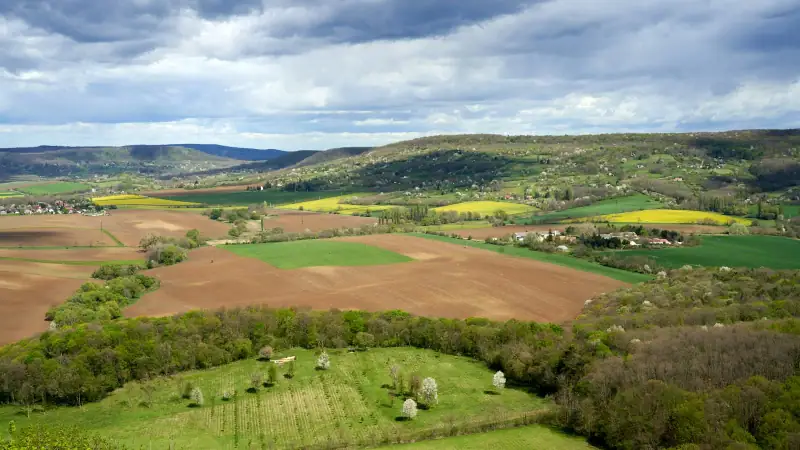
What to see in northern Hungary: villages, caves and mountains
Hollókő, Aggtelek caves, Lillafüred, Szilvásvárad, Sárospatak: what to see in northern Hungary beyond Eger and Tokaj, with journeys and tips.
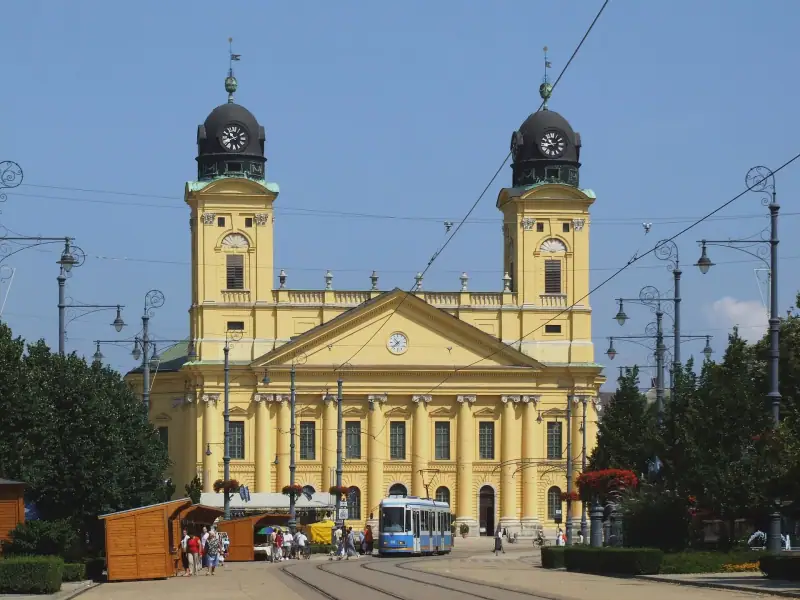
Visiting Debrecen: what to see and do in eastern Hungary's big city
Debrecen in Hungary: Great Reformed Church, Déri Museum, Nagyerdő park, Aquaticum baths and the Hortobágy puszta. Access from Budapest and tips.
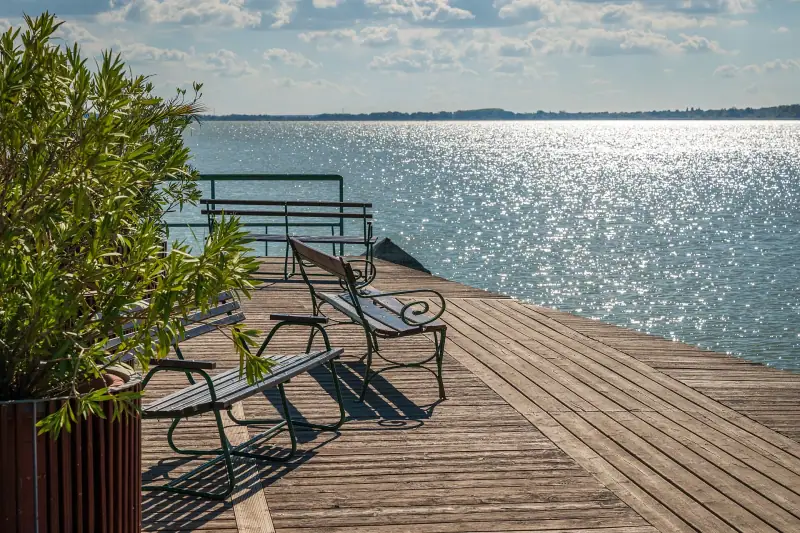
Lake Balaton: what to see and do around the "Hungarian sea"
Lake Balaton in Hungary: Siófok, Tihany, Balatonfüred, Badacsony, Keszthely and Hévíz. What to see, how to get there from Budapest and where to stay.
Ready-made
Hungary itineraries
7 days
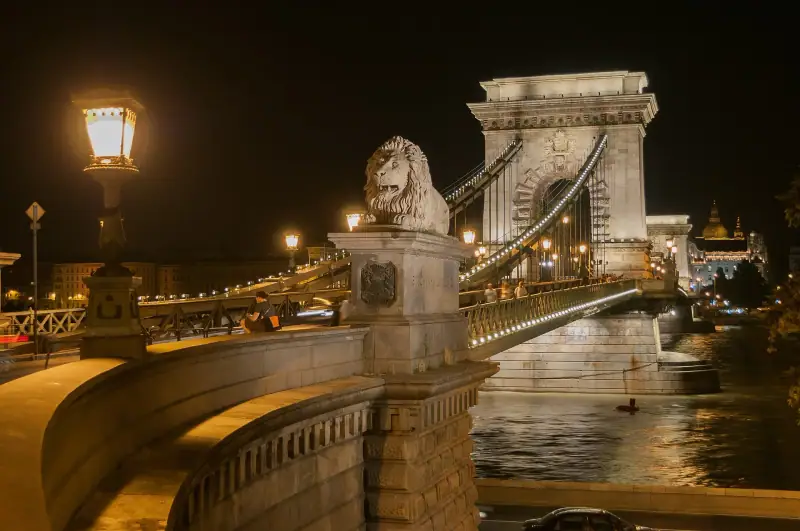
A week in Hungary by car: a 7-day road trip from Budapest to Pécs
BudapestTihany or BalatonfüredKeszthelyPécs
3 days
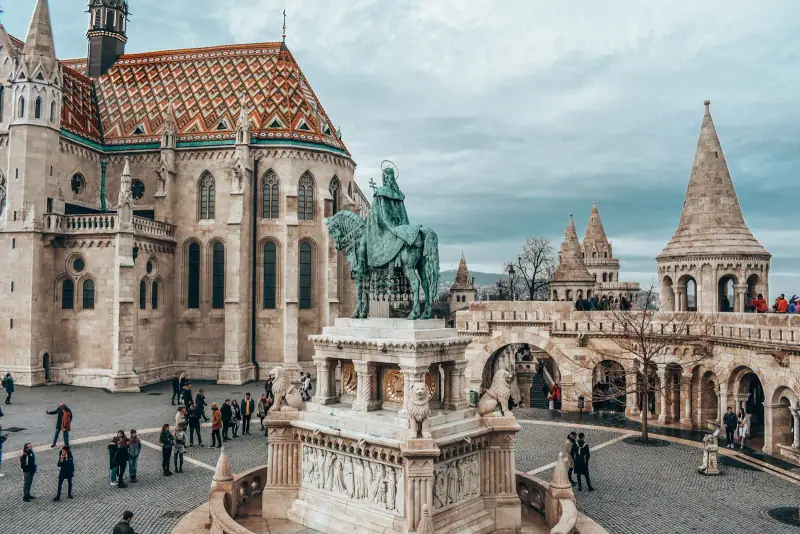
Budapest in 3 days: a day-by-day itinerary for a first stay
Budapest in 3 days: a detailed plan across Buda and Pest, Parliament, the castle, thermal baths, the Great Market Hall and a Danube stroll.
7 days
Hungary in 7 days without a car: a realistic itinerary by train and bus
BudapestEgerSiófok