What to see
What to see in northern Hungary: villages, caves and mountains
We may earn a commission when you book through links on this page, at no extra cost to you. We don't visit or try the places we cover: we summarize published sources. How we work
In short
- Hollókő (UNESCO village), the Aggtelek caves, Lillafüred near Miskolc and the Szalajka valley at Szilvásvárad make an excellent four, to complete with Eger and Tokaj.
- Four to five days cover the main sights. With only two days, choose a base (Eger or Miskolc) and two or three nearby stops.
- A car is the most practical: Hollókő, Aggtelek and the Zemplén villages are poorly linked by public transport. Eger and Miskolc are reached by train from Budapest.
- Spring and early autumn are the most pleasant for hiking, villages and the grape harvest; caves stay cool all year.
When people talk about northern Hungary, they almost always think of Eger and its cellars, or Tokaj and its golden wine. Yet this region of hills and wooded mountains, between the capital and the Slovak and Ukrainian borders, holds many other surprises: a village frozen in time, a World Heritage cave network, a neo-Renaissance palace beside a lake, Lipizzan horses and small university towns.
This article complements our guide to Eger and Tokaj, the wine route. Here we look at everything else: what to see, how to link the stops, how much time to allow and which bases to choose for a stay of four to five days.
Northern Hungary at a glance
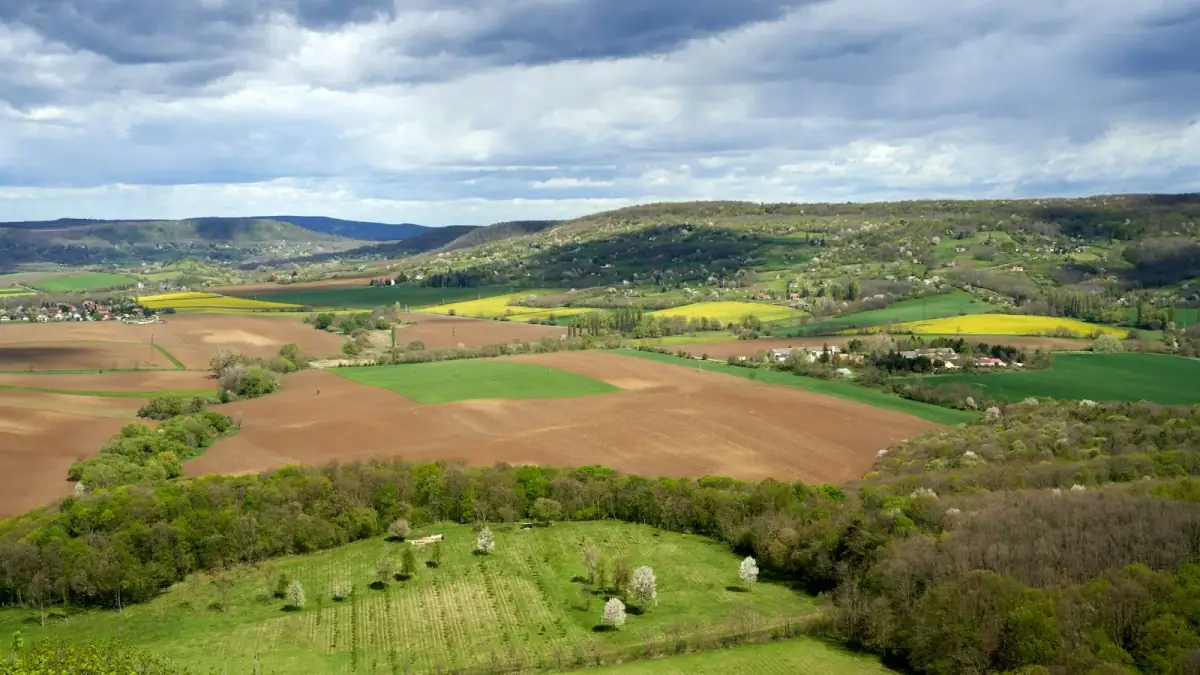
The region is dominated by two massifs: the Mátra Mountains, home to the country’s highest peaks, and the Bükk, a limestone plateau covered with beech forests, carved by valleys and caves. Further east, the Zemplén hills advance toward the Slovak border and overlook the Tokaj wine region.
The reference towns are Eger, Miskolc, the big industrial city of the northeast, and Tokaj. Around them are small towns, ruined castles and national parks. The pace is rural, foreign tourists are rare and prices remain lower than in Budapest.
The north lends itself well to a relaxed road trip. To compare means of transport, read our guide getting around Hungary by train, bus or car.
Hollókő: the UNESCO village-museum
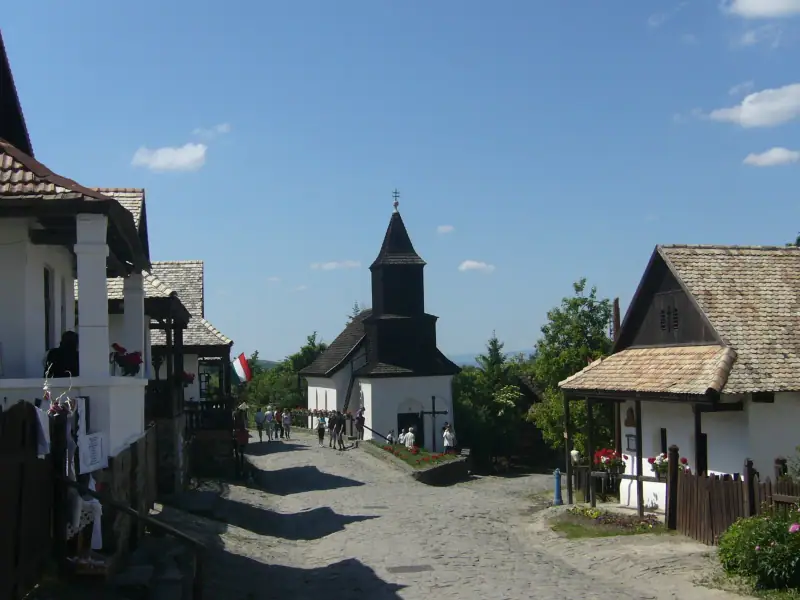
Hollókő is about 100 km (62 mi) northeast of Budapest, in the Nógrád hills. This village of a few hundred inhabitants was listed as a UNESCO World Heritage site in 1987, as a remarkable example of preserved traditional rural settlement. The old village has about fifty protected houses and buildings, with whitewashed walls, wooden balconies and tiled roofs.
Walking through the old village
You visit on foot, in one to two hours: main street, a small wood-and-stone church, peasant houses turned into small museums devoted to crafts, weaving or everyday life of the past. The village is lived in all year: you will meet residents, not only visitors, which gives it a great deal of charm.
The castle above the village
A path climbs to the castle, built in the 13th century on Mount Szár. Partly destroyed in the early 18th century, it remains one of the best-preserved castles in the north of the country. From the top of the ramparts, the view takes in the surrounding hills and forest.
Easter festivities
Hollókő is most famous for its Easter celebrations, during which residents wear richly embroidered regional costumes. If you travel at that time, book well in advance: crowds are heavy. Off season, the village is almost unreally calm.
The Aggtelek caves: an underground world on the border
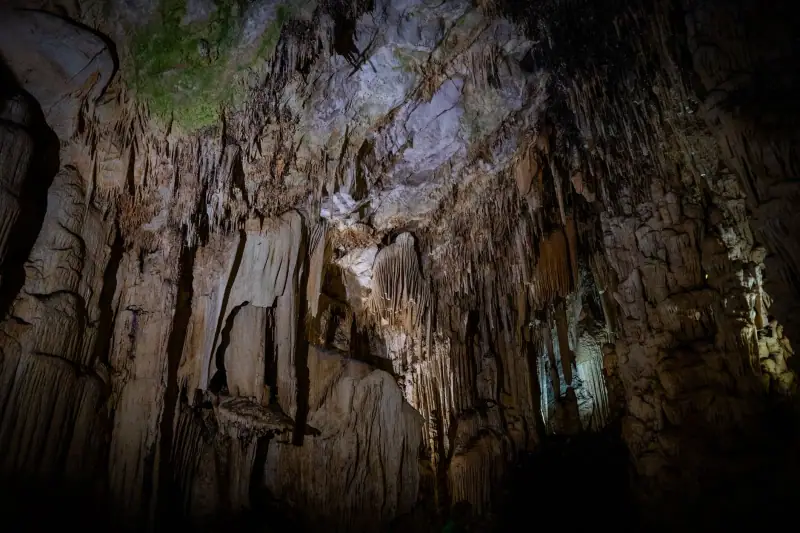
In the far northeast of the country, against the Slovak border, the Aggtelek karst massif is one of Hungary’s great natural sites. It has been UNESCO-listed since 1995, as part of a cross-border ensemble with Slovakia, extended in 2000 and then 2008.
The Baradla cave
Baradla is the best-known cave of the site. Together with the Slovak Domica cave it forms a system of about 21 km (13 mi), about a quarter of which lies on the Slovak side. It has been open to the public since 1920, and several routes are offered, from the shortest to the longest. You discover stalactites, stalagmites and large chambers of impressive dimensions.
The temperature inside stays cool in every season: bring a jacket, even in midsummer. Shoes with good grip are useful, as the ground can be wet.
A national park to explore
Aggtelek National Park is not limited to its caves. Hiking trails cross karst forests and clearings, and small quiet villages nestle in the neighboring valleys. Allow a full day if you want to combine an underground visit and a walk.
Sleep in northern Hungary
Compare hotels and guesthouses in Miskolc, Eger or near the national parks depending on your chosen stop.
Miskolc and Lillafüred: the city and its mountain setting
Miskolc is the big city of the northeast. It does not have Eger’s reputation, but it serves as a practical base, with its stations, shops and lodging. It has notably Diósgyőr Castle, often nicknamed the Queens’ Castle, as well as an Orthodox synagogue. The city is also the gateway to the Bükk massif.
Lillafüred and Lake Hámor
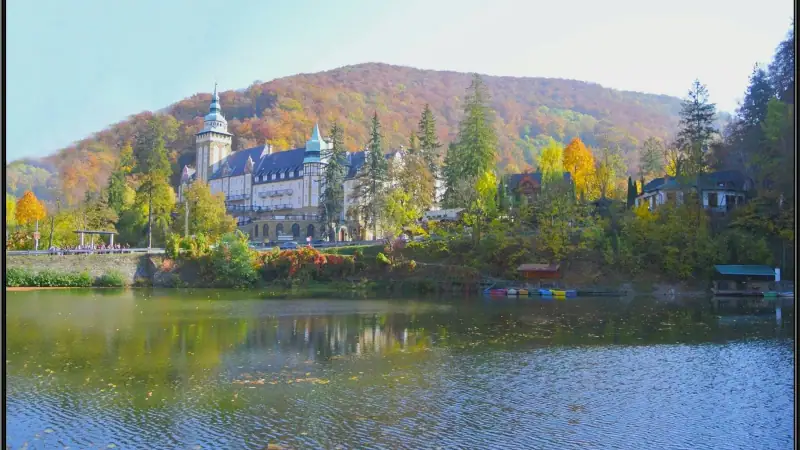
Lillafüred is a district of Miskolc nestled in the Bükk Mountains. The site was developed from the 1890s on the initiative of Count András Bethlen, then Minister of Agriculture, near Lake Hámor. It bears the name of his niece, Élisabeth “Lilla” Vay.
Lake Hámor is an artificial body of water about 1.5 km (0.9 mi) long, created by dams on two rivers to power the region’s steelworks. In summer you can rent rowboats and pedal boats there.
The Palace Hotel and the hanging gardens
Built between 1927 and 1930 in a neo-Renaissance style by architect Kálmán Lux, the Palace Hotel overlooks the lake and its parks. Even if you do not stay there, it is worth a look for its architecture and setting.
Right next to it, the hanging gardens are terraced between two rivers. They include an artificial waterfall of about twenty meters (66 ft), presented as the highest in the country. The cavities of this waterfall contributed to the formation of the Anna Cave, one of the neighboring caves that can be visited on foot along with the István Cave.
The little forest train
A forest train links central Miskolc to Lillafüred via the village of Garadna. It is a pleasant way to reach the site without a car, especially with children. As schedules depend on the season, check them before you leave.
Szilvásvárad: Lipizzan horses and the Szalajka valley
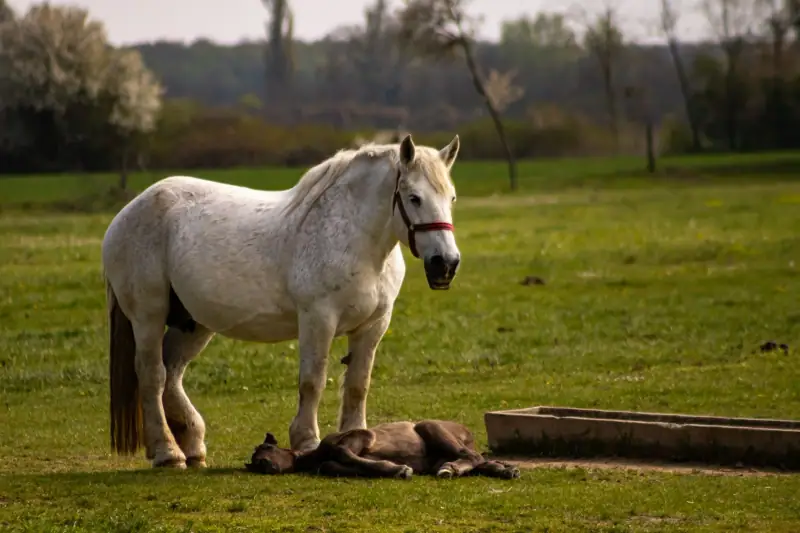
Szilvásvárad is a village in Heves County, at the foot of the Bükk, in the same region as Eger. It is best known for its stud farm, where Lipizzan horses are bred, the white breed famous for its equestrian shows. Depending on the period, you can see presentations or simply horses in the pasture.
The Szalajka valley
From the village, the Szalajka valley is an easy and very popular walk. A trail follows the stream in the shade of beeches and spruces, to the Fátyol waterfall, whose name means “veil”. A small steam train, the Szilvásvárad forest train, also runs through the valley in the good season.
The walk is easy to do as a family in half a day. It also suits a green break between two wine stops: from Eger, Szilvásvárad is easily visited in a day. To stay in Eger, see our guide where to stay in Eger.
Sárospatak and the Zemplén hills
In the northeast, near Tokaj, Sárospatak is a small town of about 10,000 inhabitants, in Borsod-Abaúj-Zemplén County. It is known for its castle, the Rákóczi Castle, and for its past as a cultural and teaching center, which its old town largely preserves.
A peaceful stop between history and hills
You can see the town on foot in a few hours: castle, lanes, the banks of the Bodrog River. Beyond, the Zemplén hills offer forests, small ruined castles and wine villages. Many visitors pair Sárospatak with the Tokaj wine region, with which it forms a coherent whole.
To extend toward the golden wine and its cellars, see our guide where to stay in Tokaj and the article on the Eger and Tokaj wine route.
Guided tours and excursions
Day trips, tastings and accompanied visits in the north of the country, to book in advance.
The Mátra Mountains: the country’s highest relief
Northeast of Budapest, the Mátra Mountains are Hungary’s highest massif. They attract hikers in summer and modest but loyal skiers when there is snow. The villages of the region lend themselves to nature stays at low prices, and the vineyards of the southern edge produce wines less known than Eger’s.
For a first stay, the Mátra are a fallback option when the weather is clear and you want to walk without special preparation. The trails are marked, but mountain weather can change quickly: bring a warm layer and water.
How to organize your trip
Choosing your base
Three bases work well. Eger is the most pleasant: you sleep well, eat well and the town gives access to Szilvásvárad and the cellars. Miskolc is the most practical for Lillafüred, Aggtelek and the Zemplén. Tokaj is ideal for wine lovers and for Sárospatak.
Journeys
Eger and Miskolc can be reached from Budapest by train, with journeys of around two hours. For the rest, a car offers valuable freedom: Hollókő, Aggtelek and the Zemplén villages are not easily linked to one another by public transport. Allow legs of 1 h to 2 h of driving between the main sights and plan less than 200 km (124 mi) per day.
Rent a car for the north
Compare rental companies to explore villages, caves and mountains at your own pace.
Suggested itinerary: 5 days in the north
- Day 1: Budapest to Hollókő. Drive to the Nógrád hills, visit the old village and the castle, overnight there or on the way to Eger.
- Day 2: Eger. Castle, minaret, basilica and an evening in the cellars of the Valley of the Beautiful Woman.
- Day 3: Szilvásvárad and Lillafüred. Morning in the Szalajka valley, then the road to Miskolc and a walk by Lake Hámor.
- Day 4: Aggtelek. Visit the Baradla cave and hike in the national park, night in Miskolc or nearby.
- Day 5: Sárospatak and Tokaj. Castle, wine tasting and a night in Tokaj, before returning to Budapest.
This route requires a car and a few long legs. To drive less, drop Aggtelek or Hollókő, or limit yourself to Eger, Szilvásvárad and Tokaj.
When to go and what to taste
Spring and early autumn suit hiking and the grape harvest. Summer is hot, but the caves stay cool. Winter is calm and some sites reduce their hours. To choose your month, read our guide when to go to Hungary.
On the plate, the region serves simple country cooking, with soups, braised meats and pastries. To know what to order, see our guide to Hungarian cuisine.
Extending in Central Europe
Hungary pairs well with its neighbors. The Aggtelek massif continues into Slovakia. To start or finish with the capital, see our 3-day itinerary in Budapest.
A logical sequence is to arrive via Vienna, spend a few days in Budapest, then head north via Eger, Miskolc and Aggtelek before continuing to Slovakia or Poland. This route avoids backtracking and alternates big cities, nature and small villages. If you plan to cross several borders, check the entry rules for each country (they depend on your passport; see the official travel advice of your government: travel.state.gov (US), GOV.UK (UK), travel.gc.ca (Canada), Smartraveller (Australia), checked November 2026) and the conditions for taking a rental car abroad: some rental companies restrict or charge for leaving the country.
Practical tips
- Hours and rates: they change with the season for the caves, castles and forest trains. Check them on the official sites before you leave.
- Cash: in the villages, not all businesses accept cards. Keep a few forints.
- Shoes and clothing: bring closed shoes and a jacket, essential in the caves as in the forest.
- Booking: at Easter, during the grape harvest and in high season, book lodging and visits in advance.
- Travel insurance: for a stay abroad, consider travel insurance.
Frequently asked questions
What should you see first in northern Hungary?
Hollókő, a UNESCO-listed village, the Aggtelek caves, the setting of Lillafüred near Miskolc and the Szalajka valley at Szilvásvárad make an excellent four, to complete with Eger and Tokaj.
How many days should you plan for northern Hungary?
Four to five days let you see the main sights without rushing. With only two days, choose a base (Eger or Miskolc) and two or three nearby stops.
Do you need a car to visit northern Hungary?
It is the most practical: Hollókő, Aggtelek and the Zemplén villages are poorly linked to one another by public transport. Eger and Miskolc, however, can be reached by train from Budapest.
Is Hollókő worth the detour?
Yes, if you like preserved traditional villages. The old village, listed by UNESCO in 1987, has about fifty protected houses and a medieval castle above. Allow half a day.
Can the Aggtelek caves be visited all year?
The tourist tours of the Baradla cave are offered over a large part of the year, but hours and routes vary with the season: check the national park's website before you leave.
What is the best season to visit the north?
Spring and early autumn are the most pleasant for hiking, villages and the grape harvest. Summer suits the caves well, which are cool all year.
Can northern Hungary be combined with Slovakia?
The Aggtelek karst massif continues into Slovakia.
More Hungary guides
Keep reading
What to see on the Great Hungarian Plain: Hortobágy, Kecskemét, Szeged and Debrecen
What to see on the Great Plain (Alföld) in Hungary: Hortobágy puszta, Kecskemét's Art Nouveau, Szeged, thermal baths and tips for planning your circuit.
Visiting Debrecen: what to see and do in eastern Hungary's big city
Debrecen in Hungary: Great Reformed Church, Déri Museum, Nagyerdő park, Aquaticum baths and the Hortobágy puszta. Access from Budapest and tips.
Lake Balaton: what to see and do around the "Hungarian sea"
Lake Balaton in Hungary: Siófok, Tihany, Balatonfüred, Badacsony, Keszthely and Hévíz. What to see, how to get there from Budapest and where to stay.
Ready-made
Hungary itineraries
7 days
A week in Hungary by car: a 7-day road trip from Budapest to Pécs
BudapestTihany or BalatonfüredKeszthelyPécs
3 days
Budapest in 3 days: a day-by-day itinerary for a first stay
Budapest in 3 days: a detailed plan across Buda and Pest, Parliament, the castle, thermal baths, the Great Market Hall and a Danube stroll.
7 days
Hungary in 7 days without a car: a realistic itinerary by train and bus
BudapestEgerSiófok