Plan your trip
Budget for a trip to Hungary: real costs and 3 priced profiles
We may earn a commission when you book through links on this page, at no extra cost to you. We don't visit or try the places we cover: we summarize published sources. How we work
In short
- Per person per day, lodging included: about €30 to 45 ($35 to 52) on a budget, €55 to 90 ($64 to 104) mid-range, €100 to 160 ($116 to 186) comfortable.
- The currency is the forint (HUF), about 400 forints to €1 in 2026. Always pay in forints, not euros, when a terminal offers the choice.
- Four days in Budapest per person, excluding flights: about €85 to 170 ($99 to 197) budget, €235 to 390 ($273 to 452) mid-range, €420 to 740 ($487 to 858) comfortable.
- Lodging and flights are the two main levers; the set lunch (ebédmenü) is the best deal for meals.
Hungary has a reputation as an affordable destination, and that is largely true: you eat well for a few euros, get around for almost nothing and a thermal bath costs less than a weekend in Vienna. But “cheap” does not mean “free”, and some items (lodging in season, bath entry fees, last-minute flights) can derail a poorly prepared budget.
This article details real costs item by item, offers three priced budget profiles for a four-day stay, and ends with concrete tips to spend less. The prices quoted are orders of magnitude collected in early October 2026 from several cost guides and published price lists; they change from season to season, so check final amounts before booking.
Currency and exchange rate: the forint, not the euro
Hungary has not adopted the euro. The currency is the forint (HUF), and the rate observed in 2026 is around 400 forints to €1. To convert quickly, divide by 400: 2,000 forints is about €5 (about $6), 10,000 forints about €25 (about $29).
A few habits avoid losing money needlessly:
- Pay in forints. When a payment terminal offers to charge in euros, decline: the rate applied is almost always unfavorable.
- Withdraw from a local bank’s ATM (OTP, Raiffeisen, K&H, UniCredit) rather than a Euronet machine, which adds fees of around 3 to 5% on top of your bank’s.
- Avoid street currency exchange offices with tempting signs: hidden commissions and rates are common there. A card with no foreign fees remains the simplest solution.
- Keep a little cash for tips, markets and small shops.
Bank cards are accepted almost everywhere in Budapest, including on public transport. In the provinces, a bit of cash remains useful in wine villages and small inns.
Lodging: the first item in the budget
This is where the gap between profiles is widest. Here are the ranges collected for Budapest in 2026, per night:
| Type of lodging | Indicative price per night |
|---|---|
| Hostel dorm bed | €12 to 18 (~$14 to 21) |
| Private hostel room | about €35 to 60 (~$41 to 70) |
| 3-star hotel (double room) | €35 to 55 (~$41 to 64) for the lowest offers, up to €100 (~$116) in high season |
| 4-star hotel or boutique hotel | €55 to 90 (~$64 to 104) and up |
| Apartment in the city center | €35 to 70 (~$41 to 81) |
| 5-star hotel | €200 (~$230) and up |
The gaps between sources are explained by the season: weekends, Christmas markets and summer push rates up, while November, January and February are clearly cheaper. Our guide to seasons, weather and events helps you choose the period that fits your budget.
The neighborhood also matters. Central Pest (around St. Stephen’s Basilica and the Jewish Quarter) is practical but pricier; areas a bit farther out, well served by the metro or tram, offer better value. We compare them in our article where to stay in Budapest.
Prices vary a lot with the dates: compare offers online and favor free-cancellation rates to keep flexibility.
Transport: very cheap once you are there, variable to get there
Getting to Hungary
The flight is often the most unpredictable item. Fares depend on the departure city, the airline and above all how far ahead you book. Rather than give a figure that would be wrong in three weeks, keep the method: compare several dates, avoid Friday evening departures and Sunday evening returns, and book as soon as you find a reasonable fare. Midweek flights outside school holidays are generally the best value.
Shifting your dates by a day can make a real difference to the ticket price: test several combinations.
From the airport to the center
The 100E express bus links the airport to Deák Ferenc tér. It requires a dedicated ticket, about 2,500 forints (€6 to 7 / about $7 to 8) in 2026 according to the BKK network’s price list. A taxi or ride-hailing costs more: allow around €15 to 25 ($17 to 29) with a ride-hailing app, more for a regular taxi. For a solo traveler, the bus is cheapest; with two or three people, the gap narrows.
Getting around Budapest
The capital’s transport is one of the best values in Europe:
- Single ticket: about 450 to 500 forints (€1.10 to 1.40 / about $1.30 to 1.60).
- Book of 10 tickets: about €11.25 (about $13).
- 24-hour pass: about 2,750 forints (€7.70 / about $9), worthwhile from 5 or 6 trips in the day.
- 72-hour pass: between €8 and 14 ($9 to 16) depending on the price lists.
Payment is by app, machine or bank card on board. For details on lines, trains to Eger and Pécs and car rental, see our guide to getting around Hungary. Intercity trains and buses remain much cheaper than a car when you travel alone or as a couple.
The car: only if the trip justifies it
A car is not justified in Budapest, where parking is paid and traffic dense. It becomes interesting for Lake Balaton, the Tokaj region or the Great Plain. Add the electronic motorway vignette (e-matrica), fuel and parking: on a short stay, the train is generally cheaper.
Meals: where Hungary shines
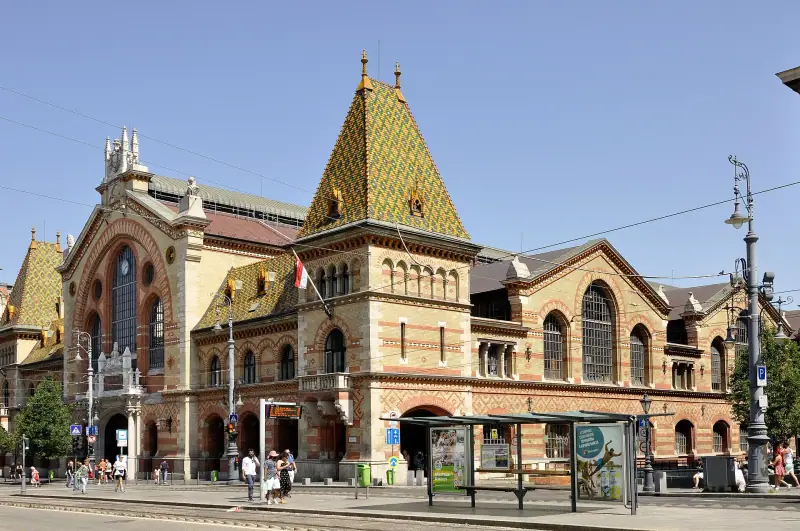
You can eat very well while spending little, as long as you know where to go. Ranges collected in Budapest in 2026:
| Meal | Indicative price |
|---|---|
| Bakery breakfast | €2 to 3 (~$2 to 3.50) |
| Lángos (savory fried bread) street food | €2 to 5 (~$2 to 6) |
| Set lunch (ebédmenü) | €6 to 8 (~$7 to 9) |
| Dinner in a local restaurant | €5 to 11 (~$6 to 13) |
| Lunch in a mid-range restaurant | €9 to 14 (~$10 to 16) |
| Quality dinner with wine | €25 to 45 (~$29 to 52) |
| Coffee | €1.50 to 3 (~$1.75 to 3.50) |
| Beer in a bar or kocsma | €2 to 3 (~$2.30 to 3.50) |
The set lunch is the best deal in the country: soup, main course and sometimes dessert at a fixed price, served on weekdays at midday in many neighborhood restaurants. It lets you taste local cooking (goulash, paprikás, pörkölt) for the price of a sandwich. You will find the dishes to try in our article on Hungarian cuisine and its specialties.
Two details that weigh on the bill: the service charge of 12 to 13% often added automatically (check the bill before leaving a tip on top), and drinks, which quickly push up a bill in tourist establishments. Supermarkets sell beer at about €1 to 2 ($1.15 to 2.30) a can or bottle.
To discover specialties with a local guide, there are food tours, wine tastings and Hungarian cooking classes.
Activities and sights: thermal baths weigh heavily
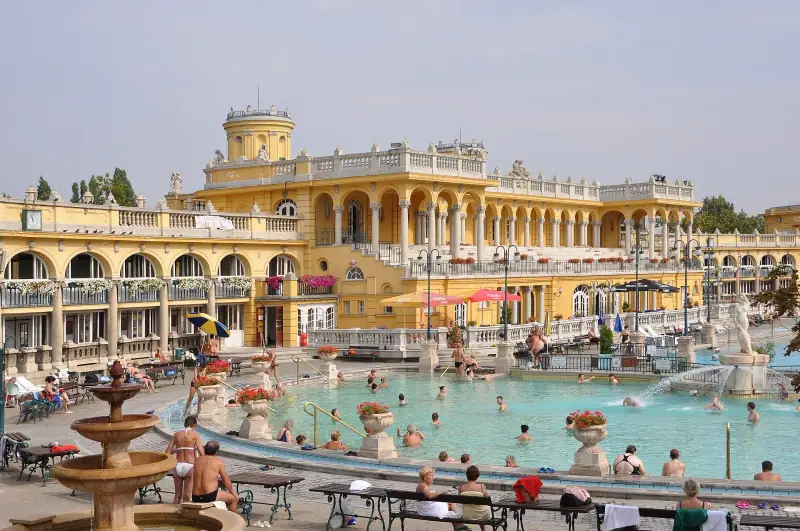
Museums and monuments are affordable, but thermal baths have risen clearly in recent years. Here are the 2026 orders of magnitude:
- Széchenyi baths: about 13,200 forints on weekdays and 14,800 on weekends (€33 to 37 / about $38 to 43) according to prices published in 2026, with a cheaper “good morning” ticket before 9 am. Towels are no longer provided in most baths; plan to buy one or bring your own.
- Lukács baths: about €17.50 to 20 ($20 to 23).
- Danube Thermal: about €6 to 10 ($7 to 12).
- Guided walking tour (2 h): €10 to 15 ($12 to 17).
- Danube cruise: €9 to 14 ($10 to 16) for the simplest option.
- Parliament visit: about €15 to 20 ($17 to 23); book in advance.
- Budapest Zoo: about €15 ($17).
- House of Terror: about €10 ($12).
- Budapest Card 72 h: about €75 ($87). It is only worth it if you chain many paid visits.
Prices change from year to year and from weekday to weekend: always check the establishment’s official price list. Our guide to Budapest’s thermal baths compares the establishments to pick the one that fits your budget. Many baths less famous than Széchenyi offer a comparable experience for far less.
Cruises, bath entries, guided tours: booking online often avoids the line and lets you compare options.
Three budget profiles for 4 days in Budapest
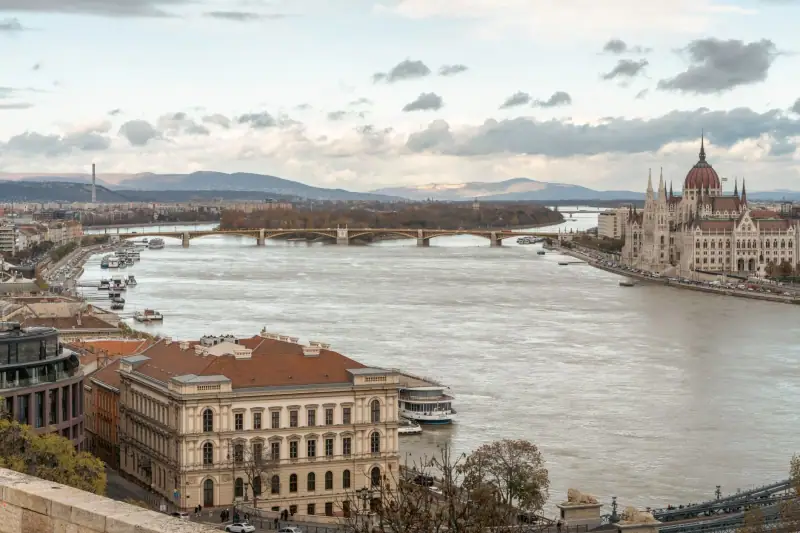
The calculations below are per person, for 4 days and 3 nights, excluding flights. They combine the ranges detailed above; they are estimates, not guaranteed prices. Lodging is shared by two in profiles 2 and 3, which explains the per-person cost.
Profile 1: budget (about €85 to 170 / $99 to 197)
Hostel dorm (3 nights: €36 to 54 / $42 to 63), meals based on bakery, lángos and set lunches (€10 to 15 / $12 to 17 per day), public transport with a 24 h pass or single tickets (€10 to 15 / $12 to 17 in total), one or two free or cheap activities (a walk by the Danube, the castle district, the Danube Thermal bath). For addresses and lángos prices, see where to eat lángos in Budapest. A beer in a kocsma in the evening completes the picture. The upper range includes a thermal bath entry.
Profile 2: mid-range (about €235 to 390 / $273 to 452)
A 3-star hotel or an apartment shared by two (3 nights: €60 to 110 / $70 to 128 per person), one local restaurant per day and a set lunch (€25 to 40 / $29 to 46 per day), transport (€15 to 20 / $17 to 23), and two or three paid activities: a thermal bath, a cruise, the Parliament visit. This is the profile of most travelers on a long weekend.
Profile 3: comfort (about €420 to 740 / $487 to 858)
A well-located 4-star hotel or boutique hotel (3 nights: €120 to 200 / $139 to 232 per person), dinners in good restaurants with wine (€40 to 70 / $46 to 81 per day), taxis or ride-hailing for some trips, private guided tours, thermal baths with treatments or massage, and a day trip around the Danube Bend. Beyond that, you enter luxury, with rates of €200 ($232) and more per night.
Summary
| Item (per person, 4 days) | Budget | Mid-range | Comfort |
|---|---|---|---|
| Lodging | €36 to 54 (~$42 to 63) | €60 to 110 (~$70 to 128) | €120 to 200 (~$139 to 232) |
| Meals and drinks | €40 to 60 (~$46 to 70) | €100 to 160 (~$116 to 186) | €160 to 280 (~$186 to 325) |
| Local transport | €10 to 15 (~$12 to 17) | €15 to 20 (~$17 to 23) | €20 to 60 (~$23 to 70) |
| Activities | €0 to 40 (~$0 to 46) | €60 to 100 (~$70 to 116) | €120 to 200 (~$139 to 232) |
| Total excluding flights | about €85 to 170 (~$99 to 197) | about €235 to 390 (~$273 to 452) | about €420 to 740 (~$487 to 858) |
These totals are consistent with the daily budgets published for 2026 (€30 to 45 per day on a budget, €55 to 90 mid-range, €100 to 160 comfortable), with differences due to rounding.
Beyond Budapest: what about the provinces?
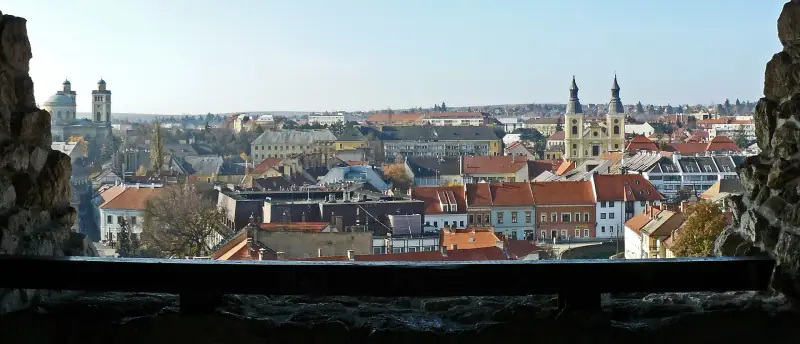
Outside the capital, prices are generally a bit lower, but transport costs more in both time and money. For a day trip on the Danube Bend, plan for the train or bus, a local lunch and possibly a visit: the whole stays reasonable. For Eger and Tokaj, wine becomes the main expense, with tastings often very affordable. We detail the itinerary in our article on the Eger-Tokaj wine route. If you plan a longer stay, our 3-day itinerary in Budapest can serve as a basis for estimating your budget day by day.
12 tips to spend less
- Travel off season. November, January and February are clearly cheaper for hotels. Christmas markets and summer push prices up.
- Go on weekdays. Hotels and bath entries are often cheaper Monday to Thursday.
- Book early. The best places at good prices go fast, especially in high season.
- Have lunch with a set menu. It is the most profitable tip in the country.
- Dine away from the most touristy streets. Walk a few streets away to lower the bill.
- Check the service charge on the bill before leaving a tip on top.
- Buy a transport pass rather than single tickets if you make more than 5 or 6 trips a day.
- Avoid street taxis: prefer a ride-hailing app or public transport.
- Choose a less well-known bath and take advantage of the morning ticket for the busiest ones.
- Bring your towel and swimsuit: buying one there is expensive.
- Shop at the supermarket for drinks and breakfasts.
- Pay in forints and withdraw from a local bank’s ATM.
Insurance and unexpected costs
Even in a well-equipped country, plan a 10% margin for the unexpected. A bank card with travel cover, or travel insurance, keeps an incident from ruining the trip.
Key takeaways
Hungary remains one of the most affordable destinations in Central Europe. With €85 to 170 ($99 to 197) you can visit Budapest on a budget for four days; with €235 to 390 ($273 to 452) you travel comfortably; with €420 ($487) or more you really treat yourself. Flights and lodging remain the two main levers: play with dates and booking ahead, and the rest will follow.
To continue your preparation, move on to our guide on how to get around Hungary and on the best time to go.
Sources
- BKK Budapest Transport Centre: prices checked November 2026
- Széchenyi Thermal Bath: figures checked November 2026
Frequently asked questions
What daily budget should you plan in Hungary?
Travel sources for 2026 converge on about €30 to 45 ($35 to 52) per day per person on a budget, €55 to 90 ($64 to 104) mid-range and €100 to 160 ($116 to 186) comfortable, lodging included. These figures mostly concern Budapest; the provinces are generally a bit cheaper.
Does Hungary use the euro?
No, the currency is the forint (HUF). The rate observed in 2026 is around 400 forints to €1. It fluctuates: check it before you leave and always pay in forints, not euros, when a terminal offers you the choice.
Should you tip in restaurants?
Look at the bill first: many establishments add a service charge (szervízdíj) of about 12 to 13%, in which case nothing more is expected. Otherwise, 10 to 15% is customary for good service, preferably in cash.
Is it better to pay by card or in cash?
Bank cards are accepted almost everywhere in Budapest. Keep a little cash for tips, markets and some public toilets. To withdraw, favor a local bank's ATMs rather than Euronet machines, which charge high fees.
Is Hungary cheaper than Vienna or Prague?
2026 cost comparisons place Budapest clearly below Vienna and Amsterdam, and generally below Prague. The gap shows mostly on meals, coffee, transport and thermal baths, a bit less on hotels in high season.
What is the simplest way to cut your budget?
Book lodging early, have lunch with a set menu (ebédmenü), use public transport rather than taxis, and choose a thermal bath at a quiet hour or an establishment less known than Széchenyi.
More Hungary guides
Keep reading
When to go to Hungary: seasons, weather and events month by month
When to go to Hungary? Climate, temperatures, holidays and festivals: spring, summer at Balaton, autumn harvest and Christmas markets.
Hungary with kids: trip ideas and activities with children
Traveling in Hungary with children: thermal baths, zoo, Children's Railway, Danube, Balaton and open-air museum. Activity ideas, pace and practical tips.

What to see on the Great Hungarian Plain: Hortobágy, Kecskemét, Szeged and Debrecen
What to see on the Great Plain (Alföld) in Hungary: Hortobágy puszta, Kecskemét's Art Nouveau, Szeged, thermal baths and tips for planning your circuit.
Ready-made
Hungary itineraries
7 days
A week in Hungary by car: a 7-day road trip from Budapest to Pécs
BudapestTihany or BalatonfüredKeszthelyPécs
3 days
Budapest in 3 days: a day-by-day itinerary for a first stay
Budapest in 3 days: a detailed plan across Buda and Pest, Parliament, the castle, thermal baths, the Great Market Hall and a Danube stroll.
7 days
Hungary in 7 days without a car: a realistic itinerary by train and bus
BudapestEgerSiófok