Things to do
Budapest thermal baths: Széchenyi, Rudas, Lukács, which to choose?
We may earn a commission when you book through links on this page, at no extra cost to you. We don't visit or try the places we cover: we summarize published sources. How we work
In short
- Széchenyi is the classic choice: a neo-Baroque building in City Park with many indoor and outdoor pools, and the busiest bath in the city.
- Rudas is known for its 16th-century Ottoman pool and rooftop pool with Danube views; Lukács draws mostly regulars and is generally the cheapest.
- The Gellért baths are announced as closed for renovation, with a reopening mentioned around 2028; check the official site.
- A swimsuit is required almost everywhere. Go on weekdays, early in the morning or late in the afternoon, to avoid the crowds.
Budapest is built on a network of hot springs that gush from the ground, and the city has turned them into an art of living. The Romans already frequented baths here, the Ottomans left domes and pools in the 16th century that are still in use today, and the Austro-Hungarian era added monumental thermal palaces. Going to the baths is not just a tourist attraction: Budapest residents come to relax, ease their joints or play chess with their feet in the water.
This guide helps you choose among the major establishments, prepare your visit and avoid the classic mistakes (lines, forgotten swimsuit, wrong arrival time).
Széchenyi: the thermal palace of City Park
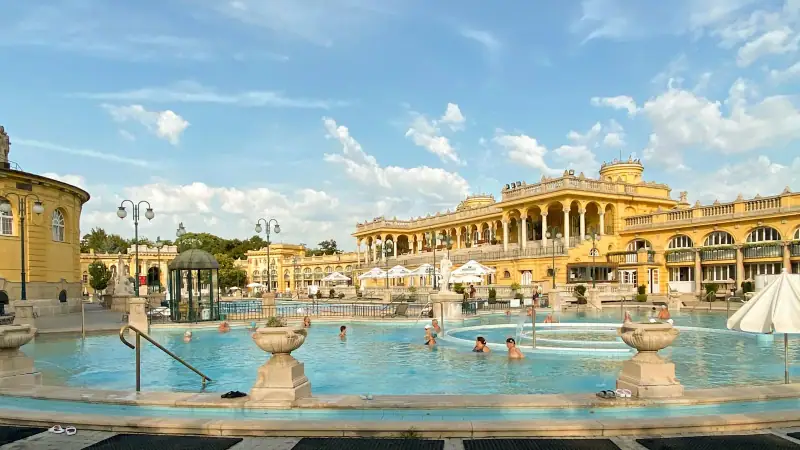
This is the image most travelers have in mind: a yellow neo-Baroque facade, steaming outdoor pools and bathers at the floating chess table. Széchenyi opened in 1913 in the Városliget, Pest’s big city park, and offers many indoor and outdoor pools of different temperatures, as well as saunas and steam rooms.
What to know
- The large outdoor pools are the main attraction, in summer and winter alike.
- The indoor pools, calmer, are worth the detour, with varied temperatures so you can alternate between hot and warm.
- The establishment is mixed and a swimsuit is required.
- It is the busiest in the city: favor weekdays, early in the morning or late in the afternoon.
The park itself deserves a walk before or after bathing. You will find Vajdahunyad Castle, a group of buildings mixing several architectural styles, and Heroes’ Square right next door.
Tickets and tours in Budapest
Tickets for the baths, Danube cruises and guided tours of the city.
Rudas: the Ottoman heritage on the Danube
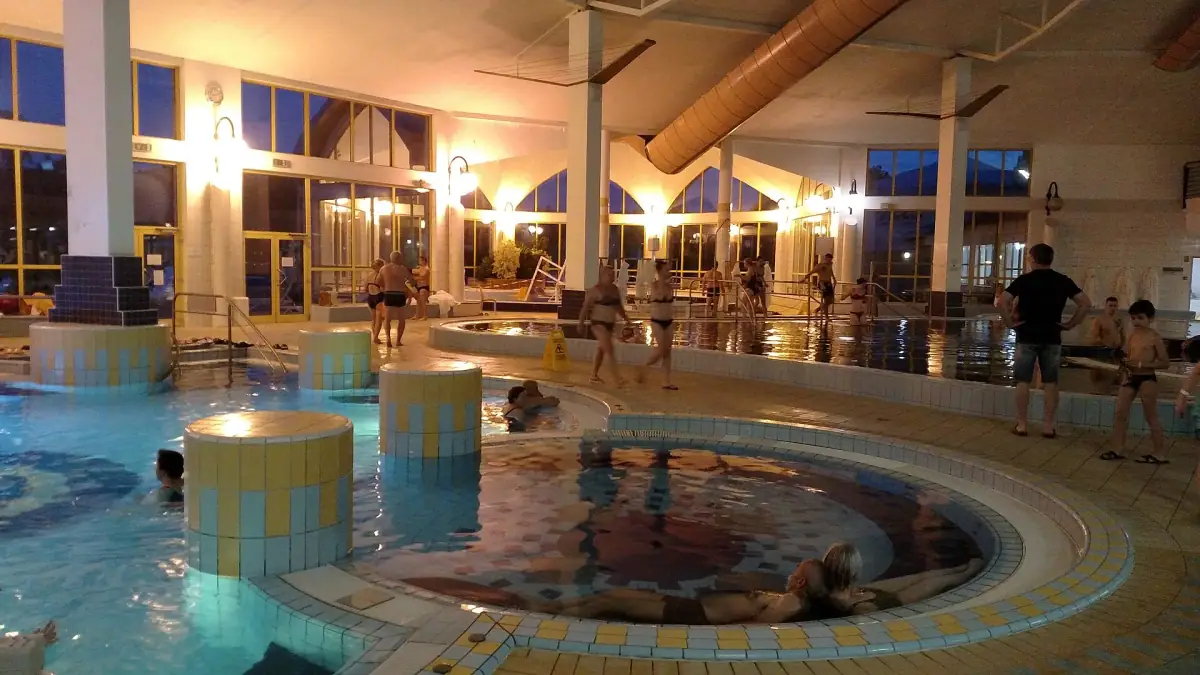
Rudas is among the oldest baths in the city: it already overlooked the Danube banks in the 16th century, during the Ottoman occupation, and its octagonal pool under a dome is its most spectacular witness. The light filtering through the small openings of the vault creates an atmosphere no other establishment really reproduces.
What to know
- The Ottoman part works by time slots: reserved for men or women depending on the day on weekdays, mixed on weekends. These hours have already changed, check before coming.
- A rooftop pool offers a view of the Danube and the bridges, much appreciated at sunset.
- On weekends and on the panoramic terrace, a swimsuit is required everywhere.
- The atmosphere is more hushed than at Széchenyi, and the space more limited: arriving early helps.
The neighboring area, at the foot of Gellért Hill, is pleasant to walk. The Danube bank offers fine perspectives of Parliament across the river.
Lukács: the regulars’ bath
Lukács is among Budapest’s oldest establishments and keeps a clientele of regulars. It has thermal pools, swimming pools, massage rooms and an outdoor area. No postcard decor here: people come for the tranquility and for prices generally lower than at the other two baths.
Who is it for?
- Those who want to avoid the crush of the most famous baths.
- Travelers looking for an everyday experience rather than an architectural spectacle.
- Tight budgets: it is often the cheapest option of the three.
Lukács is on the Buda side, which lets you pair it with a walk in the neighboring area and on the heights.
And the Gellért baths?
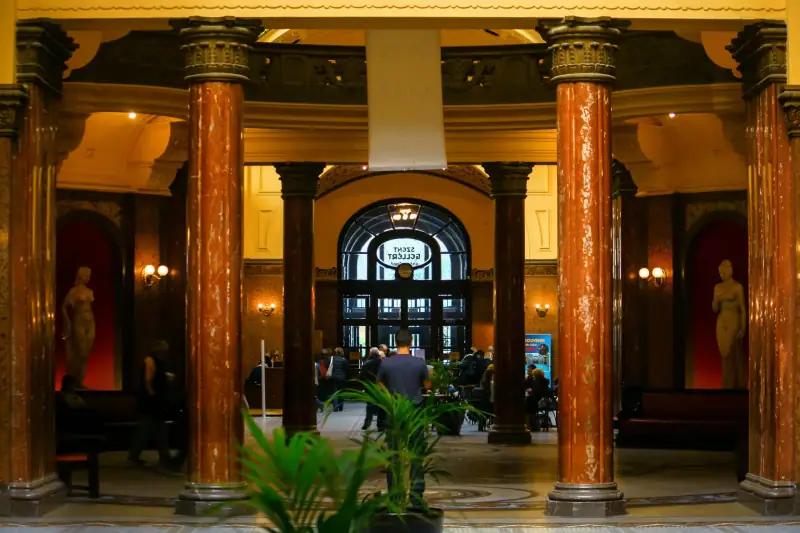
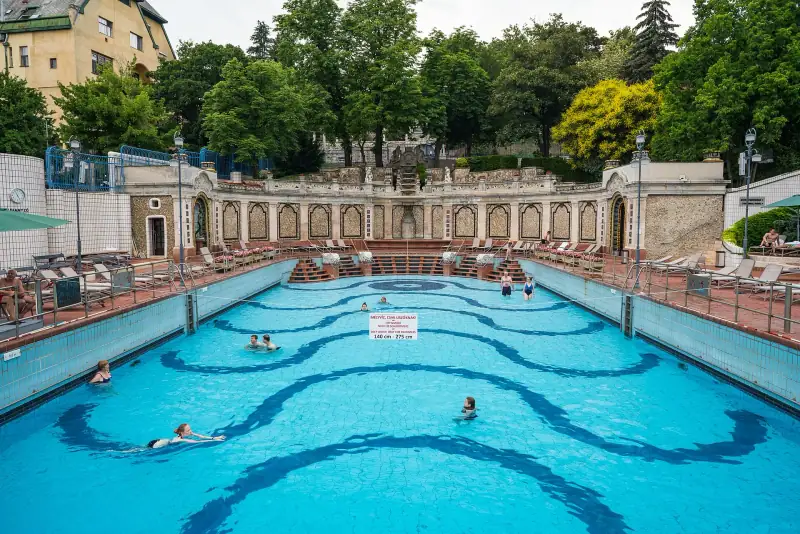
Gellért is an Art Nouveau monument: built between 1912 and 1918, it is famous for its mosaics, columns and large indoor pool covered by a glass roof. It is, however, announced as closed for renovation, with a reopening mentioned around 2028. So do not plan your stay around it without checking its current situation with official sources.
In the meantime, the three establishments above cover the essentials: the splendor of Széchenyi, the Ottoman charm of Rudas and the authenticity of Lukács.
Where to stay in Budapest?
Hotels near the baths, the Danube or the historic center: compare offers.
Preparing your visit to the baths
What to bring
- A swimsuit, essential in almost all areas.
- Flip-flops, which serve both for wet floors and the walk between pools.
- A towel (or rent one there), possibly a bathrobe in winter.
- A waterproof bag for wet things and a light padlock if asked.
- A water bottle: heat dehydrates more than you think.
The typical routine
- Go to the ticket desk, where you are given a wristband or card that serves as the cabin or locker key.
- Change, store your things and keep the wristband on you.
- Alternate hot and warm pools.
- Take regular breaks to drink and rest.
- Return the wristband and collect your things on the way out.
Health and caution
Thermal baths are not suitable for everyone. The baths publish their own health notices and rules, so read them on the official sites before going.
How much time to plan
Allow half a day to enjoy one establishment without rushing: about two to three hours in the water, plus time to change and eat. For a short stay, a single visit is enough to get a taste of the experience. For a stay of four or five days, you can slip in two and compare.
Which moment to choose?
- Weekday morning: the calmest.
- Late afternoon: beautiful light on the outdoor pools, especially at Széchenyi or at the Rudas rooftop pool.
- Winter: the steam rising from the outdoor pools creates a unique atmosphere, a highlight if you come at Christmas.
- Evening: some establishments offer night openings on certain dates, to check on the official site.
Budget: what to expect
Prices vary by establishment, by day (weekends generally cost more) and by type of changing room: locker or private cabin. Lukács is the most affordable option; Széchenyi and Rudas are higher. Prices in forints change regularly and online tickets can differ from those sold on site, so check each bath’s website.
To limit costs:
- Come with your own towel and flip-flops.
- Choose a locker rather than a private cabin if you travel alone.
- Eat outside the complex: the baths’ restaurants are pricier than in town.
Combining the baths with the rest of Budapest
The baths fit easily into a one- or two-day program:
- Széchenyi + Városliget: a morning in the park and Vajdahunyad Castle, then the baths, before heading to the center by metro.
- Rudas + Buda bank: a swim at sunset, then a walk along the Danube.
- Lukács + Buda neighborhood: a bath early in the morning, then a walk on the heights.
If you extend your trip through Central Europe, Vienna is within train reach of Budapest.
Common mistakes to avoid
- Forgetting your swimsuit: renting one there is possible but impractical.
- Arriving at peak time: a rainy weekend at Széchenyi means a guaranteed line.
- Staying too long in hot water: alternate with more temperate pools.
- Not checking hours: some slots are reserved (women, men) or closed for maintenance.
- Planning Gellért: check its reopening status first.
Recommendation
If you only have one visit to make, choose Széchenyi for its decor and outdoor pools, on a weekday and early in the morning. If you want history, Rudas and its Ottoman pool are unforgettable. And if quiet and budget come first, Lukács is an excellent choice.
Frequently asked questions
Which thermal bath should you choose for a first visit to Budapest?
Széchenyi is the classic choice: a neo-Baroque building in City Park (Városliget), many indoor and outdoor pools, a postcard atmosphere. If you prefer a more authentic and less touristy setting, Lukács draws mostly regulars. Rudas appeals for its 16th-century Ottoman pool and its rooftop pool over the Danube.
Are the Gellért baths open?
The Gellért baths are announced as closed for renovation, with a reopening mentioned around 2028. The situation may change: check the official Budapest baths website before building your plans around them.
Do you need to bring your swimsuit and towel?
A swimsuit is required almost everywhere. The establishments rent or sell towels and bathrobes, but these services are charged: bringing your own is cheaper. Also bring flip-flops and a waterproof bag for your wet things.
Are the baths mixed?
Széchenyi and Lukács are mixed. At Rudas, the Ottoman part is reserved by time slot for women or men on weekdays, then mixed on weekends. As these hours have changed in the past, check them before coming.
What time should you go to avoid the crowds?
On weekdays, early in the morning or late in the afternoon. Weekends and rainy days are the busiest, notably at Széchenyi. In winter, bathing outdoors in the cold air, with steam rising from the water, remains a great moment.
Can you bathe in winter?
Yes, it is even one of the most appreciated experiences. The outdoor pools are heated all year. Just bring a bathrobe or thick towel for the short walk between pools, and flip-flops.
Do you need to book tickets in advance?
In high season and on weekends, a ticket bought online or a combined pass avoids part of the line. In low season and on weekdays, buying at the entrance is generally possible. Prices vary by bath, day and type of cabin or locker.
More Hungary guides
Keep reading
Hungary with kids: trip ideas and activities with children
Traveling in Hungary with children: thermal baths, zoo, Children's Railway, Danube, Balaton and open-air museum. Activity ideas, pace and practical tips.

The Danube Bend: a day trip from Budapest (Szentendre, Visegrád, Esztergom)
Danube Bend day trip from Budapest: Szentendre, Visegrád and Esztergom, transport, order of stops, program ideas and tips for the day.

Budget for a trip to Hungary: real costs and 3 priced profiles
How much does a trip to Hungary cost? Real 2026 prices by item (lodging, transport, meals, activities), three priced budgets and tips to spend less.
Ready-made
Hungary itineraries
7 days
A week in Hungary by car: a 7-day road trip from Budapest to Pécs
BudapestTihany or BalatonfüredKeszthelyPécs
3 days
Budapest in 3 days: a day-by-day itinerary for a first stay
Budapest in 3 days: a detailed plan across Buda and Pest, Parliament, the castle, thermal baths, the Great Market Hall and a Danube stroll.

7 days
Hungary in 7 days without a car: a realistic itinerary by train and bus
BudapestEgerSiófok