What to see
Visiting Hilo: complete guide to Big Island's east coast
We may earn a commission when you book through links on this page, at no extra cost to you. We don't visit or try the places we cover: we summarize published sources. How we work
In short
- Hilo is about 45 km (28 mi), or 45 to 50 minutes, from the main entrance of Hawaii Volcanoes National Park, much closer than Kailua-Kona (over 2 hours).
- Rainbow Falls (free) is best between 9 and 11 am; Akaka Falls State Park costs $5 per car. The Hilo Farmers Market runs Wednesday and Saturday, 6 am to 4 pm.
- Hilo gets about 3,000 mm (118 in) of rain a year; the driest months are June to September and the rainiest are December and January.
- The article's indicative daily budget is $120-180 (tight), $200-350 (mid-range) or $350-550 (comfort); a car is essential.
Hilo. The name doesn’t make you dream as much as Waikiki or Maui. No white sand beaches, no luxurious oceanfront resorts, no cocktail bars facing the sunset. Hilo is something else: a town with character, slightly snubbed by mass tourism, and that is precisely why it deserves some of your time.
The seat of Hawaii County (that is its official name), Hilo is the largest town on Big Island with about 50,400 residents. Wedged between the Pacific Ocean and the flanks of Mauna Kea, bathed in generous tropical rain that sustains incredibly lush vegetation, the town cultivates an identity apart in the archipelago: multicultural, agricultural, academic, a bit rebellious. It is the Hawaii from before tourism.
Forty-five minutes from the active volcanoes of Hawaii Volcanoes National Park, surrounded by breathtaking waterfalls and home to one of the best farmers markets in Hawaii, Hilo is the ideal base to explore the hidden face of Big Island. This guide tells you everything about the town: its highlights, its secrets, its lodging, its food and the best excursions from town.
For an overview of the island, see our complete Big Island road trip, which fits Hilo into a 7 to 10 day circuit.
Rainbow Falls and Hilo’s waterfalls
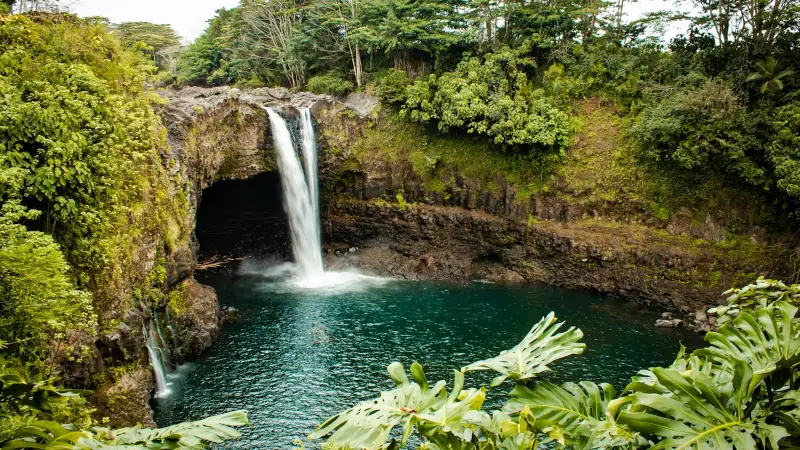
Rainbow Falls: Big Island’s most famous waterfall
Just 3 km (2 mi) west of downtown, Rainbow Falls (Waiānuenue) is Hilo’s most photographed natural attraction. This 24-meter (80 ft) waterfall plunges into a natural pool surrounded by dense jungle of wild banana, ginger and giant tree ferns.
The magic of Rainbow Falls is in its light: in sunny weather in mid-morning, the mist created by the water hitting the pool produces a permanent rainbow, hanging in the humid air like a watercolor. The best time to see it is between 9 and 11 am, when the sun lights the falls directly.
Access is simple and free: a roadside parking lot, two minutes’ walk on a developed trail. A wooden lookout gives a front view of the falls. A secondary trail (a bit slippery in wet weather) climbs to the left to reach the top of the falls, from where you see the natural pool in the lava rock, a magical spot, little known and often deserted.
Boiling Pots and Pe’epe’e Falls
500 meters (0.3 mi) upstream from Rainbow Falls on the Wailuku River, the Boiling Pots are a fascinating geological phenomenon: a series of natural pools carved into the lava by the river, linked by underground tunnels. When the river flow is strong (after rain), the water swirls in these pools and “boils” like a pot, hence the name. A 500-meter (0.3 mi) trail from the Rainbow Falls parking lot leads to this site, often ignored by visitors in a hurry.
Just above the Boiling Pots, Pe’epe’e Falls is a wider but lower waterfall (about 10 m / 33 ft) that cuts across the river in several arms. The view from the lookout overlooking both sites at once is exceptional.
Places to stay in Hilo
Bay-view hotels, charming B&Bs and tropical lodges: compare the best places to stay in town.
Akaka Falls: the big waterfall of the east coast
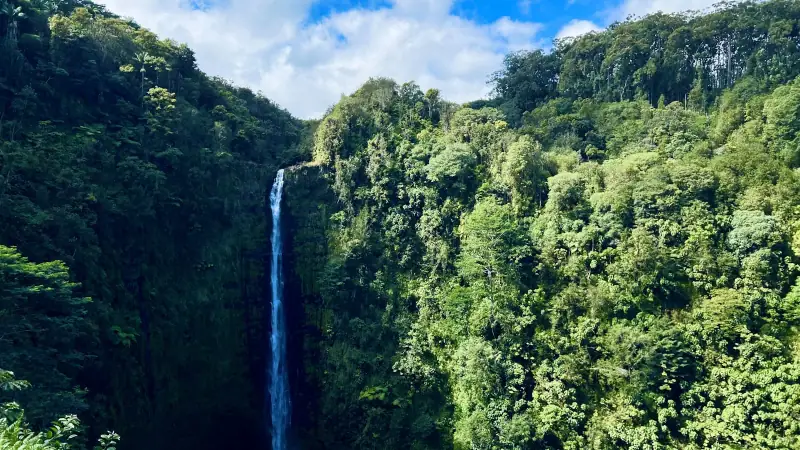
A hike in the tropical jungle
23 km (14 mi) north of Hilo, Akaka Falls State Park is home to one of the most spectacular waterfalls in the whole Hawaiian archipelago. The main fall, Akaka Falls, is 135 meters (443 ft) high, one of the tallest waterfalls in Hawaii. It plunges into a narrow canyon framed by cliffs covered in moss, ferns and wild orchids in a cathedral-like green atmosphere.
Access is from the park parking lot (entry: $5 per car) via a 1.5 km (0.9 mi) loop trail through dense rainforest. The path is perfectly marked and developed, accessible to most visitors. Along the way you pass Kahuna Falls, a more modest (30 m / 98 ft) but equally beautiful fall, before reaching the lookout over Akaka Falls.
Allow 45 to 60 minutes for the full loop. After rain, the vegetation is even more lush and the waterfalls more powerful; “wet” conditions are paradoxically the most photogenic for Akaka Falls.
The Pepe’ekeo Scenic Drive on the way
Between Hilo and Akaka Falls, don’t miss the Pepe’ekeo Scenic Drive (also called Old Mamalahoa Highway): a 6 km (4 mi) loop on the old coastal road, winding through a forest of bamboo, pandanus and banana above lava cliffs battered by the ocean. Halfway, What’s Shakin’ is an open-air cafe serving smoothies and acai bowls made in Hawaii with fruit picked the same morning, well worth a stop.
Downtown Hilo: architecture and history
Hilo’s historic district
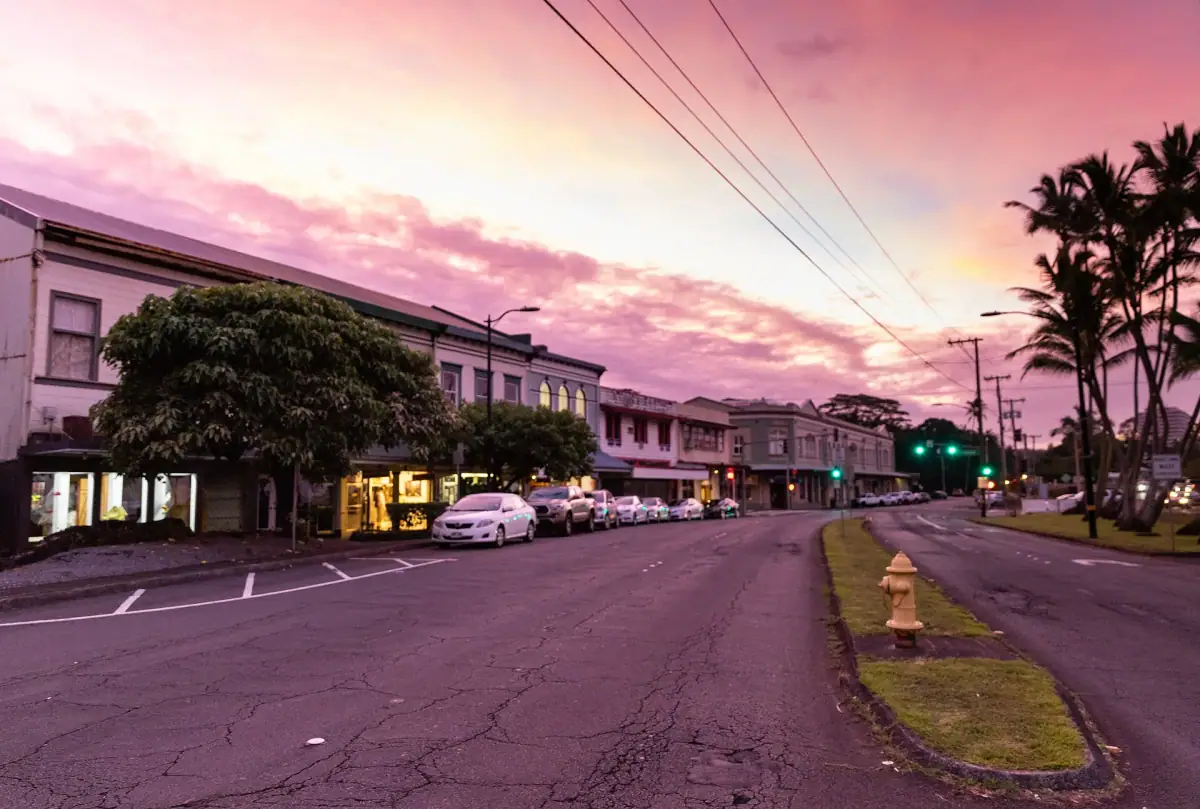
Hilo is one of the few towns in Hawaii to have kept a coherent historic downtown, with wood and brick buildings from the 1920s-1940s. After the devastating 1960 tsunami (caused by an earthquake in Chile, 61 victims in Hilo), much of the waterfront was razed and turned into parks and buffer zones; this is why Hilo Bay is surrounded by lawns and gardens rather than buildings.
Downtown Hilo, around Kamehameha Avenue, deserves a 2-hour walk. The historic brick buildings now house art galleries, antique shops, independent cafes and local restaurants. Hilo’s art scene, discreet but lively, is driven by the presence of the University of Hawaii at Hilo and the local creative community.
The Pacific Tsunami Museum
In a former 1930 bank building in the middle of downtown, the Pacific Tsunami Museum traces the history of the tsunamis that struck Hilo, a town hard hit in 1946 (96 dead) and 1960 (61 dead). Interactive exhibits, survivor testimonies, historical archives and the current warning system: a moving and educational museum that helps you understand why Hilo looks the way it does. Entry: $10 adult.
Lili’uokalani Park and the Japanese gardens
On the edge of Hilo Bay, the Lili’uokalani Gardens are the largest formal Japanese gardens outside Japan, laid out in the early 20th century in tribute to the community of Japanese immigrants who worked in Big Island’s sugarcane plantations. Stone lanterns, curved wooden bridges, a koi pond, century-old bonsai and pagodas are reflected in the calm waters of Wailoa River State Park.
Right opposite, Coconut Island (Mokuola) is an islet reachable on foot over a bridge, a quiet municipal park with views of the bay and Mauna Kea in the background in clear weather. Swimming is possible but the bottom is rocky.
Car rental in Hilo
Essential to explore the waterfalls, volcanoes and east coast of Big Island from Hilo.
The Hilo farmers market: the absolute must
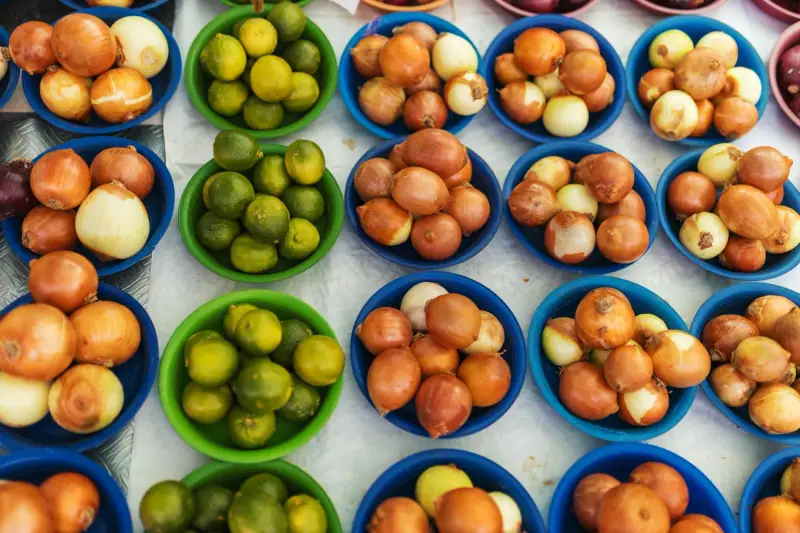
An out-of-the-ordinary market
The Hilo Farmers Market is without question one of the best experiences on all of Big Island’s east coast. Open Wednesdays and Saturdays from 6 am to 4 pm (Saturday is the busiest, with more than 200 vendors), this open-air market takes up the whole corner of Mamo Street and Kamehameha Avenue in downtown Hilo.
What sets it apart from tourist markets: it is a real market of local producers. Farmers from the Puna, Hamakua and Mauna Kea slopes areas sell their harvests directly, often picked the day before or that very morning.
What you find there
Rare tropical fruit: Hilo and its region have exceptional fruit diversity thanks to the warm, rainy climate. You find rambutan (spiny red fruit with translucent flesh), longan, dragon fruit of every color, abiu (a creamy fruit that tastes like caramel custard), jackfruit (the biggest fruit in the world), giant papayas, local mangoes in about ten varieties, and dwarf Hawaiian bananas with an incomparable taste.
Tropical flowers: Hilo’s orchids and anthuriums are famous across the archipelago. The region is one of the world’s top producers of anthuriums (bright red heart-shaped flowers). You can buy live plants as cuttings or cut flowers.
Local products: Kona coffee and Hilo coffee, 100% Big Island cacao chocolate, fresh and pasted macadamia nuts, tropical flower honeys, guava and starfruit jams, dressings and sauces made with local ingredients.
Hawaiian crafts: Koa wood (Hawaiian endemic acacia with magnificent carvings), lauhala weaving (pandanus leaves), pottery and jewelry inspired by Hawaiian culture.
Come with an empty bag, an appetite and cash (some vendors don’t accept cards).
Hilo as a base for the volcanoes
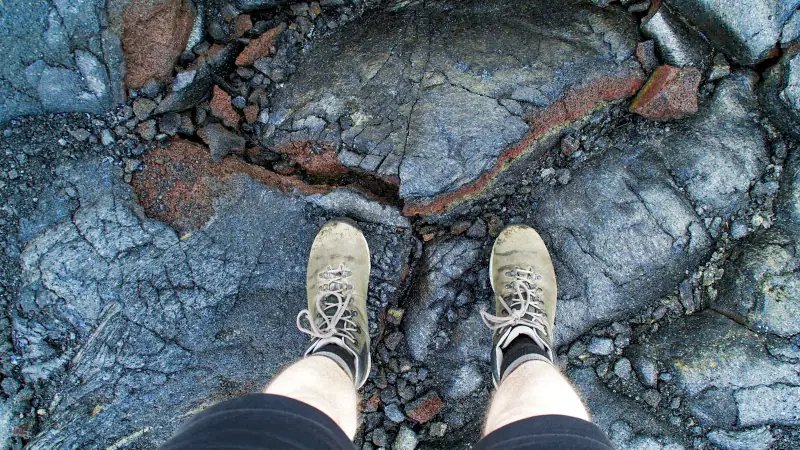
Hawaii Volcanoes National Park: 45 minutes away
Being close to Hawaii Volcanoes National Park is the decisive argument for many travelers who choose to stay in Hilo rather than Kailua-Kona. The park’s main entrance (on Route 11, Chain of Craters Road) is only 45 km (28 mi) southwest of Hilo, a 45 to 50 minute drive.
From Kailua-Kona, allow over 2 hours to reach the same entrance, which is a lot when you want to enjoy the park early in the morning or stay until sunset to see the lava glow.
Our complete guide to Hawaii’s volcanoes details all the possible activities in the park: hikes in lava tubes, lookouts over Kilauea crater, Chain of Craters Road down to the ocean, and the best conditions to watch active lava when there is an eruption.
Lava Tree State Monument
25 km (16 mi) south of Hilo (toward Pahoa), the Lava Tree State Monument is a singular natural park that few visitors know. In 1790, a fast lava flow wrapped a forest of ‘ōhi’a lehua, solidifying around the trunks before withdrawing. What remains are hollow molds of solidified lava, the “lava trees”, standing in the regenerated forest like mineral ghosts. An 800-meter (0.5 mi) loop crosses the site. Free entry.
Volcano and Big Island tours
Guided volcano tours, night hikes with the lava, helicopter over Kilauea.
The Mauna Kea observatory from Hilo
The biggest observatory in the world
Hilo is also the town closest to the Mauna Kea summit road, one of the best astronomical observation sites on the planet. Mauna Kea rises to 4,205 meters (13,796 ft) above the Pacific Ocean (but about 10,000 meters / 32,800 ft if measured from its underwater base, which makes it technically the tallest mountain in the world from its foot).
At the summit are 13 international observatories, including the Keck Observatory (the largest optical telescope in the world when built in 1992-1996, now surpassed by other telescopes), the Japanese Subaru Telescope and the Canadian-French-Hawaiian CFHT. From Hilo, the Mauna Kea road (Saddle Road then Mauna Kea Access Road) starts about thirty kilometers (about 19 mi) west of town.
The Visitor Information Station (VIS), at 2,800 m (9,200 ft), already offers spectacular views and is accessible to all vehicles. Evening stargazing sessions are offered there (check current programs and reservation rules). For the summit (4,205 m / 13,796 ft), a 4x4 is required, and most rental companies forbid summit access, so check your contract.
Important: the summit is at very high altitude. Ask your doctor or a travel clinic, and see the official travel health pages (CDC in the US, TravelHealthPro in the UK). Pregnant women and people with heart or breathing conditions are advised not to attempt the climb.
Food in Hilo: eating local
East coast cuisine
Hilo’s food scene reflects its multicultural identity: Hawaiian, Japanese, Filipino, Portuguese and American mix in a natural, tasty fusion. Forget tourist menus; here you eat like the locals.
Cafe 100: A Hilo institution since 1946, this small family restaurant on Kilauea Avenue is the Hawaiian reference for loco moco: a bowl of rice topped with a hamburger steak and a fried egg and covered in gravy. Simple, hearty and delicious. Under $10. The lunchtime line is long but moves fast.
Suisan Fish Market: At Hilo’s harbor, this family fish market open since 1907 sells the best raw fish in town. Order a poke bowl (the real thing, with fresh marinated ahi) or a sashimi assortment for under $15. Locals have shopped here for generations.
Hilo Lunch Shop: The Hawaiian bento box at its peak: a tray of rice, a variety of proteins (teriyaki chicken, kalua pork, grilled fish) and macaroni salads in generous portions. Under $12. Always packed at weekday lunchtime.
Ken’s House of Pancakes: Open 24 hours, this Hawaiian diner on Kamehameha Avenue is the meeting place of night owls and early risers heading to the volcanoes. Macadamia nut pancakes, giant omelets, endless Hawaiian coffee. Perfect before a long day of exploring.
To go further into Hawaiian food, our complete guide to Hawaiian cuisine decodes all the archipelago’s specialties.
Beaches and the coast around Hilo
Black sand beaches
Big Island’s east coast does not have the white sand beaches of the other islands. But it has something better: black volcanic sand beaches, unique in the world, the result of the ocean eroding lava flows.
Richardson Ocean Park (about 9-10 km / 6 mi east of central Hilo) is the most accessible black sand beach. Hawaiian green sea turtles (honu) frequent the water and regularly come ashore to warm up in the sun; always keep your distance (3 meters / 10 ft minimum, it’s the law). Decent snorkeling in calm weather, but the water can be rough in winter.
Onekahakaha Beach Park is calmer, with a natural lagoon pool protected by a lava reef, ideal for families with children. The bottom is rocky but the water is clear.
The Puna coast: beaches and lava landscapes
Continuing south from Hilo on Route 137 (Red Road), you follow the Puna coast, one of the wildest and most volcanic areas of the island. Relatively recent lava flows (1990, 2018) covered whole beaches and whole neighborhoods, creating fascinating post-apocalyptic landscapes. Kehena Black Sand Beach, reached by a trail on the lava cliff, is an unofficial clothing-optional beach frequented by Puna’s alternative locals.
Practical information for visiting Hilo
How to get there
By air: Hilo International Airport (ITO) receives direct flights from Honolulu (45 min), Maui and Kauai (inter-island carriers: Hawaiian Airlines, Southwest, Mokulele). From the U.S. mainland, direct flights from Los Angeles and San Francisco exist but are less frequent than to Kona.
From Kailua-Kona: Saddle Road (Route 190 then 200) is the fastest, about 1 h 30 to 1 h 45 for 125 km (78 mi) across the central volcanic plateau, with breathtaking views of the two giants Mauna Kea and Mauna Loa. The southern coastal road (Route 11 via Pahala) is longer (3 h) but passes Hawaii Volcanoes National Park, ideal if you combine both visits.
A car is essential: There is no efficient public transport for exploring the Hilo area. Book your vehicle ahead; there are fewer rental agencies at Hilo airport than at Kona.
Indicative budget
Hilo is clearly cheaper than Kailua-Kona or Maui, which makes it an excellent base for budget-conscious travelers.
- Tight budget: $120 to $180 a day (B&B or hostel, farmers market + local restaurants, free or inexpensive sites)
- Mid-range: $200 to $350 a day (decent hotel, varied restaurants, volcano or Mauna Kea excursion)
- Comfort: $350 to $550 a day (bay-view hotel, guided excursions, restaurants)
See our Hawaii budget guide for detailed advice on possible savings across the archipelago.
Entry requirements
Hawaii is a US state, so the formalities are those of a trip to the United States. Entry rules depend on your passport. Check the official travel advice of your government before you book: travel.state.gov (US), GOV.UK (UK), travel.gc.ca (Canada), Smartraveller (Australia) (checked November 2026).
Itinerary: 2 days in Hilo and the east coast
Day 1: waterfalls, market and downtown
Early morning (6-9 am): If it is a Wednesday or Saturday, start with the Hilo Farmers Market. Arrive at opening for the best selection of exotic fruit. Plan a budget of $20 to $40 for purchases.
9 am-noon: Drive to Rainbow Falls (15 min by car from downtown). Visit the main falls, then climb the trail to the top for the view from above. Continue 500 meters (0.3 mi) to the Boiling Pots and Pe’epe’e Falls. If the weather is overcast when you arrive, wait 30 minutes; the sun often appears in mid-morning.
Noon-2 pm: Lunch at Cafe 100 (loco moco) or at Suisan fish market (poke bowl). Walk through historic downtown Hilo.
2-5 pm: Visit the Lili’uokalani Gardens, walk to Coconut Island, view of Hilo Bay. Stop at the Pacific Tsunami Museum (45 min).
Evening: Dinner at a local restaurant on Kamehameha Avenue. Sunset (if it shows itself) from the Hilo Bay promenade.
Day 2: Akaka Falls and volcanoes
7 am: Early departure for Hawaii Volcanoes National Park (45 min south). Arrive before the crowd to enjoy Kilauea Overlook in the cool morning. Walk through the Thurston Lava Tube (a 500 m / 1,640 ft lava tunnel). Chain of Craters Road down to the ocean.
12:30 pm: Lunch at the park cafe or a picnic prepared the day before.
2 pm: Drive north to Akaka Falls State Park (1 h from the park). 1.5 km (0.9 mi) loop in the tropical jungle, facing the big waterfall. Stop at What’s Shakin’ on the Pepe’ekeo Scenic Drive for a smoothie.
Back in Hilo around 5:30 pm.
Hilo is not postcard Hawaii. There is no resort on the beach, no sunset guaranteed every evening, no DJ bar with an ocean view. There is something better: a town that breathes at its own pace, markets where farmers know their customers by first name, waterfalls that tourist buses don’t reach, and the awareness of being 45 minutes from the living fire that has been building this land for millennia.
Visiting Hilo means choosing to see Hawaii as it really is: complex, multicultural, generous and undeniably alive. To explore the opposite side of the island, our guide to Kailua-Kona awaits, with its nearly guaranteed sun and crystal-clear water.
Frequently asked questions
Is Hilo really worth visiting?
Absolutely. Hilo is one of the most authentic and least touristy towns in Hawaii. It offers privileged access to Hawaii Volcanoes National Park (45 min), spectacular waterfalls (Rainbow Falls, Akaka Falls), an exceptional farmers market on Wednesday and Saturday, and an atmosphere that resembles what Hawaii was before mass tourism. It is the hidden face of Big Island.
Is Hilo really very rainy?
Hilo is one of the rainiest towns in the United States, with about 3,000 mm (118 in) of rain a year. Most showers are short and happen in the morning or late afternoon. The sun comes back quickly. The rain is also responsible for the lush vegetation and spectacular waterfalls. Bring a light raincoat, but don't be discouraged: mornings are often clear.
Can you visit the volcanoes from Hilo?
Yes, and it is one of Hilo's great strengths. The main entrance of Hawaii Volcanoes National Park (a UNESCO site) is only 45 km (28 mi) southwest of Hilo, which is 45 to 50 minutes by car. It is by far the best base for exploring the park, since many visitors stay in Hilo and do the round trip in a day. From Kailua-Kona, allow over 2 hours.
How do you get from Hilo to Kailua-Kona?
The fastest route between Hilo and Kailua-Kona is Saddle Road (Hawaii Belt Road, Route 200), which crosses Big Island's central plateau between Mauna Kea and Mauna Loa. The distance is about 125 km (78 mi) for a 1 h 30 to 1 h 45 trip. It is a magnificent drive with lunar landscapes and Hawaii's two tallest volcanoes as a backdrop. The southern coastal road (via Pahala) is longer but passes historic lava areas.
When is the Hilo farmers market open?
The Hilo Farmers Market, one of the best in Hawaii, is held every Wednesday and Saturday from about 6 am to 4 pm, at the corner of Mamo Street and Kamehameha Avenue, in the middle of downtown. Saturday is the busiest day with more than 200 vendors. You find local tropical fruit (rambutan, longan, mango, papaya), anthurium and orchid flowers, Hawaiian crafts, food specialties and organic vegetables.
Where should you stay in Hilo?
Hilo has a varied range of lodging, clearly cheaper than the Kailua-Kona coast. The Banyan Drive hotels (Hilo Bay Hotel, Grand Naniloa) have bay views with direct access to the Japanese gardens. B&Bs and guesthouses in residential neighborhoods are an excellent alternative to immerse yourself in local life. There is no big international resort, which is precisely what gives Hilo its charm.
What is the best time to visit Hilo?
The least rainy season runs from June to September, with often sunny mornings and rarer rain. But Hilo can be visited all year; even in the rainy season showers are generally brief and the vegetation is even more lush. Avoid December-January, the rainiest months, if you want to maximize your chances of sun.
More Hawaii guides
Keep reading
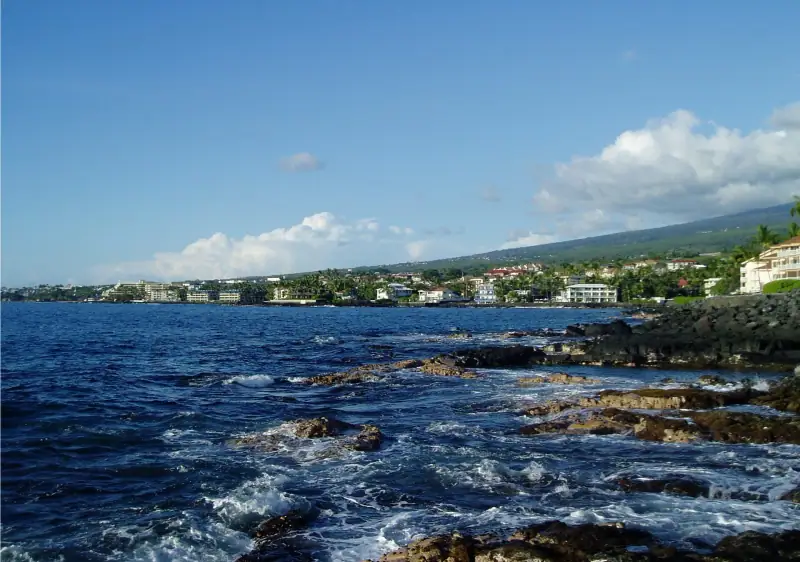
Visiting Kailua-Kona: complete guide to Big Island's coastal town
Kailua-Kona, gateway to Big Island: manta rays, Kona coffee, snorkeling with turtles, Ali'i Drive and Pacific sunsets.
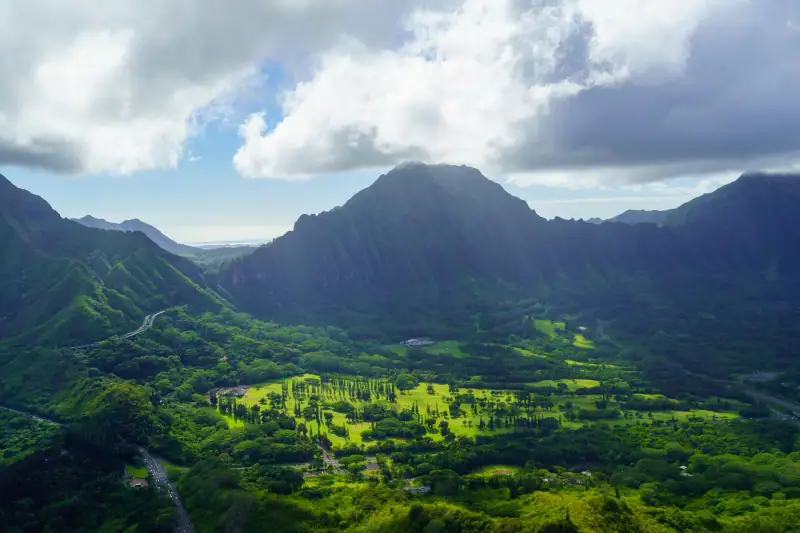
Oahu: the must-sees you shouldn't miss
The top 20 things to do and see on Oahu: Pearl Harbor, Diamond Head, the North Shore and more, with prices, hours and practical tips.
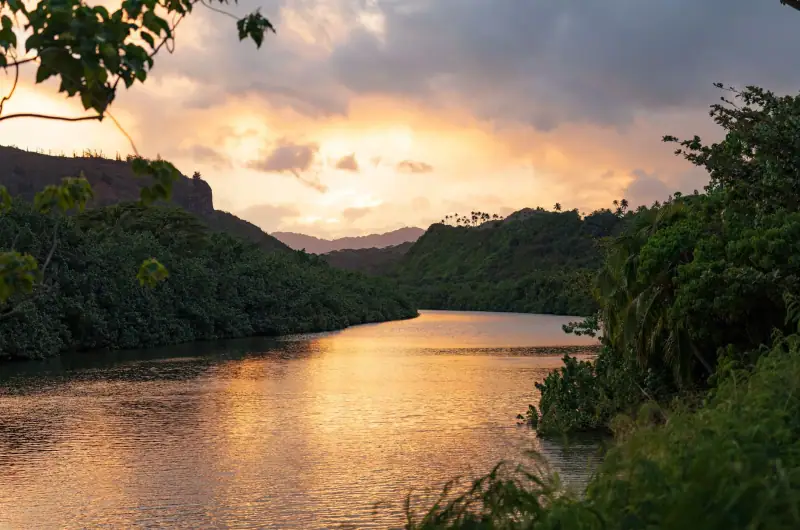
Visiting Kauai: complete guide to the island of Kauai in Hawaii
Visiting Kauai: Na Pali Coast, Waimea Canyon, Hanalei Bay, beaches, hikes and practical tips to plan your Hawaii trip.
Ready-made
Hawaii itineraries
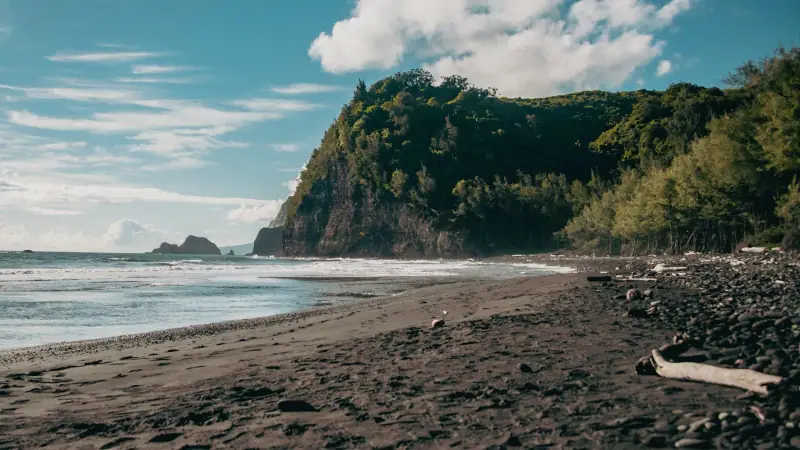
5 days
Big Island road trip in 5 days
Kailua-KonaVolcano VillageHilo or Hamakua Coast
7 days
Kauai 7-day itinerary: the best road trip on the wild island
A detailed 7-day Kauai itinerary: Na Pali Coast, Waimea Canyon, Hanalei Bay and the best beaches. Day-by-day plan for an unforgettable road trip.
7 days
Maui 7-day itinerary: the complete guide to planning your trip
Maui in 7 days: Road to Hana, Haleakala, Wailea and Kaanapali beaches. A day-by-day plan to discover the pearl of the Hawaiian archipelago.