Where to stay
Where to stay in Hurghada and Marsa Alam: resorts, areas and tips
We may earn a commission when you book through links on this page, at no extra cost to you. We don't visit or try the places we cover: we summarize published sources. How we work
In short
- Hurghada is a real city (airport near the center, many hotels, restaurants, excursions); Marsa Alam is quieter, with better-preserved reefs and isolated resorts, about 270 km (168 mi) away.
- El Gouna (about 25 km / 16 mi north of Hurghada) suits couples and water-sports fans; Sahl Hasheesh, Makadi Bay and Soma Bay are the southern resort areas.
- All-inclusive makes sense in isolated resorts; half board or breakfast only works better in lively areas such as central Hurghada or El Gouna.
- Check beach and reef access, the airport distance (a long transfer at Marsa Alam) and what the meal plan really covers.
The Egyptian Red Sea is a long strip of coast where the desert plunges into turquoise water, with pleasant temperatures almost all year and some of the world’s most renowned coral reefs. But “staying on the Red Sea” means nothing until you have chosen where. Between the lively city of Hurghada, the resorts built around lagoons, the isolated resorts in the south and the calm of Marsa Alam, the stays have almost nothing in common.
This guide compares the main areas, explains who they suit and details the points to check before booking: meal plan, beach access, reef, distance to the airport. We have deliberately not named any establishment: the offer changes fast and recent reviews remain the best criterion. For the rest of the trip, our 10-day Egypt itinerary shows how to fit a few beach days between Cairo and Luxor.
Hurghada or Marsa Alam: the first choice to make
Hurghada and Marsa Alam are about 270 kilometers (168 mi) apart, several hours’ drive along the coast. They are not two variants of the same destination, but two philosophies.
Hurghada is a real city, very stretched along the sea. It has an airport near the center, hundreds of hotels of all categories, restaurants, markets, a marina and many excursion agencies. You can stay there without a car, go out in the evening and organize your days easily.
Marsa Alam is more diffuse: a few villages, resorts scattered along the coastal road and large stretches of desert between them. The stay almost always takes place at the hotel or around it, in direct contact with the sea. It is the destination of divers, snorkeling fans and those who want to “disconnect”.
A few pointers to decide:
- You want life, restaurants and outings: Hurghada or El Gouna.
- You want to see fish from the beach: Marsa Alam, or a resort in southern Hurghada with a reef.
- You travel with children: a resort with a gently sloping sandy beach, rather in Hurghada or the southern resort areas.
- You come mainly to dive: first read our guide to diving in the Red Sea between Hurghada and Marsa Alam.
Central Hurghada: Sakkala and El Dahar
The historic heart of Hurghada splits into two main areas. El Dahar, the old district, is the most authentic: markets, small shops, mosques, local restaurants and dense traffic. Sakkala, by the sea, is the most touristy district, with its terraces, shops, bars and seaside promenades.
Pros: everything is close. You find good mid-range or budget hotels, restaurants for every budget and excursion departures a few minutes away. It is also the area where you spend least on food, eating in town rather than at the hotel.
Cons: private beaches are not always in front of the hotel, the city is noisy and sales pitches are frequent. To swim in good conditions, you often have to choose a hotel with its own beach or take a day boat.
Who for? Independent travelers, small budgets, those who like the atmosphere of a real Egyptian city and those who do not want to stay shut in a resort. To fill your days out of the water, see our ideas for activities in Hurghada besides diving.
Hotels in Hurghada
Compare hotels in Hurghada, from Sakkala to seaside resorts, and filter by reviews, beach, meal plan and free cancellation.
Hurghada coast resorts: beach and all-inclusive
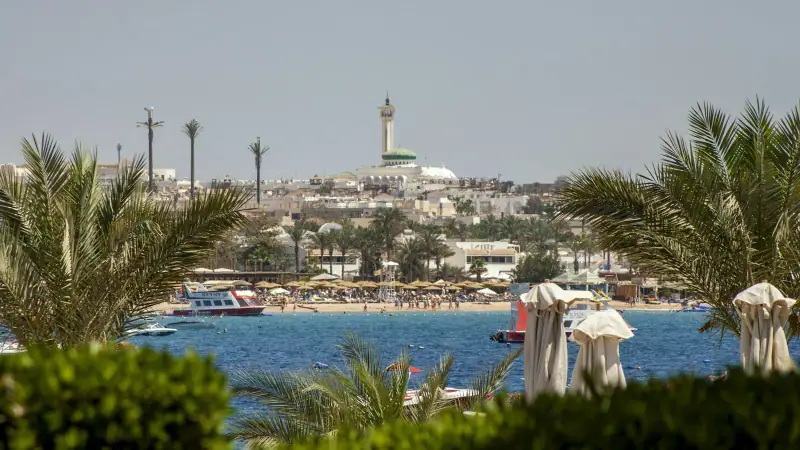
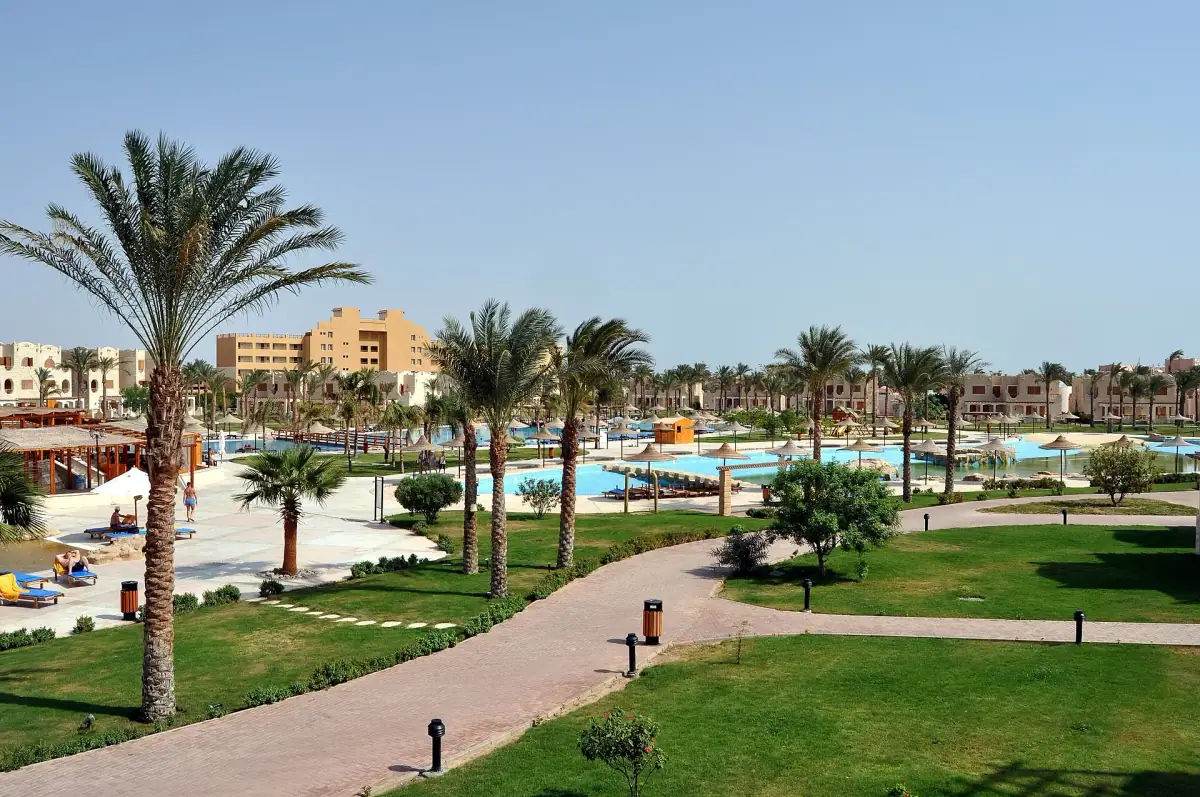
This is the image many travelers have of seaside Egypt: a large beachfront complex, several pools, themed restaurants, entertainment and an all-inclusive plan. These resorts are spread along the coast, north and south of central Hurghada, and sometimes form real small closed towns.
Pros: everything is provided at the resort. Meals, local drinks, pools, kids’ clubs, water sports and shows are bundled. Value for money can be excellent, especially outside school holidays, and safety and comfort are generally high.
Cons: you eat and sleep in the same place, and you discover less of the country. Excursions and transfers to the center must be organized, often at higher rates than outside the resort. Some beaches are shallow, which forces you to walk or use a jetty to really swim.
Who for? Families, couples seeking relaxation and those who want a week without logistics. Before booking, check precisely what the plan covers: imported drinks, à la carte restaurants, water activities, wifi and beach towels are not always included.
El Gouna: lagoons, marina and a modern resort atmosphere
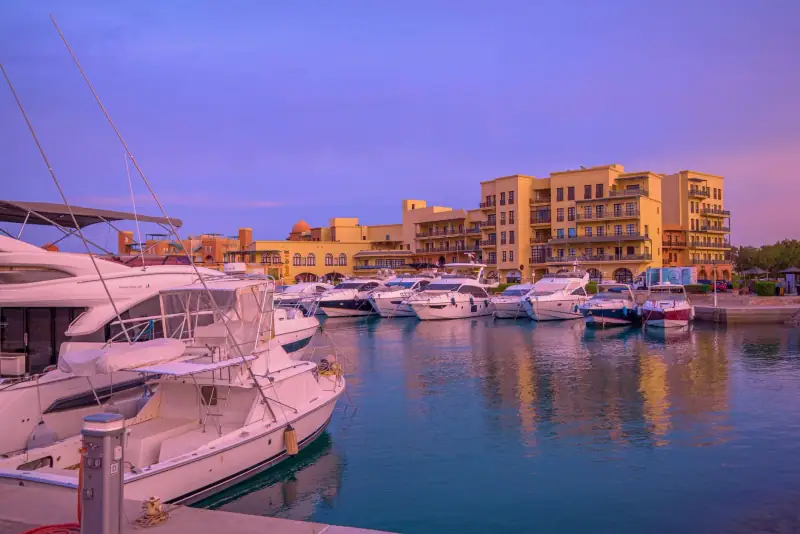
El Gouna lies north of Hurghada, about 25 kilometers (16 mi) away. It is a resort town built entirely around lagoons and canals, with a marina, beaches, restaurants, cafés and a pedestrian center. The atmosphere is more “residential” and elegant than the city’s, with mid-range to high-end hotels.
Pros: a clean, calm and pleasant setting, real resort life with restaurants and promenades, and board sports such as kitesurfing and windsurfing in suitable areas. You get around easily on foot, by bike or by shuttle.
Cons: prices are higher than in central Hurghada, and you are a bit cut off from the “real” Egypt. Beaches are developed by sector, sometimes paid if you are not a hotel guest.
Who for? Couples, water-sports fans, those who want a quiet but not isolated stay, and travelers who prefer a polished resort atmosphere to that of a large closed resort.
Sahl Hasheesh, Makadi Bay and Soma Bay: the southern resorts
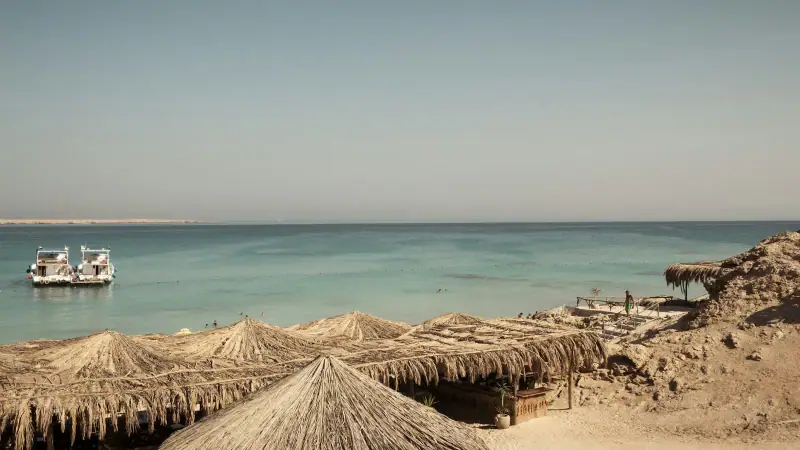
South of Hurghada stretch several resort areas highly popular with European travelers. Sahl Hasheesh, about twenty kilometers (12 mi) from the center, has a developed bay with a seaside promenade, terraced hotels and a refined atmosphere. Makadi Bay, a bit farther south, is mostly large resorts lined up facing the sea. Soma Bay, farther still, is a peninsula of resorts with golf, spas and beaches, also known for kitesurfing.
Pros: beaches often nicer and calmer than in the center, recent and well-equipped hotels, and a clearly more peaceful atmosphere. Several establishments offer direct reef access for snorkeling.
Cons: remoteness. To go out to dinner or on an excursion, you almost always need a taxi or shuttle, and each trip can take a while. Meal prices outside the plan are also higher.
Who for? Families, couples and travelers who want a real beach week without noise, willing to stay mostly in their resort.
Marsa Alam: the choice of divers and calm
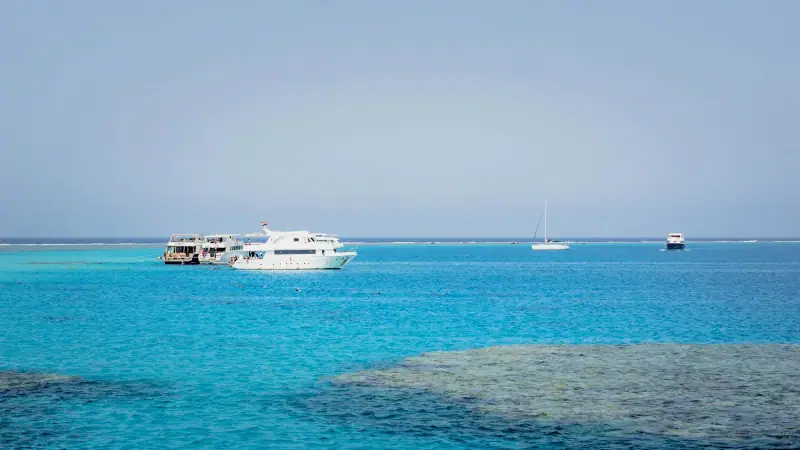
South of Hurghada, the coast becomes wilder. Marsa Alam is not a tourist city in the classic sense: it is a reference point around which resorts and small eco-lodges are spread, sometimes tens of kilometers apart. Beaches are often fringed by reefs, which has made the region’s name among divers and snorkeling fans.
Pros: more preserved nature, beautiful seabeds reachable from the beach in several areas and, depending on the zone, the chance to see sea turtles and dolphins. Renowned sites such as Abu Dabbab or Wadi el Gemal park are in the region. The calm is total, especially in the evening.
Cons: isolation. Restaurants outside hotels are rare, distances are large and the airport is far from many establishments. Outside the resort, the entertainment offer is almost nonexistent: you come for the sea, not for the shops.
Who for? Divers, snorkelers, nature lovers, couples and travelers who like to sleep to the sound of the waves. Families with teenagers can enjoy it if the resort offers varied activities.
Hotels in Marsa Alam
Compare resorts and lodges in the Marsa Alam region, with traveler reviews on the reef, beach and meal plan.
Quick comparison of the areas
To see more clearly, here is a summary by criterion:
- City life, restaurants, shopping: central Hurghada, then El Gouna.
- Absolute calm: Marsa Alam, Soma Bay, some Sahl Hasheesh resorts.
- Family with young children: Hurghada coast resorts and southern resort areas, with kids’ clubs and gently sloping beaches.
- Snorkeling from the beach: Marsa Alam and resorts with an accessible reef.
- Board sports: El Gouna, Soma Bay.
- Small budget: central Hurghada, half board or breakfast only.
- Proximity to the airport: Hurghada, clearly easier than Marsa Alam.
Choosing your plan: all-inclusive, half board or breakfast
The plan weighs as much as the area in the success of the stay.
All-inclusive: suited to isolated resorts. It spares you pulling out your wallet at each meal and drink. Check the list of included drinks and the hours of à la carte restaurants, often subject to reservation. Its value depends on your actual consumption: if you often eat out, it does not pay off.
Half board: a good compromise in lively areas. You have breakfast and dinner at the hotel, and lunch wherever you like during excursions. It suits a week of discovery well.
Breakfast only: ideal in central Hurghada or El Gouna, where the restaurant offer is wide. It is the cheapest plan for a traveler curious about local food; our guide to Egyptian dishes to try gives you ideas.
In all cases, read the cancellation terms: on a destination where the weather is stable but travel constraints can change, flexibility is worth a small extra. Also remember to check the entry requirements for Egypt before paying. Entry rules depend on your passport. Check the official travel advice of your government before you book: travel.state.gov (US), GOV.UK (UK), travel.gc.ca (Canada), Smartraveller (Australia) (checked November 2026).
Criteria to check before booking
Beyond the area, a few details make the difference between a good stay and a disappointment:
- Sea access: sandy beach, jetty or reef? Some beaches force you to walk in shallow water; a jetty lets you swim in deeper water.
- The reef: if it is accessible from the beach, it is ideal for beginners. Bring reef shoes and a mask, and respect the corals: do not walk on them.
- Orientation and wind: on some coasts, the wind blows fairly strongly much of the year. It is an asset for kitesurfing, less so for those who just want to lounge.
- Distance to the airport: a transfer of over an hour after a flight is tiring with children. It matters mostly at Marsa Alam.
- Renovation date: a large resort may have aged. Reviews from the last few months are more useful than the overall rating.
- Air conditioning and heated pool in winter: sea water stays pleasant, but pool water can be cool from December to February.
When to go to the Red Sea?
The climate is dry and sunny all year. Summer is very hot, but swimming remains pleasant and rates are lower. From autumn to spring, temperatures are milder and the sea still good for swimming. Winter months can be pleasant by day but cool in the evening and windier. Our article on when to visit Egypt details the seasons, and the guide to the budget in Egypt helps you estimate the cost of a week on the coast.
Excursions from Hurghada
Boat trip, snorkeling, desert safari: compare excursions offered from Hurghada among the available offers.
Combining the Red Sea with the rest of Egypt
Many travelers do not come only for the beach. A classic stay combines a few days of cultural visits, then a beach break to rest. Luxor, with its temples, is reachable from the coast by road or by air, depending on the season and available connections. If you leave from Luxor, read our guide on where to stay in Luxor to prepare the cultural stage.
Two formulas work well:
- Culture first, beach after: Cairo, Luxor, then relaxation in Hurghada. You end your trip rested, without running.
- Beach first, culture after: useful if you arrive tired and want to recover. Less common, because visits are physical in full heat.
In both cases, do not plan too many back-and-forths: distances are large, and each transfer eats into a day. A stay of three to six nights on the coast gives a good balance for a ten-day or two-week trip.
A few practical tips for sleeping well
- Ask for a room away from the activity if you are a light sleeper: resort shows sometimes end late.
- Bring cash in small bills for tips, customary in hotels and restaurants.
- Protect yourself from the sun: sunscreen, hat and a UV T-shirt for snorkeling, because glare on the water is strong even in cloudy weather.
- Check the water: favor bottled water for drinking, including in resorts, unless the establishment says otherwise.
- Take out travel insurance before leaving: cancellation, medical costs and repatriation are useful in a country where you sometimes end up several hours from a hospital.
Our recommendation by profile
- First stay, tight budget: central Hurghada with breakfast or half board, with day boat excursions.
- Family with children: a beachfront resort on the southern Hurghada coast or at Sahl Hasheesh, with a kids’ club.
- Couple seeking a polished setting: El Gouna or a hotel in Sahl Hasheesh.
- Diver or snorkeler: Marsa Alam, in a hotel with direct reef access.
- Independent traveler: central Hurghada or El Gouna, to combine meals, outings and beach without depending on a resort.
Whatever you choose, always compare recent reviews, read the cancellation terms and keep some margin in your schedule for transfers. The Red Sea rewards those who take the time to choose the right corner of coast rather than the first hotel that comes up.
Frequently asked questions
Is it better to stay in Hurghada or Marsa Alam?
Hurghada suits you if you want activity, restaurants, shops, a wide choice of hotels and a nearby airport. Marsa Alam appeals to those seeking calm, better-preserved reefs and isolated beachfront resorts. If you want to go out in the evening without taking a car, choose Hurghada; for quiet diving and snorkeling, Marsa Alam.
Is all-inclusive a good idea on the Red Sea?
In big resorts, often isolated from everything, it is the most practical plan: meals, local drinks and entertainment are bundled. It is less so if you like trying street food or changing restaurants each evening. A half-board stay in a lively area balances budget and discovery better.
Do you need a hotel with a coral reef in front of the beach?
For independent snorkeling, it is a real plus: you put on fins and mask without taking a boat. Not all hotels have a directly accessible reef, and some only have a jetty. Check the description and recent reviews, which often mention water access and the state of the reef.
How do you get from the airport to your hotel?
In Hurghada, the airport is close to the center, and transfers to the northern and southern resorts take from a few minutes to under an hour depending on distance. In Marsa Alam, the airport is far from many resorts and the transfer can last over an hour. Plan an organized transfer, often offered by the hotel or agency.
Can you combine the Red Sea and a Nile cruise?
Yes, it is a classic: a few days of culture in Cairo and Luxor, then beach relaxation in Hurghada or Marsa Alam. Luxor is linked to the coast by road, a trip of several hours, or by air via Hurghada or Marsa Alam depending on the season.
When should you book a hotel on the Red Sea?
For school holidays, the Christmas period and spring, book several months ahead: well-rated resorts go fast. In the very hot summer low season, rates are lower and last-minute deals more frequent. Favor free-cancellation rates.
More Egypt guides
Keep reading
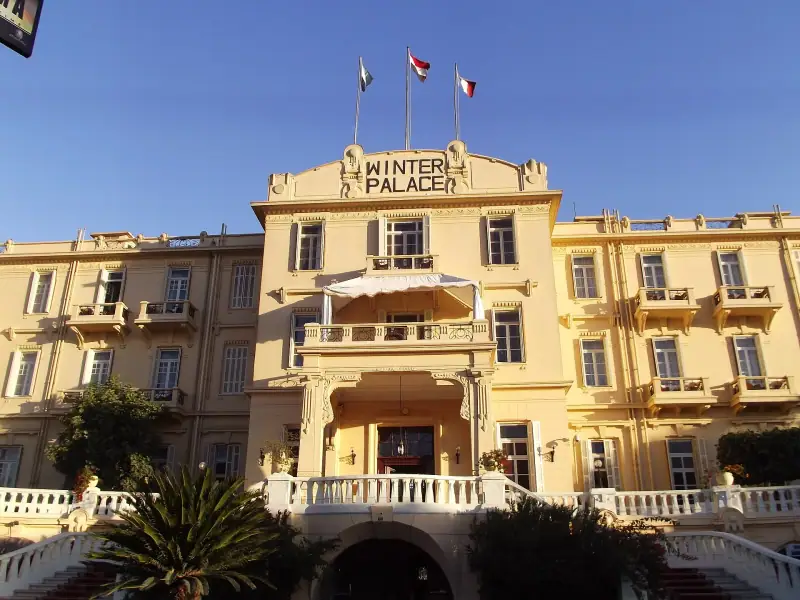
Where to stay in Luxor: east bank or west bank, neighborhoods and tips
Where to stay in Luxor? The lively east bank near Karnak or the quieter west bank near the Valley of the Kings: areas compared, with booking tips.
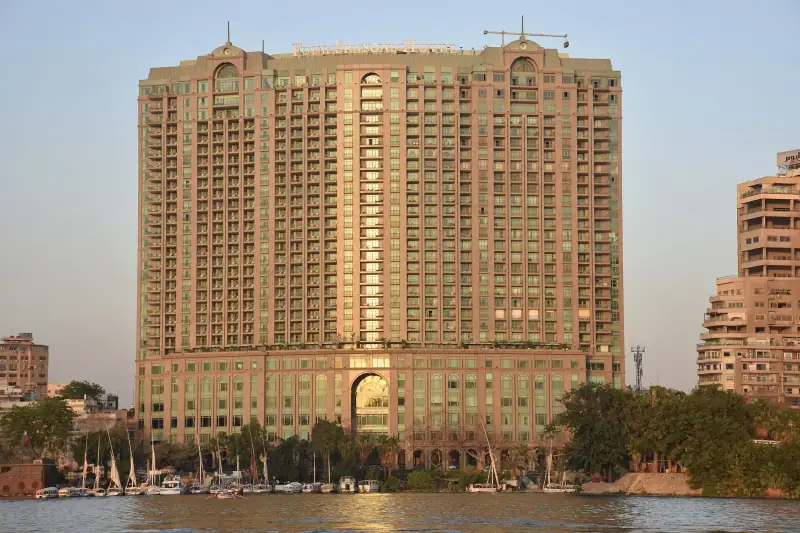
Where to stay in Cairo: neighborhoods, tips and accommodation deals
Where to stay in Cairo? Giza, Zamalek, downtown, Islamic Cairo or Garden City: neighborhoods compared to choose your hotel by stay and budget.
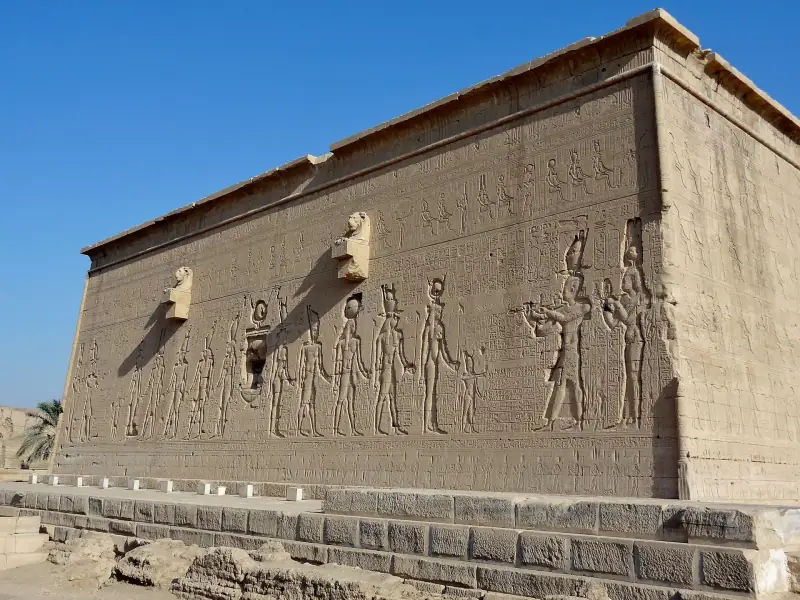
Dendera from Luxor: is the Temple of Hathor worth the detour?
Dendera Temple from Luxor: distance, how to get there, hours, official prices, visit length and what you see (astronomical ceiling, roof, crypts).
Ready-made
Egypt itineraries
4 days
3 days
3 days in Cairo: a day-by-day itinerary from the pyramids to Islamic Cairo
What to do in 3 days in Cairo? Giza pyramids, museums, Coptic and Islamic Cairo, Saqqara: a realistic day-by-day itinerary with practical tips.
7 days
Egypt 7-day itinerary: Cairo, Luxor and Aswan in one week
CairoLuxorAswan