What to see
Visiting Dinan: what to see and do in the medieval town on the Rance
We may earn a commission when you book through links on this page, at no extra cost to you. We don't visit or try the places we cover: we summarize published sources. How we work
In short
- One day covers the essentials: historic center, ramparts, castle, rue du Jerzual and the port; a night there lets you enjoy the town in the evening and morning.
- Rue du Jerzual is cobbled and steep: slippery in rain, a climb back up, poorly suited to strollers and wheelchairs.
- Dinan is about 30 km (19 mi) from Saint-Malo; it has a station and buses, but a car helps for Cap Fréhel and the coast.
- The Fête des Remparts, a big medieval gathering held in July every two years, fills accommodation early.
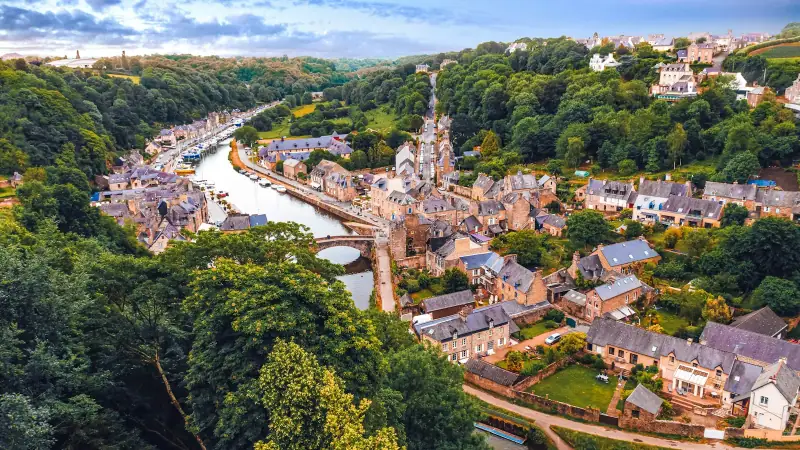
Dinan is one of the best-preserved medieval towns in Brittany. Perched on a spur above the Rance valley, it brings together ramparts that still surround the center, streets lined with half-timbered houses, a castle with its keep and, at the very bottom, a small river port where you sit on a terrace by the water. It can all be visited on foot, in a setting that has changed little for centuries.
This guide helps you organize your visit: what to see first, how to build a day or a weekend, where to eat, where to stay and how to reach the town. To place it in a wider stay on the north coast, see the 3-day itinerary between Saint-Malo, Cancale and Dinan.
Why visit Dinan?
Dinan appeals first through its authenticity. Unlike some medieval towns that have become mere scenery, it is a living town: people shop here, a market is held, you meet craftspeople, gallery owners and residents who have kept the habit of gathering on the squares. The heritage is not locked in a perimeter reserved for visitors; it is part of daily life.
Its location is the other big asset. A few dozen kilometers from the Emerald Coast, Dinan lets you combine heritage, river walks and seaside outings. Saint-Malo, Dinard and the beaches of northern Brittany are within reach by car or public transport, which makes it a pleasant base, quieter and often more affordable than the seaside resorts in high season.
It suits varied profiles: couples on a weekend, families who like stories of knights, photography fans, hikers and cyclists following the Rance valley, and travelers without a car who like doing everything on foot.
The historic center: squares, half-timbering and the Clock Tower
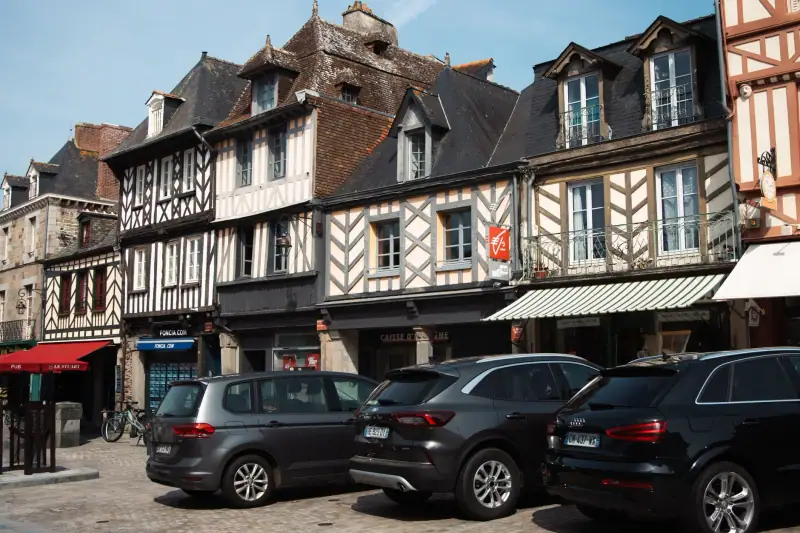
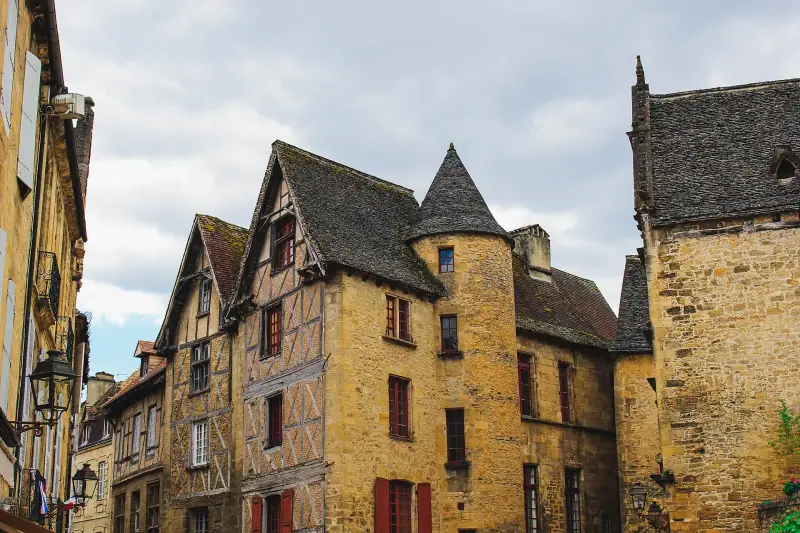
Dinan’s heart is discovered by strolling. The center’s streets are lined with half-timbered houses, with their overhanging upper floors, irregular façades and slate. Some now hold shops, craft workshops and crêperies; others are homes. Take the time to look up: carved beams, old signs and small details tell several centuries of history.
Two squares concentrate most of the activity. Place des Merciers, with its houses on porches, is one of the most photographed in town. Place des Cordeliers, more open, is a good place to sit for a while. A little farther, place du Guesclin recalls the famous duel of Bertrand du Guesclin, a 14th-century Breton knight whose figure is everywhere in Dinan.
The Clock Tower dominates the center. It can be visited and its top offers a panorama over the town’s roofs and the surrounding countryside; hours and rates vary by season, so check with the tourist office. It is a good landmark for getting your bearings and an interesting pause in the middle of the visit.
Where to stay in Dinan
Charming hotels in the medieval center, guesthouses and places near the port: compare offers, especially in summer and during big events.
The Basilica of Saint-Sauveur and the gardens
The Basilica of Saint-Sauveur deserves a visit, inside and out. Its architecture mixes several styles, a sign of building work spread over long periods, and it holds an element that intrigues many visitors: a cenotaph containing, according to tradition, the heart of Bertrand du Guesclin. Opening hours vary, and it is best to respect the religious character of the place.
Right beside it, the English garden opens as a terrace above the valley. It is one of the finest viewpoints in Dinan: you see the Rance winding below, the viaduct that spans it and the surrounding hills. The place is calm, pleasant for a break in late morning or at sunset, and access is free.
Allow about an hour for this group if you take the time to visit the building and sit in the garden.
The ramparts and Dinan Castle
Dinan’s ramparts are among the most extensive in Brittany: they ring the historic center for several kilometers and can be walked in part, with towers, gates and viewpoints over the valley. There is no need to do the full circuit: one stretch is enough to get the idea, especially on the side of the gardens and the gates that descend to the Rance.
The castle, which houses a museum, is built into the fortifications. Its keep, with its vaulted rooms and staircase, can be visited and gives a good overview of medieval military architecture. Exhibitions change with the periods, and hours depend on the season: check the tourist office website before your visit.
For families, the keep and the wall walks are often the children’s favorite moments. Just watch the narrow staircases and exposed passages.
Rue du Jerzual and the descent to the port

This is Dinan’s most famous walk. Rue du Jerzual, continued by rue du Petit-Fort, descends steeply from the Jerzual gate, in the ramparts, to the port below. Half-timbered houses crowd both sides, and you find craft workshops, galleries and designer shops.
Bring good shoes: the cobblestones are uneven, the slope is marked and the ground becomes slippery in rain. Going down, the walk is a pleasure; the climb back takes some effort. If you travel with small children or people with reduced mobility, it is better to plan another way to reach the port.
Early in the morning or at the end of the afternoon, the street is calmer and the light softer. In the middle of a summer day, it is one of the places where you meet the most people.
Dinan’s port and the Rance valley
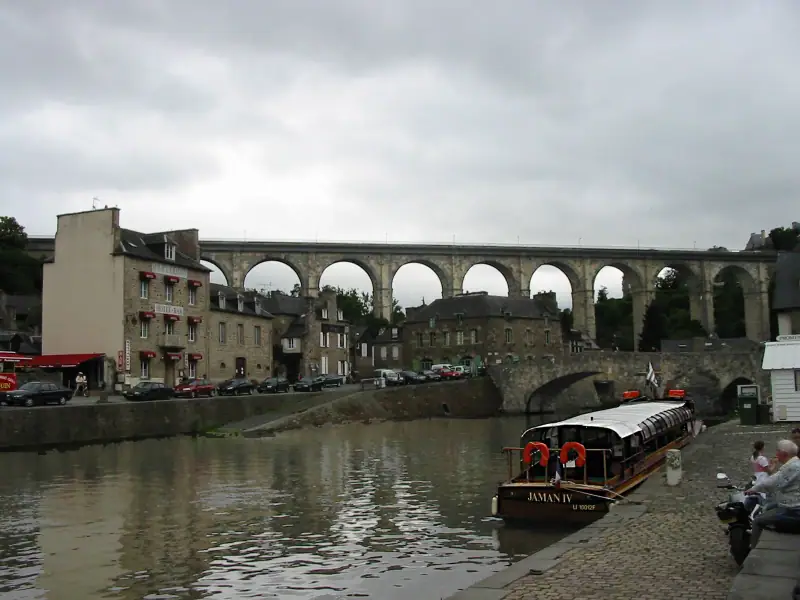
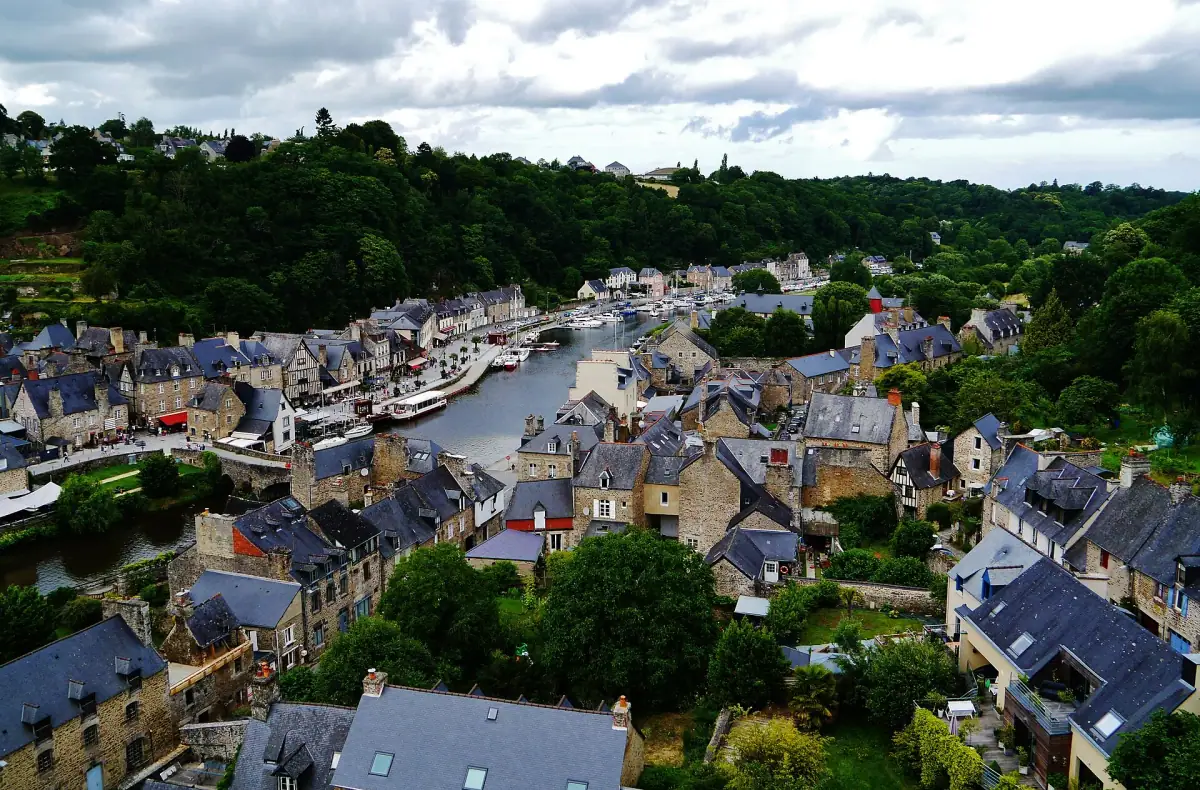
At the bottom of rue du Jerzual, Dinan’s river port shows a completely different face of the town. Stone quays, pleasure boats, terraces and old converted warehouses make up a peaceful landscape, quite different from the lanes above. An imposing viaduct overlooks the site: it dates from the 19th century and serves as a visual landmark from the English garden.
It is also the starting point for rides on the Rance. Depending on the season, boats offer narrated trips on the river, sometimes with a run to Dinard and the maritime zone of the estuary. Hours depend on the tides, which strongly affect navigation: ask the companies directly.
The towpath that runs along the Rance is the other great pleasure of the port. It lets you walk or cycle in a green setting, at your own pace, with landscapes very different from the coast. Cyclists can go further, on laid-out routes along the river.
Rides and excursions around Dinan
Rance cruises, guided visits and trips to the Emerald Coast: compare offers and book ahead in high season.
Where to eat and what to taste in Dinan
Dinan offers cooking true to Brittany: buckwheat galettes, crêpes, seafood, cider, salted butter and caramel. Crêperies are numerous in the center, often set in old houses whose interior is worth the detour on its own. To understand what is served and how to choose, read the guide to crêpes and galettes in Brittany.
At the port, waterside terraces are very pleasant in good weather, with menus more oriented toward fish and seafood. The center also has more traditional restaurants, bakeries, pastry shops and cheese shops where you find local specialties. The town-center market is a good way to taste local products, but days and hours change: check with the tourist office before you come.
A few simple tips: book for dinner in summer and on weekends, favor streets a little away from the busiest routes to avoid inflated prices, and keep your longest lunch for the port.
Where to stay: medieval center, port or outskirts
For a short stay, sleeping in the historic center is the most pleasant: late dinners and evening strolls are done on foot, and the lanes are almost empty once the groups have left. The main drawback is parking and the cobbled streets, which complicate arriving by car with luggage.
The port is calmer and more bucolic, with water views, but the climb back to the center is an effort. On the outskirts, there are hotels easier to reach by car, often more affordable, and guesthouses in the surrounding countryside. To compare types of accommodation in the region, see the guide to where to stay in Brittany.
Book early for July and August, May weekends and long weekends, as well as for the Fête des Remparts, which attracts many visitors. In low season, rates fall markedly and it is often possible to find a room at the last minute.
Guesthouses and hotels on the Emerald Coast
If Dinan is full or you prefer the sea, also compare accommodation in Saint-Malo, a practical base for exploring the region.
Getting there and getting around
Dinan is served by train: the station is within reasonable walking distance of the center, with a possible connection to Rennes and other towns depending on the timetable. Buses also link the town to Saint-Malo and several neighboring communes. By road, Dinan is reached from Rennes, Saint-Malo and the north coast; the trip from Saint-Malo generally takes a little under an hour by car, about 30 km (19 mi).
In town, the old town is explored on foot. If you come by car, use the car parks on the edge of the center: parking in the lanes is limited and often paid. To organize your travel across the region, read the article on getting around Brittany.
If you plan to explore the coast beyond Dinan, a rental car makes excursions to the beaches and capes of the shoreline easier.
Sample program: one day or a weekend
One day. In the morning, start with place des Merciers and the Clock Tower, then the Basilica of Saint-Sauveur and the English garden. Have lunch in a crêperie in the center. In the afternoon, visit the castle and keep, a stretch of the ramparts, then descend rue du Jerzual to the port. Finish with a drink or dinner by the Rance.
A weekend. Devote the first day to the town, as above. On the second, treat yourself to a ride on the Rance or the towpath, then an excursion to Dinard and Saint-Malo as you wish. For the coastal part, the guide to visiting Saint-Malo gives you useful pointers.
Three days. Include Dinan in a full Emerald Coast circuit with Saint-Malo and Cancale, as in the 3-day itinerary.
Budget and practical tips
Dinan remains generally more affordable than Saint-Malo, especially for accommodation. Prices rise in summer, on extended weekends and during the Fête des Remparts. Crêperies offer meals at reasonable prices, while the port terraces are a bit pricier. Admission to the castle and the Clock Tower and cruises on the Rance are extra; their rates change from one season to the next.
A few useful habits: wear good shoes for the cobblestones and slopes, pack a light waterproof jacket because Breton weather changes fast, leave early to enjoy the lanes before the crowds, and book accommodation ahead in high season. To choose your dates, see also the article on when to go to Brittany.
Frequently asked questions
How long do you need to visit Dinan?
One day is enough to see the essentials: historic center, ramparts, castle, rue du Jerzual and the port. With a night there, you also enjoy the town in the evening and morning, when groups are fewer. To add a ride on the Rance or an excursion to Dinard and Saint-Malo, allow two days.
What should you see first in Dinan?
The highlights are the half-timbered lanes around place des Merciers and place des Cordeliers, the Clock Tower, the Basilica of Saint-Sauveur, the gardens and ramparts, the castle and its keep, then the descent of rue du Jerzual to the port on the Rance.
Can you reach Dinan without a car?
Yes. Dinan has a station, and the historic center is visited on foot. Buses link the town to Saint-Malo and neighboring communes, but schedules vary by season: check them before you go. A car remains practical for coastal sights such as Cap Fréhel or the Bay of Saint-Brieuc.
Is rue du Jerzual hard to walk?
It is cobbled and steeply sloped, which makes the descent slippery in rain and the climb back a bit physical. Bring good shoes. It is poorly suited to strollers and wheelchairs: an alternative is to reach the port by car or shuttle, then walk back up as you wish.
What is the best time to visit Dinan?
May to September, for the long days and open terraces. June and September often offer the best balance between weather and crowds. The town also hosts the Fête des Remparts, a big medieval gathering held in July every two years: it is spectacular, but accommodation must be booked very early.
Can you combine Dinan with Saint-Malo?
It is even the most common pairing. The two towns are about 30 km (19 mi) apart, a short hour by road or public transport depending on the link. The 3-day itinerary between Saint-Malo, Cancale and Dinan details a full program.
Is Dinan suitable for children?
Yes, as long as you adapt the pace. The ramparts, the castle keep, the port and boat rides on the Rance generally appeal to younger visitors. The cobblestones and slopes just call for a little patience.
More Brittany guides
Keep reading
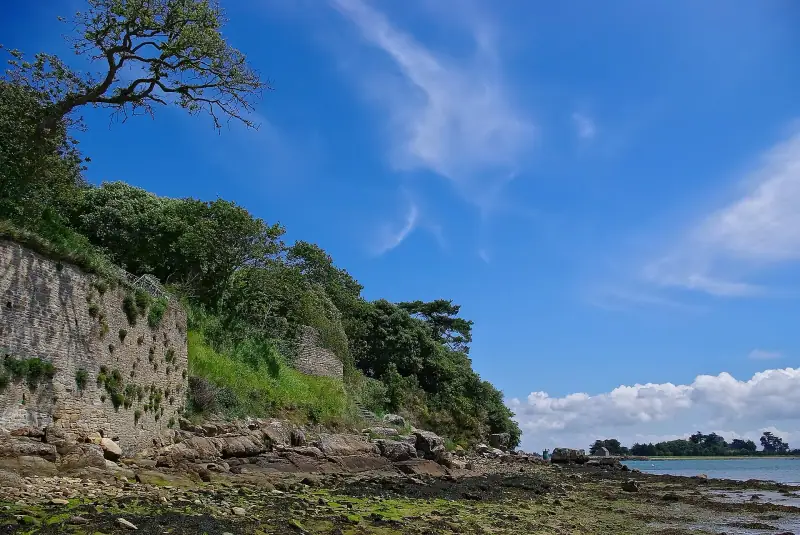
What to see in Morbihan: 12 highlights between gulf, megaliths and islands
What to see in Morbihan? The gulf, Carnac's alignments, Belle-Île, Quiberon, Josselin, Rochefort-en-Terre: the highlights and a plan to link them.
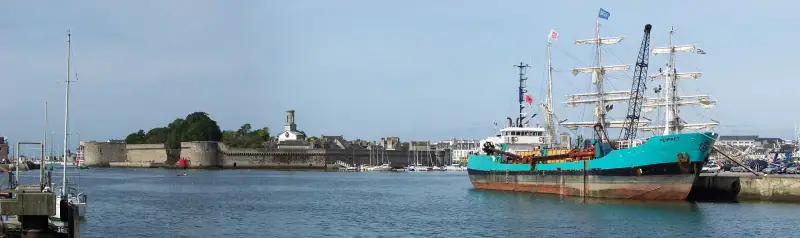
Visiting Concarneau: what to see and do between the walled town and the fishing port
Visiting Concarneau in Finistère: walled town, ramparts, Fishing Museum, Marinarium, beaches, Glénan and Filets bleus. What to see, eat and how to plan.
Visiting Perros-Guirec: what to see and do on the Pink Granite Coast
Visiting Perros-Guirec: customs officers' path, Ploumanac'h's pink granite, the Sept-Îles, beaches and tips to plan your stay on the Pink Granite Coast.
Ready-made
Brittany itineraries
3 days
3 days in Saint-Malo, Cancale and Dinan: an Emerald Coast itinerary
A 3-day itinerary in northern Brittany: Saint-Malo's ramparts, Cancale's oysters, Dinan's medieval lanes. Daily plan, tides, transport and budget.

7 days
One week in Brittany without a car: a day-by-day itinerary by train and bus
RennesSaint-MaloQuimperVannes
7 days
Brittany road trip in 7 days: from Saint-Malo to the Gulf of Morbihan
A 7-day coastal road trip in Brittany: Saint-Malo, Pink Granite Coast, Crozon peninsula, Quimper, Carnac and Vannes. Stops, distances, budget and tips.