What to see
Visiting Espelette: what to see and do in the chili pepper village
We may earn a commission when you book through links on this page, at no extra cost to you. We don't visit or try the places we cover: we summarize published sources. How we work
In short
- The village takes one to two hours; plan half a day for lunch, shopping and a short country walk, or a full day with the neighboring villages.
- Fall is the most photogenic season, when red peppers dry on the facades; the pepper festival is held on the last weekend of October.
- Espelette is about 20 to 25 km (12 to 16 mi) from Biarritz, Bayonne and Saint-Jean-de-Luz; a car is simplest, buses from the coast have limited frequencies.
- Park in the car parks around the center and arrive early in high season.
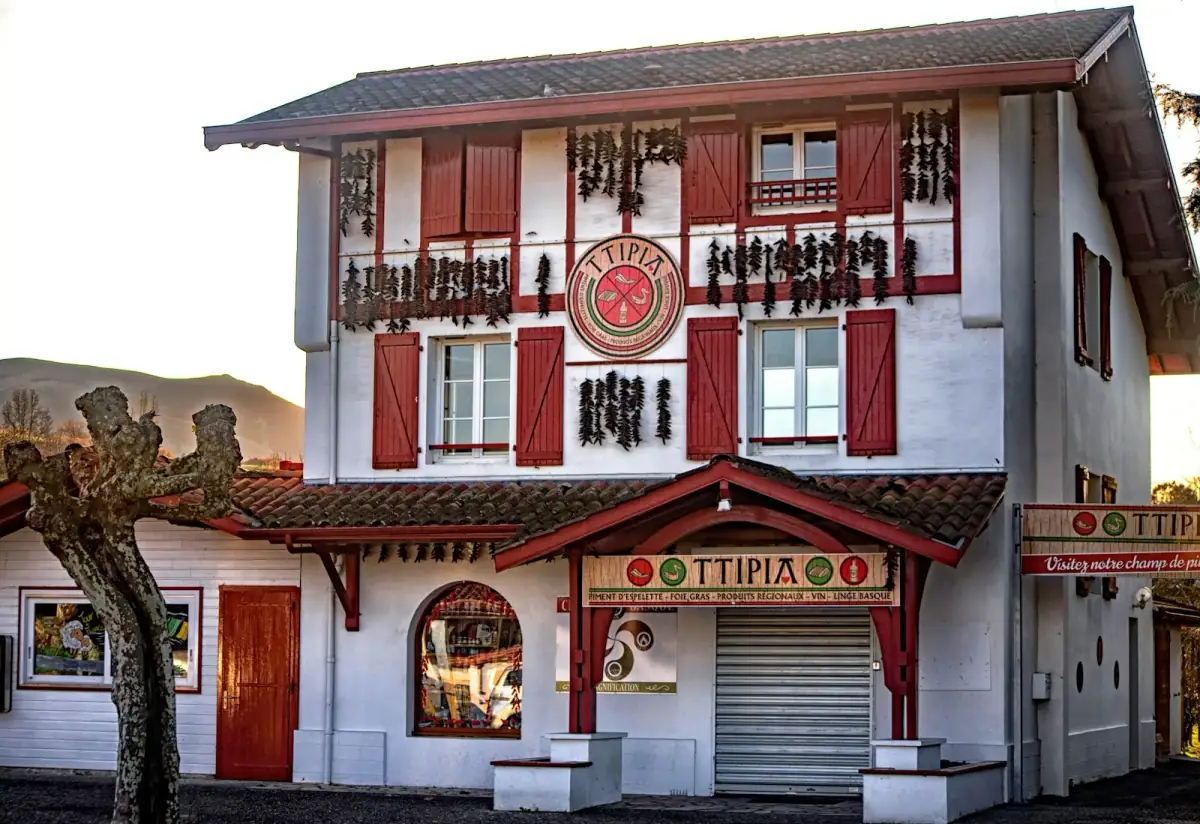
With its white houses with red shutters and garlands of chili peppers drying on the facades, Espelette is one of the best-known images of the Basque Country. This village of Labourd, nestled in rolling countryside a few kilometers from the Spanish border, has only a few thousand inhabitants, but it attracts visitors all year. Rightly so: you find heritage, genuine agricultural life, a recognizable food culture and an ideal starting point for exploring the inland area.
This guide helps you decide what to see in Espelette, how much time to give it, what season to come and how to extend the day in the neighboring villages. To learn everything about the product itself (AOP, shopping, festival), see also our article on Espelette pepper AOP.
Espelette at a glance: one village, one identity
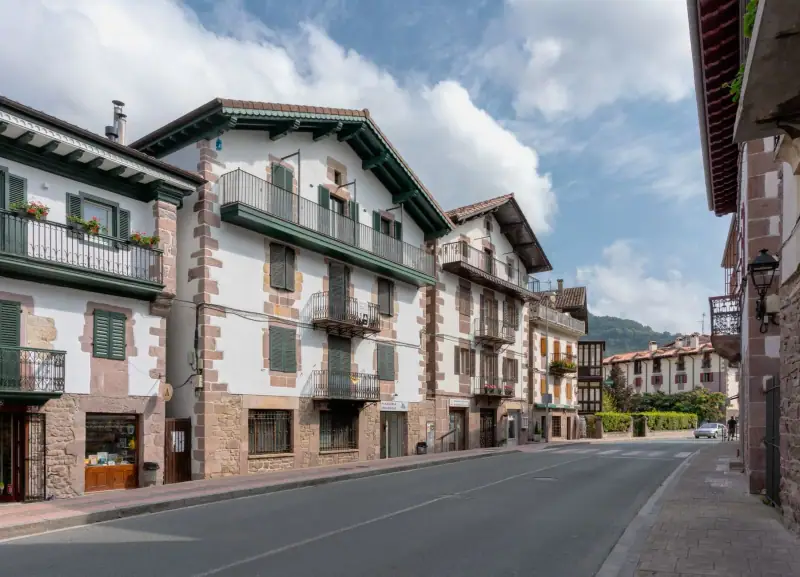
Espelette is in inland Labourd, the part of the French Basque Country that stretches between the Atlantic coast and the first mountain slopes. It is a region of green hills, meadows, isolated farms and scattered hamlets. The village is about 20 to 25 km (12 to 16 mi) from Biarritz, Bayonne and Saint-Jean-de-Luz: close enough for a day trip, far enough to change atmosphere.
What strikes you first is the architectural unity. Traditional Labourd houses have whitewashed facades, painted half-timbering, roofs with broad slopes and wooden balconies. In Espelette, these balconies also serve as drying racks: peppers are hung there in strings after the harvest, which gives the village its red and white silhouette.
The pepper is not just decor. It is grown on the surrounding farms, under strict specifications that earn it the AOP designation, and it structures the local economy: producers, processors, shops, restaurants. Pepper growing and village life are closely linked.
Strolling the center: the main street and its facades
The heart of the village is discovered on foot and in a short time. The main street concentrates most of it: shops selling local products, small stores, terraces and flowered facades. This is where the pepper strings are most numerous, especially in fall, and where photographers stop at every corner.
A few tips to enjoy it:
- Come early in the morning or late in the day. In peak season, the center is quickly crowded. The light is also nicer, and the streets calmer.
- Look up. The details are in the balconies, the painted beams, the door lintels where you sometimes read a date or a family name.
- Step into the shops. Even without buying, you will see the different forms of the product: powder, puree, whole pepper, mustard, jams, chocolates.
- Walk beyond the main street. A few minutes away, lanes and paths offer views of the countryside and quieter houses.
Peppers are harvested ripe at the end of summer and early fall, then strung to dry before being processed. That is why the sight is most impressive at this time. Outside the season, some shops still display decorative strings.
The castle and the village’s old history
Espelette was long the seat of a lordship, and its castle recalls this past. The building stands in the center. Its history is tied to the former lords of the place, and it now houses municipal services. It does not look like a fairy-tale fortress: it is rather a large fortified residence, recognizable by its massive facade and its tower.
The interior is not visited the same way at different times: some rooms host temporary exhibitions, notably around the pepper and local history. Check with the tourist office before you come, as openings vary by season. Even closed, the castle deserves a glance to understand the village’s importance in the era when Labourd was organized around its great families.
Saint-Étienne church and its discoidal tombstones
Saint-Étienne church is one of the highlights of the village. It illustrates Basque religious architecture well: a building that is plain outside and hides a surprising interior. As in many churches of Labourd, you find tiered wooden galleries, formerly reserved for men, that surround the nave and give the place a very particular atmosphere. The altarpiece and decor give an idea of the popular fervor of these villages.
Around the church, the cemetery preserves discoidal tombstones, those round-headed funerary stones decorated with engraved motifs (crosses, solar symbols, geometric patterns), typical of the Basque tradition. They are among the most recognizable signs of local heritage. Walk among them with respect: it is a place of remembrance, not a decor.
Allow 20 to 30 minutes for the whole. The church is generally open during the day, but it is better to avoid services and ceremonies.
Sleep in Espelette and around
Guesthouses, houses with character and inland hotels: compare accommodation for your dates, especially if you visit in October.
What to do in Espelette: shops, tastings and know-how
Visiting Espelette also means tasting and bringing back products. The village lends itself well to a food-focused visit, provided you know what to look for.
Pepper in all its forms
The star product comes as powder, puree, dried string and whole pepper. Powder is the most practical form for cooking: it lifts an omelet, grilled meat, a soup or a sauce. Its flavor is fruity, slightly smoky, with a gentle rather than aggressive heat. To learn how to check the AOP and avoid imitations, read our dedicated guide.
Chocolate, duck, Basque cake
Pepper also finds its way into chocolate, jams, mustards and sauces. Alongside, you find products from local farming: duck preserves, charcuterie, sheep’s cheese. Basque cake, filled with cream or black cherry, is the other essential. Our article on Basque specialties will help you compose your basket.
The markets
A producers’ market is held regularly in the village; days and hours change with the season, so it is better to check them with the tourist office. It is a chance to buy directly from farmers, compare products and talk about how they are grown.
Visits around the pepper
Some producers and organizations offer visits, demonstrations or explanations about pepper growing and processing. Options vary by period: find out before coming, especially for groups.
Tastings and excursions in the Basque Country
Guided tours, discovery of regional products, excursions inland: compare the activities available for your dates.
Where and what to eat in Espelette
Local cooking is that of Labourd: farm products, meats, fish from the coast, sheep’s cheese and, of course, pepper. Among the dishes you often meet: piperade (peppers, tomatoes, onions and eggs), veal axoa (a sort of shredded stew seasoned with pepper), Basque chicken, or garbure and the soup of the season. For dessert, Basque cake, sheep’s cheese with black cherry jam, and chocolate sweets.
A few pointers for eating well:
- Avoid restaurants that offer only generic dishes. A short, seasonal menu is often a good sign.
- Ask about the pepper level. It is rarely hot, but you can ask for less.
- Book in high season. On weekends and in fall, tables fill up quickly.
- Think of alternatives on the road. The neighboring villages also have inns and farm-inns where you eat farm products.
Walks and nature around Espelette
The village is surrounded by hills, farm tracks and easy trails. You do not need hiking gear to enjoy the countryside: a pair of comfortable shoes is enough for a one- or two-hour walk. The landscape alternates pepper fields, meadows, woods and isolated farms, with the first Basque summits in the background.
For more ambitious hikes, the inland area offers La Rhune, the iconic mountain of the Basque Country, reachable from several starting points, as well as other Labourd trails. Our guide to hiking in the Basque Country details the options by level. If the weather is uncertain, postpone the climb: mist can hide the views and make trails slippery.
Another point of interest in the countryside: livestock farms and pepper fields. Always respect the fields, stay on the paths and do not pick anything without permission.
Extending the day: neighboring villages and sights
Espelette is an excellent starting point, as several interesting places are only a few kilometers away.
Ainhoa
This very well-preserved street-village, with stone and half-timbered houses lined up on either side of the road, is one of the most beautiful in Labourd. It can be visited leisurely in an hour or two and complements the visit to Espelette well.
Cambo-les-Bains
This former spa town is home to Villa Arnaga, the former residence of the writer Edmond Rostand, surrounded by gardens. It is a pleasant visit if you like architecture and French-style gardens.
Itxassou
Known for its black cherries and valley landscapes, Itxassou is a quiet village on the banks of the Nive. It also serves as a starting point for walks in the area, including the Pas de Roland site, tied to a local legend.
The villages of the coast
From Espelette, it is easy to reach Saint-Jean-de-Luz, Biarritz or Bayonne for the end of the day. If you are planning a longer stay, our 3-day itinerary between coast and inland shows how to fit Espelette into a coherent route.
When to visit Espelette
- Late summer and fall (September-October): the best time to see the pepper garlands. The village is lively, the light is soft, but visitor numbers rise.
- Pepper festival (last weekend of October): a festive atmosphere with market, entertainment and crowds. Book well in advance and arrive early; if you want tranquility, choose a weekday instead.
- Spring: landscapes are green, days milder, visitor numbers moderate. A good time to combine the village and walks.
- Summer: heat and the vacation season make the village very busy. Visit early in the morning or late in the afternoon.
- Winter: the village is quiet, some shops slow down, but the atmosphere stays authentic.
For a fuller view of the climate, see our guide to when to go to the Basque Country.
How to get there and park
The simplest is to come by car: the village is about 20 to 25 km (12 to 16 mi) from the big coastal towns, by secondary roads that cross the countryside. Car parks surround the center, which you then explore on foot. In high season, arrive early.
If you travel without a car, public transport links exist from the coast, but with restricted timetables. Our article on how to get around the Basque Country details the possibilities. Remember to check the last return before leaving, so you do not get stranded.
Practical tips to prepare your visit
- Plan half a day for the village alone, a day if you add the neighboring villages.
- Wear comfortable shoes: the streets slope gently and walks in the area can be damp.
- Bring a cooler bag if you buy fresh products in summer.
- Check opening hours of shops and visits with the tourist office, especially off season.
- Respect the residents: the village is a place where people live, not a decor. Do not enter private property and ask before photographing people.
- Keep time to wander: Espelette is best seen without hurry.
Should you sleep in Espelette?
Many visitors come for the day from the coast, which is perfectly possible. Sleeping in the village or nearby, however, lets you enjoy the village in the evening and early morning, when the tourists have gone. The inland area mostly offers guesthouses, charming houses and a few hotels, calmer and often cheaper than by the sea. To compare districts and types of accommodation across the region, see our guide to where to stay in the Basque Country.
A weekend inland in the Basque Country
Houses with character, guesthouses and hotels: compare accommodation for a short stay between Espelette, Ainhoa and Cambo.
In summary
Espelette deserves a stop for its architecture, its church, its Basque village atmosphere and its products. It is not a site of big visits, but a place to savor slowly: a street, a shop, a table, a walk. Visit it preferably in fall for the peppers, on a weekday for tranquility, and combine it with Ainhoa, Cambo or the coast for a full day.
Sources
Frequently asked questions
How long do you need to visit Espelette?
The village is covered in one to two hours: main street, church, castle and a few shops. Plan half a day if you want to have lunch there, shop without rushing and add a short walk in the countryside. A full day is useful if you pair Espelette with the neighboring villages.
What is the best time to visit Espelette?
From late summer to fall, when red peppers dry on the facades: it is the most photogenic time. On the last weekend of October, the pepper festival draws many people. Off season, the village is calmer, but there are fewer garlands.
Can you go to Espelette without a car?
It is possible but less flexible. The village is in the inland part of Labourd, about 20 to 25 km (12 to 16 mi) from Biarritz, Bayonne and Saint-Jean-de-Luz. Bus links exist from the coast, with limited frequencies: check timetables before leaving. By car, allow roughly half an hour from the coast, more in summer.
Is Espelette worth the detour outside harvest season?
Yes, if you like authentic Basque villages, regional products and quiet walks. The village stays pleasant all year, with its Labourd houses, church and shops. You will simply see fewer hanging peppers than in fall.
Where do you park in Espelette?
Car parks are laid out around the center, and the village is then visited on foot. In high season and during the pepper festival, arrive early: spaces fill quickly and traffic can be heavy. Follow the instructions posted there.
What should you bring back from Espelette?
Espelette pepper as powder, puree or dried string, but also pepper chocolate, duck products, Basque cakes, Basque linen or local treats. Look for the AOP mention on the pepper: our dedicated guide explains how to spot it.
Do you need to book for lunch in Espelette?
In summer, in fall and on weekends, it is better to book or to arrive before the midday rush. Off season on weekdays, it is generally easier. Restaurants mostly serve seasonal Basque cooking, where pepper lifts dishes without making them burning hot.
More Basque Country guides
Keep reading
The Spanish Basque Country: what to see beyond San Sebastián (Bilbao, Guernica, Vitoria…)
The Spanish Basque Country beyond San Sebastián: Bilbao and the Guggenheim, Guernica, Getaria, Hondarribia, Gaztelugatxe and Vitoria-Gasteiz.
What to see in Soule: Mauléon, Tardets, Larrau and wild gorges
What to see in Soule, the smallest French Basque province: Mauléon-Licharre, Tardets, Larrau, Sainte-Engrâce, Holzarté and pastorales.
Visiting Biarritz: what to see and do (beaches, lighthouse, old port, museums)
What to see and do in Biarritz: Grande Plage, Rocher de la Vierge, lighthouse, fishermen's port, Côte des Basques, museums and food.
Ready-made
Basque Country itineraries
1 day
San Sebastián in 1 day from the Basque coast: itinerary and tips
One day in San Sebastián from Biarritz, Saint-Jean-de-Luz or Hendaye: how to get there, what to see and where to taste pintxos.
5 days
The Basque Country in 5 days with kids: stops and pace
The Basque Country with kids in 5 days: drive times, beaches, La Rhune cog train, Sare caves and a rainy-day plan B, at a child's pace.
3 days
3 days in the Basque Country: coast and inland itinerary
A 3-day Basque Country itinerary: Biarritz, Bayonne, Saint-Jean-de-Luz, Espelette and La Rhune, with distances, tips and good addresses.