What to see
What to see in Soule: Mauléon, Tardets, Larrau and wild gorges
We may earn a commission when you book through links on this page, at no extra cost to you. We don't visit or try the places we cover: we summarize published sources. How we work
In short
- Soule (Zuberoa) is the smallest French Basque province: about 850 km² (328 sq mi) and some 15,000 people, with Mauléon-Licharre as its historic capital.
- Two days cover the essentials: Mauléon and Tardets on day one, the upper valley (Larrau, Sainte-Engrâce, Iraty) on day two.
- The Holzarté footbridge walk takes about two hours round trip; the Kakuetta gorges are closed to visitors and no official reopening was confirmed when this was written.
- A car is very strongly recommended: villages are scattered, mountain roads wind and public transport is rare.
When you plan a trip to the Basque Country, you think first of the coast, then of Espelette or Saint-Jean-Pied-de-Port. Soule often goes under the radar. Yet it is the smallest of the French Basque provinces, and probably the most hidden: deep valleys, gorges, vast beech forests, high pastures and a very lively culture, with its own language, its pastorales and its mascarades. Here, the Basque you hear is Souletin, a dialect of its own.
This guide helps you understand this territory and build a realistic stay. We will pass through Mauléon-Licharre, Tardets-Sorholus, Larrau, Sainte-Engrâce and the Iraty forest. If you arrive from the neighboring province, our article on Lower Navarre is an excellent complement.
Soule at a glance
Soule, or Zuberoa in Basque, covers about 850 km² (328 sq mi) for a population of around 15,000. Density is therefore very low, and that is a good part of its charm. It follows the Saison valley and is divided into three large areas:
- The Arbaille, in the east, a massif of hills and forests away from the main roads.
- Lower Soule (Basse-Soule), in the north, around Mauléon-Licharre, gentler and more populated.
- Upper Soule (Haute-Soule), in the south, around Tardets-Sorholus, where the terrain becomes mountainous: gorges, passes, the Orhy peak.
Its history has long been distinctive: a viscounty in the Middle Ages, Soule passed between English and French influence, and kept local liberties until the Revolution. Today the economy rests on sheep farming and sheep’s cheese, craft activities, a little industry and nature tourism. About half of the inhabitants have Basque as their first language, which makes it one of the territories where it is most alive.
Mauléon-Licharre, the capital
Mauléon-Licharre has a little under 3,000 inhabitants, but it plays the role of a small capital. It is made up of two parts: the Upper Town (Haute-Ville), around the old castle, and Licharre, on the other side of the Saison, more commercial.
Top sights:
- The old castle, a fortress dating back to the 11th century, listed as a historic monument in 1925. It overlooks the town and offers a nice viewpoint over the valley and hills.
- Andurain Castle, also called Maÿtie, Renaissance in style, dated to the 16th century. It is also protected as a historic monument; check visiting conditions before you come, as they vary with the seasons.
- The covered market hall, dated 1765, rebuilt after the great fire of 1641.
- The churches of Saint-Jean-Baptiste and Notre-Dame de la Haute-Ville, simple but representative of local religious art.
Mauléon is above all known as the capital of the espadrille. In the 20th century, the industry employed several thousand workers, before declining sharply. Some of that know-how remains visible, and the tradition is celebrated at the espadrille festival, around August 15. Buying a pair of espadrilles there makes a fitting souvenir.
The Mauléon festivals are held around July 14, with concerts, dances and pelota. Allow half a day for the town, more if you take a break in a café on the square or wander between the Upper Town and Licharre.
Where to stay in Soule
Guesthouses, gîtes and small hotels in Mauléon, Tardets or the mountain villages: compare accommodation for your dates.
Tardets-Sorholus, gateway to Upper Soule
About 16 km (10 mi) from Mauléon, Tardets-Sorholus is the town that opens Upper Soule. It is a small village of about 600 inhabitants, but it serves as a base for the whole upper Saison valley: shops, restaurants, accommodation, tourist information.
You find Saint-Pierre church and, on the Madeleine hill, a chapel that is a local pilgrimage destination. A stele also commemorates the passage of those fleeing France who reached Spain through the mountains during the Second World War. The interest of Tardets lies less in its monuments than in its atmosphere: quiet streets, white facades with colored shutters, village life turned toward the mountains.
It is the best place to stop if you want to fan out toward Larrau, Sainte-Engrâce and Iraty without driving too long each day. The gorges and passes then follow one another as you go up the Saison.
Larrau, Holzarté and the upper valley
Larrau is a mountain village of about 180 inhabitants, but its territory is immense and rises to more than 2,000 m (6,560 ft). It is the starting point of great walks, and the gateway to the Iraty forest on the Soule side. On the road, the Larrau pass links Soule to Spanish Navarre.
The Holzarté footbridge trail is one of the most famous hikes in the Basque Country. The footbridge, built in 1920 over the Olhadubi canyon, first served forestry work before becoming a walking destination. The trail generally starts from the Logibar inn, about 2 km (1.2 mi) before the village. For a round trip to the footbridge, allow about two hours of walking, with elevation gain. A longer loop in the Olhadubi gorges takes several more hours.
A few precautions:
- Check with the town hall or the tourist office that the trail is open, as closures for safety work have occurred in the past.
- Avoid days of rain or fog: exposed sections are slippery.
- Bring good shoes, water and a warm layer, even in summer.
- Visitor numbers are high in July and August: start early.
For other ideas of high-altitude walks, see our guide to hiking in the Basque Country. Larrau is also a recognized observation site for migrating birds: the Organbidexka pass, near the Iraty chalets, has been monitored since 1979 in cooperation with the LPO (the French bird protection league), and fall draws many enthusiasts there.
The Iraty forest on the Soule side
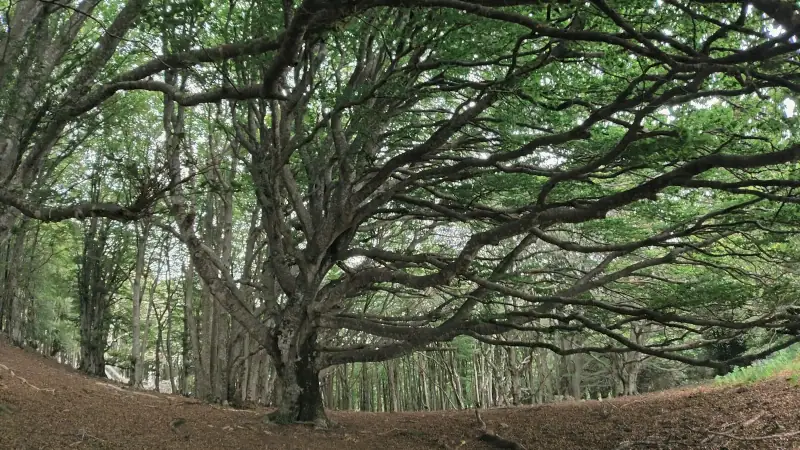
Iraty is one of the largest beech forests in Europe, straddling Soule and Lower Navarre. About 2,500 hectares (6,200 acres) are classified Natura 2000. You meet cows, sheep and pottoks roaming free on the pastures, and very pleasant undergrowth in summer and fall.
The site lends itself equally to a family walk and to a long ridge hike. Fall, when the beeches turn orange, is particularly spectacular. In winter, snow can complicate access and some roads are closed: check before leaving.
The Orhy peak, which peaks at about 2,000 m (6,560 ft), is one of the big summits of the area. It is reachable on foot from Larrau by mountain routes that require strong legs, clear weather and careful map reading.
Activities in the Basque Country
Guided hikes, guided tours and tastings in the inland Basque Country: compare the outings offered for your dates.
Sainte-Engrâce and the Kakuetta gorges
Sainte-Engrâce (Santa Grazi) is the most remote municipality of the French Basque Country: about a hundred inhabitants, over an area of more than 70 km² (27 sq mi), and altitudes ranging from about 300 m (985 ft) to nearly 1,900 m (6,235 ft). You get there by a long valley road that climbs to the final cirque.
The village’s great interest is its Romanesque church, built in the 11th century, imposing with its stocky silhouette and square bell tower. Inside, three naves and remarkable carved capitals. In the cemetery, discoidal steles recall Basque funerary traditions. The church lies on one of the Camino de Santiago routes and will delight Romanesque art lovers.
The Kakuetta gorges are the area’s most famous attraction: a narrow, lush canyon, with a waterfall of about 20 m (65 ft) at the end of the route. But the site has been closed to visitors since a fatal accident caused by falling rocks, and no official reopening announcement is known. A later reopening with a new route has been mentioned, with no confirmed date. So do not build your stay around this site, and check the situation before you come.
Other curiosities are worth the detour in the same area: the Ehujarre gorges, which can be approached by marked trails, and the La Verna chamber, an immense cavity of the Pierre-Saint-Martin network, open to the public since 2010. For the latter, check access conditions and reservations before traveling.
Pastorales, mascarades and Souletin culture
What truly sets Soule apart is the vitality of its traditions. Two events are worth knowing.
The pastorale is a large open-air play performed by the inhabitants of a single village, entirely in Basque. It pits good (Christians, angels) against evil (Turks, Satan and other enemies), in a show mixing text, songs and dances. Preparation takes six months to a year. A different village stages it each year, and performances are generally held in late July and early August. It lasts several hours, often about three: bring water, a hat and a cushion. Understanding Basque is not essential to enjoy the staging, the blue and red costumes and the music.
The mascarade is the Souletin carnival. During the winter period, costumed troupes travel through the villages, with codified characters and dances. It is a local event more discreet than the pastorale, but very authentic.
These traditions are listed in France’s inventory of intangible cultural heritage. To find out the village and the dates for the year, check with the local tourist office: the program changes every season.
What to taste in Soule
Souletin cooking is mountain cooking, simple and generous. Here is what to look for:
- Sheep’s cheese, made on summer-pasture farms. Buying directly from producers is the best way to taste it.
- Charcuterie and farm products, sold at markets and in small shops.
- Espadrilles, not edible but inseparable from Mauléon.
- Stewed dishes, such as chicken basquaise or axoa, often served in village inns.
For a full overview of products and dishes to try elsewhere in the region, read our guide to Basque specialties. Prefer simple tables, and check opening days in low season: many small establishments close one or two days a week.
A two-day itinerary in Soule
Here is a realistic route by car, to adapt to your starting point.
Day 1: Lower Soule and Tardets
- Morning: visit Mauléon-Licharre, the Upper Town and the old castle, then wander in Licharre.
- Midday: lunch in Mauléon or Tardets.
- Afternoon: drive to Tardets-Sorholus, walk through the village and, weather permitting, climb to a viewpoint over the valley.
Day 2: upper valley
- Morning: head to Larrau, hike to the Holzarté footbridge (start early, about two hours round trip).
- Afternoon: Iraty forest for an easy walk, or the Romanesque church of Sainte-Engrâce.
- Evening: back to Tardets or Mauléon for dinner.
Drives look short on the map but are slow: narrow roads, bends, animals on the road. Keep a margin. If you have only one day, favor Larrau and Iraty for nature, or Mauléon and Tardets for culture.
Rent a car for the Basque mountains
Soule is poorly served by public transport: a car gives access to trailheads and isolated villages. Compare rental companies.
Getting there and getting around
Mauléon-Licharre is about 59 km (37 mi) from Pau by road and 32 km (20 mi) from Oloron-Sainte-Marie; Tardets is about sixty kilometers (37 mi) from Pau. From the Basque coast, plan a good hour of driving for Lower Soule, markedly more to reach Larrau or Sainte-Engrâce, as the last sections wind.
Regional buses serve some towns, but frequencies are low, especially on weekends and off season. To compare the options, see our article on how to get around the Basque Country. Once there, fill up the tank before climbing to altitude and remember that there is little mobile coverage in some valleys.
When to come to Soule
- Spring: very green meadows and powerful waterfalls, but still snow at altitude. High trails can be impassable until June.
- Summer: the season of the pastorales and long hikes, with heavier crowds at Holzarté and Iraty in July-August.
- Fall: ideal for colorful beech forests and bird migration. Days get shorter and some accommodation closes.
- Winter: quiet, sometimes snowy. For the mascarade it is the right season, but take care on mountain roads.
To compare months, our guide when to go to the Basque Country details the weather by season. If you stay east of Lower Navarre, our article on Saint-Jean-Pied-de-Port will help you link the two provinces.
Tips for a successful stay
- Check openings: trails, gorges, caves and heritage sites change status with the seasons and works.
- Equip yourself for the mountains: even in summer, the weather can turn within hours.
- Book in summer: accommodation in the upper valley is limited and goes fast in July-August.
- Start early: it is the best way to avoid the crowd and enjoy the light.
- Respect the herds: close gates behind you, keep dogs on a leash and do not feed the animals.
Soule is not visited by ticking off monuments. It is discovered at the pace of the valleys, villages and encounters. Take your time, and you will understand why it remains, for many, the most authentic heart of the Basque Country.
Frequently asked questions
Where is Soule?
Soule (Zuberoa in Basque) is the smallest of the three provinces of the French Basque Country. It occupies the east of the territory, between Lower Navarre to the west and Béarn to the east, and extends to the Spanish border in the south. Its historic capital is Mauléon-Licharre.
How long do you need to visit Soule?
Two days let you see the essentials: Mauléon and Tardets on the first day, the upper valley (Larrau, Sainte-Engrâce, Iraty) on the second. If you like hiking, allow three or four days to enjoy the trails without rushing.
Can you still visit the Kakuetta gorges?
The site has been closed to visitors since a fatal accident caused by falling rocks, and no official reopening was confirmed when this article was written. Check with the Sainte-Engrâce town hall or the tourist office before planning the detour.
Do you need a car to visit Soule?
Yes, it is very strongly recommended. Villages are scattered, mountain roads are winding and public transport is rare, especially off season. A car also lets you stop at viewpoints and trailheads.
What is the best time to come to Soule?
From May to October for hiking, with more stable weather from June to September. Summer also brings the pastorales, which are generally performed in late July and early August. Fall is superb in the beech forests, but days get shorter and mountain weather can change quickly.
What is a Souletin pastorale?
It is a large open-air play, performed entirely in Basque by the inhabitants of a single village, with songs and dances. It stages the struggle between good and evil. Each year a different village puts on its pastorale, often for two performances in summer.
Can you visit Soule with children?
Yes, provided you choose suitable activities: easy walks in the Iraty forest, a visit to Mauléon, markets and farms. Vertiginous trails, such as the one to the Holzarté footbridge, require a child comfortable in the mountains and good weather.
More Basque Country guides
Keep reading
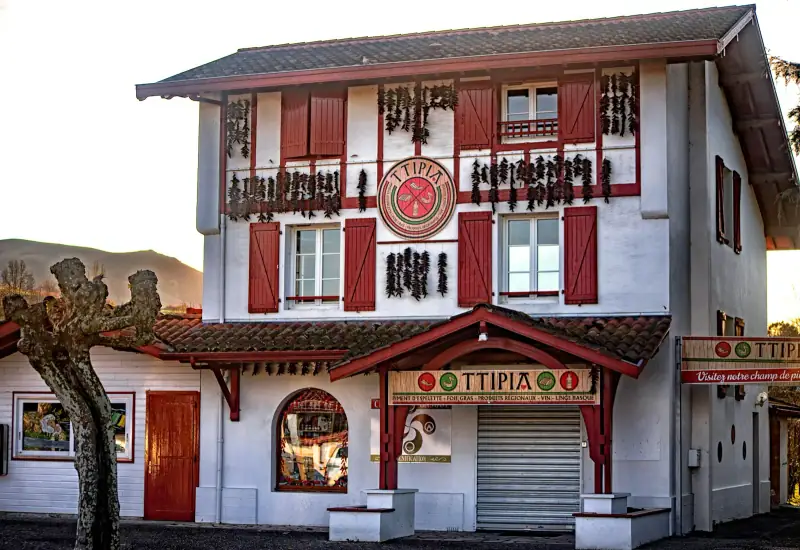
Visiting Espelette: what to see and do in the chili pepper village
What to see in Espelette: pepper-decked facades, castle, church and tombstones, shops, walks in Labourd and when to go.
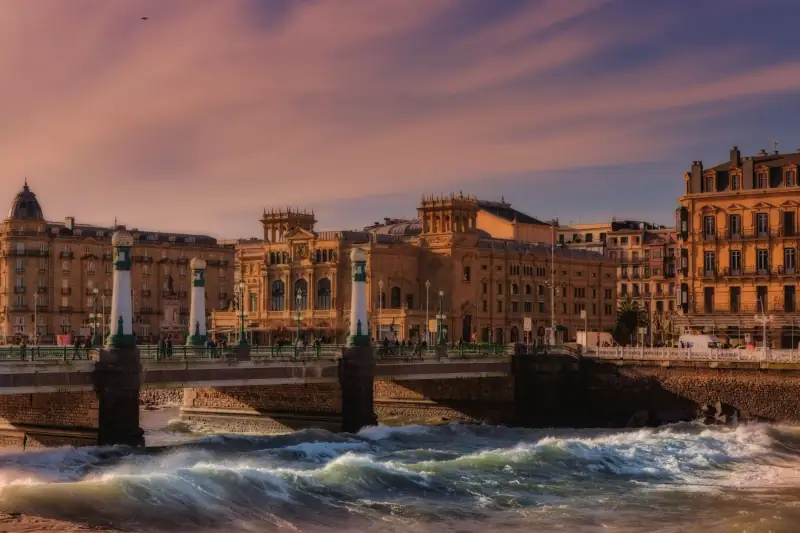
The Spanish Basque Country: what to see beyond San Sebastián (Bilbao, Guernica, Vitoria…)
The Spanish Basque Country beyond San Sebastián: Bilbao and the Guggenheim, Guernica, Getaria, Hondarribia, Gaztelugatxe and Vitoria-Gasteiz.
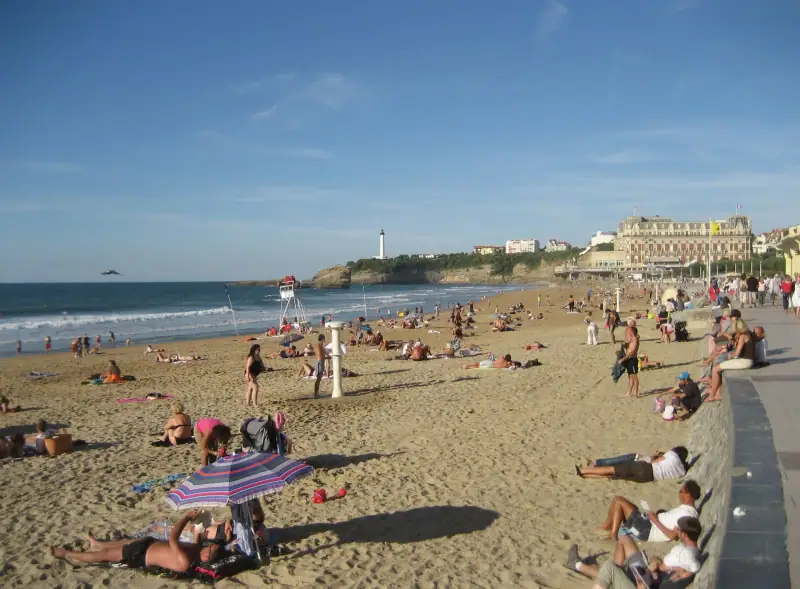
Visiting Biarritz: what to see and do (beaches, lighthouse, old port, museums)
What to see and do in Biarritz: Grande Plage, Rocher de la Vierge, lighthouse, fishermen's port, Côte des Basques, museums and food.
Ready-made
Basque Country itineraries
1 day
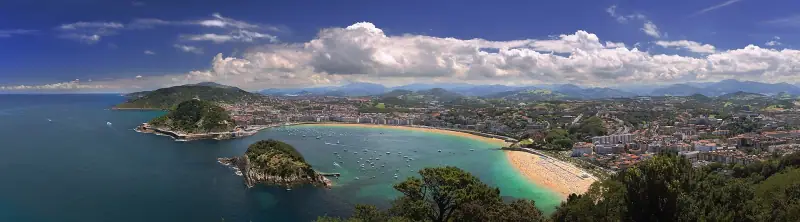
San Sebastián in 1 day from the Basque coast: itinerary and tips
One day in San Sebastián from Biarritz, Saint-Jean-de-Luz or Hendaye: how to get there, what to see and where to taste pintxos.
5 days
The Basque Country in 5 days with kids: stops and pace
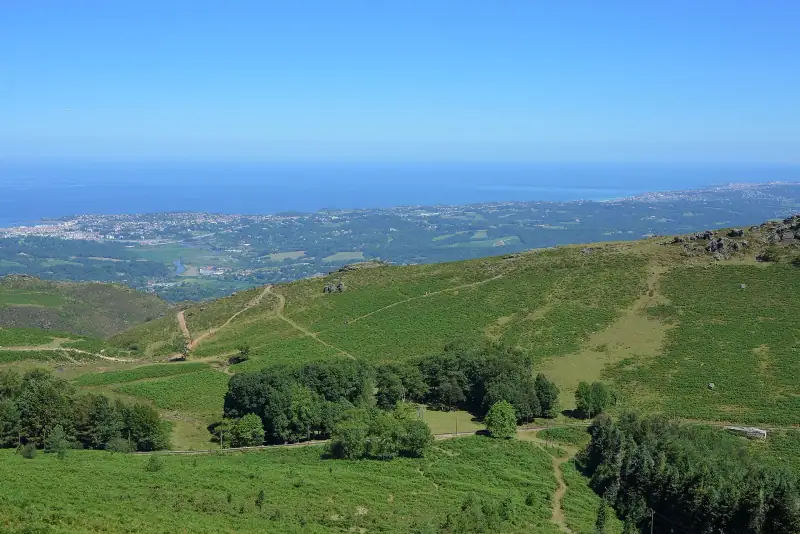
The Basque Country with kids in 5 days: drive times, beaches, La Rhune cog train, Sare caves and a rainy-day plan B, at a child's pace.
3 days
3 days in the Basque Country: coast and inland itinerary
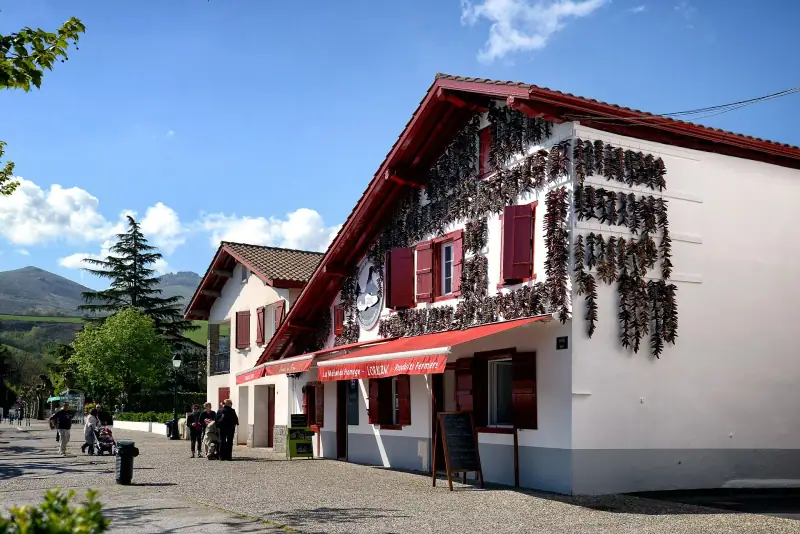
A 3-day Basque Country itinerary: Biarritz, Bayonne, Saint-Jean-de-Luz, Espelette and La Rhune, with distances, tips and good addresses.