What to see
What to see in the Monts du Cantal: Puy Mary, Salers, Le Lioran and the valleys
We may earn a commission when you book through links on this page, at no extra cost to you. We don't visit or try the places we cover: we summarize published sources. How we work
In short
- The Puy Mary (1,783 m / 5,850 ft) is the top objective: from the Pas de Peyrol pass, a short, steep stepped path takes about half an hour.
- Two days cover the classics (Puy Mary, Salers, a valley); three or four days add a real hike, Le Lioran, Murat and Tournemire.
- A car is almost essential: sights are scattered between valleys, passes and hamlets, and public transport is limited.
- Best period is June to September; high-altitude roads can be closed by snow in winter.
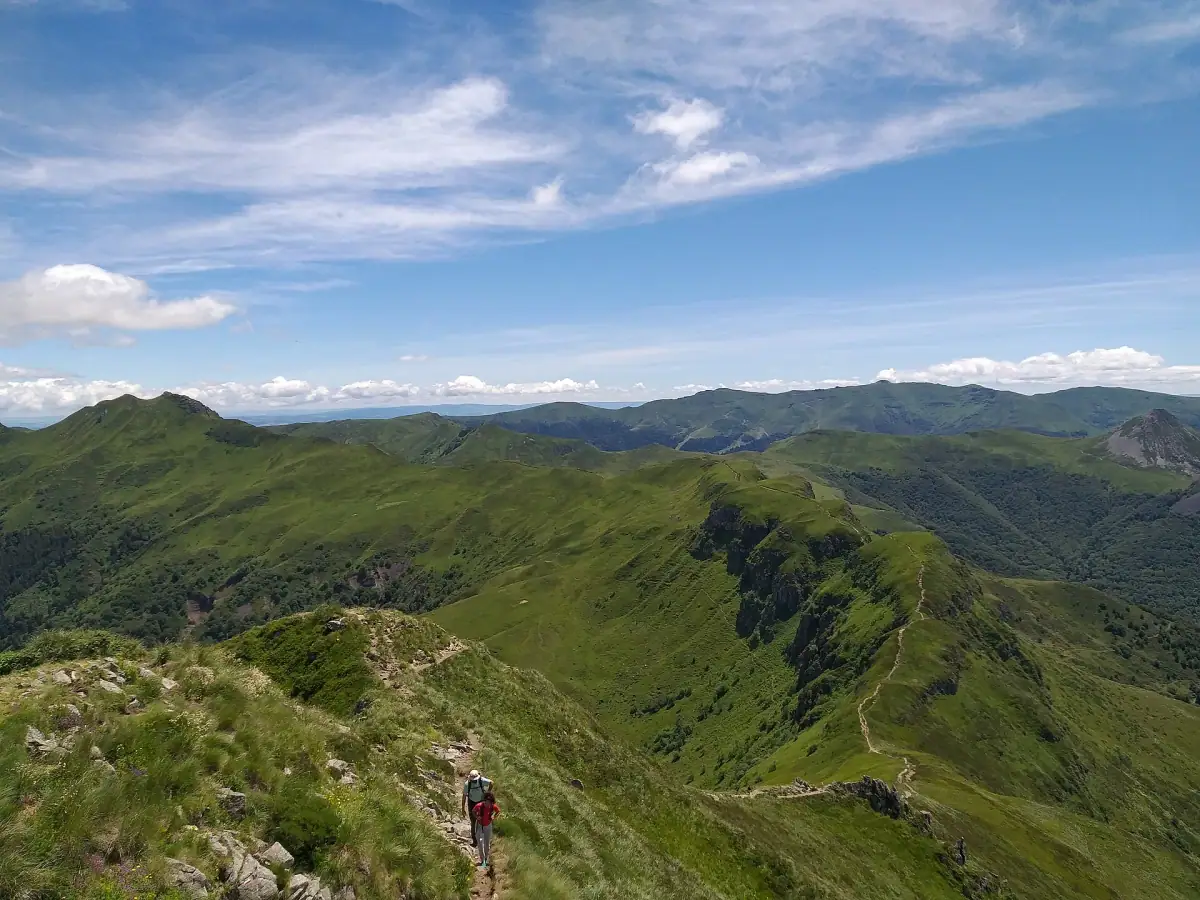
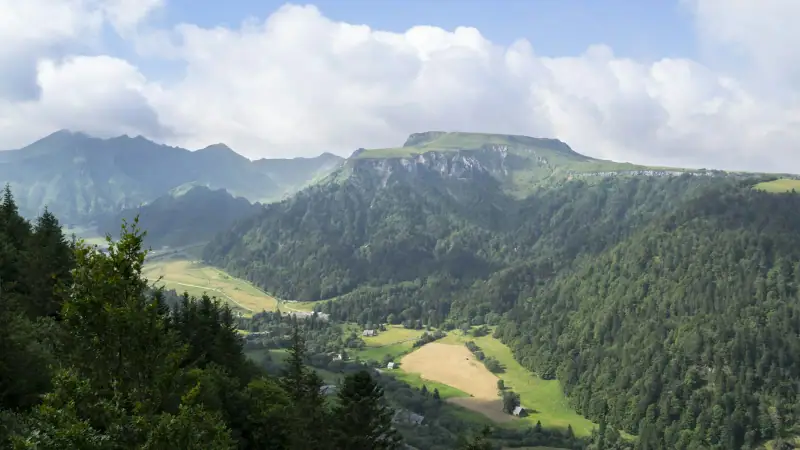
The Monts du Cantal form one of the largest volcanic massifs in Europe. Millions of years ago, an immense volcano rose here; erosion and glaciers then cut it into deep valleys that radiate like the branches of a star around a vanished center. What remains are ridges, pyramid-shaped summits, vast high pastures called estives and dark-stone villages set at the bottom of the valleys.
This guide answers a simple question: what to see in the Monts du Cantal, and in what order? Rather than describe a single town, we go through the massif by area: the Puy Mary and its valleys, the Salers region, Le Lioran and the Plomb du Cantal, then the upper Cère valley and the neighboring villages. This guide does not name specific restaurants or hotels: hours, rates and addresses change, and it is better to check them with the tourist offices at the time of your trip.
The Monts du Cantal at a glance
The massif is in the Cantal department, in the southwest of Auvergne, in the Volcans d’Auvergne Regional Nature Park. Aurillac, the capital of the department, borders the massif to the southwest; Murat and Le Lioran occupy its east side. From Clermont-Ferrand, allow about 1.5 to 2 hours by road to reach Le Lioran, depending on route and traffic.
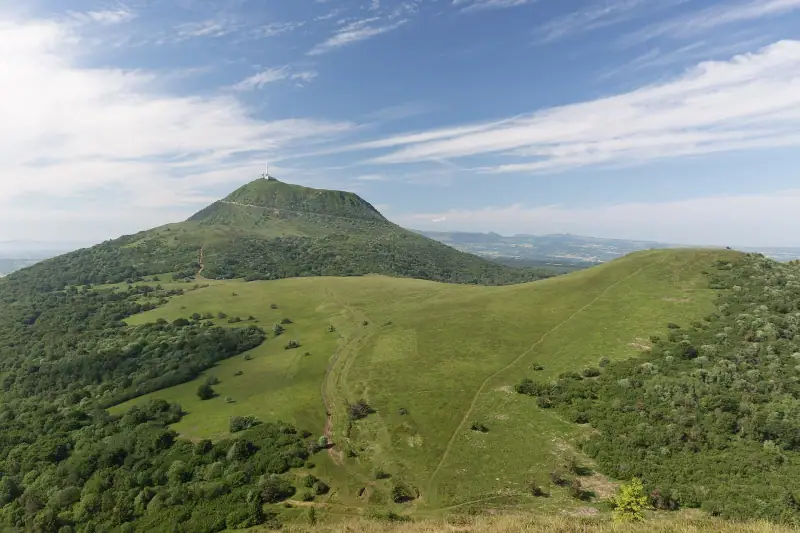
The relief is explained by the history of the volcano: after its activity, which ended several million years ago, Quaternary glaciers carved U-shaped valleys, left cirques and sculpted summits. The result is a massif of rounded forms, very green, which contrasts with the younger cones of the Chaîne des Puys.
| Need | Short answer |
|---|---|
| Ideal length | 2 to 4 days |
| Bases | Salers, Aurillac, Le Lioran, Murat |
| Getting around | Car strongly recommended |
| Highlights | Puy Mary, Plomb du Cantal, Salers, Jordanne and Cère valleys |
| Specialties | Cantal, Salers, truffade, aligot |
| Watch out for | Changeable weather, wind and cool air at altitude |
To place the massif among the region’s main stops, see our complete guide to Auvergne.
The Puy Mary, emblematic summit of the Cantal
At about 1,783 m (5,850 ft), the Puy Mary is the summit you immediately associate with the Monts du Cantal. Its almost perfect pyramid shape overlooks a crossroads of valleys. The site has the Grand Site de France label, which rewards the quality of its protection and its welcome of the public.
The busiest climb starts from the pass called Pas de Peyrol, reachable by car. From there, a developed path with steps climbs to the summit in a little under half an hour. It is short but steep: you feel the effort and the wind. From the top, the view takes in the valleys that leave in every direction, the neighboring ridges and, on a clear day, a large part of the Massif Central.
A few tips for a successful climb:
- Start early: the pass car park fills quickly in summer and clouds often rise in the afternoon.
- Check the weather the same morning: fog can hide the view within minutes.
- Stay on the marked path: erosion is a real problem at this very busy site.
- Bring a windbreaker: even in midsummer, the summit is exposed.
To compare this outing with other hikes in the region, our article on hiking in Auvergne gives benchmarks of duration and difficulty.
Salers, the dark-stone village
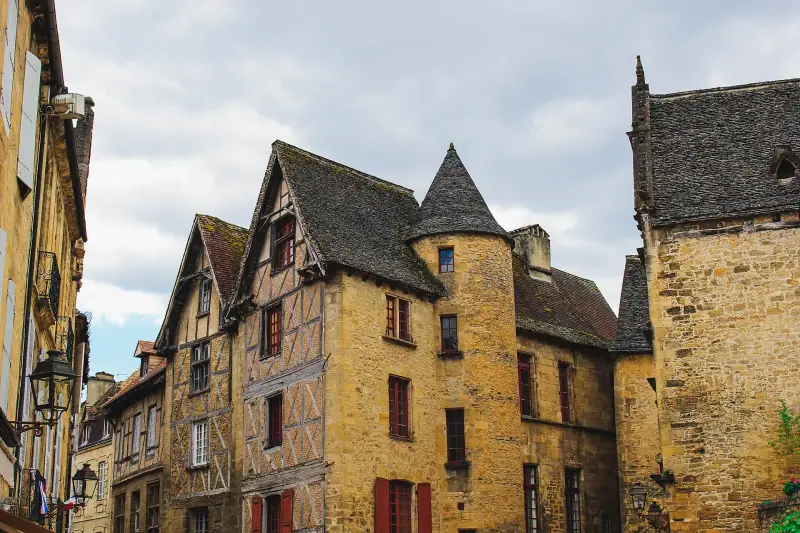
Salers is the essential stop of the massif. This fortified village, perched on a promontory, gathers houses of dark volcanic stone topped with stone-slab (lauze) or slate roofs around an elegant central square. The lanes can be walked in an hour or two, with turrets, old doors and regional food shops.
The village gave its name to the breed of hardy mahogany-coated cows, and to the AOP cheese made from their milk. In season, you meet these cows on the surrounding summer pastures. To learn everything about the visit, read our guide to visiting Salers, and if you are looking for lodging, our article on where to stay in Salers compares the areas.
Salers is also an excellent base for exploring the area: the Maronne and Jordanne valleys, as well as the roads that climb to the Puy Mary, come together within a short drive.
Stay in the Cantal
Compare hotels, bed and breakfasts and gîtes in Salers and the surroundings.
The glacial valleys: Jordanne, Cère and Brezons
The defining feature of the massif is its radiating valleys. Each has its own character. The Jordanne valley, which descends toward Aurillac, is one of the most beautiful: green valley floor, quiet villages and steep slopes that you discover as you go up toward the Puy Mary. The Cère valley, to the east, leads to Le Lioran and its fir and beech forests.
The Brezons valley, farther east, is known for its landscape of meadows, basalt cliffs and old burons, the small stone buildings where cheese was once made on the summer pastures. Many are abandoned today or turned into shelters; some are still used in summer.
These valleys can be visited on foot or by car, stopping at the signposted viewpoints. It is the best way to understand how the massif is organized. If you want to read everything about the volcanic logic of the region, our guide to what to see in the Chaîne des Puys offers an interesting contrast with these much younger volcanoes.
To walk without difficulty, stick to valley-floor trails: they follow streams, cross meadows and do not require big elevation gains. Ridges are more exposed and reserved for trained walkers in fine weather.
Le Lioran and the Plomb du Cantal
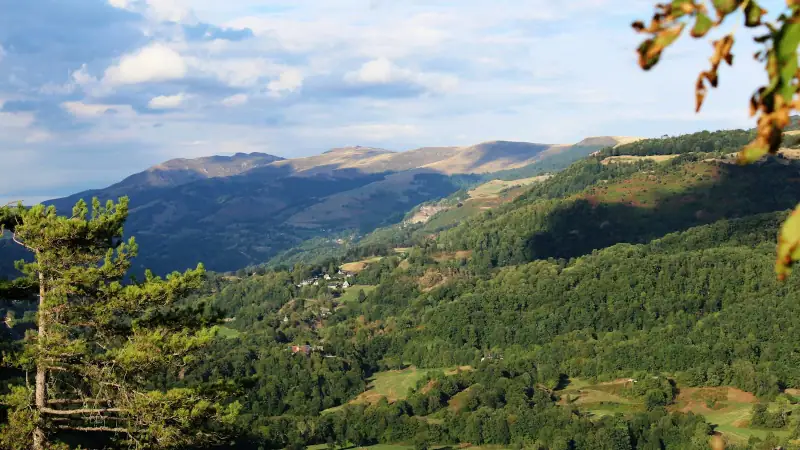
Le Lioran is the massif’s main resort, both a ski center in winter and a hiking base in summer. The Plomb du Cantal, which peaks at about 1,855 m (6,086 ft), is the highest point of the Monts du Cantal. A cable car, running according to the season, rises close to the summit from the resort; it was put into service in the 1960s and is one of the landmarks of Le Lioran.
From the top, the view extends over the surrounding ridges and valleys. You can go up or come down on foot, by marked trails of varying difficulty. Check operating periods and hours before going: they depend on the season and the weather.
In winter, Le Lioran offers downhill skiing, cross-country skiing and snowshoe routes. The ski area remains more modest than those of the Alps, with a family atmosphere and often gentler rates. Snow conditions vary from year to year: check the bulletins before booking. To compare Le Lioran with the Sancy resorts and their passes, read our comparison of Auvergne ski resorts.
Excursions in the Cantal
Guided hikes, nature walks and outdoor activities in the Monts du Cantal.
Murat, the basalt town
On the east side of the massif, Murat stretches at the foot of a spectacular basalt rock, the Bonnevie rock, which overlooks the town. The streets of the center, with their old houses of dark stone walls, can be walked at an easy pace. The town is a good starting point for Le Lioran, a short drive away.
Murat is also a practical stop for those arriving by motorway from Clermont-Ferrand or from the south: it offers shops, varied lodging and the atmosphere of a small mountain town. Plan half a day for strolling and climbing to the rock, depending on trail conditions.
In the surroundings, several scenic roads let you discover high-altitude plateaus where herds graze. They are ideal by car, with many stopping points for photos.
Tournemire, Anjony and the neighboring villages
At the foot of the massif, on the Aurillac side, the village of Tournemire is among the most beautiful villages of France. It is overlooked by the Château d’Anjony, a fortified 15th-century residence that can be visited in season. Even from the outside, the castle’s silhouette, with its towers, makes it a remarkable photo stop.
Check hours and rates before coming, as they vary by period. The neighboring village offers an interesting contrast with Salers: calmer and more discreet, it is visited quickly and combines easily with a day in the Jordanne valley.
To fit these stops into a wider trip, see our 7-day road trip in Auvergne, which passes through the Cantal.
Cantal and Salers: the cheeses of the massif
These mountains are the cradle of two major AOP cheeses. Cantal, an uncooked pressed-curd cheese, comes in several agings, from the youngest, mild and milky, to the oldest, sharper and stronger. Salers, rarer, is made only with the milk of Salers cattle during the summer pasture period, which gives it a pronounced character.
Several farms in the region offer visits or direct sales: ask the tourist office which ones welcome the public. To understand the differences between Cantal, Salers, Saint-Nectaire, Bleu d’Auvergne and Fourme d’Ambert, read our guide to the AOP cheeses of Auvergne.
On the plate, the massif highlights truffade, aligot, potée and charcuterie. Our article on typical dishes of Auvergne helps you choose. Prefer a more structured approach to food? A guided excursion with tasting can be a good way to discover local products.
Aurillac, the gateway to the massif
Aurillac is the largest town in the Cantal and the southwest gateway to the massif. Its historic center, lanes and shops make it a pleasant stop before or after the mountains. The town also hosts a well-known street theater festival, held in summer.
It is practical as a base if you want varied lodging and full services, with quick access to the Jordanne and Cère valleys. Our guide to visiting Aurillac details the town’s highlights.
Rent a car for the Cantal
Compare car rental companies to roam freely between valleys, passes and villages.
A 3-day plan for the Monts du Cantal
Here is a suggestion to adapt to the weather and your pace. Distances between stops remain short, generally thirty minutes to an hour by road depending on the route.
Day 1: Salers and the Jordanne valley
- Morning: visit Salers, its square and its lanes.
- Midday: lunch there, with a regional specialty.
- Afternoon: go up the Jordanne valley, with stops at viewpoints.
Day 2: the Puy Mary
- Morning: climb the Puy Mary from the pass, early to avoid the crowd.
- Midday: picnic or lunch in a valley village.
- Afternoon: walk in the Brezons valley or on a summer-pasture trail.
Day 3: Le Lioran, Plomb du Cantal and Murat
- Morning: Plomb du Cantal cable car (depending on the season) and a hike.
- Midday: lunch in Le Lioran or Murat.
- Afternoon: visit Murat and the Bonnevie rock.
With one more day, add Tournemire and the Château d’Anjony, or a long hike on the ridges. For a wider route, see our 3-day itinerary in Auvergne.
How to get there and get around
From Clermont-Ferrand, the road to Murat and Le Lioran follows a mostly fast route. From Aurillac, the Jordanne and Cère valleys give access to the heights in about three quarters of an hour to an hour depending on the destination. A car remains the simplest way to link the sights: public transport exists, but it is infrequent. Our guide to getting around Auvergne compares car, train, bus and bike.
Pass roads are narrow and winding. Drive carefully, give yourself time and fill up on fuel before going up. In winter, some roads are closed or require equipment: find out before you leave.
When to go
The warm season, from June to September, is ideal for summer pastures, hikes and pass roads. September and early October offer fall colors and fewer people. Winter suits skiing and snowshoeing around Le Lioran. To compare seasons, see our guide to choosing when to go to Auvergne. If you hesitate between the Cantal and the Sancy, our article on the Sancy Massif will help you compare.
Tips for a successful stay
- Check the weather every morning: it changes quickly at altitude.
- Bring a warm layer and a windbreaker, even in July.
- Check the hours of the cable car, castles and sights before going.
- Stay on marked trails and close pasture gates behind you.
- Do not disturb the herds and keep dogs on a leash.
- Book your lodging early for summer and school holidays.
- Have a rainy-day plan B: the village of Salers, a farm visit or a cheese tasting.
- To prepare the overall budget for your stay, see our article on the budget for Auvergne.
Frequently asked questions
What should you see first in the Monts du Cantal?
The Puy Mary is objective number one: its pyramid-shaped summit offers a panorama over the radiating valleys of the massif. Add Salers, a dark-stone village, the Le Lioran and Plomb du Cantal area, and a glacial valley like the Jordanne or the Cère. With two days, these stops give a very good picture of the massif.
How long does it take to visit the Monts du Cantal?
Two days are enough for the big classics: Puy Mary, Salers and a valley. Three or four days leave time to add a real hike, Le Lioran, Murat and a village like Tournemire. Distances are modest but mountain roads are winding: allow plenty of time.
How do you climb the Puy Mary?
The most common access is by car to the pass called Pas de Peyrol, from which a developed path with steps leads to the summit in a little under half an hour. It is a short but steep climb: bring good shoes and a warm layer, as wind is frequent. Longer routes start from the valleys.
Do you need a car to visit the Monts du Cantal?
It is almost essential. Sights are scattered between valleys, passes and hamlets, and public transport is limited. A base like Salers, Aurillac or Le Lioran with a vehicle gives you all the freedom you need. Our guide to getting around Auvergne details the options.
What is the best time to visit the Monts du Cantal?
June to September for the summer pastures, hikes and generally open pass roads. September and early October offer fall colors and fewer people. Winter suits skiing and snowshoeing around Le Lioran, depending on snow. High-altitude roads can be closed by snow.
Are the Monts du Cantal suitable for children?
Yes, provided you choose short outings: walks in the valleys, a visit to a village like Salers, discovering a farm or a castle. Save ridges and the Puy Mary climb for children used to walking, and always bring warm clothing.
Which cheese should you try in the Monts du Cantal?
Cantal and Salers are two AOP uncooked pressed-curd cheeses born in these mountains. Salers is made only with the milk of Salers cattle, on summer pastures, during the warm season. Our guide to the AOP cheeses of Auvergne explains the differences and the aging times.
More Auvergne guides
Keep reading
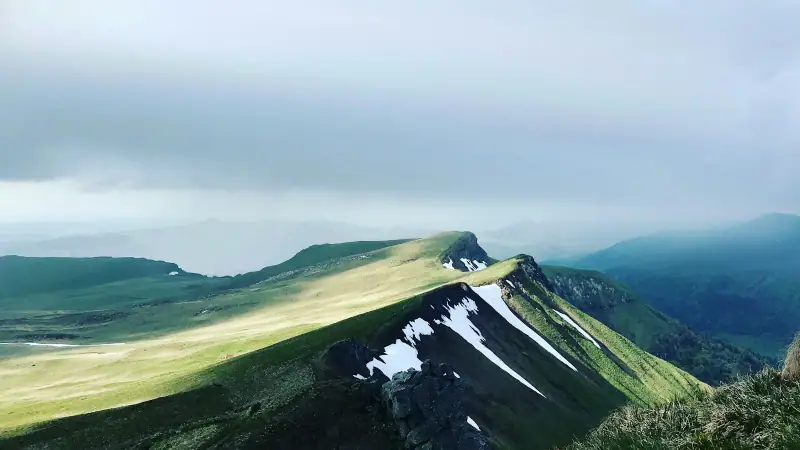
What to see in the Sancy Massif: summits, lakes and villages not to miss
What to see in the Sancy Massif: Puy de Sancy, Le Mont-Dore, Lake Pavin, Chambon, Murol, Saint-Nectaire, Besse and Orcival. Plan 2 to 4 days.
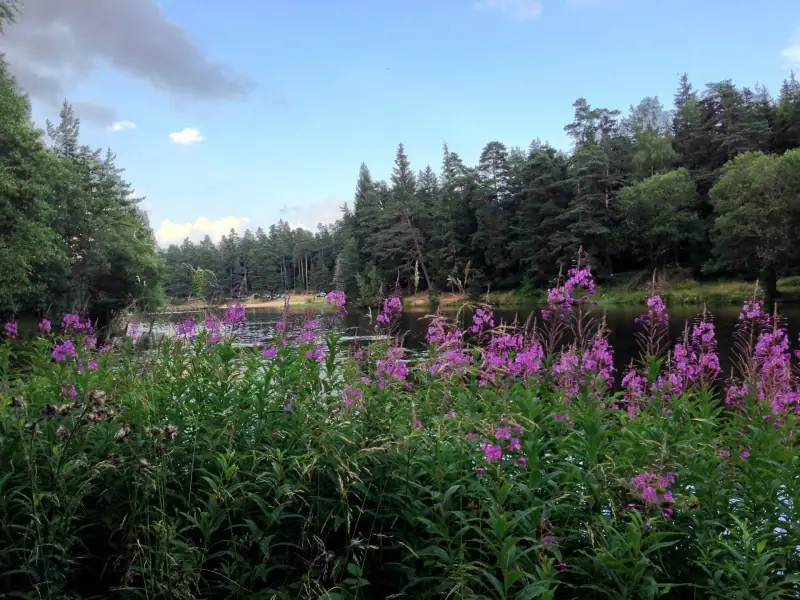
What to see in Livradois-Forez: Thiers, Ambert, La Chaise-Dieu and the high pastures
What to see in the Livradois-Forez nature park: Thiers knives, Ambert's fourme cheese, La Chaise-Dieu abbey, the Forez mountains. A guide for 2 to 4 days.
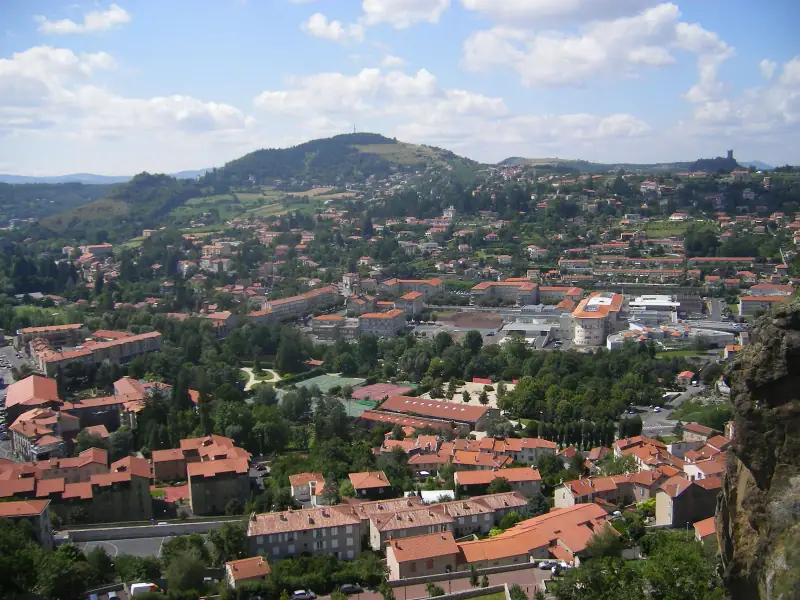
What to see in the Haute-Loire: Le Puy, gorges, villages and abbeys
What to see in the Haute-Loire: Le Puy-en-Velay, Polignac, La Chaise-Dieu, Brioude, Loire and Allier gorges, villages. A guide for 3 to 5 days.
Ready-made
Auvergne itineraries
7 days
A week in Auvergne with kids: day-by-day itinerary
Clermont-FerrandLe Mont-DoreSalers
3 days
3 days in Auvergne: an itinerary of volcanoes, lakes and stone villages
Clermont-FerrandLe Mont-Dore or Besse-et-Saint-Anastaise
7 days
Auvergne road trip in 7 days: volcanoes, Cantal and Haute-Loire
A 7-day driving itinerary in Auvergne: Puy de Dôme, Sancy, Lake Pavin, Salers, Puy Mary, Le Puy-en-Velay. Stops, realistic drives and practical tips.